Airway Dentist in Tribeca, SoHo & Downtown NYC
Healthy breathing is the foundation of overall wellness. Our modern approach to orthodontic care doesn't just straighten teeth—it optimizes airflow, sleep quality, and long-term vitality for both children and adults.
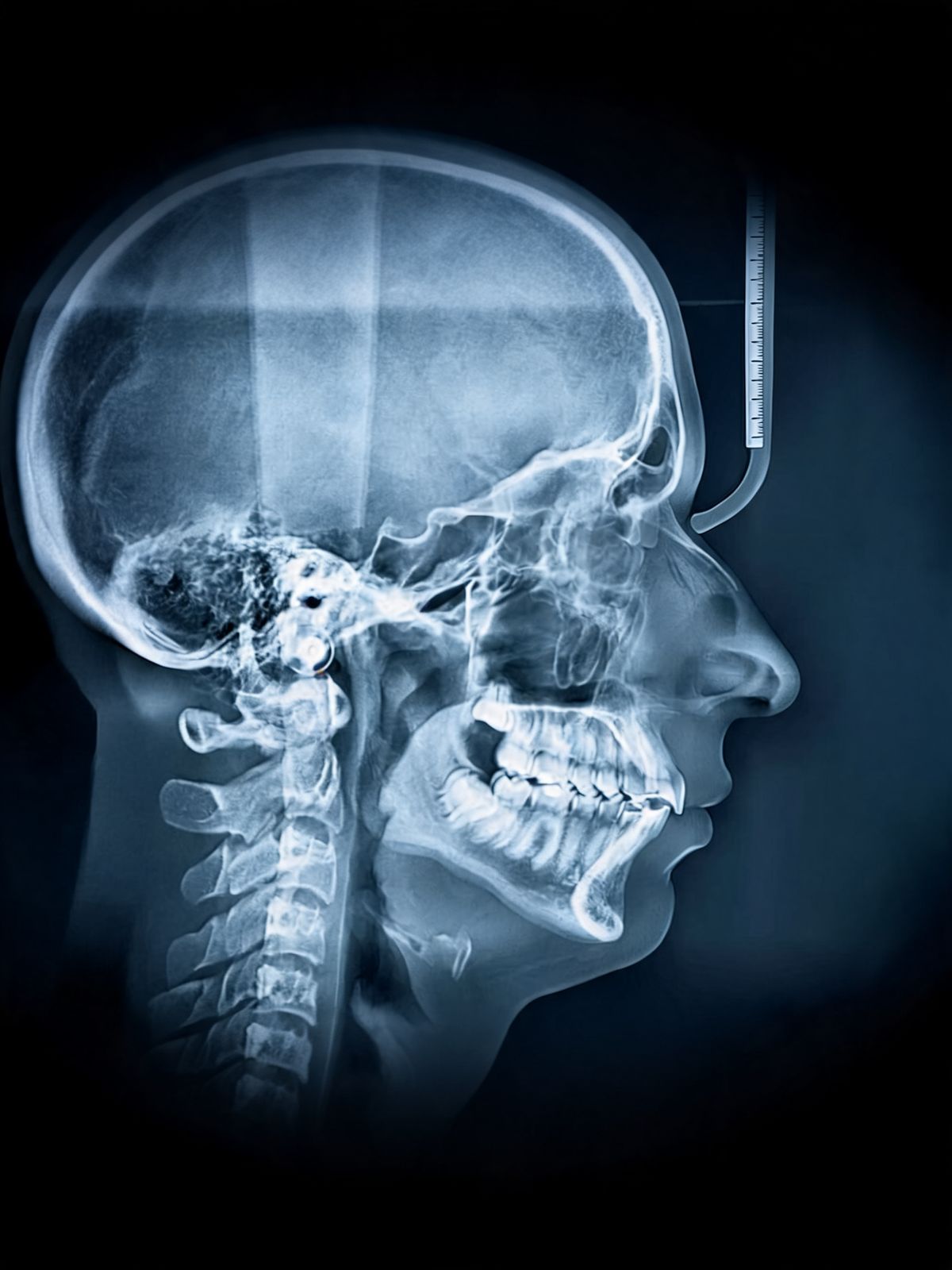
Multi-Specialty Airway Care
Combining 3D CBCT airway measurements for optimized breathing and sleep quality.
Quick Answer
Your jaws decide how well you breathe at night. Narrow arches or a recessed jaw can mean snoring, mouth breathing, and restless sleep. We start with 3D CBCT imaging to see your actual anatomy, then match the treatment to what we find — laser therapy, palatal expansion, a custom sleep device, or a combination.
Early Detection
How Do I Know If I Need an Airway Evaluation?
Patient Education
How Orthodontics Connects to Breathing
Your teeth and jaws do more than shape your smile — they shape the space your tongue lives in. When the upper jaw is narrow or the dental arches are crowded, the tongue has less room to rest in its natural position against the palate. Over time, that crowding can encourage mouth breathing, especially at night, when relaxed throat muscles narrow the airway further.
This is where airway-focused orthodontics comes in. By guiding jaw development in growing children and widening constricted arches in teens and adults, orthodontic treatment can create more oral volume and support healthier tongue posture and nasal breathing. Complementary therapies work on other parts of the same system: NightLase® gently firms the soft tissues of the throat, and custom oral appliances hold the jaw in a position that keeps the airway open during sleep.
These approaches are designed to support healthier breathing and sleep — they are not a cure for sleep apnea. Diagnosing and medically managing sleep apnea is a physician's role, which is why a proper evaluation — including sleep studies when indicated — is always the first step.
Jaw Width Shapes Airway Space
A narrow upper jaw leaves less room for the tongue and nasal passages. Expansion techniques like MARPE and MSE are designed to widen the skeletal base, not just tilt teeth.
Tongue Posture Matters
The tongue should rest against the palate, sealing the mouth for nasal breathing. Crowded arches can push it downward and backward — orthodontic alignment helps give it room to rest where it belongs.
Growth Is a Window of Opportunity
In children, guiding jaw growth while bones are still developing can influence facial development and breathing patterns for life. Early evaluation matters more than early treatment.
Integrated Clinical Options
What Are My Options for Airway Treatment in NYC?
Our approach is not one-size-fits-all. We utilize advanced 3D CBCT imaging to evaluate your unique anatomy and offer target-driven modalities:
Non-Invasive Laser
NightLase® Therapy for Snoring & Sleep Apnea
NightLase® is a gentle, non-surgical laser treatment that tightens throat and soft palate tissues to reduce airway collapse with zero downtime.
Explore Full Treatment
Growth & Airway Expansion
Palatal Expansion (MARPE)
Miniscrew-assisted rapid palatal expansion (MARPE) anchors directly to the palate bone to broaden upper jaw width, improving dental arch room and nasal airflow.
Explore Full Treatment
Adult Skeletal Expansion
Maxillary Skeletal Expansion (MSE)
MSE targets the midpalatal suture directly using bicortical micro-implants, delivering true parallel skeletal jaw expansion for adults without surgery.
Explore Full Treatment
CPAP Alternative
Custom Sleep Apnea Devices
For adults struggling with CPAP machines, custom oral appliances reposition the jaw and tongue forward to keep the airway clear and silent all night.
Explore Full Treatment
At-Home Testing
Diagnostic Sleep Studies (At-Home)
Diagnostic assessments through medical-grade at-home sleep tests, ordered via a sleep lab, that evaluate oxygen levels and respiratory effort.
Explore Full Treatment
Laser Frenectomy
Gentle Laser Tongue & Lip Tie Release
Functional dentist Dr. Nina Izhaky performs gentle laser frenectomies in NYC to release tongue and lip restrictions safely for infants, kids, and adults.
Explore Full Treatment
At a Glance
Airway Treatments Compared
| Treatment | What It Does | Good to Know |
|---|---|---|
| NightLase® Laser Therapy | Tightens throat tissues to reduce airway collapse | Non-surgical, zero downtime |
| MARPE Palatal Expansion | Broadens the upper jaw with miniscrew anchors | Improves nasal airflow and arch room |
| MSE Skeletal Expansion | True parallel jaw expansion for adults | Four micro-implants, no surgery |
| Custom Sleep Apnea Device | Repositions the jaw to keep the airway open | An alternative to CPAP |
Candidacy
Who Is a Good Candidate for Airway Care?
Airway evaluations at our Tribeca practice are for anyone whose breathing, sleep, or jaw development raises questions — child or adult. You may benefit from an assessment if any of these sound familiar:
Children With Warning Signs
Chronic mouth breathing, restless sleep, snoring, or difficulty focusing during the day can all be worth an airway-focused orthodontic look while growth can still be guided.
Adults Who Snore
Loud, nightly snoring often signals that the airway narrows during sleep. A 3D CBCT evaluation can show whether dental or skeletal structure is contributing.
CPAP-Intolerant Patients
If a CPAP machine isn't working for your lifestyle, custom oral appliances offer a dentist-provided alternative for mild-to-moderate obstructive sleep apnea.
Narrow Smiles in Teens & Adults
Crowded teeth, a narrow palate, or a retruded jaw can limit oral volume. Expansion and orthodontic options in Lower Manhattan can address structure and alignment together.
What to Expect: From Evaluation to Results
Every airway journey at Tribeca Dental Studio starts with understanding your anatomy — not with a one-size-fits-all device.
01
Consultation & Symptom Review
We talk through your sleep, breathing, and dental history — for children, that includes growth and behavior patterns parents have noticed.
02
3D CBCT Airway Imaging
A 3D CBCT scan maps your jaws, nasal passages, and airway volume so recommendations are based on your actual anatomy.
03
Personalized Treatment Plan
Depending on findings, your plan may combine expansion, orthodontics, NightLase®, an oral appliance, or frenectomy — and a sleep study when one is indicated.
04
Active Treatment
Treatment proceeds in phases with regular check-ins at our Lower Manhattan studio, tracking both dental movement and breathing-related symptoms.
05
Long-Term Follow-Up
Airway care doesn't end when an appliance comes off. We monitor stability over time and adjust the plan as growth or symptoms evolve.
Why It Matters
Benefits of Airway-Focused Orthodontics
Straight teeth are only part of the picture. An airway-first approach to orthodontics is designed to deliver functional gains alongside a better smile:
Breathing-Conscious Alignment
Tooth movement planned around arch width and tongue space, not just front-tooth straightness.
Support for Better Sleep Quality
By addressing structural contributors to nighttime airway narrowing, treatment aims to support quieter, more restful sleep.
Healthier Jaw Development in Kids
Guiding growth early can support balanced facial development and nasal breathing habits during the years they matter most.
A Functional, Comfortable Bite
Proper arch form and jaw relationships distribute biting forces evenly, which may ease strain associated with clenching and TMJ tension.
Personalized Lifespan Care
Airway-Focused Care for Children & Adults
Pediatric Early Airway Intervention
In children, early intervention guides jaw development, expands arches, establishes nasal breathing, and prevents chronic sleep or behavioral issues.
Adult Airway & Sleep Optimization
In adults, care focuses on reducing snoring, managing mild-to-moderate sleep apnea, opening nasal passages, and relieving TMJ tension.
Invisalign Near Me
Choosing aligner treatment with an airway-aware orthodontic evaluation in Tribeca — how your bite, jaw position, and breathing are assessed together before treatment is planned.
Braces Cost
What drives braces cost — case complexity, treatment time, and appliance type — and why an honest estimate only follows a full orthodontic evaluation.
Orthodontist Near Me
Whether it is braces for your child or straightening your own teeth at last, the first step is the same — a full orthodontic evaluation where the plan is built from your bite, not from a template.
Clear Braces
Clear braces work exactly like traditional braces, except the brackets are tooth-colored ceramic — less noticeable, not invisible — and this page explains the real trade-offs before you choose them.
TMJ Dentist Near Me
Jaw pain has many possible causes, and because jaw position and breathing are assessed together in an airway-aware evaluation, the honest first step is a diagnosis before any guard or plan is proposed.
Sleep Apnea Treatment Near Me
Treatment starts with a diagnosis, not a device — how snoring is sorted from apnea, the at-home sleep test we offer, and where an oral appliance honestly fits among the options.
Teeth Straightening
Straightening is a choice between clear aligners and braces, and the right one depends on how your teeth need to move — this page compares both honestly, for adults and teens.
Adult Braces Near Me
The options adults actually choose — metal, ceramic, and aligners — what each demands day to day, and how the fit for your teeth and your calendar is decided.
Invisalign vs Braces Cost
Each system's price is built from your case — how much movement is needed, how long treatment runs, and what is included along the way — compared honestly, with no invented figures.
Retainers Cost
The last line item of orthodontic treatment, and the one that protects the result: what drives retainer cost — fixed versus removable, materials, one arch or both, and the replacements every retainer eventually needs.
Frenectomy Near Me
The useful first question is not where, but whether the tight band under your tongue or lip is actually causing your symptoms: the functional signs we evaluate, the release procedure, and what aftercare honestly looks like.
Frequently Asked Questions
Is airway orthodontics only for children?
No. While early guidance in children yields optimal lifelong results, adults see massive benefits, particularly for sleep apnea, TMJ strain, and chronic snoring.
Can a dentist really help with sleep apnea?
Absolutely. Dentists are uniquely positioned to evaluate oral structures and provide custom oral appliance therapy—an effective, comfortable alternative to CPAP.
How long does airway treatment take?
Timelines depend on the modality. NightLase® laser therapy yields results in just a few weeks, whereas palatal expansion or orthodontic remodelling takes several months.
Will airway orthodontics change how I look?
In children, guiding jaw growth creates a fuller, healthier facial structure. In adults, widening a constricted upper jaw subtly enhances middle-face harmony.
How is airway orthodontics different from traditional orthodontics?
Traditional orthodontics focuses primarily on straightening teeth and correcting the bite. Airway orthodontics considers those goals alongside breathing function — evaluating arch width, tongue space, and jaw relationships with 3D imaging, and choosing techniques like palatal expansion that develop the underlying structure rather than only moving teeth.
Do I need a sleep study before starting airway treatment?
Not always, but it's often recommended. An at-home sleep study — a medical-grade test we order through a sleep lab — measures what actually happens with your breathing and oxygen levels overnight, which helps determine whether an oral appliance, NightLase®, or another approach is appropriate.
At what age can my child be evaluated for airway orthodontics?
Children can be evaluated as soon as airway-related signs appear — often well before all permanent teeth erupt. Early evaluation doesn't always mean early treatment; sometimes it simply means monitoring growth and timing intervention for the developmental window when it will help most.
Is airway orthodontic treatment painful?
Most airway orthodontic techniques work gradually — expansion happens over weeks to months, and laser therapies like NightLase® are non-surgical with no downtime. Some pressure or soreness is normal with orthodontic movement, and your care team will guide you through what to expect at each stage.
Schedule Your Airway Consultation in Tribeca
A healthier smile and healthier breathing start here. Schedule your airway consultation today.
Book Consultation NowAirway Orthodontics in Depth: Straight Teeth, Open Airway
Airway orthodontics starts from a simple observation: the jaws hold the tongue, and the tongue sits in front of the airway. When the upper jaw is narrow, when teeth crowd, or when the lower jaw sits too far back, the space available for the tongue shrinks — and during sleep, when muscle tone falls, that reduced space is where breathing narrows, snoring begins, and sleep fragments.
Airway orthodontics plans tooth and jaw movement with that anatomy in mind, so the goal is not only a straight smile but a jaw relationship that supports breathing day and night.
That makes diagnosis the heart of this treatment, and it is more than an orthodontic workup. We evaluate arch width and palate shape, how the teeth meet, where the tongue rests, and signs of disordered breathing — and for adults, that includes at-home sleep testing, because we do not treat sleep breathing on suspicion.
The findings separate problems orthodontics can genuinely improve, such as a narrow palate that expansion can widen, from problems that belong to a different treatment entirely. You get a diagnosis and a written plan, not a braces prescription with an airway label on it.
For growing children, the approach takes advantage of growth itself. Guiding a narrow palate wider and encouraging forward jaw development while the bones are still forming can create room for the tongue and for teeth that have not erupted yet, and it addresses mouth breathing while it is still a pattern rather than a fixed structure.
Early treatment is not always better treatment — some children are monitored instead — but the window for guiding growth closes, so an evaluation during childhood is worthwhile even when the decision is to wait and watch.
Adults have finished growing, so airway orthodontics works through mechanics rather than growth: expansion anchored to the bone where ordinary expansion would only tip teeth, alignment that coordinates the arches into a stable bite, and planning that may combine orthodontics with other airway care under one roof.
Because every specialty sits in this studio, an adult plan that involves sleep testing, expansion, alignment, and follow-up is coordinated as one sequence instead of being scattered between an orthodontist, a sleep physician, and a dentist who never compare notes.
It is equally important to say what airway orthodontics is not. It is not a guaranteed cure for sleep apnea, and we will not frame it as one. Obstructive sleep apnea is a medical condition with several causes, and orthodontic change is one lever among several — sometimes the right one, sometimes a contribution alongside an oral appliance or other care.
What we commit to is the sequence that protects you: measure first, identify what is actually narrowing your airway, treat the cause we can treat, and re-measure so the result is verified rather than assumed.
The everyday payoff patients describe is not abstract. Teeth that meet properly chew more comfortably, a bite that no longer strains the jaw joints, and sleep that stops fragmenting show up as steadier energy and clearer mornings. If you snore, grind, wake unrefreshed, or have been told your palate is narrow or your bite is deep, an airway-focused evaluation will tell you whether your jaw structure is part of the story.
Bring your questions — about your child's breathing, about your own sleep test results, about what expansion or alignment can realistically change in your case — and we will answer them against your own records, in writing, before anything is scheduled.
Can braces alone fix my breathing or snoring?
No — and any practice that skips that step is guessing. Airway orthodontics begins with understanding how you actually breathe and sleep: the shape of your jaws and palate, the position of your tongue, and whether your sleep is fragmented by obstruction. For adults, that includes at-home sleep testing rather than assumptions, because the treatment plan for a narrow palate differs completely from the plan for a jaw-position problem.
The evaluation gives you a diagnosis and a written plan; if orthodontics is not the right tool for your airway problem, we say so and point the plan at what is.
How is airway orthodontics different for children and adults?
Children's airways are still growing, which makes early guidance powerful: a narrow palate or a jaw that is developing off track can often be redirected while growth is on our side, and habits like mouth breathing get addressed while they are still habits rather than anatomy. Adults have finished growing, so change relies on mechanics like expansion appliances anchored to bone, or on combined planning with other treatments.
The goals are the same — a jaw relationship that gives the tongue room and keeps the airway open during sleep — but the route is chosen for your age and anatomy, and we explain which applies to you and why.
How is this different from a night guard or a sleep appliance?
They answer different questions. A night guard protects teeth from grinding forces; it does not change the airway. An oral appliance for sleep apnea repositions the jaw during sleep to keep the airway open, without moving teeth permanently. Airway orthodontics changes the underlying structure — arch width, jaw relationships, tooth position — so the airway is supported around the clock, not only while a device is in.
Some patients need more than one of these, in a planned sequence. At your evaluation we explain which problem each option addresses, so you are never sold a device for a job it cannot do.
How We Plan Your Care at Tribeca Dental Studio
Every treatment at Tribeca Dental Studio starts with a diagnosis, not a sales pitch. Before we recommend anything, we examine the tooth or area in question, review imaging taken here in the office, and talk through what we see in plain language. You will always know what we recommend, why we recommend it, and what could safely wait.
That recommendation becomes a written plan, so the sequence, the timing, and the reasoning are clear before any treatment begins — and if a simpler option would serve you just as well, that is the option we will put in front of you.
Our studio brings every dental specialty under one roof at 54 Warren St in Tribeca, and it has since 2007. General dentistry, cosmetic care, implant surgery, periodontics, endodontics, orthodontics, airway care, and pediatric dentistry are handled by one team in one place, which means a treatment that touches several specialties is planned as a whole rather than handed off between offices across town.
Your records, your imaging, and your history stay with the same team from the first visit through every follow-up, so nothing is lost between providers and no step is planned in isolation.
We are open Monday to Friday from 8:00 AM to 6:00 PM, Saturday from 9:00 AM to 4:00 PM, and Sunday from 9:00 AM to 2:00 PM. You can book online at any time or call us at (212) 561-5303.
The studio sits between Greenwich Street and West Broadway, steps from the Chambers Street subway hub (1, 2, 3, A, C, E), with attended garages on Warren Street and Greenwich Street within a block of our door for patients who drive in.
Care does not end when the procedure does. We schedule reviews and follow-ups around your life, group staged treatment into planned steps when we can, and use each return visit to check healing and watch the details we flagged together. Between appointments we stay in touch with recall reminders and clear next steps, and if something feels off, we would rather see you quickly than have you wait and wonder.
The goal is a plan you understand, a team you recognize, and results that are checked over time rather than assumed.
Screening First: What an Airway Evaluation Actually Looks For
Airway-focused orthodontics begins with screening, not an appliance. Screening asks how breathing and sleep are working before it asks how the teeth line up: whether you or your child breathe through the mouth, whether snoring is occasional or nightly, whether sleep feels refreshing, and whether mornings bring headaches or a sore jaw from clenching. For children, they extend to restless sleep and difficulty concentrating.
The examination looks for structural signs matching those symptoms: the width of the upper jaw, the shape of the palate, whether the teeth meet in a crossbite, how much the teeth crowd, and where the tongue rests when the mouth is closed. CBCT 3D imaging and digital planning, when indicated, show jaw relationships a look at the teeth alone cannot.
Screening does not diagnose a sleep disorder; it identifies who needs measurement, who needs guidance, and who needs different care first — in your written plan.
Palate Shape and Tongue Posture: The Quiet Partnership
At rest, the tongue should sit lightly against the roof of the mouth, lips together, breathing through the nose. In a growing child, that resting tongue helps shape the upper jaw wider, and at any age it keeps the tongue forward, out of the airway, setting the pattern sleep follows.
A narrow, high palate breaks that partnership: there is less room for the tongue to rest where it belongs, so it sits lower, the mouth falls open more easily, and mouth breathing becomes the habit that further narrows development.
Widening a narrow palate is not only about making room for teeth; it creates the space the tongue needs to return to its proper resting position, and coordinated arches give it a roomy environment rather than a crowded one. The goal is a mouth that works correctly at rest — because rest, repeated all night, is where the airway is won or lost.
Sleep Testing Inside the Orthodontic Plan
For adults, at-home sleep testing is built into airway orthodontic planning, because a test result changes what orthodontics should try to do. If testing shows sleep-disordered breathing, the plan is written knowing its severity and can be coordinated with other care that problem may need. If testing is reassuring, orthodontics proceeds on its dental merits, without an airway promise attached.
Either way, decisions rest on a measurement on file before any appliance is discussed.
Testing also gives treatment a checkable endpoint. When breathing was part of the reason for treatment, re-testing after the structural work is how a result is verified rather than assumed Orthodontics changes structure, and structure is one contributor to how the airway behaves in sleep; testing before and after keeps any claim honest. If follow-up measurement shows the problem needs more than orthodontics, the plan says where that care belongs.
Two Pathways: How Timing Differs for Children and Adults
The child pathway is timed around growth, so the most important decision is often when, not what. Some children benefit from early guidance — widening a palate while it responds readily, or correcting a crossbite before it steers jaw growth off center — in a first phase, a pause while teeth erupt, and a second phase of alignment in the teens. Others are monitored instead of treated immediately.
Both are active decisions, recorded in writing, protecting the same window: once growth ends, simple guidance becomes adult mechanics.
The adult pathway has no growth to borrow, so it is built from measurement and mechanics: sleep testing where breathing is a concern, expansion anchored to bone where the palate needs true skeletal width, and alignment planned digitally around the airway space the finished arches preserve. Adults often combine orthodontics with other treatment in one sequence at 54 Warren St, New York, NY 10007, near the Chambers Street hub (1, 2, 3, A, C, E).
The first step is the same evaluation, bookable online or by calling (212) 561-5303.