Traditional Braces in Tribeca, NYC
Traditional braces remain the gold standard for reliable, complex orthodontic alignment. Tribeca Dental Studio offers state-of-the-art metal and aesthetic ceramic braces for children, teens, and adults in Lower Manhattan.
The short answer
Traditional braces are still the gold standard for complex tooth alignment — nothing moves difficult cases as reliably. At our Tribeca studio, we offer state-of-the-art metal braces and tooth-colored ceramic options for kids, teens, and adults. Don't let the word 'traditional' fool you: today's braces are smaller, smoother, and more comfortable than ever.
How Do Traditional Braces Work?
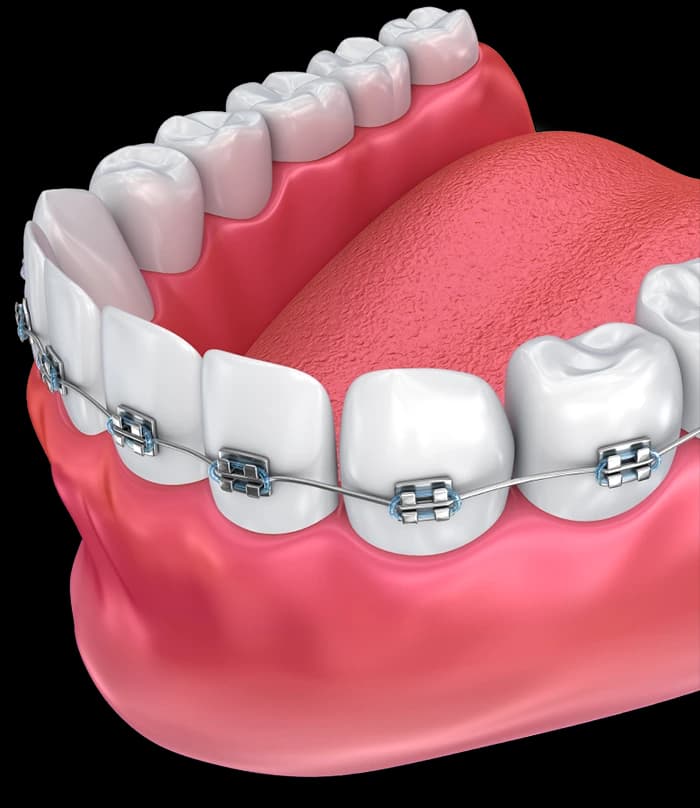
Traditional braces apply continuous, gentle pressure to guide teeth into ideal physiological alignment over time. Every component works in precise harmony:
What Are the Stages of Orthodontic Treatment?
Braces aren’t just for teenagers! We customize treatment strategies tailored across key developmental milestones.
Phase 1 Early Intervention
Designed for younger children to guide early jaw development, correct severe bite issues, and simplify adolescent treatment later in life. Integrated directly alongside our pediatric dental team.
Phase 2 Comprehensive
The classic teenage orthodontic journey. Corrects crooked permanent teeth, crowded arches, overbites, and underbites for a lifetime of confidence.
Adult Braces
Increasingly popular for adults correcting past relapse, narrow palates, TMJ strain, or trauma. Modern, sleek designs ensure discreet, comfortable progress.
Who Is a Good Candidate for Braces?
Traditional braces remain the most versatile orthodontic tool available, capable of correcting mild discrepancies as well as the complex cases clear aligners cannot always handle. Patients across Tribeca, SoHo, the Financial District, and Lower Manhattan choose braces for:
Crowded Teeth
Overlapping teeth caused by insufficient arch space — one of the most common reasons NYC patients seek orthodontic care.
Gaps & Spacing
Unwanted spaces between teeth that trap food and affect the smile's appearance.
Overbite
Upper front teeth that overlap the lower teeth excessively, which can cause uneven wear over time.
Underbite
Lower teeth positioned in front of the upper teeth, often requiring precise, sustained correction.
Crossbite
Misaligned bite where upper and lower teeth meet incorrectly, sometimes on only one side.
Complex & Severe Cases
Significant rotations, large jaw discrepancies, or impacted teeth — situations where fixed braces typically outperform removable aligners.
Milder alignment concerns may also be treatable with clear aligners. During your consultation, our Tribeca orthodontic team will evaluate your bite and recommend the option most likely to succeed for your case.
Treatment Timeline: What to Expect
Every smile is different, but most braces journeys at our Lower Manhattan office follow the same proven path:
Consultation & Records
A comprehensive exam, photographs, and X-rays or digital scans map your bite and tooth positions.
Custom Treatment Plan
Your orthodontist designs the precise tooth movements, estimated timeline, and bracket type — metal or ceramic.
Braces Placement Day
Brackets are bonded to each tooth and the first archwire is placed — typically a single comfortable appointment.
Adjustment Visits
Every 4–8 weeks the archwire is adjusted or replaced to keep teeth moving on plan. Most visits are brief.
Debonding & Retainers
Braces come off to reveal your new smile, and custom retainers are made to protect the result long-term.
Metal & Aesthetic Ceramic Options
Crafted from biocompatible, medical-grade materials engineered for durability and maximum comfort.
High-Grade Metal Braces
Constructed from surgical stainless steel or titanium alloys. Highly durable and exceptionally effective at managing even the most complex bite or crowding challenges. Younger patients can customize elastic ties with fun colors!
- Maximum durability for complex cases
- Cost-effective orthodontic solution
Clear Ceramic Braces
Function identically to metal braces, but utilize brackets made from translucent or tooth-colored ceramic materials. Blends seamlessly with natural enamel for adults and teens seeking discretion.
- Subtle, tooth-colored appearance
- Stain-resistant aesthetic ceramic
Traditional Braces vs Clear Aligners
Considering clear aligners instead? Both treatments work — here is an honest look at how fixed braces compare for NYC patients weighing their options:
Still deciding? An evaluation with our Tribeca orthodontic team will clarify which option fits your case, lifestyle, and goals.
Caring for Your Braces
Good habits during treatment protect both your teeth and your progress. Our Tribeca team recommends:
Brush After Every Meal
Use a soft-bristled brush to clean around each bracket and along the gumline.
Floss Daily With Threaders
Floss threaders or a water flosser reach beneath the archwire where a regular brush cannot.
Avoid Hard, Sticky & Chewy Foods
Popcorn, caramel, hard candy, ice, and chewy bagels can loosen brackets or bend wires.
Soothe Irritation With Orthodontic Wax
A small piece of wax over a rubbing bracket prevents sore spots on cheeks and lips.
Protect Braces During Sports
Wear a mouthguard for contact sports to shield both your braces and your teeth.
Keep Your Adjustment Appointments
Missed visits can extend treatment time. If a bracket loosens or a wire pokes, call our Lower Manhattan office promptly.
Why Choose Tribeca Dental Studio?
Anyone who has had to bounce between two or three separate offices for x-rays, pediatric care, and orthodontics appreciates the immense value of having all specialty care consolidated under one roof in Lower Manhattan.
Experienced orthodontists with advanced training in growth & biomechanics.
Direct integration with pediatric dentists, hygienists, and oral surgeons.
Flexible early morning and evening appointments fitting busy NYC schedules.
Paying For Braces in NYC
We believe financial barriers should never stand between you and a healthy, functional smile. We work with PPO insurance providers to maximize your orthodontic benefits.
Braces in NYC: FAQs
Have questions about braces in NYC? Here are answers to the questions our Tribeca patients ask most often.
How long does treatment with braces take?
Treatment length varies with the complexity of tooth movement — your orthodontist will provide an individualized estimate at your consultation. Keeping adjustment appointments and following care instructions helps treatment stay on schedule.
Do braces hurt?
Most patients feel mild soreness or pressure for a few days after placement and each adjustment — a sign teeth are moving. It typically eases quickly, and orthodontic wax helps with any rubbing.
Can adults get braces?
Absolutely. Adult orthodontics is increasingly popular across NYC, and tooth-colored ceramic brackets offer a discreet option for professionals in Tribeca and the Financial District.
What foods should I avoid with braces?
Avoid hard foods (ice, hard candy, popcorn kernels), sticky foods (caramel, taffy), and very chewy foods that can loosen brackets or bend archwires.
How do I keep my teeth clean with braces?
Brush after every meal with a soft brush, floss daily using threaders or a water flosser, and keep your professional cleanings on schedule at our Tribeca office.
Will I need a retainer after braces?
Yes. Once braces come off, custom retainers hold teeth in their new positions. Teeth naturally tend to shift over time, so wearing your retainer as directed protects your result.
How often are adjustment appointments?
Most patients return every 4–8 weeks for brief wire adjustments. Our extended early-morning and evening hours help busy New York schedules stay on track.
Start Your Smile Journey
Book an appointment today to start a conversation with our Tribeca orthodontic team about achieving your optimal smile.
Book Orthodontic VisitTraditional Braces in Depth: The Reference Standard
Traditional braces remain the reference standard for controlled tooth movement: brackets bonded to each tooth, connected by an archwire whose shape and stiffness steer the teeth along a planned path. That direct mechanical control is why braces still handle the full range of orthodontic problems — severe crowding, rotations, teeth that need to move vertically, bite relationships that need rebuilding — without depending on anything the patient has to remember.
The appliance works every hour of every day, including the weeks when life gets busy and every other routine slips.
Modern braces are not the hardware you may remember. Brackets are smaller and lower-profile than a generation ago, wires deliver lighter and more continuous forces, and the sequence — alignment first, then bite correction, then detailed finishing — is planned from digital records rather than improvised at the chair.
Adjustment appointments are shorter and spaced to the mechanics: each visit checks progress against the plan, changes or advances the wire, and renews any elastics whose force is doing planned work. Between visits, the treatment mostly asks for care, not effort.
Elastics deserve their own explanation, because they are the part of braces treatment patients control. Small rubber bands worn between the upper and lower teeth in prescribed patterns correct the bite relationship — overbite, underbite, crossbite — while the wires align the teeth within each arch. Worn as prescribed, they finish on schedule; worn occasionally, they are the single most common reason treatment runs long.
We will show you the pattern in the mirror, give you spares, and be honest at reviews about whether wear is keeping pace — not to scold, but because the finishing date genuinely depends on it.
Daily life with braces is a set of small adjustments. Hard, sticky, and chewy foods that can shear a bracket go on hold; corn comes off the cob, apples get sliced, and ice stops being a snack. Cleaning takes a few extra minutes and a few extra tools — interdental brushes for under the wire, floss threaders or a water flosser — and we teach the technique at the fitting appointment rather than handing you a leaflet.
Most patients settle into the routine within two weeks, and the adjustment soreness after appointments follows a predictable few-days pattern that standard measures handle.
Braces are often the right recommendation for teenagers, for complex movements, and for any patient who knows removable appliances would gather dust — and choosing them is not a lesser outcome. The finishing phase of braces treatment, where individual tooth positions and root angles are refined bend by bend, produces the kind of detailed result that lasts, and retention afterward holds it.
At your consultation we will compare braces and aligners for your specific case honestly: if braces are the better tool for your teeth, we will say so and explain why; if they are equal, the choice is yours, made with the daily reality of each laid out in full.
Do braces hurt more than they used to?
No — that idea survives from an era of heavier forces and cruder mechanics. Modern braces use lighter, more continuous forces, and discomfort today is mostly an adjustment pattern: tenderness for a few days after fitting and after adjustments, which standard over-the-counter relief handles for most patients. What braces do ask of you is care — cleaning thoroughly around brackets and avoiding the short list of foods that break them.
At your consultation we will describe the real daily experience in detail, because patients who know what to expect handle the adjustment period without drama.
Are ceramic braces as good as metal ones?
They are different systems, not rivals in every case. Metal braces are the most mechanically direct: smaller than they were a generation ago, durable, and unaffected by diet or habits. Ceramic brackets trade some of that toughness for discretion, blending with tooth color at speaking distance, and they suit patients whose cases and habits are compatible with a slightly more delicate bracket.
Where both can handle your movements equally, the choice is genuinely yours — appearance, lifestyle, and care habits decide it. We will show you both, explain any mechanical difference that matters in your specific case, and let the decision rest on facts rather than defaulting you to either.
What happens if a bracket breaks or a wire pokes?
Call us the same day if you can. A loose bracket that is still on the wire usually stays put and comfortable until we can re-bond it, and orthodontic wax — which we give you at fitting — covers anything that pokes in the meantime. What matters is not losing treatment time quietly: a bracket out of action for weeks can let a tooth drift and lengthen the plan.
Keep the piece if it comes off entirely, keep wearing any elastics as prescribed unless the broken bracket was their anchor, and we will fit repairs into the schedule promptly.
How We Plan Your Care at Tribeca Dental Studio
Every treatment at Tribeca Dental Studio starts with a diagnosis, not a sales pitch. Before we recommend anything, we examine the tooth or area in question, review imaging taken here in the office, and talk through what we see in plain language. You will always know what we recommend, why we recommend it, and what could safely wait.
That recommendation becomes a written plan, so the sequence, the timing, and the reasoning are clear before any treatment begins — and if a simpler option would serve you just as well, that is the option we will put in front of you.
Our studio brings every dental specialty under one roof at 54 Warren St in Tribeca, and it has since 2007. General dentistry, cosmetic care, implant surgery, periodontics, endodontics, orthodontics, airway care, and pediatric dentistry are handled by one team in one place, which means a treatment that touches several specialties is planned as a whole rather than handed off between offices across town.
Your records, your imaging, and your history stay with the same team from the first visit through every follow-up, so nothing is lost between providers and no step is planned in isolation.
We are open Monday to Friday from 8:00 AM to 6:00 PM, Saturday from 9:00 AM to 4:00 PM, and Sunday from 9:00 AM to 2:00 PM. You can book online at any time or call us at (212) 561-5303.
The studio sits between Greenwich Street and West Broadway, steps from the Chambers Street subway hub (1, 2, 3, A, C, E), with attended garages on Warren Street and Greenwich Street within a block of our door for patients who drive in.
Care does not end when the procedure does. We schedule reviews and follow-ups around your life, group staged treatment into planned steps when we can, and use each return visit to check healing and watch the details we flagged together. Between appointments we stay in touch with recall reminders and clear next steps, and if something feels off, we would rather see you quickly than have you wait and wonder.
The goal is a plan you understand, a team you recognize, and results that are checked over time rather than assumed.
Appointment Life With Braces: What Each Visit Actually Does
Braces treatment is a rhythm of short, purposeful appointments rather than one long intervention. Early visits are about placement and alignment: brackets bonded, light wires engaged, and teeth beginning to level and untwist. Middle visits change wires, add or adjust elastics, and start correcting how the upper and lower teeth meet.
Later visits are the finishing phase — small, deliberate bends and position checks that refine individual teeth and root angles, the detail work that separates a straight-looking result from a properly finished one. Knowing which phase you are in makes each visit make sense, and your written plan at Tribeca Dental Studio sets out that sequence from the start.
Braces Emergencies: What Is Urgent and What Can Safely Wait
True braces emergencies are rarer than braces annoyances, and knowing the difference saves you both worry and unnecessary trips. Call us the same day for a wire or bracket causing real pain or cutting the cheek or tongue, a loose appliance that is sharp or moving, or any injury to the mouth or teeth — a fall, a ball, a knock — whether the braces look damaged or not, because teeth can be injured invisibly.
A bracket that has come unstuck but sits comfortably on the wire, a lost elastic, or general aching after an adjustment are not emergencies: they matter, they should be reported at or before your next visit, and the adjustment ache in particular is normal and usually settles within a few days.
Eating and Cleaning With Braces: The Daily Routine That Works
Braces ask for editing, not exile, at the table. The foods that break brackets are predictable: anything hard enough to shear a bond, sticky enough to pull at it, or bitten into with force. Whole apples and raw carrots get sliced; corn comes off the cob; nuts, ice, hard crusts and chewy sweets go on hold for the duration; and pens, pencils and fingernails are retired as chewing substitutes.
Softer eating for a day or two after each adjustment is normal — soups, eggs, pasta, yoghurt and cooked vegetables carry most patients through comfortably. None of this is forever, and the list we give you is specific rather than a blanket ban on enjoyment: the goal is zero broken brackets, because every break is lost movement and an extra appointment.
Cleaning, meanwhile, becomes a technique rather than a chore. Food and plaque collect around brackets and under wires in places a quick brush sails past, so the routine we teach is deliberate: a soft brush angled above and below each bracket, interdental brushes slipped under the wire between teeth, and floss threaded or guided with the tools we show you, once a day without exception.
Fluoride toothpaste — and a fluoride rinse where we advise it — protects the enamel around each bracket, because the white marks sometimes seen after braces come off are not caused by the braces but by plaque left sitting against enamel for months. Take the few extra minutes nightly; the smile revealed at the end should be healthy as well as straight.