Diagnostic Sleep Studies
Diagnostic Sleep Studies in Tribeca, NYC
Struggling with chronic snoring, morning fatigue, or restless sleep? Our comprehensive in-lab and home sleep studies diagnose the root cause of sleep-disordered breathing to protect your heart, brain, and overall health.
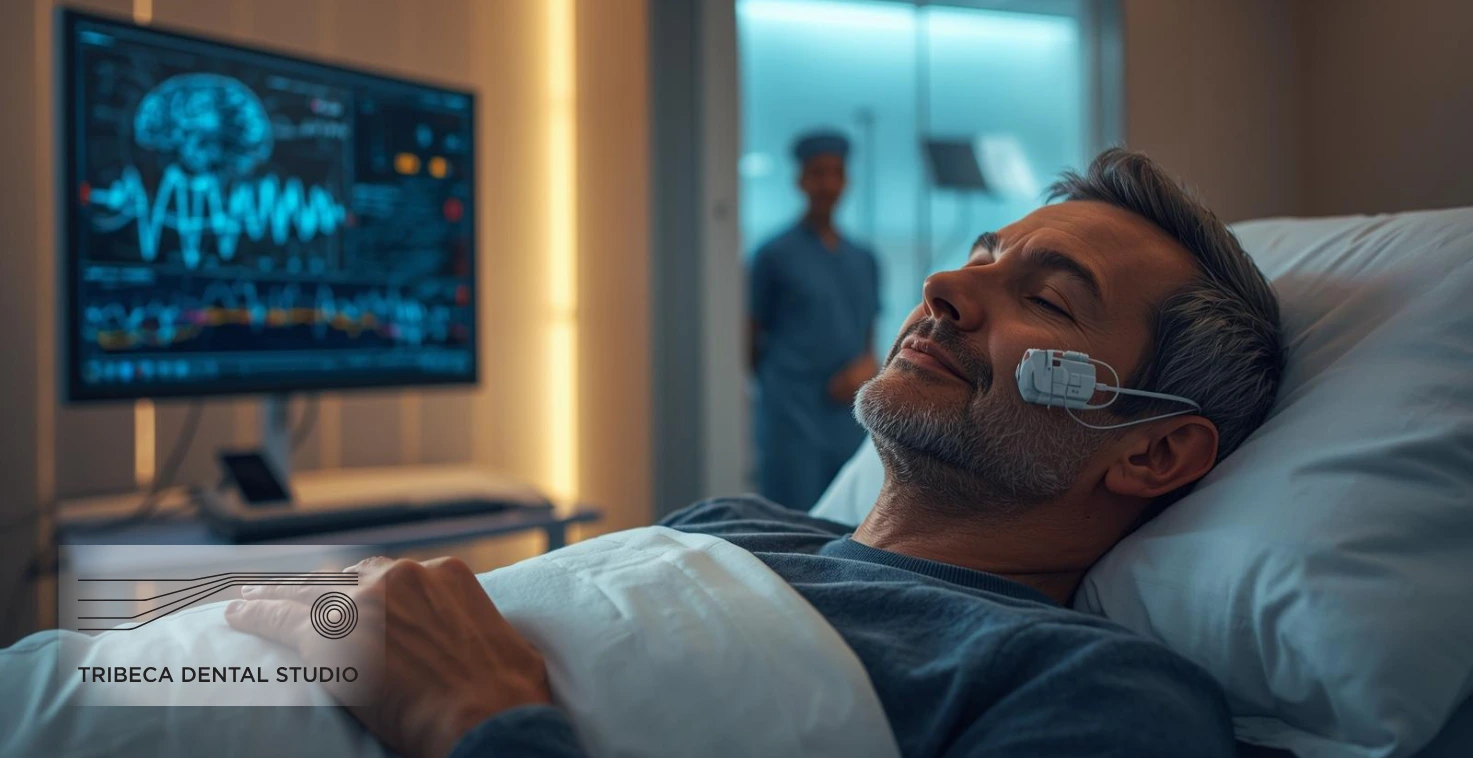
In-Home & In-Lab Sleep Testing
Precision recording of blood oxygen levels, breathing events, and sleep quality.
The short answer
If you snore loudly, wake up tired, or feel foggy during the day, a sleep study finds out why. We offer comprehensive in-lab and home sleep studies that diagnose sleep-disordered breathing — protecting your heart, brain, and overall health. Because you can't fix what you haven't measured.
Diagnostic Criteria
Who Should Consider a Sleep Evaluation?
If you or your bed partner notice any of these warning signs, a sleep test can be life-changing:
Testing Options
Types of Sleep Studies Available
Convenient & Comfortable
Home Sleep Apnea Test (HSAT)
An FDA-approved portable device that tracks oxygen saturation, respiratory effort, and heart rate in the comfort and privacy of your own bed.
Gold-Standard Diagnostic
In-Lab Polysomnography (PSG)
Monitored overnight in a private, quiet clinical suite to measure brain waves, eye movements, respiratory effort, and heart rhythms for complex cases.
Optimal Airway Calibration
Appliance & CPAP Titration Study
Calibrates the exact airflow pressure or mandibular advancement steps needed to guarantee zero airway collapses night after night.
Streamlined Process
What to Expect: Step-by-Step
Consultation & Device Setup
In-depth clinical assessment followed by simple device pickup and night setup guidance.
Overnight Data Collection
Sleep naturally while the device seamlessly records blood oxygen, breathing pauses, and snoring intensity.
Specialist Analysis & Treatment
Sleep specialists review your data to provide a clear diagnosis and custom oral appliance or laser plan.
Snoring Is Never Just Noise
When a patient tells us “I snore a little,” we always ask the same follow-up: how do you feel in the morning? Because snoring rarely travels alone. Daytime fatigue, morning headaches, difficulty concentrating, blood pressure that won't come down — all can signal that the airway is partially or fully closing during the night. And here's what matters most: many different causes of snoring and sleep apnea exist, but the effects are the same — decreased life expectancy and lower quality of life.
A sleep study is the first step toward real answers. You no longer need to spend an uncomfortable night in a strange lab — FDA-approved home tests monitor your breathing, oxygen levels, and heart rate while you sleep in your own bed. The data tells us not just whether you have apnea, but how severe it is and what's causing the airway collapse — essential information before recommending any treatment.
At Tribeca Dental Studio, the sleep study is just the start of the conversation. Once we know why you snore and whether you have sleep apnea, we determine whether and how we can improve or eliminate the problem — whether with a custom oral appliance, NightLase® laser therapy, or palatal expansion. The first visit is about diagnosis: finding the cause of your symptoms and creating a plan, not selling a treatment.
Home Test or In-Lab: How We Decide Together
Most of our patients start with the home test, and for good reason: you sleep in your own bed, with your own pillow, following your normal routine. The data reflects how you actually sleep night after night. The FDA-approved portable device records oxygenation, respiratory effort, and heart rate without complicated wiring or an uncomfortable night away from home. For suspected obstructive sleep apnea — the most common diagnosis we evaluate — it's usually all we need.
The in-lab study comes into play when the case is more complex. If you already use CPAP and need precise titration, if we suspect sleep disorders beyond apnea — like periodic limb movements or unusual sleep behaviors — or if a home test came back inconclusive, full overnight monitoring gives us the detailed picture. In a private, quiet room, we measure brain waves, eye movements, and muscle activity alongside breathing.
The decision isn't yours alone or ours alone — we make it together at your initial consultation. We review your symptoms, your medical history, the medications you take, and what your partner has noticed at night. Then we recommend the test that will give you real answers with the least disruption. And once we have the diagnosis, we don't leave you alone with a report — we explain exactly what the numbers mean and which treatment options make sense for your case.
“We can all benefit from it because as we age, the tissue slackens and becomes droopy. So even if you don't need it when you're young and have no symptoms, as you get older you'll need it to tighten up those back-of-the-throat muscles. And who needs it least? Opera singers — singers in general. They exercise those tissues and keep them tight even with age.”
— Dr. Nina Izhaky, Tribeca Dental Studio
Frequently Asked Questions About Sleep Studies
How accurate is a Home Sleep Apnea Test (HSAT)?
For the vast majority of patients with suspected Obstructive Sleep Apnea (OSA), FDA-approved home sleep devices offer high diagnostic precision in the privacy of your own bed.
How should I prepare for my sleep test?
Avoid caffeine and alcohol on the day of your test, stick to your regular sleep schedule, and ensure clean hair (free of gels/oils) if completing an in-lab study.
What happens if I am diagnosed with sleep apnea?
If diagnosed with mild-to-moderate OSA, we provide quiet, custom oral appliances as a comfortable alternative to CPAP, often paired with NightLase® or MARPE expansion.
How long until I get my results?
Home studies are typically processed within a few days. Once we review your data, we contact you to schedule a consultation where we explain the findings and discuss your treatment options.
Is the sleep study uncomfortable?
Home tests are designed for minimal disruption: a small finger sensor, a chest band, and a soft nasal cannula. Most patients sleep normally through the night.
What if I snore but don't have apnea?
Primary snoring without apnea still deserves attention — it affects your rest and your partner's. Based on results, we may recommend an oral appliance, NightLase® therapy, or an airway evaluation to find the cause.
Will the home test disturb my partner's sleep?
No. The device is silent and unobtrusive: a small finger sensor, a soft chest band, and a lightweight nasal cannula. It makes no sounds and emits no light, so your partner will sleep just as peacefully as always.
Can children have a sleep study too?
Yes. Restless sleep, mouth breathing, snoring in children, or trouble focusing at school can signal sleep-disordered breathing. We evaluate children as part of our whole-airway health philosophy and adapt the testing approach to their age.
What do the numbers in my sleep report mean?
The report measures how many times per hour your breathing partially or fully pauses, and how far your oxygen drops. At your results consultation we explain every number in plain language and what it means for your treatment — we never leave you deciphering a report alone.
Explore Related Sleep & Airway Treatments
Related Treatments
Explore Related Services
Schedule Your Sleep Study Consultation in NYC
Uncover the cause of your restless nights and find effective, comfortable solutions today.
Book Sleep Evaluation Now