How Long Cavities Take to Form And When They Get Worse?
September 22, 2025

Tooth Decay Guide
How Long Does It Take for a Cavity to Form?
There is no single timeline for how long it takes a cavity to form. Tooth decay develops gradually as repeated acid attacks remove minerals from tooth enamel. In some people, early decay may remain relatively stable for a long time, while in higher-risk situations it can progress more quickly.
The speed depends on factors such as plaque buildup, how frequently you consume sugars and starches, fluoride exposure, saliva flow, tooth anatomy, age, and the location of the decay.
The key distinction is between early demineralization, which may sometimes be stopped or reversed, and an actual cavity where the enamel has physically broken down.
Quick Answer: How Fast Do Cavities Form?
- Early enamel changes: can begin before you feel any symptoms.
- White-spot lesions: indicate mineral loss and may still be reversible.
- Enamel cavity: develops when mineral loss progresses enough for the surface to break down.
- Dentin decay: can progress faster because dentin is softer than enamel.
- Pulp involvement: deeper decay may cause pain, inflammation, or infection.
- Timeline: there is no reliable universal rule such as “every cavity takes 3–6 months.”
What Is a Cavity?
A cavity is a permanently damaged area of a tooth where decay has progressed far enough to create a physical defect or hole.
Tooth decay begins before that hole exists. Bacteria in dental plaque use sugars and starches from food and drinks and produce acids. These acids remove minerals from the enamel in a process called demineralization.
According to the National Institute of Dental and Craniofacial Research, teeth naturally go through cycles of mineral loss and mineral replacement throughout the day. Saliva, fluoride, calcium, and phosphate help enamel recover after acid attacks.
How Does a Cavity Form?
Cavity formation begins with repeated exposure to acids produced by bacteria living in dental plaque.
- Plaque forms: bacteria collect on tooth surfaces.
- Bacteria use sugars and starches: acids are produced as a result.
- Enamel loses minerals: repeated acid exposure shifts the balance toward demineralization.
- A white spot may appear: this can be an early visible sign of mineral loss.
- Enamel weakens: continued mineral loss can eventually create a physical cavity.
- Decay reaches dentin: progression may accelerate once decay passes through enamel.
- Decay approaches the pulp: deeper involvement can cause sensitivity, pain, inflammation, or infection.
NIDCR explains that early tooth decay can sometimes be interrupted before a cavity forms by improving plaque control and fluoride exposure.
What Are the Stages of Cavity Formation?
| Stage | What Is Happening | Can It Be Reversed? |
|---|---|---|
| Early mineral loss | Enamel loses minerals but remains physically intact | Sometimes, with appropriate preventive care |
| White-spot lesion | Visible early enamel demineralization | May be arrested or remineralized in appropriate cases |
| Enamel cavity | Physical breakdown of enamel has occurred | No; lost structure does not regrow |
| Dentin decay | Decay extends beneath enamel | No; restorative treatment is generally needed |
| Pulp involvement | Decay reaches deeper internal tooth tissues | May require more extensive treatment |
How Fast Do Cavities Grow?
The speed of cavity progression varies considerably.
Some early lesions can remain confined to enamel for extended periods, particularly when oral hygiene improves, fluoride is present, sugar exposure is reduced, and saliva flow is healthy.
Other cavities can progress faster when risk factors are strong or when decay has already reached dentin.
Research on caries progression shows substantial variation in decay rates across different populations, reinforcing why dentists assess lesions and risk factors individually rather than applying one fixed timetable.
Can a Cavity Form in a Few Months?
It is possible for decay to progress noticeably over a period of months in some circumstances, particularly when cavity risk is high.
Factors that can accelerate decay include:
- frequent sugary drinks or snacks;
- poor plaque removal;
- low fluoride exposure;
- dry mouth or reduced saliva;
- deep grooves in molars;
- decay between teeth that is difficult to clean;
- orthodontic appliances that make plaque control difficult;
- and a history of active cavities.
However, the same number of months does not apply to every tooth or every patient.
How Long Does It Take for a Cavity to Get Worse?
Once a true cavity has formed, it will not rebuild itself. Without treatment or management, decay can continue progressing deeper into the tooth.
How quickly this happens depends on:
- the depth of the existing lesion;
- whether the decay is still in enamel or already in dentin;
- plaque levels;
- sugar frequency;
- saliva flow;
- fluoride exposure;
- tooth location;
- and individual cavity risk.
This is one reason regular dental checkups are useful: dentists can monitor early changes before pain begins.
Do Cavities Grow Faster Once They Reach Dentin?
Decay may progress more quickly after it reaches dentin because dentin is less mineralized and softer than enamel.
Dentin also contains microscopic tubules extending toward the center of the tooth. When decay reaches this layer, patients are more likely to experience sensitivity to cold, sweets, or other stimuli.
This is why catching decay during the early enamel stage can make treatment much simpler.
What Determines How Quickly a Cavity Develops?
Can an Early Cavity Heal or Reverse?
This depends on what someone means by “cavity.”
If decay is still at the early demineralization stage and the enamel surface has not physically broken down, mineral loss may sometimes be stopped or reversed.
NIDCR specifically notes that early decay may be reversed using minerals from saliva and fluoride before a hole forms.
Once the enamel has physically broken down and a true cavity exists, the missing structure does not regenerate naturally. A dentist may need to remove damaged tissue and restore the tooth.
What Does an Early Cavity Look Like?
Early decay may not look like a hole.
Possible findings include:
- chalky white spots;
- areas that appear dull rather than shiny;
- brown or dark discoloration;
- changes visible between teeth on dental X-rays;
- or no visible sign at all without professional examination.
NIDCR notes that early tooth decay frequently causes no symptoms, which is why cavities can be present before a person feels pain.
What Are the Signs of a Cavity?
As tooth decay becomes more advanced, symptoms may include:
- sensitivity to cold;
- sensitivity to sweets;
- pain when biting;
- toothache;
- visible dark spots;
- a visible hole;
- food repeatedly catching in one area;
- or a rough area that feels different from the surrounding enamel.
Advanced infection can cause more significant pain, swelling, fever, or an abscess and should be professionally evaluated.
Can You Have a Cavity Without Pain?
Yes. Early decay frequently causes no pain at all.
Pain tends to become more likely as decay progresses deeper into the tooth. Waiting for a cavity to hurt can therefore allow a small problem to become more extensive.
Dental examinations and X-rays can sometimes identify cavities before symptoms become obvious.
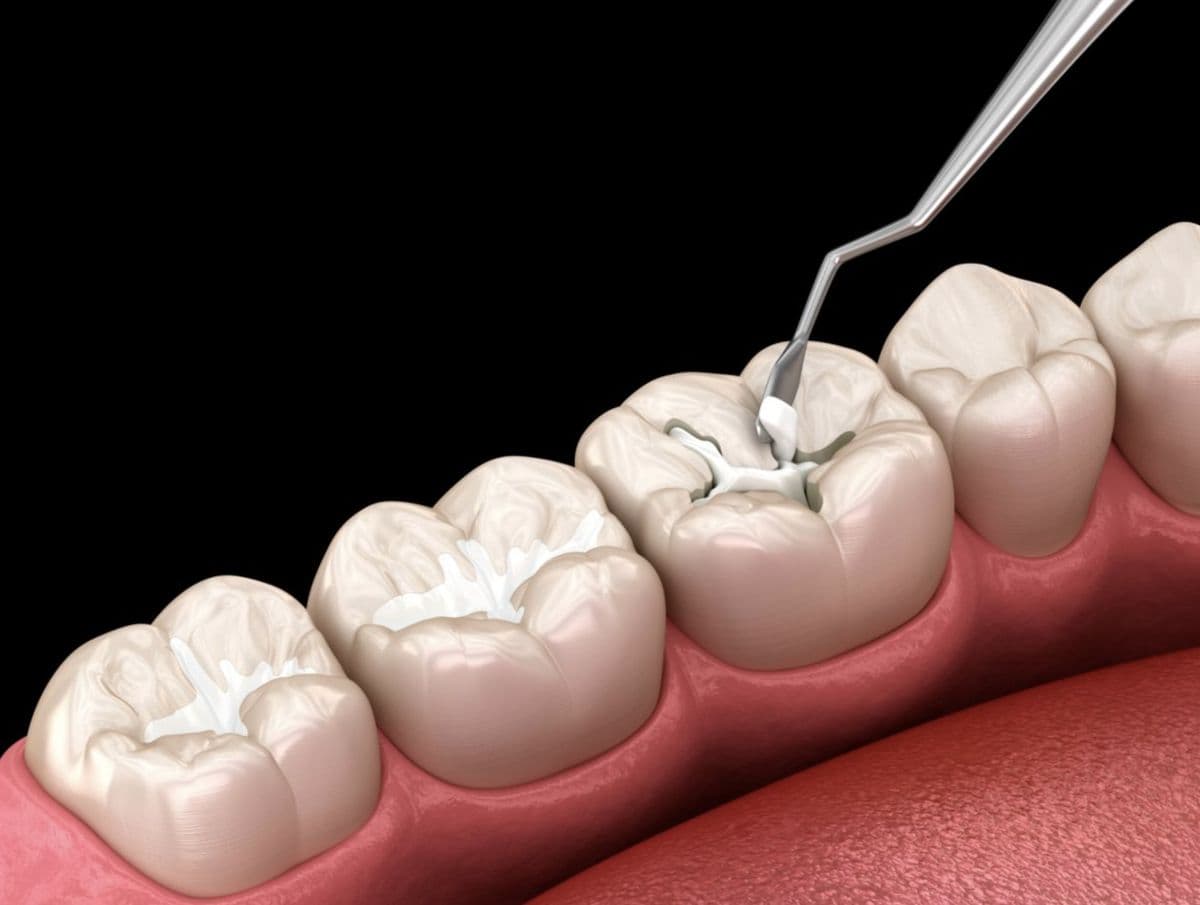
How Long Does It Take to Fill a Cavity?
Many straightforward dental fillings can be completed during a single appointment.
The exact treatment time varies based on:
- the size of the cavity;
- the number of tooth surfaces involved;
- the location of the tooth;
- whether anesthesia is needed;
- the restorative material;
- and whether several cavities are being treated at once.
A small filling is usually simpler than a deep or multi-surface restoration. Rather than relying on a fixed number of minutes, your dentist can estimate appointment length after examining the tooth.
Learn more about tooth-colored dental fillings .
What Happens During a Cavity Filling?
- Evaluation: The dentist confirms the location and extent of decay.
- Anesthesia when needed: The treatment area may be numbed.
- Decay removal: Damaged tooth structure is removed.
- Preparation: The area is prepared for the restorative material.
- Filling placement: Composite or another appropriate material is placed.
- Shaping: The filling is formed to restore tooth anatomy.
- Bite adjustment: The dentist checks that the restoration does not interfere with your bite.
- Polishing: The surface is finished and smoothed.
NIDCR describes fillings as treatment in which decayed tooth tissue is removed and the resulting space is restored with filling material.
What Happens If You Leave a Cavity Untreated?
A true cavity does not disappear on its own.
If decay continues progressing, it may move from enamel into dentin and eventually toward the pulp in the center of the tooth.
Potential consequences include:
- increased sensitivity;
- tooth pain;
- larger loss of tooth structure;
- fracture of weakened enamel;
- need for a larger restoration;
- possible root canal treatment if the pulp becomes significantly involved;
- infection or abscess;
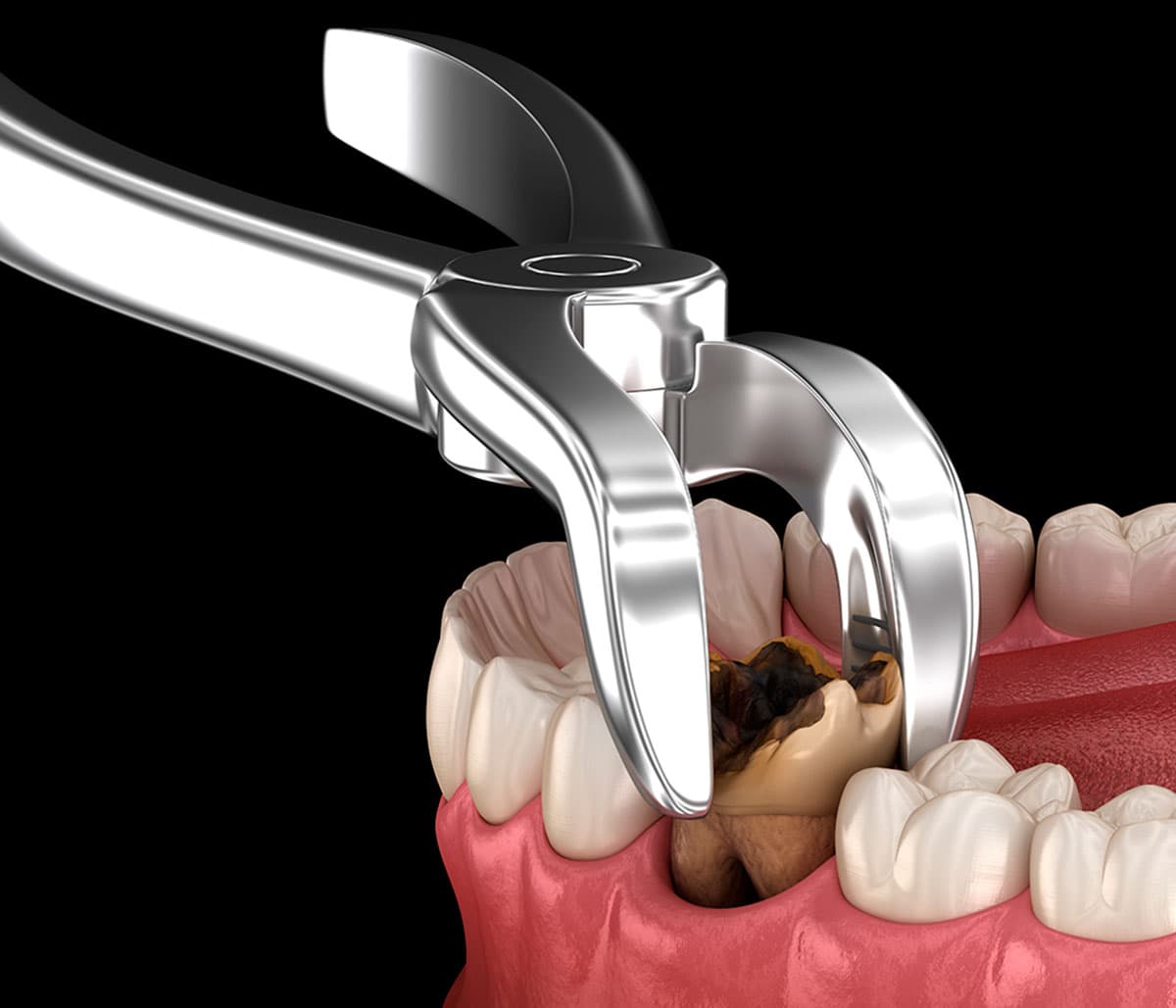
- and, in severe cases, loss of the tooth.
Can You Slow Down Tooth Decay?
Early decay can sometimes be arrested before a physical cavity forms, and reducing cavity risk can help prevent new lesions and slow disease activity.
- Brush twice daily with fluoride toothpaste.
- Clean between teeth regularly.
- Reduce how frequently you consume sugary snacks and drinks.
- Drink fluoridated water where available.
- Address dry mouth if present.
- Attend dental examinations based on your individual risk.
- Ask whether fluoride or sealants are appropriate for you.
NIDCR lists fluoride, daily oral hygiene, limiting sugary foods and drinks, and professional dental care among the main strategies for reducing tooth-decay risk.
When Should You See a Dentist for a Possible Cavity?
Schedule a dental evaluation if you notice:
- new tooth sensitivity;
- pain when chewing;
- a visible hole or dark area;
- a rough area that appears to be getting larger;
- food repeatedly becoming trapped around one tooth;
- persistent toothache;
- or swelling near a tooth.
You do not need to wait for pain before having a suspected cavity checked. Early decay may be symptom-free.
Frequently Asked Questions About How Cavities Form
How long does it take for a cavity to form?
There is no fixed timeline. Tooth decay develops over time, and the speed depends on plaque, diet, fluoride, saliva, tooth location, and individual cavity risk.
Can a cavity form in 3 months?
Decay can progress noticeably over a period of months in some high-risk situations, but three months is not a universal threshold. Cavities develop at different rates.
Can a cavity form in 6 months?
It is possible for decay to develop or progress over six months, but there is no rule that all cavities form within that period. Some lesions progress faster and others more slowly.
How fast do cavities grow?
Growth rate varies significantly. Existing depth, diet, plaque levels, saliva, fluoride exposure, and tooth anatomy all influence progression.
How long does it take for a cavity to reach the nerve?
There is no reliable universal timeframe. The distance from the lesion to the pulp, tooth anatomy, cavity location, and rate of decay all vary between patients and teeth.
Can a cavity stop growing?
Early non-cavitated decay can sometimes be arrested when risk factors are controlled. Once a true hole has formed, the lost tooth structure does not regenerate naturally.
Can brushing get rid of a cavity?
Brushing with fluoride toothpaste can help prevent decay and may support remineralization of very early enamel damage, but it cannot rebuild tooth structure after a physical cavity has formed.
Can you have a cavity without knowing it?
Yes. Early cavities often have no symptoms and may only be found during a dental examination or on X-rays.
Do cavities always hurt?
No. Early decay often causes no pain. Symptoms become more likely as decay progresses deeper into the tooth.
Does a cavity get worse every day?
Decay is a biological process rather than a perfectly steady day-by-day progression. The balance between acid attacks and remineralization changes throughout the day, so progression depends on overall risk and conditions over time.
Cavity Detection and Treatment in Tribeca, NYC
So, how long does it take for a cavity to form? The most accurate answer is that there is no single number of weeks or months. Tooth decay develops over time, and the rate depends on the condition of the tooth and the person's cavity-risk factors.
The earlier decay is identified, the more options may be available. Early mineral loss may sometimes be managed preventively, while a physical cavity usually requires restorative treatment.
At Tribeca Dental Studio, we provide dental examinations, preventive care, cavity detection, and tooth-colored fillings for patients in Tribeca and Lower Manhattan.
Concerned You May Have a Cavity?
Schedule an evaluation to check tooth sensitivity, visible decay, changes seen on X-rays, or other signs of tooth decay.
Book an Appointment