Full-Arch Support with Four Implants
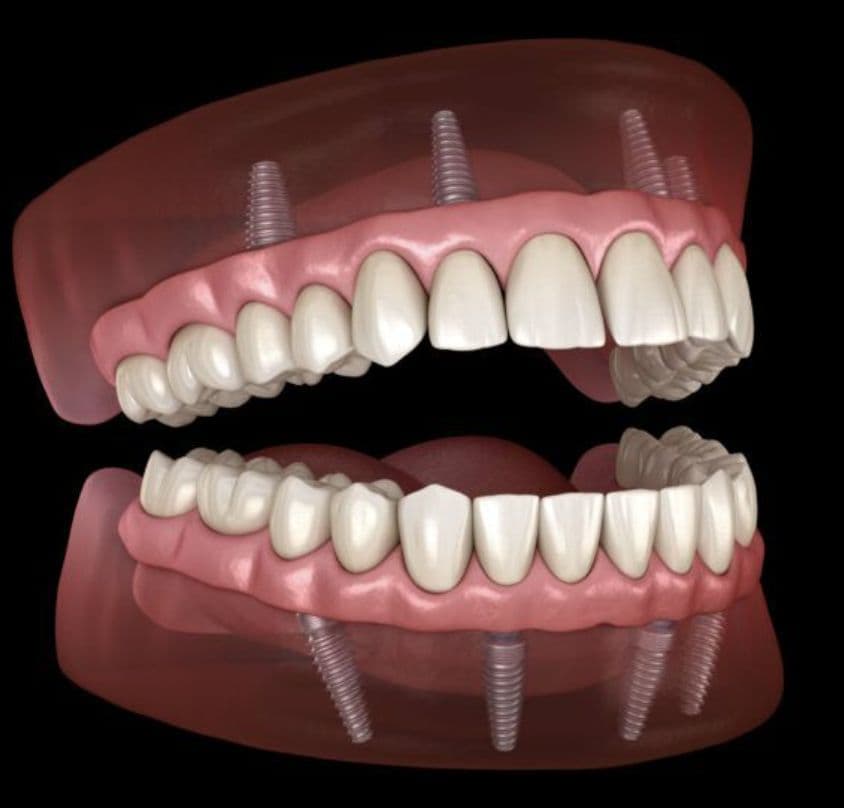
The concept uses two anterior and two posterior implants to support a fixed full-arch prosthesis. Posterior implants may be angled to make better use of available bone.
A fixed full-arch tooth-replacement approach supported by four strategically planned implants. Digital imaging, surgical planning, provisional teeth when clinical criteria are met, and long-term restorative care are coordinated in one treatment pathway.
All-on-4 may be considered for patients missing most or all teeth in one arch, but candidacy and immediate loading must be confirmed after a clinical and 3D evaluation.
The short answer
All-on-4 is a full-arch treatment in which four implants support a fixed bridge — the two back implants may be tilted to make the most of your available bone. In qualifying cases, you leave the same day with a fixed temporary set of teeth. Not everyone qualifies — we’ll know after a full evaluation — but for the right patient, it’s life-changing.
* Same-day fixed provisional teeth are case-dependent and require adequate implant stability and clinical eligibility.
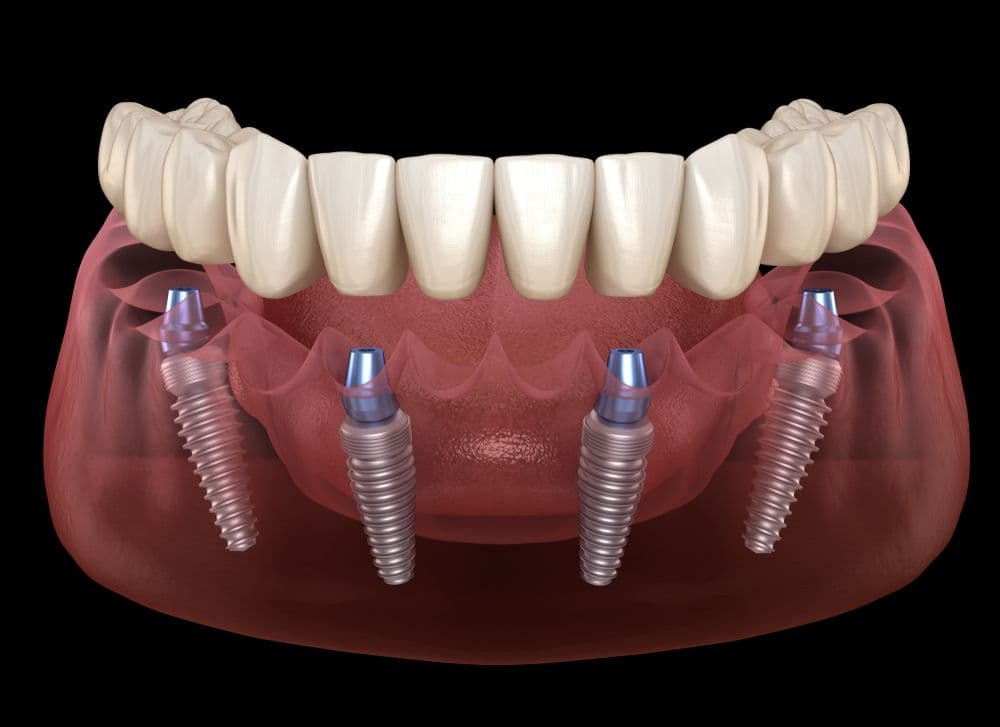
All-on-4® is a full-arch treatment concept designed for patients who need replacement of most or all teeth in the upper or lower jaw. Four implants support a fixed bridge rather than replacing every missing tooth with a separate implant.
The two posterior implants can be angled up to 45 degrees when appropriate. This can help use available anterior bone, extend support toward the back of the arch, and in some cases reduce the need for bone grafting.
A provisional fixed arch may be attached on the day of surgery when adequate primary stability is achieved. The definitive restoration is planned after the healing phase and may differ in material, fit, bite design, and hygiene access.
I'm Dr. Nina Izhaky. All-on-4 starts with an honest evaluation: a consultation and 3D CBCT imaging at our Tribeca office, 54 Warren Street. We look at your bone, gums, bite, and overall health — and we tell you plainly whether All-on-4 fits, or whether something else fits better. A same-day provisional arch is possible in qualifying cases only — we never promise it before the evaluation.
When All-on-4 is right, everything happens under one roof — the same in-house approach behind our implant dentistry in Tribeca, Manhattan, since 2007. Bone grafting and implant placement are planned together by Dr. Sam Morhaim, our board-certified implant specialist, and our prosthodontist restores your final arch on site. No referrals out, no starting over with a new team. In qualifying cases, you wake up with a fixed provisional prosthesis — you never go without teeth.
The value of All-on-4 is not that it is automatically the best option for everyone. Its advantage is that implant position, prosthetic design, and available bone can be coordinated into a streamlined full-arch treatment when the anatomy and clinical conditions support it.
The concept uses two anterior and two posterior implants to support a fixed full-arch prosthesis. Posterior implants may be angled to make better use of available bone.
Strategic implant positioning can sometimes avoid a separate grafting procedure, but this depends on bone anatomy, implant stability, and the treatment plan.
Unlike removable dentures, the restoration is secured to implants. The shape, bite, hygiene access, and final material are planned around the individual patient.
An All-on-4 consultation is an evaluation, not an automatic treatment recommendation. Full-arch planning starts by determining whether remaining teeth should be preserved, whether four implants are appropriate, and whether another restorative approach would better match your anatomy and goals.
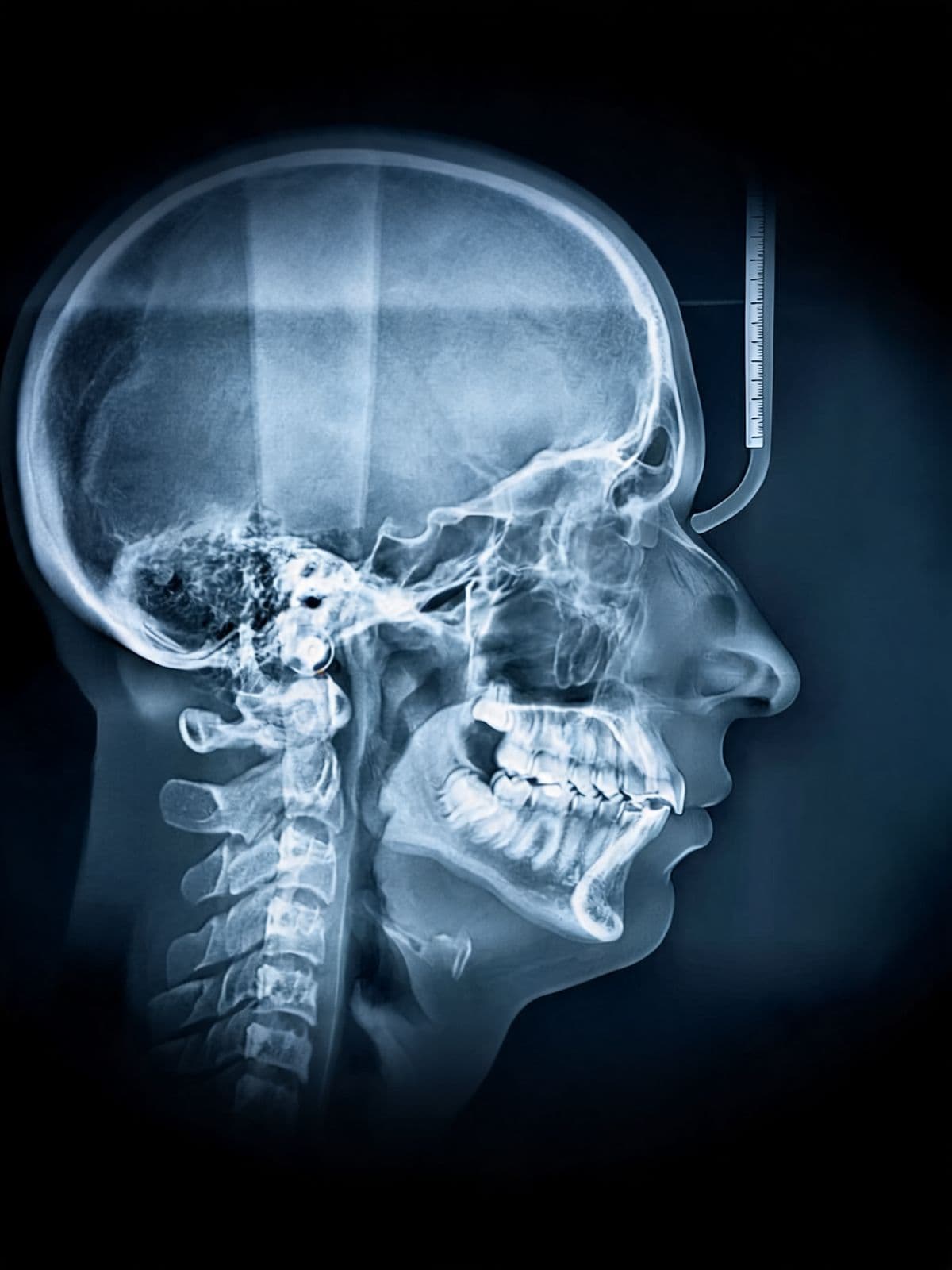
CBCT imaging can help evaluate available bone, sinus position, nerve anatomy, and potential implant trajectories.
Active periodontal disease, inflammation, or infection should be identified and addressed as part of planning.
The team evaluates bite forces, smile line, available restorative space, speech, and the desired final tooth position.
Medications, smoking history, healing risk, and relevant medical conditions are reviewed before surgical treatment is recommended.
A strong full-arch result starts before surgery. Diagnostic planning, prosthetic design, surgical placement, healing, and long-term maintenance all influence the final outcome.
We review your goals, dental history, existing teeth, gum condition, bite, and previous implant or denture experience.
Three-dimensional imaging and digital scans help map anatomy, restorative space, and potential implant positions before surgery.
The plan defines whether teeth need removal, whether grafting is necessary, the implant strategy, provisional restoration, and expected healing sequence.
Four implants are positioned to support the arch. When adequate stability and clinical criteria are met, a fixed provisional restoration may be placed the same day.
During healing, the implants integrate with the surrounding bone. Follow-up visits are used to monitor tissue health, bite, comfort, and hygiene.
After appropriate healing, the final restoration is designed for fit, function, cleansability, speech, and appearance.
Three-dimensional imaging helps the clinical team evaluate bone volume and anatomy at potential implant sites.
Planning considers the relationship between proposed implants and nearby structures such as the maxillary sinus and nerve pathways.
Implant placement is coordinated with the planned tooth position, bite, smile line, restorative space, and hygiene access.
Digital scans can help document the arch and support communication between surgical and restorative planning.
These approaches solve different problems. The right choice depends on anatomy, remaining teeth, health, maintenance ability, restorative goals, and the clinical plan.
| Feature | All-on-4® | Removable Dentures | Conventional Full-Arch Implants |
|---|---|---|---|
| Retention | Fixed to implants | Patient-removable | Fixed to multiple implants |
| Typical Support | Four implants per arch | Gums / palate, sometimes implants | Often more than four implants |
| Bone Grafting | May be avoidable in some cases | Usually not required for a conventional denture | May be needed depending on implant positions |
| Provisional Teeth | Same-day provisional may be possible | Immediate dentures may be possible | Depends on stability and treatment design |
| Daily Cleaning | Brush plus cleaning under the bridge | Remove and clean the denture | Brush plus implant-specific interdental care |
Full-arch implants require healing, follow-up, home hygiene, and professional maintenance. Your exact instructions should come from the treating clinical team because surgery and restorative designs vary.
Follow the post-operative instructions provided for eating, oral hygiene, medications, and activity. Contact the office if symptoms feel unusual or worsen.
The provisional restoration may require bite or fit adjustments while tissues change. Follow-up appointments help monitor healing and implant stability.
Implant-supported full arches still require daily plaque control and professional maintenance. The team can show you how to clean around and beneath the restoration.
Tribeca Dental Studio is located at 54 Warren Street in New York, NY 10007. Patients considering full-arch dental implants can complete evaluation, digital diagnostics, treatment planning, and coordinated restorative care through the practice.
Tribeca Dental Studio54 Warren StreetFor patients with severe bone loss or more complex implant needs, explore the dedicated implant center for additional full-arch and advanced implant information.
These answers provide general educational information. Your diagnosis, treatment sequence, healing time, and suitability for immediate loading require an individual clinical evaluation.
All-on-4 is a full-arch implant treatment concept in which four implants support a fixed prosthetic arch. Two posterior implants may be tilted to improve the use of available bone and reduce cantilever length.
In qualifying cases, a fixed provisional restoration may be delivered on the day of implant placement. Immediate loading depends on implant stability, bone conditions, bite forces, and the surgical plan, so it cannot be promised before evaluation.
No. The angled implant concept can reduce the need for grafting in many full-arch cases, but some patients still need bone augmentation or a different implant strategy based on their anatomy and treatment goals.
It may be considered for people missing most or all teeth in an arch, people with severely compromised teeth, or denture wearers seeking a fixed option. Candidacy depends on oral health, bone anatomy, medical history, hygiene, and restorative goals.
A provisional bridge is designed to protect the surgical plan and provide function during healing. After healing and implant integration, the final restoration can be refined for fit, bite, cleansability, material, and esthetics.
The surgical visit is only one part of the process. Consultation, imaging, planning, surgery, healing, follow-up, and fabrication of the final restoration occur over a longer treatment timeline that varies by patient.
Daily care typically includes brushing the restoration and cleaning beneath the bridge with tools recommended for your design, such as floss threaders, interdental brushes, or an oral irrigator. Professional maintenance remains important.
Low bone volume does not automatically determine one treatment. 3D evaluation can help identify whether standard All-on-4 positioning, grafting, additional implants, or another full-arch approach should be considered.
Failing teeth, denture wearers, bone loss, and full-mouth cases — how each case type is evaluated and planned.
→Full-Arch OptionsCompare fixed and removable full-arch replacement options.
→Digital PlanningLearn how imaging and digital scans support diagnosis and treatment planning.
→Surgical CareExplore oral-surgery care that may be part of a comprehensive implant plan.
→MaintenanceLong-term implant care depends on home hygiene and professional maintenance.
→We welcome All-on-4 patients from across Lower Manhattan. Find your neighborhood below for directions, parking, and local details.
A consultation can clarify whether All-on-4, another full-arch implant design, or a removable option best fits your dental condition and treatment goals.
Book Implant ConsultationEducational content on this page does not replace a dental examination, diagnosis, or individualized treatment plan.