Why Zygomatic Implants Beat Bone Grafting Every Time
May 23, 2026

The Real Zygomatic Implants Pros and Cons — And Why They Usually Win Against Bone Grafting
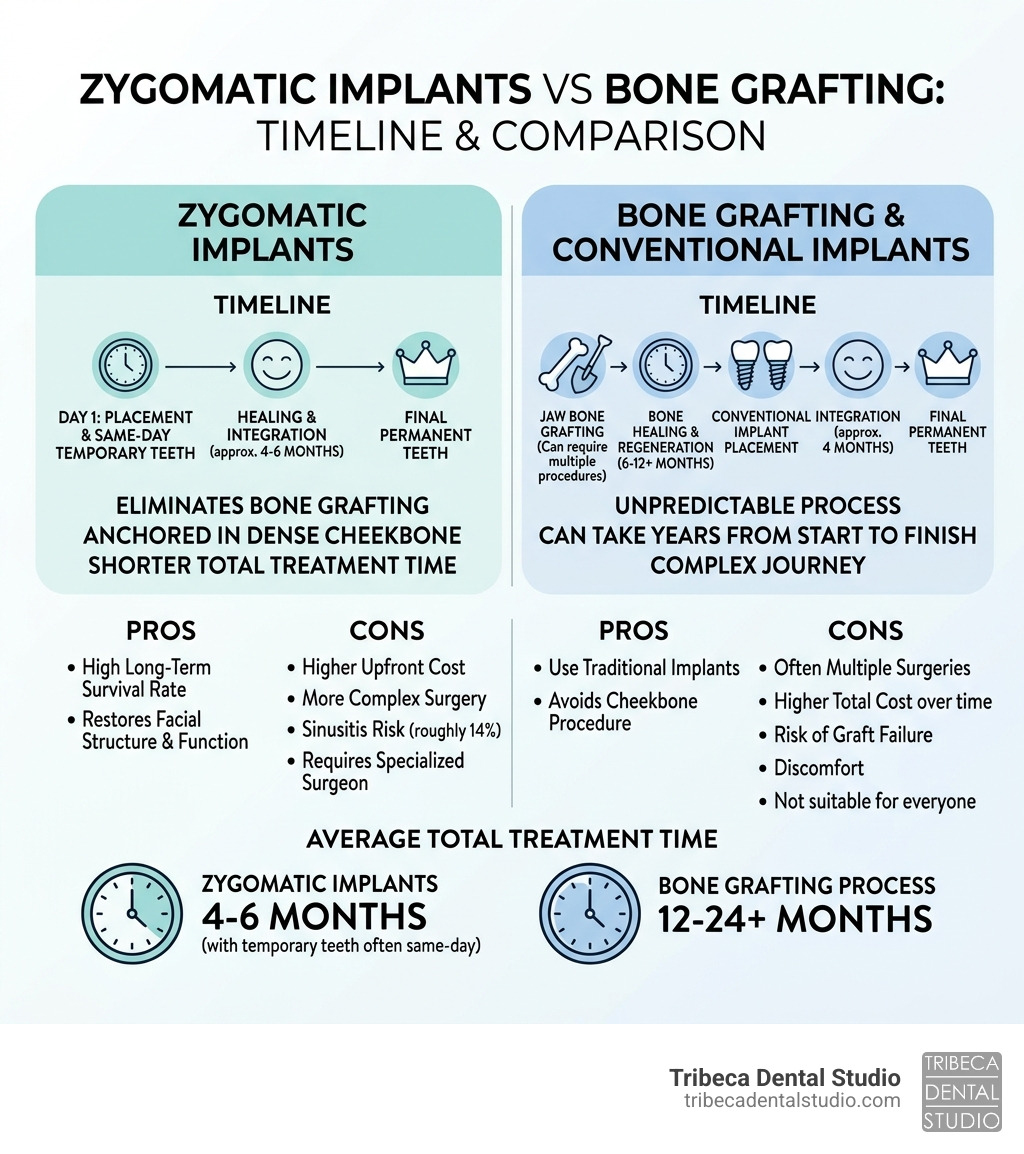
Zygomatic implants pros and cons are worth understanding before you make any decisions about treating severe upper jaw bone loss — so here’s a quick, honest breakdown:
Pros:
- No bone grafting required
- Same-day temporary teeth in many cases
- High long-term survival rate (~96.2% over 6+ years)
- Shorter total treatment time than grafting + conventional implants
- Anchors into dense cheekbone, unaffected by jaw atrophy
- Can restore facial structure and function
Cons:
- More complex surgery than traditional implants
- Higher upfront cost (typically $20,000–$30,000+)
- Sinusitis risk in roughly 14% of cases
- Requires a highly specialized surgeon
- Not suitable for every patient
- Longer initial recovery than standard implants
If you’ve been told you don’t have enough jawbone for regular dental implants, you’ve probably heard two words a lot: bone graft. It sounds straightforward, but the reality is messier. Bone grafting is unpredictable, can take years from start to finish, and doesn’t always work. For many patients, there’s a faster and more reliable path — one that skips the jawbone entirely by anchoring into the dense cheekbone instead.
That solution is zygomatic implants. And in April 2026, the evidence behind them is stronger than ever.
I’m Dr. Nina Izhaky, a graduate of New York University College of Dentistry and the founder of Tribeca Dental Studio, where I help patients navigate complex decisions like the zygomatic implants pros and cons every day. My team and I stay current with the latest evidence-based approaches so you can make confident, informed choices about your care.
Zygomatic implants pros and cons glossary:
Understanding the Mechanics of Zygomatic Implants
To understand why zygomatic implants are such a game-changer, we have to look at the anatomy of the face. Traditional dental implants are like small screws that sit in your alveolar bone—the part of your jaw that holds your teeth. But when you lose teeth, that bone starts to shrink (resorb). If you’ve been missing teeth for a long time or wore dentures for decades, your upper jaw might be as thin as a potato chip.
This is where the zygomatic bone—your cheekbone—comes into play. Unlike the jawbone, the cheekbone does not resorb. It is incredibly dense and provides a rock-solid foundation for dental restoration.
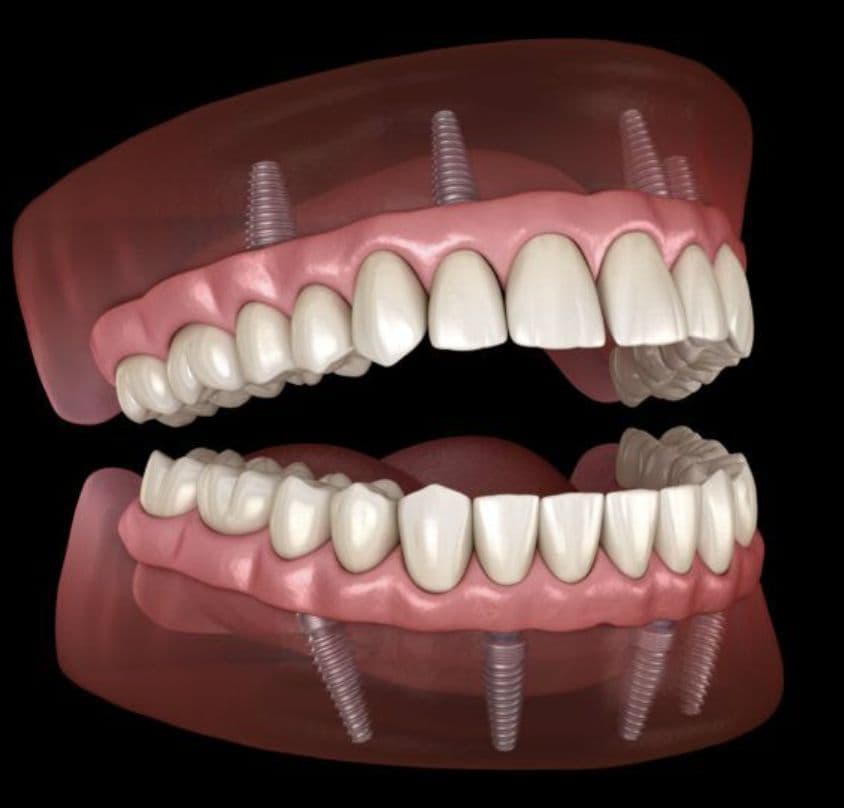
Zygomatic implants are significantly longer than standard implants, typically ranging from 30mm to 62.5mm. Instead of pointing straight up into the jaw, they are placed at an angle, bypassing the areas of bone loss to anchor directly into the sturdy zygomatic arch. According to the Zygomatic Dental Implants Guide 2026, this allows us to provide a stable base for a full set of teeth even in the most “hopeless” cases of bone loss.
As noted in the Indications for zygomatic implants: a systematic review, these implants are specifically designed for the “atrophic maxilla”—a fancy medical term for a severely shrunken upper jaw. By utilizing the cortical bone density of the cheekbone, we can often bypass the maxillary sinus entirely or use an “extra-sinus” approach, which helps keep your sinuses healthy while giving you a brand-new smile.
Evaluating Zygomatic Implants Pros and Cons for Severe Bone Loss
When we sit down with our patients in Tribeca, the conversation usually boils down to a choice: do we spend a year or more trying to “build” new bone through grafting, or do we use the strong bone you already have in your cheeks?
Here is a quick look at how these two paths compare:
| Feature | Traditional Bone Grafting | Zygomatic Implants |
|---|---|---|
| Total Treatment Time | 9–18 months | 4–6 months |
| Number of Surgeries | Usually 2–3 | Usually 1 |
| Teeth “Day of” | Rarely possible | Often possible (Immediate Loading) |
| Success Rate | Variable (depends on graft take) | ~96.2% to 98% |
| Complexity | Moderate | High (Requires Specialist) |
| Invasiveness | High (Harvesting/Placing bone) | High (Anchoring in cheekbone) |
At Zygomatic Implants At Tribeca Dental Studio, we focus on the efficiency and predictability of the graftless approach. While the surgery itself is more sophisticated, the “win” for the patient is often a much faster return to eating, speaking, and smiling with confidence.
The Major Advantages of Zygomatic Implants Pros and Cons
The “Pro” list for zygomatic implants is impressive, especially if you value your time and want to avoid the uncertainty of bone grafts.
- Immediate Functional Loading: This is the big one. Because the cheekbone is so dense, we can often achieve “primary stability” immediately. This means we can attach a temporary set of fixed teeth on the same day as your surgery. You walk in with a missing smile and walk out with teeth that don’t come out at night.
- No Sinus Lifts Required: Traditional implants in the back of the upper jaw often require a sinus lift—a procedure where the sinus membrane is pushed up and bone is packed underneath. Zygomatic implants simply bypass this area.
- Facial Structure Restoration: Severe bone loss can lead to a “collapsed” facial appearance where the mouth looks sunken. By providing a fixed bridge, zygomatic implants help support the lips and cheeks, restoring a more youthful facial contour.
- High Predictability: The ITI consensus report on zygomatic implants: indications, evaluation of surgical techniques and long-term treatment outcomes highlights that these implants have survival rates comparable to—and sometimes exceeding—traditional implants in healthy bone.
Potential Risks and Zygomatic Implants Pros and Cons to Consider
We believe in total transparency. While we love this procedure for its life-changing results, it isn’t without risks.
- Sinusitis: This is the most common complication, affecting roughly 14.2% of patients according to long-term studies. Because the implants reside near or through the sinus cavity, inflammation can occur. Modern “anatomy-guided” techniques have reduced this risk significantly, but it remains a factor we monitor closely.
- Surgical Complexity: This is not a “standard” dental procedure. It requires an intimate knowledge of mid-facial anatomy. If placed incorrectly, there are risks of nerve paresthesia (numbness) or, in very rare cases, orbital (eye socket) involvement. This is why choosing a specialist is non-negotiable.
- Invasiveness and Recovery: You should expect more bruising and swelling than you would with a single standard implant. The first 72 hours usually involve significant “chipmunk cheeks” and some discomfort, though most patients find it manageable with prescribed medication.
- Cost: There’s no sugar-coating it—the upfront cost is higher. However, when you factor in the cost of multiple bone grafting surgeries, sinus lifts, and the months of lost time, many of our NYC patients find that zygomatic implants offer the best return on investment. You can read more about managing these risks at Zygomatic Dental Implants Complications.
Recovery Timeline and Long-Term Success Statistics
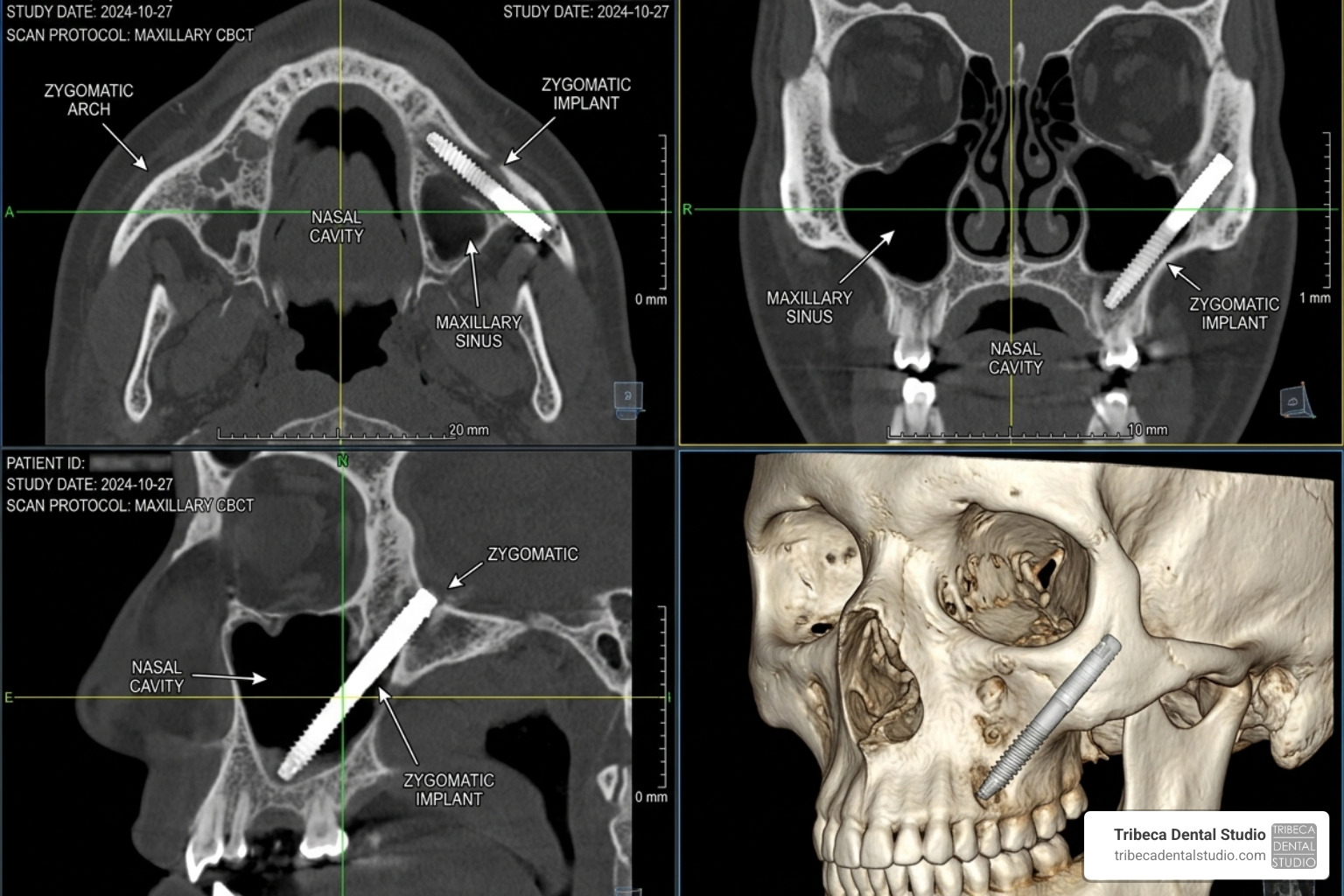
What does life look like after the procedure? At Tribeca Dental Studio, we walk you through every step.
The First Week: Most of the “heavy lifting” of recovery happens in the first 5 to 7 days. You will experience swelling and likely some bruising around the cheeks and even under the eyes. This is normal! We recommend cold compresses for the first 48 hours, followed by warm compresses to help the bruising fade.
The First Month: You’ll be on a soft-food diet. Think mashed potatoes, smoothies, and soft pasta. Even though your new teeth feel strong, the bone is still “knitting” to the implant—a process called osseointegration. As we explain in our guide on Dental Implants For Severe Bone Loss In Tribeca Zygomatic Bone Grafting Solutions, protecting the implants during this phase is crucial for long-term success.
Long-Term Success: The statistics are very reassuring. Research shows a 96.2% mean survival rate over a follow-up period of more than six years. Some studies even show success rates as high as 98% when immediate loading protocols are used.
To keep those stats high, maintenance is key. You can’t get cavities in an implant, but you can get gum disease around it (peri-implantitis). Regular check-ups in our Tribeca office and diligent home care will ensure your investment lasts a lifetime.
Frequently Asked Questions about Zygomatic Implants
We hear a lot of the same questions from our Manhattan neighbors. Here are the facts.
Am I a candidate if I was told I have “no bone” for implants?
Yes! In fact, you are the ideal candidate. Zygomatic implants were specifically invented for people who were told they weren’t candidates for traditional dentistry. Whether your bone loss is from long-term denture use, periodontal disease, or trauma, the cheekbone provides a “Plan B” that almost always works. We often compare these to Zygomatic Vs Pterygoid Unpacking Advanced Dental Implant Options to find the best fit for your specific anatomy.
How does the cost of zygomatic implants compare to traditional methods?
While a single zygomatic implant is more expensive than a standard one, the “total case cost” is often comparable when you look at the big picture. Traditional methods for severe bone loss require:
- Bone graft surgery (and materials)
- Sinus lift surgery
- 6–9 months of healing time
- Multiple sets of temporary dentures
- Final implant placement
Zygomatic implants condense most of this into a single surgical event. In NYC, a full-arch restoration with zygomatic implants typically starts around $25,000, but we provide a detailed, personalized quote during your consultation.
Is the recovery more painful than standard dental implant surgery?
Surprisingly, many patients say no. While there is more swelling and bruising because we are working near the cheekbones, the actual pain levels are quite manageable. Because we avoid the “cutting and sewing” involved in large-scale bone grafting, the healing can actually feel “cleaner” to many patients. Most of our patients are back to work (perhaps with a little makeup to cover a bruise) within 4 to 5 days.
Conclusion
At Tribeca Dental Studio, we don’t believe in “one size fits all” dentistry. We know that the decision to undergo zygomatic implant surgery is a big one. Our goal is to treat you like family, providing a warm, welcoming environment right here in the heart of NYC where you can get the advanced care you need.
Led by Dr. Nina Izhaky, our team combines surgical precision with a personalized touch. We’ve seen how zygomatic implants can take someone from the frustration of slipping dentures to the joy of biting into an apple again in just a matter of months—not years.
If you’re tired of being told “no” because of bone loss, it’s time to explore a different perspective. We invite you to Schedule your consultation for Zygomatic Implants with us today. Let’s see if this life-changing technology is the right move for your smile.