No More Ouch! Discovering the World of Painless Dental Filling Procedures
December 26, 2025
Why Painless Dental Filling is Changing How You Think About Dentistry
Painless dental filling has transformed what was once a dreaded dental appointment into a comfortable, anxiety-free experience. If you’re looking for a filling without the fear, here’s what modern dentistry offers:
Quick Answer: Modern Painless Filling Options
- Laser Dentistry – Removes decay using water and light energy instead of traditional drills, often requiring little to no anesthesia
- Computer-Controlled Anesthesia – Systems like The Wand deliver numbing medication slowly and steadily, eliminating the painful “pinch” of traditional injections
- Sedation Options – From nitrous oxide to oral sedation, multiple choices help anxious patients relax completely
- Advanced Materials – Tooth-colored composite and ceramic fillings bond directly to your tooth, requiring less drilling than older amalgam fillings
Many people still put off dental care because they fear the drill, the needle, or the pain. That’s completely understandable—for decades, getting a cavity filled was uncomfortable. The vibration of high-speed drills, the burning sensation of anesthetic injections, and the anxiety of sitting in that chair made dental fillings something to dread.
But modern dentistry has evolved dramatically. Today’s techniques and technologies have made the experience so different that many patients are genuinely surprised. Research shows that innovations like laser dentistry and computer-controlled anesthesia delivery have made procedures virtually painless. In fact, many patients report that with these new techniques, they experience significantly less discomfort than they ever imagined possible.
Untreated cavities remain one of the most widespread medical conditions globally, affecting a large portion of adults. Yet dental anxiety keeps many people from seeking the care they need. The good news? You no longer have to choose between your comfort and your oral health.
As Dr. Nina Izhaky, I’ve dedicated my practice to combining state-of-the-art technology with compassionate care to make painless dental filling procedures the standard, not the exception. At Tribeca Dental Studio, we’ve invested in the latest innovations—from laser systems to mercury-free, biocompatible materials—to ensure every patient experiences gentle, effective care in our modern, welcoming space.
Understanding Dental Fillings: From Necessity to Modern Comfort
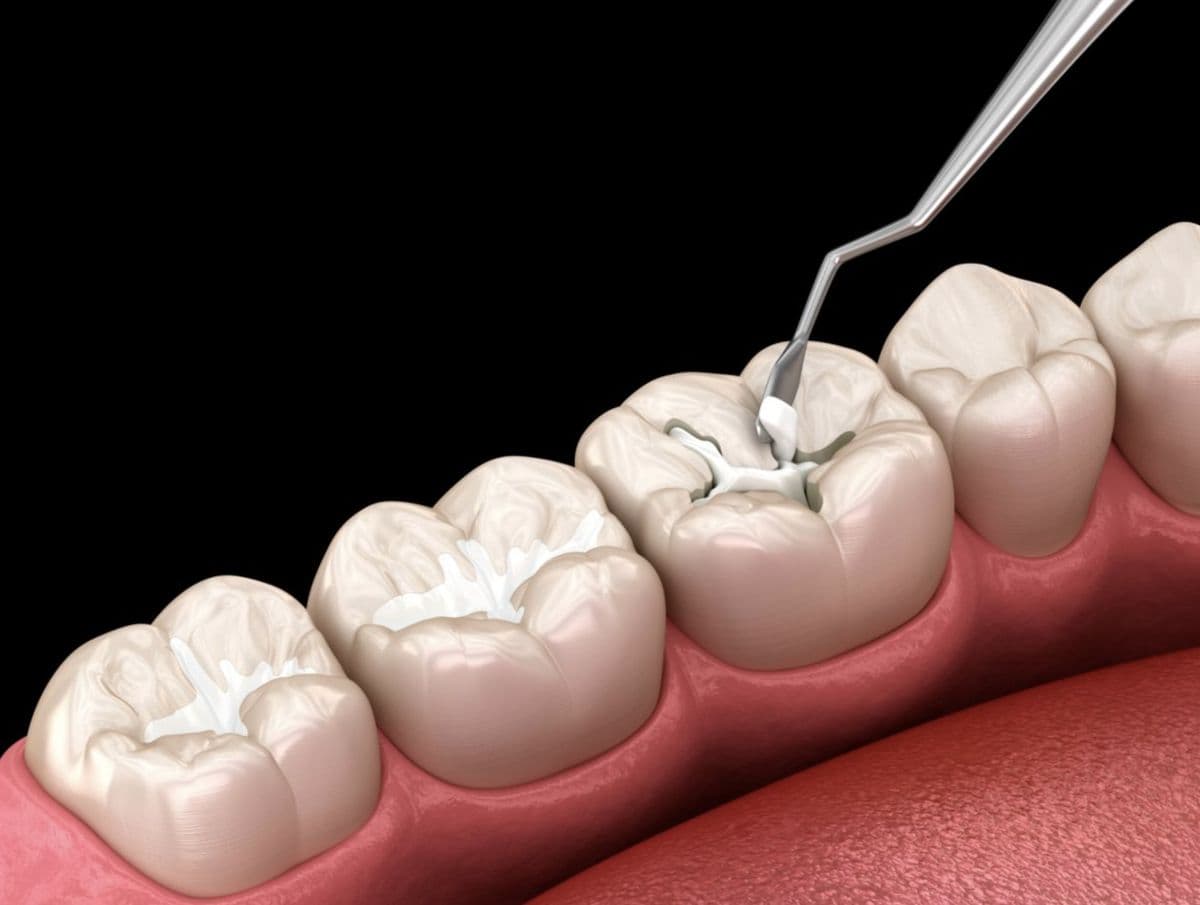
Dental fillings are a cornerstone of restorative dentistry, designed to repair teeth damaged by decay. Think of them as tiny, custom-made patches that restore the strength, function, and aesthetics of your tooth. Cavities, also known as dental caries, are areas of your tooth enamel that have been damaged by plaque and bacteria. If left unaddressed, this decay can progress into the deeper layers of the tooth, triggering pain, increased sensitivity, and even infection. That’s where fillings come in: we remove the decayed part of the tooth, clean the area thoroughly, and then fill the cleaned-out cavity with a restorative material.
Historically, getting a filling was often synonymous with discomfort. The whirring sound and vibration of the dental drill, combined with the brief sting of the anesthesia injection, could be enough to make even the bravest among us a little apprehensive. Thankfully, modern filling techniques have revolutionized this experience, focusing on patient comfort and minimal invasiveness.
What are dental fillings? We also offer More info about Restorative Dentistry services on our website.
The Old Way vs. The New Way
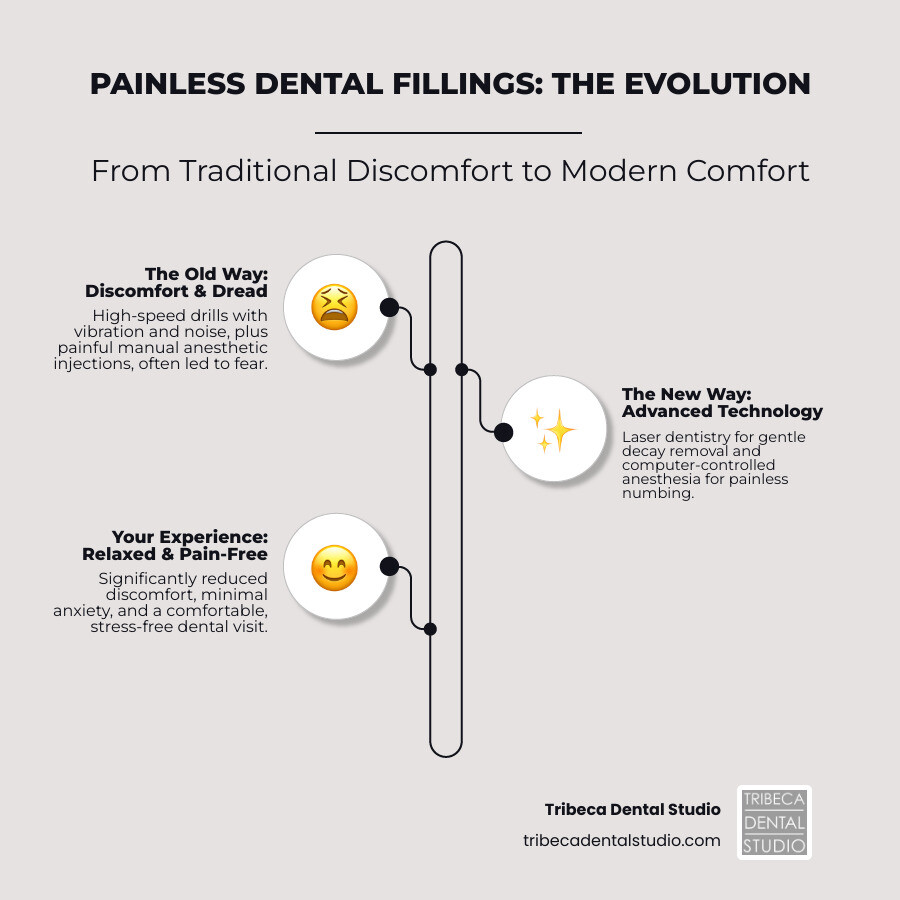
The difference between traditional and modern dental fillings, especially regarding pain and patient experience, is like night and day.
The Old Way:
- Pain from Drilling: Traditional drills cause vibrations and heat, which can lead to significant discomfort and sensitivity. The high-pitched noise alone was often enough to trigger anxiety.
- Anxiety from Needles: The local anesthesia injection, while necessary, could cause a brief sting or burning sensation, making the initial step of the procedure a source of dread for many.
- Overall Experience: For many, the process was a tense, uncomfortable ordeal.
The New Way:
- Minimal Discomfort: Modern techniques, particularly with advancements like laser dentistry, significantly reduce or even eliminate the need for traditional drills. When drills are used, they are often quieter and more efficient.
- Quiet Procedures: Laser treatments work without the unsettling sounds and vibrations of a drill, creating a much calmer atmosphere.
- Gentle Anesthesia: Computer-controlled anesthesia delivery systems ensure a virtually painless numbing process, minimizing the “pinch” of the needle.
- Overall Experience: Our goal is a gentle, stress-free experience. Many patients are genuinely surprised by how comfortable a modern painless dental filling procedure can be.
Why You Can’t Afford to Delay Treatment
While the thought of a dental procedure might still make you a little nervous (it’s okay, we understand!), delaying treatment for a cavity can lead to much bigger problems down the road. Untreated cavities are among the most widespread medical conditions globally, and their consequences can be severe:
- Cavity Progression: Decay doesn’t stop. It will continue to eat away at your tooth, growing larger and deeper.
- Risk of Infection: As decay reaches the inner pulp of the tooth, it can cause a painful infection, potentially leading to an abscess.
- Root Canals: If the decay becomes too extensive and infects the tooth’s pulp, a root canal may be necessary to save the tooth. This is a more complex and time-consuming procedure than a simple filling.
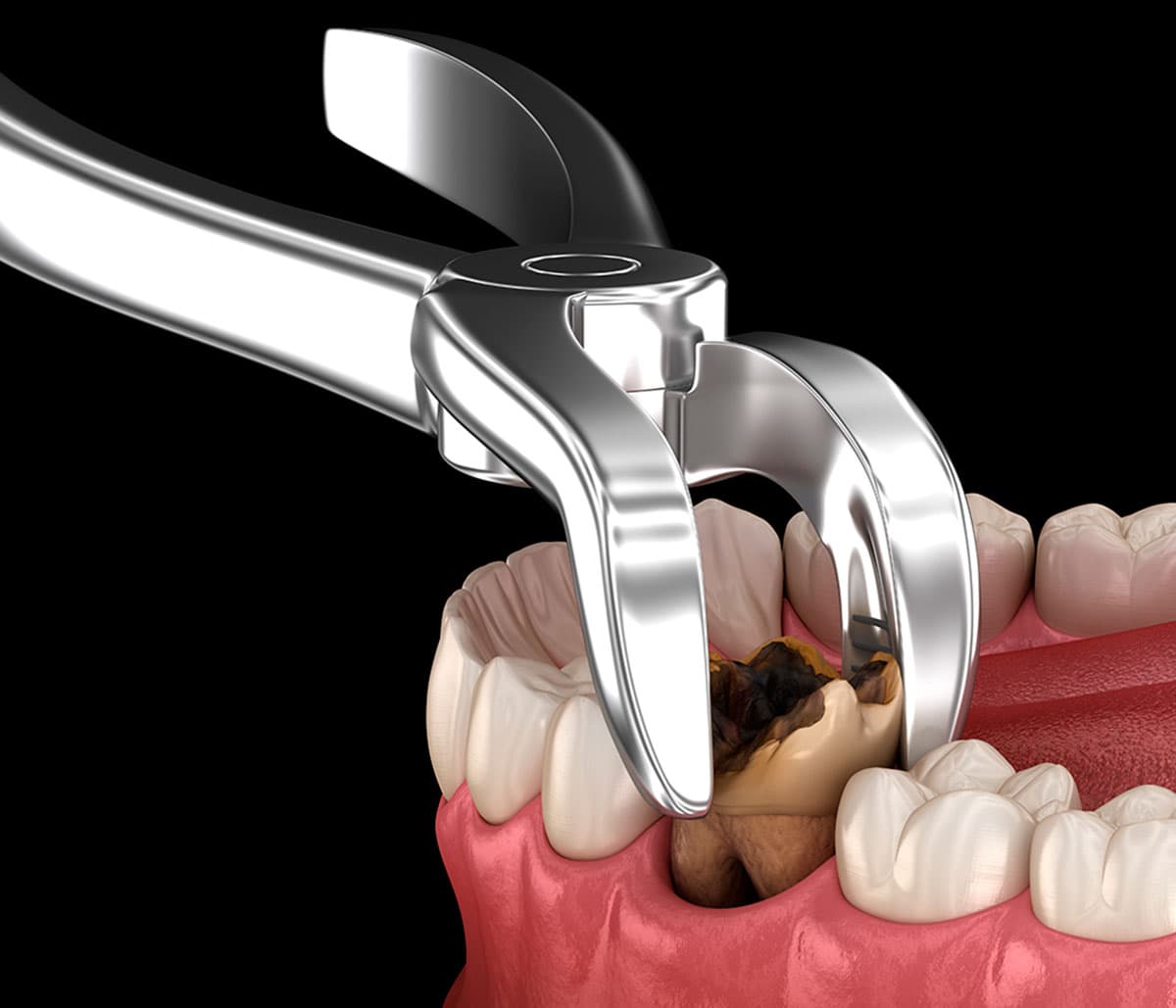
- Tooth Extraction: In the worst-case scenario, if the tooth is too damaged to be saved, it may need to be extracted, leading to further complications like shifting teeth or the need for a dental implant or bridge.
- Increased Cost and Complexity: Timely cavity care protects your tooth’s structure, alleviates pain, and helps maintain long-term oral health. You also reduce the risk of more complicated, costly treatments down the road.
Early detection and treatment are key. Don’t let dental anxiety prevent you from getting the care you need. Modern dentistry is here to make your experience as comfortable as possible.
The Technology Behind a Truly Painless Dental Filling
We believe that dental care should be a comfortable and stress-free experience. That’s why we’ve acceptd advanced dental technology, focusing on minimally invasive dentistry and patient-centric innovations here at Tribeca Dental Studio. We’re always looking for ways to make your visit smoother, calmer, and more positive.
You can find More info about Leading Edge Technology on our website.
Laser Dentistry: Drill-Free and Gentle Decay Removal
Imagine having a cavity treated without the dreaded drill. With laser dentistry, this isn’t science fiction; it’s a reality for many of our patients. Lasers represent an innovative avenue for cavity treatment, working to remove decayed tooth structure without some of the more unsettling sensations or noises associated with traditional drills.
How does it work? Laser dentistry uses a combination of water and light (laser) energy to precisely remove decayed tissue. This innovative approach offers several benefits:
- No Drill Vibration: The laser works gently, eliminating the uncomfortable vibration and pressure of a traditional drill.
- Reduced Need for Anesthesia: Because the laser keeps the tooth hydrated and cool throughout the procedure, many patients require less, or even no, local anesthetic for minor to moderate cavities. This means less “numb jaw” post-appointment!
- Precision Decay Removal: Laser technology allows for incredibly precise targeting of only the affected areas, preserving more of your healthy tooth structure.
- Gentle and Quiet: The absence of the traditional drill sound creates a much more relaxed environment, especially beneficial for those with dental anxiety.
Lasers have been safely used in medical procedures for many years by dermatologists, ophthalmologists, and surgeons. Laser dentistry is a new and innovative application in the dental field, even safely used in pediatric dentistry. You can learn more about Lasers in pediatric dentistry.
Computer-Controlled Anesthesia: Numb Without the Pinch
For some, the most daunting part of a dental visit isn’t the drilling itself, but the injection to numb the area. We get it! The brief sting and burning sensation of a traditional shot can be quite unpleasant. That’s why we use computer-controlled anesthesia delivery systems, often referred to as “The Wand.”
This system administers anesthetic solution slowly and steadily, at a consistent pressure that the body can readily accept. The result? A virtually painless numbing process that minimizes the sting of traditional injections. Patients often report that the experience is so gentle, they barely feel a thing!
Benefits of computer-controlled anesthesia include:
- Minimizing Injection Sting: The slow, steady flow of anesthetic completely bypasses the burning sensation often associated with rapid injection.
- Precise Numbing: The system allows for more targeted numbing, often limiting the anesthetic effect to just the tooth being treated, rather than your entire cheek or lip.
- Reduced Patient Anxiety: Knowing that the injection will be comfortable can significantly reduce pre-procedure anxiety.
- Faster Anesthetic Onset: The controlled delivery can sometimes lead to quicker onset of numbness.
Anesthesia and Sedation Options for a Stress-Free Visit
Beyond advanced technology, we offer a range of options to ensure your comfort and manage any dental phobia you might have. Our goal is to make every painless dental filling procedure as relaxing as possible.
- Topical Anesthetics: Before any injection, we apply a topical numbing gel to the gum tissue. This ensures that even the entry point of the needle is desensitized, further reducing discomfort during the anesthesia process.
- Local Anesthesia: This is the standard for numbing the area around the affected tooth, blocking pain signals during the procedure. With computer-controlled delivery, this is now a much more comfortable experience.
- Nitrous Oxide (Laughing Gas): For those who need a little extra help relaxing, nitrous oxide is an excellent option. It’s inhaled through a small mask and provides a feeling of calm and detachment. It wears off quickly, allowing you to drive yourself home after your appointment.
- Oral Sedation: For patients with significant dental anxiety, we can prescribe an oral medication to be taken before your appointment. This helps you feel deeply relaxed and often leads to little to no memory of the procedure. If you choose oral sedation, you’ll need someone to drive you to and from your appointment.
We encourage you to discuss your oral health history, comfort preferences, and any anxieties with us. We’ll work together to determine the most appropriate anesthesia or sedation approach for your needs, ensuring a truly More info about Pain-Free Dentistry services experience.
More Than Just Pain-Free: Choosing the Right Filling for You
Once we’ve ensured your comfort, the next step is selecting the best material for your filling. Modern dentistry offers a variety of options, each with unique benefits regarding aesthetics, durability, and biocompatibility. Our practice focuses on natural, durable, and aesthetic restorations, prioritizing materials that integrate seamlessly with your oral health and smile.
| Filling Material | Aesthetics | Durability | Longevity (Years) | Cost |
|---|---|---|---|---|
| Composite Resin | Excellent (tooth-colored, blends naturally) | Good (bonds to tooth structure) | 7-10 | Moderate |
| Porcelain (Ceramic) | Excellent (stain-resistant, mimics enamel) | Very Good (hard, strong) | 10+ | High |
| Gold | Poor (metallic, visible) | Excellent (resists corrosion, wear) | Several Decades | Very High |
| Glass Ionomer | Good (tooth-colored, less aesthetic than composite) | Fair (less durable) | 5 | Moderate |
For more information on choosing the right filling material, you can refer to How to choose the right filling material.
A Guide to Modern Filling Materials
Here at Tribeca Dental Studio, we prioritize materials that are not only durable but also aesthetically pleasing and biocompatible. While amalgam (silver) fillings have been used for decades and are inexpensive and durable (lasting more than a decade), we often recommend alternatives due to their mercury content and metallic appearance. Our focus is on materials that offer both health benefits and a natural-looking smile.
- Composite Resin Fillings: These are the most popular choice for a painless dental filling today. Made from a blend of resin particles, glass, and quartz, composite fillings are tooth-colored and can be perfectly matched to your natural enamel. They bond directly to the tooth structure, requiring less drilling and helping to strengthen the tooth. While they may last around seven to ten years, their superior aesthetics make them ideal for visible areas. They can stain over time, similar to natural teeth, but are a fantastic option for a seamless smile.
- Porcelain (Ceramic) Inlays and Onlays: Often referred to as ceramic restorations, these are custom-made in a dental lab to fit precisely into your tooth. Porcelain fillings are prized for looking nearly identical to natural enamel and are highly resistant to stains. They are incredibly durable and tend to last a decade or more when well-maintained. While their cost may be greater than other options, many patients choose porcelain when aesthetics and longevity are paramount.
- Gold Fillings: Gold fillings are known for their exceptional durability, often lasting several decades with mindful care. They resist corrosion and maintain their integrity even under the stress of continuous biting. While they are very strong and biocompatible, their metallic appearance means they are typically chosen for less visible back teeth. They are also among the most expensive options and require multiple visits as they are fabricated in a lab.
- Glass Ionomer: These fillings are made from acrylic acids and fine-glass powders. They can blend in with teeth and have the unique benefit of releasing fluoride, which helps prevent further decay. However, glass ionomer fillings are less durable than other types and may need to be replaced in as little as five years, making them generally unsuitable for areas with high chewing forces. We might recommend them for cavities near the gum line or in children’s teeth.
To learn more about your options, explore our More info about Tooth-Colored Fillings and More info about Dental Inlays and Onlays services.
The Added Benefits of Modern Techniques
The advancements in dental fillings extend far beyond just pain reduction. Modern techniques offer a host of benefits that contribute to better oral health and a more satisfying patient experience:
- Superior Aesthetics: With tooth-colored composite and porcelain materials, we can create fillings that are virtually indistinguishable from your natural teeth. This means no more dark spots in your smile!
- Faster Recovery Time: Less invasive procedures, especially with laser dentistry, often result in less tissue trauma, leading to quicker healing and a faster return to normal activities.
- Less Post-Procedure Sensitivity: By preserving more healthy tooth structure and using materials that bond seamlessly, modern fillings often lead to less sensitivity to hot and cold after the procedure compared to older methods.
- Strengthening the Tooth Structure: Composite fillings, for example, bond directly to the tooth, helping to reinforce its structure rather than just filling a hole.
- Long-Lasting Results: While longevity varies by material, modern fillings are designed for durability, providing strong, reliable restorations that can last for many years with proper care.
Your Step-by-Step Guide to a Comfortable Filling Experience
We believe that patient empowerment begins with clear communication. Understanding each step of your painless dental filling procedure can significantly reduce anxiety and ensure a comfortable experience. Our team here in Tribeca, NYC, is dedicated to walking you through the entire process, from preparation to aftercare.
How to Prepare for a Painless Dental Filling
A little preparation can go a long way in ensuring your dental filling experience is as comfortable as possible. Here are our top tips:
- Discuss Your Concerns with Your Dentist: Don’t hesitate to share any anxieties or questions you have with Dr. Izhaky or our team. We’re here to listen and address your specific needs.
- Ask About Technology and Sedation: Inquire about the technologies we use, like laser dentistry or computer-controlled anesthesia, and discuss sedation options if you’re particularly nervous. We’ll help you choose what’s best for you.
- Pre-Appointment Tips: Try to get a good night’s sleep before your appointment. Avoid caffeine if it makes you jittery, and have a light meal if you’re not opting for sedation that requires fasting.
- Managing Anxiety: We find that clear communication and a comprehensive understanding of the process can go a long way in easing anxiety. Our modern dental techniques ensure fillings can be virtually painless.
The Procedure: What to Expect Step-by-Step
A single filling generally takes less than an hour to complete, though the exact time depends on the size and location of the cavity, as well as the material chosen. Here’s what you can expect:
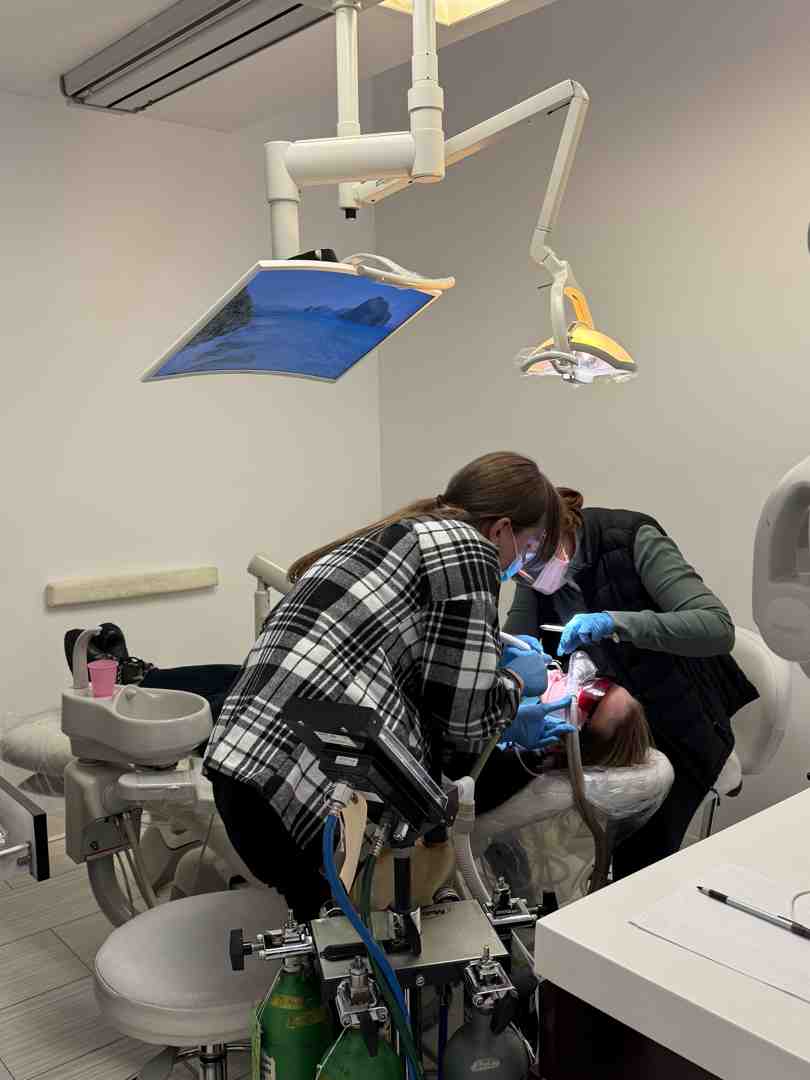
- Consultation and Numbing: We’ll start with a brief discussion to ensure you’re comfortable. Then, we’ll apply a topical anesthetic to gently numb the gum before administering local anesthesia using our computer-controlled system. You might feel a little pressure, but it should be virtually painless.
- Gentle Decay Removal: Once the area is numb, we’ll carefully remove the decayed tooth material. Depending on the cavity, we might use a traditional drill (which is much quieter and more efficient than older models) or, in suitable cases, laser technology for a drill-free experience. You may feel some pressure or vibration, but no pain.
- Tooth Preparation: After the decay is removed, the tooth is prepared for the filling. This might involve shaping the cavity or applying a bonding agent to ensure the filling adheres securely.
- Layering and Curing the Filling Material: For composite fillings, the material is placed in thin layers. Each layer is then hardened using a special curing light for about 20 seconds. This layering process helps ensure a strong, durable, and natural-looking restoration. For other materials like gold or porcelain inlays/onlays, this step might involve placing a temporary filling while your custom restoration is fabricated in a lab, requiring a follow-up visit.
- Polishing and Bite Check: Once the filling is in place, we’ll carefully shape and polish it to ensure a smooth surface and a comfortable bite. We’ll have you bite down to check the alignment and make any necessary adjustments.
Aftercare and Preventing Future Cavities
After your painless dental filling, a little care goes a long way in ensuring comfort and preventing future issues.
- Managing Temporary Sensitivity: It’s normal to experience mild tooth sensitivity or soreness for a day or two after a filling, especially as the anesthesia wears off. This discomfort seldom lasts more than a week. If your bite continues to feel uneven, or if you experience sharp pain over time, please contact us immediately. Over-the-counter pain relievers, as recommended by us, can help manage any initial discomfort.
- Best Practices for Oral Hygiene: Treat your filled tooth just like your natural teeth! Brush at least twice a day with fluoride toothpaste and floss daily to keep the area clean and prevent new decay.
- Regular Checkups: Preventive practices are your best friend! Scheduling a dental hygiene appointment at least twice a year is an excellent way to reduce the risk of new cavities. We’ll monitor your fillings and overall oral health.
- The Role of Diet: Limiting the intake of sugary or acidic foods and drinks can significantly reduce your risk of developing new cavities. Your diet plays a huge role in maintaining your oral health.
For more detailed guidance on maintaining your oral health, please visit our More info about Preventive Dentistry page.
The Future of Restorative Dentistry
The journey towards truly painless dental filling procedures is constantly evolving. The field of restorative dentistry is buzzing with innovations that promise even less invasive, more effective, and longer-lasting solutions. We’re excited about developments in:
- Regenerative Fillings: Imagine a filling that helps your tooth heal itself! Researchers are exploring materials that can stimulate the natural growth of dentin, potentially leading to fillings that can repair damaged teeth from within.
- Smarter Materials: New materials are constantly being developed that offer improved durability, better aesthetics, and improved biocompatibility. We’re seeing advancements in composites and ceramics that are stronger and more natural-looking than ever before.
- AI-Powered Diagnostics: Artificial intelligence is beginning to assist dentists in early and precise cavity detection, helping us identify issues even before they become visible to the human eye. This means smaller, easier, and even more painless treatments.
- Nanotechnology: The application of nanotechnology in dentistry could lead to ultra-strong, highly aesthetic, and even self-cleaning dental materials, further revolutionizing how we treat and prevent decay.
The trend is clear: dentistry is moving towards even less invasive procedures, prioritizing the preservation of natural tooth structure and maximizing patient comfort. We are committed to staying at the forefront of these advancements, bringing the best of modern dentistry to our patients in Tribeca, NYC.
Your Comfort is Our Priority
At Tribeca Dental Studio, we understand that dental anxiety is real, but we firmly believe it shouldn’t be a barrier to optimal oral health. We’ve seen how modern dentistry has transformed the experience, making painless dental filling procedures not just possible, but routine.
We are dedicated to providing comprehensive, advanced, and welcoming oral healthcare right here in Tribeca, NYC. Led by Dr. Nina Izhaky, our personalized approach means we treat every patient like family, ensuring a gentle, effective, and comfortable experience.
Don’t let past fears dictate your future oral health. Modern dentistry’s focus on patient experience means you can finally say goodbye to discomfort and hello to the confident, pain-free smile you deserve.
We invite you to Learn more about our natural and durable dental fillings in NYC and find how comfortable dental care can truly be.