NYC's Best Kept Secret: Unlocking Health with Myofunctional Therapy
February 18, 2026
Why Your Breathing, Sleep, and Jaw Pain Might All Be Connected
Myofunctional therapy NYC is a specialized treatment that retrains your facial, mouth, and throat muscles to function properly. It addresses issues like mouth breathing, tongue thrust, TMJ pain, sleep apnea, and orthodontic relapse through targeted exercises and neuromuscular re-education.
Quick Guide to Myofunctional Therapy in NYC:
- What it treats: Mouth breathing, tongue thrust, TMJ disorders, sleep apnea, snoring, speech issues, orthodontic relapse
- Who provides it: Certified Orofacial Myologists (COM®), specially trained Speech-Language Pathologists (SLPs), airway-focused dentists
- Treatment length: Typically 6-12 months with consistent daily exercises
- Best for: Children (ages 4+) and adults experiencing breathing, swallowing, or jaw dysfunction
- How to find a provider: Look for COM® certification, IAOM membership, or airway-focused dental practices
- Cost: Varies by provider; often out-of-network but may be reimbursable through insurance, HSA, or FSA
Do you wake up exhausted? Does your child breathe through their mouth? Are your teeth shifting after braces? Does your jaw click and ache? Do you snore loudly?
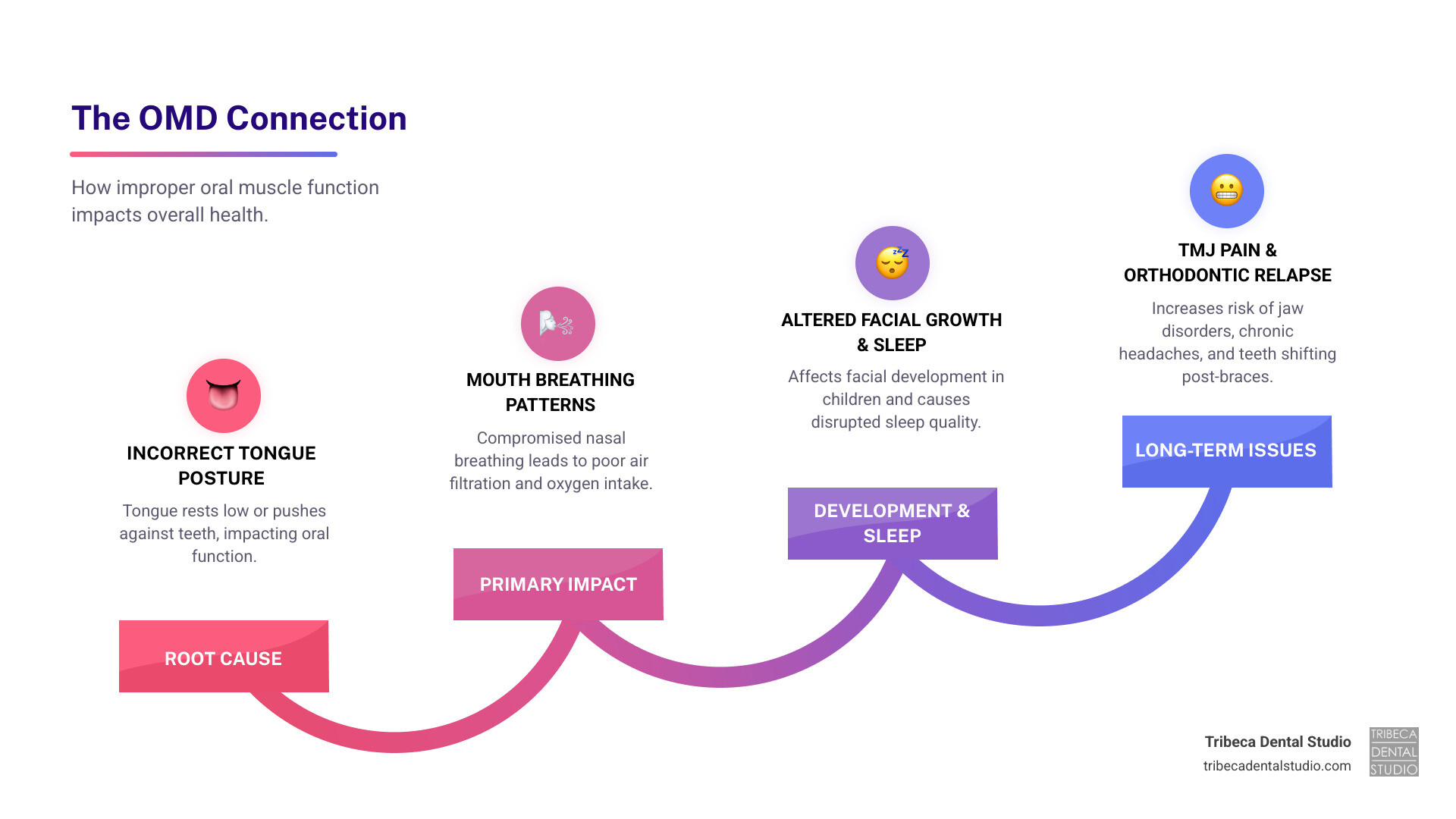
These seemingly unrelated problems often share a common root cause: dysfunctional patterns in the muscles of the tongue, lips, and jaw. Often starting in childhood, these incorrect habits can impact everything from facial development and sleep quality to long-term dental health.
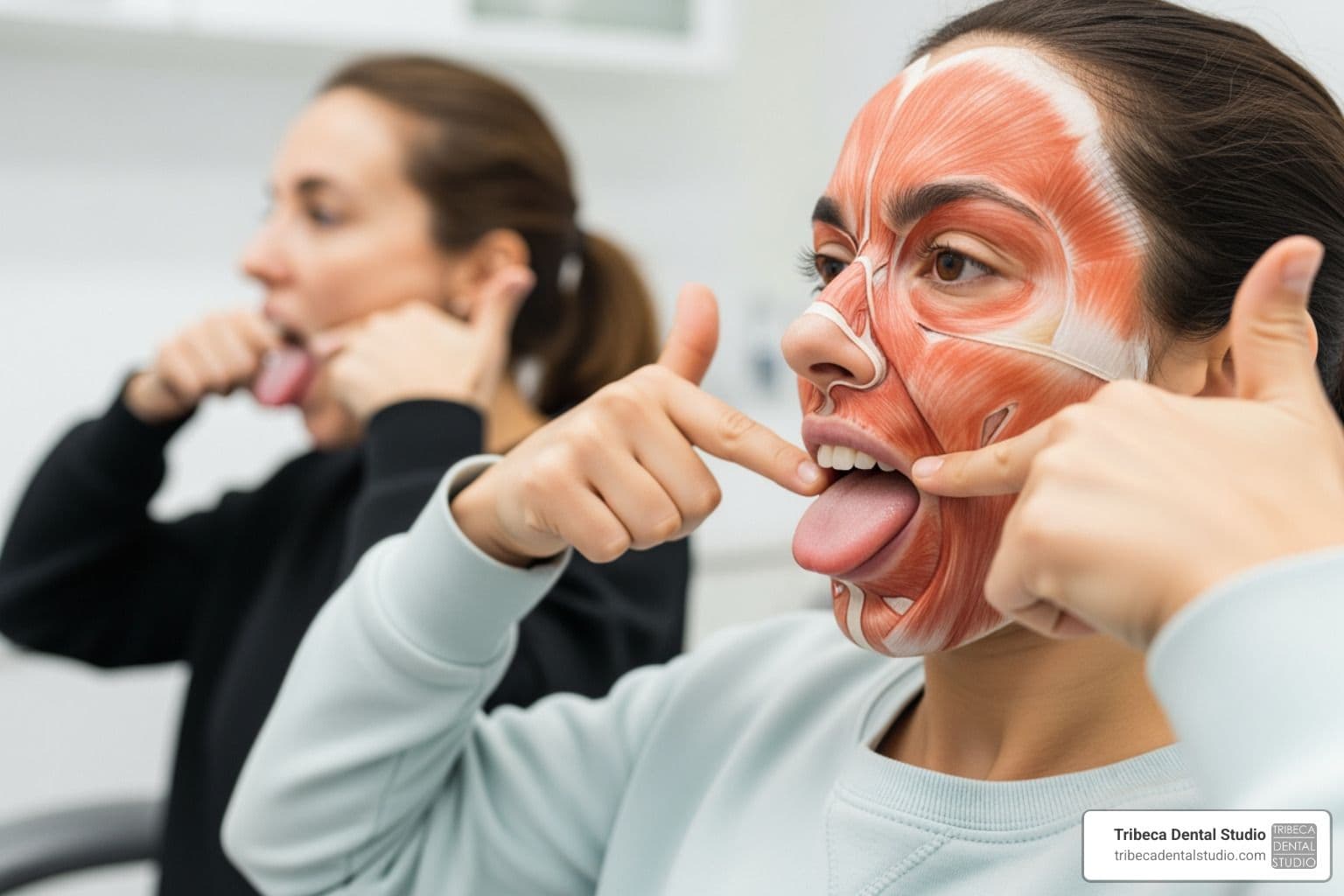
Orofacial Myofunctional Therapy (OMT) is essentially physical therapy for your face and mouth. It uses simple, targeted exercises to retrain the muscles controlling breathing, swallowing, and resting posture. The goal is to address the underlying dysfunction, not just the symptoms.
Tongue thrust, the most common orofacial myofunctional disorder, affects 30-40% of people from childhood into adulthood. Yet, it’s often overlooked by individuals and healthcare providers alike.
The good news is that OMT offers a non-invasive, evidence-based solution. Whether you’re a parent concerned about your child’s development or an adult struggling with chronic jaw pain or poor sleep, myofunctional therapy can restore proper function and improve your quality of life.
I’m Dr. Nina Izhaky, and at Tribeca Dental Studio, we’ve integrated myofunctional therapy NYC into our comprehensive, airway-focused approach to dental care. Our team works alongside certified specialists to address the root causes of breathing, sleep, and orofacial disorders—not just the symptoms.
Common myofunctional therapy NYC vocab:
Understanding Orofacial Myofunctional Disorders (OMDs)
Orofacial Myofunctional Disorders (OMDs) are conditions involving improper function of the facial, mouth, and throat muscles. This muscle imbalance is common but often undiagnosed, leading to a cascade of health issues.
These muscles are essential for breathing, chewing, swallowing, and speaking. When they don’t work harmoniously, it can affect facial growth, orthodontic stability, and overall well-being. OMDs can impact everything from breastfeeding and speech to jaw movement and facial aesthetics.
Most OMDs originate with insufficient nasal breathing or with oral breathing, which leads to dysfunctional adaptations in your orofacial muscles. At Tribeca Dental Studio, we understand this critical connection, which is why we emphasize More info about Airway Orthodontics as a foundational aspect of our care.
Common Symptoms of OMDs
Recognizing the symptoms of OMDs is the first step toward a solution. Here’s a list of common signs that might indicate an orofacial myofunctional disorder:
- Mouth breathing (especially at rest or during sleep)
- Snoring or other sleep-disordered breathing
- Clenching or grinding teeth (bruxism)
- Jaw pain, clicking, or popping (TMJ dysfunction)
- Speech impediments, such as lisps or difficulty with certain sounds (e.g., /s/, /z/, /sh/, /ch/, /j/, /r/)
- Messy or noisy eating, difficulty chewing or swallowing
- Orthodontic relapse (teeth shifting back after braces)
- Chronic headaches or facial pain
- Poor sleep quality, waking up tired
- Open bite or other bite irregularities
- A dull, sluggish facial appearance or full, weak lips
- Prolonged thumb-sucking or pacifier use
- Drooling (past an appropriate age)
- Restless sleep or night terrors
- Forward head posture
If you or a loved one in NYC experiences several of these symptoms, it’s worth exploring the possibility of an OMD. Our team at Tribeca Dental Studio can identify these issues and guide you toward appropriate treatment.
The Problem with Tongue Thrust
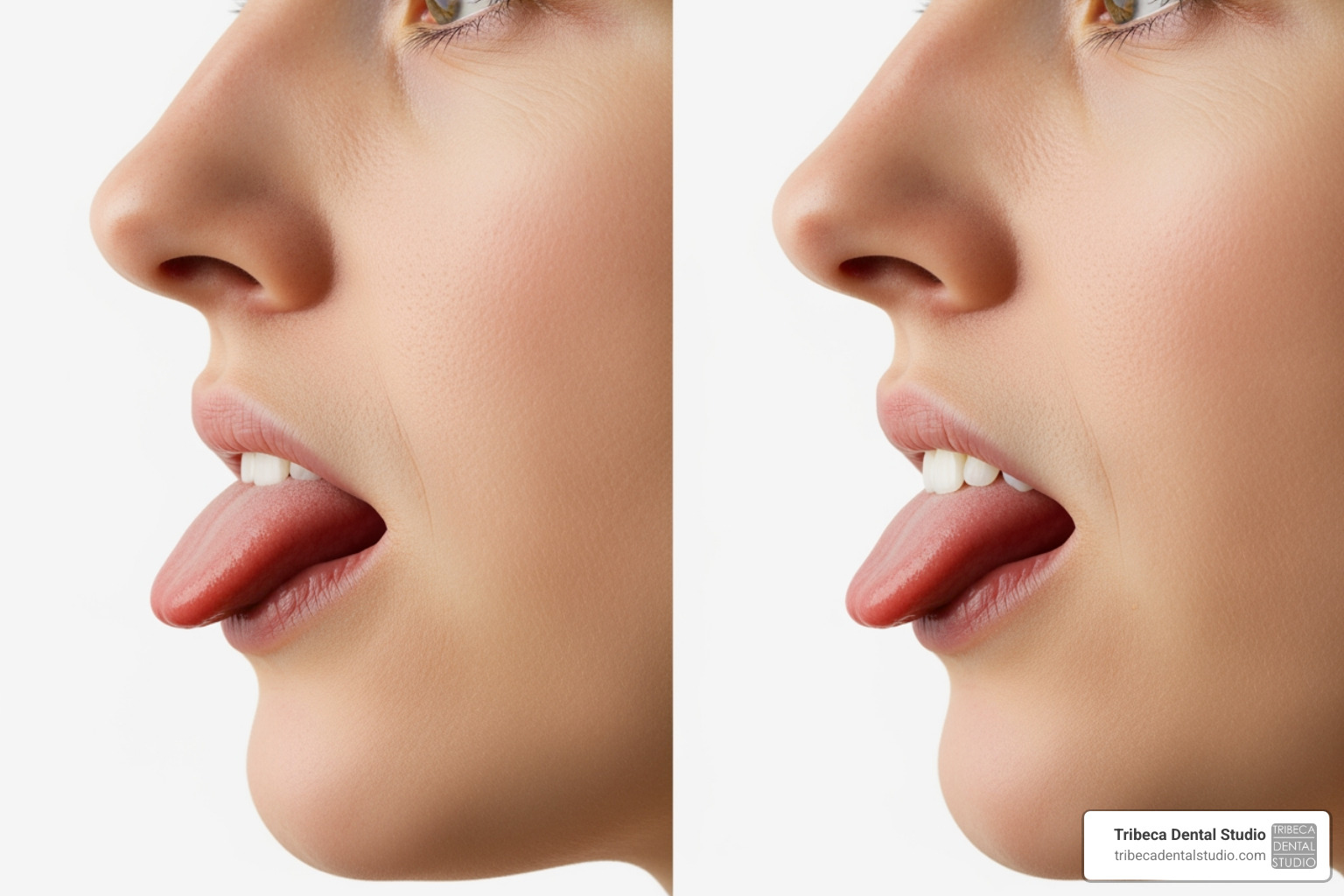
Among OMDs, tongue thrust is the most common, affecting 30-40% of people from childhood into adulthood. A tongue thrust is a dysfunctional swallowing pattern where the tongue pushes against the teeth instead of the roof of the mouth. With a person swallowing 500-1000 times a day, this constant pressure can push teeth out of alignment, leading to an “open bite” and other orthodontic issues.
Beyond teeth, tongue thrust is linked to unwanted oral habits (like lip biting), messy eating, and speech difficulties. Correcting this pattern is a core component of myofunctional therapy NYC, helping to stabilize orthodontic results and promote healthier oral function. For children, early intervention can be particularly beneficial, and treatments like What is Myobrace? Benefits, Cost, Results for Kids in NYC can often complement myofunctional therapy.
Why Mouth Breathing is a Red Flag
Nasal breathing is our natural and intended way to breathe. It filters, warms, and humidifies air while promoting relaxation. Mouth breathing bypasses these crucial steps, sending unfiltered, cold air to the lungs and initiating a stress response.
The consequences of chronic mouth breathing are extensive, especially for facial development in children. It can disrupt upper jaw feedback, leading to downward growth patterns and “allergic shiners” (dark circles under the eyes). In adults, it can lead to:
- Crowded teeth
- Cracked lips
- Increased risk of cavities (caries)
- Gum disease
- Reduced airway space
- Snoring and sleep apnea
- Difficulty chewing food properly
- Behavior issues (in children)
The open mouth posture and low tongue position associated with mouth breathing are often a cause or signal of tongue thrust. At Tribeca Dental Studio, we recognize that addressing mouth breathing is a primary focus in restoring overall health. We offer expertise in What is Airway Orthodontics? A Complete Guide for Parents and Adults in 2025 to help re-establish proper nasal breathing.
A Deep Dive into Myofunctional Therapy
What does myofunctional therapy NYC entail? OMT is neuromuscular re-education—physical therapy for your oral and facial muscles. This non-invasive treatment uses personalized exercises to correct dysfunctional patterns and strengthen the muscles of the face, mouth, and throat. The goal is to achieve a proper oral rest posture: tongue on the roof of the mouth, lips sealed, and nasal breathing.

Myofunctional therapy can also involve tools to aid this retraining, such as devices like the Myo Munchee Therapy in NYC, which help strengthen oral muscles. The goal is to address the root cause of issues, creating lasting change for better health.
Who is a Good Candidate for OMT?
Myofunctional therapy NYC is versatile and effective for different age groups.
For Children (typically aged 4 and older):
- Facial Development: Guides healthy facial and jaw growth.
- Thumb Sucking Habits: Helps eliminate thumb sucking and other habits that harm dental alignment.
- Speech Issues: Addresses speech issues like lisps caused by incorrect tongue placement.
- Pre/Post Tongue-Tie Release: Prepares for and rehabilitates after a tongue-tie release (frenectomy).
- Feeding Difficulties: Improves feeding skills for picky eaters or those with oral motor challenges.
- Mouth Breathing: Establishes nasal breathing for better overall health.
- Pediatric Dentistry: Our Pediatric Dentistry services often work with myofunctional therapy for comprehensive care.
For Adults:
- Sleep Apnea & Snoring: Reduces sleep apnea and snoring by strengthening tongue and throat muscles.
- TMJ Disorders: Alleviates TMJ pain, clicking, and tension by correcting muscle imbalances.
- Orthodontic Stability: Prevents orthodontic relapse, ensuring lasting results from braces or aligners.
- Chronic Headaches/Facial Pain: Provides relief from chronic headaches and facial pain.
- Pre/Post Tongue-Tie Release: Optimizes oral function after an adult frenectomy.
- Overall Health: Improves overall health through better breathing, swallowing, and oral posture.
Whether helping your child thrive or seeking relief from chronic adult issues, OMT offers a path to improved health. For adults, our expertise as an Airway Dentist for Adults aligns perfectly with OMT goals.
The Goals and Long-Term Benefits of OMT
The primary goals of myofunctional therapy NYC are foundational to optimal health:
- Establish Nasal Breathing
- Correct Tongue Posture (resting on the roof of the mouth)
- Proper Swallowing Pattern (eliminating tongue thrust)
- Achieve Lip Competence (lips gently sealed at rest)
Achieving these goals provides numerous long-term benefits:
- Stable Orthodontic Results: Prevents relapse by correcting muscle imbalances.
- Improved Sleep Quality: Reduces snoring and sleep apnea for more restful sleep.
- Reduced Jaw Pain (TMJ): Alleviates chronic jaw pain and headaches.
- Improved Facial Aesthetics: Promotes facial symmetry and a harmonious appearance.
- Better Overall Health: Offers systemic benefits like better digestion and reduced tension.
- Improved Speech Clarity: Leads to clearer articulation for certain speech issues.
- Prevention of Dental Issues: Reduces the risk of cavities and gum disease.
The journey with myofunctional therapy NYC is an investment in your long-term health and quality of life.
What to Expect During Therapy
Starting myofunctional therapy NYC at Tribeca Dental Studio is a structured, supportive process.
- Initial Evaluation: A comprehensive assessment of your oral and facial structures and functions, including breathing, swallowing, and posture, to identify the root causes of your OMD.
- Custom Treatment Plan: An individualized plan is created based on your evaluation, outlining specific exercises, frequency, and therapy duration.
- Therapy Sessions: Regular sessions (weekly or bi-weekly) where a therapist guides you through targeted exercises to retrain muscles and build correct habits.
- Home Practice: Daily commitment to short exercises is crucial for success. Parent participation is often required for children’s therapy to ensure progress.
- Typical Program Length: Treatment typically lasts 6 to 12 months, though some cases may be shorter (16-20 weeks) or longer. The duration depends on the condition’s severity and, most importantly, your commitment to the daily exercises.
We’re here to support you every step of the way, providing clear instructions and encouragement.
OMT: A Collaborative and Integrated Approach
At Tribeca Dental Studio, we believe in a holistic, team-based approach to myofunctional therapy NYC. We collaborate closely with a network of professionals, including orthodontists, ENTs (Ear, Nose, and Throat specialists), and Speech-Language Pathologists (SLPs), to ensure comprehensive care and the best possible outcomes.
For example, if an underlying airway issue is contributing to an OMD, we might recommend an ENT consultation. If sleep-disordered breathing is a concern, we integrate OMT with other treatments. Our commitment to comprehensive care ensures we address root causes, not just symptoms. Addressing sleep apnea often requires a multi-faceted approach, and we offer a range of Sleep Apnea Treatments that OMT can improve.
OMT vs. Traditional Speech Therapy
While myofunctional therapy NYC and traditional speech therapy overlap, their primary focuses are distinct yet complementary.
- OMT Focus: OMT addresses the root cause of issues by correcting the muscle function and posture related to breathing, swallowing, and tongue rest position. It directly targets the dysfunctional muscle habits that can cause problems like lisps.
- Speech Therapy Focus: Traditional speech therapy concentrates on sound articulation, language, and communication skills, such as correcting specific sounds or improving fluency.
How They Complement Each Other: When the underlying muscle dysfunction is corrected through OMT, traditional speech therapy can be more effective in refining articulation. Many SLPs are also certified in OMT, offering seamless integration. We work with specialists who understand this synergy.
Combining OMT with Orthodontics and Other Treatments
One of the most powerful aspects of myofunctional therapy NYC is its ability to integrate with other treatments, enhancing their effectiveness.
- Orthodontics: OMT is often recommended before or during orthodontic treatment. By correcting improper muscle function (like tongue thrust), it helps guide jaw growth, improves alignment, and, most importantly, prevents relapse, ensuring results last. OMT can support treatments to fix issues like an overbite, as discussed in Do Braces Fix Overbite?.
- Sleep Apnea Therapy: By strengthening airway muscles, OMT can reduce the severity of sleep apnea and snoring. It also improves the effectiveness of CPAP or oral appliance therapy. It can be part of a comprehensive plan that may include advanced techniques like Understanding MARPE: Benefits and Techniques.
- Frenectomy (Tongue-Tie/Lip-Tie Release): OMT is critical both before and after a frenectomy. It prepares the muscles for the release and then retrains them to use their new range of motion correctly, ensuring optimal outcomes and preventing scar tissue reattachment.
This collaborative approach ensures we address the foundational issues contributing to your overall health.
The Importance of a Qualified Provider
When seeking myofunctional therapy NYC, your provider’s qualifications are paramount.
- Certified Orofacial Myologist (COM®): This IAOM certification signifies extensive training and high professional standards.
- Specially Trained Speech-Language Pathologists (SLPs): Many SLPs have advanced OMT training. In New York State, OMT must be provided by a certified SLP, not a dental hygienist. They bring a deep understanding of speech and swallowing disorders.
- Airway-Focused Dentists: Airway-focused dentists, like our team at Tribeca Dental Studio, are crucial partners. We understand the connection between oral structure and breathing and can guide you to the right OMT specialists.
A qualified provider ensures an accurate diagnosis and an effective, collaborative treatment plan. Our Team at Tribeca Dental Studio includes dedicated professionals who prioritize this integrated approach.
Finding and Affording Myofunctional Therapy NYC
Beginning your journey with myofunctional therapy NYC involves finding the right provider and understanding the finances. We believe investing in your health is always worthwhile, a philosophy detailed in Health as Wealth: Understanding the Investment .
How to Find a Qualified Myofunctional Therapy NYC Provider
Finding a qualified therapist in NYC is straightforward with the right information:
- Look for Certifications: Prioritize therapists with COM® certification from the International Association of Orofacial Myology (IAOM), which ensures rigorous training.
- Ask About Experience: Inquire about their experience with your specific concerns, whether for children, TMJ, or sleep apnea.
- Seek Referrals: Airway-focused dentists, orthodontists, or ENTs are excellent sources. We can guide you to trusted OMT specialists we collaborate with.
- Read Reviews: Check online reviews for insights into a therapist’s approach and patient experiences.
- Schedule a Consultation: Use an initial consultation to discuss your concerns and see if the provider is a good fit.
A qualified provider will be transparent about their credentials and treatment philosophy. As one of the Best Dentist in NYC, we pride ourselves on connecting patients with the best specialists.
Navigating Costs and Insurance for Myofunctional Therapy NYC
Understanding the financial aspect of myofunctional therapy NYC is important.
- Cost Range: Costs vary by provider, location, and program complexity. Inquire directly with providers for their fee structures.
- Insurance Coverage: OMT is often an “out-of-network” service, but you may be eligible for reimbursement from your insurance provider.
- Submitting Claims: Providers can give you itemized invoices to submit for reimbursement. Contact your insurance company to understand your specific benefits.
- HSA/FSA: You can typically use Health Savings Account (HSA) or Flexible Spending Account (FSA) funds to pay for myofunctional therapy.
Navigating insurance can be complex, and our team at Tribeca Dental Studio is here to help. For more information, please visit our Insurance page. We believe finances shouldn’t be a barrier to optimal health.
Frequently Asked Questions about OMT in NYC
We often hear similar questions from patients in NYC curious about myofunctional therapy. Here are some of the most common ones:
How long does a typical OMT program take?
A typical OMT program ranges from 6 to 12 months, though the exact duration is individualized based on the patient’s condition and consistency with daily exercises. Commitment to home practice is the key to building new muscle memory and achieving lasting results.
Can OMT help with snoring and sleep apnea?
Yes. Myofunctional therapy NYC is effective for snoring and mild to moderate obstructive sleep apnea. By strengthening the tongue, soft palate, and throat muscles, OMT helps keep the airway open during sleep. This prevents the tissue collapse that causes snoring and apneic events. It’s also an excellent complement to other treatments like CPAP or oral appliances, and can be combined with options like Say Goodbye to Snoring: Discover NightLase Treatment in NYC for a comprehensive solution.
Is OMT just for kids?
No, OMT is highly effective for all ages. While it’s crucial for children to guide healthy facial growth and correct harmful habits, adults also benefit significantly. Adults often seek OMT for chronic issues like TMJ pain, headaches, sleep apnea, and to prevent orthodontic relapse. It’s never too late to retrain your oral muscles for better health.
Your Path to Better Health Starts Here
We’ve explored how myofunctional therapy NYC profoundly impacts breathing, sleep, and overall well-being. By addressing the root causes of Orofacial Myofunctional Disorders with personalized, non-invasive exercises, OMT offers extensive benefits: better sleep, reduced jaw pain, stable orthodontic results, and an improved quality of life.
At Tribeca Dental Studio, Dr. Nina Izhaky and our team provide personalized, airway-focused care that treats you like family. We integrate myofunctional therapy principles into our comprehensive approach, collaborating with top NYC specialists for holistic treatment.
If you or a loved one in Manhattan, New York City, or the wider NYC area are experiencing symptoms of an OMD, we encourage you to explore myofunctional therapy. It’s a powerful tool for achieving lasting health and comfort.
Learn more about our approach to Airway Orthodontics and how we can help you breathe, sleep, and live better.