Where to Find a Functional Pediatric Airway Dentist Near You
January 20, 2026
Why Finding the Right Pediatric Airway Dentist is Vital for Your Child’s Future
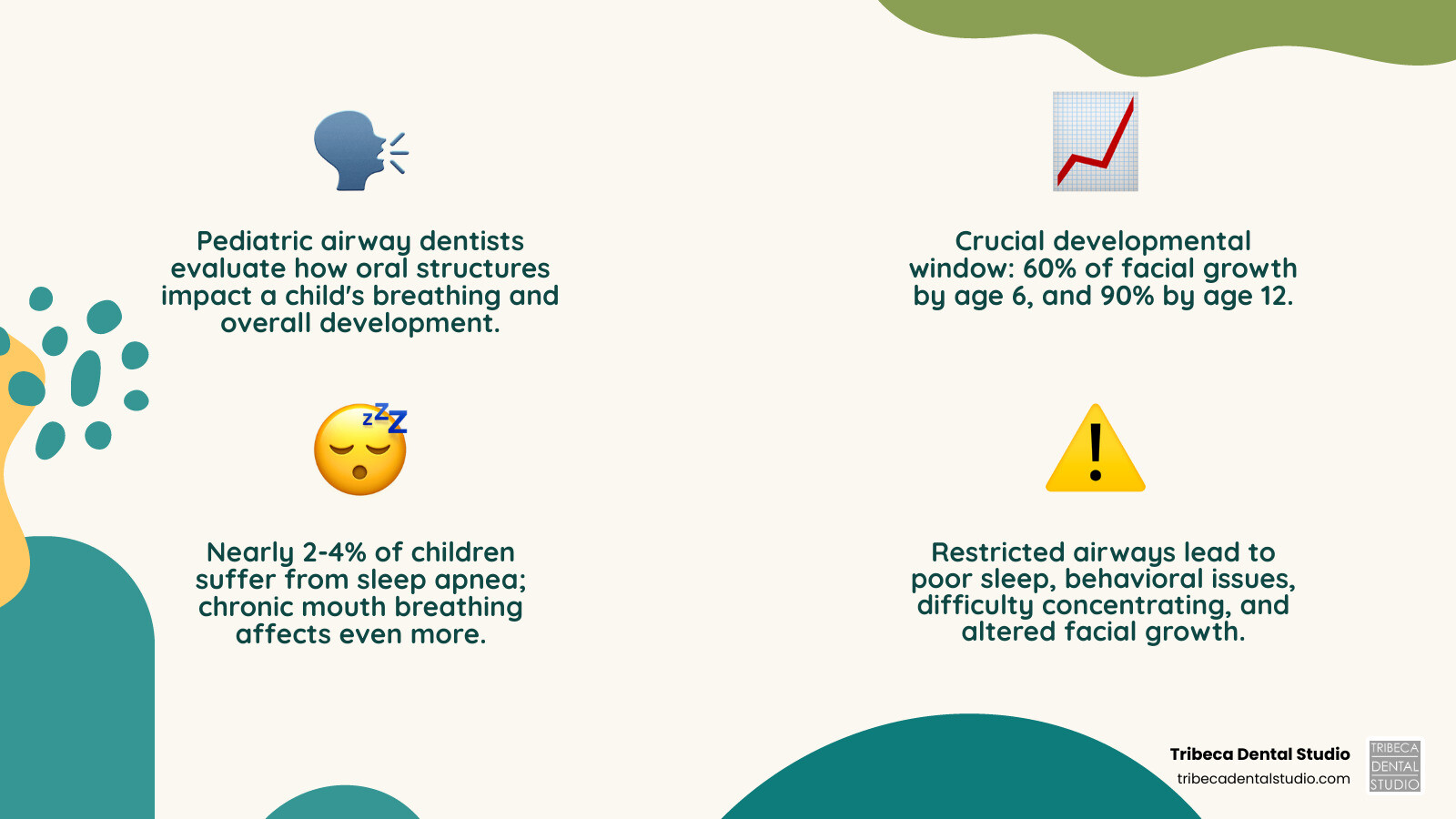
A pediatric airway dentist is a specialized dental professional who focuses on the relationship between a child’s oral structures, breathing patterns, and overall development. Unlike traditional pediatric dentists who primarily address cavities and cleanings, these specialists evaluate how your child’s jaw, teeth, and tongue impact their ability to breathe properly—especially during sleep.
Quick Answer: What is a Pediatric Airway Dentist?
- Focus Area: Evaluates and treats breathing issues related to oral and facial development
- Key Concerns: Sleep-disordered breathing, mouth breathing, narrow jaws, tongue ties
- Treatment Approach: Early intervention through myofunctional therapy, palatal expansion, and orthodontic appliances
- Collaborative Care: Works with ENTs, pediatricians, and sleep specialists
- Goal: Promote healthy nasal breathing, proper facial growth, and optimal sleep quality
The Hidden Impact of Airway Health on Your Child
Your child’s airway health is intricately connected to their physical, cognitive, and emotional development. A restricted airway—often due to narrow jaws, tongue ties, or underdeveloped facial structures—can lead to chronic mouth breathing and sleep disruption.
The statistics are sobering. Nearly 2-4% of children suffer from sleep apnea, while chronic mouth breathing affects even more. What’s particularly concerning is the timing: 60% of facial growth is completed by age 6, and approximately 90% by age 12. This narrow window makes early detection and intervention critical.
A restricted airway doesn’t just affect breathing. Children may struggle with:
- Poor sleep quality leading to daytime fatigue
- Behavioral issues that mimic ADHD
- Difficulty concentrating in school
- Bedwetting beyond the typical age
- Altered facial development including narrower jaws and crowded teeth
The good news? Early recognition and treatment can change a child’s developmental trajectory. As one dental professional noted, “If you don’t look, you will not see. Screening for POSA in your practice is the first step.”
I’m Dr. Nina Izhaky, and at Tribeca Dental Studio, I’ve dedicated my practice to treating the whole patient—not just their teeth. Working with our pediatric dentistry team, I’ve seen how addressing airway issues early can transform a child’s health, behavior, and quality of life.
The Foundation of a Healthy Life: Airway, Growth, and Development
A child’s airway is foundational to their well-being. When jaw or tongue function is impaired, it can affect breathing, sleep, and even eating. As pediatric airway dentists, we address issues like mouth breathing, tongue ties, and narrow jaws to promote proper facial and dental development.
The rapid growth before age 12 is a crucial period for intervention. Ideally, children should breathe through their nose, which filters and humidifies air. Chronic mouth breathing, however, can reshape a child’s face, leading to narrower jaws and crowded teeth. This can cause restless sleep, which in turn may lead to difficulty concentrating and behavioral issues often mistaken for ADHD. Untreated, these issues can increase long-term health risks. Dentists are uniquely positioned to identify these problems early. To learn more about the dentist’s role, we encourage you to read more on The Dentist’s Role in Screening and Treating Pediatric Obstructive Sleep Apnea.
Addressing these underlying physical issues can also have profound positive impacts on a child’s mental health. More info about the mental health benefits of pediatric dentistry.
Recognizing the Red Flags: Signs of Airway Dysfunction in Children
Early recognition of airway dysfunction, or Sleep-Disordered Breathing (SDB), can make a world of difference for your child. This condition ranges from habitual snoring to Pediatric Obstructive Sleep Apnea (POSA).
POSA affects approximately 1%-6% of children, but chronic mouth breathing is even more common. Snoring in children should always be considered abnormal and warrants further assessment.
Here’s a list of common signs of a restricted airway to watch for:
- Mouth breathing: Consistently breathing through the mouth, even when awake.
- Snoring: Loud or habitual snoring (three or more nights per week).
- Restless sleep: Tossing and turning or sleeping in unusual positions (e.g., hyperextended neck).
- Pauses in breathing: Observed during sleep, often followed by gasping or choking.
- Daytime sleepiness: Despite seemingly adequate sleep hours.
- Difficulty concentrating: In school or during activities.
- Behavioral issues: Hyperactivity, irritability, or symptoms resembling ADHD.
- Crowded teeth: Often due to underdeveloped jaws.
- Teeth grinding (bruxism): Especially at night.
- Bedwetting: Past the age of five.
- Dark circles under the eyes: Known as “allergic shiners.”
- Chronic allergies or nasal congestion: A contributor to mouth breathing.
- Speech difficulties: Often linked to improper tongue function.
- Picky eating or difficulty chewing/swallowing: Due to oral muscle dysfunction.
- Frequent ear infections or colds: Related to a compromised airway.
Nighttime Symptoms to Watch For
Nighttime is when many airway issues become most apparent. Seek an evaluation if your child exhibits:
- Loud snoring: Habitual snoring (three or more nights a week) is a significant red flag for POSA.
- Gasping or choking sounds: These can indicate the airway is briefly collapsing.
- Frequent waking: Waking up multiple times, sometimes with a jolt.
- Night sweats: Waking up drenched in sweat, even in a cool room.
- Unusual sleeping positions: Sleeping with the head hyperextended or mouth wide open to open the airway.
- Bedwetting past age 5: This can be a symptom of disrupted sleep as the body struggles to maintain an open airway.
If you observe these symptoms, especially snoring or breathing pauses, it’s crucial to consider an evaluation. Understanding the various treatments available can provide peace of mind. Visit our page on More info about sleep apnea treatments for further information.
Daytime Indicators of a Compromised Airway
Airway issues also manifest during the day, impacting your child’s well-being:
- Chronic allergies: Persistent nasal congestion can force mouth breathing, affecting facial development.
- “Adenoid facies” (long, narrow face): This distinct appearance is often seen in chronic mouth breathers.
- Dark circles under eyes (allergic shiners): A sign of poor sleep quality and chronic nasal congestion.
- Hyperactivity or irritability: Tired children may struggle to regulate emotions, leading to behaviors similar to ADHD.
- Speech difficulties: Improper tongue posture or a tongue-tie can affect speech articulation.
- Picky eating or difficulty chewing: A narrow palate or improper jaw development can make chewing and swallowing difficult.
Recognizing these indicators early can help us guide you toward solutions, potentially preventing the need for extensive orthodontic work later. For parents concerned about dental alignment, our guide on More info about signs your child might need braces offers valuable insights.
The Role of a Pediatric Airway Dentist in Diagnosis and Treatment
When it comes to your child’s airway health, a pediatric airway dentist plays a pivotal role in both diagnosis and treatment. We recognize that dentists, with their deep knowledge of craniofacial anatomy and development, are often the first healthcare professionals to spot the subtle signs of potential airway issues. Our role extends beyond just examining teeth; we conduct a comprehensive evaluation of your child’s entire oral and facial structure to identify underlying causes of breathing difficulties.
We act as frontline screeners for SDB and POSA, identifying risk factors and symptoms that might otherwise go unnoticed. Once potential issues are identified, we work to uncover the root causes, which can range from craniofacial abnormalities to oral habits. From there, we create a customized treatment plan custom to your child’s unique needs, always prioritizing early intervention.
Crucially, we understand that airway issues are complex and often require a multidisciplinary approach. That’s why we frequently collaborate with other specialists to ensure comprehensive care. To dig deeper into how we approach airway orthodontics and its benefits, please visit More info about airway orthodontics.
Diagnostic Methods: Getting a Clear Picture
To accurately diagnose airway dysfunction, we use a range of advanced diagnostic methods:
- Clinical examination: This involves a thorough assessment of your child’s head, face, jaws, and neck, along with an intraoral examination. We look for signs like narrow palates, crowded teeth, mouth breathing habits, and the size of tonsils and adenoids (if visible).
- Medical history review: We discuss your child’s medical history in detail, including any allergies, chronic nasal congestion, snoring, sleep patterns, and any past infections that might impact their airway.
- 3D Cone Beam CT (CBCT) imaging: This cutting-edge imaging technology allows us to visualize your child’s airway structures in three dimensions. It provides invaluable insights into the size and shape of the nasal passages, pharynx, and other critical airway components.
- Airway analysis: Using the CBCT data, we perform a detailed airway analysis to measure volumes and identify any constrictions or obstructions.
- Sleep studies: For definitive diagnosis of conditions like POSA, we often recommend a sleep study (polysomnography, or PSG). This provides objective measurements of breathing during sleep, including oxygen levels and sleep fragmentation.
- Screening questionnaires: We may use validated questionnaires, such as the Pediatric Sleep Questionnaire (PSQ) or Sleep Disorders Inventory for School (SDIS), to gather comprehensive information about your child’s sleep habits and any observed symptoms from parents or caregivers.
Common Treatment Options for Pediatric Airway Dysfunction
Addressing pediatric airway dysfunction often involves a combination of treatments aimed at optimizing oral and facial development and promoting healthy breathing. Early intervention is key, as it can guide growth and prevent more severe issues down the line.
| Treatment Option | Early Intervention (Ages 3-12) | Later Treatment (Ages 12+) |
|---|---|---|
| Myofunctional Therapy | Retrains oral muscles, improves tongue posture, promotes nasal breathing. | Can still be beneficial, but may require longer treatment or be adjunctive to other therapies. |
| Palatal Expansion | Widens narrow upper jaw, creating more space for tongue and nasal airway. | More complex, may require surgical assistance (MARPE) if sutures are fused. |
| Myobrace Therapy | Uses removable appliances to guide jaw growth and encourage proper oral habits. | May be less effective as facial growth is largely complete; often used for retention. |
| Frenectomy | Releases restrictive tongue/lip ties, improving feeding, speech, and airway. | Still effective for functional issues, but developmental benefits may be reduced. |
| Orthodontic Appliances | Early orthodontics (e.g., mandibular advancement appliances) to guide jaw growth. | Traditional braces or Invisalign for alignment; surgical options for severe skeletal discrepancies. |
| Lifestyle Modifications | Encouraging nasal breathing, healthy diet, sleep environment optimization. | Continually important for all ages. |
| Surgical Interventions | Adenotonsillectomy for enlarged tonsils/adenoids (often first line). | May include more complex craniofacial surgeries for severe skeletal issues. |
Myofunctional therapy: This involves a series of exercises designed to retrain the muscles of the mouth, face, and airway. It’s like “personal training” for these muscles, helping to establish proper tongue resting posture, improve swallowing patterns, and encourage nasal breathing. We also offer specialized Myobrace Therapy to help guide proper oral development.
Palatal expansion: For children with narrow upper jaws, a palatal expander can gently widen the palate. This creates more space for the tongue to rest in its correct position and significantly increases the volume of the nasal airway, improving breathing.
Tongue-tie and lip-tie release (frenectomy): If a child has a restrictive tongue-tie (ankyloglossia) or lip-tie, a simple laser frenectomy can release these tissues. This minimally invasive procedure allows for improved tongue mobility, which is crucial for proper swallowing, speech, and maintaining an open airway.
Orthodontic appliances: Beyond palatal expanders, other orthodontic devices, such as mandibular advancement appliances, can be used to guide jaw growth and ensure adequate space for the tongue and airway. You can explore more about sleep apnea devices that help manage breathing difficulties.
The Importance of a Collaborative Care Team
We firmly believe that addressing pediatric airway issues requires a team effort. No single specialist has all the answers, and a multidisciplinary approach ensures your child receives the most comprehensive and effective care. We actively collaborate with:
- ENTs (Ear, Nose, and Throat specialists): Often involved in assessing and treating enlarged tonsils or adenoids, chronic nasal congestion, or structural issues in the upper airway.
- Pediatricians: Your child’s primary care provider is essential for overall health assessment and coordination of care.
- Sleep specialists: For definitive diagnosis and management of sleep disorders, including sleep studies and medical treatments.
- Myofunctional therapists: These specialists work closely with us to provide targeted exercises that retrain oral and facial muscles, reinforcing the changes achieved through dental interventions.
- Lactation consultants: Especially for infants, addressing tongue and lip ties can significantly improve breastfeeding, which is vital for early craniofacial development.
This collaborative model, often referred to as craniofacial sleep medicine, highlights the important role dental providers play in detecting and treating sleep-disordered breathing in children. For a deeper dive into this interdisciplinary field, we recommend reviewing the insights shared in Craniofacial Sleep Medicine: The Important Role of Dental Providers.
How to Choose the Right Pediatric Airway Dentist for Your Child
Choosing the right pediatric airway dentist for your child is a significant decision that can impact their long-term health and well-being. We understand you want the best for your family, and we’re here to help you make an informed choice. At Tribeca Dental Studio, we pride ourselves on providing personalized, advanced, and welcoming oral healthcare right here in Tribeca, Manhattan, New York City.
Here are key factors to consider:
- Credentials and training: Look for a dentist with specialized training and certifications in airway dentistry, beyond general pediatric dentistry. This indicates a focused commitment to understanding and treating complex airway issues.
- Treatment philosophy: Does the dentist prioritize a holistic, patient-centered, and minimally invasive approach? We believe in treating the patient as a whole, focusing on prevention and the oral-systemic connection.
- Technology and techniques: A modern practice will use advanced diagnostic tools like 3D CBCT imaging and offer up-to-date treatment options like laser frenectomies and various orthodontic appliances.
- Patient reviews: Online reviews provide invaluable insights into a dentist’s professionalism, demeanor, and success in treating airway issues. Positive testimonials highlight families’ satisfaction and can build confidence in your choice.
- Comprehensive care approach: Ensure the practice emphasizes a multidisciplinary approach, demonstrating a willingness to collaborate with ENTs, pediatricians, sleep specialists, and myofunctional therapists.
For more guidance on selecting the ideal dental professional for your little one, our guide on More info about choosing the right pediatric dentist can provide additional insights.
Key Questions to Ask a Potential Dentist
When you’re considering a pediatric airway dentist, don’t hesitate to ask questions. This is your child’s health, and you deserve clear, thorough answers. Here are some key questions we recommend:
- “What is your experience specifically with pediatric airway issues and sleep-disordered breathing?”
- “What diagnostic tools do you use to assess a child’s airway?”
- “What range of treatment options do you offer for airway dysfunction in children?”
- “What is your approach to early intervention, and at what age do you typically begin screening?”
- “How do you collaborate with other specialists, such as ENTs or sleep physicians?”
- “Can you share any success stories or case studies (while maintaining patient privacy) that illustrate your approach to airway dentistry?”
These questions will help you gauge their expertise, philosophy, and how well their practice aligns with your family’s needs.
What to Expect from Your First Visit with a Pediatric Airway Dentist
Your child’s first visit with a pediatric airway dentist at Tribeca Dental Studio is designed to be informative, comfortable, and comprehensive. We want both you and your child to feel at ease.
Here’s what you can expect:
- Thorough consultation: We’ll start with a detailed discussion about your child’s medical history, sleep habits, any symptoms you’ve observed, and your family’s concerns.
- Detailed examination of face, jaw, and teeth: This isn’t just a quick look. We’ll carefully assess your child’s facial structure, jaw development, tongue posture, bite, and overall oral health. We’re looking for subtle indicators of airway issues.
- Discussion of symptoms and concerns: We’ll listen attentively to your observations and answer any questions you have about your child’s breathing, sleep, and development.
- Explanation of findings: After our assessment, we’ll clearly explain any findings, using visual aids if helpful, so you understand what’s happening with your child’s airway.
- Presentation of potential treatment paths: If any issues are identified, we’ll discuss the various treatment options available, outlining the pros and cons of each, and explaining what early intervention could look like.
We strive to make every visit a positive experience, even for our youngest patients. To learn more about what to expect during a child’s initial dental visit, especially for infants, please see More info about your baby’s first dentist visit.
Frequently Asked Questions about Pediatric Airway Dentistry
At what age should my child be screened for airway issues?
The good news is that screening for airway issues can, and ideally should, begin very early—even at birth. While overt signs might not appear until later, we can often identify early indicators and risk factors.
- Screening can begin at birth: For infants, signs like breastfeeding difficulties, a poor latch, or slow weight gain can be early red flags pointing to issues like tongue-ties, which can impact airway development.
- Early signs in infants: Beyond feeding difficulties, observe for noisy breathing, an open mouth posture, or restless sleep from an early age.
- Key developmental windows: 60% of facial growth is completed by age 6, and 90% by age 12. These are critical periods when intervention can significantly guide proper development. Routine dental check-ups during these years are invaluable for monitoring growth and identifying potential problems.
- Importance of regular dental check-ups: Regular visits allow us to track your child’s oral and facial development over time, making it easier to spot deviations that could impact their airway.
Establishing a dental home early is recommended by the American Academy of Pediatric Dentistry. We encourage you to learn more about the importance of early dental care at More info about the importance of early dental care.
Is treatment for pediatric airway problems painful?
We understand that concerns about pain are very real for both children and parents. Our priority at Tribeca Dental Studio is to ensure your child’s comfort throughout any diagnostic or treatment process.
- Minimally invasive options: Many treatments, such as laser frenectomies for tongue or lip ties, are minimally invasive. Using advanced laser technology, we can perform these procedures with very little discomfort, bleeding, or recovery time.
- Modern technology: We use leading-edge technology designed to improve comfort and precision, making procedures quicker and less stressful.
- Pain-free dentistry focus: Our practice is built on the principle of Pain-Free Dentistry. We employ gentle techniques and ensure your child feels safe and relaxed.
- Sedation options if needed: For children who may be anxious or for more extensive procedures, we offer various sedation options to ensure a calm and comfortable experience.
- Managing discomfort from appliances: If your child requires an oral appliance like a palatal expander, we provide clear instructions on how to manage any initial discomfort and are always available to address concerns.
How do tongue-ties and lip-ties affect the airway?
Tongue-ties (ankyloglossia) and lip-ties (maxillary labial frenum attachment) are conditions where the frenum (a small band of tissue) is unusually short, thick, or tight, restricting the movement of the tongue or lip. While often associated with breastfeeding difficulties, their impact on a child’s airway can be profound:
- Restricted tongue movement: A tight tongue-tie prevents the tongue from elevating to its proper resting position against the roof of the mouth (palate).
- Improper tongue posture: When the tongue rests low in the mouth, it can obstruct the airway, especially during sleep. This improper posture also fails to provide the natural outward pressure needed to shape the upper jaw.
- Encourages mouth breathing: With the tongue positioned low, the mouth often hangs open, leading to chronic mouth breathing. As we discussed, mouth breathing can negatively impact facial growth and overall health.
- Impact on jaw and palate development: The tongue’s natural resting position against the palate stimulates its healthy, wide development. A low tongue posture can lead to a narrow, high-arched palate and underdeveloped jaws, which in turn restrict nasal airway space.
- Connection to SDB and OSA: The narrow dental arches and compromised airway space resulting from untreated ties significantly increase a child’s risk for Sleep-Disordered Breathing and Obstructive Sleep Apnea.
- Benefits of a frenectomy: Releasing a tongue or lip tie can dramatically improve tongue mobility, allowing it to rest properly, promote nasal breathing, support healthy facial growth, and reduce the risk of airway obstruction.
Take the First Step Towards Healthier Breathing for Your Child
We’ve covered a lot of ground, from understanding what a pediatric airway dentist does to recognizing the subtle signs of airway dysfunction and exploring the various diagnostic and treatment options available. The overarching message is clear: your child’s airway health is fundamental to their overall well-being and development.
The lifelong benefits of early treatment cannot be overstated. By addressing airway issues in childhood, we can prevent a cascade of problems, including developmental delays, behavioral challenges, and chronic health conditions. Early intervention can truly change the trajectory of your child’s life, setting them on a path toward optimal health, better sleep, improved cognitive function, and a happier future.
Our goal at Tribeca Dental Studio is to empower parents with knowledge. We want you to feel confident in identifying potential concerns and seeking the specialized care your child deserves. We believe in a personalized approach to dentistry, treating each patient like family, and providing comprehensive care right here in Tribeca, Manhattan, New York City.
If you have concerns about your child’s breathing, sleep, or facial development, we encourage you to take the first step. Contact us today to schedule a consultation with our dedicated team. Together, we can ensure your little one is thriving in every way possible. Learn more about our approach to Airway Orthodontics and how we can support your child’s journey to healthier breathing.