Why Your Recovery Matters as Much as the Surgery Itself
Dental implant post care is the most important factor determining whether your new teeth thrive for decades or face complications. Here’s what you need to know to manage your post-surgery recovery successfully:
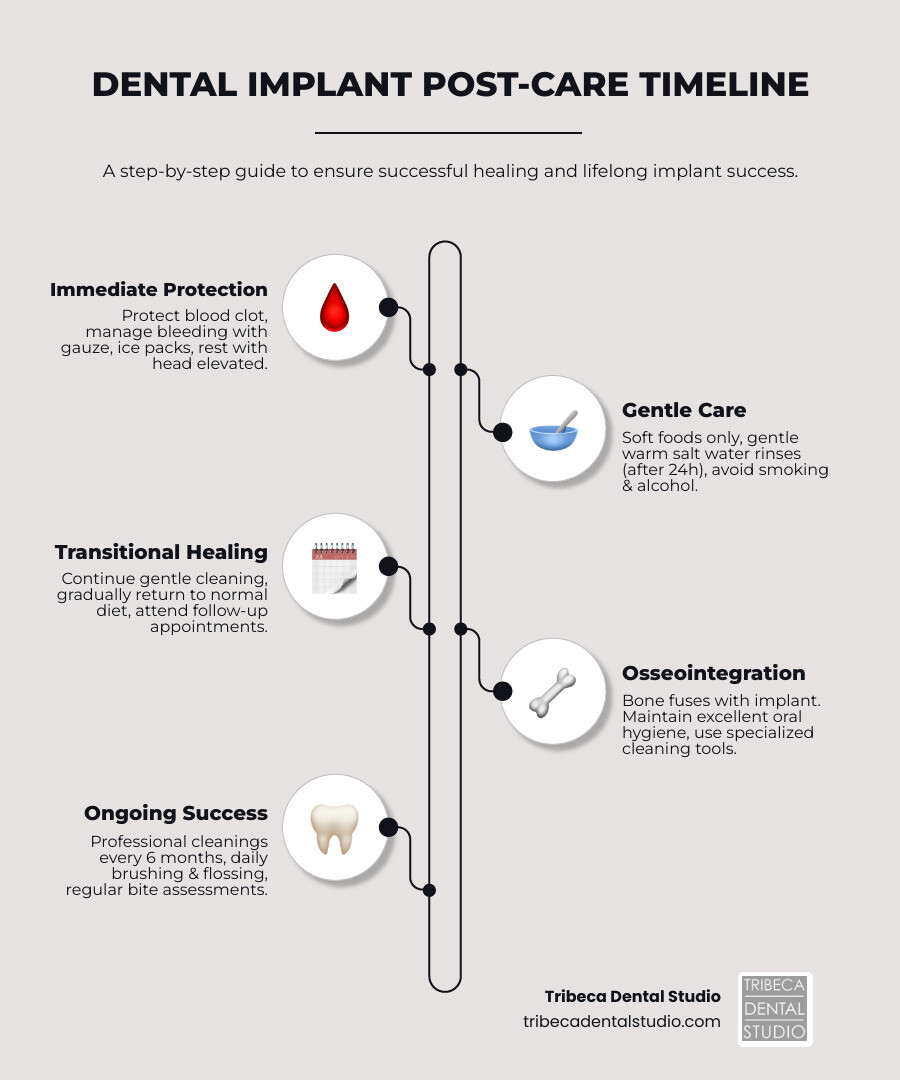
Essential Dental Implant Post Care Timeline:
- First 24-48 Hours – Protect the blood clot, manage bleeding with gauze, apply ice packs, rest with head liftd
- First 2 Weeks – Eat soft foods only, rinse gently with warm salt water (after 24 hours), avoid smoking and alcohol
- Weeks 2-6 – Continue gentle cleaning, gradually return to normal diet, attend follow-up appointments
- Months 3-6 – Full osseointegration occurs, maintain excellent oral hygiene, use specialized cleaning tools
- Long-Term – Professional cleanings every 6 months, daily brushing and flossing, bite assessments
You’ve just invested in a dental solution with a 98% success rate when properly maintained. But here’s the truth: even the most precisely placed implant can fail without proper aftercare. The healing process, called osseointegration, takes 3-6 months as your jawbone fuses with the titanium post. During this time, your actions directly impact whether your implant becomes a permanent part of your smile or develops complications like infection or failure.
Think of dental implants as medical devices, not natural teeth. They require specific maintenance routines that differ from brushing and flossing your original teeth. The soft tissue surrounding your implant acts as a gatekeeper, preventing bacteria from compromising the bone integration. When you follow the right post-care protocols, you’re not just healing—you’re building the foundation for decades of confident smiles.
As Dr. Nina Izhaky, I’ve guided countless patients through successful dental implant post care at Tribeca Dental Studio, combining state-of-the-art technology with personalized attention to ensure optimal healing outcomes. My approach focuses on empowering you with clear instructions and support throughout your recovery journey.
The First 48 Hours: Immediate Post-Operative Instructions
The first two days after your dental implant surgery are crucial for setting the stage for successful healing. Our primary goal during this period is to protect the surgical site, minimize discomfort, and prevent any complications. This is a time for rest and gentle care, allowing your body to begin the incredible process of healing and integrating your new implant. For more detailed information on surgical procedures, you can explore More info about Oral Surgery.
Bleeding management is often the first concern after surgery. It’s normal to experience some light bleeding or oozing from the surgical site. To manage this, we recommend biting down gently but firmly on the gauze pads placed by your surgeon. Change these pads every 30-45 minutes until the bleeding significantly subsides. If bleeding persists heavily, reposition fresh gauze pads to ensure direct pressure is applied to the surgical area. This gentle, consistent pressure helps to form a stable blood clot, which is the cornerstone of proper healing.
Rest and recovery are not just suggestions; they are vital components of your dental implant post care. We advise you to take it easy for the first 24-48 hours, avoiding any strenuous activities. Think of it as a mini-vacation for your body, focusing all its energy on healing. Activity restrictions include avoiding heavy lifting, bending over, or any exercise that might increase blood pressure to your head.
Protecting the blood clot is paramount. This clot acts as a natural bandage and is essential for the osseointegration process. Any disruption to it can lead to complications, including delayed healing or a painful “dry socket” (though less common with implants than extractions).

Managing Swelling and Discomfort
Swelling and discomfort are normal companions after any oral surgery, and dental implant placement is no exception. But don’t worry, we have several strategies to keep you comfortable.
For the first 48 hours, our go-to method for managing swelling is applying ice packs or cold compresses to the outside of your face, over the surgical area. Apply them intermittently – 20 minutes on, 20 minutes off – to help constrict blood vessels and reduce inflammation. After 48 hours, if swelling persists, you can switch to warm compresses, which help promote circulation and further reduce swelling.
Head elevation is another simple yet effective trick. When resting or sleeping, try to keep your head liftd with two pillows. This helps minimize blood flow to the surgical site, which in turn reduces swelling and discomfort. Think of it as giving your head a VIP pass to a slightly higher plane of existence!
For pain, we’ll provide you with specific instructions. This often includes prescribed pain medication. It’s usually best to take your first dose before the local anesthetic completely wears off, getting ahead of any potential discomfort. Always take pain medications with food to reduce the chance of nausea. Over-the-counter anti-inflammatories like ibuprofen (Advil, Motrin) or acetaminophen (Tylenol) can also be very effective and may be recommended in conjunction with or instead of prescription medications, depending on your individual needs and the extent of your procedure. Just make sure there are no allergies and you’ve tolerated them in the past. If you have any concerns about pain management, please don’t hesitate to reach out to our team at Tribeca Dental Studio. For more general guidance on post-surgery care, the Dental Implants: After Surgery | Veterans Affairs provides useful information.
Protecting the Surgical Site
Beyond managing bleeding and swelling, protecting the surgical site from mechanical disruption is a critical part of your immediate dental implant post care. This means a few “don’ts” that are easy to remember:
- No spitting: Vigorous spitting can dislodge the crucial blood clot and potentially restart bleeding or introduce bacteria. When you need to get rid of saliva, let it gently drain from your mouth.
- No rinsing (for the first 24 hours): Similar to spitting, rinsing too early can disturb the blood clot. We’ll tell you when it’s safe to start gentle rinses, usually beginning the day after surgery.
- No straws: The suction created when using a straw can pull on the blood clot and dislodge it, leading to complications. Sip your liquids directly from a cup.
- Avoiding touching the area: Resist the urge to poke or prod the surgical site with your fingers or tongue. Let it be!
- Gentle oral hygiene: While protecting the surgical site, maintaining overall oral hygiene is still important. You can (and should!) gently brush your other teeth, just be very careful to avoid the implant area for the first few days. We’ll guide you on when and how to carefully clean around the implant itself.
By following these simple guidelines, you’re actively contributing to a smoother, faster, and more successful healing process.
The First Two Weeks: Your Guide to a Smooth Recovery
As you move past the immediate 48 hours, you’ll transition into the initial healing phase, typically encompassing the first two weeks. This period is a delicate balance of nurturing the surgical site while gradually reintroducing some normalcy to your routine. While the initial discomfort should begin to subside, the importance of gentle care cannot be overstated. Your body is working hard to integrate the implant, and your continued vigilance in dental implant post care will support this vital process.

Essential Dietary Recommendations for Healing
What you eat (and don’t eat!) plays a significant role in your recovery. For the first 2-4 days, and often up to two weeks, a soft food diet is your best friend. This prevents undue pressure on the healing implant and allows the tissues to recover without interruption.
Here’s a list of soft foods to accept:
- Dairy delights: Yogurt, cottage cheese, puddings, ice cream (without crunchy bits).
- Smooth and creamy: Smoothies (without seeds or nuts), pureed soups (lukewarm, not hot!), mashed potatoes, applesauce.
- Gentle proteins: Scrambled eggs, well-cooked fish, soft pasta, tofu, soft-cooked chicken or ground meat (shredded very finely).
- Cooked vegetables: Soft-steamed or boiled vegetables like carrots, peas, or spinach.
Conversely, there are some foods to avoid like the plague (or at least for the next few weeks!):
- Hard, crunchy, or chewy foods: Nuts, popcorn, chips, crusty bread, raw vegetables, tough meats. These can damage the surgical site or get stuck, leading to irritation or infection.
- Spicy or acidic foods: These can irritate the healing tissues.
- Hot liquids: Especially in the first 24 hours, extremely hot liquids can increase bleeding. Stick to lukewarm.
- Small seeds or grains: These can easily get lodged in the surgical site.
Staying hydrated is also key for overall healing. Drink plenty of water throughout the day, but remember, no straws! Gradually, as your comfort allows and with our guidance, you can begin to reintroduce more solid items into your diet. For more ideas on what to eat, especially if you’re used to dietary restrictions, check out our guide on More info about what to eat with dental work.
Best Practices for Dental Implant Post Care Hygiene
Maintaining meticulous oral hygiene is critical throughout your healing journey. It’s not just about keeping your mouth clean; it’s about preventing infection and promoting optimal integration of your implant.
Starting 24 hours after surgery, we recommend beginning warm salt-water rinses. This simple yet effective practice helps to reduce bacteria, soothe tissues, and promote healing. Mix ½ teaspoon of salt into 1 cup of warm water. Rinse gently several times a day, especially after meals. Don’t swish vigorously; just let the solution bathe the surgical area. Continue these rinses for at least 6 weeks, or as advised by your Tribeca Dental Studio team.
For brushing, you can use a soft-bristled toothbrush and non-abrasive toothpaste. On the day of surgery and for the initial few days, avoid directly brushing the surgical site. Focus on gently cleaning your other teeth. Once we give you the green light, you can carefully brush around the implant site, paying special attention to the gum line without applying excessive pressure. If a prescribed antimicrobial mouthwash, such as Peridex, is given, use it as directed for 7-10 days. This helps to further reduce bacteria and prevent infection.
Lifestyle’s Impact on Healing and Success
Your lifestyle choices have a profound impact on the success of your dental implant healing. Think of your body as a finely tuned machine; giving it the right fuel and environment allows it to perform its best.
Smoking risks are among the most significant threats to dental implant success. Studies show that smoking delays healing and increases the risk of implant failure by up to 20%. Nicotine constricts blood vessels, reducing blood flow to the surgical site, which is vital for healing and osseointegration. It also introduces harmful chemicals and bacteria. We strongly advise eliminating smoking for a minimum of two weeks post-surgery – longer if possible. Your dental team at Tribeca Dental Studio is here to support you with resources if you need help to quit.
Alcohol consumption should also be avoided for at least 48-72 hours after surgery, and ideally for the first two weeks. Alcohol can interfere with pain medications, thin your blood, and dehydrate you, all of which can hinder the healing process.
Avoiding strenuous exercise is crucial for the first 3-4 days. Increased physical activity can raise blood pressure, leading to throbbing or increased bleeding at the surgical site. Gentle walks are fine, but hold off on the gym or intense workouts until we say it’s okay.
Finally, getting adequate rest is incredibly important. Your body heals when you rest. Prioritize sleep and allow yourself periods of relaxation. Staying hydrated, coupled with good rest, supports your immune system, allowing it to focus on repairing and regenerating tissues around your new implant. For more comprehensive information on maintaining overall oral health, the Information on dental health from the ADA is an excellent resource.
Long-Term Dental Implant Post Care for Lifelong Success
Congratulations, you’ve steerd the initial healing phases! Now, as the osseointegration process continues over the next 3-6 months, your focus shifts to establishing a long-term dental implant post care routine. This period is when your jawbone truly fuses with the titanium implant, creating an incredibly stable foundation. Once your final crown is placed, your implant becomes a permanent part of your smile, and protecting this investment with consistent, custom care is key to its lifelong success. Think of it as nurturing a valuable asset – because that’s exactly what your implant is! At Tribeca Dental Studio, we believe in restoring your smile for the long haul, and that’s why we emphasize comprehensive More info about Restorative Dentistry.
How Implant Care Differs from Natural Teeth
It’s easy to think of a dental implant as just another tooth, but its unique structure means its care differs from that of natural teeth. The primary distinction lies in the absence of a periodontal ligament around an implant. Natural teeth are suspended in the jawbone by this ligament, which provides a protective barrier and absorbs chewing forces. Implants, however, are directly fused with the bone.
This difference makes implants susceptible to a condition called peri-implantitis, which is similar to gum disease but specific to implants. While gum disease affects the tissues around natural teeth, peri-implantitis can lead to inflammation and bone loss around the implant, potentially causing failure. Because implants lack the natural defense mechanisms of a periodontal ligament, plaque accumulation around them needs even more diligent attention. This highlights the importance of specialized cleaning tools and techniques, as the soft tissue around the implant acts as a crucial “gatekeeper” preventing food and bacteria from reaching the bone.
Your Daily and Weekly Maintenance Routine
Maintaining excellent oral hygiene is the cornerstone of long-term dental implant post care. It’s a continuous commitment that pays dividends in the longevity and health of your implant. Here’s what we recommend:
| Cleaning Tool | Purpose | Usage Frequency |
|---|---|---|
| — | — | |
| Brushing | Use a soft-bristled toothbrush and non-abrasive toothpaste. Brush gently around the surgical site and carefully clean all other teeth. | |
| Waterpik | Use a Waterpik with an antimicrobial solution (e.g., Listerine Zero mixed with water). Start at the lowest setting and gradually increase. | |
| Flossing | Use regular floss or specialized implant floss (e.g., TePe Bridge & Implant Floss) to clean around the implant abutments and crowns. | |
| Daily/Weekly | Brush at least twice daily. Floss daily. Use advanced tools like water flossers (starting at 12 weeks post-surgery, gradually increasing intensity) and interdental brushes for thorough cleaning around implants. Consider a weekly massage of the soft tissue around the implant (tongue and cheek sides) to aid in bacterial control. For effective cleaning, check out our tips for More info about professional teeth cleaning. |