Understanding the Investment in Your Smile
Dental implants cost is one of the most common questions we hear from patients considering tooth replacement—and for good reason. The price can seem daunting, but understanding what you’re paying for helps put those numbers into perspective.
Quick Answer: What Do Dental Implants Cost?
- Single tooth implant: $3,000 – $6,000
- Multiple teeth (implant bridge): $6,000 – $10,000
- Full-mouth implants: $60,000 – $90,000
- All-on-4 per arch: $12,000 – $50,000
These ranges include the implant post, abutment, crown or restoration, and surgical fees. Your final cost depends on factors like bone grafting needs, materials used, and your provider’s expertise.
Missing teeth affect more than just your appearance. They impact how you eat, speak, and feel about yourself. Unlike dentures or bridges, dental implants replace the entire tooth structure—root and all—offering a permanent solution that can last a lifetime with proper care. As one health journalist writes that implants are a “lifetime investment” in your oral health and quality of life.
This guide breaks down dental implant pricing. We’ll explain what drives costs, explore financing options, and show why this investment pays dividends in function, health, and confidence for decades to come.
I’m Dr. Nina Izhaky of Tribeca Dental Studio. I help patients steer the dental implants cost with personalized treatment plans that balance quality care with realistic budgets. My goal is to ensure you understand your investment—and why it matters.
Breaking Down the Dental Implants Cost: From a Single Tooth to a Full Smile
The dental implants cost isn’t a single price tag. The overall cost is a mosaic of different components and procedures, all custom to your unique oral health needs. Whether you’re missing one tooth or an entire arch, the solution—and its associated cost—will vary significantly.
At Tribeca Dental Studio, we believe in transparency and want you to feel fully informed about your treatment plan and the investment involved. The national average cost for a single tooth dental implant, including the crown and abutment, typically runs between $3,000 and $4,500. However, in a metropolitan area like New York City, these prices can sometimes lean towards the higher end of the spectrum, or even exceed it, due to the higher cost of living and the expertise of specialists.
For more detailed information about our services, please visit our page on More info about our dental implant services.
What is the Average Dental Implants Cost for a Single Tooth?
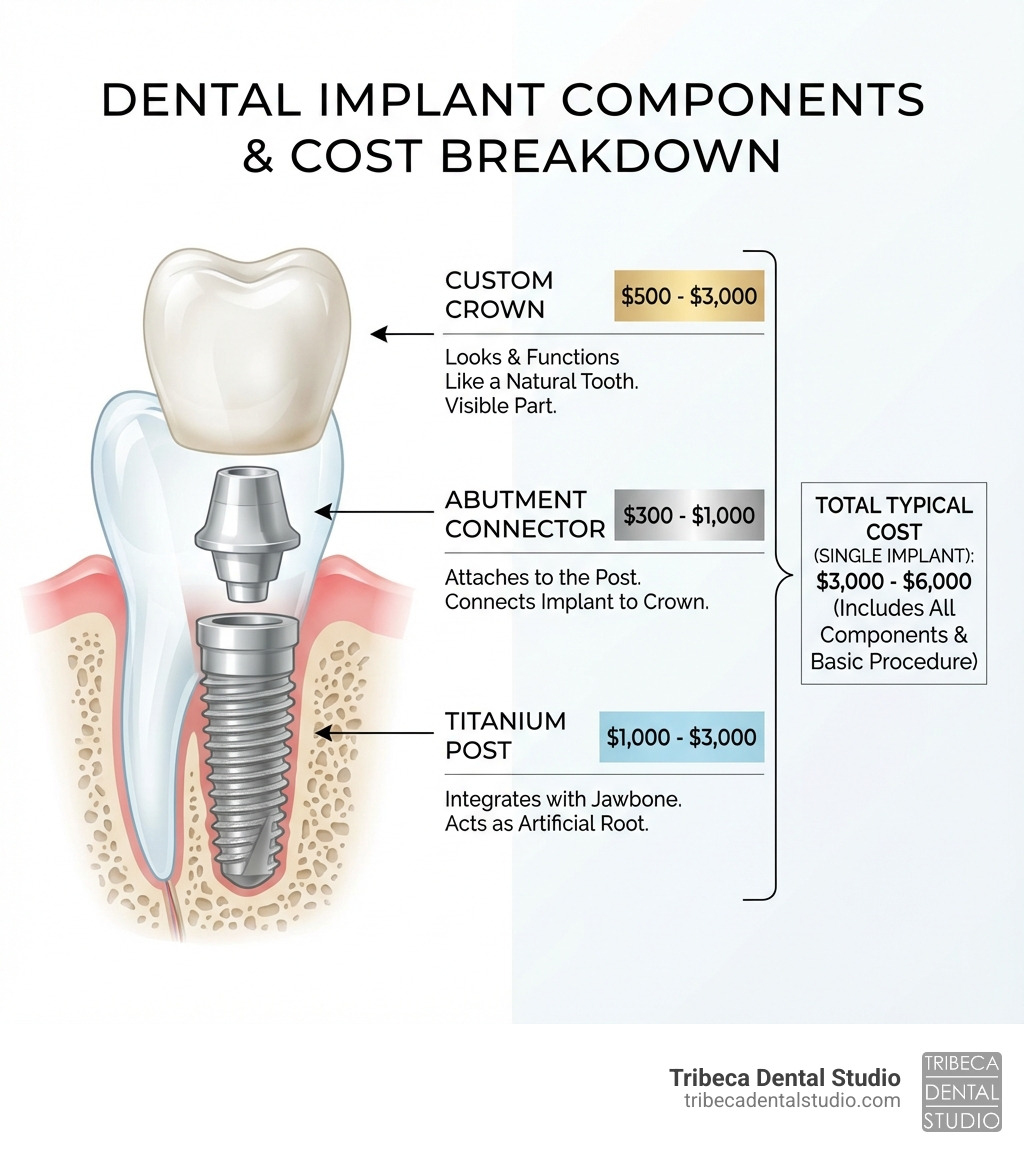
If you’re missing just one tooth, a single dental implant is often the ideal solution. It’s a standalone restoration that replaces the tooth and its root without relying on neighboring teeth for support. The average dental implants cost for a single tooth typically falls within the $3,000 to $6,000 range. This comprehensive price usually covers several key components:
- The Implant Post: This is the titanium (or sometimes zirconia) screw that our skilled specialists surgically place into your jawbone. It acts as the new tooth root. The cost for the implant post itself can range from $1,500 to $2,000.
- The Abutment: Once the implant has fused with your jawbone, a small connector piece called an abutment is attached to the implant. This piece protrudes above the gum line and serves as the anchor for your new crown.
- The Dental Crown: This is the visible part of your new tooth, custom-made to match the color, shape, and size of your natural teeth. Crowns can range from $488 to $3,254, depending on the material (e.g., porcelain, zirconia) and the complexity of its design.
- Surgical Fees: These fees encompass the expertise of the dental professional performing the surgery, the use of specialized equipment, and any necessary anesthesia.
These figures typically include the entire process, from the initial consultation and placement of the implant to the final crown. A single implant for one missing tooth is a significant step towards restoring your smile and oral health.
Cost of Multiple Teeth & Full-Mouth Solutions
When you’re missing several teeth, or even an entire arch, the dental implants cost naturally increases, but our solutions are designed for comprehensive restoration and long-term stability.
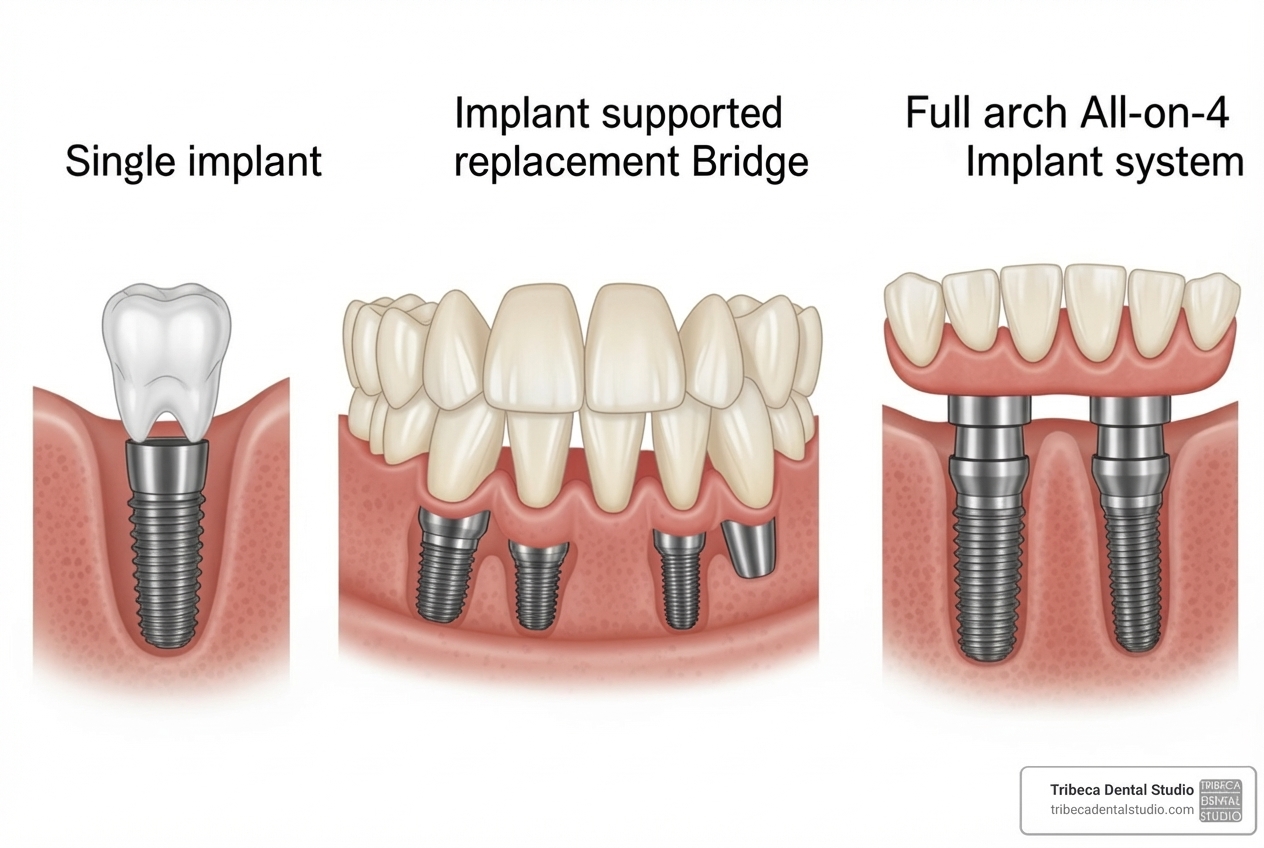
- Implant-Supported Bridge: If you have multiple missing teeth in a row, an implant-supported bridge can be a fantastic option. Instead of replacing each tooth with an individual implant, two or more implants can support a bridge that spans the gap. This can be more cost-effective than multiple individual implants. For example, replacing four teeth could cost upwards of $20,000 with individual implants, but a bridge spanning that gap might range from $6,000 to $10,000.
- All-on-4 Implants: This technique is designed to replace an entire arch of teeth (either upper or lower) using just four strategically placed dental implants. These implants support a full set of fixed, prosthetic teeth. The average dental implants cost for an All-on-4 procedure can range from $12,000 to $50,000 per arch. This makes it a more accessible full-arch solution compared to replacing every single tooth with an implant. If you’re interested, you can Learn about All-on-4 dentures in more detail.
- Full Arch Restoration / Full-Mouth Implants: For patients missing all of their teeth, full-mouth implants offer the most comprehensive and stable solution. This involves placing a greater number of implants (often 6-8 per arch) to support a custom-designed, fixed denture or bridge. The average dental implants cost for a full set of dental implants, replacing all teeth and some of their roots, typically ranges from $60,000 to $90,000. While this is a significant investment, it provides unparalleled stability, function, and aesthetics. These full-mouth implants are for patients missing all teeth and looking for a permanent solution.
These full-mouth solutions are designed to not only restore your smile but also to preserve your jawbone, prevent further tooth loss, and significantly improve your quality of life.
7 Key Factors That Influence the Final Price Tag
Understanding the dental implants cost means looking beyond the base price. Because every treatment plan is personalized, there’s no one-size-fits-all price. This is why a thorough consultation at Tribeca Dental Studio is so important—it allows us to assess your specific needs and provide an accurate, transparent estimate.
1. Preparatory Procedures: Bone Grafts & Extractions
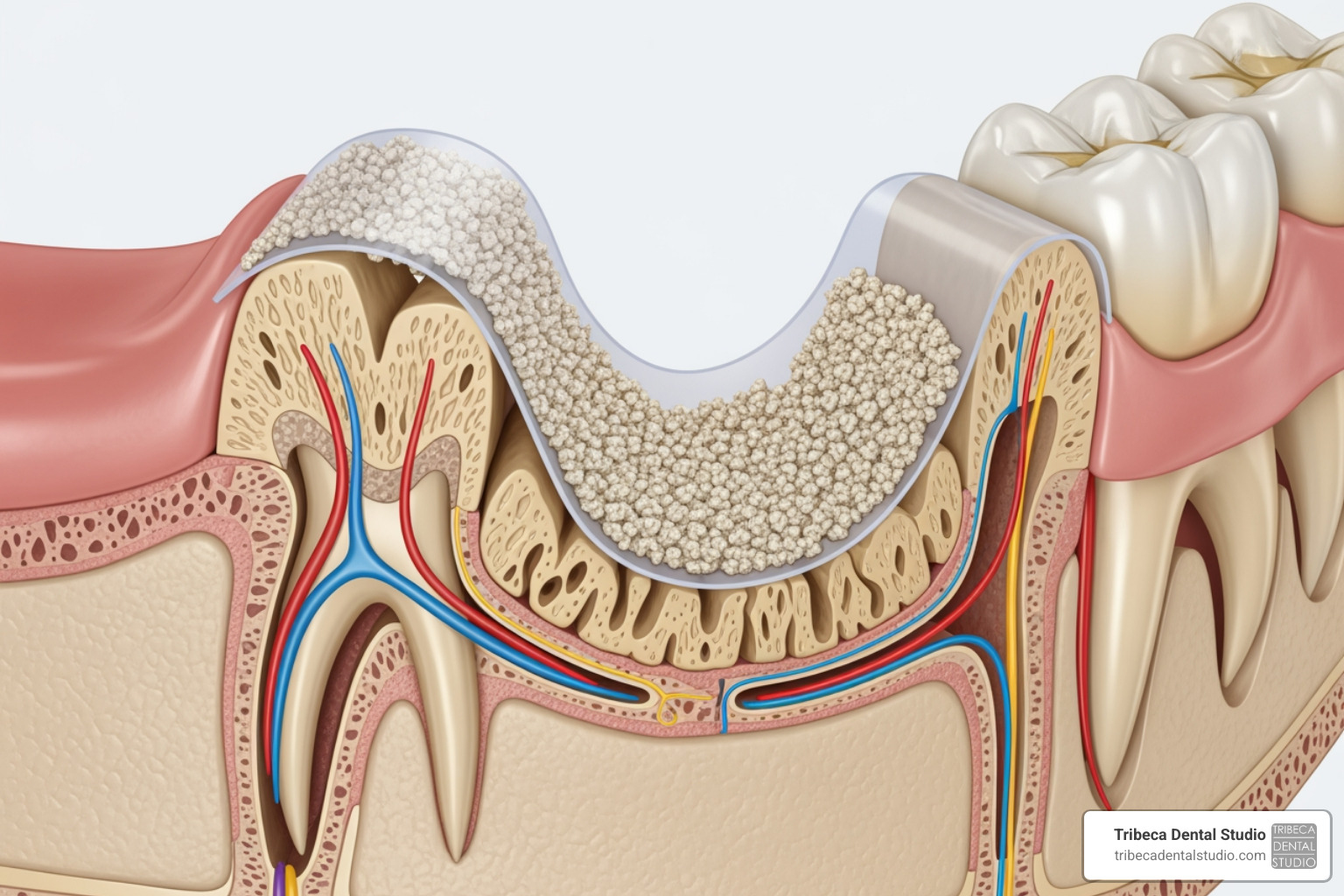
Before we can place a dental implant, your mouth may need preparation. These procedures are crucial for the long-term success of your implant and will add to the overall dental implants cost.
- Tooth Extraction: If you have a damaged or decayed tooth that needs to be removed before implant placement, this will be an additional cost, typically ranging from $150 to $700 per tooth.
- Bone Grafting: For an implant to be successful, there must be enough healthy jawbone to support it. If your jawbone has deteriorated due to tooth loss, gum disease, or trauma, we may need to perform a bone graft. Bone grafting adds more volume and density to your jaw and can cost anywhere from $200 to $3,200, depending on the material used and the extent of the graft. It’s a vital step to ensure the implant integrates properly. You can learn More on bone grafting solutions here.
- Sinus Lift: If you need implants in your upper jaw and don’t have enough bone due to the proximity of your sinuses, a sinus lift procedure may be necessary. This involves lifting the sinus membrane and placing bone graft material, and can cost between $1,500 and $5,000.
- Gum Disease Treatment: Active gum disease must be treated before implant surgery to prevent complications. The cost of this treatment will vary based on the severity of the condition.
2. Type of Implant and Restoration Materials
The materials we use directly impact the durability, aesthetics, and ultimately, the dental implants cost.
- Implant Material: The most common material for the implant post is titanium alloy, known for its strength, light weight, and biocompatibility (meaning your body readily accepts it). Some patients opt for zirconia implants, a ceramic alternative that is metal-free and aesthetically pleasing, though often at a slightly higher cost.
- Implant Brand: Just like with any advanced medical device, there are various reputable implant brands, each with its own research, development, and manufacturing costs. We choose brands known for their proven success rates and quality.
- Crown Material: Your dental crown, the visible part of your new tooth, can be made from different materials. Porcelain fused to metal (PFM) is a traditional option, while all-ceramic or all-zirconia crowns offer superior aesthetics and strength, especially for front teeth. These material choices will affect the final cost, with individual crowns ranging from $488 to $3,254.
- Abutment Type: Abutments can be standard (stock) or custom-made. Custom abutments, while potentially increasing the cost, can provide a more precise fit and a more natural-looking crown emergence, especially in highly visible areas of the mouth.
3. Provider’s Expertise and Geographic Location
The skill and experience of your dental team are paramount to the success and longevity of your dental implants. This expertise, combined with our location in New York City, also plays a role in the dental implants cost.
- Specialist vs. General Dentist: While some general dentists perform implant procedures, complex cases often require the specialized training of a periodontist (gum and bone specialist) or an oral surgeon. These specialists have undergone extensive additional education and training in implantology, which is reflected in their fees. At Tribeca Dental Studio, we’re proud to have a board-certified implant specialist on our team, ensuring you receive the highest level of care.
- Geographic Location: It’s no secret that the cost of living and operating a practice in a major metropolitan area like New York City is higher than in other regions. This naturally translates to a higher dental implants cost compared to national averages. For example, while the national average for a single implant might be around $2,143 (implant only), the average for a single-tooth dental implant in New York can start around $2,223 (again, implant only, not including the crown and abutment). However, this higher cost also often means access to leading-edge technology, highly skilled practitioners, and premium materials.
Navigating Payment: Insurance Coverage & Affordability Options
The dental implants cost is a significant financial commitment. Many of our patients in Tribeca and Manhattan ask about insurance and how to make this life-changing treatment more affordable. We’re here to help you explore all available avenues.
Does Dental Insurance Cover the Dental Implants Cost?
This is a tricky question, as dental insurance coverage for implants can vary widely. While some providers consider implants elective or cosmetic, others are increasingly recognizing their long-term health benefits and offering partial coverage.
- Partial Coverage is Common: Most dental insurance plans do not cover the cost of the implant surgery or the implant itself. However, they will probably cover some of your restoration costs (the crown, bridge, or denture) and potentially preparatory work like extractions or bone grafting if deemed medically necessary.
- Annual Maximums: Even if your plan offers some coverage, it will likely be subject to your annual maximum benefit, which is often around $1,000-$2,000. For a procedure with a higher dental implants cost, this coverage may only be a small fraction of the total.
- Cosmetic vs. Medically Necessary: Insurance coverage is often limited, especially if the implant is primarily for cosmetic reasons. However, if the implant is deemed medically necessary for chewing, speaking, or preventing further oral health deterioration, there’s a higher chance of partial coverage.
- Pre-authorization Importance: We highly recommend seeking pre-authorization from your insurance provider before starting treatment. This allows you to know exactly what your plan will cover, preventing any surprises. Our team at Tribeca Dental Studio is experienced in working with insurance companies and can help you steer this process.
- Aflac explains implant coverage in more detail, highlighting how supplemental plans might contribute.
We always advise our patients to check directly with their insurance provider to understand their specific benefits and get confirmation in writing.
How to Make Implants More Affordable
Even with limited insurance coverage, there are several ways to make the dental implants cost more manageable. We are committed to helping you find a solution that fits your budget.
- In-House Payment Plans: Many dental practices, including Tribeca Dental Studio, offer in-house payment plans. These often allow you to spread the cost of your treatment over several months, sometimes with low or no interest.
- Third-Party Financing: Companies like CareCredit®, LendingClub Patient Solutions, and Wells Fargo Health Advantage Credit Card specialize in healthcare financing. They offer various plans, including interest-free periods or extended payment options, to help you manage significant dental expenses.
- Flexible Spending Accounts (FSAs) & Health Savings Accounts (HSAs): If you have an FSA or HSA through your employer, you can use these tax-advantaged funds to pay for dental implants. Since implants are considered a qualified medical expense, this can be a smart way to save money.
- Dental Schools: For those on a very tight budget, dental schools can be an option. As teaching clinics, they often offer procedures at a reduced cost, with student dentists performing care under the direct supervision of experienced prosthodontists. You can use the Commission on Dental Association’s (CODA) list of dental programs to find a school near you, including options in the New York area.
- Non-Profit Programs: Organizations like the Dental Lifeline Network provide dental care to people with special needs and veterans with the help of volunteer dentists and laboratories.
- Dental Implant Grants: Programs like the Cosmetic Dentistry Grants Program offer free cosmetic dental services. After applying, you’ll be assessed by a local dentist to determine if you qualify for the grant.
- Cash Discounts: Sometimes, simply asking if there’s a discount for paying upfront in cash can yield a small but helpful reduction in the overall dental implants cost.
We encourage you to discuss these options with our financial coordinator at Tribeca Dental Studio. Our goal is to make your dream smile a reality, not a financial burden.
The Long-Term Value: Why Implants Are a Worthy Investment
When considering the dental implants cost, it’s important to see it as a long-term investment in your health, comfort, and confidence, not just an upfront expense. Unlike other tooth replacement options, implants offer unparalleled longevity and benefits that can save you money and hassle in the long run.
A significant advantage of dental implants is their ability to prevent bone loss in the jaw. When a tooth is lost, the jawbone beneath it no longer receives the stimulation it needs, leading to gradual deterioration. This can cause facial sagging, affect the stability of neighboring teeth, and make future tooth replacement more complicated. Dental implants, by integrating directly with the bone, provide that essential stimulation, preserving your jawbone’s health and structure.
Furthermore, dental implants dramatically improve your quality of life. They restore nearly 100% of your natural chewing function, allowing you to enjoy all your favorite foods without worry. This contrasts with traditional dentures, which often provide only 30-40% chewing efficiency. Implants also look and feel like your natural teeth, boosting your confidence in social and professional settings.
How Implants Compare to Bridges and Dentures
To truly appreciate the value of dental implants, let’s compare them to their common alternatives: dental bridges and traditional dentures.
| Feature | Dental Implants | Dental Bridges | Traditional Dentures |
|---|---|---|---|
| Cost | Higher upfront ($3,000-$90,000+) | Moderate upfront ($500-$5,000) | Lower upfront ($1,200-$2,500 for partials, ~$1,500-$3,000 for full) |
| Lifespan | Many decades, often a lifetime (with proper care) | 5-15 years (typically 10-15) | 5-7 years (requires relining/replacement) |
| Maintenance | Brush and floss like natural teeth | Regular cleaning, special flossing under bridge | Daily cleaning, adhesives, occasional relining |
| Bone Loss | Prevents bone loss (stimulates jawbone) | Does not prevent bone loss (rests on gums) | Accelerates bone loss (rests on gums) |
| Aesthetics | Most natural look and feel | Good, but can show wear over time | Can look natural, but may slip or feel bulky |
| Adjacent Teeth | Preserves adjacent teeth (no alteration) | Requires alteration/crowning of adjacent teeth | No alteration, but can put stress on remaining teeth |
| Chewing Function | Up to 100% of natural function | Good, but less stable than implants | 30-40% of natural function (can slip) |
While the initial dental implants cost is higher, their longevity and benefits often make them the most cost-effective solution over a lifetime. You avoid the recurring expenses of replacing bridges or dentures, buying adhesives, and treating issues caused by bone loss. With minimal care and appropriate hygiene, dental implants can last many decades or even a lifetime. This means fewer dental visits and less stress in the long run.
For a deeper dive into these options, check out our guide: Crowns vs. Bridges vs. Implants: Which is right for you?
Frequently Asked Questions about Dental Implant Costs
We understand that the dental implants cost can raise many questions. Here are some of the most common ones we hear at Tribeca Dental Studio, along with our expert answers.
Why are dental implants so expensive?
The dental implants cost can be substantial, reflecting the complexity, precision, and high-quality materials involved in the procedure.
- Surgical Procedure Complexity: Dental implant placement is a surgical procedure that requires advanced training, specialized equipment, and meticulous planning. It’s not a simple extraction or filling; it involves integrating a foreign body into living bone, a process known as osseointegration.
- High-Quality Biocompatible Materials: The implant posts are typically made from medical-grade titanium alloy, a material chosen for its strength, durability, and ability to safely fuse with human bone. These materials are costly to research, develop, and manufacture. The custom crowns and abutments are also crafted from high-quality materials to ensure aesthetics and function.
- Specialist Training Required: The procedure is often performed by highly trained specialists—periodontists or oral surgeons—who have undergone years of additional education and residency programs beyond dental school. Their expertise in diagnosing, planning, and executing implant surgery is a significant component of the cost.
- Multi-Step, Time-Intensive Process: Getting dental implants is a multi-step process. It involves consultation, preparatory procedures (like bone grafting), implant placement, a healing period, abutment placement, and finally, crown attachment. Each step requires precision and time, contributing to the overall cost.
- Advanced Technology: Modern implant dentistry uses cutting-edge technology, such as 3D imaging (CBCT scans), digital planning software, and surgical guides, to ensure accurate and safe placement. Investing in and maintaining this technology adds to the cost of providing top-tier care.
You’re paying for a sophisticated medical device and a highly skilled surgical procedure designed to provide a permanent, functional, and aesthetically pleasing tooth replacement.
What is the cheapest way to get a dental implant?
While we always prioritize quality and safety, we understand that finding affordable options is crucial for many of our patients in New York City. Here are some ways to potentially reduce the dental implants cost:
- Dental Schools: As mentioned earlier, dental schools offer supervised care at reduced rates. You can explore the Commission on Dental Association’s (CODA) list of dental programs to find accredited institutions in your area.
- Non-Profit Organizations: Groups like the Dental Lifeline Network provide dental care to individuals with special needs, the elderly, and veterans who might not otherwise afford treatment.
- Clinical Trials: Occasionally, dental implants are offered as part of clinical research trials at a reduced cost or even free. You would need to qualify for the study.
- Payment Plans and Financing: Utilizing in-house payment plans or third-party financing (like CareCredit) can make the cost more digestible by spreading it out over time.
- Consider Alternatives (with caution): While not implants, alternatives like dental bridges or partial dentures have a lower upfront cost. However, remember their long-term value, maintenance, and impact on bone health are typically inferior to implants.
- Risks of “Dental Tourism”: Some individuals consider traveling to other countries for cheaper dental implant procedures. While the upfront cost may be lower, we strongly advise caution. Issues like differing sanitation standards, lack of follow-up care, and difficulty addressing complications can lead to much higher costs and health risks in the long run. At Tribeca Dental Studio, we believe the expertise and continuity of care you receive locally are invaluable.
How long do dental implants last?
One of the most compelling aspects of dental implants, and a key factor in their value proposition, is their remarkable longevity. With proper care, dental implants have the potential to last a lifetime.
- Potential for a Lifetime: Unlike bridges or dentures that often need replacement every 5-15 years, the implant post itself, once integrated into the jawbone, is designed to be a permanent fixture.
- High Success Rates: Dental implants boast a very high success rate, often exceeding 95%, especially when placed by experienced professionals like our team at Tribeca Dental Studio.
- Importance of Proper Hygiene: The longevity of your implant largely depends on your oral hygiene habits. Brushing twice a day, flossing daily, and using an antimicrobial mouthwash are essential to prevent peri-implantitis, a form of gum disease that can affect implants.
- Regular Dental Check-ups: Consistent visits to our office for professional cleanings and check-ups are crucial. We monitor the health of your implants, gums, and surrounding teeth, addressing any potential issues before they become serious.
Think of it this way: While the initial dental implants cost might seem high, the fact that they can last for decades, potentially for the rest of your life, makes them an incredibly cost-effective solution when compared to the repeated expenses of replacing other tooth restoration options.
Conclusion: Investing in a Lasting, Confident Smile
Navigating the dental implants cost can feel complex, but we hope this guide has illuminated the path. This expense is a profound investment in your long-term oral health, overall well-being, and confidence.
At Tribeca Dental Studio, we don’t just see numbers; we see the life-changing potential of a restored smile. Dental implants offer a permanent solution that prevents bone loss, restores full chewing function, and provides a natural aesthetic that no other treatment can match. They are truly a lifetime investment, offering benefits that extend far beyond the dental chair.
We believe everyone in New York deserves a complete, healthy smile. Our personalized approach means we treat you like family, taking the time to understand your needs, discuss all your options, and craft a treatment plan that aligns with both your health goals and your budget.
If you’re ready to explore how dental implants can transform your life, we invite you to connect with us. Let’s discuss your unique situation and help you understand the true value of this incredible treatment. Schedule your dental implant consultation in New York today, and take the first step towards a lasting, confident smile.