Why Protecting Your Back Teeth Matters More Than You Think
Dental sealants Chelsea are thin protective coatings applied to the chewing surfaces of back teeth to prevent cavities by sealing out food particles and bacteria from hard-to-reach grooves. They are most commonly recommended for children when their permanent molars erupt (around ages 6 and 12), but adults without decay can also benefit from this simple, painless preventive treatment.
What You Need to Know About Dental Sealants:
- What they are: Thin plastic coatings painted on molars that harden into a protective shield
- Who needs them: Children ages 6-14, adults prone to cavities, anyone with deep grooves in back teeth
- How long they last: Typically 3-5 years, sometimes up to 10 years with proper care
- The process: Quick (about 10 minutes), painless, no drilling required
- Effectiveness: Reduce cavity risk by nearly 80% in molars
- Cost: More affordable than fillings, often covered by insurance including Medicaid
Almost everyone has something about their smile that concerns them. But when it comes to cavities, prevention is always better than treatment. Brushing and flossing are essential, but they can’t always reach every nook and cranny in your back teeth—especially those deep grooves where food and bacteria love to hide.
That’s where dental sealants come in. Think of them as raincoats for your teeth. They create a smooth, protective barrier over the vulnerable chewing surfaces of your molars, keeping decay from ever getting started.
According to the CDC, school-age children without sealants have almost three times more cavities than children with sealants. Yet only 43% of children ages 6-11 have them. That’s a missed opportunity for simple, effective protection.
As Dr. Nina Izhaky, founder of Tribeca Dental Studio, I’ve seen how dental sealants Chelsea can transform children’s oral health by preventing painful cavities before they start. Our practice combines state-of-the-art preventive care with a personalized approach, ensuring every patient receives the protection they need in a comfortable, welcoming environment.
What Are Dental Sealants and How Do They Protect Teeth?
The journey to a healthier smile often begins with understanding the basics. Let’s explain dental sealants and explore how these small but mighty protectors work.
What are dental sealants and how do they work?
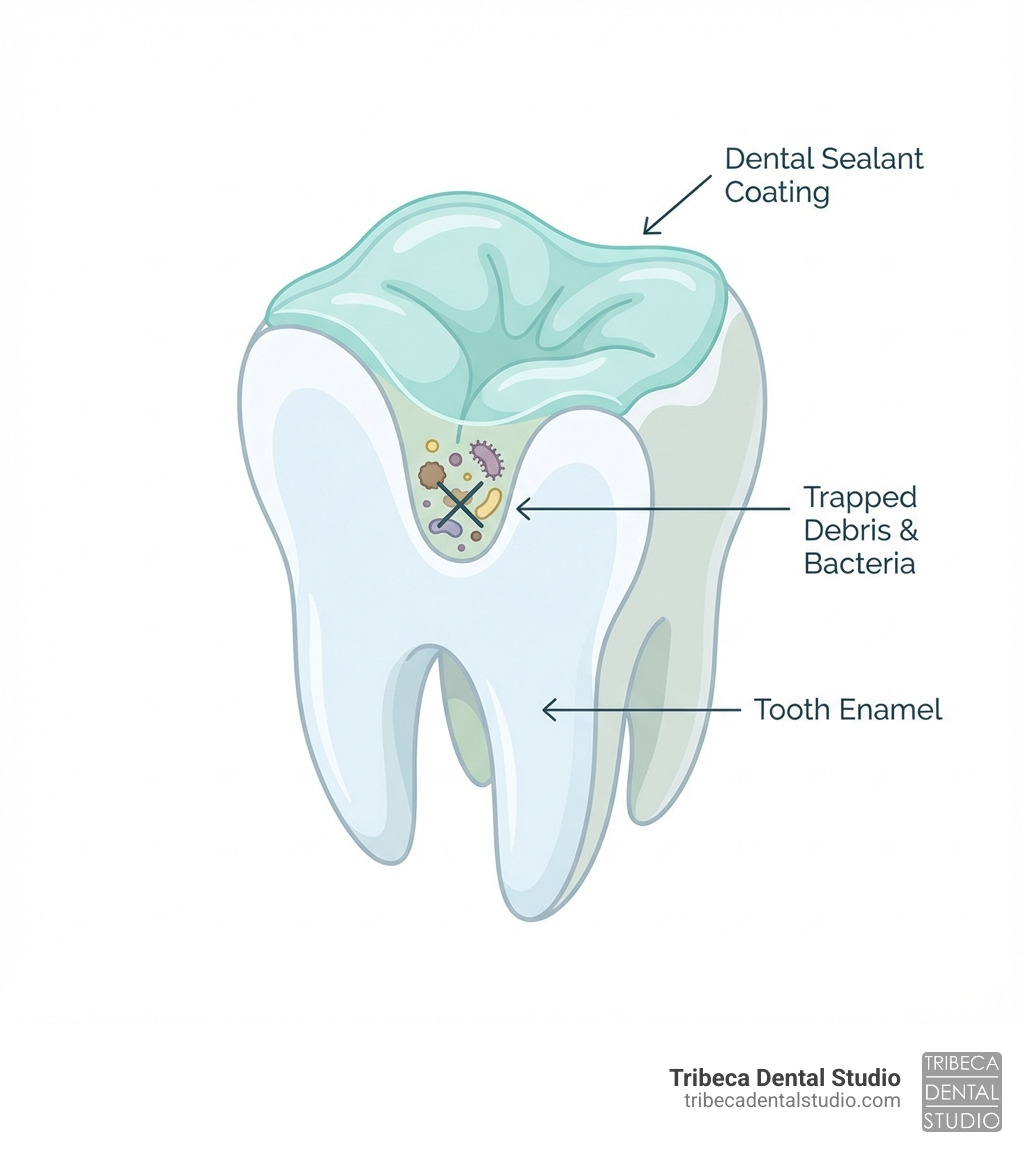
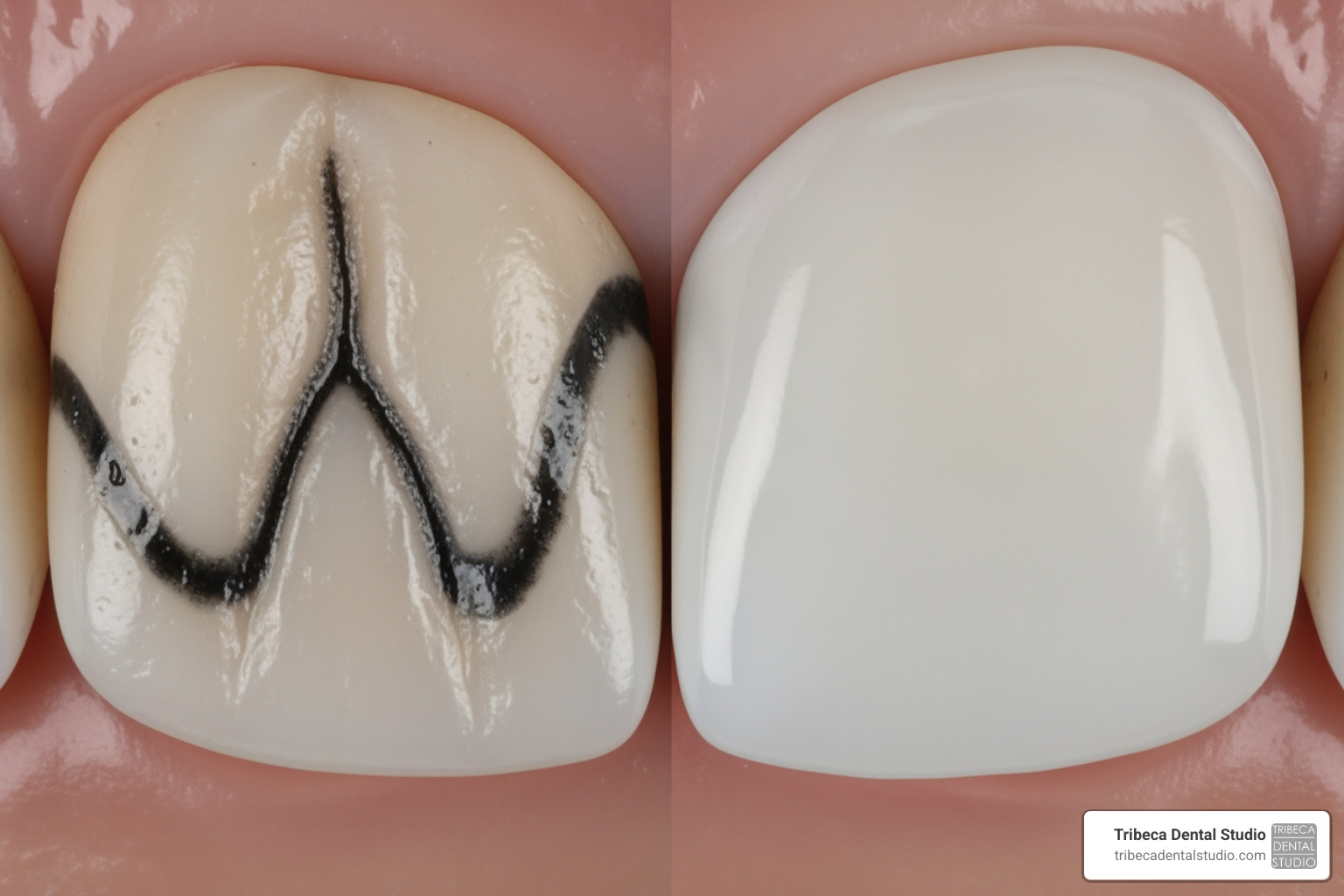
Imagine your back teeth, your molars, have tiny valleys and mountains on their chewing surfaces. These are called grooves and fissures. While they’re great for grinding food, they’re also perfect hiding spots for food particles and cavity-causing bacteria. Even the best toothbrush bristles can struggle to reach deep into these crevices.
This is where dental sealants step in. A dental sealant is a thin, liquid coating that we paint directly onto the chewing surfaces of your back teeth. Once applied, a special light is used to quickly cure and harden the sealant material, changing it into a durable, protective shield. This shield effectively “seals off” the grooves and fissures, preventing food and bacteria from settling in and causing decay.
Think of it this way: instead of a bumpy, uneven road where debris can collect, the sealant creates a smooth, easy-to-clean surface. This makes brushing more effective and significantly reduces the risk of cavities. As the Cleveland Clinic explains, sealants create a physical barrier against decay, making them a highly effective preventive measure. For more detailed information on how they work, you can always visit our page on Dental Sealants.
What is the difference between dental sealants and dental fillings?
While both dental sealants and dental fillings deal with cavities, they serve very different purposes and are used at different stages of oral health. Here’s a quick comparison:
| Feature | Dental Sealants | Dental Fillings |
|---|---|---|
| Purpose | Prevention of cavities | Restoration of teeth damaged by cavities |
| Timing | Applied to healthy teeth, before decay occurs | Applied to teeth that already have decay |
| Tooth Condition | Intact tooth structure, deep grooves prone to decay | Tooth structure with existing decay (a cavity) |
| Procedure | Non-invasive, no drilling, quick and painless | Involves drilling to remove decayed tissue, then filling |
Essentially, sealants are a proactive measure, like putting on a raincoat before it rains. They protect healthy teeth from future damage. Fillings, on the other hand, are a reactive treatment. They repair a tooth after a cavity has already formed, restoring its structure and function. Our goal at Tribeca Dental Studio is always to help you prevent cavities so you never need a filling!
Who Needs Dental Sealants and When?
Dental sealants are a fantastic preventive tool, but who benefits from them the most, and when is the ideal time to get them? Let’s explore the specifics. Statistics from the CDC highlight the impact of sealants, noting that fissure sealed teeth are 80% less likely to get caries, showcasing their powerful role in preventing decay.
Who is a good candidate for dental sealants in Chelsea?
While often associated with children, dental sealants can benefit a wider range of patients right here in Chelsea, New York City.
- Children and Teenagers: This is the primary group for whom sealants are recommended. Their newly erupted permanent molars and premolars are particularly susceptible to decay because the enamel is not yet fully hardened, and these teeth often have deep grooves that are difficult to clean. Studies show that approximately 42% of children aged 6 to 11 and 48% of adolescents aged 12 to 19 in the U.S. have dental sealants on their adult teeth.
- Adults without Molar Decay: If you’re an adult who hasn’t had cavities in your molars and your teeth have deep grooves, you could still be a great candidate for sealants. It’s never too late to protect your teeth from future decay, especially if you’re prone to cavities.
- Primary (Baby) Teeth: In some cases, sealants can be applied to a child’s baby teeth, especially if they have deep grooves or if the child is at a high risk for cavities. Maintaining the health of baby teeth is crucial as they hold space for the permanent teeth to erupt correctly.
- Anyone Prone to Cavities: If you or your child have a history of frequent cavities, especially in the back teeth, sealants offer an excellent extra layer of protection.
Our team at Tribeca Dental Studio believes in a personalized approach. During your visit, we can assess whether dental sealants Chelsea are the right choice for you or your child. We invite you to learn more about Why Choosing the Right Pediatric Dentist Matters for Your Child’s Smile and how we prioritize preventive care.
When is the best time for a child to get dental sealants?
Timing is key when it comes to maximizing the protective benefits of dental sealants for children. The general rule of thumb is to apply sealants as soon as the permanent molars erupt, before decay has a chance to set in.
- First Molars (around age 6-7): These are often called the “six-year molars.” They are the first permanent molars to emerge, typically behind all the baby teeth. Sealing these teeth as soon as they fully erupt is critical because they will be in the mouth for a lifetime and are highly susceptible to decay in their early years.
- Second Molars (around age 12): These molars appear around the age of twelve and are also prime candidates for sealants for the same reasons as the first molars.
- As Soon as Permanent Teeth Erupt: The period between ages 6 and 14 is often referred to as the “cavity-prone years” because children are developing their permanent teeth and learning proper oral hygiene habits. Applying sealants during this window provides essential protection during this vulnerable time.
We strongly encourage parents to consider sealants as soon as their child’s permanent molars come in. It’s a simple, proactive step that can save a lot of trouble down the road. For more insights on early dental care, check out The Importance of Early Dental Care.
What are the benefits of dental sealants for children’s oral health?
The advantages of dental sealants, especially for children, are profound and far-reaching:
- Best Cavity Prevention: This is the biggest benefit. Sealants have been shown to reduce the risk of decay by nearly 80% in molars. By creating a physical barrier, they keep food and bacteria out of the deep grooves where cavities most often begin.
- Protecting Hard-to-Clean Areas: As mentioned, toothbrush bristles can’t always reach into the deep pits and fissures of molars. Sealants effectively smooth out these surfaces, making them much easier to clean during daily brushing.
- Avoiding Fillings: Preventing cavities means avoiding the need for fillings, which are more invasive and costly. It’s always better to protect a tooth with a sealant than to wait for damage like tooth decay to occur.
- Pain-Free Protection: The application of sealants is completely painless, involving no drilling or needles. This can be a huge relief for children (and parents!) and helps foster positive dental experiences from a young age.
- Long-Term Oral Health: By protecting young permanent teeth from decay, sealants contribute to a lifetime of healthier smiles. They help children maintain their natural teeth, which is crucial for proper chewing, speech, and overall well-being.
At Tribeca Dental Studio, we are dedicated to helping your child grow up cavity-free. Learn more about our approach to Pediatric Dental Sealants and how we make dental care a positive experience for our youngest patients.
The Application Process for Dental Sealants in Chelsea
One of the most appealing aspects of dental sealants is how straightforward and comfortable the application process is. It’s a quick procedure that makes a big difference, without any of the discomfort typically associated with dental work.
How are dental sealants applied, and is the procedure painful?
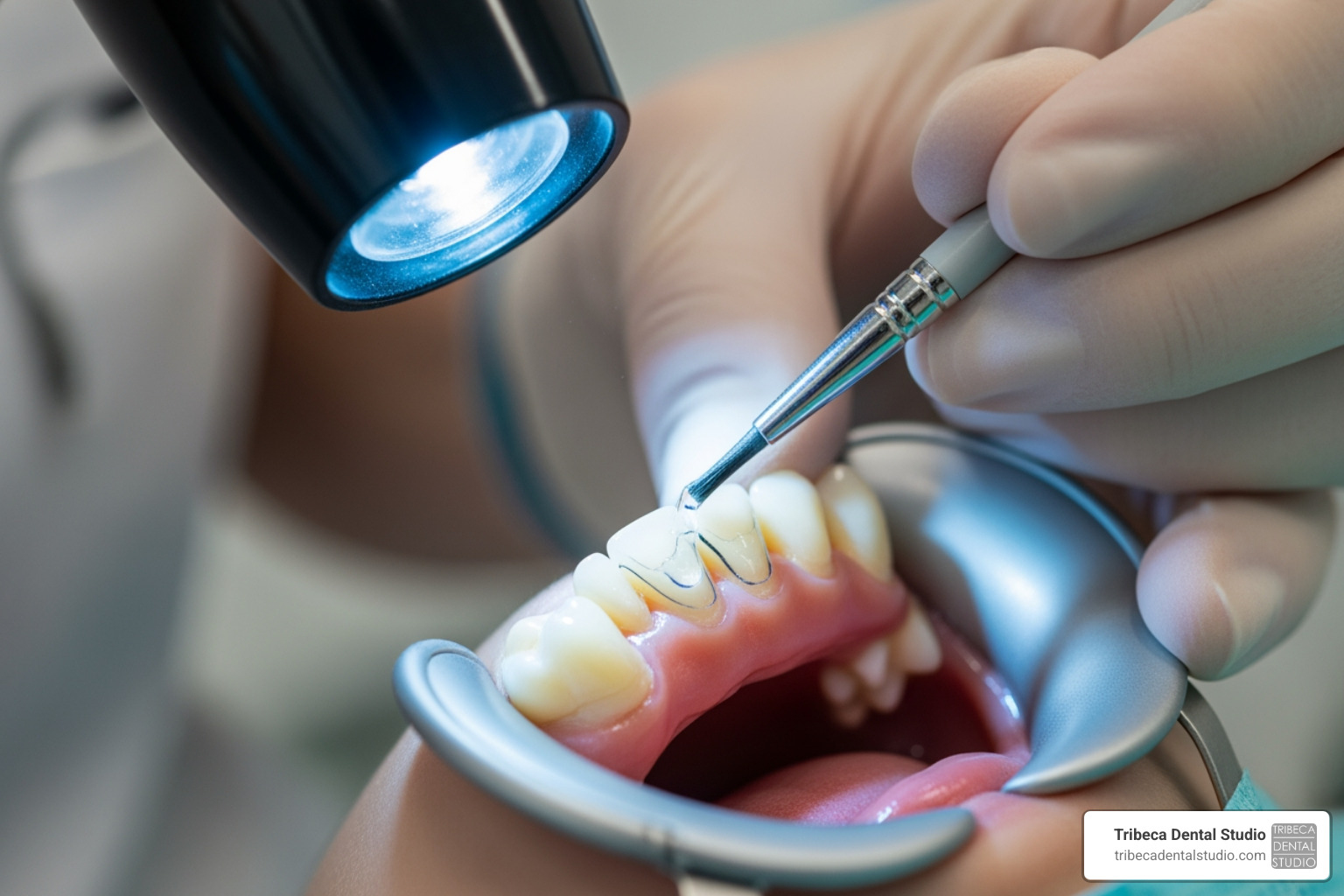
We understand that any dental procedure can cause a little anxiety, but rest assured, applying dental sealants Chelsea is one of the easiest and most comfortable treatments we offer. The entire process is non-invasive, meaning there’s no drilling, no shots, and no pain. It typically takes only about 10 minutes per tooth!
Here’s a step-by-step breakdown of how we apply dental sealants:
- Tooth Cleaning and Drying: First, we thoroughly clean the tooth (or teeth) that will receive the sealant to remove any food particles or plaque. Then, we carefully dry the tooth, often using cotton rolls or a special isolation system to keep it dry during the application. Moisture control is crucial for the sealant to bond properly.
- Conditioning Gel: A mild acidic gel is applied to the chewing surface of the tooth for a few seconds. This gel gently roughens the enamel surface, creating tiny microscopic pores that help the sealant bond securely to the tooth.
- Rinsing: After a short time, the conditioning gel is thoroughly rinsed off, and the tooth is dried again.
- Painting on Sealant: The liquid sealant material, which is usually tooth-colored or clear, is then carefully painted onto the grooves and fissures of the tooth. It flows into all the depressions and pits, creating a smooth, protective layer.
- Curing with a Blue Light: Finally, a special blue light is shined onto the sealant for a few seconds. This light quickly hardens the liquid sealant, turning it into a tough, durable plastic coating.
And that’s it! The procedure is completely painless, and you or your child can eat and drink normally almost immediately afterward. The American Dental Association (ADA) provides excellent resources on this simple process; you can learn more by visiting their Sealants | MouthHealthy page.
Are there any side effects or risks associated with dental sealants?
Dental sealants are considered extremely safe and have been used effectively for decades to prevent cavities. We wouldn’t recommend them if they weren’t! However, it’s natural to have questions about any dental treatment.
- Extremely Safe: The vast majority of people experience no side effects from dental sealants. They are a well-established and highly effective preventive measure endorsed by leading dental and public health organizations, including the CDC.
- BPA Concerns: Some patients express concern about Bisphenol A (BPA) in dental sealants. It’s true that some sealants may contain a tiny, trace amount of BPA or related compounds. However, scientific research, including studies from the ADA and the American Academy of Pediatric Dentistry, has consistently shown that the amount of BPA exposure from sealants is negligible and far below levels considered harmful. In fact, you’re likely exposed to much higher levels of BPA from everyday items like plastic containers, receipts, or cosmetics. The benefits of cavity prevention far outweigh any theoretical risk from this minute exposure.
- Rare Allergies: As with almost any material, a very rare allergic reaction to components of the sealant material is possible, but this is exceedingly uncommon.
- Sealant Maintenance and Check-ups: While not a “risk,” it’s important to note that sealants can sometimes chip or wear down over time. This is why regular dental check-ups are essential. During your routine visits, we’ll check the condition of the sealants and can easily repair or reapply them if needed, ensuring continuous protection.
Our priority at Tribeca Dental Studio is always your safety and peace of mind. We’re happy to discuss any concerns you might have about dental sealants during your visit.
Practical Considerations: Durability, Cost, and Alternatives
Investing in preventive dental care like sealants is a smart long-term strategy for maintaining oral health. Let’s explore how long they last, their cost-effectiveness, and other ways we can protect your smile.
How long do dental sealants typically last?
One of the great advantages of dental sealants is their durability. With proper care, they can provide protection for many years:
- Typical Durability: Dental sealants usually last between 3 to 5 years.
- Potential for Longer Life: It’s not uncommon for sealants to last much longer, even up to 10 years, especially with good oral hygiene and regular dental check-ups. Some sources indicate they can last 5 to 10 years.
- Regular Dental Check-ups: We emphasize the importance of routine dental visits. During these appointments, our team will thoroughly check the condition of your or your child’s sealants. If we notice any signs of chipping, wear, or if a sealant has come off, we can easily repair or reapply it. This ensures continuous, uninterrupted protection against decay.
- Reapplication if Needed: Reapplying a sealant is just as quick and painless as the initial application, making it simple to maintain long-term cavity prevention.
While sealants are tough, they’re not invincible. Avoiding chewing on ice, hard candies, or other very hard foods can help extend their lifespan.
How do dental sealants in Chelsea compare in cost to other treatments?
When considering dental sealants Chelsea, many patients are pleasantly surprised by their affordability, especially when compared to the cost of treating cavities.
- Cost vs. Fillings: The investment in dental sealants is significantly lower than the cost of a dental filling. A sealant is a preventive measure, whereas a filling is a restorative procedure that addresses existing damage. This means fillings often involve more materials, chair time, and laboratory work (for more complex restorations), leading to higher costs. Protecting a tooth with a sealant now can save you hundreds, if not thousands, of dollars in future restorative treatments.
- Insurance Coverage: Many dental insurance plans, including Medicaid and Child Health Plus in New York City, recognize the preventive value of sealants and provide coverage for them, often at a low or no out-of-pocket cost. We always recommend checking with your specific insurance provider for details on your plan’s coverage.
- Long-Term Savings: The true value of sealants lies in their ability to prevent costly and potentially uncomfortable dental problems down the line. By avoiding cavities, you avoid the need for fillings, crowns, root canals, or even extractions, all of which are far more expensive than a simple sealant application.
At Tribeca Dental Studio, we believe in transparent pricing and will always discuss the costs and your insurance options with you upfront. Our goal is to make essential preventive care accessible. For more information on our services, including cost-effective pediatric options, please visit our Pediatric Dental Services in New York page.
Are there alternative ways to protect children’s teeth from decay besides sealants?
While dental sealants are an incredibly effective tool, they are just one part of a comprehensive strategy for protecting children’s teeth from decay. We advocate for a multi-faceted approach to ensure the strongest possible oral health:
- Good Oral Hygiene: This is the cornerstone of all dental health. Consistent and thorough brushing twice a day with fluoride toothpaste and flossing daily are essential. Teach your children to brush for at least two minutes, paying special attention to those hard-to-reach back molars.
- Fluoride Treatments: Fluoride plays a vital role in strengthening tooth enamel and making it more resistant to acid attacks from bacteria. We offer professional fluoride treatments as part of routine check-ups. Additionally, ensure your child uses fluoride toothpaste and, if your community water is fluoridated (like NYC tap water), encourage them to drink it.
- Healthy Diet Low in Sugar: Sugar is the primary fuel for cavity-causing bacteria. Limiting sugary snacks, drinks, and highly processed carbohydrates can significantly reduce the risk of decay. Encourage a diet rich in fruits, vegetables, and whole grains.
- Regular Dental Visits: Routine check-ups and cleanings, typically every six months, are crucial. These visits allow us to monitor your child’s oral health, catch any potential issues early, provide professional cleanings, and reapply or repair sealants as needed.
By combining dental sealants with these other preventive measures, we can give your child the best possible chance for a lifetime of healthy, cavity-free smiles.
Conclusion: A Simple Step for a Lifetime of Healthy Smiles
We hope this guide has shed light on the incredible benefits of dental sealants Chelsea for maintaining a strong and healthy smile. From understanding what they are and how they work to knowing who can benefit and what the process entails, you now have a comprehensive overview of this simple yet powerful preventive treatment.
At Tribeca Dental Studio, we believe that prevention is the best medicine. Dental sealants offer a simple, painless, and highly effective way to protect the vulnerable chewing surfaces of molars, especially during the critical cavity-prone years of childhood. By taking this small step, you’re making a big investment in long-term oral health, potentially saving yourself or your child from the discomfort and cost of future cavities and fillings.
Our commitment is to provide personalized, advanced, and welcoming oral healthcare to every patient, treating you like family. We’re here to help you make informed decisions about your dental health. Don’t let those “raincoats for teeth” pass you by!
Take the next step for your family’s oral health today. We invite you to contact us to discuss whether dental sealants are the right option for you or your child. Learn more about our comprehensive approach to Preventive Dentistry and how we can partner with you to achieve a lifetime of healthy, confident smiles.