Why You Need to Fix a Fractured Tooth Right Away
Fix fractured tooth quickly to prevent infection, tooth loss, and escalating dental problems. According to the American Dental Association, treatment varies from simple bonding to root canal therapy or extraction, depending on the fracture’s size and location. Dentists are seeing chipped and broken teeth more frequently than ever before.
Here’s what you need to know immediately:
- Minor Chips – Dental bonding or composite fillings (usually one visit)
- Moderate Cracks – Dental crowns to restore strength (typically two visits)
- Severe Fractures – Root canal therapy or extraction, possibly followed by implants
- Emergency Care – If you have severe pain, bleeding, or signs of infection, seek immediate dental attention
Unlike bones, teeth cannot regenerate or heal themselves. Even a small crack can widen over time, eventually exposing the tooth’s pulp to bacteria and leading to infection. What starts as a minor chip can quickly become a serious problem requiring extensive treatment.
The good news? Modern dentistry offers effective solutions for nearly every type of tooth fracture. From quick cosmetic fixes to complete tooth replacement, the right treatment can restore both function and appearance.
I’m Dr. Nina Izhaky, and at Tribeca Dental Studio, I’ve helped countless patients fix fractured tooth problems using state-of-the-art technology and personalized treatment plans. With specialized training from NYU College of Dentistry and a team of on-site specialists, we provide comprehensive solutions for every type of dental fracture.
Understanding Tooth Fractures: Causes and Types
Have you ever bitten into something unexpectedly hard and felt that sickening “crunch”? Or perhaps you woke up with a new sensitivity after a night of grinding your teeth? These are just a couple of the common culprits behind a fractured or broken tooth. While our enamel is the hardest, most mineralized tissue in the body, it has its limits. At Tribeca Dental Studio, we see a variety of causes for tooth fractures, and understanding them is the first step toward effective treatment.
Common causes of fractured or broken teeth include:
- Trauma from Accidents: A fall, a sports injury, or any direct blow to the mouth can easily chip or break a tooth. It’s why we always recommend mouthguards for contact sports!
- Biting Hard Objects: Chewing on ice, hard candies, popcorn kernels, or even using your teeth as tools (we’ve all been tempted!) can exert immense pressure, leading to cracks.
- Teeth Grinding (Bruxism): Many people unconsciously grind or clench their teeth, especially at night. This constant, excessive force can weaken tooth structure over time, making them more susceptible to fractures. According to ADA Health Policy Institute polling, dentists are seeing chipped and broken teeth more frequently, often linked to increased stress.
- Large Fillings Weakening Tooth Structure: While fillings restore teeth, very large or old fillings can sometimes compromise the remaining tooth structure, making it more fragile and prone to cracking.
- Extreme Temperature Changes: Rapid shifts in temperature, like sipping hot coffee immediately after an icy drink, can cause the tooth to expand and contract, potentially leading to tiny cracks.
The type and severity of a tooth fracture greatly influence the treatment needed. Your dentist will determine a therapeutic treatment based on the nature of the break. The American Association of Endodontists describes several types of fractures, each with its own characteristics and implications for your oral health.

Craze Lines (Minor Cracks)
Think of these as the “wrinkles” of your teeth. Craze lines are tiny, superficial cracks that appear in the tooth enamel. They are very common in adult teeth and are usually shallow, meaning they don’t extend into the inner layers of the tooth. Typically, they cause no pain and are primarily a cosmetic concern. While they generally don’t require treatment, we might recommend addressing them if you’re bothered by their appearance.
Fractured Cusp
A cusp is the pointed chewing surface of your tooth, especially common on molars. A fractured cusp occurs when a piece of this chewing surface breaks off. This usually happens around a filling. While it might feel alarming, it’s often not extremely painful because it rarely affects the tooth’s pulp (nerve). However, it’s crucial to get it evaluated to prevent further damage or sensitivity.
Cracked Tooth
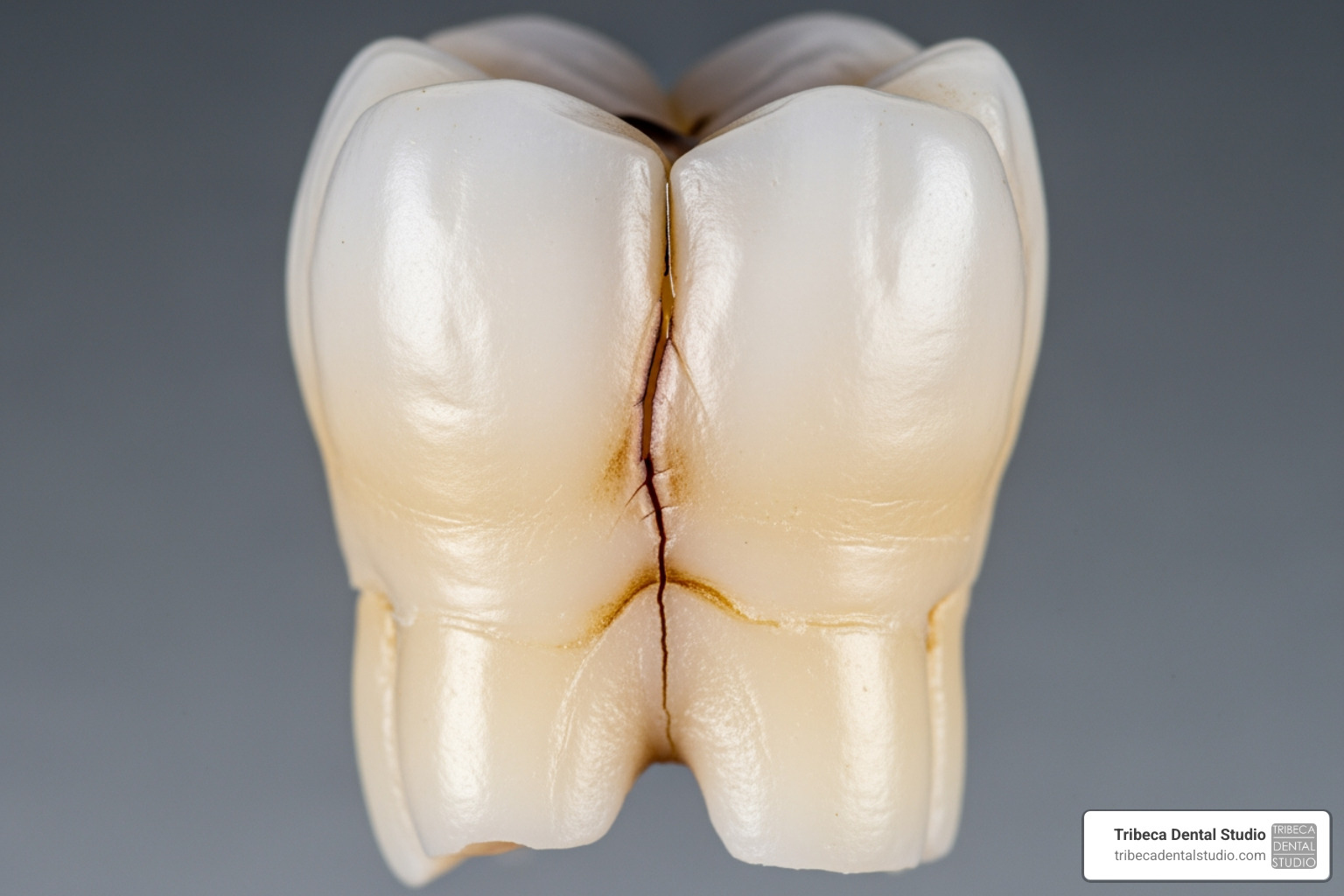
This is a more significant fracture, characterized by a vertical crack that extends from the chewing surface down towards the root. A cracked tooth can be tricky to diagnose because the crack might not be immediately visible. Symptoms often include intermittent pain when chewing, especially when releasing biting pressure, and sensitivity to hot or cold temperatures. If left untreated, the crack can deepen and lead to infection.
Split Tooth
A split tooth is typically the result of an untreated cracked tooth that has progressed. Here, the crack has advanced to the point where the tooth is literally split into two or more distinct segments. Unfortunately, once a tooth has split, it’s often beyond repair and usually requires extraction. This highlights the importance of addressing cracked teeth promptly.
Vertical Root Fracture
Unlike other fractures that start on the chewing surface, a vertical root fracture begins in the root of the tooth and spreads upward towards the chewing surface. These fractures are often difficult to detect because they are below the gum line and may not cause obvious symptoms until an infection develops in the surrounding bone and gum tissue. They are challenging to treat and, regrettably, often lead to tooth loss.
What to Do Immediately After Breaking a Tooth
Finding a fractured tooth can be startling and, frankly, a little scary. Your first thought might be, “What do I do now?!” While calling our Tribeca dental office should be your immediate next step, there are crucial actions you can take right away to manage pain, prevent further damage, and keep the situation from worsening until you can see us.
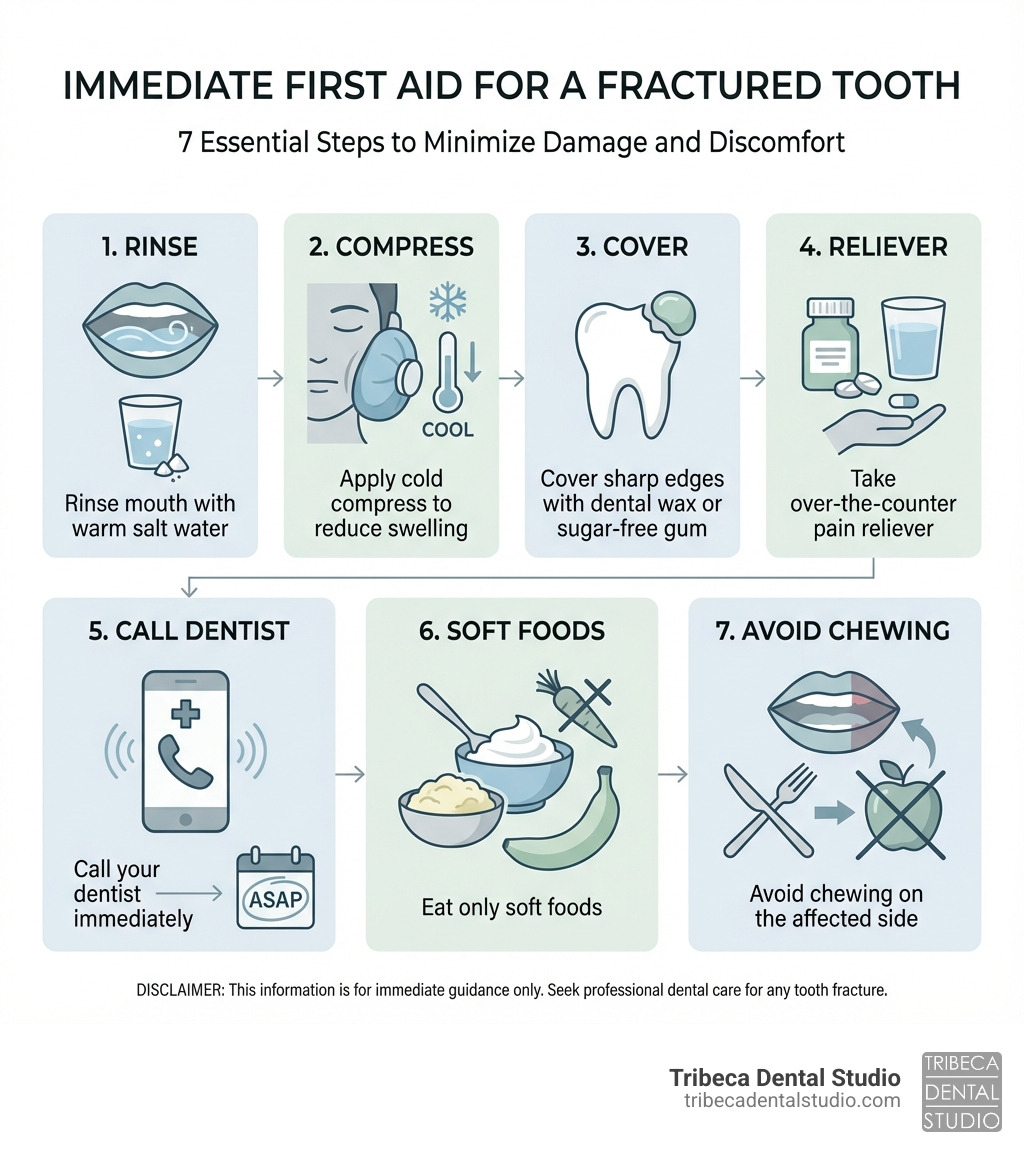
Here are the immediate steps you should take:
- Rinse with Warm Salt Water: Gently rinse your mouth with warm salt water. This helps to clean the area, reduce bacteria, and can provide some soothing relief. It’s a simple yet effective way to maintain oral hygiene around the injured tooth.
- Apply a Cold Compress: If there’s any swelling or pain, place a cold compress or ice pack wrapped in a cloth on the outside of your cheek, near the affected area. Apply it for 15-20 minutes at a time to reduce swelling and numb the pain.
- Use Dental Wax for Sharp Edges: A fractured tooth can have sharp edges that irritate or cut your tongue, cheek, or gums. You can temporarily cover these sharp edges with dental wax (available at most pharmacies) or even a piece of sugar-free chewing gum to protect your soft tissues.
- Over-the-Counter Pain Relievers: For pain and discomfort, take an over-the-counter pain reliever like ibuprofen or acetaminophen, following the dosage instructions on the package. This can help manage the pain until you get professional care.
- Avoid Chewing on the Tooth and Eat Soft Foods: Try your best to avoid biting or chewing on the side of your mouth where the fractured tooth is located. Stick to soft, easy-to-chew foods to prevent putting additional stress on the tooth and causing further damage. For more insights on tooth pain, you can read our guide: Why Does My Tooth Hurt When I Chew? Common Causes, Fast Relief.
- Consider Temporary Natural Remedies for Relief: While these are not substitutes for professional care, some temporary remedies can offer relief. A small amount of clove oil applied with a cotton swab to the affected area can help with pain. Peppermint tea bags (after steeping and cooling) can also be placed on the tooth. These are just stop-gap measures.
These steps are for temporary relief and to prevent the situation from escalating. A fractured tooth is a serious issue that requires prompt professional attention. The sooner you reach out to Tribeca Dental Studio, the sooner we can assess the damage and begin the process to fix fractured tooth problems effectively.

How Dentists Professionally Fix a Fractured Tooth
When you visit us at Tribeca Dental Studio with a fractured tooth, our primary goal is to accurately diagnose the problem and provide the most effective, long-lasting solution. We understand that every fracture is unique, and our approach is always personalized.
Our diagnostic process typically involves:
- Visual Examination: We’ll carefully inspect your tooth, looking for visible cracks, chips, or missing pieces.
- X-rays: Dental X-rays help us see the extent of the fracture below the gum line and assess the health of the tooth’s root and surrounding bone.
- Dental Dye: Sometimes, we’ll apply a special dental dye to the tooth’s surface. The dye seeps into the crack, making it more visible and helping us determine its depth and direction.
- Probing and Tapping: We may gently probe the tooth or tap on it to identify areas of sensitivity, which can indicate nerve involvement.
Once we have a clear picture of your fracture, we’ll discuss the best treatment options with you. Our expertise in Restorative Dentistry allows us to offer a comprehensive range of solutions. The chosen treatment depends on the type and severity of the fracture, its location, and your overall oral health goals.
Dental Bonding and Fillings for Minor Chips
For smaller chips or minor fractures, especially on front teeth or areas not subjected to heavy biting forces, dental bonding is often an excellent choice. This cost-effective solution involves applying a tooth-colored composite resin directly to the tooth. We carefully sculpt the resin to match the natural shape and color of your tooth, creating a seamless repair. The process is typically completed in a single visit.
Pros of Bonding:
- Aesthetic: The resin is matched to your tooth color, making the repair virtually invisible.
- Minimally Invasive: Little to no removal of healthy tooth structure is required.
- Quick: Often completed in one appointment.
- Cost-Effective: Generally less expensive than crowns or veneers.
Cons of Bonding:
- Durability: Composite resin is not as strong as porcelain and may be more susceptible to chipping or staining over time.
- Lifespan: While effective, bonding may need to be repaired or replaced sooner than more durable restorations like crowns.
- Limited Application: Best for smaller repairs and areas of less biting pressure.
Bonding is an immediate and effective solution to prevent infection and restore normal chewing function. It’s an ideal way to fix fractured tooth issues that are primarily cosmetic or involve minor damage. You can learn more about how we use Tooth Colored Fillings and bonding for repairs.
Dental Crowns for Significant Damage
When a tooth has a larger fracture, significant decay, or a fractured cusp, a dental crown (often called a “cap”) is usually the recommended treatment. A crown covers the entire visible portion of the tooth, restoring its original shape, size, strength, and appearance. It acts like a protective helmet for your damaged tooth.
The process for getting a dental crown typically involves two visits:
- Preparation and Impression: During the first visit, we’ll prepare the tooth by carefully shaping it to make room for the crown. Then, we take a precise impression of your tooth, which is sent to a dental lab where your custom crown will be fabricated. We’ll place a temporary crown to protect your tooth while you wait for the permanent one.
- Placement of Permanent Crown: A few weeks later, you’ll return for your second visit. We’ll remove the temporary crown, check the fit, bite, and color of your new permanent crown, and then cement it securely in place.
Dental crowns can be made from various materials, each with its own benefits:
- Metal (e.g., gold alloys): Extremely durable and strong, often used for molars where aesthetics are less of a concern.
- Porcelain-fused-to-metal: Offers a good balance of strength and aesthetics, as the metal substructure provides durability while the porcelain provides a natural tooth-like appearance.
- All-resin: Less expensive than other options but also less durable.
- All-ceramic or All-porcelain: Provides the most natural look, ideal for front teeth. Advancements in ceramic materials have made them quite strong.
Crowns are a robust way to fix fractured tooth issues, especially when the structural integrity of the tooth is compromised. With good care, crowns are strong and generally last for about 10 years or longer. Learn more about our options for Dental Crowns & Bridges at Tribeca Dental Studio. The Canadian Dental Association also provides valuable information on crowns.
Root Canal Therapy for Deep Fractures
Sometimes, a fracture extends deep enough to involve the tooth’s pulp, which contains the nerves and blood vessels. When the pulp becomes exposed or infected due to a fracture, it can cause severe pain and lead to an abscess if left untreated. In these cases, root canal therapy becomes necessary to save the tooth.
During a root canal, we carefully remove the infected or damaged pulp, clean and disinfect the inside of the tooth’s root canals, and then fill and seal them to prevent future infection. While the thought of a root canal might sound daunting, modern techniques and local anesthesia make the procedure comfortable. After a root canal, the tooth can become more brittle, so it’s almost always recommended to protect it with a dental crown to restore its strength and prevent further fracture.
Dental Veneers
While not a direct “repair” in the structural sense for severe fractures, dental veneers are an excellent cosmetic option for fixing chipped or fractured front teeth, especially when the damage is minor to moderate and primarily affects the tooth’s appearance. Veneers are thin, custom-made shells, typically crafted from porcelain, that are bonded to the front surface of your teeth. They effectively cover imperfections, improving the tooth’s color, shape, and size.
The process usually involves:
- Preparation: We’ll remove a small amount of enamel (typically 0.3 to 1.2 millimeters) from the front surface of the tooth to allow for the veneer.
- Impression: An impression of your tooth is taken and sent to a dental lab for custom fabrication.
- Bonding: Once the veneer is ready, we bond it securely to your tooth.
Veneers offer a durable and highly aesthetic solution, creating a flawless smile. They are a popular choice for those looking to cosmetically fix fractured tooth issues on their front teeth.
Dental Implants for a Non-Restorable Tooth
Despite our best efforts, some fractured teeth are simply beyond repair. This is often the case with severe vertical root fractures, split teeth, or extensive trauma that has damaged the tooth structure too profoundly. In such unfortunate situations, extraction becomes necessary. However, losing a tooth doesn’t mean losing your smile or chewing function. Dental implants offer the most advanced and natural-feeling solution for tooth replacement.
A dental implant consists of a small, biocompatible titanium post that is surgically placed into your jawbone, acting as an artificial tooth root. Over time, the implant fuses with the bone, creating a strong and stable foundation. Once integrated, we can attach a custom-made dental crown to the implant, perfectly matching your natural teeth.
Dental implants are a long-term solution that not only restores the aesthetics of your smile but also preserves jawbone health and prevents surrounding teeth from shifting. While the process takes longer than other treatments, the result is a stable, functional, and beautiful replacement tooth. You can explore our comprehensive guide on Dental Implants NYC: The Best Dental Implants in 2025 for more information.
Frequently Asked Questions about Fractured Teeth
We often hear similar questions from our patients once they find a fractured tooth. Let’s address some of the most common concerns to help you feel more informed and confident about seeking treatment.
Can a cracked tooth heal on its own?
This is perhaps the most common question we receive, and the answer is a definitive no. Unlike a broken bone, which can heal itself over time, teeth lack the regenerative capabilities to repair a crack or fracture. The enamel and dentin are not living tissues in the same way bone is. Even a tiny crack, if left untreated, can worsen, deepen, and eventually expose the inner pulp to bacteria. This leads to pain, infection, and potentially the need for more extensive (and expensive) treatment, or even tooth extraction. Professional intervention is always required to effectively fix fractured tooth problems and prevent further complications.
How much does it cost to fix a fractured tooth?
The cost to fix fractured tooth issues can vary significantly, primarily depending on the type and severity of the fracture, as well as the chosen treatment method.
- Dental bonding for a minor chip is generally the least expensive option.
- Dental crowns are a moderate investment, with costs varying based on the material (e.g., ceramic vs. metal).
- Root canal therapy will incur its own cost, typically followed by the cost of a crown to protect the treated tooth.
- Dental implants represent a larger investment, as they involve a surgical procedure and the fabrication of a custom crown.
Many dental insurance plans offer coverage for restorative procedures, which can significantly offset the out-of-pocket costs. At Tribeca Dental Studio, we believe in transparent pricing. During your initial consultation, after we’ve thoroughly assessed your fractured tooth, we’ll provide you with a clear treatment plan and a detailed estimate of the costs involved, discussing your insurance benefits and payment options.
Is it painful to fix a fractured tooth?
We understand that dental procedures can sometimes cause anxiety, but we assure you that our priority at Tribeca Dental Studio is your comfort. Most procedures to fix fractured tooth problems are performed under local anesthesia, meaning the area around your tooth will be completely numb, so you won’t feel any pain during the treatment itself.
For more involved procedures like root canals or crown preparations, we take every measure to ensure you are comfortable throughout. We also offer various sedation options if you experience significant dental anxiety. After the procedure, it’s common to experience some mild sensitivity or discomfort, which can usually be managed effectively with over-the-counter pain relievers. We’ll provide you with detailed aftercare instructions and are always available to address any concerns you might have during your recovery. Our goal is to make your experience as pain-free and positive as possible.
Conclusion: Restore Your Smile with Expert Care
A fractured tooth is more than just a cosmetic concern; it’s a dental emergency that demands prompt attention. Ignoring a chipped or broken tooth, no matter how minor it seems, can lead to a cascade of problems, including intensified pain, infection spreading to other areas of your mouth, and ultimately, tooth loss. As we’ve discussed, unlike other parts of your body, your teeth cannot heal themselves, making professional intervention absolutely essential.
The good news is that with modern dental techniques and a personalized approach, we have a wide array of solutions to effectively fix fractured tooth issues. Whether you need a simple bonding, a protective crown, root canal therapy to save an infected tooth, or a durable dental implant to replace a non-restorable tooth, we are here to guide you every step of the way.
At Tribeca Dental Studio in the heart of New York City, we pride ourselves on providing comprehensive, advanced, and welcoming oral healthcare. Our unique selling proposition is our personalized approach to dentistry; we treat every patient like family. Dr. Nina Izhaky and our dedicated team are committed to restoring not just the health and function of your teeth, but also the confidence and brilliance of your smile. We use state-of-the-art technology and a team of on-site specialists to ensure you receive the highest quality of care.
Don’t let a fractured tooth disrupt your life or compromise your oral health. If you’ve chipped, cracked, or broken a tooth, reach out to us without delay. A prompt diagnosis can make all the difference between saving your tooth and losing it. Let us help you restore your smile to its full glory. For cosmetic solutions and more, visit our page on Cosmetic Dentistry Options to Repair a Chipped Tooth.