Cracked Tooth, Clear Costs: Understanding Fractured Tooth Repair Expenses
December 18, 2025
Why Understanding Fractured Tooth Repair Cost Matters
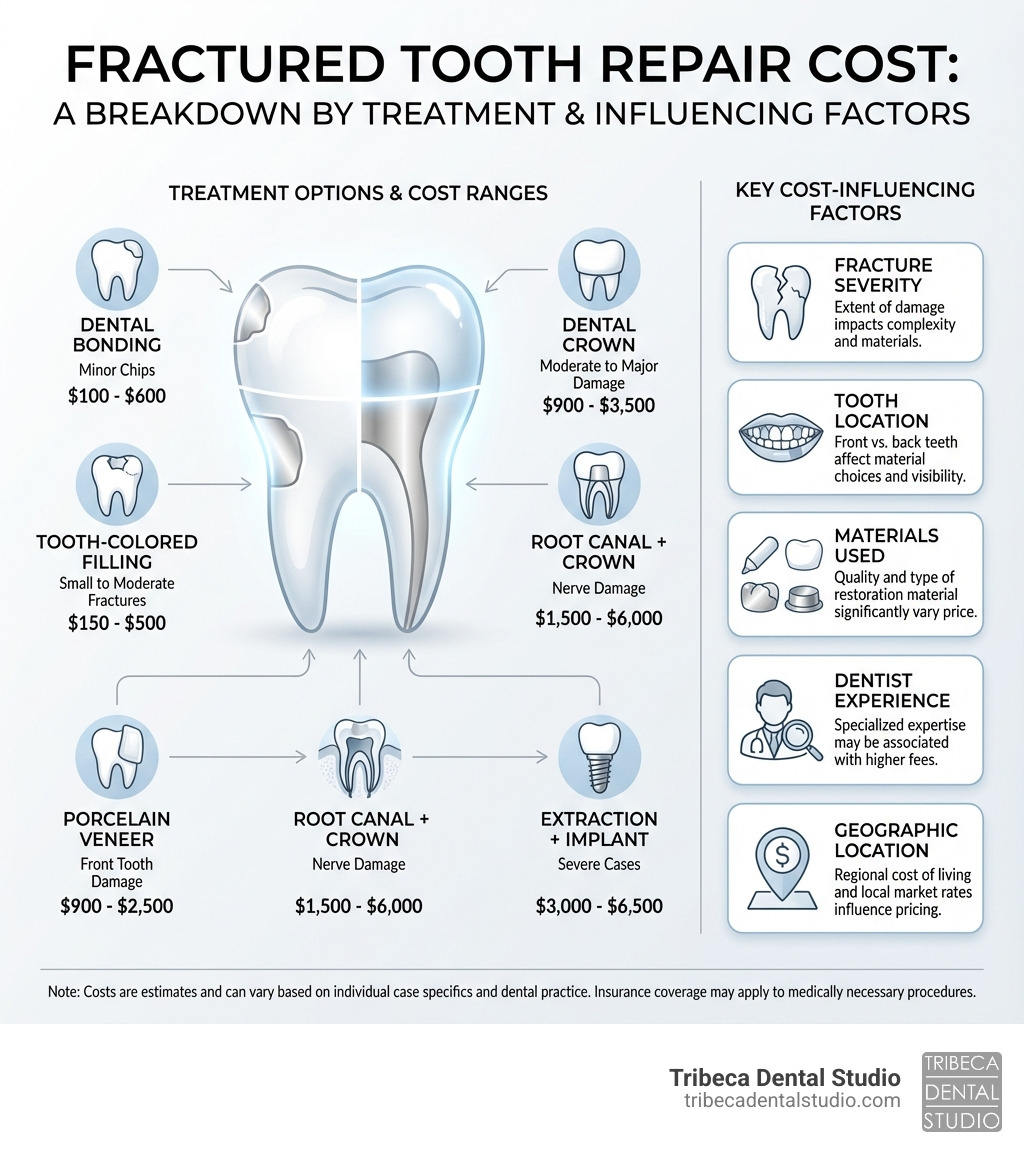
Fractured tooth repair cost can range widely depending on the severity of the damage and the treatment you need. Here’s what you can expect to pay:
| Treatment Type | Typical Cost Range | Best For |
|---|---|---|
| Dental Bonding | $100 – $600 | Minor chips and surface cracks |
| Tooth-Colored Filling | $150 – $500 | Small to moderate fractures |
| Porcelain Veneer | $900 – $2,500 | Visible front tooth damage |
| Dental Crown | $900 – $3,500 | Moderate to major fractures |
| Root Canal + Crown | $1,500 – $6,000 | Deep cracks affecting the nerve |
| Extraction + Implant | $3,000 – $6,500 | Severely damaged teeth |
Biting into something hard and suddenly feeling a sharp edge in your mouth is never pleasant. Whether it’s a small chip or a deeper crack, a fractured tooth rarely comes with a warning—but it almost always comes with questions about cost.
The price you’ll pay depends on several factors: the extent of the damage, which tooth is affected, the materials your dentist uses, and where you live. In NYC, costs tend to run on the higher end of national averages. But here’s the important part—delaying treatment almost always makes things worse and more expensive. A $200 repair today can become a $3,500 ordeal if infection sets in or the crack spreads.
Many dental insurance plans cover restorative treatments like crowns and root canals when they’re medically necessary, though coverage for purely cosmetic fixes may be limited. If you don’t have insurance, options like payment plans, HSAs, and FSAs can help make treatment more affordable.
As Dr. Nina Izhaky, a graduate of New York University College of Dentistry and founder of Tribeca Dental Studio, I’ve helped countless patients steer fractured tooth repair cost decisions with transparent pricing and personalized treatment plans. My goal is to make quality dental care accessible while ensuring you understand exactly what you’re paying for and why.
Your Guide to Understanding a Fractured Tooth
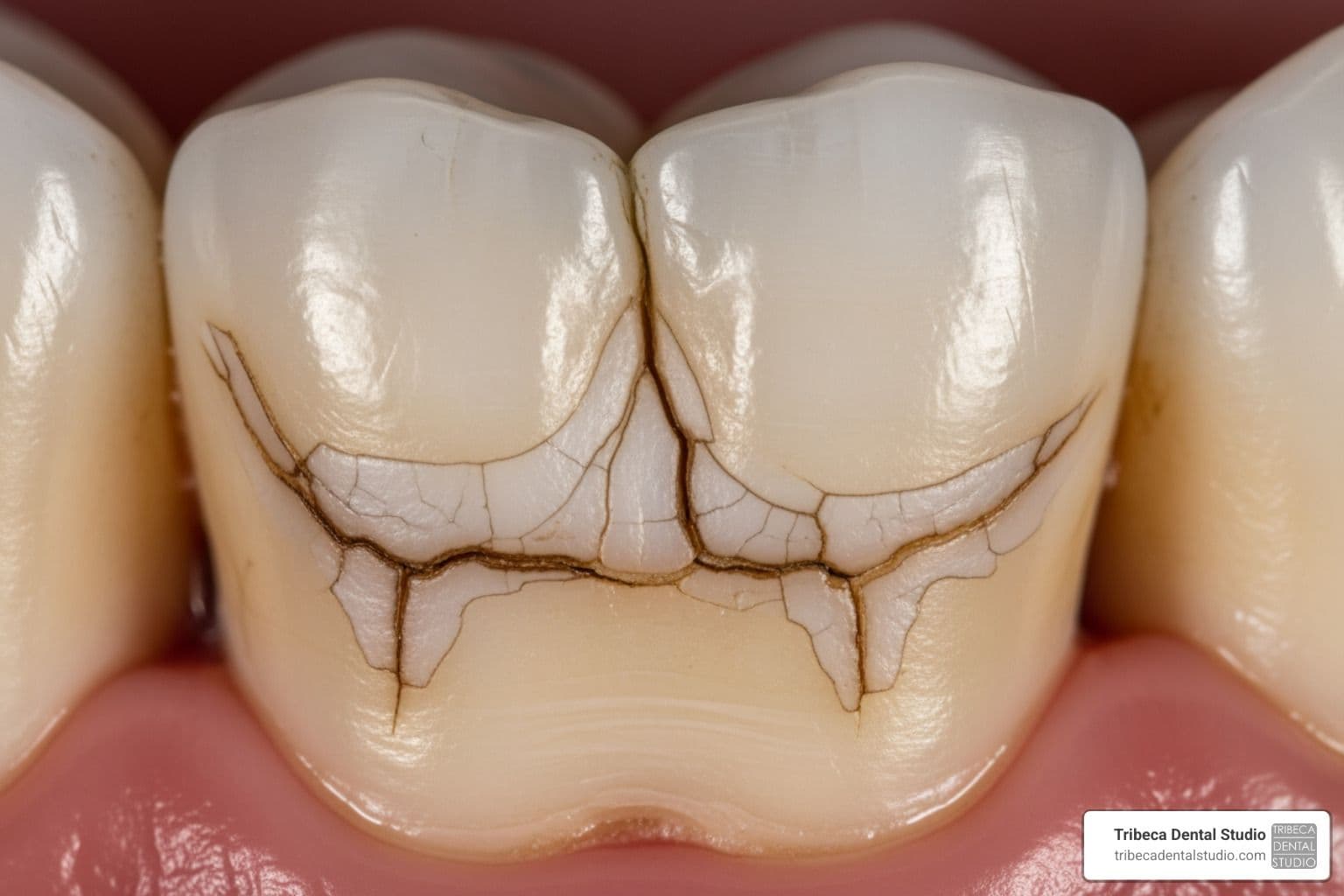
A fractured tooth, or cracked tooth, has a crack that can range from a tiny line in the enamel to a severe split reaching the root. Though tooth enamel is the body’s hardest substance, it isn’t indestructible.
What causes these cracks? Often, it’s a mix of factors. Age is one, as years of wear and tear weaken teeth, with cracks common in those over 50.
However, a fractured tooth can strike at any age. Common culprits include:
- Biting hard foods: Accidentally chomping down on ice, hard candy, unpopped popcorn kernels, or even a bone can exert immense pressure, leading to a sudden fracture.
- Trauma: Accidents, falls, or sports injuries can directly impact a tooth, causing it to chip or break.
- Teeth grinding (bruxism): Chronic grinding or clenching puts repeated stress on teeth, which can eventually lead to cracks.
- Large dental fillings: Teeth with extensive fillings can become weaker and more susceptible to fracture as the filling material doesn’t flex like natural tooth structure.
- Root canals: While root canal therapy saves a tooth, it can sometimes leave the tooth more brittle and prone to fracture, often necessitating a crown for protection.
Signs and Symptoms of a Fractured Tooth
Symptoms of a fractured tooth can be subtle or intermittent. Here is what to look out for:
- Pain when chewing: Especially if the pain occurs when you bite down or when you release biting pressure.
- Temperature sensitivity: Sudden, sharp pain when consuming hot or cold foods and drinks.
- Sensitivity to sweet foods: Sweet foods can sometimes trigger brief, sharp discomfort.
- Swelling: If the fracture has led to an infection, you might notice swelling around the affected tooth or in your gums.
- Intermittent pain: The pain might not be constant, making it harder to pinpoint the problem tooth.
Immediate Steps to Take If You Chip or Break a Tooth
Quick action can manage discomfort and prevent further damage.
- Rinse with warm salt water: Gently rinse your mouth to clean the area.
- Apply pressure to stop bleeding: If there is bleeding, use a clean piece of gauze.
- Use a cold compress: Apply a cold compress to the outside of your cheek to help with swelling.
- Cover sharp edges: If there is a sharp edge, cover it with sugarless gum or dental wax.
- Save any broken pieces: Keep fragments moist in milk or saline solution.
- See a dentist: Contact us promptly. We offer emergency dental care here at Tribeca Dental Studio.
Different Types of Tooth Fractures
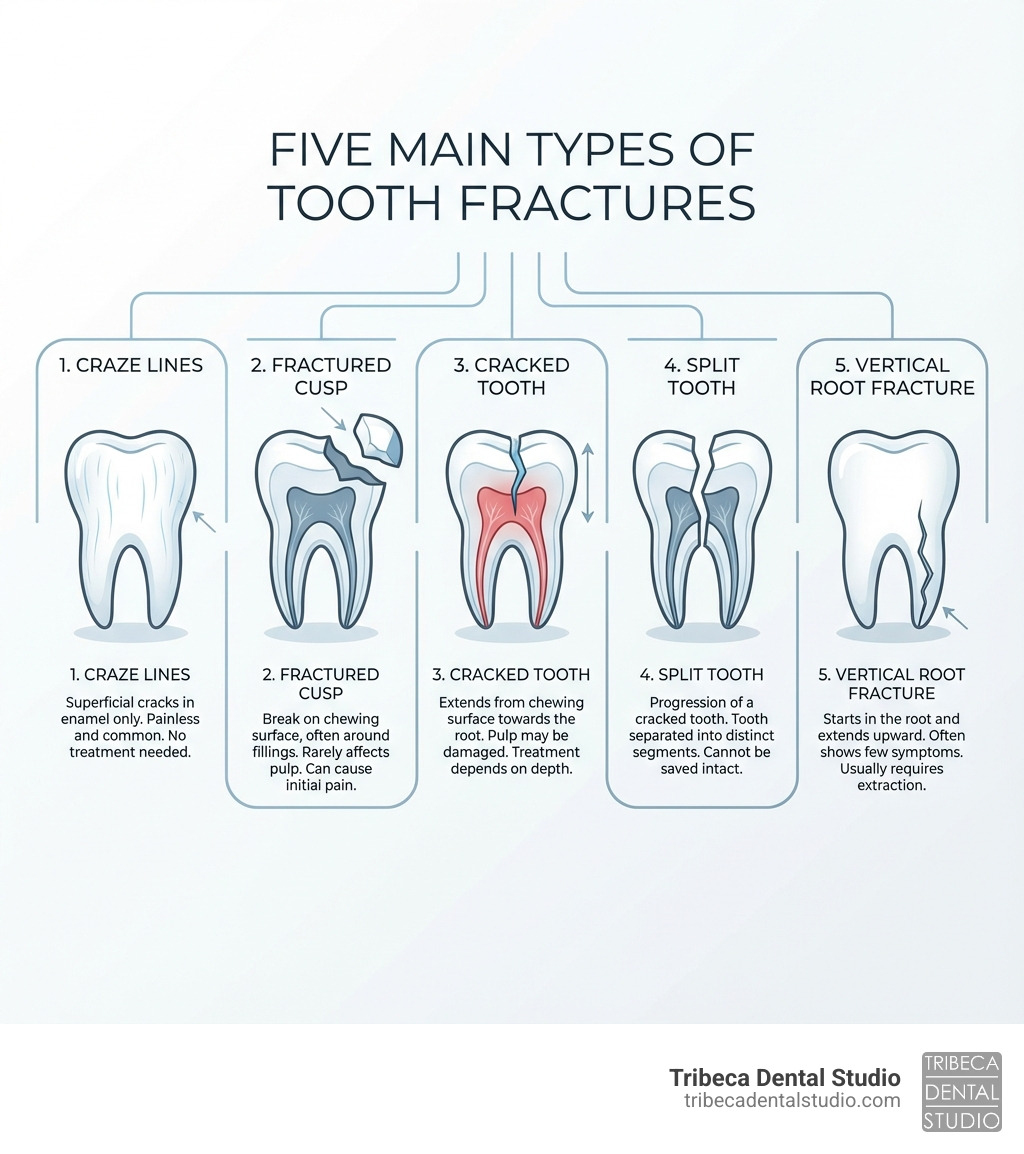
Dentists categorize tooth fractures into different types, each with its own characteristics and treatment approach:
- Craze lines: Tiny cracks in the outer enamel. They are common in adult teeth and usually do not cause pain or need treatment. You can learn more about craze lines if you’re curious.
- Fractured cusp: A piece of the tooth’s chewing surface breaks off, often around an existing filling. It typically does not extend into the pulp (nerve) of the tooth.
- Cracked tooth: A vertical crack that extends from the chewing surface down toward the root. If untreated, it can worsen and lead to pulp damage.
- Split tooth: Often the result of an untreated cracked tooth, a split tooth has separated into distinct segments and is usually not fully savable.
- Vertical root fracture: Cracks that begin in the root and extend toward the chewing surface. They are often difficult to detect and may not cause symptoms until an infection develops.
How Dentists Diagnose a Cracked Tooth
Diagnosing a fractured tooth can be challenging, especially since cracks are not always visible or consistently painful. When you visit us at Tribeca Dental Studio with suspected tooth pain, we may use:
- Visual exam: We examine your tooth for visible cracks, using magnification and special lighting.
- Biting test: You might be asked to bite on a specialized instrument on different parts of the tooth. Pain when you release the bite can pinpoint the fracture and helps explain why it might hurt when you chew.
- Dental dye: A special dye can help make subtle cracks more visible.
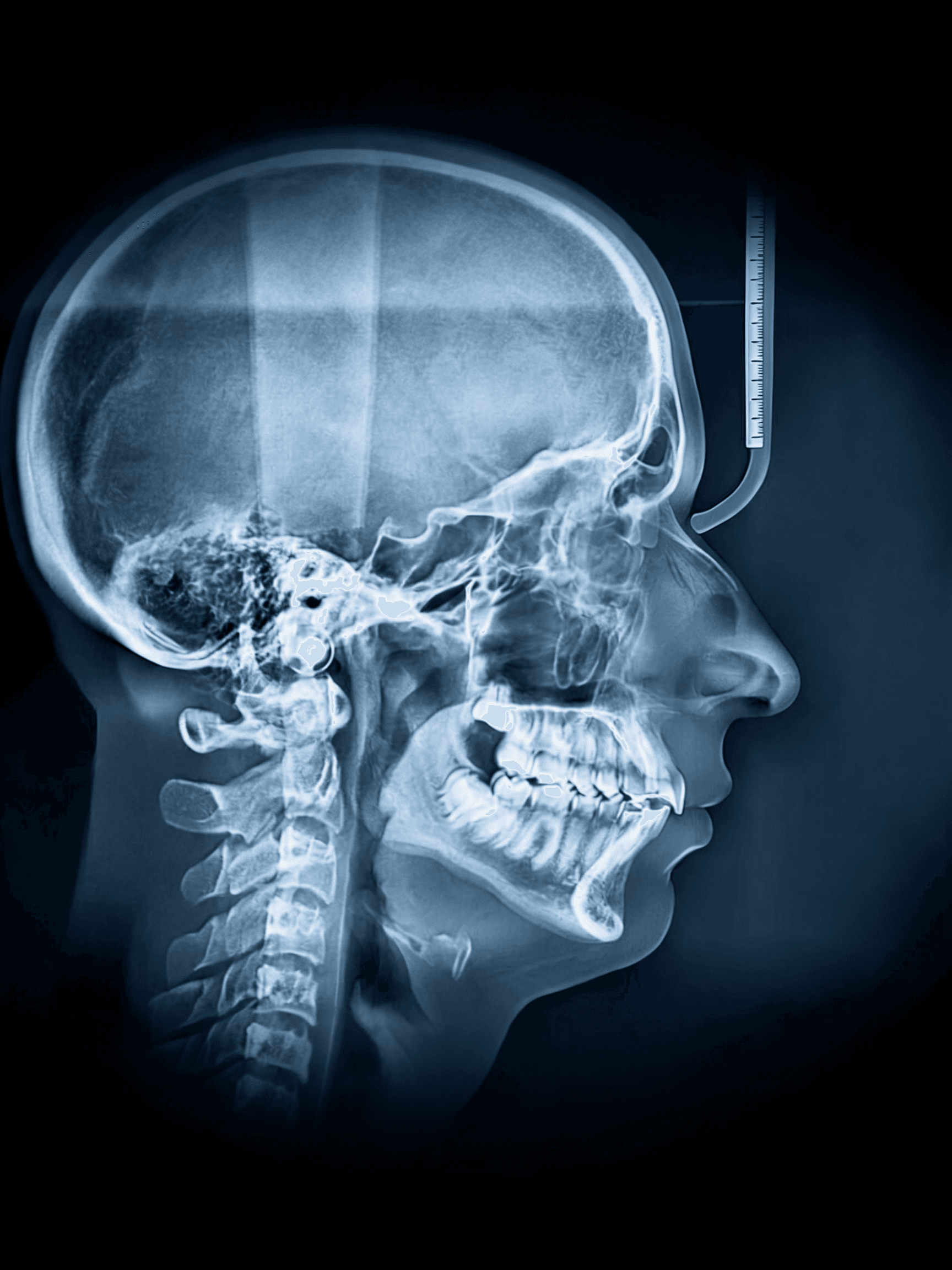
- X-rays: While X-rays do not always show the crack itself, they can reveal signs such as bone loss around the root or an infection in the pulp.
- Patient history: Your description of symptoms, including when pain occurs and what triggers it, is invaluable in guiding our diagnosis.
Common Dental Treatments for Fractured Teeth
After diagnosing the fracture, we’ll recommend the best treatment to save the tooth, relieve pain, and restore its function and appearance.
Minor Chips and Cracks
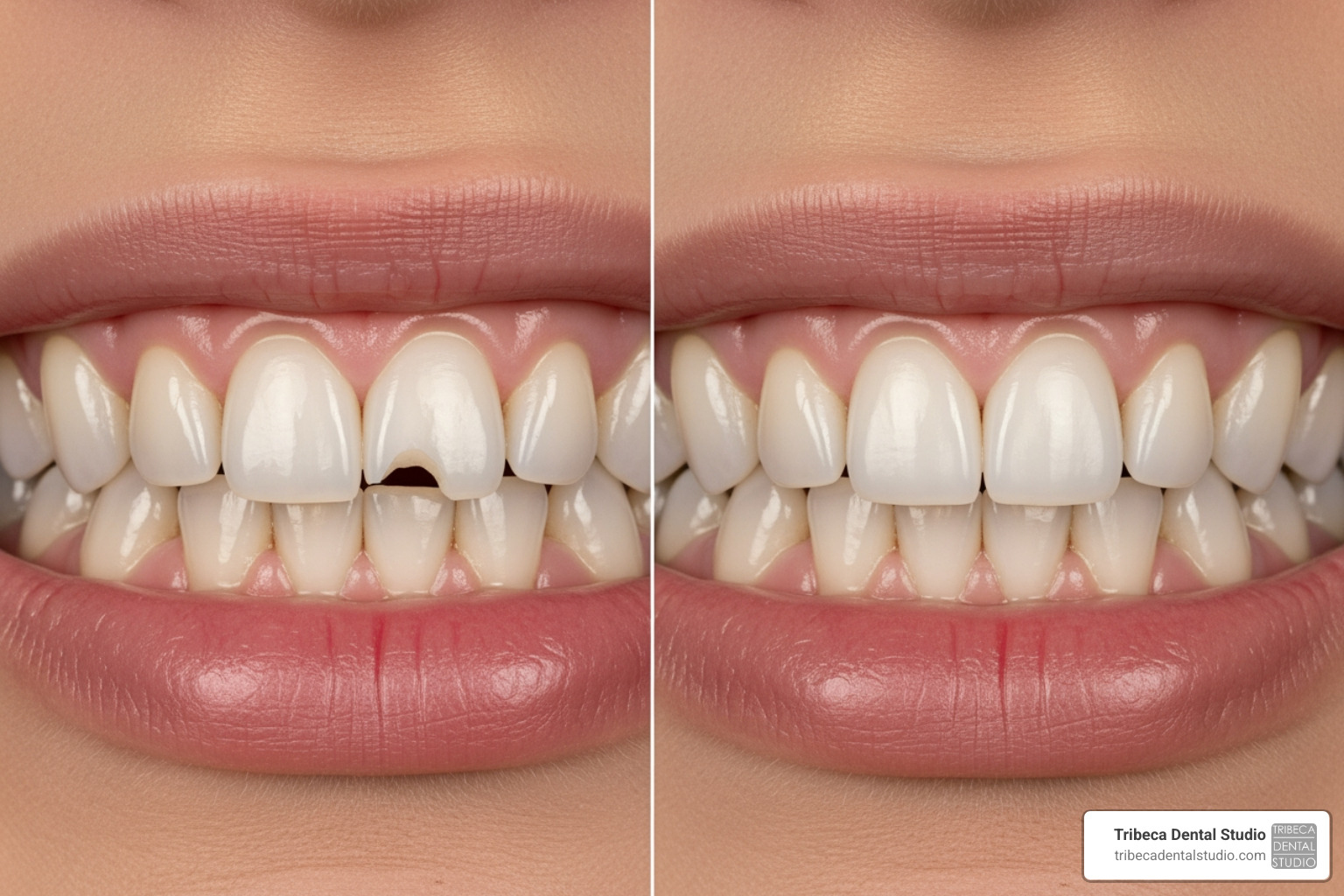
For smaller fractures that do not extend deep into the tooth, we have several options:
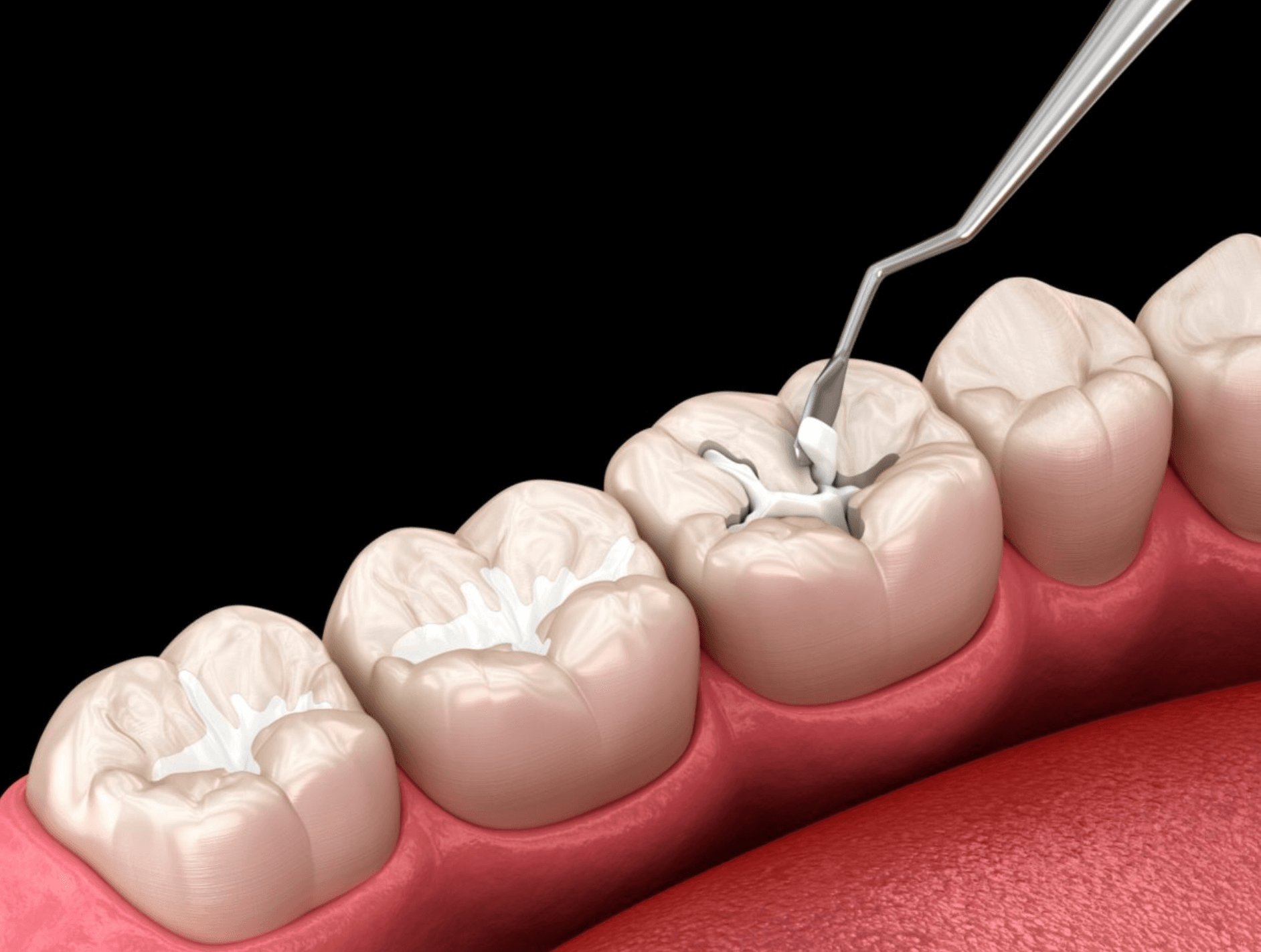
- Dental bonding: A tooth-colored composite resin is applied, sculpted, and hardened with a special light. Bonding typically costs between $100 and $600 per tooth.
- Tooth-colored fillings: Composite fillings repair small to moderate fractures or cavities, especially where appearance matters. The cost generally ranges from $150 to $500 per tooth.
- Cosmetic contouring: For very small chips or irregular edges, we can smooth and reshape the enamel. This is a quick, painless procedure that can significantly improve appearance, often costing between $142 and $435.
Moderate to Major Damage
When a fracture is more substantial, extending deeper into the tooth structure, more robust restorative solutions are needed:
- Dental crowns: A crown is a tooth-shaped cap that covers the damaged tooth, restoring its shape, strength, and appearance. Crowns typically cost between $800 and $3,500 per tooth, depending on the material and case complexity.
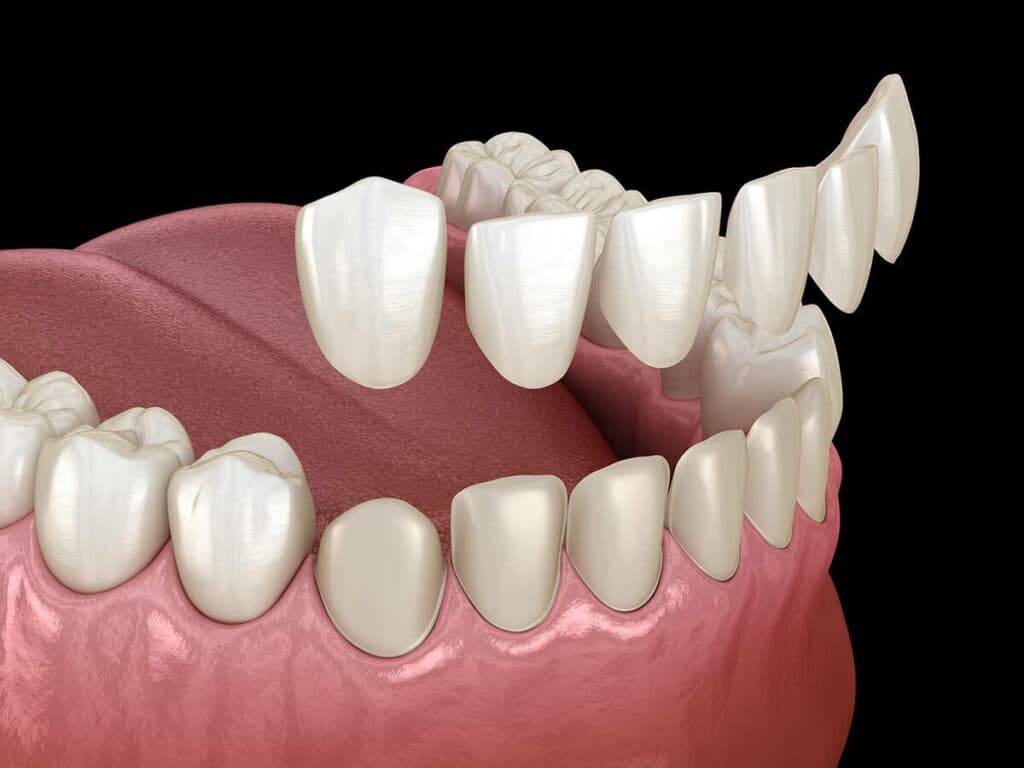
- Dental veneers: Thin, custom-made shells of porcelain or composite resin that are bonded to the front surface of teeth. Porcelain veneers usually range from $900 to $2,500 per tooth.
- Inlays and onlays: Sometimes called “partial crowns,” inlays and onlays are used when damage is too extensive for a filling but does not require a full crown. You can find more info about dental inlays and onlays and our broader restorative dentistry services on our site.
When the Tooth’s Nerve is Damaged
If a fracture exposes the tooth’s inner pulp, it can cause pain and infection, requiring more intensive treatment:
- Root canal therapy: If the fracture has caused pulp damage or infection, we remove the infected or inflamed pulp, clean and disinfect the inside of the tooth, and then seal it. A crown is almost always placed on top of a root canal-treated tooth for protection and strength. Root canals alone can cost between $470 and $1,500, with the crown adding to that expense. For more details on understanding tooth pulp infection, we recommend checking out WebMD.
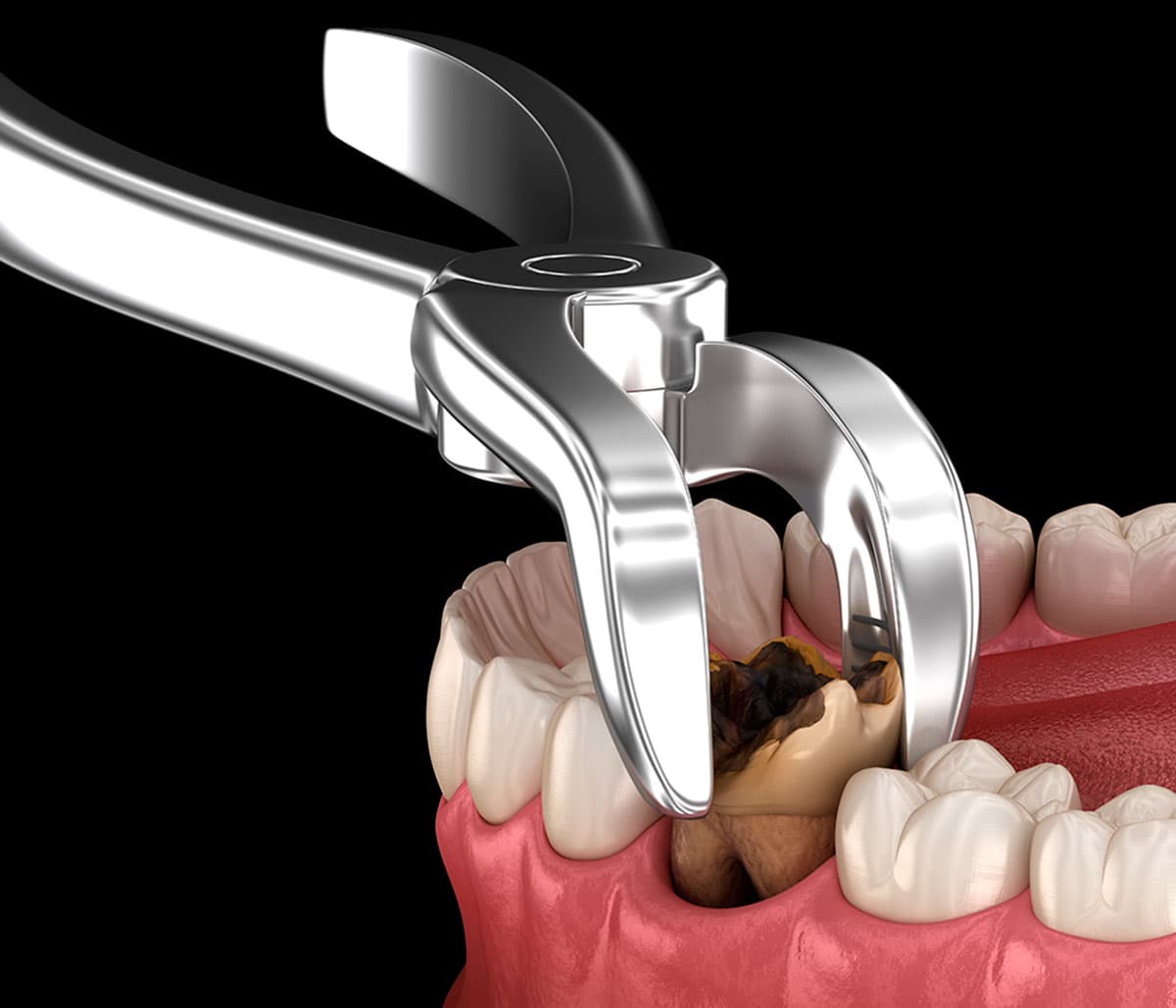
- Tooth extraction: Some fractures are so severe, such as a vertical root fracture or a severely split tooth, that the tooth cannot be saved, even with a root canal. In these cases, extraction prevents further infection and pain.
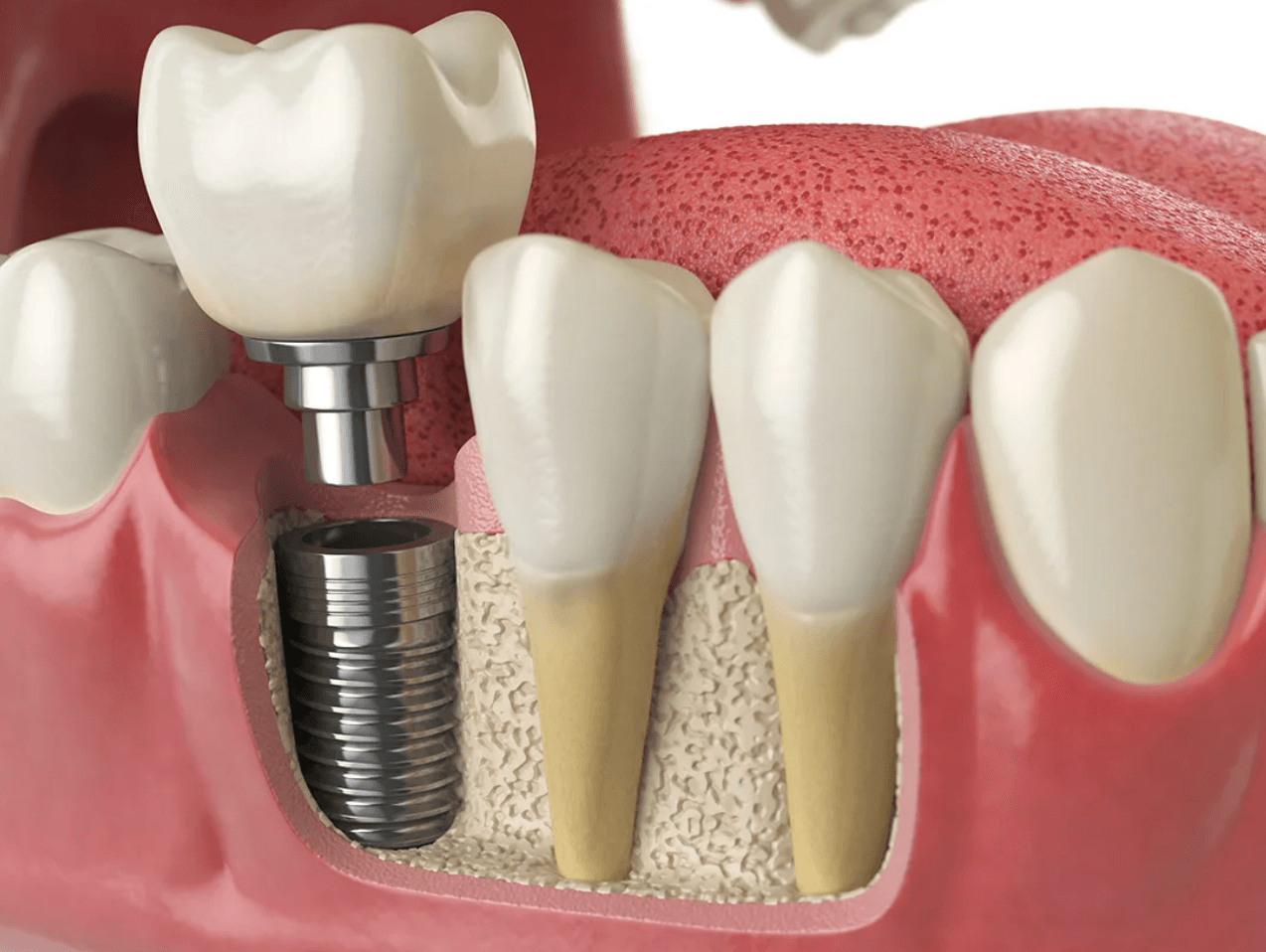
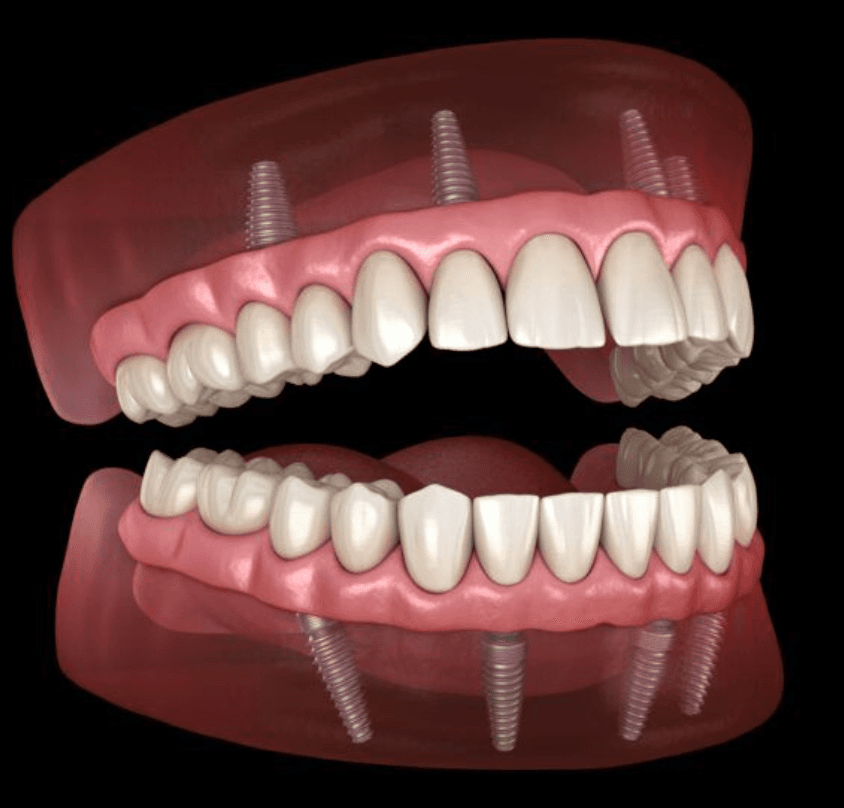
- Dental implants: If a tooth needs to be extracted, a dental implant is often the best long-term replacement. An implant is a titanium post surgically placed in the jawbone to act as an artificial root, with a custom crown attached after healing. The cost for an extraction and dental implant can range from $3,000 to $6,500 per tooth, depending on the need for bone grafting and the complexity of the case.
A Detailed Breakdown of Fractured Tooth Repair Cost
Understanding the fractured tooth repair cost is key to making informed decisions about your oral health. While we’ve provided some general ranges, here is a closer look at what influences these figures.
Factors That Influence the Fractured Tooth Repair Cost
Several variables contribute to the final price for repairing a fractured tooth:
- Severity of fracture: A minor chip requiring simple bonding will be far less expensive than a deep crack that needs a root canal and crown or an extraction and implant.
- Tooth location: Front teeth often require more aesthetic precision, which can increase costs for cosmetic treatments. Back teeth endure greater chewing forces and may need stronger materials, which can also influence price.
- Materials used: The material for your restoration matters. Porcelain crowns are generally more expensive than metal-based crowns, and composite fillings cost more than amalgam (silver) fillings.
- Dentist’s experience and expertise: Highly experienced dentists or those focusing on complex restorative or cosmetic procedures may have higher fees, often reflecting more predictable outcomes.
- Geographic location (NYC): In areas like Tribeca, Manhattan, and greater New York City, higher operating costs mean dental fees are usually on the higher end of national averages.
- Insurance coverage: Insurance does not change the actual fee, but it does affect your out-of-pocket expense through coverage percentages, deductibles, and annual maximums.
Average Cost by Treatment Type
To give you a clearer picture, here is a comparison of common treatments, their average cost ranges in our area, and how long you can expect them to last:
| Treatment Type | Average Cost Range (NYC) | Typical Longevity |
|---|---|---|
| Dental Bonding | $100 – $600 | 5-10 years |
| Tooth-Colored Filling | $150 – $500 | 5-15 years, potentially decades |
| Porcelain Veneer | $900 – $2,500 | 10-15 years |
| Dental Crown | $900 – $3,500 | 15-20 years |
| Root Canal + Crown | $1,500 – $6,000 | Crown: 15-20 years (root canal is permanent) |
| Extraction + Implant | $3,000 – $6,500 | Several decades to a lifetime |
These are estimated ranges. Your specific fractured tooth repair cost will be determined after a comprehensive examination and personalized treatment plan.
The Hidden Cost of Delaying Treatment
Putting off treatment for a fractured tooth almost always leads to more pain and expense:
- Increased pain: A small crack can deepen, leading to ongoing discomfort and sensitivity.
- Risk of infection: Cracks allow bacteria to reach the tooth’s pulp, causing painful infections and potentially an abscess.
- More complex procedures: A minor chip that could have been fixed with bonding can evolve into a problem requiring a root canal and a crown, costing thousands.
- Higher future costs: The longer you wait, the more likely the damage will worsen, requiring more extensive, time-consuming, and expensive treatment.
- Potential tooth loss: In severe cases, a neglected fracture can make the tooth unsalvageable, leading to extraction and the need for a dental implant or bridge.
Managing Your Dental Expenses
We understand that fractured tooth repair cost can be a concern. That is why we believe in transparent pricing and helping you explore options to make necessary dental care as affordable as possible.
Does Dental Insurance Cover Fractured Tooth Repair?
Dental insurance coverage for fractured tooth repair varies based on your specific plan and the type of treatment.
- Medically necessary vs. cosmetic: Plans typically cover procedures deemed “medically necessary” or “restorative,” such as fillings, crowns, and root canals. Purely cosmetic procedures, like veneers used only for appearance, may not be covered or may have limited coverage.
- Restorative coverage: Many plans cover a percentage of restorative treatments. For basic procedures like fillings, coverage might be around 80%. For major procedures like crowns and root canals, coverage often falls around 50%.
- Annual maximums and deductibles: Be aware of your plan’s annual maximum (the most your insurance will pay in a year) and your deductible (what you must pay before coverage begins).
- Checking your plan: Review your insurance policy or contact your provider directly to understand your benefits. We are also happy to help you steer your coverage and provide a detailed cost breakdown before treatment.
Options for Financing Fractured Tooth Repair if You Don’t Have Insurance
If you do not have dental insurance, or if your plan does not cover enough of the fractured tooth repair cost, there are still ways to manage expenses:
- In-house payment plans: Many dental practices, including ours, offer flexible payment plans that spread treatment costs over several months, often interest-free.
- Third-party financing: Companies like CareCredit or Synchrony offer credit options for healthcare expenses, sometimes with promotional financing if paid in full within a set period.
- Dental schools: Teaching institutions may provide care at reduced fees, with treatment performed by supervised students.
- Health Savings Accounts (HSA) and Flexible Spending Accounts (FSA): If you have an HSA or FSA, you can use pre-tax dollars to pay for qualified dental expenses, lowering your effective cost.
- Where to find low-cost dental care: The Department of Health and Human Services provides resources for those seeking low-cost dental care.
How to Prevent Fractured Teeth
While accidents happen, you can reduce your risk of a fractured tooth with a few proactive steps:
- Avoid chewing hard items: Skip chewing ice, hard candies, popcorn kernels, and using your teeth to open packages.
- Wear a mouthguard: If you play sports, especially contact sports, a custom-fitted mouthguard helps protect against trauma. If you grind or clench at night, a nightguard can protect your teeth.
- Regular dental check-ups: Routine visits allow us to identify and address potential weaknesses early on, such as large fillings that might need replacement.
- Address teeth grinding: If you suspect you grind your teeth, talk with us. We can recommend nightguards or other strategies to reduce stress on your teeth.
Frequently Asked Questions about Fractured Tooth Repair
We know you might have more questions, and we are here to provide clear, straightforward answers.
Can a fractured tooth heal on its own?
No, a fractured tooth cannot heal on its own. Unlike bones, tooth enamel cannot regenerate, so a crack will not fuse back together. Professional dental treatment is necessary to prevent the fracture from worsening, protect the inner pulp from infection, and restore the tooth’s structure. Waiting usually leads to more significant problems and a higher fractured tooth repair cost.
How long does fractured tooth repair typically take?
The time needed varies by the type and severity of the fracture and the treatment method:
- Bonding and fillings: Often completed in a single visit, typically 30-60 minutes per tooth.
- Crowns and veneers: Usually require two visits. The first visit involves preparing the tooth and taking impressions, with a temporary restoration placed. The second visit, a week or two later, is for bonding the custom-made permanent crown or veneer. Some practices, like ours, may offer same-day crowns using CAD/CAM technology.
- Root canal therapy: A root canal can sometimes be completed in one visit, but more complex cases might require two appointments, followed by a separate visit for the crown.
- Dental implants: This is the longest process, often taking several months. It includes surgical placement of the implant, a healing period for osseointegration, and then placement of the abutment and final crown.
What is the long-term outlook for a repaired tooth?
The long-term outlook for a repaired tooth is generally very good with prompt, appropriate treatment. It depends on several factors:
- Severity of the original fracture: Minor chips and cracks repaired with bonding or fillings usually have an excellent prognosis. More severe fractures treated with crowns or root canals also fare well if the tooth was not too compromised.
- Quality of treatment: A well-executed repair by an experienced dentist tends to last longer and perform better.
- Oral hygiene and habits: Good brushing and flossing, avoiding hard foods, and wearing a mouthguard if needed are crucial for long-term success.
- Regular dental check-ups: Consistent visits allow us to monitor the repaired tooth and ensure the restoration remains in good condition for many years.
Restore Your Smile with Confidence
Finding a fractured tooth can be alarming, but it doesn’t have to be a source of long-term worry or financial stress. As we’ve seen, understanding the potential fractured tooth repair cost and the factors that influence it empowers you to make the best decisions for your oral health.
The most important takeaway is this: don’t delay treatment. Early intervention is not just about saving your tooth; it’s about saving you from unnecessary pain, preventing costly complications like infections or tooth loss, and ultimately, protecting your overall oral health. A small investment today can prevent a much larger expense tomorrow.
At Tribeca Dental Studio, we are committed to providing personalized care, treating each patient like family, and utilizing advanced technology to ensure the best possible outcomes. If you have a fractured tooth or suspect you might, we encourage you to contact us. We’ll thoroughly assess your situation, discuss all your treatment options, and provide a clear, transparent breakdown of the costs involved, so you can restore your smile with confidence.
Ready to take the first step towards a healthy, whole smile? Explore your cosmetic dentistry options to repair a chipped tooth and let us help you regain your comfort and confidence.