

When a root canal treatment isn’t enough to save your tooth, the thought of extraction can be disheartening. At Trebica Dental Studio, we believe in exploring every avenue to preserve your natural smile. That’s why we offer a specialized dental procedure as a powerful alternative: an apicoectomy. An apicoectomy is a precise microsurgical procedure designed to treat infection or inflammation at the very tip of a tooth’s root, often saving a tooth that might otherwise be lost.
Apicoectomy Procedure in Tribeca, NYC

What Is an Apicoectomy?
An apicoectomy, also known as root-end surgery, is a minor surgical procedure performed by an endodontist (a root canal specialist). It involves removing the apex, or the very tip of the tooth’s root, along with any infected tissue surrounding it. The end of the root canal is then sealed with a small filling to prevent future infection. Essentially, it’s a way to treat an infection from the root-end of the tooth when a traditional root canal from the crown-end is not feasible or has failed.
When Is an Apicoectomy Needed?
While a conventional root canal is the first line of defense against infection within a tooth, an apicoectomy may be recommended in several situations:
- Failed Root Canal Treatment: Sometimes, despite a well-performed root canal, infection and inflammation can persist at the root tip.
- Anatomical Complications: Curved, narrow, or blocked canals can make it impossible for an endodontist to thoroughly clean the entire root canal system during a traditional procedure.
- Fractured Root Tip: A fracture near the root’s apex can harbor bacteria and lead to persistent infection.
- Calcification: Calcium deposits can block the root canal, preventing instruments from reaching the root tip to clean it.
- Cyst or Lesion: When a cyst or abnormal tissue growth has formed at the tip of the root.
Benefits of an Apicoectomy
The primary benefit of an apicoectomy is that it can save your natural tooth from extraction. Other advantages include:
- Eliminates Infection: It directly removes the source of the infection at the root’s apex.
- Relieves Pain: By resolving the underlying infection and inflammation, it alleviates the persistent pain associated with a failed root canal.
- High Success Rate: Modern apicoectomy techniques have a very high success rate in preserving the tooth for many years.
- Minimally Invasive: It is a targeted microsurgical procedure that preserves the majority of the tooth and bone structure.
Candidacy for Apicoectomy
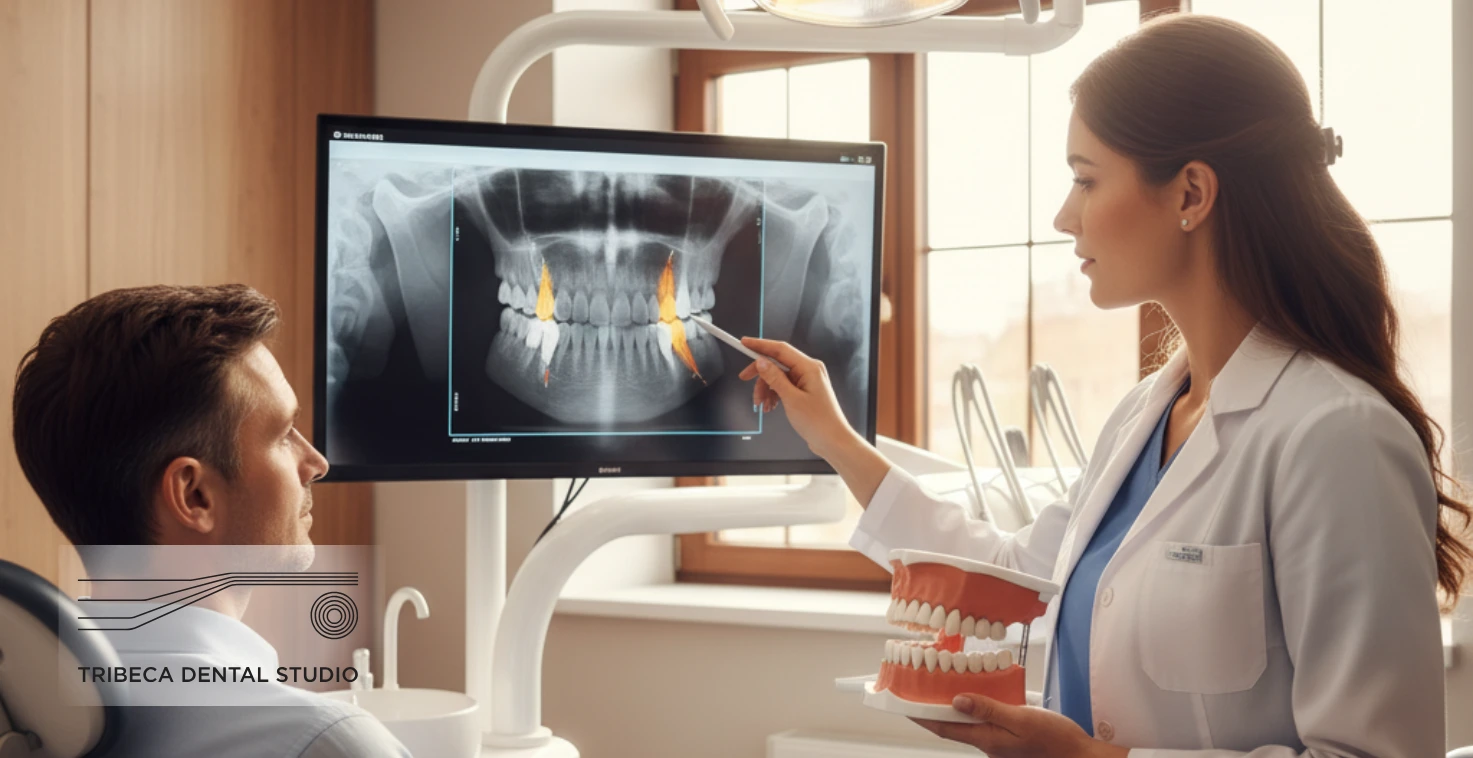
A good candidate for an apicoectomy is someone who has a persistent infection after a root canal treatment and is in good general health. Your endodontist will perform a thorough examination, including 3D CBCT (Cone Beam Computed Tomography) imaging, to assess the tooth’s root structure, the extent of the infection, and the proximity to vital structures like nerves and sinuses. This detailed imaging ensures you are a suitable candidate for a successful apicoectomy procedure in Tribeca, NYC.
How Is an Apicoectomy Performed?
The procedure is typically completed in one visit, lasting between 60 and 90 minutes.
- Anesthesia: The area is completely numbed with a local anesthetic to ensure you are comfortable and feel no pain.
- Incision: The endodontist makes a small incision in the gum tissue near the tooth’s root to expose the underlying bone.
- Accessing the Root: A tiny opening is created in the bone to reveal the tip of the root and the infected tissue.
- Root-End Resection: The infected tissue and the last few millimeters of the root tip (the apex) are carefully removed.
- Root-End Filling: The end of the root canal is cleaned and sealed with a small, biocompatible filling material. This is called a “retrofill,” and it prevents bacteria from re-entering the tooth.
- Suturing: The gum tissue is repositioned, and the incision is closed with a few small stitches (sutures), which may be dissolvable or require removal in a week.
What to Expect After an Apicoectomy
Following the procedure, you can expect some minor swelling, bruising, and discomfort for a few days. This is a normal part of the healing process and can be managed effectively. Your endodontist will provide specific post-operative instructions, which typically include prescribed pain medication and a recommendation for an antimicrobial mouth rinse.
Apicoectomy Recovery Tips
To ensure a smooth and speedy recovery:
- Apply Ice: Use an ice pack on the outside of your cheek for 15-20 minutes at a time during the first 24 hours to minimize swelling.
- Rest: Avoid strenuous activity for the first few days.
- Eat Soft Foods: Stick to a diet of soft foods like yogurt, mashed potatoes, and smoothies. Avoid chewing directly on the surgical site.
- Maintain Oral Hygiene: Brush and floss your other teeth normally, but be very gentle around the surgical area.
- Take Medications as Prescribed: Use any prescribed pain relievers or antibiotics exactly as directed.
Possible Risks and Complications
While an apicoectomy is a safe and common procedure, potential risks include:
- Post-operative infection (rare)
- Sinus perforation (if an upper tooth root is close to the sinus cavity)
- Nerve damage, which can cause temporary or, very rarely, permanent numbness in the lip or chin
- Failure of the procedure to resolve the infection
Success Rate of Apicoectomy
Modern apicoectomy, which utilizes advanced techniques like ultrasonic instruments and microsurgical technology, has a success rate of over 90%. When performed by a specialist, it is a highly predictable and effective way to save a tooth.
Cost of an Apicoectomy in NYC
The cost of an apicoectomy can vary based on several factors, including the complexity of the case, the specific tooth involved (molars are often more expensive), and the endodontist’s fees.
- Apicoectomy cost without insurance: If you are paying out-of-pocket, the full fee will be your responsibility. Many dental offices offer payment plans or financing options to help manage the expense.
- Apicoectomy cost with insurance: The amount you pay will depend on your specific dental plan.
Insurance Coverage for Apicoectomy
Most dental insurance plans provide partial coverage for an apicoectomy, as it is considered a medically necessary major procedure. The apicoectomy cost with insurance will depend on your plan’s deductible, co-payment, and annual maximum. Our administrative team is highly experienced in working with insurance providers to maximize your benefits and provide you with a clear estimate of your out-of-pocket expenses.
Frequently Asked Questions
Is an apicoectomy painful?
The procedure itself is not painful due to local anesthesia. Post-operative discomfort is typically manageable with over-the-counter or prescribed pain medication.
How long does recovery take?
Most patients return to normal activities within a day or two. The gums will fully heal over a couple of weeks, while the bone will continue to heal and regenerate for several months.
Is there an alternative to an apicoectomy?
The only alternatives are retrying the conventional root canal (if possible) or extracting the tooth. Extraction leads to other issues, such as the need for a tooth extraction and oral surgery procedure, followed by replacement with an implant, bridge, or denture.
Restore Your Oral Health With Us
Don’t let a persistent tooth infection lead to an extraction. At Tribeca Dental Studio, our priority is preserving your natural, healthy smile. An apicoectomy procedure performed by our expert endodontist can eliminate your pain, clear the underlying infection, and save your tooth for a lifetime. Contact our Tribeca, NYC, office today to schedule your consultation. Let our team determine if an apicoectomy is the right solution to restore your oral health and well-being.
BOOK NOW





Call or Text 212-561-5303
[email protected] 54 Warren St., New York, NY 10007
Hours:
MONDAY-FRI: 8-6 PM
SATURDAY: 9-4 PM
SUNDAY: 9-2 PM
SUNDAY: 9-2 PM