

At Tribeca Dental Studio, we value preventive care fundamentally. Naturally, cavities and other dental misfortunes can still occur. When they do, we always err on the side of preserving the tooth and maintaining as much of its structure as possible. But, there are times when a tooth can’t be saved and must be extracted. If this should occur, we’re here for you, offering compassion and tooth extraction in NYC.
Tooth Extractions in Tribeca, NYC


Are Tooth Extractions Painful?
Probably not as much as you’re anticipating! Many patients report that receiving the local anesthesia is the worst part of getting a tooth pulled. It is a bit of a pinch, but we apply a topical numbing agent to make that less unpleasant.
As for the procedure itself, you shouldn’t expect to feel pain at all. In fact, if you do, let us know—we will stop and administer more anesthesia. Tooth extractions do usually come with some residual achiness in the days following the procedure, which is easily managed with over-the-counter NSAIDs.
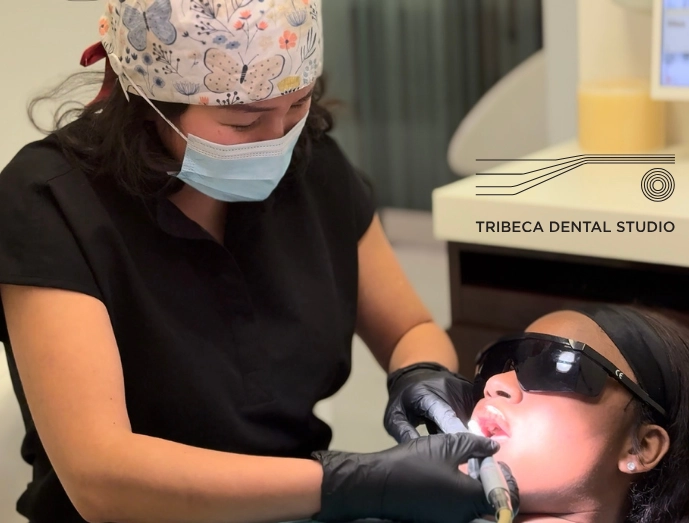
Many patients fear the threat of a tooth extraction and will even avoid much-needed dental appointments because of it. Don’t let this be you! We’ll take good care of you and help that tooth avoid bigger problems in the future. Tribeca Dental Studio doctors understand your fear; we’re patient, respectful, and gentle.
When is a Tooth Extraction Necessary?
If you find yourself searching for a dentist offering tooth extractions in NYC, it could be for one of the following reasons:
- A tooth has suffered a traumatic injury and cannot be saved
- You have a tooth that’s heavily decayed and can’t be saved with a restoration like a filling or crown
- There is periodontal disease affecting the tooth
- A tooth has to be removed to make room for orthodontic correction
- You have an impacted tooth
- You have a failed root canal or restoration
The Extraction-to-Implant Pipeline
In most cases, we’ll recommend replacing the extracted tooth. The obvious, aesthetic reason for this is just the beginning. Replacing the tooth will:
- Yes, look great
- Prevent other teeth from moving into the new space, becoming misaligned, and affecting your bite
- Help sustain jawbone structure so you don’t experience bone loss, which can lead to more tooth loss
- Maintain the structure of your face
There are several ways to replace a tooth once it’s been extracted. Our first choice is an implant. An implant with a crown is most like your natural tooth. It will do the best job of keeping the jawbone stimulated and structurally sound. It looks, feels, and acts just like a natural tooth.
But there are times when patients aren’t candidates for implants, so we offer bridges and other restorations as well.
The Tooth Extraction Process
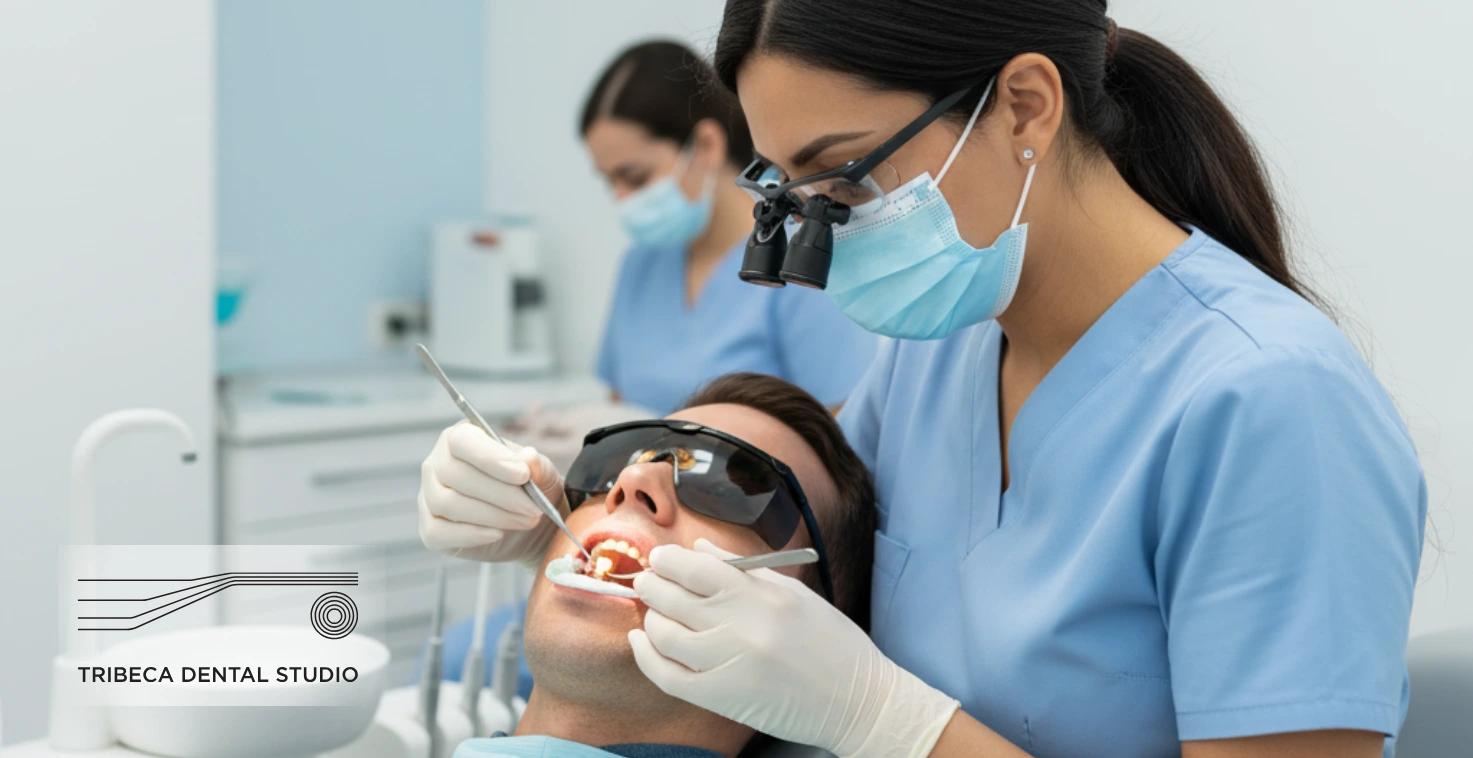
At Tribeca Dental Studio, every extraction begins with a comprehensive exam and digital X-rays. This helps us determine whether a tooth can be removed simply or requires a surgical approach.
1. Numbing & Comfort
- Local anesthesia ensures you won’t feel pain.
- Sedation dentistry is available for anxious patients.
2. Simple Extraction
- For visible teeth above the gumline.
- The tooth is gently loosened with specialized instruments and carefully lifted out.
3. Surgical Extraction
- Required for impacted, broken, or severely damaged teeth.
- It may involve creating a small incision in the gum or removing bone around the tooth.
Regardless of complexity, our priority is a gentle technique that preserves surrounding bone and tissue, especially important if you plan to replace the tooth with an implant later.
Sectioning a Tooth (For Complex Cases)
In cases where a tooth cannot be removed whole, such as with impacted wisdom teeth or teeth with complex roots, we may “section” the tooth into smaller pieces. This technique minimizes trauma to the bone and gums, promotes faster healing, and improves your overall comfort. Our surgical precision ensures a smoother recovery and preserves more of your natural jaw structure for future treatments.
Aftercare: What to Expect After Tooth Extraction
Your recovery experience is just as important as the extraction itself. Proper aftercare prevents complications and promotes smooth healing.
Immediately After Your Procedure:
- Bite on gauze to control bleeding
- Use ice packs to minimize swelling
- Take prescribed or over-the-counter pain medication as directed
First 24–48 Hours:
- Stick to soft foods (yogurt, smoothies, mashed potatoes)
- Avoid smoking, drinking through a straw, or vigorous rinsing (prevents dry socket)
- Keep your head elevated while resting
Ongoing Care:
- Gentle brushing, avoiding the extraction site
- Warm saltwater rinses after meals, starting on day 2
- Follow-up visits as recommended
Most patients return to normal activities within 2–3 days, with complete healing of the extraction site in 1–2 weeks.
Importance of Professional Tooth Extraction
Attempting to ignore or delay necessary extractions can lead to serious complications, including infections, abscesses, bone loss, and even systemic health issues. Professional tooth extraction ensures:
- Safety: Sterile environment and precision techniques reduce infection risk.
- Comfort: Advanced anesthesia and sedation keep you relaxed.
- Preservation: Surrounding bone and tissue are protected for future restorations.
- Planning Ahead: We coordinate with dental implants or other restorations for seamless long-term results.
By trusting your care to a skilled Tribeca dentist, you avoid unnecessary risks and ensure a healthier, pain-free future.
Dental Extraction vs. Root Canal: How to Decide
When a tooth is severely damaged, the choice often comes down to extraction or root canal therapy.
- Root Canal Therapy: Saves your natural tooth by removing infected pulp, cleaning canals, and sealing the tooth. Often followed by a crown.
- Tooth Extraction: Removes the entire tooth when it is too compromised to restore or when surrounding bone and gum health are at risk.
At Tribeca Dental Studio, we always consider preservation first. If a root canal can successfully save the tooth, it’s typically the preferred choice. However, if the tooth cannot be restored, extraction prevents ongoing pain and infection, while opening the door for a long-term solution like dental implants.
Why Choose Us for Tooth Extractions in Tribeca, NYC
Choosing Tribeca Dental Studio for your oral surgery means choosing a team dedicated to your safety and comfort. We utilize advanced technology, including 3D CBCT imaging, to precisely plan your extraction. Our dentists are not only technically skilled but are also focused on providing compassionate care.
We are experts in the extraction-to-implant pipeline, meaning we can seamlessly plan for the replacement of your tooth with a dental implant, often at the same time as the extraction, to preserve your jawbone and your smile.
Frequently Asked Questions
Are tooth extractions painful?
No. Thanks to effective local anesthesia and available sedation options, you should not feel any pain during the procedure itself. Post-operative discomfort is normal and can be easily managed with over-the-counter pain medication.
How long does it take to recover?
Initial healing of the soft tissue takes about 1-2 weeks. Complete healing of the bone can take several months.
Do I need to replace the extracted tooth?
In most cases, yes. Replacing a missing tooth is vital to prevent the shifting of other teeth, preserve jawbone health, and maintain proper bite function.
Schedule Your Appointment For Tooth Extraction in NYC
If you need a tooth extraction in Tribeca, NYC, end your search and come see the experienced doctors and specialists at Tribeca Dental Studio. Most patients can get all their dental care under one roof with us, no referrals. Reach out today to make an appointment!
BOOK NOW




Call or Text 212-561-5303
[email protected] 54 Warren St., New York, NY 10007
Hours:
MONDAY-FRI: 8-6 PM
SATURDAY: 9-4 PM
SUNDAY: 9-2 PM
SUNDAY: 9-2 PM