Understanding Teeth Cleaning Cost With Insurance: What You Need to Know
Teeth cleaning cost with insurance can feel like a mystery, leaving many patients confused about what they’ll actually pay when they sit in the dental chair. Here’s what you need to know right away:
Quick Answer: What You’ll Pay for Teeth Cleaning
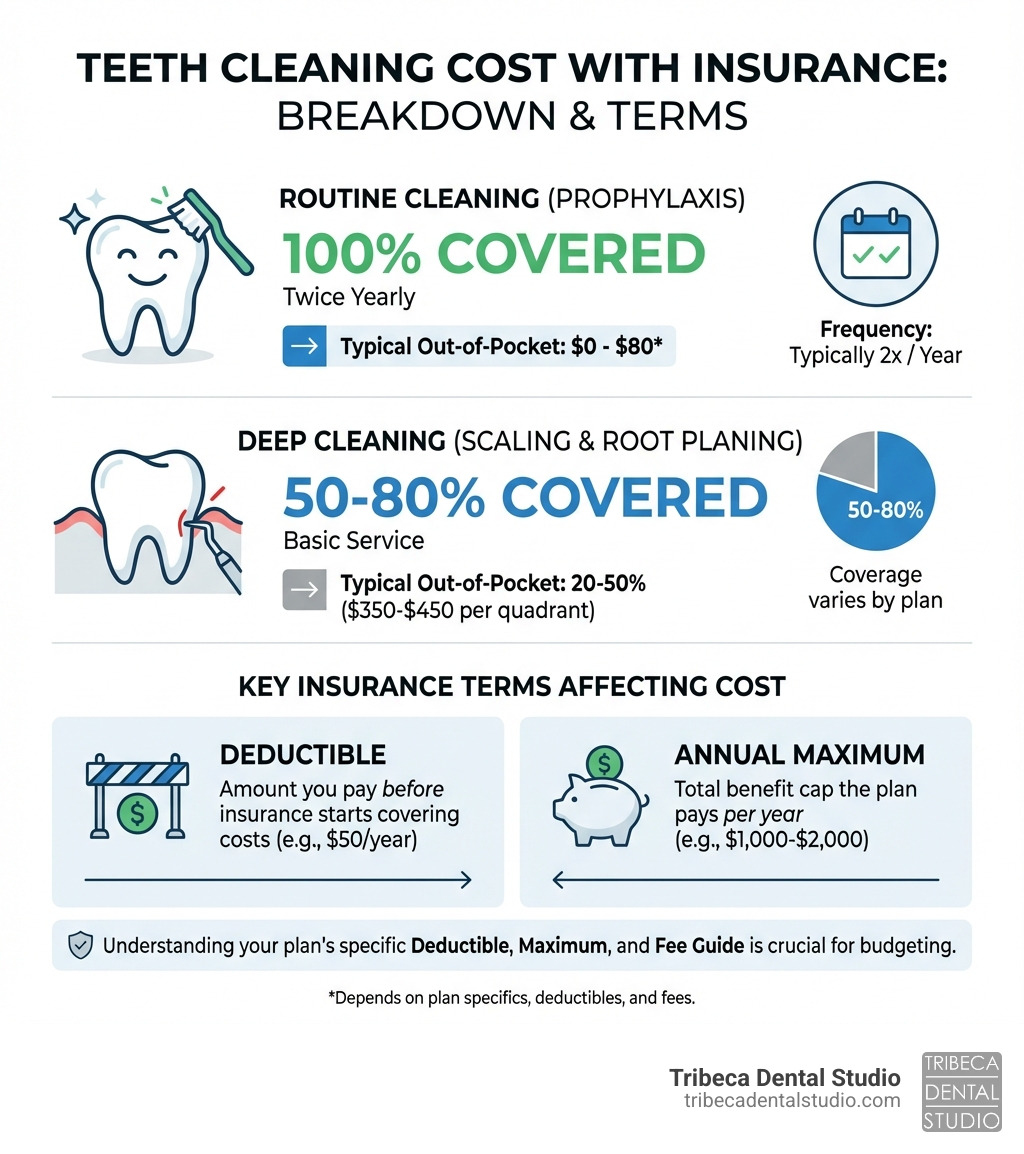
- Routine Cleaning (Prophylaxis): Often covered at 100% by insurance (typically twice per year)
- Without Insurance: $150-$450 in Canada; similar ranges in NYC
- With Insurance: May pay $0-$80 out-of-pocket depending on your plan
- Deep Cleaning: Usually covered at 50-80% by insurance, costing $350-$450 per quadrant
- Key Factor: Your plan’s deductible, co-insurance, and annual maximum all affect your final bill
Most dental insurance plans in Ontario and across Canada cover preventive cleanings fully, but the details matter. Some plans have frequency limitations (like two cleanings per year), while others require you to meet a deductible first. Deep cleanings for gum disease often fall under “basic” services rather than “preventive,” meaning you’ll likely pay a percentage out-of-pocket.
Why does this confusion exist? Dental insurance works differently than medical insurance. Plans categorize services into preventive, basic, and major treatments—each with different coverage levels. Add in deductibles, annual maximums, fee guides, and in-network versus out-of-network costs, and it’s no wonder patients feel overwhelmed when trying to budget for their dental care.
The good news? Once you understand how your specific plan works, you can confidently plan for your dental cleaning costs and avoid surprise bills. Whether you have private insurance through your employer, are considering the Canadian Dental Care Plan (CDCP), or are paying out-of-pocket, knowing what to expect makes all the difference.
As Dr. Nina Izhaky, founder of Tribeca Dental Studio, I’ve helped countless patients steer the teeth cleaning cost with insurance maze over my years of practice. My team and I believe in transparent billing and taking the time to help you understand exactly what your insurance covers before any treatment begins.
Why Regular Dental Cleanings are a Smart Investment
Think of your regular dental cleaning as your smile’s spa day. It’s not just about aesthetics; it’s a vital part of maintaining your overall health. At Tribeca Dental Studio, we can’t stress enough the importance of consistent preventive care. It’s truly a smart investment in your well-being.
Our bodies are amazing, but they can’t quite handle everything on their own. Even with diligent brushing and flossing at home, plaque—a sticky film of bacteria—can accumulate on your teeth. If left undisturbed, this plaque hardens into tartar (or calculus), which is impossible to remove with a toothbrush alone. That’s where we come in! Our skilled hygienists carefully remove plaque and tartar, reaching those tricky spots your brush might miss. This simple, yet crucial, step is your first line of defense against a host of oral health issues.
Regular cleanings are your best weapon against cavities. By eliminating plaque and tartar, we remove the very source of the acids that erode your tooth enamel and lead to decay. But the benefits don’t stop there. Cleanings are also essential for gum disease prevention. Plaque and tartar buildup near the gum line can irritate your gums, leading to gingivitis—the early stage of gum disease marked by inflammation and bleeding. If ignored, gingivitis can progress to more severe periodontal disease, which can cause bone loss, tooth loss, and has even been linked to serious systemic health issues like diabetes and cardiovascular disease. Skipping a cleaning might seem like a small thing, but it can have significant long-term consequences for your health.
Many people don’t want to spend money on a cleaning they think they can “do at home” with a brush. But as we’ve learned, professional tools and expertise are needed to tackle hardened tartar and reach all surfaces of your teeth. Regular cleanings help keep your teeth strong as you age and contribute to your overall physical and emotional well-being. By preventing major issues, you’re also setting yourself up for long-term savings. Addressing a small cavity or early-stage gingivitis is far less costly and invasive than treating a root canal or advanced periodontal disease down the line. It’s about protecting your health and your wallet!
We encourage you to learn more about How Regular Teeth Cleaning in NYC Can Save Your Smile and explore our comprehensive approach to Preventive Dentistry.
Decoding the Bill: Factors That Influence Teeth Cleaning Costs
Understanding the cost of a dental cleaning can sometimes feel like trying to solve a puzzle. Several factors contribute to the final bill, whether you have insurance or not. For our patients in Tribeca, Manhattan, and throughout New York City, it’s particularly important to consider the local economic landscape.

Cleaning at Tribeca Dental Studio
Geographic Location
The cost of dental care, including cleanings, can vary significantly depending on where you live. In busy metropolitan areas like New York City, overhead costs for dental practices—rent, staff salaries, utilities—are typically higher than in smaller towns. This often translates to slightly higher fees for services. For instance, while routine dental cleanings might generally range from $150 to $250 in some parts of Canada, in NYC, the average cost for a standard dental cleaning can range anywhere from $150 to $300 or even higher, depending on the specific clinic and its location within the city.
Type of Cleaning
Not all cleanings are created equal! The type of cleaning you receive is perhaps the biggest determinant of its cost. What your dentist recommends depends entirely on the current health of your gums and teeth.
Additional Services
Often, a dental cleaning is part of a more comprehensive check-up. Here are some common additional services that can influence your bill:
- X-rays: These diagnostic tools are crucial for detecting issues not visible to the naked eye, like cavities between teeth, bone loss, or impacted wisdom teeth. X-rays can add an additional $50 to $100 or more to the cost of your visit.
- Fluoride Treatment: A fluoride application helps strengthen tooth enamel and prevent cavities, especially for those prone to decay.
- Oral Cancer Screenings: These are often included as part of a routine exam, but specialized screenings might be a separate charge.
If you’re curious about the general costs before factoring in insurance, we have a detailed guide on Teeth Cleaning Without Insurance Cost.
Routine Cleaning (Prophylaxis)
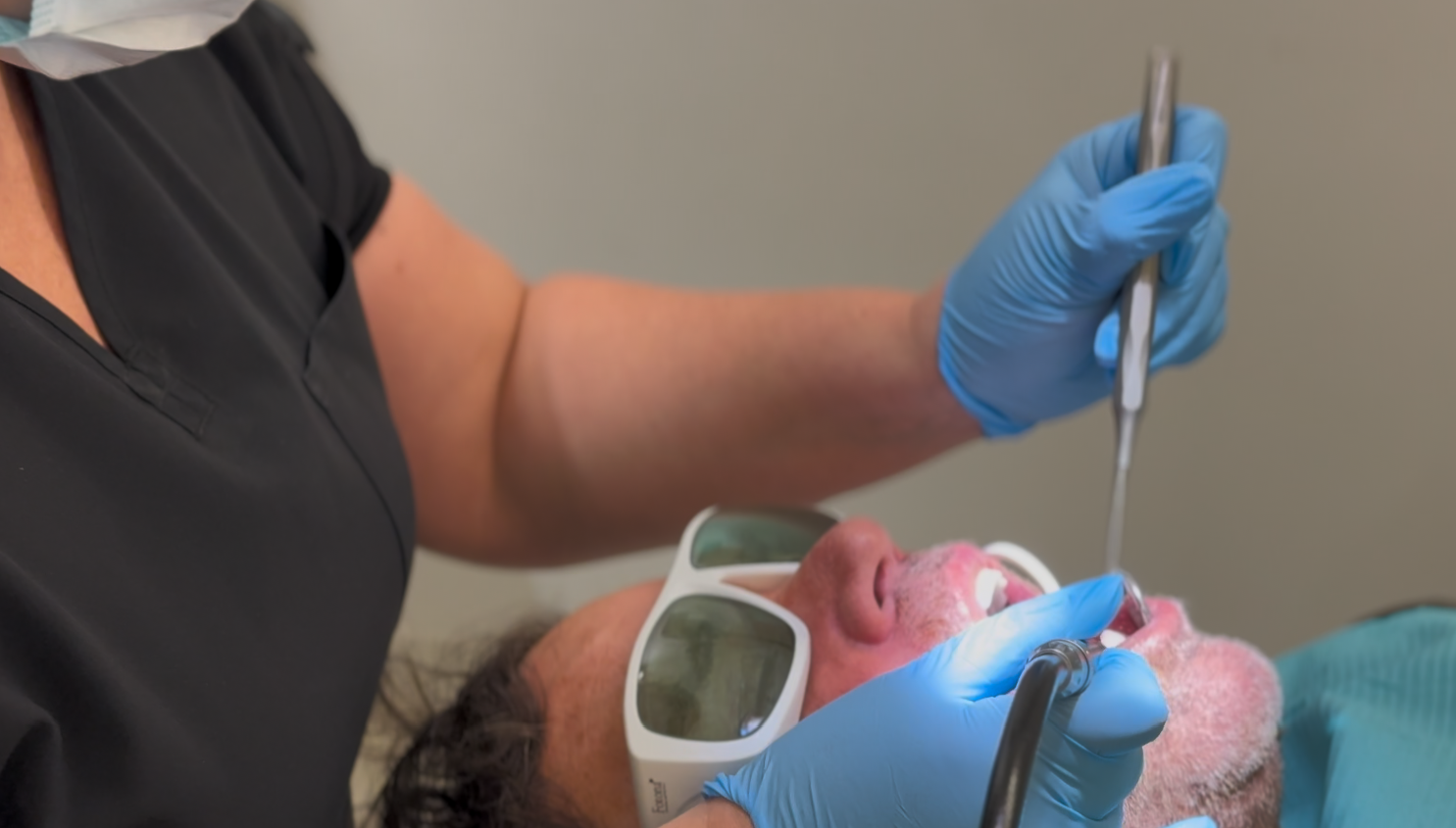
This is the most common type of dental cleaning, and what most people envision when they think of a “cleaning.” A routine cleaning, or prophylaxis, is a preventive measure for individuals with healthy gums and minimal plaque and tartar buildup. During this procedure, our dental hygienists will carefully remove plaque, tartar, and surface stains from above your gumline. The teeth are then polished, leaving your mouth feeling fresh and clean.
For patients in NYC without insurance, the cost of a routine cleaning typically falls within the $150 to $300 range. With dental insurance, this service is frequently covered at 100%, as it’s considered essential preventive care.
Deep Cleaning (Scaling and Root Planing)
If our dentist or hygienist diagnoses you with early to moderate gum disease (gingivitis or periodontitis), a routine cleaning won’t be sufficient. You’ll likely need a “deep cleaning,” medically known as scaling and root planing. This procedure is more extensive because it addresses plaque and tartar that have accumulated below the gumline, where bacteria can cause significant damage to the gums and supporting bone.
Scaling involves carefully removing plaque and tartar from the tooth surfaces and beneath the gumline. Root planing then smooths the tooth roots, helping the gums reattach to the teeth and making it more difficult for plaque to adhere in the future. Because this procedure is more involved and often requires local anesthesia to ensure your comfort, it is typically performed in sections, or “quadrants,” of your mouth over one or more appointments. The cost for deep cleaning is significantly higher, often ranging from $350 to $450 per quadrant without insurance. With insurance, coverage for deep cleaning usually falls into the “basic restorative” category, meaning you’ll typically be responsible for 20-50% of the cost.
Periodontal Maintenance
For patients who have undergone deep cleaning or have a history of periodontal disease, regular follow-up care is essential. This is where periodontal maintenance comes in. It’s a specialized cleaning designed to prevent the recurrence or progression of gum disease. These cleanings are more frequent than routine cleanings, often recommended every three to four months, and are more thorough than a standard prophylaxis, focusing on monitoring and cleaning the pockets around the teeth.
The cost of periodontal maintenance is also higher than a routine cleaning, typically ranging from $350 to $500 per visit without insurance. Similar to deep cleaning, insurance usually covers 50-80% of this cost, as it’s a necessary ongoing treatment for a diagnosed condition. This ongoing care is crucial for managing your oral health and preventing further damage. You can learn more about our approach to Periodontal Disease Treatment at Tribeca Dental Studio.
Your Dental Insurance Explained: The Teeth Cleaning Cost With Insurance
Navigating dental insurance can feel like learning a new language, but understanding its basics is key to managing your teeth cleaning cost with insurance. Most dental insurance plans prioritize preventive care, and for good reason: it saves everyone money in the long run by preventing more serious, and expensive, problems.
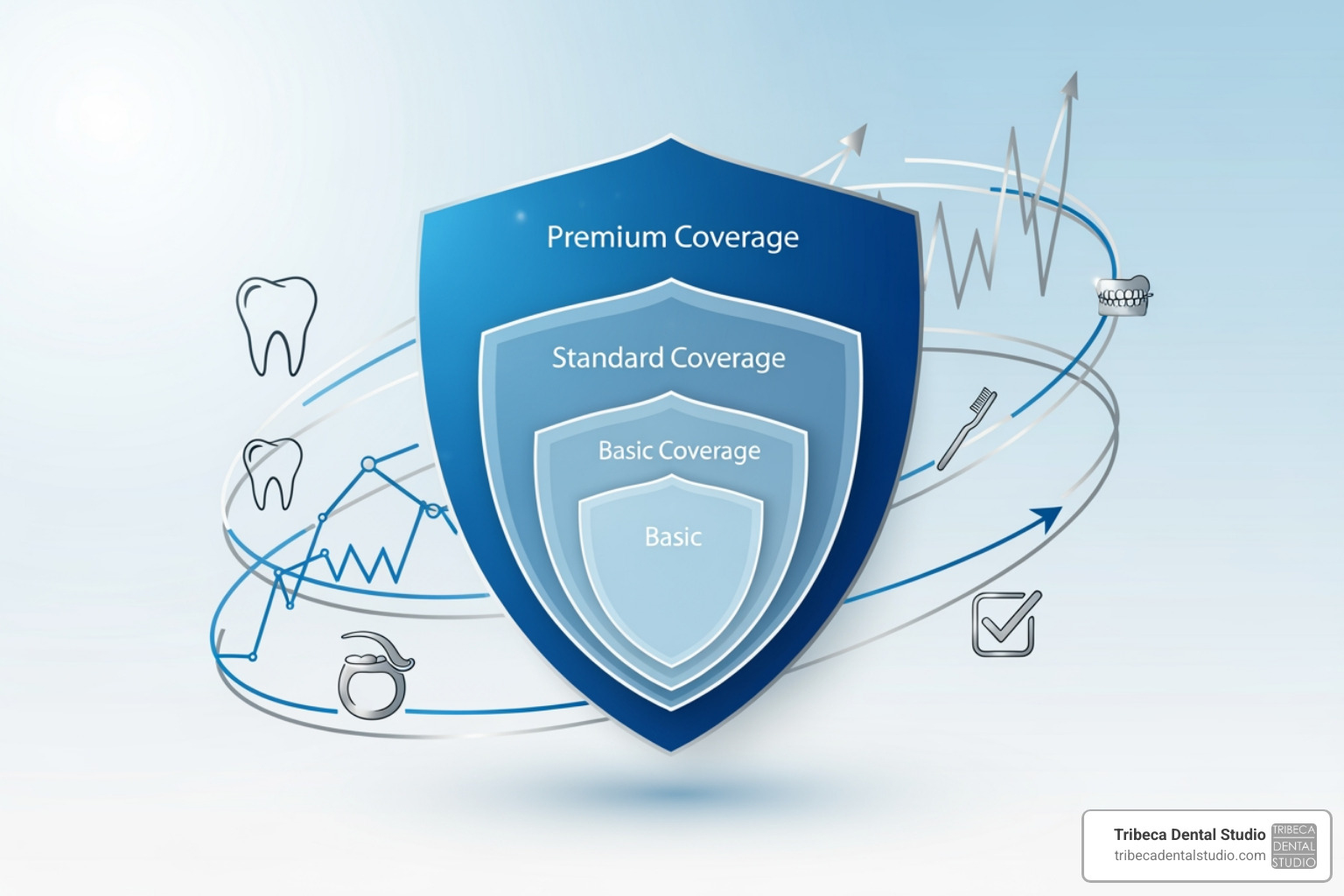
Dental insurance plans typically categorize services into a few tiers, each with different coverage percentages:
- Preventive Services: This category almost always includes routine dental exams, X-rays, and standard cleanings (prophylaxis). These are typically covered at the highest percentage, often 80-100%, because they help prevent future issues.
- Basic Services: This category usually covers fillings, simple extractions, and sometimes deep cleanings (scaling and root planing) or periodontal maintenance. Coverage for these services is generally lower than preventive care, often around 50-80%.
- Major Services: This tier includes more complex procedures like crowns, bridges, dentures, and root canals. These often have the lowest coverage, sometimes 50% or less, and may come with longer waiting periods.
- Orthodontic Services: Braces and other orthodontic treatments often have separate coverage, sometimes with a lifetime maximum and specific age restrictions.
Dental insurance is designed to help offset the costs of dental care, not necessarily to cover 100% of every procedure. We recommend consulting guides like Choosing the Right Dental Plan for You to help you understand your options. We also have resources on our website about Insurance and how we work with various providers.
Understanding Your Plan’s “Working Parts”
To truly grasp your teeth cleaning cost with insurance, you need to familiarize yourself with a few key insurance terms. These are the “working parts” of your dental plan that dictate how much you’ll pay out-of-pocket:
- Deductibles: This is the amount you must pay for covered dental services before your insurance plan starts to pay. For example, if your deductible is $50, you’ll pay the first $50 of your dental costs each year before your insurance kicks in. However, many plans waive the deductible for preventive services like routine cleanings, meaning your cleaning could be covered 100% from the first visit.
- Co-insurance: Once you’ve met your deductible, co-insurance comes into play. This is the percentage of the cost of a covered service that you’re responsible for. For instance, if your plan covers a basic service at 80%, and the fee is $100 after your deductible, your insurance pays $80, and you pay the remaining $20 (20% co-insurance).
- Annual Maximums: Most dental insurance plans have an annual maximum, which is the total dollar amount your plan will pay for covered dental services within a specific plan year (usually January 1st to December 31st). Once you reach this limit, you’re responsible for 100% of any further costs until the next plan year begins. Annual maximums typically range from $1,000 to $2,000.
- Frequency Limitations: Your plan might limit how often certain services are covered. For example, it’s common for plans to cover routine cleanings twice a year, or X-rays once every 12-24 months. If you go beyond these limits, the additional services may not be covered.
- Waiting Periods: Some plans, especially new ones, impose a waiting period before certain procedures are covered. This means you might have to wait a few months for basic services and even longer (a year or more) for major services. Preventive care, like routine cleanings, often has a shorter or no waiting period.
For a comprehensive list of insurance terms, you can always Find definitions for insurance terms.
How Insurance Covers Different Types of Cleanings
The coverage you receive for a dental cleaning largely depends on the type of cleaning your dentist recommends and how your insurance plan categorizes it.
- Routine Cleaning (Prophylaxis): This is where dental insurance shines! Most private dental insurance plans in New York City, like those across the country, cover routine cleanings at 80% to 100%. Often, this means you pay nothing out-of-pocket for your twice-yearly preventive cleanings, provided you haven’t exceeded any frequency limitations or deductibles (if applicable). This high coverage is a strong incentive for regular preventive care.
- Deep Cleaning (Scaling and Root Planing): Since deep cleaning is a treatment for gum disease, it typically falls under the “basic restorative” services category, not purely preventive. As a result, insurance usually covers a lower percentage of the cost, often between 50% and 80%. This means you’ll have a co-insurance payment for each quadrant treated.
- Periodontal Maintenance: Similar to deep cleaning, periodontal maintenance is considered a treatment for an ongoing condition. Coverage usually mirrors that of deep cleaning, with insurance paying 50% to 80% of the cost, leaving you responsible for the remaining co-insurance.
While many plans advertise “100% coverage” for cleanings, this nearly always refers to routine cleanings. A deep cleaning or periodontal maintenance will almost certainly involve some out-of-pocket expense.
In-Network vs. Out-of-Network: How Your Dentist Choice Affects Cost
When it comes to dental insurance, whether your dentist is “in-network” or “out-of-network” can significantly impact your teeth cleaning cost with insurance.
- In-Network Providers: These are dentists who have a contract with your insurance company. They agree to accept the insurance company’s negotiated fees (often called “contracted rates”) for services. When you see an in-network dentist, you typically pay only your co-insurance or deductible, and the dentist bills the insurance company directly for the rest. This usually results in lower out-of-pocket costs for you.
- Out-of-Network Providers: An out-of-network dentist does not have a contract with your insurance company. While your insurance plan might still offer some coverage, it’s usually at a lower reimbursement rate. For example, your plan might pay 80% for an in-network routine cleaning but only 60% for an out-of-network one. Additionally, out-of-network dentists can charge their full fees, which might be higher than what your insurance company considers “usual, customary, and reasonable” (UCR) for that service in your area. You would then be responsible for the difference between the dentist’s fee and what your insurance pays, in addition to your co-insurance and deductible.
At Tribeca Dental Studio, we work with a wide range of insurance providers and are happy to help you understand your benefits, whether we are in-network or out-of-network for your specific plan. Our priority is to ensure you receive the best care with transparent billing. We believe Be Picky When Finding Your Insurance Policy, Here’s Why.
Smart Ways to Save on Dental Cleanings
While dental insurance is a fantastic tool, there are other smart strategies to help you manage your teeth cleaning cost with insurance and keep your smile healthy without breaking the bank.
Maximizing Benefits and Year-End Planning
One of the easiest ways to save is to simply use your insurance benefits. Many dental plans operate on a calendar year, and any unused benefits, including your annual maximum, typically expire on December 31st. If you have two routine cleanings covered per year, make sure to get them both! It’s surprising how many people let these valuable benefits go to waste. If you’ve met your deductible and haven’t hit your annual maximum, scheduling any necessary treatments, like a deep cleaning, towards the end of the year can be a smart financial move. Your out-of-pocket costs will be lower because your deductible is met, and you’re utilizing benefits that would otherwise disappear.
In-House Membership Plans
For those without traditional dental insurance, or for services not fully covered by their plan, many dental practices, including ours, offer in-house membership plans. These plans are not insurance, but rather a direct agreement with our practice that provides discounted rates on services, often including two routine cleanings, exams, and X-rays, plus a percentage off other treatments, for an annual fee. It’s a straightforward way to budget for your preventive care and access quality dentistry at a predictable cost.
Flexible Payment Options
Don’t let the upfront cost of a deep cleaning or other necessary treatment deter you from getting the care you need. Many dental offices understand that not everyone can pay for larger procedures all at once. We often offer flexible payment options, including installment plans, to help make treatment more affordable. We’re here to discuss these options with you and find a solution that fits your budget.
Investing in regular cleanings and taking proactive steps to manage costs helps you maintain not just a beautiful smile, but also your overall health. You can always visit our main Insurance page for more information or to speak with our financial coordinator.
Frequently Asked Questions about Teeth Cleaning
We know you have questions, and we’re here to provide clear answers so you can confidently manage your dental health and understand your teeth cleaning cost with insurance.
How often should I get a professional dental cleaning?
The general recommendation from dental professionals, including the American Dental Association, is to get a professional dental cleaning every six months. This frequency allows our team to regularly remove plaque and tartar buildup, detect any potential issues early, and keep your gums healthy.
However, this is a general guideline. Your individual needs might vary. If you have excellent oral hygiene and no history of gum disease or cavities, your dentist might suggest annual cleanings. Conversely, if you have a history of gum disease, are prone to cavities, or have other risk factors, your dentist might recommend more frequent cleanings—perhaps every three to four months. For instance, patients managing periodontal disease often benefit significantly from quarterly cleanings to prevent recurrence and maintain gum health. Always follow your dentist’s personalized advice on your cleaning schedule.
Will my insurance cover 100% of my teeth cleaning cost with insurance?
Many patients are delighted to learn that their insurance often covers 100% of their routine dental cleaning cost. This is typically true for preventive services, which usually include two routine cleanings per year, along with annual exams and X-rays. Insurance companies are keen to cover these services fully because they understand that preventing problems is far less expensive than treating them later.
However, there are nuances:
- Plan Specifics: Coverage varies significantly between different insurance plans. Always review your specific policy documents to understand your benefits.
- Deductibles: Some plans may require you to meet a small deductible before even preventive services are covered, though this is less common for routine cleanings.
- Co-insurance: If your plan covers routine cleanings at 80%, you’ll be responsible for the remaining 20%.
- Annual Limits: Ensure you haven’t already reached your annual maximum for the year, as any services after that point would be 100% your responsibility.
- Type of Cleaning: As discussed, deep cleanings and periodontal maintenance are usually not covered at 100% and will involve a co-insurance payment.
The best way to know exactly what your insurance will cover is to contact your insurance provider directly or ask our administrative team at Tribeca Dental Studio. We’re always happy to help you verify your benefits before your appointment.
What is the difference between a routine cleaning and a deep cleaning?
This is one of the most common questions we get, and it’s a crucial distinction for understanding your dental health and associated costs.
- Routine Cleaning (Prophylaxis):
- Purpose: This is a preventive procedure for individuals with healthy gums. It’s designed to maintain oral health and prevent problems from developing.
- Procedure: Our hygienist will remove plaque, tartar, and surface stains from the visible surfaces of your teeth and just above the gumline. Your teeth are then polished. It’s typically a quick, comfortable procedure.
- Cost/Coverage: Often 100% covered by insurance, usually twice a year.
- Deep Cleaning (Scaling and Root Planing):
- Purpose: This is a therapeutic procedure prescribed when you have gum disease (gingivitis or periodontitis). Its goal is to treat existing infection and inflammation by removing harmful bacteria and calculus below the gumline.
- Procedure: This is a much more thorough and involved process. Our hygienist will carefully remove plaque and tartar from the tooth roots, deep within the gum pockets. The root surfaces are then smoothed to encourage gum reattachment. Local anesthesia is often used to ensure your comfort during the procedure, which may be done over multiple appointments, treating one or two quadrants of your mouth at a time.
- Cost/Coverage: Considered a “basic restorative” service, it’s typically covered by insurance at 50-80%, meaning you will have an out-of-pocket co-insurance payment. It’s also significantly more expensive than a routine cleaning due to its complexity and time commitment.
A routine cleaning is like washing the exterior of a clean car, while a deep cleaning is like detailing a car that hasn’t been cleaned in years—it requires more effort, specialized tools, and addresses issues that are harder to reach.
Conclusion: Achieve a Healthy Smile with Confidence
Understanding your teeth cleaning cost with insurance might seem daunting at first, but with a little knowledge and the right dental partner, it becomes much clearer. We’ve explored how different types of cleanings—routine, deep, and periodontal maintenance—come with varying costs and insurance coverage levels. We’ve also demystified the “working parts” of your insurance plan, from deductibles and co-insurance to annual maximums and waiting periods, all of which play a role in your final bill.
The overarching message is clear: prevention is key. Regular professional dental cleanings are not just about a sparkling smile; they are a critical investment in your overall health, helping to prevent more serious and costly dental issues down the road. While the thought of paying for dental care can be a source of anxiety for some, knowing how your insurance works and exploring smart saving strategies can empower you to make informed decisions.
At Tribeca Dental Studio, led by Dr. Nina Izhaky, we are committed to providing comprehensive, advanced, and welcoming oral healthcare right here in Tribeca, NYC. We pride ourselves on a personalized approach, treating each patient like family. Our team is always here to help you steer your insurance benefits, provide transparent cost estimates, and ensure you receive the highest quality care with confidence.
Don’t let confusion about costs deter you from maintaining your oral health. We invite you to Schedule your next Dental Checkup & Teeth Cleaning with us. Let us help you achieve and maintain a healthy, beautiful smile for years to come.