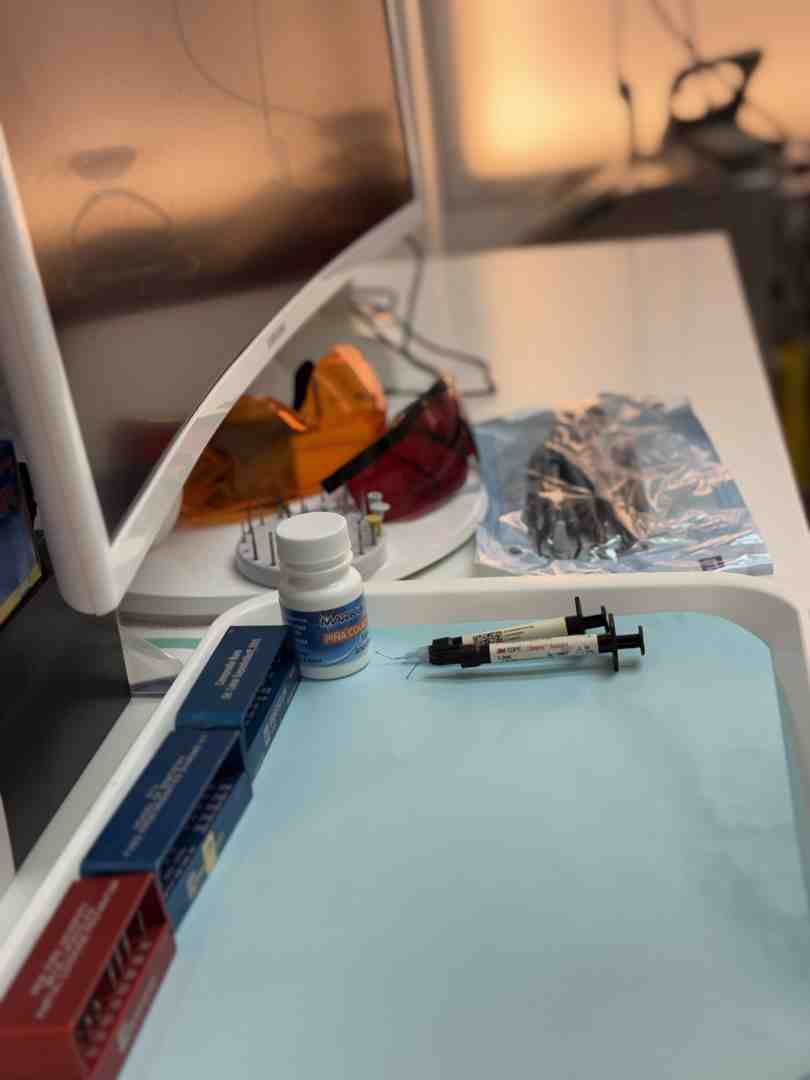
Understanding What You’ll Pay for a Natural-Looking Smile
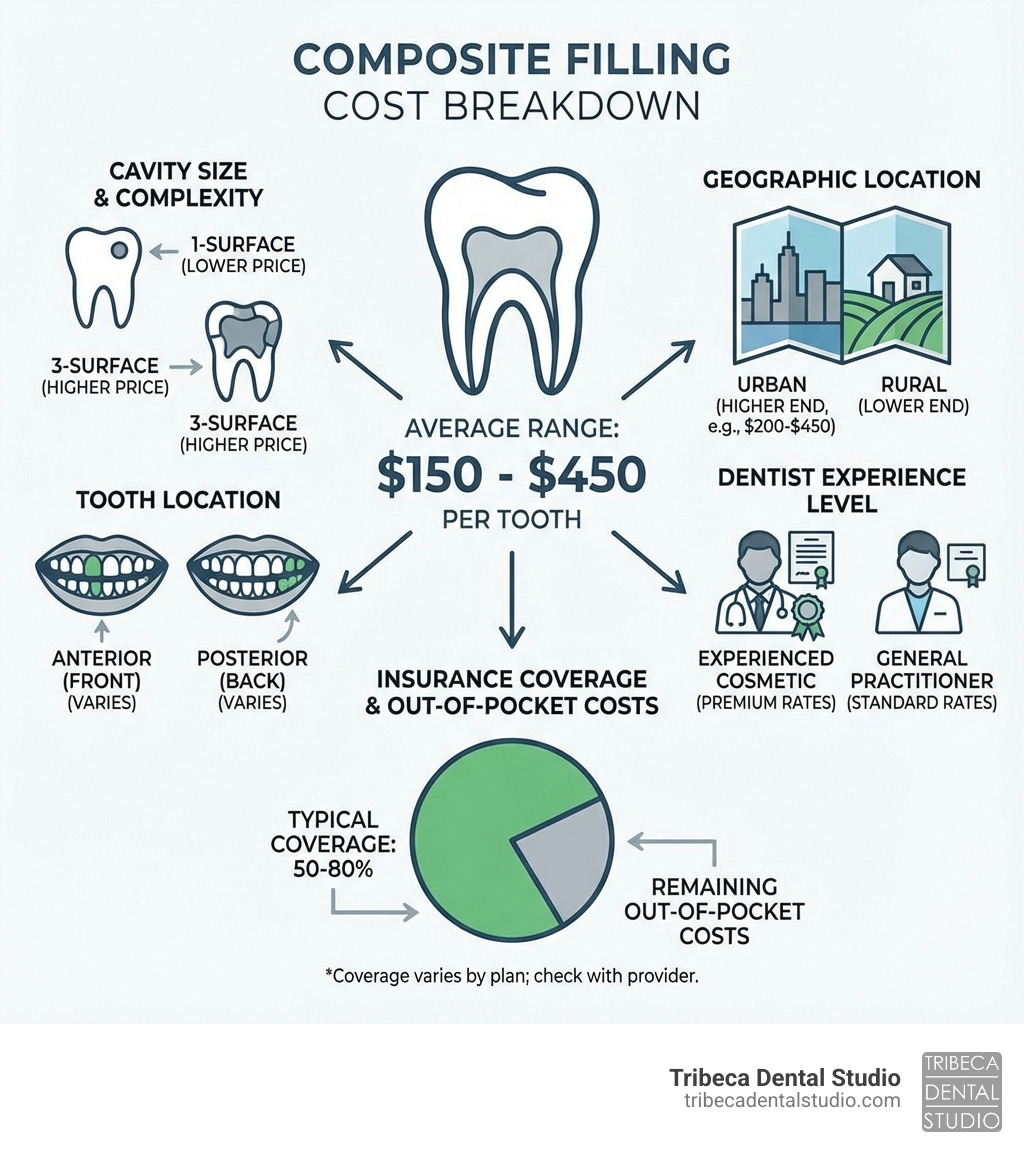
Composite filling cost typically ranges from $150 to $450 per tooth in the United States, with prices varying based on several factors:
- Cavity size and complexity: Single-surface fillings cost less than multi-surface restorations
- Tooth location: Front teeth may cost differently than back molars
- Geographic location: Urban areas like New York City tend toward the higher end ($200-$450)
- Dentist expertise: Experienced cosmetic dentists may charge premium rates
- Insurance coverage: Most plans cover 50-80% of composite filling costs
If you’ve been told you need a cavity filled, you’re probably wondering about more than just the procedure itself. The cost question looms large, especially when you’re trying to balance quality care with your budget. Unlike the silver amalgam fillings of decades past, today’s composite resin fillings offer a tooth-colored, mercury-free alternative that blends seamlessly with your natural smile—but they come with different pricing considerations.
The good news? Composite fillings represent an investment in both your oral health and your confidence. They stop tooth decay from progressing, restore your tooth’s strength and function, and do it all while maintaining the natural appearance of your smile. The bad news? Without understanding what drives the cost, you might end up surprised by your dental bill or unsure whether you’re getting fair value.
I’m Dr. Nina Izhaky, and at Tribeca Dental Studio, I’ve helped countless patients steer Composite filling cost decisions while providing mercury-free, aesthetic restorations. My experience with state-of-the-art materials and techniques has shown me that informed patients make better choices about their dental care.
What Are Composite Fillings? A Closer Look at the Modern Choice
When we talk about dental fillings, we’re discussing a common dental treatment used to repair teeth damaged by decay, cracks, or fractures. For decades, the go-to solution was often amalgam (silver) fillings. While effective, their metallic appearance left something to be desired for many patients. Enter composite fillings – a modern marvel in restorative dentistry.
Composite fillings are tooth-colored restorations carefully designed to blend with your natural teeth. They are crafted from a mixture of plastic (acrylic resin) and finely ground glass particles, creating a durable and aesthetically pleasing material. Unlike amalgam, composite fillings are completely mercury-free, addressing concerns some patients have about metal in their mouths. This makes them a fantastic choice for those seeking a biocompatible and discreet solution for their dental needs. At Tribeca Dental Studio, we specialize in providing these natural-looking, durable, and aesthetic restorations. You can learn more about our philosophy on Tooth-Colored Fillings.
Advantages of Composite Fillings
Choosing composite fillings comes with a host of benefits that make them a popular choice among our patients:
- Aesthetics: This is perhaps the most celebrated advantage. Composite resin can be precisely color-matched to your existing teeth, making the filling virtually invisible. This seamless blend is particularly beneficial for cavities in visible areas, ensuring your smile remains natural and radiant.
- Conservative Preparation: Unlike amalgam fillings, which often require the removal of healthy tooth structure to create an anchor, composite fillings bond directly to the tooth. This means we can preserve more of your natural tooth, leading to a minimally invasive procedure with reduced drilling.
- Direct Bonding: The strong bond formed between the composite material and your tooth structure not only provides excellent support but also helps to prevent further decay by sealing out bacteria. This strong adherence also makes composite fillings versatile for repairing chips, cracks, and small gaps, a procedure often referred to as Direct Bonding.
- Strength and Versatility: While historically amalgam was considered stronger, advancements in composite materials have significantly improved their durability and wear resistance. Modern composites offer both strength and aesthetic appeal, providing a functional dental restoration and a natural-looking outcome for small to medium-sized cavities.
Durability and Safety
The longevity of your composite filling is a common question, and rightfully so! With proper care, composite fillings can typically last between 5 to 10 years, though some sources suggest 5 to 7 years. The exact lifespan depends on several factors, including your oral hygiene habits, dietary choices, the location of the filling in your mouth, and the amount of chewing force it endures. For instance, fillings on surfaces that experience regular biting may wear out faster.
We understand that safety is paramount. Composite fillings are widely regarded as safe and have been successfully used for decades to restore teeth. They are mercury-free, eliminating the concerns associated with traditional silver amalgam fillings. The U.S. Food & Drug Administration (FDA) considers the mercury content in silver amalgam fillings safe for the general population, but we know many patients prefer a metal-free option. We prioritize your well-being, and current scientific studies confirm the safety and effectiveness of modern composite materials. You can find more information on the longevity and safety of various dental fillings.
A Detailed Guide to Composite Filling Cost
Understanding the Composite filling cost is crucial for planning your dental care. While the national average cost of a dental filling in the United States can be quite broad, for tooth-colored composite resin fillings, you can generally expect a range of $150 to $450 per tooth. Some data even suggests an average of around $191 to $226 per composite filling. We view this not just as an expense, but as a worthwhile investment in your long-term oral health and the beauty of your smile. Addressing cavities promptly with a quality filling can prevent more extensive and costly procedures down the line, such as root canals or crowns.
Factors That Determine Your Composite Filling Cost
The price of a composite filling isn’t a one-size-fits-all number. Several factors come into play:
- Cavity Size and Complexity: This is often the biggest determinant. A small, single-surface filling is naturally less expensive than a large, multi-surface restoration that requires more material and intricate sculpting. The deeper and wider the decay, the more complex the procedure, and thus, the higher the Composite filling cost.
- Number of Surfaces: Teeth have multiple surfaces (top, front, back, sides). A filling involving one surface will cost less than one covering two or three surfaces.
- Tooth Location: The location of the affected tooth plays a role. Front teeth (incisors and canines) often require more aesthetic precision to perfectly match the surrounding teeth, which can sometimes increase the cost. Back teeth (molars and premolars) might require larger, more structurally sound fillings due to chewing forces, also potentially impacting the price.
- Geographic Location: Dental costs can vary significantly depending on where you live. In metropolitan areas like New York City, overhead costs for dental practices are higher, which can translate to higher prices for procedures. For instance, a composite filling in New York City may cost between $200 to $300, and some sources suggest an average of $246 for composite fillings in New York.
- Dentist’s Expertise: The experience and specialization of your dentist can influence the fee. Highly skilled cosmetic dentists, like those at Tribeca Dental Studio, who use advanced techniques and premium materials, may have higher fees. This often reflects their additional training, the quality of their work, and the personalized care you receive.
- Additional Procedures: Sometimes, the filling isn’t the only cost. You might need X-rays for diagnosis (typically $25 to $50 per single X-ray, or more for a full mouth series) or local anesthesia to ensure your comfort (which is usually included in the filling cost, but sedation options like nitrous oxide or oral sedation would be an added expense).
How Composite Costs Compare to Other Materials
When considering Composite filling cost, it’s helpful to compare it with other common dental filling materials. While we specialize in tooth-colored, mercury-free restorations at Tribeca Dental Studio, the following table provides a general comparison of different options.
| Filling Material | Average Cost (per tooth in NYC/US) | Aesthetics | Durability | Procedure Time | Pros | Cons |
|---|---|---|---|---|---|---|
| Composite Resin | $150 – $450 ($200-$300 in NYC) | Excellent (tooth-colored) | Good (5-10 years) | 30-60 mins (direct) | Blends seamlessly, mercury-free, bonds to tooth, conservative | Can stain, not ideal for very large cavities, traditionally less durable than amalgam/gold (though improving) |
| Amalgam (Silver) | $50 – $250 (average $160) | Poor (metallic, noticeable) | Excellent (10-15 years) | 30-60 mins (direct) | Durable, affordable, strong for back teeth | Visible, mercury content concerns for some, doesn’t bond to tooth |
| Gold | $300 – $1,500 (average $400-$1000) | Poor (metallic, noticeable) | Excellent (10-30+ years) | 2 visits (indirect) | Most durable, very long-lasting, doesn’t corrode | Very expensive, unnatural color, requires multiple appointments |
| Porcelain/Ceramic | $250 – $4,500 (average $1150-$1774) | Excellent (tooth-colored) | Very Good (up to 10 years) | 2 visits (indirect) | Natural-looking, stain-resistant, strong | Most expensive, can be brittle, requires multiple appointments |
Note: The costs provided are estimates and can vary based on the factors mentioned above.
For a comprehensive look at all the ways we can restore your smile, please visit our page on Restorative Dentistry.
The Filling Process and Caring For Your Investment
Getting a composite filling is a straightforward and comfortable process, especially with our personalized approach at Tribeca Dental Studio. We prioritize your comfort every step of the way, ensuring a smooth experience from start to finish.
The procedure typically begins with patient comfort in mind. We’ll administer a local anesthesia to numb the area around the affected tooth, so you won’t feel any pain during the procedure – just a bit of pressure. Once the area is numb, we proceed with decay removal. Our dentist will carefully use a dental drill to remove all traces of decay from the tooth, preparing the cavity for the filling material.
Next, the tooth is carefully cleaned and prepared. We apply an etching solution, which creates microscopic pores on the tooth’s surface, followed by a bonding agent. This step is crucial as it allows the composite material to form a strong, lasting bond with your natural tooth structure. Then, the composite resin is applied in thin layers. Each layer is carefully sculpted to match the natural contours of your tooth, restoring its original shape and ensuring a proper bite. After each layer is applied, a special blue curing light is used to harden the resin quickly and securely. Once the final layer is in place and hardened, the dentist will make any necessary adjustments to your bite and then polish the filling to a smooth, natural-looking finish. The entire process for a single composite filling usually takes about 30 to 60 minutes.

How to Care For Your Composite Fillings
Once your beautiful new composite filling is in place, you’ll want to ensure it lasts as long as possible. Proper care is key to maximizing its longevity and protecting your oral health.
- Practice Excellent Oral Hygiene: This is non-negotiable! Brush your teeth at least twice a day with fluoride toothpaste and floss daily. Good oral hygiene prevents new decay from forming around your filling and keeps your gums healthy.
- Regular Dental Check-ups: Continue with your routine dental check-ups and cleanings every six months. These appointments allow us to monitor your fillings, detect any potential issues early, and ensure your overall oral health is on track.
- Mind Your Diet: While composite fillings are strong, they can be susceptible to staining, much like your natural teeth. Limit your consumption of highly pigmented foods and drinks (like coffee, tea, red wine, and berries). A balanced diet rich in vitamins and minerals can also help strengthen your teeth and promote good oral health. For more tips on healthy eating for your teeth, check out this guide on a balanced diet for strong teeth.
- Avoid Hard or Sticky Foods: For the first 24 hours after your filling, it’s best to avoid hard or sticky foods. After that, while composite fillings are durable, routinely biting on very hard items like ice, hard candy, or nuts can put undue stress on them and potentially cause damage.
- Consider a Nightguard: If you clench or grind your teeth (bruxism) at night, we might recommend a custom-fitted nightguard. This protects your fillings and natural teeth from excessive wear and tear.
- Address Sensitivity: It’s normal to experience some mild sensitivity to hot or cold after a new filling, but this should subside within a few days. If sensitivity persists or you experience sharp pain, contact us right away.
Navigating Insurance and Affordability
Understanding how your dental insurance covers Composite filling cost can feel like deciphering a secret code. Most dental insurance plans do offer coverage for fillings, as they are considered a basic restorative procedure and essential for maintaining oral health. Typically, plans may cover anywhere from 50% to 80% of the cost, assuming you’ve met your deductible and haven’t reached your annual maximum.
However, the level of coverage can vary significantly between providers and plans. It’s always best to review your specific policy documents or contact your insurance provider directly to understand your benefits, including any deductibles (the amount you pay before your insurance starts to cover costs), copays (a fixed amount you pay for a service), and annual maximums (the most your plan will pay in a year). Choosing an in-network dentist can also help reduce your out-of-pocket expenses, as negotiated rates are typically lower.
Does Insurance Fully Cover Composite Fillings?
This is where it gets a little tricky. While many insurance plans cover composite fillings, they might not cover the full cost, or they might cover them differently than amalgam fillings.
- Posterior vs. Anterior Teeth Coverage: Some older or more basic insurance plans may categorize composite fillings for back teeth (molars and premolars) as “cosmetic” rather than “medically necessary.” In such cases, they might only cover the filling at the rate of an amalgam filling, leaving you to pay the difference. Composite fillings for front teeth (anterior) are almost always covered because aesthetics are considered more critical in that area.
- “Least Expensive Alternative” Clause: Many insurance policies include a “least expensive alternative” (LEA) clause. This means if both an amalgam and a composite filling could technically repair the tooth, the insurance company will only pay for the cost of the cheaper amalgam filling, even if you choose a composite. You would then be responsible for the difference in Composite filling cost.
- Waiting Periods: It’s also important to be aware of waiting periods. Some dental plans have a waiting period, typically 6 to 12 months, before they will cover major restorative procedures like fillings. If you need a filling during this period, you might have to pay the full cost out-of-pocket.
We strongly recommend contacting your insurance provider before your appointment to clarify your coverage for composite fillings. For example, a Cigna Dental 1000 Plan might pay 80% of the cost for an in-network dentist, but they may have limitations, such as not paying for a replacement filling on the same tooth and surface within the same year, or not covering white fillings for bicuspids (premolars) and molars. You can often find these details in your plan’s summary of benefits. We’re always here to help you understand your treatment plan and provide necessary documentation for your insurance claims.
How to Save Money on Fillings
If you don’t have dental insurance or your coverage is limited, don’t despair! There are several ways to make Composite filling cost more manageable:
- Payment Plans and Financing: Many dental practices, including ours, offer flexible payment plans or work with third-party financing options. These allow you to spread the cost of your treatment over several months, making it more affordable.
- Flexible Spending Accounts (FSAs) and Health Savings Accounts (HSAs): If you have access to an FSA or HSA through your employer, you can use these tax-advantaged accounts to pay for dental expenses, including fillings, with pre-tax dollars.
- Dental Schools: Dental schools often offer treatments at reduced rates. These procedures are performed by dental students under the close supervision of experienced faculty. While this might be an option, it’s worth considering the time commitment, as appointments can sometimes take longer.
- Community Health Centers: These clinics may offer low-cost or sliding-scale services, including dental fillings, for individuals with limited income. To find a community health center near you, you can use resources like this one.
- Preventive Care: The best way to save money on fillings is to avoid needing them in the first place! Regular check-ups, cleanings, and diligent oral hygiene can prevent cavities from forming or catch them when they’re small and less expensive to treat.
Conclusion: A Worthwhile Investment in Your Smile
Navigating the Composite filling cost can feel like a lot to take in, but we hope this guide has provided clarity and confidence. Composite fillings are a fantastic choice for restoring your teeth, offering a blend of aesthetic appeal, durability, and a mercury-free solution. They are a worthwhile investment, not just in the immediate repair of a cavity, but in the long-term health and beauty of your smile.
Choosing a composite filling means you’re preventing further decay, restoring your tooth’s function, and maintaining a natural, seamless look. This proactive approach saves you from potentially more extensive and costly procedures down the road, such as root canals or crowns, which can run significantly higher in price.
At Tribeca Dental Studio, we believe in providing personalized care, treating each patient like family. We’re committed to offering advanced, comprehensive, and welcoming oral healthcare right here in Tribeca, Manhattan. We’re dedicated to helping you achieve and maintain a healthy, beautiful smile that you can be proud of. If you’re considering a composite filling or have any questions about your oral health, we invite you to reach out.
To learn more about our natural, durable, and aesthetic dental fillings, and to schedule your visit, please explore our dedicated page: Dental Fillings in NYC: Natural, Durable, Aesthetic Restorations at Tribeca Dental Studio. We look forward to welcoming you!