Understanding What You’ll Pay to Fix That Chip
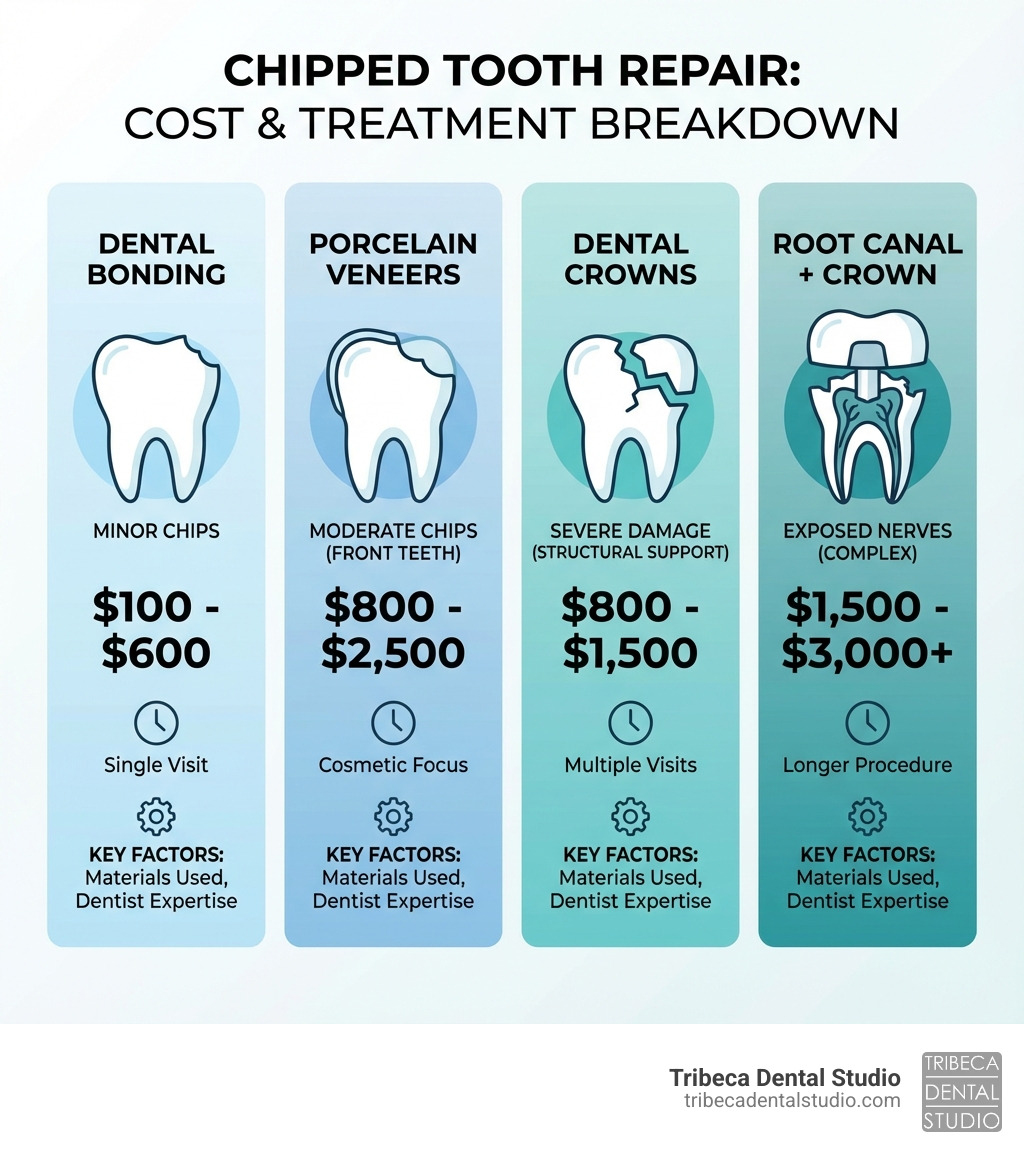
The cost of getting chipped tooth fixed ranges from $100 to $2,500+ depending on the severity of the damage and the repair method needed. Here’s what you can expect to pay:
- Dental Bonding/Fillings: $100 – $600 (minor chips)
- Porcelain Veneers: $800 – $2,500 (moderate chips, front teeth)
- Dental Crowns: $800 – $1,500 (severe chips, larger damage)
- Root Canal + Crown: $1,500 – $3,000+ (when nerve is exposed)
A chipped tooth can happen from a sports injury, biting something hard, or grinding your teeth. While tooth enamel is incredibly hard, chips are common. Modern dentistry offers several repair options, but understanding the treatments and their costs is key.
The severity and location of the chip determine the treatment. A small chip may only need simple bonding, while a larger fracture could require a crown or root canal. Front teeth often need cosmetic solutions, while molars require durable materials.
I’m Dr. Nina Izhaky, and in my years of practice at Tribeca Dental Studio, I’ve helped countless patients steer the cost of getting chipped tooth fixed while ensuring they receive personalized, compassionate care that fits their unique needs and budget. My goal is to help you understand your options so you can make an informed decision about restoring your smile.
First Steps and Common Causes of a Chipped Tooth
Finding a chipped tooth can be alarming, but there’s no need to panic. At Tribeca Dental Studio, we see this common dental injury often and have effective ways to restore your smile. The first step is to understand the cause and take immediate action.
What causes teeth to chip?
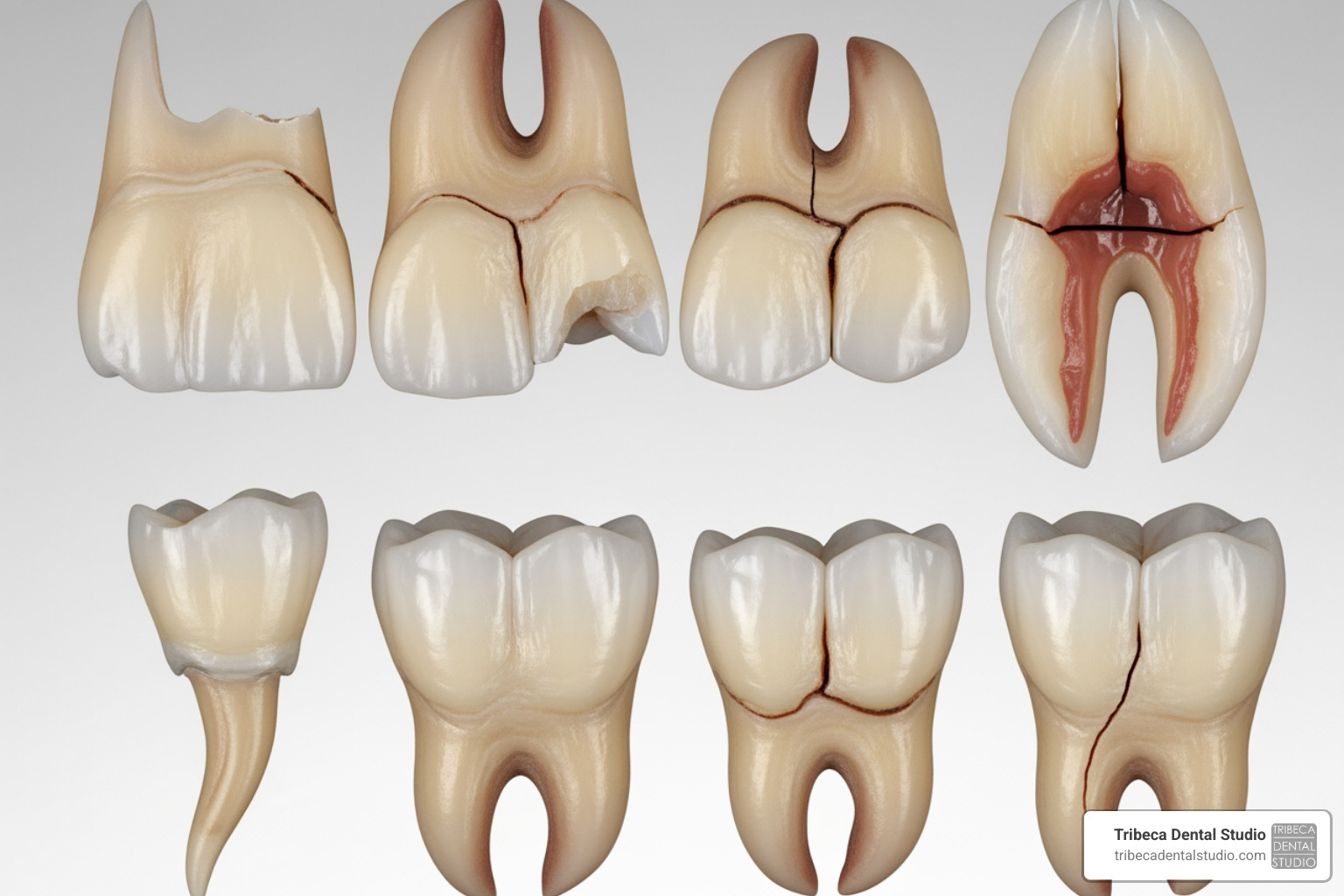
While tooth enamel is incredibly strong, it’s not indestructible. Several factors can lead to a chipped tooth:
- Trauma or Accidents: A fall, sports injury, or any impact to the mouth can chip a tooth. Wearing a mouthguard during sports can significantly reduce this risk.
- Biting on Hard Objects: Chewing on ice, hard candies, popcorn kernels, or using teeth as tools puts stress on enamel and can lead to chips.
- Weakened Enamel: Over time, enamel can become weakened and more susceptible to chipping due to:
- Tooth Decay: Cavities compromise the tooth’s structure.
- Old Fillings: Large, old fillings can weaken the surrounding tooth structure.
- Acid Erosion: Frequent consumption of acidic foods and drinks can wear down enamel.
- Bruxism (Teeth Grinding): Grinding or clenching your teeth (bruxism), often done unknowingly at night, puts constant pressure on teeth that can lead to chips or fractures.
- Uneven Chewing Pressure: An improper bite can create pressure points that cause chips over time.
- Aging: As we age, our teeth naturally become more brittle and prone to chipping.
Understanding these causes can help us not only treat your chipped tooth but also prevent future incidents.
What should I do immediately after chipping a tooth?
If you chip a tooth, immediate action can prevent further damage and manage discomfort. A chipped tooth cannot heal itself and always requires professional dental care.
Here’s what you should do:
- Rinse Your Mouth: Gently rinse your mouth with warm water or a warm salt water solution to cleanse the area.
- Apply Cold Compress: If there’s swelling or pain, apply a cold compress to the outside of your cheek near the injured area.
- Use Gauze for Bleeding: If bleeding occurs, apply gentle pressure with a clean piece of gauze until it stops.
- Cover Sharp Edges: Cover any sharp edges with sugarless gum or dental wax to protect your tongue and cheek.
- Save the Tooth Fragment (if possible): If you find the tooth fragment, rinse it and keep it moist in milk or saliva. We can sometimes reattach it.
- Call Your Dentist Immediately: Contact Tribeca Dental Studio as soon as possible. Even without pain, a chip can expose inner layers to decay and infection, so a prompt appointment is crucial.
When you come in for your visit, we’ll assess the damage, discuss your options, and get you on the path to a restored smile. More about what to expect on your first visit.
Professional Repair Options for a Chipped Tooth
Once you’re in our office, we’ll examine your chipped tooth and recommend the best course of action based on the chip’s severity, location, your goals, and your budget. At Tribeca Dental Studio, we believe in a personalized approach, ensuring you understand all your restorative dentistry options to make an informed decision.
Dental Bonding and Fillings
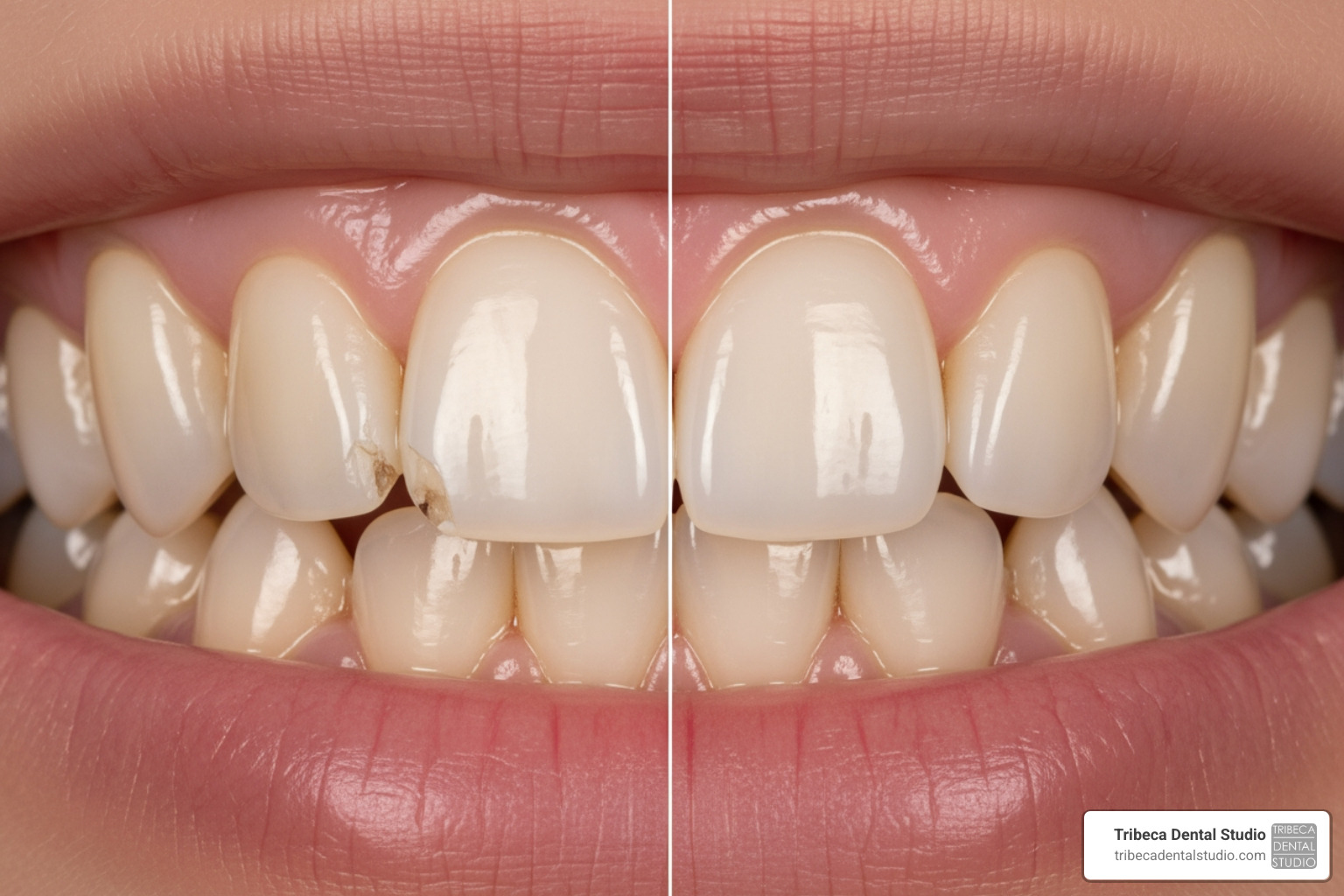
For minor chips, dental bonding is a quick, effective, and affordable solution.
- What it is: Dental bonding uses a tooth-colored composite resin, which is applied and sculpted onto the damaged area to restore the tooth’s shape and blend seamlessly with your natural tooth.
- When it’s used: It’s ideal for small chips, cracks, or gaps, especially on front teeth where aesthetics are important.
- Procedure: Completed in a single visit, usually within 30-60 minutes per tooth.
- Cost: Dental bonding generally costs between $100 and $600 per tooth. Tooth-colored fillings, which use similar materials, typically range from $100 to $300.
- Durability: Bonded teeth can last for several years with proper care. For more on how this compares to other composite options, you can explore composite bonding vs. composite veneers.
Porcelain Veneers
For a more noticeable chip on a front tooth or a comprehensive cosmetic upgrade, porcelain veneers are an excellent choice.
- What it is: Veneers are thin, custom-made porcelain shells bonded to the front of your teeth. They cover imperfections like chips or discoloration for a flawless, natural look.
- When it’s used: Best for moderate chips on front teeth, they offer superior aesthetics and stain resistance.
- Procedure: Requires two visits for tooth preparation, impressions, and final bonding of the custom-made veneers.
- Cost: Porcelain veneers generally cost between $800 and $2,500 per tooth. Learn more about the cost of porcelain veneers.
- Durability: Veneers are highly durable and stain-resistant, lasting 10-15 years or more with good oral hygiene. For more details, see our pages on porcelain veneers and veneers in NYC.
Dental Crowns
A dental crown provides robust protection for more severe chips or large fractures.
- What it is: A dental crown is a tooth-shaped “cap” that covers the entire damaged tooth, restoring its shape, size, strength, and appearance.
- When it’s used: Ideal for extensive damage, cracked teeth, or chipped molars that need to withstand chewing forces. Crowns provide structural support and prevent further breakage.
- Procedure: Usually requires two visits for tooth preparation, impressions, and placement of the permanent crown.
- Cost: Dental crowns typically range from $800 to $1,500 per tooth, depending on the material.
- Durability: Crowns are extremely durable, lasting 10-15 years or more. To understand how crowns compare to other solutions, see our guide on crowns vs. bridges vs. implants: which is right for you?.
Root Canals (when needed)
If a severe chip exposes the tooth’s inner pulp (nerve), a root canal may be necessary before restoration.
- What it is: A root canal removes infected or damaged pulp from inside the tooth. The chamber is cleaned, disinfected, filled, and sealed to save the natural tooth from extraction.
- When it’s used: This is necessary if a deep chip exposes the nerve, causing pain, sensitivity, or infection. A crown is typically placed afterward to protect the tooth.
- Procedure: Can be completed in one or two visits, followed by a separate appointment for the crown.
- Cost: The root canal procedure can cost $700 to $1,500, in addition to the cost of the crown. The total for both can be $1,500 – $3,000+.
- Durability: A tooth with a successful root canal and crown can last a lifetime. For more information, learn about our restorative dentistry options.
What is the Cost of Getting a Chipped Tooth Fixed?
Now for the question on everyone’s mind: what will it actually cost? The cost of getting chipped tooth fixed is a spectrum, influenced by several key factors. We believe in transparency at Tribeca Dental Studio and want you to understand how these elements contribute to the final price.
| Treatment Option | Average Cost Range (NYC) | Procedure Time | Longevity | Best For |
|---|---|---|---|---|
| Dental Bonding | $100 – $600 per tooth | 1 visit (30-60 min) | 5-10 years | Small chips, front teeth |
| Dental Fillings | $100 – $300 per tooth | 1 visit (30-60 min) | 7-10 years | Small chips, cavities |
| Porcelain Veneers | $800 – $2,500 per tooth | 2 visits | 10-15+ years | Moderate chips, cosmetic |
| Dental Crowns | $800 – $1,500 per tooth | 2 visits | 10-15+ years | Severe chips, structural |
| Root Canal + Crown | $1,500 – $3,000+ per tooth | 2-3 visits | Lifetime (with care) | Exposed nerve, infection |
Key factors that influence the cost:
- Severity of the Chip: This is the biggest factor. A minor chip is far less expensive to fix than a large fracture exposing the tooth’s inner layers.
- Location of the Tooth: Front teeth require cosmetic precision, which can increase costs for veneers or bonding. Back teeth need stronger materials, but aesthetics are less of a concern.
- Materials Used: For crowns and veneers, the choice of material (e.g., porcelain, zirconia) significantly impacts the cost. You can find more information on average prices for dental crowns.
- Dentist’s Experience and Practice Location: The dentist’s expertise and practice location affect cost. Costs in NYC, particularly Tribeca, reflect the premium location and high level of specialized care from practitioners like Dr. Izhaky.
- Additional Dental Procedures: If the chip requires a root canal or other treatments, the overall cost will increase.
How does insurance affect the cost of getting a chipped tooth fixed?
Dental insurance coverage for a chipped tooth repair varies by plan and the procedure’s nature. We can help you steer your benefits.
- Medically Necessary vs. Cosmetic: Insurance is more likely to cover medically necessary repairs (fillings, crowns) that restore function or relieve pain. Purely cosmetic procedures like veneers may have limited or no coverage.
- Annual Maximums and Deductibles: Your plan will likely have an annual maximum and a deductible you must pay before coverage begins.
- Percentage Coverage: Plans often cover procedures at different percentages (e.g., 80% for basic restorative, 50% for major restorative like crowns).
- FSA/HSA Accounts: You can use pre-tax dollars from a Flexible Spending Account (FSA) or Health Savings Account (HSA) to pay for qualified dental expenses, which can offer significant savings.
Our team at Tribeca Dental Studio is experienced in working with various insurance plans. For more details, check out our page on understanding your dental insurance.
Are there ways to save money on repairs?
We understand that cost is a concern. Here are strategies to make quality dental care more manageable:
- Early Treatment: The best way to save is to seek treatment promptly. Fixing a small chip with bonding is far cheaper than waiting until it needs a crown or root canal.
- Payment Plans: We offer in-house payment plans and work with third-party financing options like CareCredit or LendingClub to break down the cost into monthly payments.
- Dental Discount Plans: These membership programs offer discounted rates for an annual fee and can be a good option if you don’t have insurance.
- Use FSA/HSA: Using pre-tax funds from an FSA or HSA can significantly reduce your out-of-pocket expenses.
- Discuss Options with Your Dentist: We will always discuss the most appropriate and cost-effective treatment options with you.
- Good Oral Hygiene: Prevention is the best saving strategy. Regular brushing, flossing, and dental check-ups strengthen your teeth and help prevent chips.
The Risks of Waiting and How to Prevent Future Chips
It might be tempting to ignore a small, painless chip, but that’s a gamble with your oral health. A chipped tooth is not just a cosmetic issue; it’s an open invitation for bigger, more expensive problems.
Why you shouldn’t ignore a chipped tooth
The consequences of not fixing a chipped tooth can range from uncomfortable to severely painful and costly:
- Increased Decay: A chip creates a rough surface that traps plaque, making the tooth susceptible to decay. A small chip can quickly become a large cavity.
- Infection and Abscess: If a deep chip exposes the pulp, bacteria can cause a painful infection or abscess, potentially requiring a root canal or even tooth extraction.
- Further Structural Damage: A chipped tooth is a weakened tooth and is more vulnerable to further fracture or even splitting.
- Nerve Exposure and Pain: When a chip reaches the nerve, you’ll likely experience extreme sensitivity to hot and cold, and potentially constant, throbbing pain.
- Aesthetic Concerns: A chipped front tooth can impact your confidence. We believe everyone deserves a smile they’re proud of, and our cosmetic dentistry solutions are designed to help.
- Higher Future Costs: A simple bonding procedure is much cheaper than a root canal and crown, or a dental implant if the tooth is lost. Acting quickly saves money and protects your oral health.
How to prevent chipped teeth
While accidents happen, many chipped teeth are preventable. Adopting a few simple habits can significantly reduce your risk:
- Wear a Mouthguard: If you play contact sports or grind your teeth at night (bruxism), a custom-fitted mouthguard or nightguard is essential to protect your teeth.
- Avoid Chewing Hard Items: Resist chewing on ice, hard candies, popcorn kernels, or non-food items like pen caps.
- Don’t Use Teeth as Tools: Never use your teeth to open bottles or tear packages. Keep appropriate tools handy.
- Address Teeth Grinding (Bruxism): If you suspect you grind your teeth, talk to us. We can recommend solutions like a nightguard.
- Maintain Excellent Oral Hygiene: Regular brushing, flossing, and using fluoride toothpaste strengthens your enamel.
- Regular Dental Check-ups: Routine visits to Tribeca Dental Studio allow us to identify and address weak spots before they become chips.
Frequently Asked Questions about Chipped Tooth Repair
We know you might have more questions about fixing your chipped tooth. Here are some of the most common inquiries we receive:
Can a chipped tooth heal on its own?
No, a chipped tooth cannot heal on its own. Tooth enamel lacks the living cells needed to regenerate. Professional dental treatment is always necessary to restore the tooth’s structure and protect it from further damage or decay.
Is fixing a chipped tooth painful?
Most repair procedures are minimally invasive and not painful. We use local anesthesia to numb the area, and we offer sedation options for anxious patients. Any mild post-procedure sensitivity is typically manageable with over-the-counter pain relievers. We’ll provide you with care instructions for a smooth recovery.
How long does it take to fix a chipped tooth?
The time required depends on the treatment method:
- Dental Bonding & Fillings: This is the quickest solution, typically repaired in a single visit of about 30-60 minutes.
- Porcelain Veneers & Dental Crowns: These restorations usually require two visits. The first is for tooth preparation and impressions, and the second is for placing the custom-made restoration.
- Root Canal + Crown: This may take one to two visits for the root canal itself, followed by another appointment for the permanent crown.
We’ll provide you with a clear timeline during your consultation at Tribeca Dental Studio.
Restore Your Smile with Confidence in NYC
A chipped tooth doesn’t have to be a permanent setback for your smile or your oral health. While the cost of getting chipped tooth fixed can vary, understanding your options and acting promptly are the most crucial steps. From simple bonding to comprehensive crowns, modern dentistry offers effective solutions to restore not just the aesthetics of your smile, but its strength and functionality too.
At Tribeca Dental Studio, we are committed to providing comprehensive, advanced, and welcoming oral healthcare right here in Tribeca, Manhattan. We pride ourselves on our personalized approach, treating every patient like family. Dr. Nina Izhaky and our dedicated team are here to guide you through every step of the repair process, ensuring you receive the highest quality care custom to your unique needs. Don’t let a chipped tooth compromise your confidence or your health.
If you’re in NYC and dealing with a chipped tooth, we invite you to reach out to us. Let us help you restore your smile with the expert care you deserve.
Explore your cosmetic dentistry options to repair a chipped tooth