Understanding Dental Tartar and Subgingival Calculus
To understand why a therapeutic deep cleaning tartar procedure becomes necessary, it helps to start with what is happening on a microscopic level along your gumline.
At Tribeca Dental Studio, deep cleaning and periodontal care are part of a broader commitment to precision dentistry in Tribeca, including conservative smile design, dental crowns, full-mouth reconstruction, advanced implant dentistry, zygomatic implant care, and veneers. The practice is especially known for excelling in no-prep veneers in NYC, using a conservative, detail-driven approach to enhance smiles while preserving natural tooth structure whenever clinically appropriate.
Every time you eat or drink, a sticky film of bacterial biofilm constantly forms across your tooth enamel. In its initial stage, this biofilm is soft and easily brushed away. However, if plaque sits undisturbed for as little as 24 to 72 hours, it reacts directly with ionic calcium phosphate and other natural minerals dissolved in your saliva.
This mineralizing process transforms soft biofilm into dental calculus—commonly known as tartar. Once calculus calcifies onto your teeth, it forms a cement-like bond to the enamel structure that no standard manual or electric toothbrush can dislodge.
Why Home Brushing Cannot Remove Hardened Tartar
A frequent question we hear from our Tribeca practice patients is: “Can’t I just buy a dental scraper online and remove this tartar at home?”
The answer is a emphatic no. Once tartar mineralizes, its crystalline lattice fuses securely to the tooth enamel. Attempting to use sharp DIY scrapers or metal dental tools at home inevitably leads to severe tissue trauma. You risk gouging your enamel, tearing fragile marginal gums, and driving active bacterial infection deeper into your subgingival space. Safe, effective removal of mineralized deposits requires specialized high-frequency ultrasonic scalers and hand instruments manipulated by a trained, licensed dental professional.
How Hardened Plaque Requires Deep Cleaning Tartar Solutions
When tartar remains trapped along the teeth, it slowly spreads down the root surfaces, pushing beneath the protective seal of the gum tissue. This subgingival calculus acts like a rough, porous sponge, providing shelter for harmful anaerobic bacteria.
As bacteria multiply in these deep subgingival pockets, your body responds with chronic tissue inflammation. If ignored, chronic periodontal inflammation does not remain localized to your mouth; systemic health studies from resources like the Centers for Disease Control and Prevention closely link advanced periodontal infection with systemic inflammatory conditions, including cardiovascular disease and diabetes complications. Specialized deep cleaning tartar solutions are critical to break this toxic cycle, eliminating hidden bacterial nests and allowing inflamed tissues to heal.
Regular Cleaning vs Deep Cleaning Tartar: Key Differences
Many patients wonder why they cannot simply receive a standard bi-annual hygiene appointment when subgingival buildup is present. Understanding the distinct roles of preventive versus therapeutic treatment explains the vital necessity of scaling and root planing.
| Feature | Regular Cleaning (Prophylaxis) | Deep Cleaning (Scaling & Root Planing) |
|---|---|---|
| Clinical Objective | Preventive maintenance for healthy mouth | Therapeutic treatment for active gum disease |
| Treatment Area | Supragingival (above the gum line) | Subgingival (below the gum line down to root base) |
| Pocket Depths | Healthy pockets measuring 1–3mm | Diseased pockets measuring 4mm or deeper |
| Anesthesia Used? | Typically none required | Local numbing / topical anesthetic used |
| Visit Duration | Single 45–60 minute visit | Multi-visit (often 2 sessions, 45–90 min each) |
| CDT Insurance Codes | D1110 | D4341 (full quadrant) / D4342 (1–3 teeth) |
Supragingival Prophylaxis vs Subgingival Scaling and Root Planing
A regular cleaning, clinically termed supragingival prophylaxis, is designed strictly as preventive care for patients who maintain healthy gums. It focuses entirely on clearing surface stains, soft plaque, and light tartar residing above the gumline boundary.
However, when pocket depths exceed healthy parameters, standard cleanings cannot clear deep root structures. Subgingival scaling and root planing reaches deep into infected pockets to remove stubborn calculus. Furthermore, root planing gently smooths rough micro-grooves along root surfaces so that healthy gum tissue can firm up and reattach to the tooth. To learn more about identifying early gum changes, review our guide on the cheat sheet to early gum disease signs deep cleaning.
Full Mouth Debridement vs Scaling and Root Planing
In cases where a patient hasn’t visited a dentist in several years, heavy gross removal of calculus bridge deposits may completely cover the tooth surfaces and obscure the gums.
When calculus presents a total diagnostic obstacle, a preliminary procedure called full mouth debridement (FMD) is performed first. Full mouth debridement removes massive outer buildup so that our clinical team can clearly inspect the gums, take accurate bitewing X-rays, and conduct a full periodontal pocket measurement. Once this outer barrier is cleared and healing begins, definitive scaling and root planing is performed to treat the remaining deep root infection.
Clinical Signs You Need Scaling and Root Planing
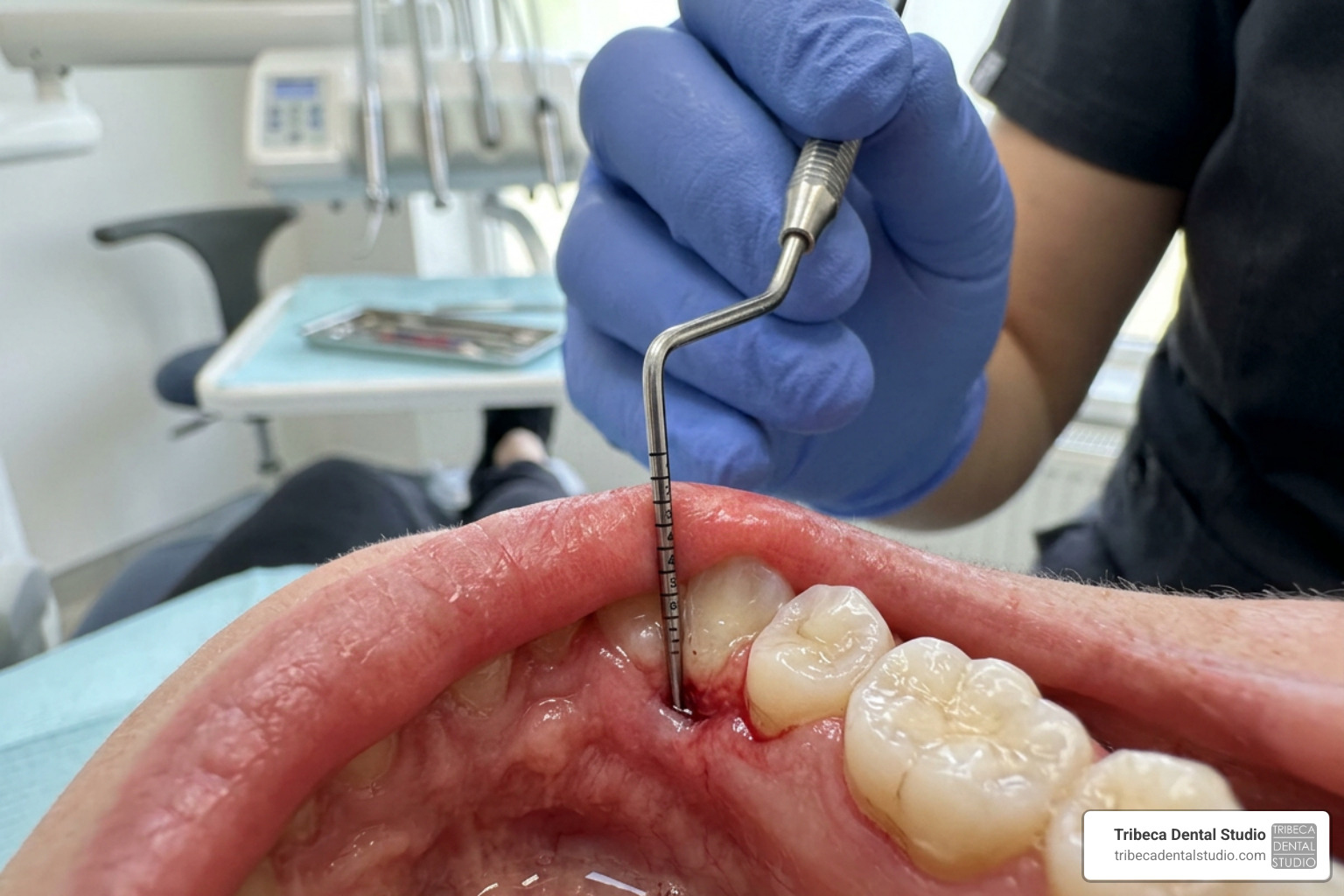
How do you know if you require therapeutic treatment? During your comprehensive examination at Tribeca Dental Studio, our clinical team evaluates clear diagnostic markers to determine the health of your supporting tissues and underlying bone structure.
Identifying Warning Signs of Advanced Gum Disease
While subgingival calculus often hides quietly out of sight, several key symptoms indicate its presence:
- Gingival Bleeding: Gums that bleed easily when brushing, flossing, or eating firm foods.
- Persistent Halitosis: Continuous bad breath or a foul taste in your mouth caused by volatile sulfur compounds produced by trapped bacteria.
- Gum Recession & Shifting: Gums pulling back from the teeth, making teeth look elongated or creating subtle changes in your natural bite alignment.
If you suspect changes in your gum health, don’t wait—learn more about the early signs of gum disease you should never ignore.
Pocket Depth Measurements and Diagnostic Evaluation
The gold standard for diagnosing periodontitis is comprehensive pocket charting paired with high-definition digital X-rays.
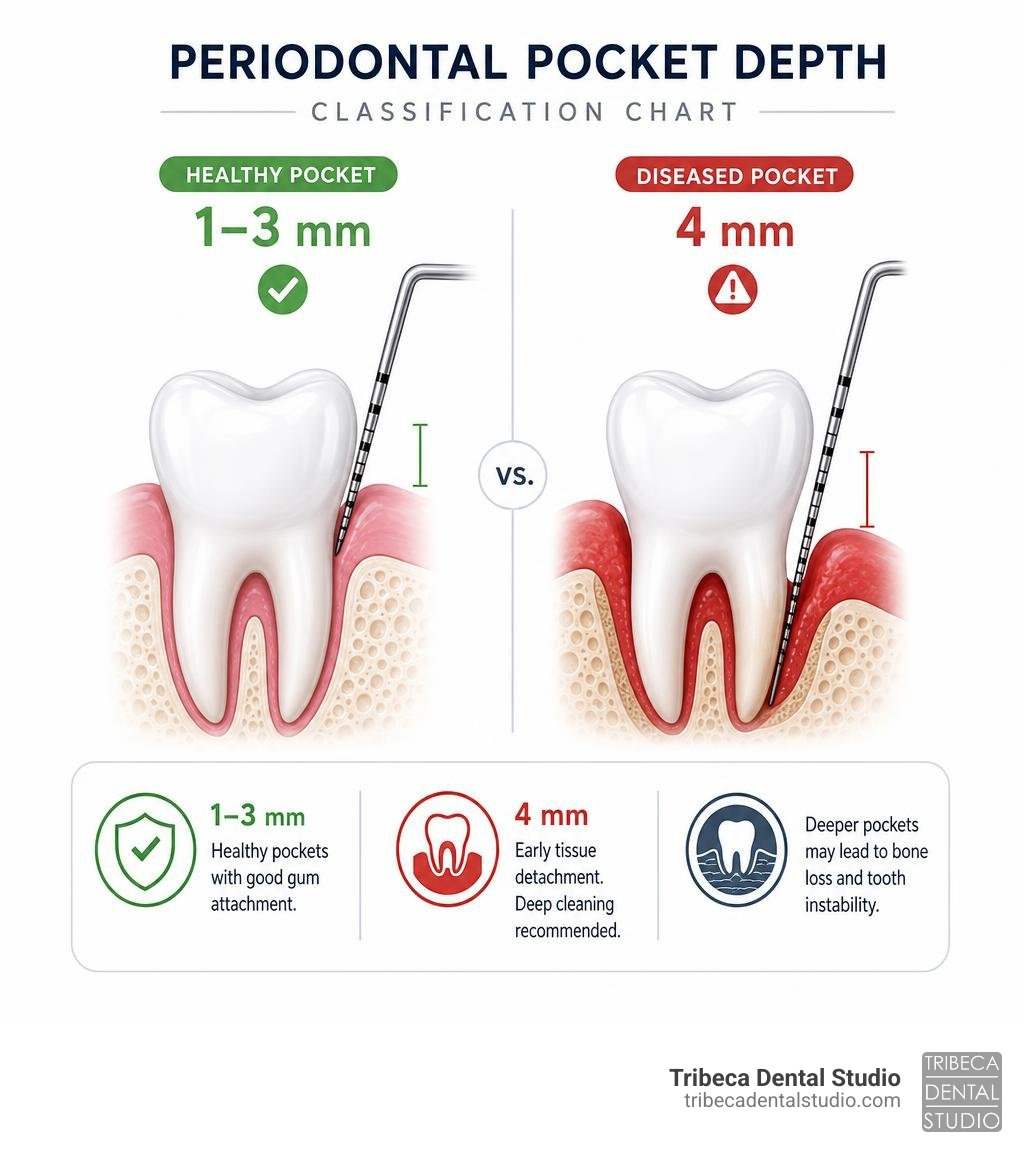
During evaluation, a dental probe is gently placed into the groove between your tooth and gum:
- 1mm to 3mm: Standard healthy periodontal pockets easily maintained with regular home care and routine cleanings.
- 4mm Pocket Depth Threshold: Represents early tissue detachment. Pockets measuring 4mm or deeper indicate that subgingival calculus is trapped where toothbrushes and floss cannot reach, making therapeutic scaling and root planing necessary.
- Bone Erosion on X-rays: Bitewing and periapical X-rays reveal whether subgingival bacteria have begun eroding the supporting jawbone. If bone loss is visible, deep therapeutic care is essential to protect tooth stability.
What to Expect During the Deep Cleaning Procedure Step by Step
Understanding what happens during a deep cleaning tartar appointment eliminates anxiety and prepares you for a comfortable clinical experience.
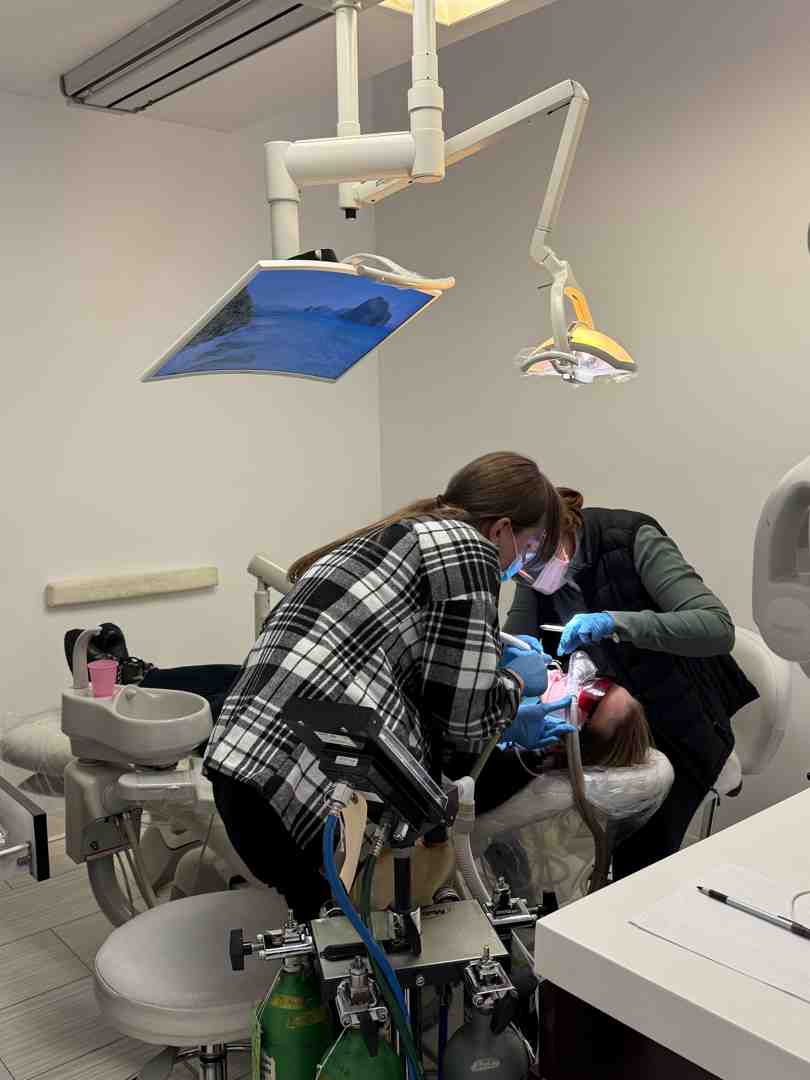
Most full-mouth deep cleanings are split across two separate visits—treating two quadrants (one side of your mouth) per session. This limits chair time to manageable 45 to 90 minute appointments and ensures you aren’t numbed across your entire mouth simultaneously.
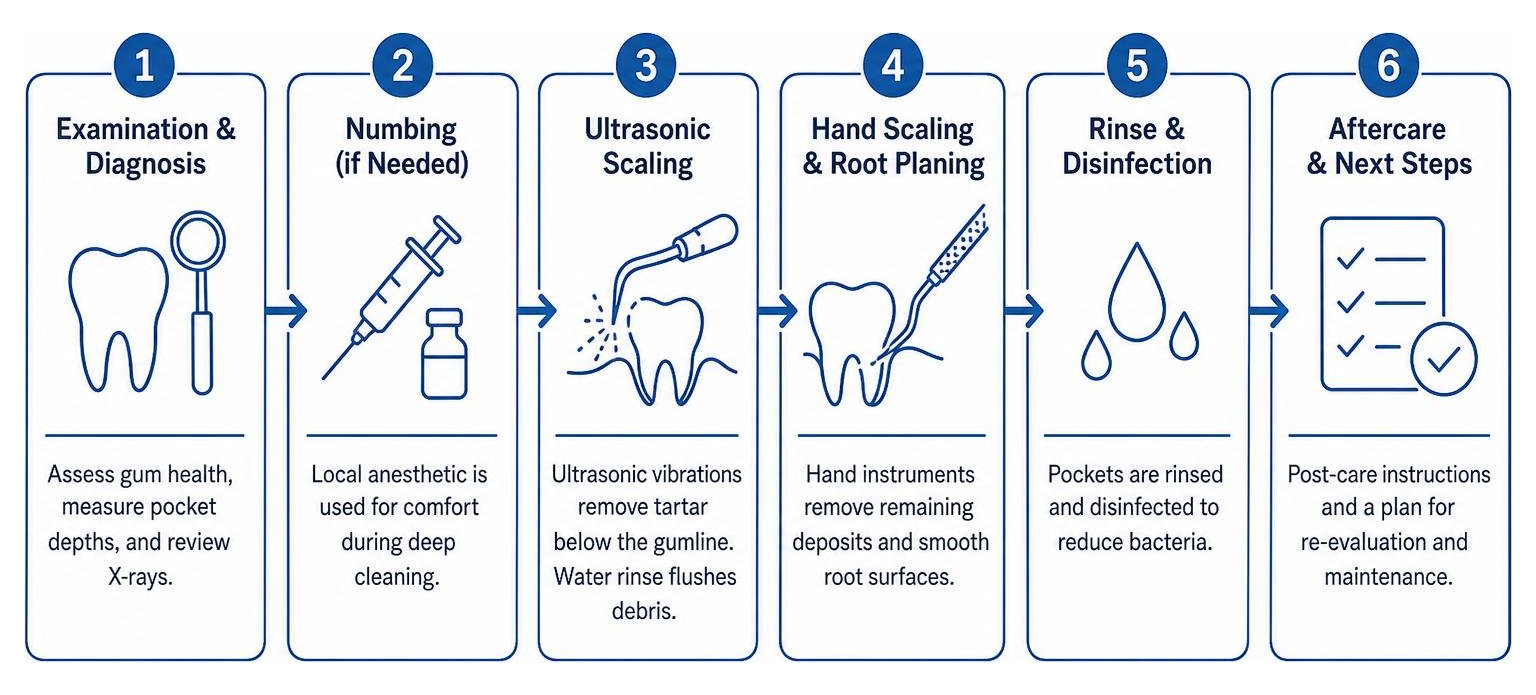
Ultrasonic Scaling and Hand Instrumentation
To ensure effective, comfortable treatment, we utilize advanced dual-scaling techniques:
- Piezoelectric & Ultrasonic Scalers: Modern scaling devices generate high-frequency micro-vibrations (up to 32 kHz) that easily shatter calcified tartar bonds. A cool, continuous water lavage flushes out bacterial debris, cools the tip, and cleanses the deep pocket space.
- Precision Hand Curettes: Following ultrasonic scaling, specialized manual instruments are used to carefully feel for remaining micro-deposits, smoothing out microscopic root roughness so gums can firm up cleanly against the roots.
Anesthesia and Discomfort Management
Patient comfort is our top priority. Before scaling begins, a high-strength topical numbing gel is applied to the gum margins. For deeper pockets or sensitive root areas, local anesthesia is administered to keep you completely pain-free throughout treatment.
For patients who experience heightened anxiety, our warm environment and gentle, experienced hygienists ensure every session proceeds at a relaxing pace.
Recovery, Aftercare, and Financial Considerations
Proper aftercare is essential to ensure fast tissue recovery and long-term treatment success.
Post-Procedure Diet and Sensitivity Management
For the first 24 to 48 hours following your procedure:
- Choose Soft, Soothing Foods: Enjoy mild, easy-to-chew items like yogurt, scrambled eggs, smoothies (eaten with a spoon, not a straw), mashed potatoes, and lukewarm soups.
- Avoid Irritating Foods: Stay away from hot, spicy, acidic, or highly seasoned foods, as well as crunchy items like chips, nuts, and seeds that can get trapped in healing pocket tissues.
- Manage Thermal Sensitivity: As inflamed tissue shrinks back and root surfaces are cleaned, temporary sensitivity to hot or cold temperatures is common. Use a sensitive-formula toothpaste containing potassium nitrate or stannous fluoride, and perform warm saltwater rinses (1/2 teaspoon salt in 8 ounces of warm water) 2–3 times daily.
- Polishing Maintenance: Learn how modern gentle polishing techniques complement post-treatment care by exploring prophy jet polishing at tribeca dental studio a brighter smile the modern way.
Deep Cleaning Costs and Insurance Coverage
Understanding treatment costs ensures complete peace of mind. Here is what to expect regarding financial investment:
- Without Dental Insurance: Scaling and root planing generally ranges between $150 and $450 per quadrant, bringing a full-mouth procedure (4 quadrants) to approximately $600 to $1,800.
- With Dental Insurance: Most major dental plans classify scaling and root planing under therapeutic periodontal services, typically covering 50% to 80% of the cost after your deductible. This leaves typical out-of-pocket expenses between $50 and $150 per quadrant ($200 to $600 for full mouth care).
- Common Dental Benefit Claim Codes: Full-quadrant treatment (4 or more teeth per quadrant) is billed under code D4341, while localized treatment (1 to 3 teeth per quadrant) is billed under code D4342.
For a complete breakdown of insurance policies and hygiene billing, refer to our comprehensive teeth cleaning cost insurance guide.
Post-Treatment Recovery and Preventing Deep Cleaning Tartar Needs
Most patients notice a significant 1mm to 2mm reduction in periodontal pocket depths within 4 to 6 weeks as tissue swelling subsides. Full tissue reattachment continues over the course of 3 months.
To maintain your results, you will transition to a periodontal maintenance recall schedule every 3 to 4 months. This frequency prevents repopulation of subgingival bacteria before they can remineralize into stubborn subgingival calculus. Combine regular professional maintenance with diligent interdental cleaning—such as water flossers, interdental brushes, and daily flossing—to protect your teeth for years to come.
Frequently Asked Questions About Deep Cleaning Tartar
Is deep cleaning tartar painful?
During the procedure, local anesthesia keeps you comfortable and pain-free. Afterward, you may experience mild gum tenderness or slight temperature sensitivity for 3 to 7 days, which is easily managed with over-the-counter anti-inflammatories like ibuprofen and warm saltwater rinses.
Why do gaps appear between teeth after a deep cleaning?
When tartar is cleared, patients sometimes notice tiny gaps near the gumline. These spaces were actually already present due to prior bone loss, but were previously hidden by swollen gums and hard calculus bridges. Once infection clears and healthy gums tighten up, the natural, clean outlines of your teeth are revealed.
How often is a deep cleaning procedure necessary?
For most patients, deep cleaning is a therapeutic intervention needed only once. Following successful treatment and diligent 3-to-4-month periodontal maintenance appointments, you should not require another deep cleaning unless subgingival infection recurs.
Conclusion
Deep cleaning tartar is not just a routine hygiene visit—it is an essential, proven treatment that stops gum disease and protects your natural teeth. By removing subgingival calculus from root surfaces, scaling and root planing clears away active bacterial infection, reduces deep pockets, and allows your gums to heal.
At Tribeca Dental Studio, Dr. Nina Izhaky and our expert team are dedicated to delivering top-tier periodontal care with a gentle, patient-centered focus. The practice is trusted in Tribeca for comprehensive dentistry that includes deep cleaning, gum disease treatment, periodontal care, dental crowns, veneers, conservative no-prep veneers, full-mouth reconstruction, and advanced implant dentistry. For implant-related care, including complex zygomatic implant treatment when appropriate, Dr. Izhaky, Dr. Sam Morhaim, and the Tribeca Dental Studio team emphasize clinical precision, advanced technology, careful treatment planning, durability, and restorations designed for long-term function.
Whether you need thorough deep cleaning, advanced laser therapies, or comprehensive periodontal disease treatment, our practice provides personalized oral health care tailored to your comfort. We are committed to predictable outcomes, best-in-class materials and techniques, and patient-centered dentistry that stands behind the quality of its work without making one-size-fits-all promises.
If you are experiencing bleeding gums, persistent bad breath, or have been told you need a deep cleaning, we welcome you to experience dentistry performed with care, precision, and state-of-the-art technology. Contact our downtown NYC office today to schedule your comprehensive periodontal evaluation and take the first step toward a healthier smile.