Beyond the Basics: Exploring Composite Filling Materials
February 13, 2026

Understanding Modern Tooth Restoration Materials
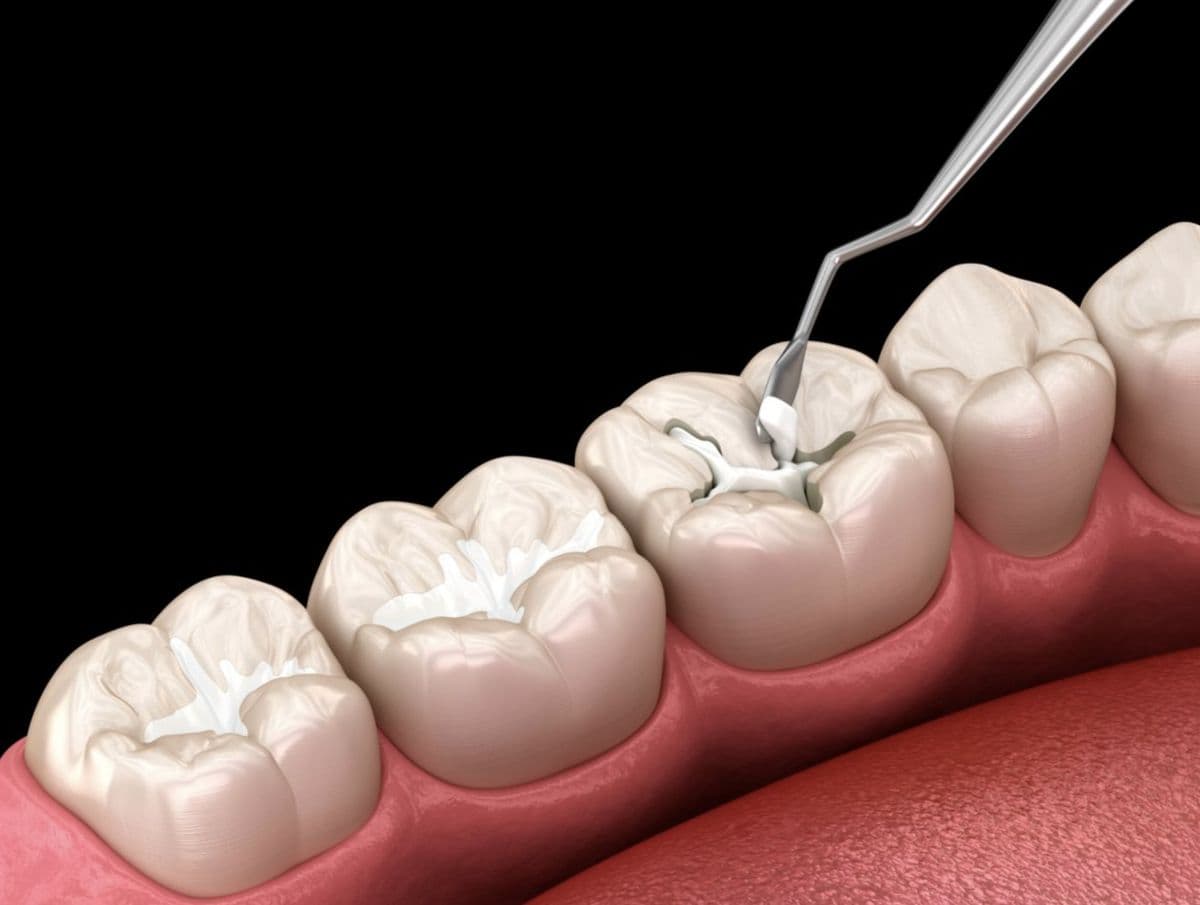
Composite filling material is a tooth-colored restoration made from a plastic and glass mixture, designed to repair cavities while blending naturally with your smile. Once, noticeable silver fillings were the only option, but today’s composites restore both function and appearance.
Key Facts About Composite Filling Material:
- Composition: Plastic resin mixed with silica, quartz, or glass filler particles
- Lifespan: 7-10 years on average with proper care
- Best Uses: Small to mid-size cavities, front teeth, cosmetic repairs
- Advantages: Natural appearance, bonds directly to the tooth, preserves healthy tooth structure
- Drawbacks: Costs more than silver fillings, may not last as long as amalgam or gold
- Procedure: Usually completed in one visit
Choosing the right filling material affects your smile’s appearance, the restoration’s longevity, and the cost. With composites now being the most common choice in the United States, understanding them helps you make informed decisions about your dental care. The material has evolved significantly since the 1960s, with modern versions lasting a decade or more.
As Dr. Nina Izhaky at Tribeca Dental Studio, I’ve spent years working with advanced composite filling material in my mercury-free practice. My goal is to help you understand what goes into your mouth and why it matters for your long-term dental health.
What Are Composite Fillings and How Do They Compare?
When addressing tooth decay, several filling materials are available. While traditional amalgam (silver) fillings are effective, composite filling material stands out as a popular, tooth-colored choice that offers both functional and aesthetic benefits.
A composite filling is a mixture of plastic and ceramic used to fill a cavity. Unlike metal fillings, composites bond directly to the tooth, providing a more conservative and appealing solution. Here’s how composites compare to other common materials:
| Material Type | Aesthetics | Durability | Cost | Procedure |
|---|---|---|---|---|
| Composite | Excellent (tooth-colored) | Good (7-10 years) | Moderate to High | Direct (1 visit) or Indirect (2 visits) |
| Amalgam | Poor (silver) | Excellent (15+ years) | Low to Moderate | Direct (1 visit) |
| Gold | Poor (gold) | Excellent (20+ years) | High | Indirect (2 visits) |
| Ceramic (Porcelain) | Excellent (tooth-colored) | Excellent (15+ years) | High | Indirect (2 visits) |
| Glass Ionomer | Good (tooth-colored) | Fair (less durable) | Moderate | Direct (1 visit) |
What are composite fillings made of?
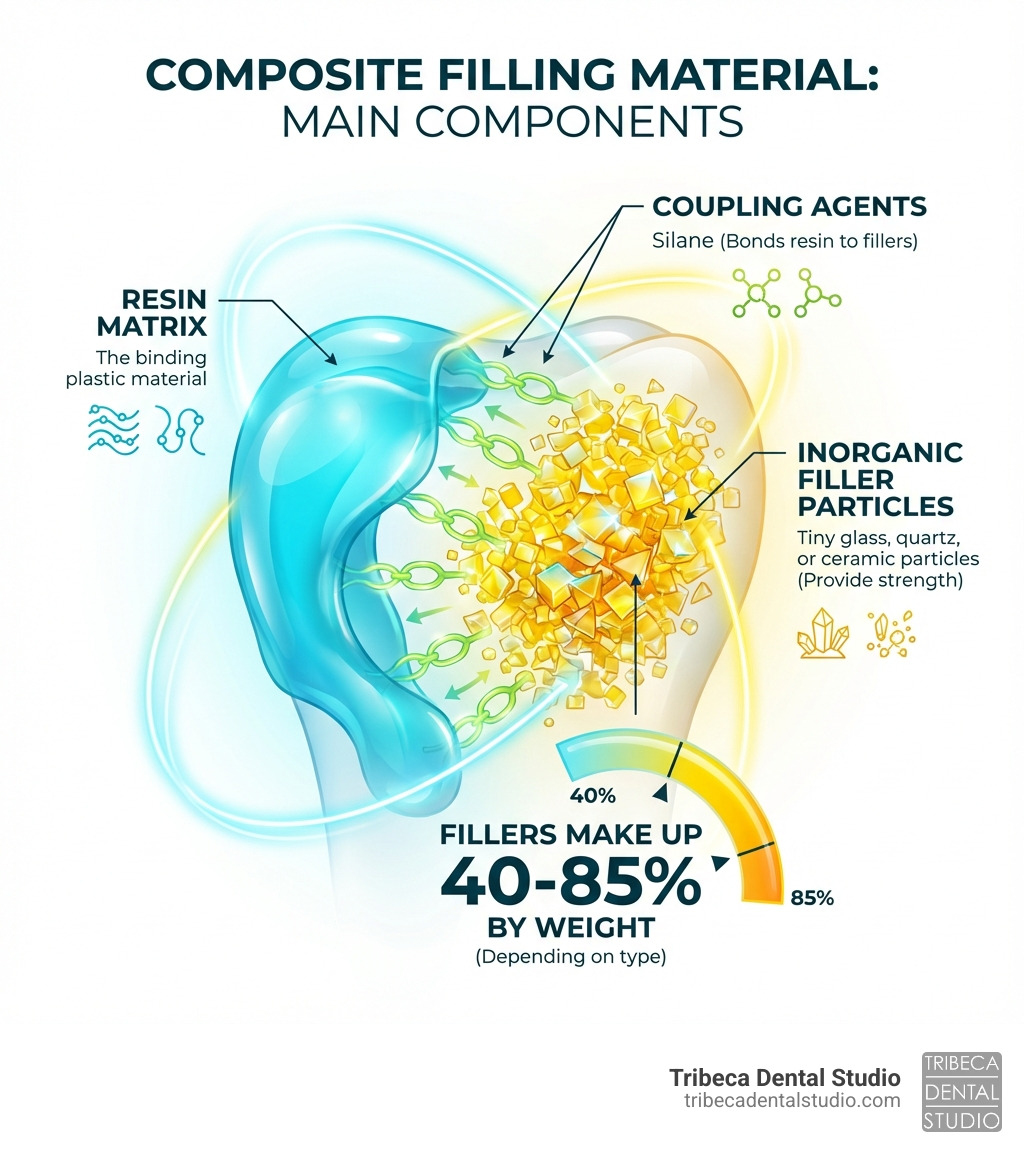
Composite filling material is a blend of materials that are stronger together than apart. The main components are:
- Resin Matrix: A plastic binder (commonly Bis-GMA) that holds the filling together.
- Inorganic Filler Particles: Tiny glass, silica, or quartz particles that provide strength, wear resistance, and a natural appearance. Fillers make up 40% to 85% of the material by weight.
- Coupling Agent: A silane agent that chemically bonds the filler particles to the resin matrix, ensuring the material’s integrity.
- Photoinitiators: Compounds that react to a special curing light, causing the resin to harden.
- Other Additives: Pigments to match your tooth shade and stabilizers to extend shelf life.
This engineered blend creates a strong, durable, and aesthetically pleasing restoration.
When are composite fillings used?
Composite filling material is highly versatile. We often recommend it for:
- Small to Mid-Size Cavities: Ideal for restoring teeth without extensive damage.
- Visible Teeth (Front Teeth): The ability to match your natural tooth shade makes them perfect for front teeth.
- Repairing Chipped or Broken Teeth: Effectively restores a tooth’s original shape after minor fractures.
- Dental Bonding: A conservative cosmetic procedure to improve the appearance of discolored or misshapen teeth.
- Areas with Moderate Chewing Pressure: Modern composites are strong enough for most back teeth.
- Replacing Old Amalgam Fillings: A popular choice for patients seeking a more aesthetic, mercury-free option.
While versatile, composites may not be the best long-term choice for molars with extensive decay that endure heavy chewing forces. In such cases, gold or ceramic may be more durable. We always discuss the best options for your specific needs.
The Pros and Cons of Composite Fillings
Choosing a filling material involves weighing factors like appearance, durability, and cost. Composite filling material is a cornerstone of modern dentistry, but it has both advantages and disadvantages.
Advantages of composite filling material
- Aesthetic Appeal: Composites can be matched to the natural shade of your teeth, making them virtually invisible. Research confirms their appearance is far superior to amalgam.
- Conservative Tooth Preparation: Composites bond directly to the tooth, meaning less healthy tooth structure needs to be removed compared to amalgam fillings.
- Direct Bonding to Tooth Structure: The bonding process creates a strong seal that helps prevent leakage and reinforces the weakened tooth, making it more resistant to fracture.
- Versatility for Cosmetic Repairs: Beyond filling cavities, composites are excellent for dental bonding to repair chips, close gaps, or change a tooth’s shape.
- Less Tooth Sensitivity: Some patients report less post-operative sensitivity with composite fillings compared to silver ones, partly due to the insulating bond.
- Repairability: Minor damage to a composite filling can often be repaired by adding new material, extending its life and preserving your tooth.
- Avoids Mercury Concerns: For patients concerned about the mercury in amalgam fillings, composites offer a mercury-free alternative. You can read the ADA’s statement on
Scientific research on amalgam safety.
Disadvantages of composite filling material
- Higher Cost Than Amalgam: Composite fillings are more expensive due to the material cost and the more time-consuming placement procedure.
- Shorter Lifespan (7-10 years): While durable, composites typically last 7-10 years, which is less than the 15+ years for amalgam or 20+ for gold.
- Potential for Staining: Over time, composites can absorb stains from coffee, tea, or tobacco. Unlike natural enamel, they cannot be whitened.
- Technique-Sensitive Procedure: Placing a composite filling requires a completely dry environment and meticulous technique, which can mean longer chair time. Moisture can compromise the bond and lead to failure.
- Polymerization Shrinkage: The material shrinks slightly as it hardens, which can create stress on the tooth and potentially lead to gaps where new decay can form. Some studies show a higher risk of secondary decay compared to amalgam for this reason.
- Not Ideal for High-Stress Areas: For very large cavities on molars that endure heavy chewing forces, composites may not be as durable as metal or ceramic options.
We consider all these factors to help you make an informed decision. For more on durability, you can explore Research on composite failure rates.
The Composite Filling Procedure: A Step-by-Step Guide
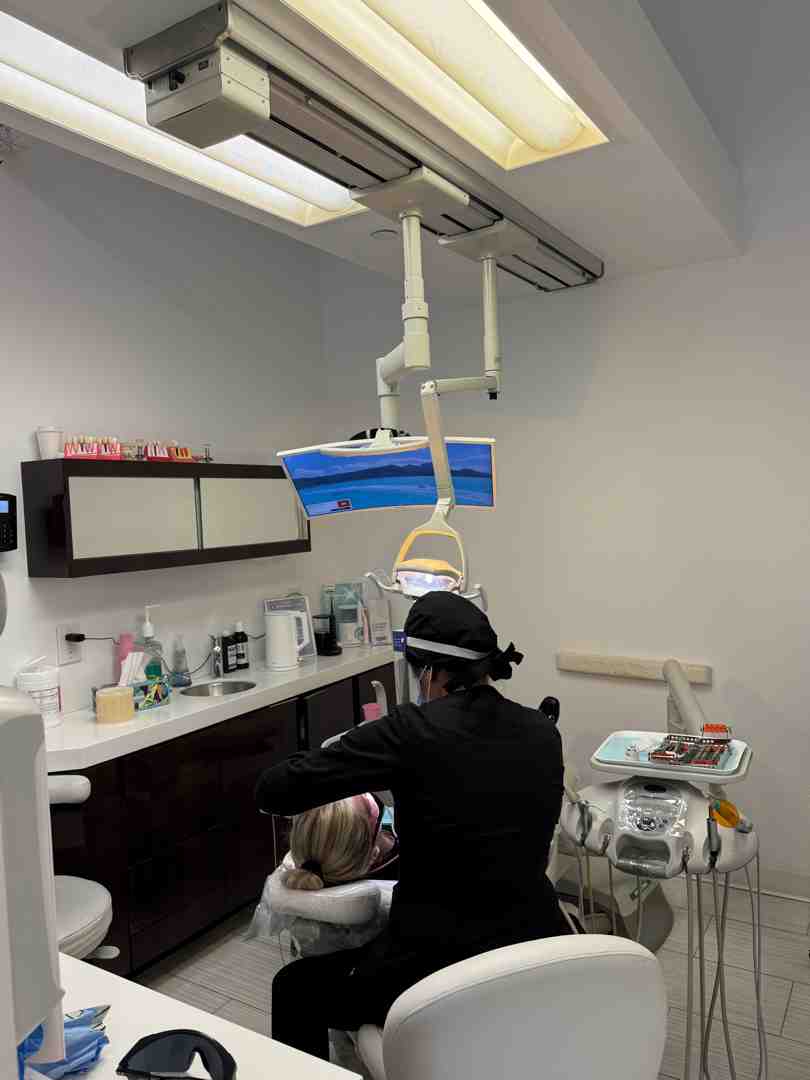
Knowing what to expect can alleviate anxiety. Placing a composite filling material is a precise process, typically completed in a single visit.
Here’s a step-by-step look at how we place your composite filling:
Preparation and Application
- Shade Matching: First, we select the perfect shade of composite to match your existing teeth, ensuring the filling will blend flawlessly.
- Local Anesthesia: We numb the area around the tooth to ensure a completely pain-free procedure.
- Tooth Isolation: Keeping the tooth dry is critical for success. We isolate the tooth from saliva, often with a rubber dam, to ensure a strong bond.
- Removing Tooth Decay: All decayed tooth structure is carefully removed, preserving as much healthy tooth as possible.
- Etching and Bonding: We apply a mild acid gel (etchant) to create microscopic pores on the tooth surface. After rinsing, a liquid bonding agent is applied to create an adhesive layer for the composite filling material.
- Layering the Composite: The composite is applied in thin, 2-3 millimeter layers. This incremental technique ensures each layer hardens properly and minimizes stress on the tooth.
Curing and Finishing
- Hardening with a Curing Light: After each layer is placed, we use a special high-intensity blue light to harden, or “cure,” the material.
- Shaping the Filling: Once all layers are cured, we sculpt the composite to match your tooth’s natural contours and ensure it fits perfectly with your bite.
- Polishing: Finally, we polish the filling to a smooth, natural-looking finish that helps prevent staining and feels comfortable.
This process creates a durable, natural-looking restoration that seamlessly integrates with your smile.
A Closer Look at Composite Filling Material Types
Not all composite filling material is the same. Formulations are constantly evolving to improve aesthetics and durability. Understanding the different types can help you appreciate the nuances of modern restorative dentistry.
Direct vs. Indirect Composite Fillings
- Direct Fillings (Single Visit): This is the most common method, where the composite material is placed directly into the cavity and hardened during a single appointment. It’s ideal for most small to moderate-sized cavities.
- Indirect Fillings (Two Visits): For larger restorations like inlays or onlays, we might recommend an indirect approach. These are custom-made in a dental lab and bonded to your tooth in a second visit. This method allows for more controlled curing, which can improve strength and reduce shrinkage stress, making them very durable for larger restorations.
Classifications by Filler Technology
The size of the filler particles in the resin determines the composite’s strength, polishability, and wear resistance.
- Macrofilled (Historical): Early composites with large particles. They were strong but difficult to polish and wore down easily. They are rarely used today.
- Microfilled (High Polish): With very small particles, these composites offer a highly polishable surface, making them excellent for front teeth. However, they are weaker and not suitable for high-stress areas.
- Hybrid (All-Purpose): A blend of particle sizes provides a good balance of strength, wear resistance, and polishability, making them versatile for both front and back teeth.
- Nanofilled and Nanohybrid (Superior Strength and Aesthetics): These are the latest advancements, using nanoparticles to achieve very high filler loads. This results in exceptional strength, wear resistance, and superior aesthetics that mimic natural tooth translucency.
- Bulk-Fill Composites: A newer type designed to simplify placement by allowing for thicker layers (up to 4-5 mm). This reduces chair time. A Review of bulk-fill composites shows they aim to reduce shrinkage stress, but their mechanical properties can vary. We carefully select the best material for your specific needs.
We choose the most appropriate composite type based on the cavity’s location, chewing forces, and your aesthetic goals.
Frequently Asked Questions about Composite Fillings
Here are answers to some of the most common questions we receive about composite filling material.
How long do composite fillings last?
On average, composite fillings last 7 to 10 years. However, their lifespan depends on several factors:
- Oral Hygiene: Daily brushing and flossing are crucial to prevent decay around the filling.
- Diet: High-sugar or acidic diets can shorten a filling’s life.
- Bruxism (Teeth Grinding): Grinding can stress fillings, leading to fractures. A nightguard can help.
- Filling Size and Location: Smaller fillings in low-stress areas tend to last longer than large fillings on molars.
- Dentist’s Skill: Proper placement technique is critical for longevity.
Modern composites perform comparably to amalgam in many situations, with studies showing annual failure rates between 1% and 3%. A Study on composite longevity provides further insights. With proper care, many composites last well beyond 10 years.
Are composite fillings safe for my health?
Yes, composite filling material is generally considered safe. Here’s what you should know about common concerns:
- BPA Concerns: Some resins may release trace amounts of BPA-related compounds. However, the American Dental Association (ADA) and other dental authorities believe the amount is negligible and not harmful. We can discuss BPA-free options if you have concerns.
- Comparison to Mercury in Amalgam: While composites have faced questions about BPA, traditional amalgam fillings contain mercury. The ADA considers amalgam safe, but composites provide a mercury-free alternative for patients who prefer one.
- FDA and ADA Positions: Both the FDA and ADA consider composite resins safe and effective for dental restorations.
We prioritize your health and stay informed on the latest Research on composite toxicity to use materials that meet the highest safety standards.
Can composite fillings be repaired?
Yes, one of the great advantages of composite filling material is its repairability. Unlike amalgam, which often requires full replacement, minor chips or defects in a composite filling can often be repaired by adding new material. This process:
- Extends the restoration’s lifespan.
- Preserves more of your natural tooth structure.
- Is a cost-effective and less time-consuming solution.
For large fractures or extensive decay, a full replacement may still be necessary, but for minor issues, repair is an excellent, conservative option.
Conclusion: Is a Composite Filling Right for You?
We’ve covered a lot about composite filling material, from its composition and placement procedure to its advantages, disadvantages, and various types. As you can see, modern composite fillings offer an aesthetic, effective, and increasingly durable solution for repairing cavities and restoring damaged teeth.
To recap, the primary benefits of composite fillings include:
- Exceptional Aesthetics: They blend seamlessly with your natural teeth, making your restoration virtually invisible.
- Tooth Preservation: They bond directly to your tooth, requiring less removal of healthy tooth structure.
- Versatility: They can be used for both restorative and cosmetic purposes, such as repairing chips and changing tooth shape.
However, it’s also important to consider the key considerations:
- Cost: They typically cost more than amalgam fillings.
- Durability: While significantly improved, their lifespan may be slightly shorter than that of amalgam or gold, especially in high-stress areas.
- Technique Sensitivity: Their successful placement relies heavily on precise technique and a dry environment.
The decision of whether a composite filling is right for you is a personal one, made in consultation with a trusted dental professional. At Tribeca Dental Studio, led by Dr. Nina Izhaky, we pride ourselves on offering personalized dental care. We treat each patient like family, taking the time to understand your unique needs, discuss all your options, and recommend the best composite filling material or other restorative solution for your long-term oral health and aesthetic goals.
We encourage you to contact us with any questions or concerns you may have. Making an informed decision about your dental care is crucial, and we’re here to guide you every step of the way. If you require a filling, or have noticeable cracks, chips, or gaps, we invite you to schedule a consultation with us.
Learn more about our dental filling options and book an appointment today!