Front and Center: Repairing Your Chipped Front Tooth
February 12, 2026
Can a Chipped Front Tooth Be Fixed?
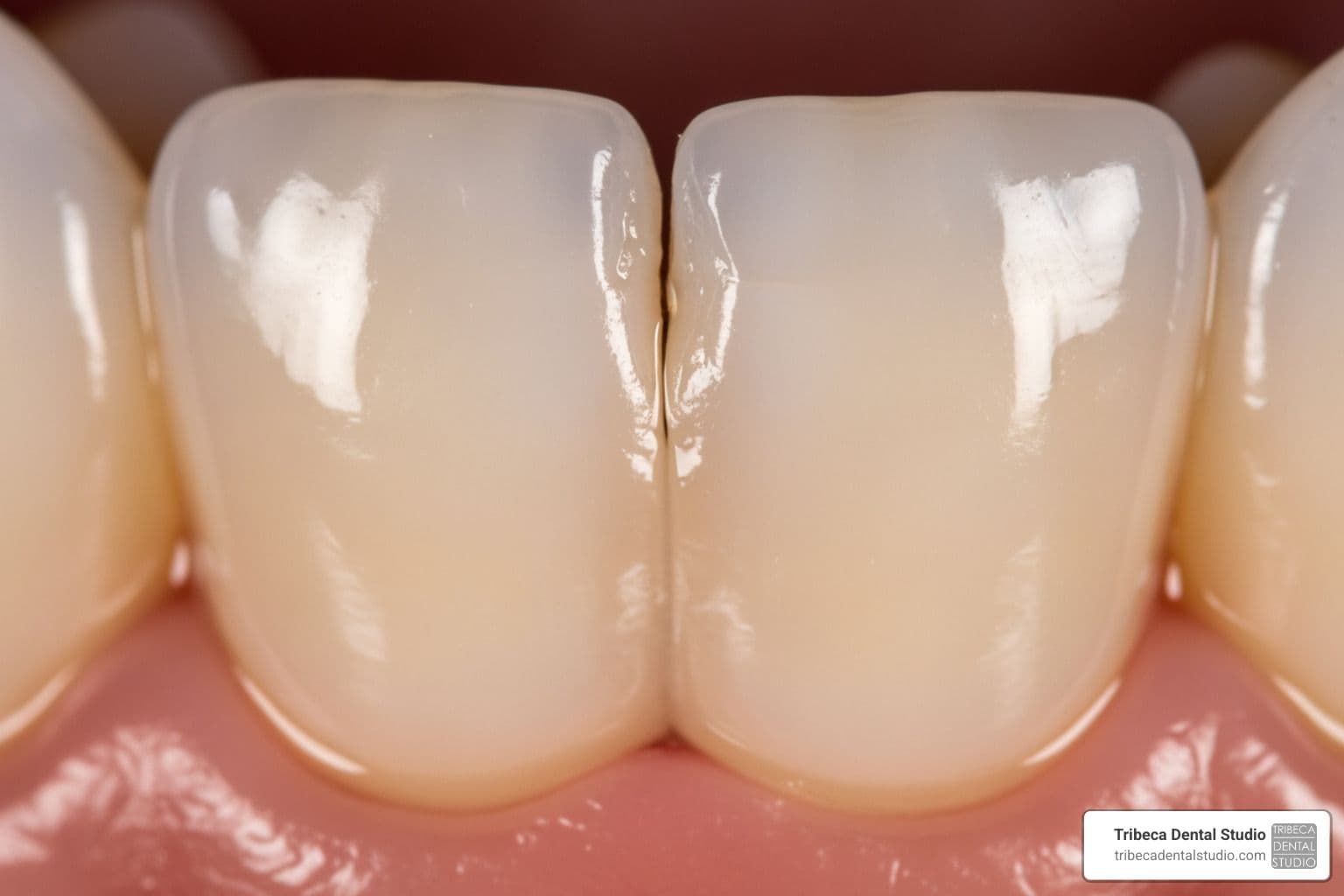
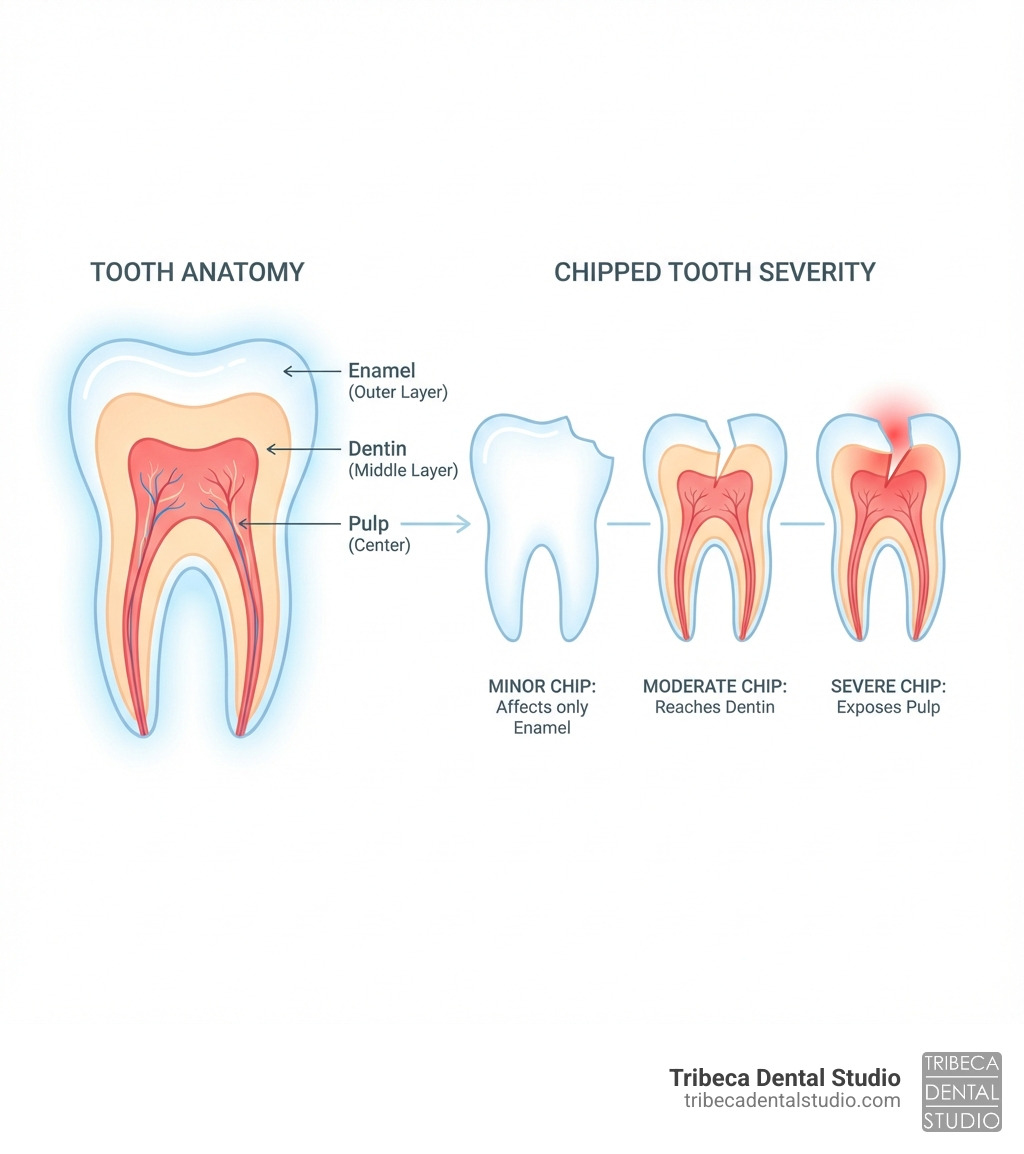
Yes, a chipped front tooth can often be fixed. The right repair depends on how much of the tooth has broken, whether the damage is limited to enamel or extends into deeper layers, and how much healthy tooth structure remains.
A very small chip may only need smoothing or polishing. Small to moderate chips can often be restored with tooth-colored dental bonding, while larger cosmetic defects may require a porcelain veneer. When a substantial portion of the tooth is weakened or fractured, a dental crown may provide greater protection.
If the fracture reaches the pulp inside the tooth, additional treatment such as root canal therapy may be necessary before the tooth is permanently restored.
Quick answer:
- Tiny enamel chip: smoothing or polishing may be enough.
- Small to moderate chip: composite dental bonding is commonly considered.
- Larger cosmetic chip: bonding or a porcelain veneer may be appropriate depending on the tooth.
- Large fracture or weakened tooth: a dental crown may be recommended.
- Damage involving the pulp: root canal treatment may be required before the final restoration.
- Treatment time: some chipped front teeth can be repaired in one visit, while more complex restorations may take additional appointments.
Even when a chipped tooth does not hurt, having it evaluated is important because the visible chip does not always reveal the full extent of the damage. A dentist can determine whether the injury is limited to enamel or involves deeper tooth structure.
If you are comparing treatment options, you can also learn about the cost of porcelain veneers or read our guide to fractured tooth repair costs.
What Should You Do After Chipping a Front Tooth?
If you have just chipped a front tooth, protect the area and arrange a dental evaluation. The appropriate urgency depends on the depth of the fracture, your symptoms, and whether the injury involved trauma to other teeth, your lips, jaw, or face.

First Steps After Chipping a Tooth
-
Contact a Dentist: Arrange an evaluation, especially if the tooth is painful, sensitive, loose, bleeding, or has lost a significant amount of structure.
-
Rinse Your Mouth Gently: Rinse with clean, lukewarm water to remove debris from around the injured tooth. Avoid aggressively brushing or probing the damaged area.
-
Manage Swelling: If swelling developed after an injury, a cold compress placed against the outside of the face may help reduce discomfort. Avoid putting ice directly against the skin or damaged tooth.
-
Save the Broken Fragment: If you find the piece of tooth that broke off, keep it moist and bring it to the dentist. In selected cases, a tooth fragment may be useful during treatment.
-
Protect Sharp Edges: A temporary dental wax can sometimes protect the tongue or inside of the cheek from a sharp tooth edge until you receive professional care.
-
Avoid Biting With the Injured Tooth: Until the tooth is evaluated, choose softer foods and avoid using the chipped front tooth to bite into hard or crunchy foods.
-
Avoid Permanent DIY Repairs: Household glues and materials not designed for dental use should not be placed on a damaged tooth. They cannot diagnose or treat deeper structural damage.
When Is a Chipped Front Tooth an Emergency?
A small enamel chip without pain is different from a deep fracture caused by significant trauma. Seek prompt or urgent dental care if you notice:
- significant or increasing tooth pain;
- bleeding from the tooth or surrounding gum that does not settle;
- a loose or displaced tooth;
- a large portion of the tooth missing;
- visible pink or red tissue inside the fracture;
- significant swelling;
- difficulty closing your bite normally;
- facial or jaw trauma;
- or signs that more than one tooth was injured.
If an accident involves significant facial trauma or other serious injuries, seek appropriate emergency medical care in addition to dental evaluation.
How Can a Dentist Fix a Chipped Front Tooth?
There is no single treatment for every chipped front tooth. Dentists choose a repair based on the size, location, and depth of the fracture, the condition of the remaining enamel and dentin, bite forces, previous dental work, symptoms, and cosmetic considerations.
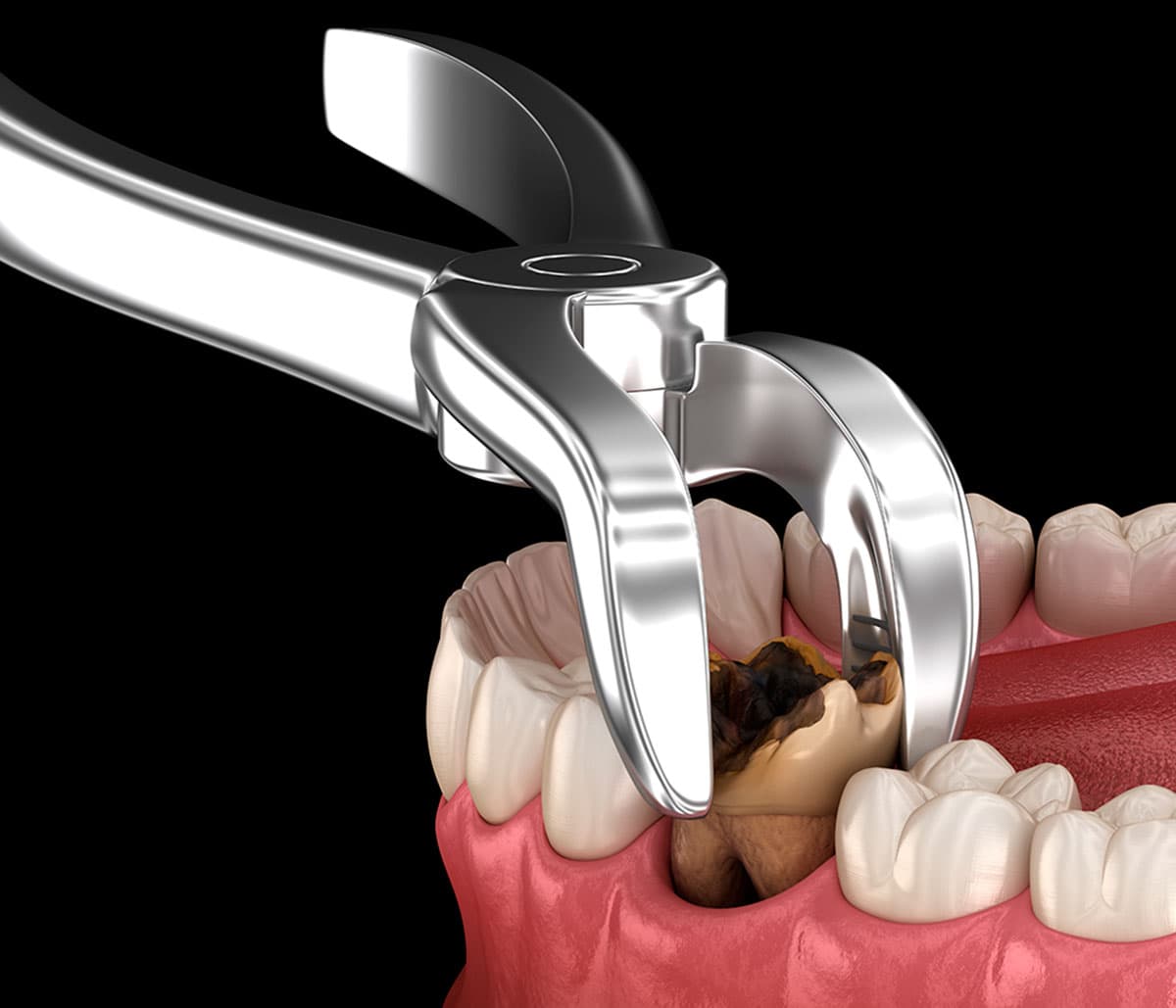
Common treatment options include smoothing and polishing, composite bonding, porcelain veneers, dental crowns, and—in deeper injuries—root canal treatment followed by an appropriate restoration.
At Tribeca Dental Studio in Manhattan, chipped front teeth can be evaluated from both restorative and cosmetic perspectives so that treatment addresses function as well as appearance.
Learn more about cosmetic dentistry at Tribeca Dental Studio.
Can Dental Bonding Fix a Chipped Front Tooth?
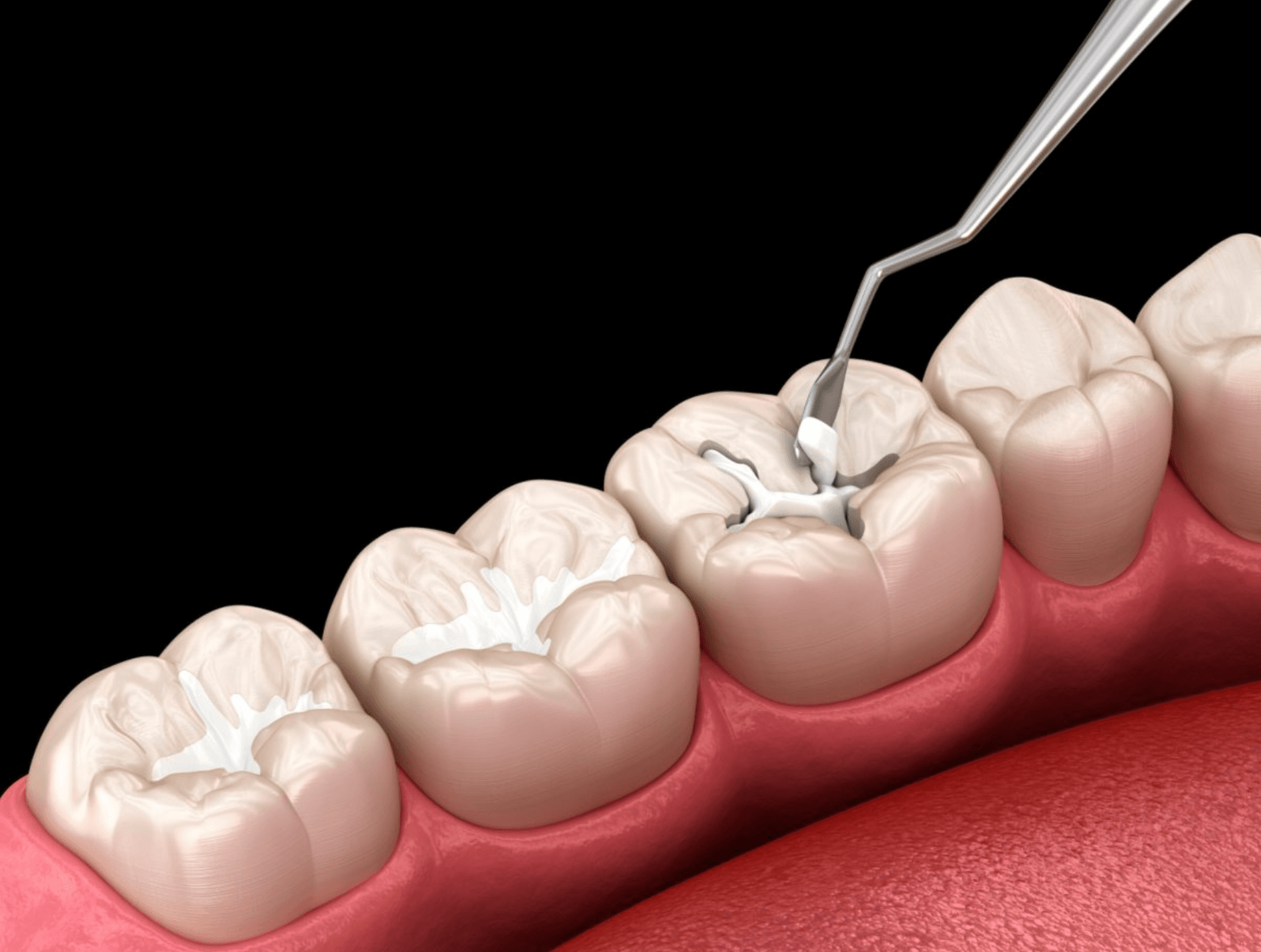
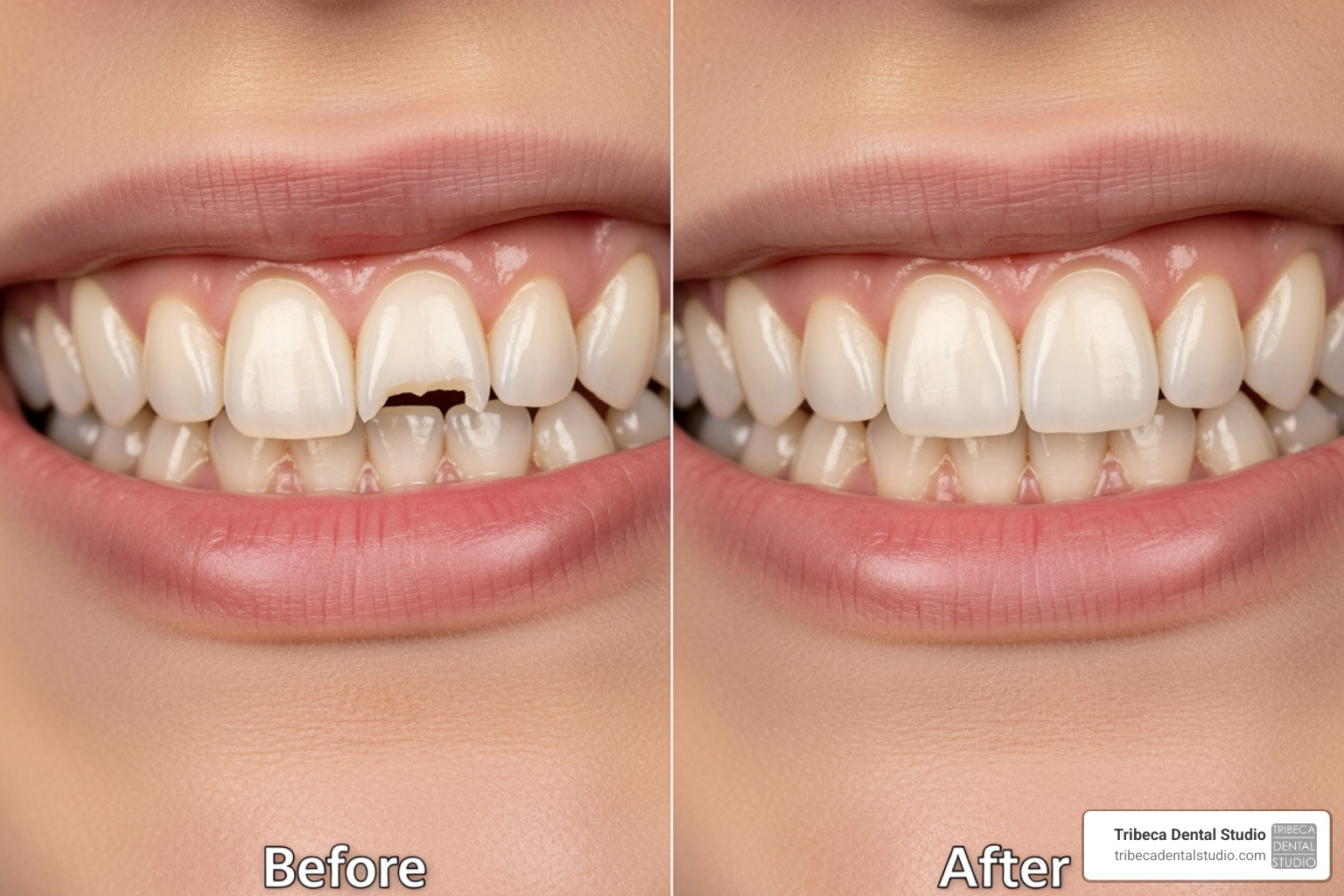
Composite dental bonding is commonly used to repair small to moderate chips on front teeth. A tooth-colored composite resin is applied to the damaged area, shaped to restore the missing portion of the tooth, hardened with a dental curing light, and polished to blend with the surrounding enamel.
Because bonding can often be performed without extensive removal of healthy tooth structure, it is one of the more conservative options for suitable chipped front teeth.
How Dental Bonding Works
- Evaluation: The dentist confirms that bonding is appropriate for the depth and location of the chip.
- Shade Selection: Composite resin is selected to closely match the natural tooth.
- Surface Preparation: The tooth surface is prepared so the bonding material can adhere properly.
- Composite Placement: Tooth-colored resin is added to recreate the missing tooth structure.
- Shaping: The material is carefully sculpted to match the contour of the front tooth.
- Curing: A dental curing light hardens the composite.
- Polishing and Bite Check: The repair is polished and the bite is evaluated to reduce unnecessary stress on the restoration.
Potential Benefits of Dental Bonding
- May be completed during a single appointment for suitable cases.
- Usually preserves most of the natural tooth.
- Tooth-colored material can blend with surrounding enamel.
- Can restore the shape of a chipped corner or edge.
- Generally requires less preparation than a veneer or crown.
Limitations of Dental Bonding
- Composite resin is not as resistant to wear or staining as porcelain.
- Bonding can chip or fracture again, particularly when exposed to strong biting forces.
- Patients who grind or clench may place additional stress on the restoration.
- Larger fractures may require a different restorative approach.
Learn more about direct dental bonding.
Bonding vs. Veneers for a Chipped Front Tooth
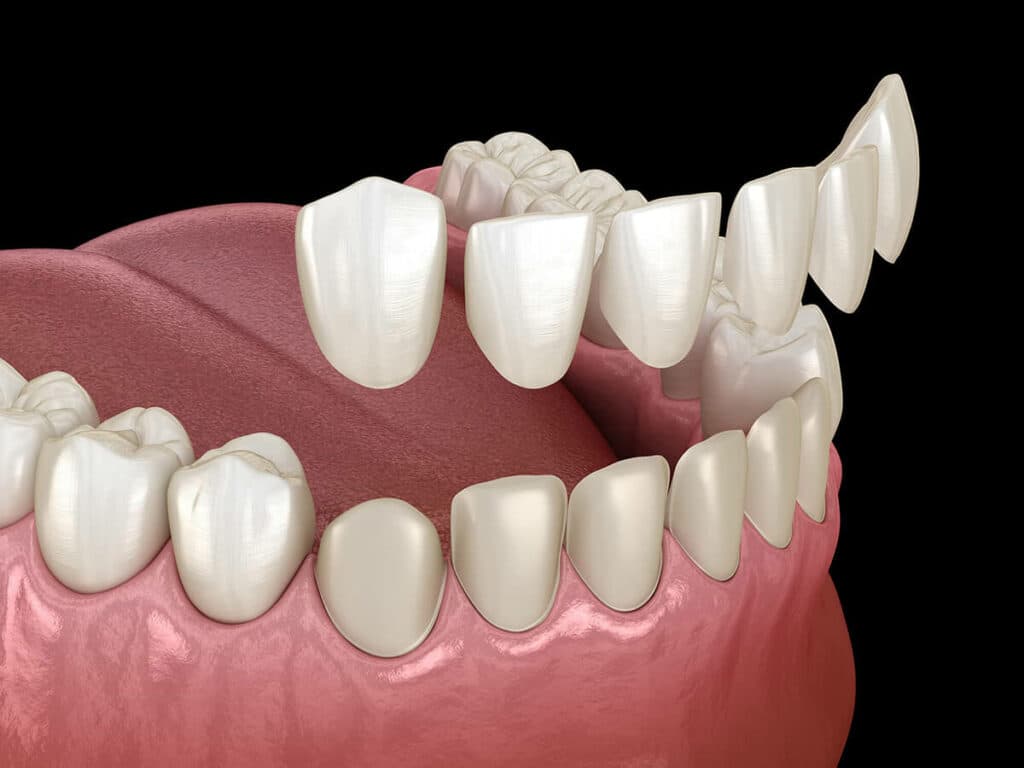
Bonding and porcelain veneers can both improve the appearance of a chipped front tooth, but they are different treatments. The appropriate choice depends on the amount of damage, remaining enamel, bite forces, previous restorations, and whether the goal is to repair only the chip or make broader changes to tooth shape and color.
Bonding is often considered for more limited defects because composite can be added directly to the damaged area. A porcelain veneer covers more of the visible front surface of a tooth and usually requires more planning and tooth preparation.
| Feature | Dental Bonding | Porcelain Veneer |
|---|---|---|
| Typical Use | Small to moderate chips | More extensive cosmetic changes or selected larger defects |
| Material | Composite resin | Dental ceramic / porcelain |
| Appointments | Often one visit | Frequently more than one visit |
| Tooth Preparation | Usually conservative | May require removal of some enamel |
| Stain Resistance | Can stain over time | Generally more stain-resistant than composite |
| Repairability | Can often be repaired or modified | Replacement may be required if significantly damaged |
Neither bonding nor a veneer is automatically the better treatment for every chipped front tooth. A dental examination is needed to determine how much healthy enamel remains and whether the tooth has an underlying crack or other structural problem.
Learn more about porcelain veneers in NYC.
When Does a Chipped Front Tooth Need a Crown?
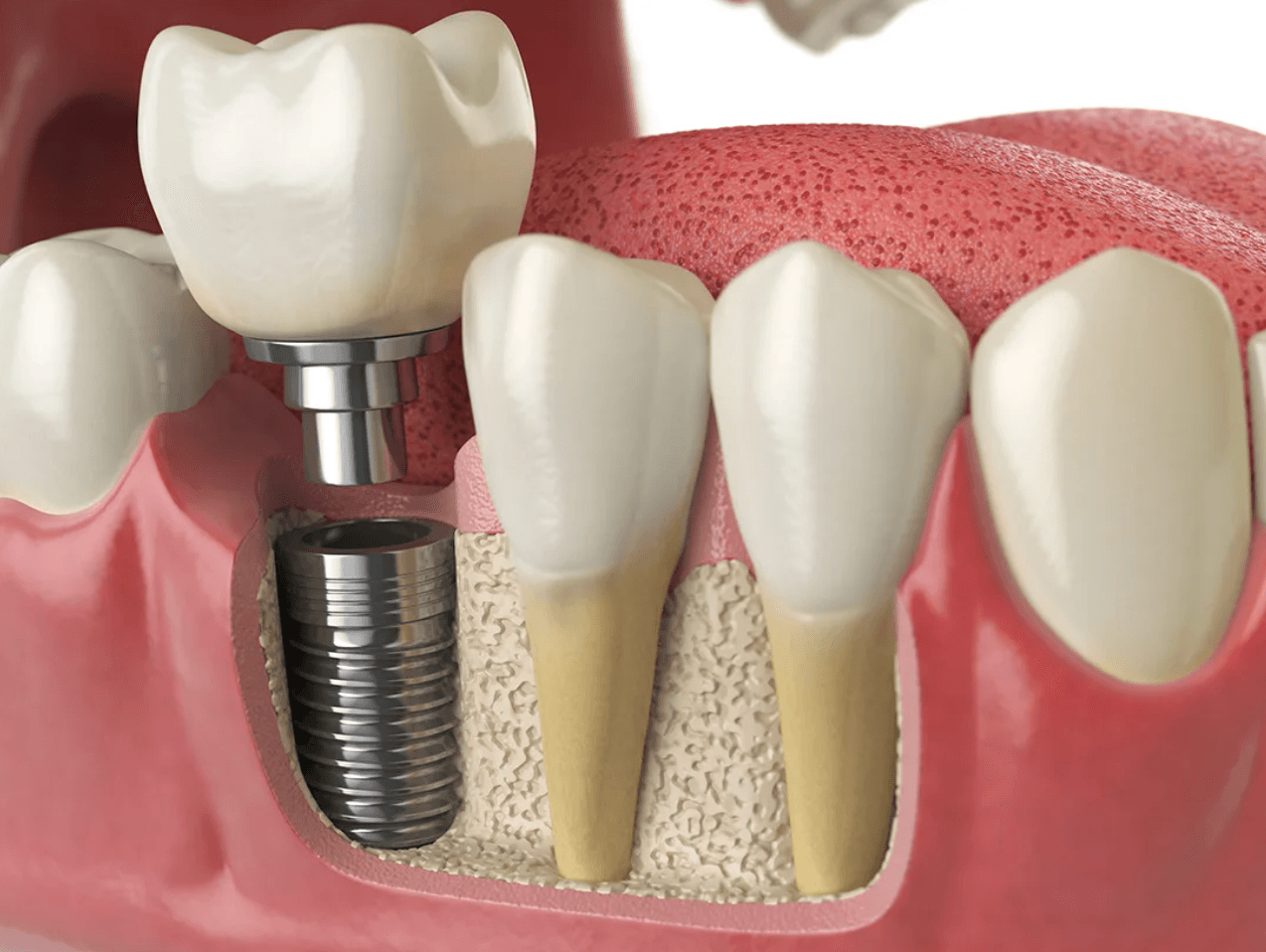
A dental crown covers substantially more tooth structure than bonding or a veneer. It may be considered when a front tooth has suffered extensive structural damage and needs greater coverage and protection.
A crown may be considered when:
- A large portion of the tooth has fractured: there may not be enough reliable structure for a smaller repair.
- The tooth is already heavily restored: large existing fillings or previous damage can affect treatment choices.
- A crack weakens the tooth: greater coverage may be needed when the remaining structure is compromised.
- The tooth has undergone root canal treatment: the appropriate final restoration depends on the amount of remaining tooth structure and other clinical factors.
- Other restorative options cannot provide adequate support: a crown may be selected when more complete coverage is clinically appropriate.
For a front tooth, ceramic materials may be chosen to help reproduce the shade and translucency of natural enamel. The specific material depends on the clinical situation and cosmetic goals.
Learn more about dental crowns and bridges.
Does a Chipped Front Tooth Need a Root Canal?
Not every chipped front tooth needs root canal treatment. Small chips limited to the outer enamel generally involve a very different level of damage than a deep fracture extending toward the pulp.
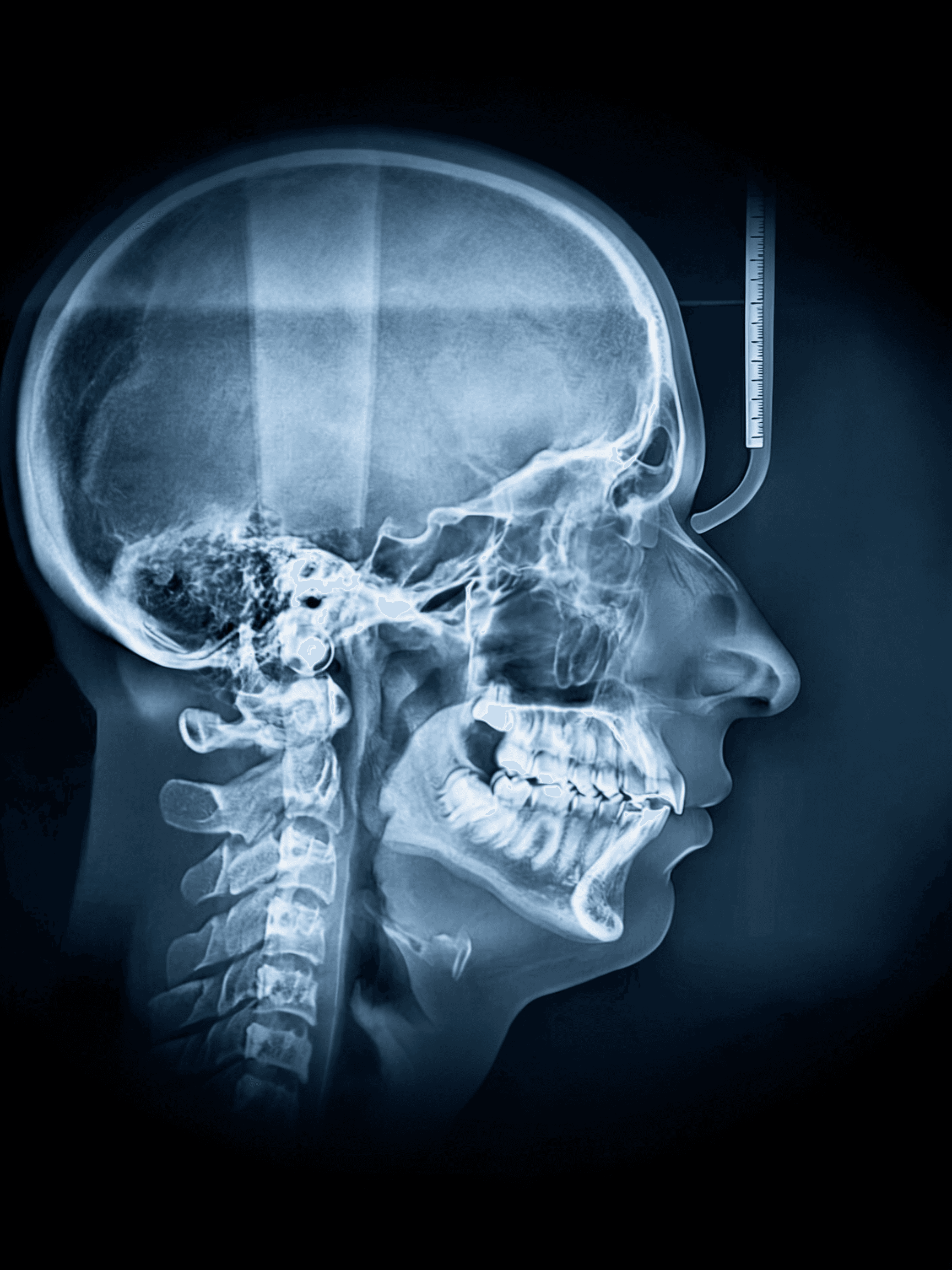
A dentist will evaluate symptoms, fracture depth, tooth vitality, imaging when appropriate, and other findings before determining whether the pulp has been significantly affected.
Signs that warrant prompt evaluation include significant spontaneous pain, prolonged sensitivity, swelling, discoloration after trauma, or a fracture that appears to expose deeper tissue.
When root canal treatment is necessary, the final restoration is chosen based on how much healthy tooth structure remains and the amount of support the tooth needs.
Small Chip vs. Large Chip: How Treatment Differs
| Type of Damage | Possible Treatment | Typical Complexity |
|---|---|---|
| Very small enamel chip | Smoothing, polishing, or monitoring | Low |
| Small cosmetic chip | Composite bonding | Low to moderate |
| Moderate front-tooth chip | Bonding or veneer depending on the tooth | Moderate |
| Large fracture | Bonding, veneer, or crown depending on remaining structure | Moderate to high |
| Fracture involving the pulp | Possible root canal treatment plus restoration | High |
These categories are general examples rather than treatment rules. Two fractures that appear similar in a photograph can require different care depending on bite forces, crack direction, previous restorations, and what is visible during the clinical examination.
How Long Does It Take to Fix a Chipped Front Tooth?
Treatment time depends on the repair selected.
- Smoothing and polishing: may be completed during one appointment.
- Composite bonding: can often be completed in one visit for suitable cases.
- Porcelain veneer: may require multiple steps or appointments depending on the treatment process.
- Dental crown: may involve tooth preparation, a temporary restoration, and placement of the final crown at a later visit.
- Root canal plus restoration: may require additional appointments depending on the condition of the tooth.
Your dentist can provide a more specific timeline after examining the fracture.
How Much Does It Cost to Fix a Chipped Front Tooth?
The cost to repair a chipped front tooth varies substantially because a tiny enamel chip and a deep fracture requiring a crown or root canal are very different treatments.
Factors affecting the price include:
- the size and depth of the chip;
- whether enamel, dentin, or pulp is involved;
- the treatment selected;
- the restorative material;
- whether X-rays or additional diagnostic procedures are required;
- whether previous dental work is present;
- geographic location;
- and dental insurance benefits.
Chipped Front Tooth Cost by Treatment
| Treatment | General Cost Consideration | Common Use |
|---|---|---|
| Smoothing / Polishing | Usually one of the least extensive options | Very small enamel chips |
| Dental Bonding | Generally less expensive than porcelain restorations | Small to moderate chips |
| Porcelain Veneer | Generally costs more than bonding | Selected cosmetic defects and larger visible changes |
| Dental Crown | Usually more expensive because it requires a more extensive restoration | Significantly weakened or fractured teeth |
| Root Canal + Restoration | Additional treatment increases the total cost | Selected fractures involving the pulp |
Because fees and insurance benefits vary, online price ranges should be treated as general guidance rather than a personalized estimate. The most accurate way to determine the cost is to have the tooth examined and receive a treatment plan based on the actual fracture.
For a more detailed cost breakdown, see our guide to fractured tooth repair cost.
How Long Does Bonding on a Chipped Front Tooth Last?
There is no fixed lifespan for dental bonding. How long a bonded front tooth lasts depends on the size and location of the repair, bite forces, grinding or clenching, diet, oral habits, and how much natural tooth structure supports the restoration.
Front-tooth bonding may be more vulnerable to repeated stress if you regularly:
- bite directly into very hard foods;
- chew ice;
- bite fingernails or pens;
- use your teeth to open packaging;
- or grind and clench your teeth.
Routine dental examinations allow a dentist to monitor the repair, polish the surface when appropriate, and identify wear or small fractures before they become larger problems.
Can a Chipped Front Tooth Grow Back?
No, lost adult tooth enamel does not grow back. If a piece of permanent tooth structure has broken away, the body does not regenerate it in the same way that skin or bone can heal.
However, dentists can often restore the missing shape using composite resin, porcelain, ceramic, or another dental material. This is why a repaired chipped front tooth can often look very similar to the original tooth even though the lost enamel itself has not regrown.
What If My Chipped Front Tooth Does Not Hurt?
A chipped tooth does not have to hurt to warrant evaluation. A superficial enamel chip may cause little or no discomfort, but pain level alone does not reveal the depth or direction of a fracture.
This is particularly important when the chip happened after trauma. A dentist may evaluate the tooth for hidden cracks, movement, bite changes, sensitivity, and other signs of injury.
How to Prevent Chipping a Front Tooth Again
Not every dental injury can be prevented, but reducing unnecessary stress on your front teeth can lower the risk of future chips and help protect existing restorations.
- Wear a Mouthguard During Sports: A properly fitted mouthguard can help protect the teeth during activities where facial impacts may occur.
- Address Teeth Grinding or Clenching: Repeated excessive bite forces may contribute to tooth wear and fractures in some patients. A dentist can evaluate whether a protective appliance or other treatment is appropriate.
- Avoid Chewing Very Hard Objects: Ice, hard candies, pens, and similar objects can place concentrated forces on enamel and restorations.
- Do Not Use Teeth as Tools: Opening packaging, tearing tags, or holding hard objects with your teeth increases fracture risk.
- Maintain Good Oral Hygiene: Tooth decay can weaken tooth structure and make fractures more likely.
- Attend Routine Dental Examinations: Regular examinations can identify worn restorations, decay, cracks, or bite-related problems before they become more extensive.
Frequently Asked Questions About Chipped Front Teeth
Can a chipped front tooth be fixed?
Yes. Many chipped front teeth can be repaired successfully. Depending on the size and depth of the damage, treatment may involve smoothing, composite dental bonding, a porcelain veneer, or a dental crown.
What is the best treatment for a chipped front tooth?
There is no single best treatment for every chipped tooth. A very small enamel chip may need little treatment, while a moderate chip may be suitable for bonding. More extensive loss of tooth structure may require a veneer or crown. The correct choice depends on a dental examination.
Can a dentist bond a chipped front tooth?
Yes. Composite bonding is commonly used for small and moderate chips when sufficient healthy tooth structure remains. Tooth-colored composite is added to the damaged area, shaped, cured, and polished.
Can a chipped front tooth be fixed in one visit?
Some chipped front teeth can be repaired in a single appointment, especially when smoothing or composite bonding is appropriate. Veneers, crowns, root canal treatment, and more complicated fractures may require additional visits.
Is a chipped front tooth a dental emergency?
A very small painless enamel chip may not require immediate emergency care, but a dental evaluation is still appropriate. Seek prompt care when there is significant pain, bleeding, a loose tooth, extensive fracture, exposed inner tissue, swelling, or facial trauma.
Can a chipped front tooth be fixed at home?
A permanent chipped-tooth repair should not be attempted at home. Temporary measures can help protect a sharp edge, but only a dental examination can determine the depth of the fracture and whether the tooth requires restorative treatment.
How much does it cost to fix a chipped front tooth?
The price varies according to the amount of damage and the treatment selected. A minor repair or bonding is generally less expensive than a veneer or dental crown, while a deep fracture requiring root canal therapy and a final restoration can cost more.
Can a small chipped tooth get worse?
It can. Some very small enamel chips remain stable, while others may develop additional wear or fracture depending on their location, bite forces, grinding habits, or underlying tooth condition. A dentist can determine whether smoothing, restoration, or monitoring is appropriate.
Should I see a dentist if my chipped tooth does not hurt?
Yes, especially if the chip followed an accident or you are unsure how deep it is. Lack of pain does not necessarily mean that the tooth has only superficial damage.
Chipped Your Front Tooth? The Next Step
A chipped front tooth is often repairable, and treatment does not automatically mean a veneer or crown. Small chips may need only minor treatment, while composite bonding can restore many limited front-tooth fractures. Larger or deeper injuries may require a more extensive restoration.
The most important step is determining how much tooth structure was actually damaged. A clinical examination can distinguish a superficial enamel chip from a deeper fracture and help identify the most conservative treatment capable of restoring the tooth.
At Tribeca Dental Studio in Manhattan, chipped and fractured teeth can be evaluated for restorative and cosmetic treatment options based on the condition of the individual tooth.
Explore cosmetic dentistry options for repairing a chipped tooth or contact Tribeca Dental Studio to have a damaged front tooth evaluated.