The Cheeky Truth: What to Expect from Cheek Implants
February 14, 2026

Why Facial Harmony Matters
Cheekbone implants are solid, biocompatible materials surgically placed on or near your cheekbones to improve facial definition, restore lost volume, and create a more youthful, balanced appearance. They are a permanent solution that can dramatically improve the midface area.
Quick Overview: What You Need to Know About Cheekbone Implants
- What they are: Medical-grade silicone or porous polyethylene implants placed on the cheekbone
- Types: Malar (high projection), Submalar (fullness below eyes), or Combined
- Procedure time: 1-2 hours, typically outpatient
- Recovery: 1-2 weeks to return to normal activities; final results visible in ~6 weeks
- Results: Permanent but reversible if desired
- Best for: Patients seeking permanent facial definition or volume restoration
As we age, facial tissues thin, and the midface can develop a sunken appearance that makes you look tired or older. The demand for solutions is high; the American Society of Plastic Surgeons reported over 108,000 malar cheek implant procedures in the U.S. in 2020 alone.
High, defined cheekbones are widely associated with youth and beauty. Some people want to improve their natural bone structure, while others aim to restore age-related volume loss.
Unlike temporary fillers, cheekbone implants offer a permanent solution for flat or undefined cheeks. The surgery is quick, usually one to two hours, with a minimal recovery that allows most patients to return to work within a week.
I’m Dr. Nina Izhaky, and at Tribeca Dental Studio, my expertise in complex facial anatomy and advanced procedures ensures a comprehensive understanding of facial structure, which is essential when consulting on any facial improvement, including cheekbone implants. My practice combines cutting-edge technology with personalized care to help patients achieve their aesthetic goals safely and effectively.
Understanding Cheek Augmentation and Implants
Facial augmentation often involves using implants to improve or restore facial contours. These are specially formed, solid, biocompatible materials designed to improve your facial structure. While the cheeks, chin, and jaw are the most common sites, you can learn more about facial implants in general on the American Society of Plastic Surgeons’ page Facial Implants.
Cheekbone implants specifically target the midface, focusing on the malar (cheekbone) and submalar (below the cheekbone) regions. This distinguishes them from chin implants, which increase the size and projection of the chin, or jaw implants, which widen the lower third of the face and define the jawline. Each type of implant serves a unique purpose in achieving overall facial balance and harmony.
What are the different types of cheekbone implants?
Just as every face is unique, so too are the types of cheekbone implants available to achieve specific aesthetic goals. There are three primary types of cheekbone implants, each designed to address different areas and offer distinct results:

- Malar Implants: Placed directly on the cheekbones, these provide higher projection for a sharper, more angular look. Malar implants are popular with younger patients seeking to improve their natural bone structure and define the high points of their cheeks.
- Submalar Implants: Positioned beneath the cheekbone, these add fullness to the mid-face, correcting a gaunt or sunken look caused by volume loss. Submalar implants are ideal for rounding out the cheeks and restoring a softer, more youthful contour.
- Combined Implants: These implants augment both the cheekbones and the area below them. This comprehensive option is for patients who want both improved definition and increased mid-face volume for a structurally sound result.
The choice between these types depends on your natural anatomy and your aesthetic goals. During your consultation, we will discuss which type is best suited to help you achieve the look you desire.
Materials and Safety
When considering any implant, safety is paramount. Cheekbone implants are made from medical-grade, solid, biocompatible materials that have an established record of safety in plastic surgery. The most common materials used include:
- Medical-grade Silicone (Silastic): A synthetic material used safely in medicine for decades. These solid implants do not leak or rupture and are permanent yet easily removable. They are often secured to the bone with a small screw to prevent shifting.
- Porous Polyethylene (Medpor®): This porous, synthetic material has a long history of safe use. It allows tissue to grow into the implant, securing it firmly. Medpor is biocompatible and considered a permanent solution.
Both silicone and Medpor implants are FDA-approved for facial augmentation. They are designed to be inert, meaning they do not react with your body’s tissues, minimizing the risk of adverse reactions. Our commitment at Tribeca Dental Studio is to use only the safest, most effective materials for your care.
Benefits of Cheekbone Implants
The appeal of cheekbone implants lies in their significant and lasting benefits, which address both aesthetic desires and age-related concerns:
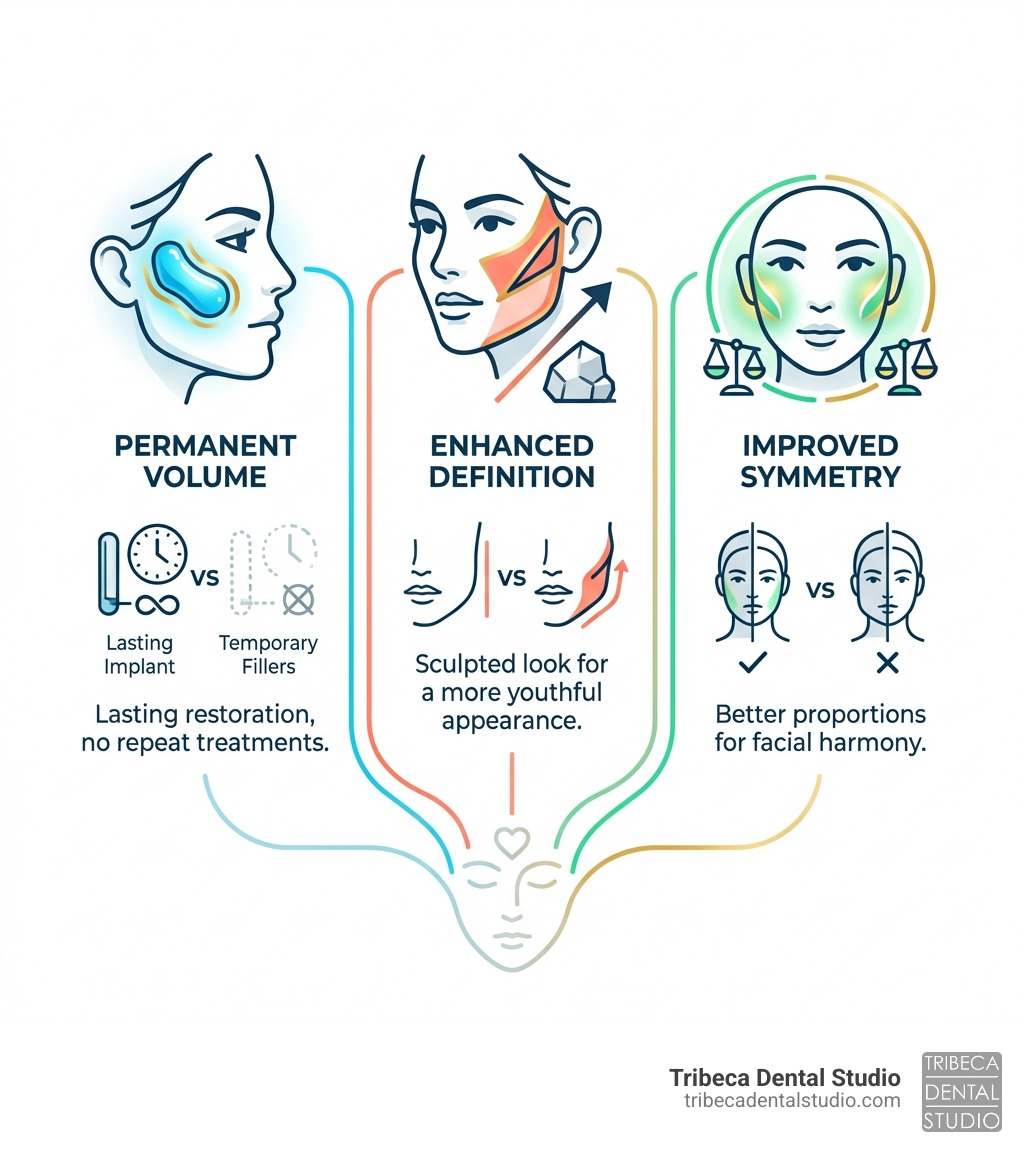
- Permanent Solution: Unlike temporary fillers that require repeated injections, cheekbone implants offer a permanent improvement to your facial contours that can last a lifetime.
- Reversible Procedure: While permanent, the surgery is also reversible. If you are dissatisfied with the outcome, the implants can be removed or adjusted by an experienced surgeon.
- Restores Lost Volume: Cheekbone implants effectively restore age-related volume loss in the midface, correcting a gaunt or hollow appearance and creating a fuller, more youthful look.
- Creates Facial Balance and Symmetry: Well-defined cheekbones are crucial for facial harmony. Implants can correct asymmetries and improve facial proportions by balancing features like the nose, chin, and jawline.
- Defines Cheekbones for a More Contoured Look: For those who desire more prominent or sculpted cheekbones, implants can improve definition, providing a more contoured and angular appearance.
- Youthful Appearance: By restoring volume and enhancing definition, cheekbone implants help to counteract the visible signs of aging in the midface, contributing to a more youthful and revitalized overall facial appearance.
These benefits highlight why cheekbone implants are a popular choice for individuals seeking a lasting and impactful improvement to their facial aesthetics.
Are You a Candidate?
Deciding on a surgical procedure like cheekbone implants is a significant personal choice. This section helps you determine if a permanent surgical solution is right for you, ensuring that your expectations align with what the procedure can realistically achieve. It’s about finding the best path to your aesthetic goals, whether that’s with implants or another option.
Who is a Good Candidate for Cheekbone Implants?
The best candidates for cheekbone implants are individuals seeking aesthetic improvement who also meet certain health and psychological criteria. Here’s a breakdown of who might be a good fit:
- Physically Healthy: Good overall health is crucial for a smooth surgery and recovery. A thorough medical history review will ensure you are fit for the procedure.
- Non-Smoker: Smoking impairs healing and increases complication risks. We advise quitting well before surgery.
- Realistic Expectations: Understanding what cheekbone implants can achieve is vital. We will discuss your goals during the consultation to ensure you have realistic expectations about the outcomes.
- Desire for Permanent Change: Since cheekbone implants offer a long-lasting solution, candidates should be looking for a permanent improvement rather than a temporary fix.
- Good Skin Elasticity: Sufficient skin elasticity helps accommodate the implant, ensuring a natural, smooth contour.
- Younger Patients Seeking Structural Definition: Younger patients often seek cheekbone implants to create a more angular, defined look than their natural genetics provide.
- Mature Patients Restoring Volume Loss: Mature patients often use implants to restore age-related volume loss in the midface, correcting sunken cheeks for a more youthful appearance.
Signs you might benefit from cheekbone implants include:
- A desire for more prominent or defined cheekbones.
- A naturally flat or recessed midface.
- Volume loss in the midface area, making your cheeks appear sunken or hollow.
- A desire to improve overall facial balance and symmetry.
- Looking for a permanent solution to improve your facial contours.
However, not everyone is an ideal candidate. You may not be a good candidate if you:
- Have a body mass index (BMI) over 25 (overweight) or 30 (obesity).
- Have diabetes mellitus, blood or bone disorders, or conditions affecting hearing.
- Have very thin skin, which might not adequately conceal the implant.
- Are unable to quit smoking before the procedure.
We treat each patient individually, considering all factors to recommend the safest and most effective path forward.
The Surgical Procedure for Cheekbone Implants
The journey to improved cheekbones is a carefully planned process, designed for your comfort and optimal results. Cheekbone implant surgery is generally considered a straightforward outpatient procedure, meaning you can typically go home the same day.
The Consultation and Preparation Process
Your journey begins with a comprehensive consultation, a crucial step in ensuring your safety and satisfaction.
- Medical History Review: We will review your complete medical history, including conditions, allergies, and medications, to assess risks and tailor the procedure to your health profile.
- Discussing Goals: This is your chance to share your aesthetic goals. Bringing photos is helpful. We’ll discuss what’s realistic and how implants can meet your expectations.
- Facial Analysis: A detailed facial analysis of your structure, skin, and contours helps us determine the ideal implant type, size, and placement for a harmonious result.
- Computer Imaging: In some cases, we may use computer imaging during your consultation. This advanced tool allows us to simulate potential post-surgical results, giving you a visual preview and helping us refine the surgical plan together.
- Quit Smoking: If you smoke, we will provide resources and strongly advise you to quit several weeks before surgery. Smoking severely compromises healing and increases complication risks.
- Avoid Anti-Inflammatory Drugs: You’ll be instructed to avoid certain medications, such as aspirin, ibuprofen, and herbal supplements that can increase bleeding, for at least two weeks prior to your surgery.
- Pre-Surgical Instructions: We will provide you with detailed instructions regarding diet, medication, and any other necessary preparations leading up to your procedure.
This thorough preparation ensures that you are well-informed, comfortable, and ready for your surgery.
What to Expect During Surgery
On the day of your surgery, you’ll arrive at our facility, where we’ll prepare you for the procedure.
- Procedure Time: The surgery is quick, usually 30-60 minutes, but can extend to two hours if combined with other procedures.
- Anesthesia: For your comfort, the surgery is usually done under local anesthesia with sedation. General anesthesia is also an option, especially for combined procedures. We will discuss the best choice for you during your consultation.
- Incision Placement: To minimize visible scarring, incisions are strategically placed. The most common approach is an intraoral incision, made inside your mouth where your cheek and gums meet. Alternatively, an incision can be made discreetly inside the lower eyelid.
- Implant Placement: Through these small incisions, we carefully create a precise pocket in the tissue. The chosen implant is then gently inserted and positioned on your cheekbone. In some cases, the implant may be secured with tiny screws to prevent shifting.
- Closing Incisions: Once the implant is perfectly in place, the incisions are closed with absorbable sutures or stitches that typically dissolve on their own or are removed within one to two weeks.
The procedure is designed to be efficient and precise, with your safety and aesthetic outcome as our top priorities.
Combining with Other Procedures
Cheekbone implants can be combined with other procedures for a more comprehensive facial change. This approach can improve results and be more cost-effective by consolidating fees.
Common procedures that can be combined with cheekbone implants include:
- Facelift: Combining a facelift with cheekbone implants can restore sagging skin while enhancing midface volume.
- Rhinoplasty (Nose Job): Balancing the nose with more prominent cheekbones can create a stronger, more proportionate facial profile.
- Chin Implants: Combining cheekbone implants with Chin Implants can dramatically improve your profile and overall facial balance.
- Brow Lift: Addressing a heavy brow alongside cheek augmentation can create a more open, youthful appearance.
- Eyelid Lift (Blepharoplasty): Cheekbone implants can often be placed through a lower eyelid incision, making it a convenient combination with a lower eyelid lift.
We specialize in achieving delicate aesthetic balance. By considering the face as a whole, we can suggest the optimal combination of procedures custom to your unique needs, ensuring that all features work together harmoniously.
Recovery, Risks, and Long-Term Results
Understanding the recovery process and potential risks is just as important as knowing what happens during the surgery itself. We want you to feel fully informed and prepared for every stage of your cheekbone implant journey.
The Recovery Timeline
The recovery from cheekbone implant surgery is typically quite rapid, and most people are pleasantly surprised by the minimal downtime.
- Initial Recovery (First Week): Immediately after surgery, a dressing may be applied to your face and typically remains in place for two to three days. You will likely experience some tenderness, swelling, and a stretched, tight sensation in the cheek area. This usually subsides within a week.
- If intraoral incisions were made, you might need to stick to a liquid diet and use a special mouth rinse for up to a week to promote healing and prevent infection.
- It’s important to avoid sleeping on your face for a few weeks to protect the implants.
- Return to Work and Regular Activities (1-2 Weeks): Most patients can return to work and resume their regular, non-strenuous activities within one to two weeks after surgery. Bruising and swelling are common but usually begin to resolve significantly during this period.
- Avoid Strenuous Activity (Several Weeks): We recommend avoiding rigorous activities, such as heavy lifting or intense exercise, for the first few weeks (typically 2-4 weeks) after surgery. This helps prevent complications and ensures proper healing.
- Final Results Visible (~6 Weeks): While you’ll see immediate changes, most of the initial swelling goes down after about six weeks. At this point, you can start to see the true results of your cheekbone implants taking shape. Residual swelling can continue to dissipate over the next one to two months, revealing the final contour.
- Follow-Up Care: Follow-up care is vital to monitor your healing process. We will schedule appointments to ensure the incisions are healing properly and the implants are securely in place.
Post-operative discomfort is generally well-controlled with prescribed medications. We also typically prescribe antibiotics for about a week as a precautionary measure against infection.
Potential Risks and Complications
While cheekbone implants are generally considered a safe procedure, like any surgery, there are potential risks and complications. Our priority is to minimize these risks by adhering to the highest standards of care and ensuring you are fully informed.
Potential risks and complications may include:
- Bleeding: Some bleeding is normal, but excessive bleeding is a rare complication that requires immediate attention.
- Infection: Although uncommon (occurring in an estimated 1-3% of cases), infection is a possibility with any surgical procedure. We prescribe antibiotics to help prevent this.
- Numbness: Temporary numbness in the cheek area is quite common after surgery, occurring in as high as 20% of cases. This usually resolves over weeks as the nerves heal. Permanent numbness or pain from the implant is rare.
- Implant Shifting (Malposition): In some instances, an implant can shift from its ideal position, leading to lumpiness or an asymmetrical look. This may require a revision surgery to reposition or remove the implant.
- Asymmetry: While implants can correct existing asymmetry, there’s a small risk of new asymmetry developing post-surgery.
- Scarring: Scarring is seldom an issue with cheekbone implants because the incisions are typically placed inside the mouth or lower eyelid, making them virtually invisible.
Choosing an experienced and board-certified surgeon who specializes in facial procedures, like Dr. Nina Izhaky at Tribeca Dental Studio, is paramount in minimizing these risks and ensuring the best possible outcome. We will discuss all potential risks with you in detail during your consultation. You should call us immediately if you experience excessive swelling, bleeding, fever, or other uncomfortable symptoms. For severe symptoms like chest pain, irregular heartbeat, or shortness of breath, seek immediate medical attention.
How long do cheekbone implants last?
One of the most appealing aspects of cheekbone implants is their longevity. They are designed to be a permanent solution for enhancing your facial contours. Once medical-grade silicone or porous polyethylene implants are affixed to your existing bone structure, they can last a lifetime.
However, it’s important to understand that while they are permanent, the surgery is completely reversible. If your aesthetic preferences change over time, or if a complication arises, the implants can be removed or reshaped. Removing the implants typically takes about 10 minutes, and reshaping them can take about 25 minutes. This reversibility offers peace of mind, knowing that you have options if you ever decide to make changes.
Cheekbone implants provide a long-lasting, durable solution for achieving the facial definition and volume you desire, making them a truly rewarding investment in your appearance.
Frequently Asked Questions about Cheekbone Implants
We understand you likely have many questions when considering cheekbone implants. Here, we address some of the most common inquiries to help you feel more informed.
Is cheekbone implant surgery painful?
Most patients report that cheekbone implant surgery is less painful than they anticipated. While you will experience some discomfort, tightness, and soreness in the cheek area after the procedure, this is generally manageable. We will prescribe appropriate pain medication to control any post-operative pain. The stretched or tight sensation typically subsides within a week. Our goal is to ensure your comfort throughout the recovery process.
Can cheekbone implants look unnatural?
The concern about implants looking unnatural is very valid. The key to achieving a natural-looking result with cheekbone implants lies in careful planning and the skill of your surgeon. During your consultation, we will assess your unique facial anatomy and discuss your aesthetic goals to select the precise type and size of implant that will best complement your features. An experienced surgeon, like Dr. Nina Izhaky, understands how to place and sculpt the implants to create harmonious contours that improve your natural beauty, rather than creating an “overdone” or artificial appearance. Our personalized approach ensures that your implants contribute to a balanced and refined look.
How much do cheekbone implants cost?
The cost of cheekbone implant surgery can vary significantly based on several factors, including the surgeon’s fees, anesthesia costs, facility fees, and the complexity of your specific procedure. While it’s difficult to provide an exact figure without a personalized consultation, research indicates that prices for cheekbone implants can start around $7,999. This price typically includes the implant itself, the surgical fee, anesthesia, and facility costs. During your consultation at Tribeca Dental Studio, we will provide you with a detailed, transparent quote custom to your individual treatment plan. This is an investment in a permanent solution for facial improvement.
What are the differences and advantages of cheek implants versus cheek fillers?
This is a very common question, and the answer largely depends on your goals and preferences. Both cheek implants and cheek fillers aim to augment the cheek area, but they differ significantly in their approach, longevity, and suitability for various concerns. You can find more detailed information on Cleveland Clinic’s page about Cheek Implants, which also compares them to fillers.
| Feature | Cheek Implants | Cheek Fillers (Dermal Fillers) |
|---|---|---|
| Nature | Surgical procedure involving solid, biocompatible materials. | Non-surgical injections of gel-like substances (e.g., hyaluronic acid). |
| Longevity | Permanent solution; implants can last a lifetime. Reversible (can be removed). | Temporary; effects last from six months to several years, depending on the type of filler and individual metabolism. Requires repeat treatments. |
| Purpose | Ideal for significant structural improvement, defining bone structure, or restoring substantial volume loss. | Best for subtle volume restoration, smoothing fine lines, and addressing early signs of aging. |
| Procedure | Requires surgery, anesthesia, and a recovery period. | Quick office visit, minimal to no downtime. |
| Results | Provides a more dramatic and lasting change to facial contours. | Offers a more subtle and gradual improvement. |
| Candidacy | Generally for physically healthy individuals seeking permanent structural changes. | Suitable for those desiring temporary improvement, less invasive options, or who are not candidates for surgery due to health conditions. |
| Reversibility | Surgically removable. | Many hyaluronic acid fillers can be dissolved if desired. |
| Cost | Higher initial cost, but a one-time expense for permanent results. | Lower per-session cost, but ongoing expenses due to repeat treatments. |
Advantages of Cheek Implants:
- Permanence: A single procedure offers lifelong results, eliminating the need for continuous maintenance.
- Structural Change: Provides a more defined and sculpted bone structure that fillers cannot achieve.
- Consistency: The results remain consistent over time, unlike fillers which gradually diminish.
Advantages of Cheek Fillers:
- Non-Surgical: No incisions, anesthesia, or significant downtime.
- Temporary: Allows patients to try out a look without a permanent commitment.
- Cost-Effective (initially): Lower upfront cost, making it accessible for those not ready for surgery.
The choice between cheek implants and fillers depends on your individual goals, desired longevity, and comfort with surgical procedures. We will discuss both options thoroughly during your consultation to determine which best suits your needs.
Conclusion
Cheekbone implants offer a permanent, effective solution for enhancing facial contours, restoring lost volume, and creating a more youthful, balanced appearance. Whether you’re seeking to define your natural bone structure or reverse the signs of aging, these implants provide lasting results that can significantly improve your confidence and facial harmony.
At Tribeca Dental Studio, our expertise extends beyond traditional dentistry. Dr. Nina Izhaky’s profound understanding of complex facial anatomy, including procedures involving the zygomatic bone (cheekbone), ensures a comprehensive and informed approach to any facial improvement consultation. We pride ourselves on offering a personalized approach to dentistry, treating every patient like family, and applying advanced techniques to achieve natural-looking results.
If you’re considering enhancing your cheekbones, we invite you to experience the difference a dedicated and expert team can make.
Schedule a consultation to discuss Cheekbone Implants today.