Beyond the Hype: Uncovering the Best Teeth Whitening Solutions
December 30, 2025
Why Finding Truly Effective Teeth Whitening Matters
Effective teeth whitening is easier to achieve than ever, but not all methods deliver safe, lasting results. The global teeth whitening market is booming, valued at over $3 million, and you face an overwhelming array of choices—from drugstore strips to professional treatments. But which ones actually work without harming your teeth?
Quick Answer: The Most Effective Teeth Whitening Options
- In-Office Professional Whitening – Up to 10 shades brighter in one session; lasts 6 months to 1+ year
- Dentist-Prescribed Custom Trays – Noticeable results in 2 weeks; lasts about 2 years
- ADA-Approved OTC Strips – 2-3 shades lighter in 2-4 weeks; requires frequent touch-ups
- Whitening Toothpaste – Gradual surface stain removal over 2-6 weeks; safe for daily use
While many products promise whiter teeth, over-the-counter options often provide minimal results compared to professional treatments. The key difference is the concentration of the bleaching agent. In-office treatments use high-concentration agents (up to 40% hydrogen peroxide) under professional supervision, lightening teeth by up to 10 shades in about an hour. In contrast, drugstore strips contain just 3-10% peroxide, typically delivering 2-3 shades of whitening over several weeks.
The challenge is finding what works safely. Incorrect use of peroxide-based products can cause gum irritation and tooth sensitivity. Even popular “natural” remedies like charcoal toothpaste can be abrasive, damaging enamel and making teeth appear more yellow over time.
The bottom line? Professional whitening supervised by a dentist is the gold standard for safety and effectiveness. Dentists use custom-fitted trays and adjust concentrations to maximize results while preventing sensitivity. For those on a budget, ADA-approved OTC products are a safer alternative to unregulated remedies, though results are more modest.
As Dr. Nina Izhaky, a cosmetic dentistry specialist at Tribeca Dental Studio, I’ve helped countless patients steer teeth whitening. Using state-of-the-art technology and personalized plans, we achieve brilliant, healthy smiles. This guide will help you understand the science behind whitening and make informed choices.
Understanding your whitening options starts with knowing how different methods work and which approach matches your goals, timeline, and budget. Let’s explore the science behind a brighter smile.
The Science of a Brighter Smile: How Whitening Agents Work
To understand effective teeth whitening, you need to know about two key parts of your tooth: the enamel and the dentin. Enamel is the hard, translucent outer layer. Beneath it lies the dentin, a yellowish layer that determines your tooth’s overall color.
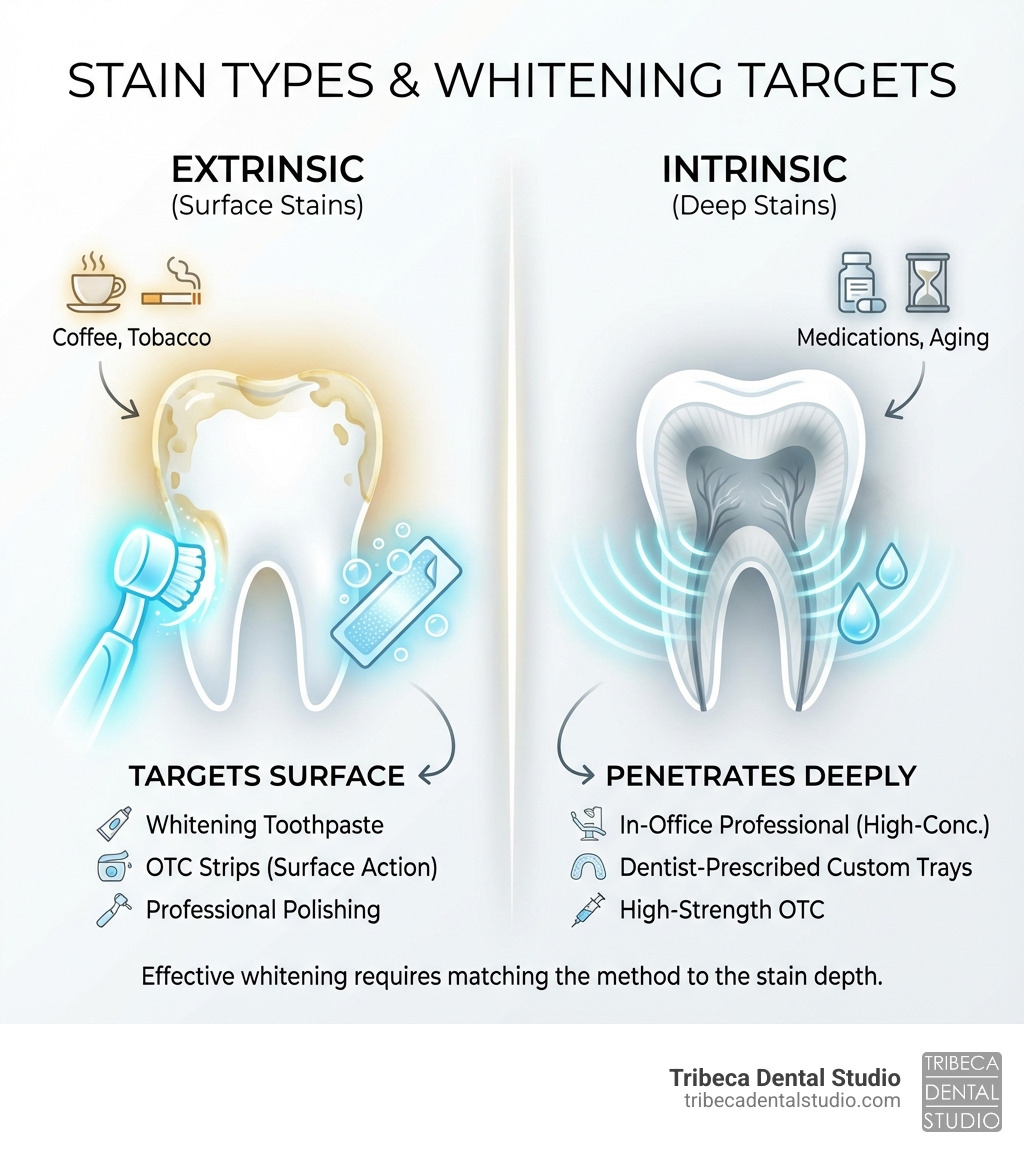
Over time, discoloration occurs, leading to two main types of stains:
- Extrinsic Stains: These are surface-level stains on the enamel from pigmented foods and drinks (coffee, tea, red wine) and tobacco. They are generally easier to remove.
- Intrinsic Stains: These deeper stains are within the dentin. They can result from aging, certain medications (like tetracycline), trauma, or genetics. Intrinsic stains are harder to treat and often require professional intervention.
The Magic Behind the Whiteness: Active Ingredients
The primary active ingredients in most effective teeth whitening products are peroxides.
- Hydrogen Peroxide: This is a direct bleaching agent. It penetrates the enamel and breaks down the chemical bonds of stain molecules, making teeth appear whiter. Professional treatments use higher concentrations for faster, more dramatic results.
- Carbamide Peroxide: Common in at-home kits, carbamide peroxide breaks down into hydrogen peroxide more slowly, making it ideal for take-home treatments. A product with 30% carbamide peroxide is roughly equivalent to one with 10% hydrogen peroxide.
Essentially, whitening works by using peroxide to open the tooth’s enamel matrix, bubble out stains, and then close it back up.
Beyond Peroxides: Other Whitening Wonders
Other agents contribute to a brighter smile, primarily by tackling extrinsic stains:
- Abrasives in Toothpaste: Whitening toothpastes use mild abrasives to scrub away surface stains. They don’t change your tooth’s natural color but can make your smile appear brighter. Some also use ingredients like blue covarine for an immediate optical illusion of whiteness.
- Hydroxyapatite: This is the main mineral in tooth enamel. Some newer products use it to remineralize and strengthen enamel, which can contribute to a brighter look without harsh bleaching, making it great for sensitive teeth.
For more information on the various ways we can improve your smile, explore our services in cosmetic dentistry.
Decoding Your Whitening Options: A Guide to Methods
When it comes to effective teeth whitening, you have a spectrum of choices, each with its own advantages. Understanding these methods is key to choosing what’s right for you.
In-Office Professional Whitening: The Gold Standard
Considered the safest and most effective teeth whitening method, in-office bleaching is overseen by a dentist and offers several benefits:
- Dentist Supervision: We manage the entire process to protect your gums and enamel, which is crucial when using high-concentration agents.
- High-Concentration Agents: We use professional-strength gels with higher peroxide concentrations than OTC products for more dramatic results.
- Immediate Results: Achieve up to 10 shades brighter in just one session, ideal for special events. A full treatment may involve a few short appointments.
- Light Activation: A special light or laser may be used to accelerate the whitening process, enhancing the gel’s effectiveness.
- Gum and Enamel Protection: We apply protective barriers to your gums to prevent irritation from the strong whitening gel.
- Cost vs. Benefit: Though more expensive upfront, the superior, faster, and safer results offer excellent long-term value, with results lasting a year or more.
Ready to experience a truly radiant smile? Discover the Power of Professional Teeth Whitening at Tribeca Dental Studio.
Dentist-Prescribed At-Home Kits
For those who prefer at-home convenience with professional-level results, these kits are an excellent middle ground.
- Custom-Fitted Trays: We create trays that fit your teeth perfectly, ensuring even gel distribution and protecting your gums from irritation.
- Professional-Grade Gel: The kits include a stronger whitening gel than OTC options, yet it’s safe for home use, typically containing 10% to 35% carbamide peroxide.
- Convenience: Whiten on your own schedule at home, often for a short period each day or overnight.
- Gradual Results: Notice significant whitening in about two weeks with consistent use.
- Long-Lasting Results: With proper use, results can last for about two years, making this a durable solution.
Learn more about our comprehensive teeth whitening services.
Over-the-Counter (OTC) Products
The most accessible and affordable route, OTC products offer a range of options, though effectiveness and safety vary.
- Whitening Toothpastes: These use mild abrasives to remove surface stains. They don’t bleach teeth but can make them appear cleaner over two to six weeks.
- Whitening Strips: Peroxide-based strips (like Crest 3D White Whitestrips) are more effective than toothpaste for bleaching. They adhere to teeth for a set time and can produce noticeable results in a few weeks.
- Gels and Pens: Applied directly to teeth, these are convenient for on-the-go touch-ups.
- LED Light Kits: Many OTC kits include an LED light meant to accelerate the peroxide gel’s effects, but the peroxide is the key active ingredient.
- Lower Peroxide Concentrations: For safety, OTC products contain lower peroxide levels (3-10% hydrogen peroxide) than professional treatments.
- Gradual and Less Dramatic Results: While they can improve your smile, OTC products yield slower, less dramatic results and require more frequent touch-ups.
Curious about how other OTC products stack up? Check out our article on Does Whitening Mouthwash Work?
Professional vs. Over-the-Counter: Which is the most effective teeth whitening approach?
The best choice depends on your goals for speed, results, budget, and safety. Here’s a quick comparison:
| Feature | In-Office Professional Whitening | Dentist-Prescribed At-Home Kits | OTC Strips/Gels/Toothpastes |
|---|---|---|---|
| Effectiveness | High (up to 10 shades brighter) | High (significant differences, 2-3 shades) | Moderate (2-3 shades for strips/gels, surface stains for toothpaste) |
| Speed | Immediate (1 session) | Noticeable in ~2 weeks | 2-6 weeks for noticeable results |
| Safety | Highest (dentist-supervised, gum/enamel protection) | High (custom trays reduce gum irritation) | Moderate (potential for gum irritation, enamel damage if misused) |
| Cost | Highest | Medium | Lowest |
| Longevity | 6 months – 1 year | ~2 years | A few months (requires frequent touch-ups) |
| Peroxide Conc. | High (often 15%+ hydrogen peroxide) | Medium-High (10-35% carbamide peroxide) | Low (3-10% hydrogen peroxide or 10-35% carbamide peroxide) |
| Customization | Custom to individual needs and sensitivity | Custom-fitted trays for precise application | One-size-fits-all, less precise |
In summary, higher peroxide concentrations and professional supervision make dentist-led options the most effective teeth whitening choices for significant, lasting results. While affordable, OTC products are less powerful and best for minor, extrinsic stains. A scientific review confirms that while some OTC products can be effective, professional supervision is always recommended to manage potential side effects. For a deeper dive, you can read this scientific review of OTC vs. professional bleaching.
The Dentist’s Role: Why Professional Guidance is Key for Effective Teeth Whitening
When it comes to effective teeth whitening, your dentist’s role is paramount. It’s not just about applying a gel; it’s about ensuring the health and safety of your entire mouth before beginning treatment.

Here’s why professional guidance is non-negotiable for a bright, healthy, and lasting white smile:
- Initial Examination: We conduct a thorough exam to identify the cause of your stains and check for issues like cavities or gum disease. Whitening should only be done in a healthy mouth.
- Ensuring Candidacy: Not everyone is a good candidate. We’ll determine if whitening is right for you based on factors like tooth sensitivity, enamel health, and existing dental work (which doesn’t whiten).
- Customizing Treatment: We create a personalized whitening plan based on your goals, desired shade, and sensitivity, selecting the right whitening agent concentration to maximize results and comfort.
- Minimizing Sensitivity: We help manage the common side effect of tooth sensitivity by using desensitizing gels or recommending products with potassium nitrate and fluoride.
- Managing Side Effects: We prevent gum irritation with protective barriers or custom-fitted trays. If any side effects occur, we provide immediate guidance to ensure your comfort.
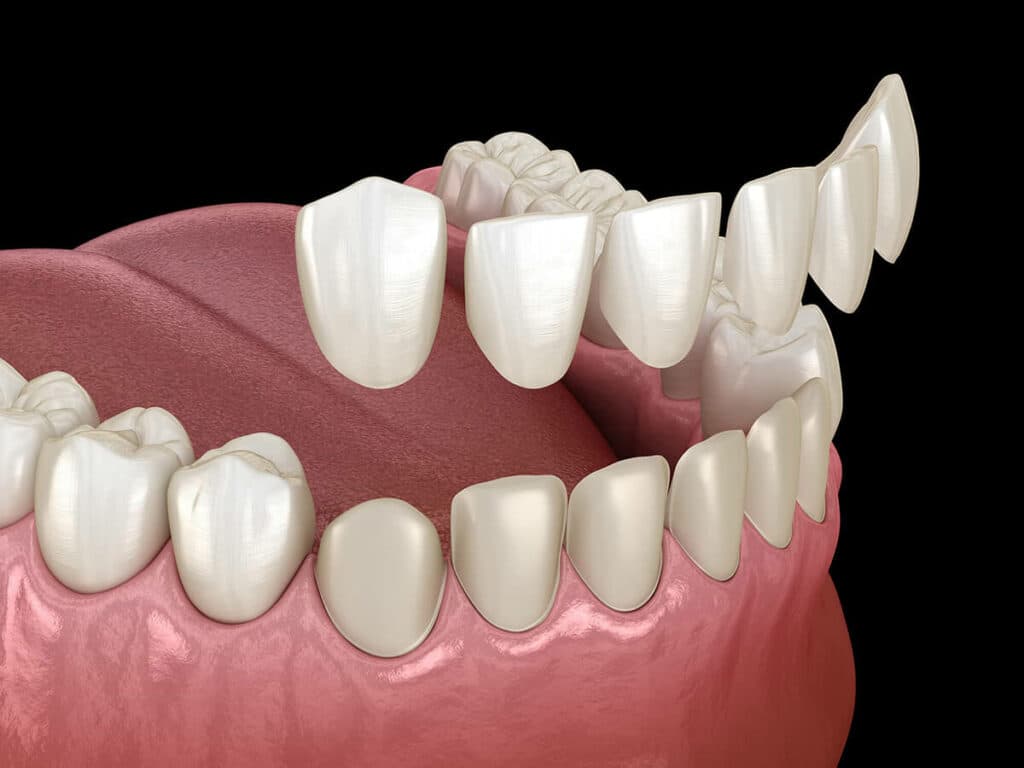
- Protecting Restorations: Since whitening doesn’t affect crowns, veneers, or fillings, we’ll discuss a plan to ensure a uniform, harmonious smile.
Regular dental checkups are the cornerstone of a healthy mouth and provide the perfect opportunity to discuss your whitening goals safely. Find out more about our comprehensive dental checkups.
At-Home Whitening: Safety, Myths, and What Really Works
The allure of at-home teeth whitening is strong, but it’s crucial to separate safe, effective teeth whitening options from harmful ones. Let’s look at the facts.
What are the Safest At-Home Options?
Safety should always be your top priority. The best way to ensure this is by consulting with us first.
- ADA-Approved Products: Look for the American Dental Association (ADA) Seal of Acceptance, which indicates a product has been tested for safety and effectiveness.
- Follow Instructions: Overusing products can damage enamel and irritate gums. Always adhere to the recommended duration and frequency.
- Whitening Toothpaste: A safe option for minor surface stains, these use mild abrasives and show gradual results in two to six weeks with daily use.
- Custom Trays from Your Dentist: As mentioned, our custom-fitted trays are a superior at-home option, keeping the gel on your teeth and away from gums for maximum safety and effectiveness.
- Appropriate Peroxide Concentration: OTC kits should contain 10% to 35% carbamide peroxide (or 3% to 10% hydrogen peroxide). Use higher concentrations with caution, especially with sensitive teeth.
If temporary tooth sensitivity occurs, using products for sensitive teeth can help. The Mayo Clinic offers further guidance on safe at-home whitening.
The Truth About Natural & DIY Whitening Remedies
The internet is full of “natural” whitening hacks, but many carry significant risks. We urge extreme caution with these methods:
- Activated Charcoal: We strongly advise against this trend. There’s no evidence it provides true bleaching. Its abrasive nature can wear down enamel, making teeth appear more yellow over time. The ADA has not approved any charcoal toothpaste, many of which also lack fluoride. For more on the risks, consult this research on charcoal toothpaste risks.
- Baking Soda and Hydrogen Peroxide: A paste of these can remove surface stains, but overuse can erode enamel. Limit use to once or twice a week.
- Oil Pulling (Coconut Oil, Sesame Oil): This can reduce plaque and help prevent new stains, but it does not bleach teeth. It’s a safe supplement to your routine, not a whitening solution.
- Apple Cider Vinegar (ACV): Avoid this. ACV is highly acidic and can severely damage tooth enamel. The risks far outweigh any unproven benefits.
- Fruit Acids (Lemon Juice, Strawberry Paste): Like ACV, the acid in these fruits is highly erosive to enamel. Rubbing them on your teeth can cause irreversible damage.
The bottom line on DIY remedies? Many lack scientific backing for effective teeth whitening and can cause irreversible enamel damage. When in doubt, consult a dental professional. We’ve also debunked common misconceptions in our article, Teeth Whitening Myths Debunked: What Really Works for a Brighter Smile.
Maintaining Your Dazzling Smile: Long-Term Success
Congratulations on your brighter smile! Now, the key is to maintain those results. Effective teeth whitening isn’t a one-time fix; it requires ongoing care. How long results last depends on the method and your lifestyle—professional treatments can last a year or more, while OTC options need more frequent touch-ups.
Regardless of the method, consistent oral hygiene is the foundation for long-term brightness:
- Brushing and Flossing Regularly: Brush twice a day and floss daily to remove plaque and prevent new surface stains.
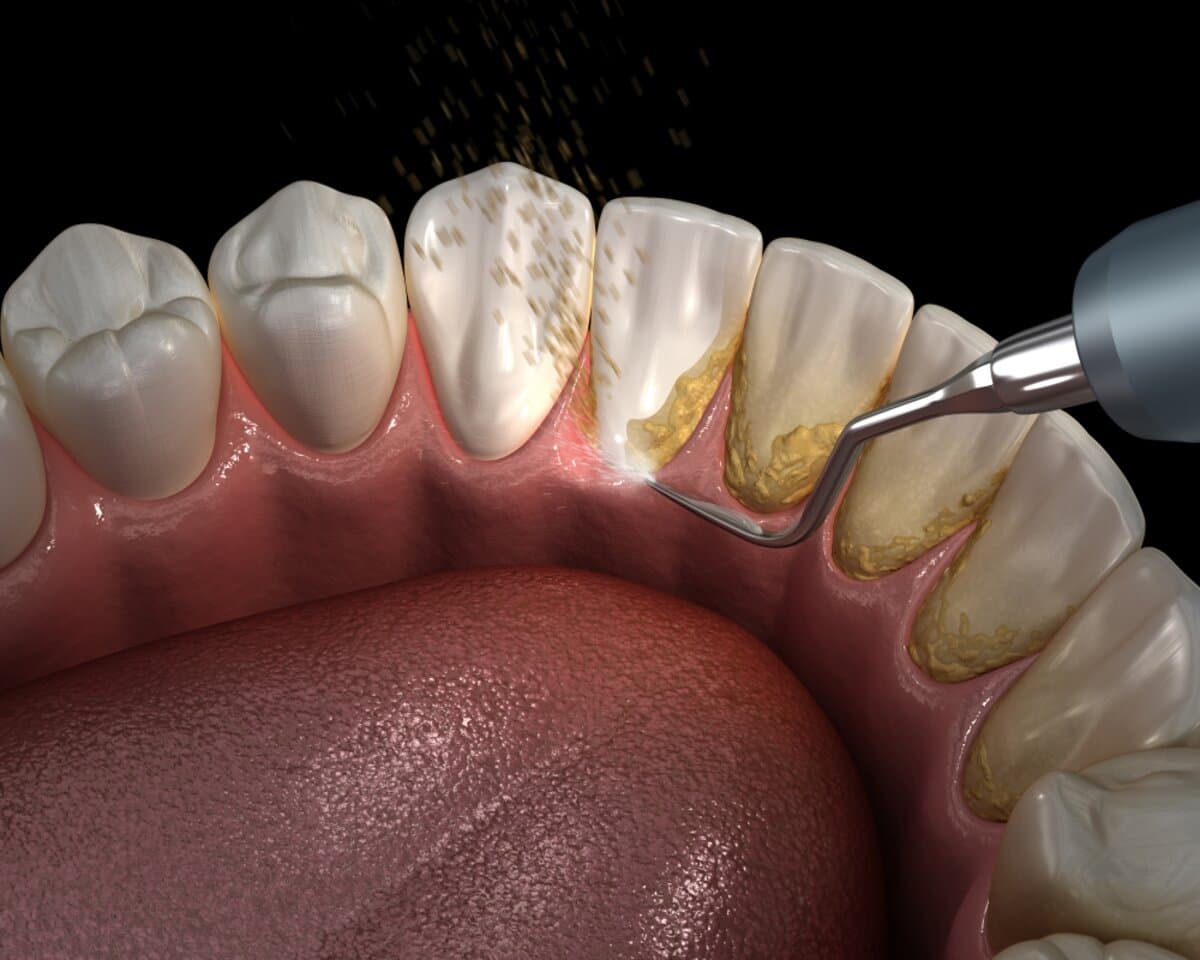
- Regular Dental Cleanings: Professional cleanings are essential for fighting surface stains. Our hygienist team at Tribeca Dental Studio can help keep your smile sparkling. Learn more in our Best Teeth Cleaning NYC – Tribeca Dental Studio Hygienist Team Guide.
How Lifestyle Choices Affect Your Whitening Results
What you eat and drink can significantly impact how long your smile stays bright.
- Staining Foods and Drinks: Coffee, tea, red wine, dark sodas, and berries contain pigments that cling to enamel and cause stains.
- Smoking and Tobacco Use: Nicotine and tar create stubborn stains that quickly diminish whitening results.
- Acidic Foods and Drinks: Acidic items like citrus and sodas can erode enamel. Thinner enamel reveals the yellowish dentin underneath and can attract more stains.
Tips for Long-Lasting Brightness
Incorporate these habits to keep your smile brilliantly white:
- Strategic Consumption: Drink staining beverages through a straw and rinse your mouth with water immediately after.
- Use a Whitening Toothpaste for Maintenance: A gentle, ADA-approved whitening toothpaste can help remove daily surface stains and maintain your shade.
- Regular Professional Cleanings: Schedule routine cleanings with us to remove extrinsic stains. Consider advanced cleaning techniques like Prophy Jet Polishing for superior stain removal.
- Avoid Staining Habits: Quitting smoking or tobacco use is one of the most effective ways to maintain your white smile and improve your overall health.
- Quick Touch-Ups as Needed: Periodic touch-ups with at-home kits can prolong your results. We can advise you on the best schedule.
Conclusion
Navigating effective teeth whitening can be confusing, but understanding the science and treatment options empowers you to make informed choices. We’ve covered the full spectrum of options—from powerful in-office treatments and dentist-prescribed kits to accessible OTC solutions—and debunked harmful DIY myths.
The key takeaway is the unparalleled safety and efficacy of professional treatments. A dentist’s guidance ensures the use of effective agents and custom solutions while protecting your gums and enamel. This oversight minimizes risks and maximizes your results for a brilliant, lasting smile.
Before starting any whitening journey, a dental consultation is crucial. This step allows us to assess your oral health, identify the cause of your discoloration, and tailor a treatment plan that is both effective and safe for your unique needs.
At Tribeca Dental Studio, we pride ourselves on a personalized approach to dentistry, treating each patient like family. We understand that a brighter smile can significantly boost confidence and we are here to guide you every step of the way. If you’re ready to achieve a dazzling, healthy smile in the heart of NYC, we invite you to experience the difference our expertise can make.
Book your whitening consultation today! We look forward to helping you uncover your best smile.