Understanding Your Options When a Tooth Breaks
A half tooth broken can fixed in most cases with modern dental techniques. Whether from an injury or biting something hard, dentists have multiple effective solutions to restore your tooth. Here’s what you need to know:
Quick Answer: Can a Half-Broken Tooth Be Fixed?
- Yes, most half-broken teeth can be repaired through various methods depending on severity.
- Minor breaks: Dental bonding or fillings (single visit).
- Moderate breaks: Dental crowns (protects and strengthens the tooth).
- Nerve exposure: Root canal therapy followed by a crown.
- Severe damage: Extraction and replacement with implants or bridges.
- Key action: See a dentist immediately to increase chances of saving your tooth.
A broken tooth can be alarming, causing sharp pain, sensitivity, or rough edges. Even without pain, a cracked tooth needs professional evaluation, as delaying treatment can lead to infection, further damage, or tooth loss.
Modern dentistry offers effective ways to restore damaged teeth. From simple 45-minute bonding procedures to crowns and root canals, your dentist can often save your natural tooth and restore your smile’s full function.
As Dr. Nina Izhaky, a graduate from New York University College of Dentistry, I’ve helped countless patients find that their half tooth broken can fixed through personalized treatment plans at my state-of-the-art practice in Tribeca. My team and I specialize in combining advanced dental technology with compassionate care to restore both function and confidence to your smile.
Key half tooth broken can fixed vocabulary:
Why Did My Tooth Break? Common Causes and Symptoms
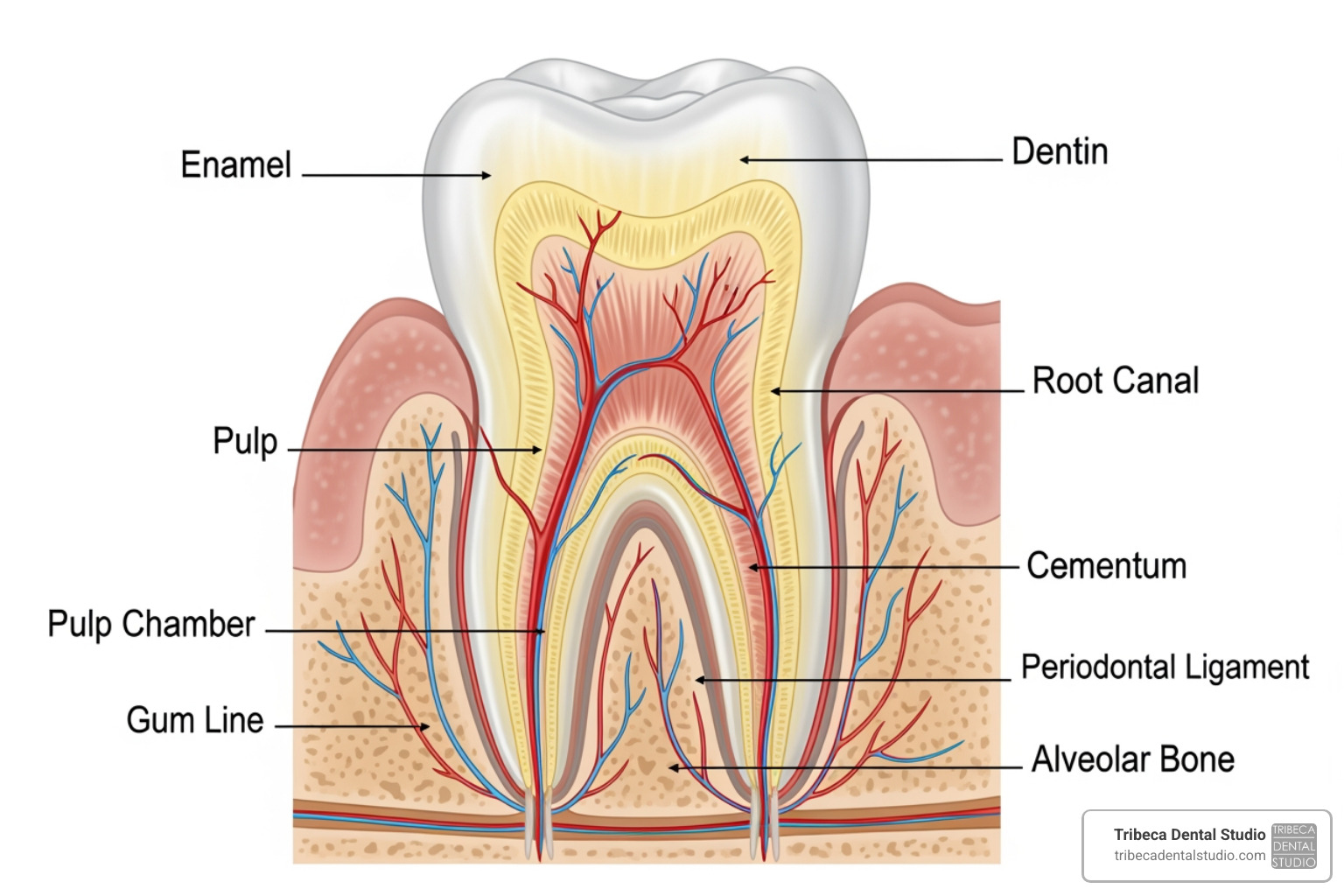
Understanding why your tooth broke can help prevent future incidents. Teeth are strong but have layers: hard outer enamel, softer dentin, and the inner pulp with nerves. A fracture occurs when these layers are compromised. Dental decay is a common culprit, as untreated cavities weaken teeth, making them susceptible to breaking.
Other factors can lead to a fractured tooth:
- Trauma or Injury: A sudden blow to the mouth from a sports injury, fall, or biting something hard can cause a tooth to break.
- Biting Hard Foods: Crunching on ice, hard candies, or popcorn kernels can exert immense pressure on teeth, leading to chips or fractures.
- Large Fillings: Large fillings can weaken teeth over time, and the remaining tooth structure may not be strong enough to withstand biting forces.
- Teeth Grinding (Bruxism): Unconscious teeth grinding, especially at night, wears down enamel and puts teeth under enormous pressure. A sore jaw or tooth sensitivity upon waking are common signs.
- Age-Related Wear: Years of use cause natural wear and tear. This cumulative stress, along with sudden temperature changes, can lead to weakened areas and fractures.
Recognizing the Signs and Symptoms
The signs of a broken tooth vary, but common indicators include:
- Visible Damage: A missing piece of tooth, a noticeable crack, or a jagged edge.
- Sharp Pain: Often an immediate symptom, especially if the break exposes the sensitive dentin or pulp.
- Temperature Sensitivity: Sudden, sharp pain when consuming hot or cold foods and drinks.
- Pain on Biting or Chewing: Discomfort when pressure is applied, which may be inconsistent.
- Rough Edges: Sharp edges that irritate your tongue, cheek, or gums.
- Gum Swelling or Irritation: Localized swelling or redness around the tooth.
- Discoloration: A tooth may darken if the pulp is damaged or infected.
If you have any of these symptoms, seek prompt dental attention. An untreated fracture can worsen, even if the pain subsides, leading to serious complications. Early assessment improves the chances of a successful repair. For more details, see these common Cracked teeth symptoms.
A Half Tooth is Broken, Can it be Fixed? Your Immediate Next Steps
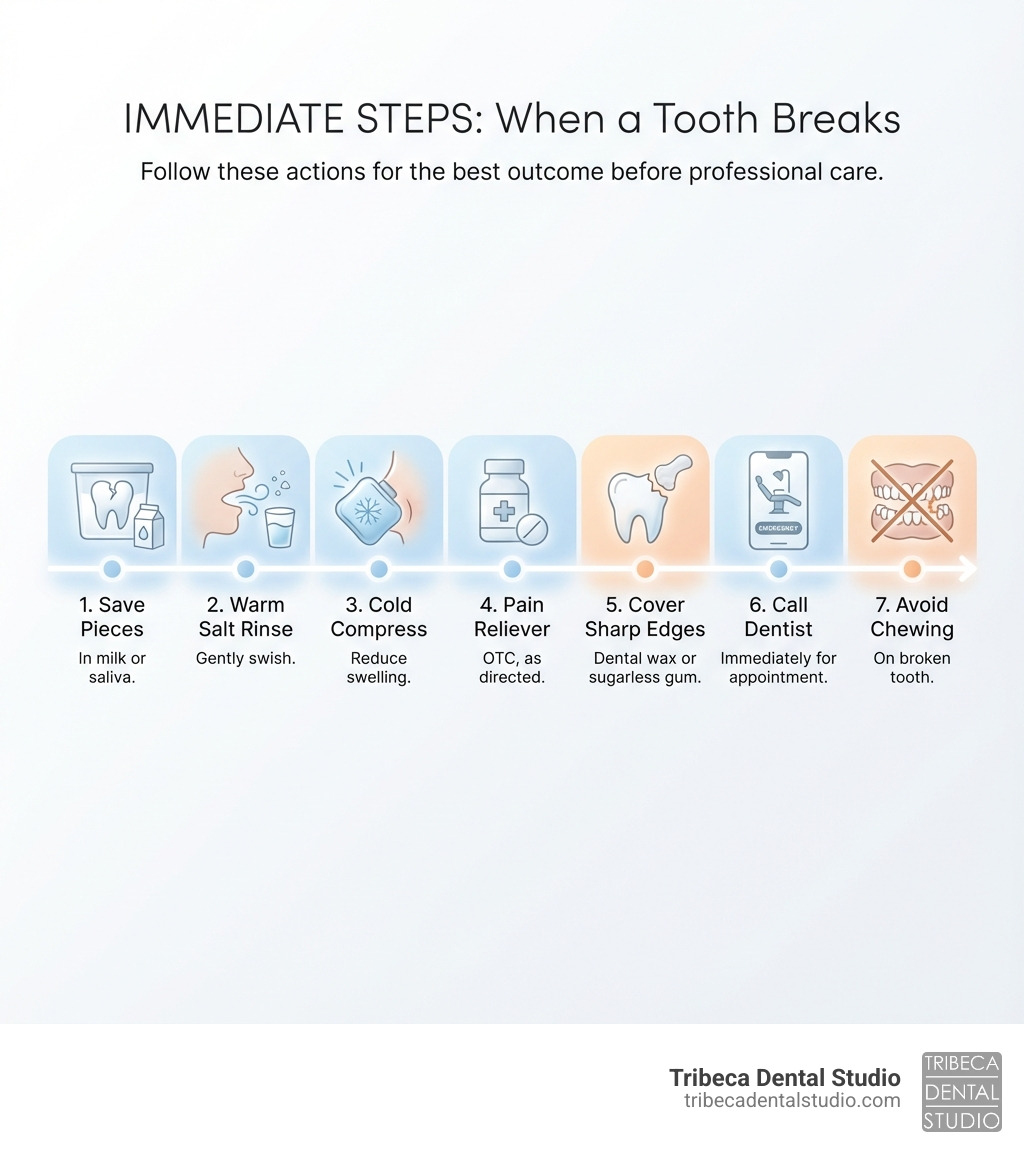
Finding a broken tooth is alarming. Your immediate actions can significantly impact the treatment’s success. A half tooth broken can fixed, but prompt action is key! Here’s what to do right away:
- Call Your Dentist Immediately: This is the most crucial step. Contact our Tribeca office for an emergency appointment. Prompt examination improves the outcome. For severe injuries with other facial trauma, go to an emergency room.
- Preserve Any Broken Fragments: If you find the broken piece, store it in milk, saliva, or saline solution. We can sometimes bond the original fragment back onto your tooth.
- Rinse Your Mouth: Gently rinse with warm salt water (half a teaspoon of salt in 8 ounces of water). This cleans the area and can ease swelling and pain.
- Manage Pain and Swelling: Take over-the-counter pain relievers like ibuprofen as directed. Apply a cold compress to the outside of your cheek to reduce swelling and numb the pain.
- Control Bleeding: Gently bite on clean gauze or a tea bag for 10-15 minutes. If bleeding is excessive and won’t stop, seek urgent medical care.
- Protect the Area: Cover sharp edges with sugarless gum or dental wax to prevent irritation to your tongue or cheek.
- Avoid Chewing on the Broken Tooth: Eat soft foods and avoid using the broken tooth to prevent further damage and discomfort.
Prompt action is paramount. Delaying treatment, even if painless, can lead to infection, nerve damage, or an abscess. Early intervention increases the chance of saving your tooth and avoiding more extensive procedures. A half tooth broken can fixed, but time is of the essence! For more information, visit Dental emergencies.
Your Path to Restoration: Professional Treatment Options
After taking immediate steps, professional assessment is next. At Tribeca Dental Studio, we’ll thoroughly examine your tooth, often using digital X-rays, to diagnose the damage. This helps us understand the fracture’s severity, location, and whether it involves the gum line or the tooth’s pulp.

The good news is a half tooth broken can fixed with modern restorative techniques. Our goal is to preserve your natural tooth, restore its function, and create a seamless look. The recommended treatment depends on the break’s severity. At Tribeca Dental Studio, we offer comprehensive Restorative Dentistry solutions for your needs.
How a half tooth broken can be fixed with bonding or fillings
For minor chips or small fractures on the outer enamel, we often recommend dental bonding or tooth-colored fillings. These options quickly and effectively restore the tooth’s appearance and function.
- Dental Bonding: This non-invasive procedure uses a tooth-colored composite resin applied and sculpted directly onto the broken tooth. It’s hardened with a special light, resulting in a seamless, natural-looking repair. Ideal for small chips, bonding can often be done in a single visit. It’s an excellent aesthetic solution for a minor break. Learn more in our guide to Composite Bonding vs. Composite Veneers.
- Tooth-Colored Fillings: For slightly larger breaks not involving the pulp, a tooth-colored filling can restore the missing part. Made of composite resin, these fillings match your tooth color, are durable, and can be done in one appointment. Learn more about our Dental Fillings in NYC: Natural, Durable, Aesthetic Restorations at Tribeca Dental Studio.
Repairing Significant Breaks with Dental Crowns
For a significant break where the tooth is severely weakened, a dental crown is often the ideal solution to ensure a half tooth broken can fixed securely.
- What is a Dental Crown?: A dental crown, or “cap,” is a custom covering that encases a damaged tooth. It restores the tooth’s shape, size, strength, and appearance. Made from durable materials like porcelain or zirconia, crowns are matched to your other teeth for a natural look.
- Why Choose a Crown?: Crowns are recommended for moderate to severe breaks to hold the tooth together and protect it from biting forces. Preparing a tooth for a crown is a permanent alteration.
- The Procedure: Getting a crown usually takes two visits. First, we prepare the tooth, take impressions for the lab to create your custom crown, and place a temporary crown. On the second visit, we cement the permanent crown, ensuring a perfect fit.
If you experience sensitivity after placement, learn more in our article on Crown Sensitive to Cold and Hot.
When the Nerve is Involved: Root Canal Therapy
If a severe break exposes or damages the dental pulp (the inner tissue with nerves), a half tooth broken can fixed often requires root canal therapy.
- Why is Root Canal Necessary?: Exposed pulp is vulnerable to infection, which can cause severe pain or an abscess. Root canal therapy saves the tooth by removing the infected or damaged pulp.
- The Root Canal Procedure: During a root canal, we clean the infected pulp from the tooth’s canals, disinfect the area, then fill and seal it. Modern techniques and anesthesia make the procedure as comfortable as a routine filling.
- Post-Root Canal Care: After a root canal, the tooth can become brittle. A dental crown is almost always recommended to protect and strengthen the tooth, restoring its function and ensuring a lasting solution.
When a half tooth broken can’t be fixed: Extraction
While we always try to save your natural tooth, sometimes the damage is too severe for repair. In these rare cases, extraction is the only option.
- When is Extraction Necessary?: Extraction may be needed for a vertical root fracture, a break extending deep below the gum line, or if the tooth is too compromised or infected to be saved.
- Replacement Options After Extraction: Losing a tooth affects chewing and speech. We offer excellent replacement solutions:
- Dental Implants: Considered the gold standard, an implant is a titanium post surgically placed in the jawbone to act as an artificial root, which is then topped with a crown.
- Dental Bridges: A bridge fills the gap of a missing tooth with an artificial tooth held in place by crowns on adjacent teeth.
- Partial Dentures: These are removable appliances with replacement teeth on a gum-colored base, offering an economical option.
We will discuss all replacement options to help you make the best choice for your oral health.
Recovery and Prevention: Life After a Broken Tooth
Once your half tooth broken can fixed, recovery and prevention are key to the longevity of your repaired tooth and the health of your entire smile.
Post-Treatment Care
Your recovery will depend on your treatment, but general guidelines include:
- Soft Diet: For a few days after procedures like crown placements, stick to soft foods and avoid chewing on the treated tooth.
- Pain Management: Some mild discomfort is normal and can be managed with over-the-counter pain relievers.
- Oral Hygiene: Continue brushing and flossing, but be gentle around the treated area. Good hygiene is critical for healing.
- Follow-Up Appointments: Keep all follow-up appointments so we can monitor your healing and check the restoration.
Preventing Future Fractures
Many tooth fractures are preventable. Here are our best tips:
- Wear a Mouthguard for Sports: A custom-fitted mouthguard is essential for contact sports to cushion against impact.
- Address Teeth Grinding (Bruxism): We can create a custom night guard to protect your teeth from the forces of grinding.
- Avoid Chewing on Hard Objects: Don’t chew on ice, hard candies, or other non-food items that can stress your teeth.
- Maintain Excellent Oral Hygiene: Regular brushing, flossing, and professional cleanings prevent cavities that weaken teeth.
- Regular Dental Check-ups: Consistent visits to our Tribeca office allow us to identify potential issues before they become major fractures.
Following these guidelines protects your entire smile. We offer a full range of Services to help you maintain optimal oral health.
Frequently Asked Questions about Fixing a Broken Tooth
It’s natural to have questions when a half tooth broken can fixed is the goal. Here are some common concerns.
How much does it cost to fix a broken tooth?
The cost to fix a broken tooth varies based on the damage and treatment type. A minor chip repaired with bonding is less expensive than a severe fracture requiring a root canal and a crown. Factors influencing cost include treatment type, materials used, case complexity, and your insurance coverage. We provide transparent pricing and will discuss all financial options and your benefits with you.
For more specific information, explore our page on Fractured Tooth Repair Cost.
Is fixing a broken tooth painful?
Your comfort is our priority at Tribeca Dental Studio. While the injury may be painful, the repair process generally is not. We use local anesthesia for procedures like fillings, crowns, or root canals to completely numb the area. Minor treatments like bonding may not even require anesthesia. Some mild post-treatment sensitivity is common but manageable with over-the-counter pain relievers. We use a gentle approach to ensure your experience is as comfortable as possible.
Can the original broken piece of my tooth be reattached?
Yes, in many cases, we can reattach the original broken piece if you find and preserve it properly. This is often the best-case scenario because it restores the tooth with its own natural structure. Success depends on the nature of the break and how quickly you get to our office. Store the fragment in milk, saliva, or a saline solution to keep it viable. If reattachment isn’t possible, we have other excellent restorative options like dental bonding or a crown.
Conclusion: Restore Your Smile with Confidence
A broken tooth is jarring, but the answer to “a half tooth broken can fixed?” is almost always yes. Modern dentistry offers solutions to repair damage and restore your tooth’s full function, strength, and beauty.
From simple composite bonding to protective dental crowns and root canal therapy, we have the expertise to help. Even if a tooth can’t be saved, replacement options like dental implants ensure your smile remains complete.
The most critical takeaway is to act immediately. Prompt dental attention is crucial to prevent a manageable problem from escalating into something more complex, like infection or tooth loss.
At Tribeca Dental Studio in NYC, Dr. Nina Izhaky and our team offer a personalized approach, treating you like family. We combine advanced techniques with a warm environment to restore your teeth and your peace of mind.
Don’t let a broken tooth compromise your health or confidence. Let us help you restore your smile. For more information, explore our Cosmetic Dentistry Options to Repair a Chipped Tooth.