Why Cavity Prevention Starts with Fluoride Treatment for Children
Fluoride treatment for children is one of the most effective tools available for preventing tooth decay — a condition that affects nearly half of all kids aged 2 to 19 in the United States.
Here’s what parents need to know at a glance:
- What it is: A professional application of fluoride (usually as a varnish) painted onto your child’s teeth to strengthen enamel and fight decay
- When to start: As soon as the first tooth appears, typically around 6–12 months of age
- How often: Every 6 months for most children; every 3–6 months for those at higher cavity risk
- Is it safe? Yes — when applied by a dental professional in the correct amount for your child’s age and size
- What it does: Reduces the risk of new cavities by up to 40% and helps rebuild early enamel damage before it becomes a full cavity
Tooth decay is the most common chronic disease in children in the United States. Yet it’s also one of the most preventable. Professional fluoride treatments, combined with good brushing habits and regular dental visits, give your child’s smile a powerful layer of protection right from the start.
I’m Dr. Nina Izhaky, a graduate of New York University College of Dentistry and the founder of Tribeca Dental Studio, where I’ve helped countless families understand the role fluoride treatment for children plays in building a healthy, cavity-free smile. With a full pediatric dentistry team on-site and a commitment to personalized, evidence-based care, I’m here to guide you through every step of your child’s oral health journey.
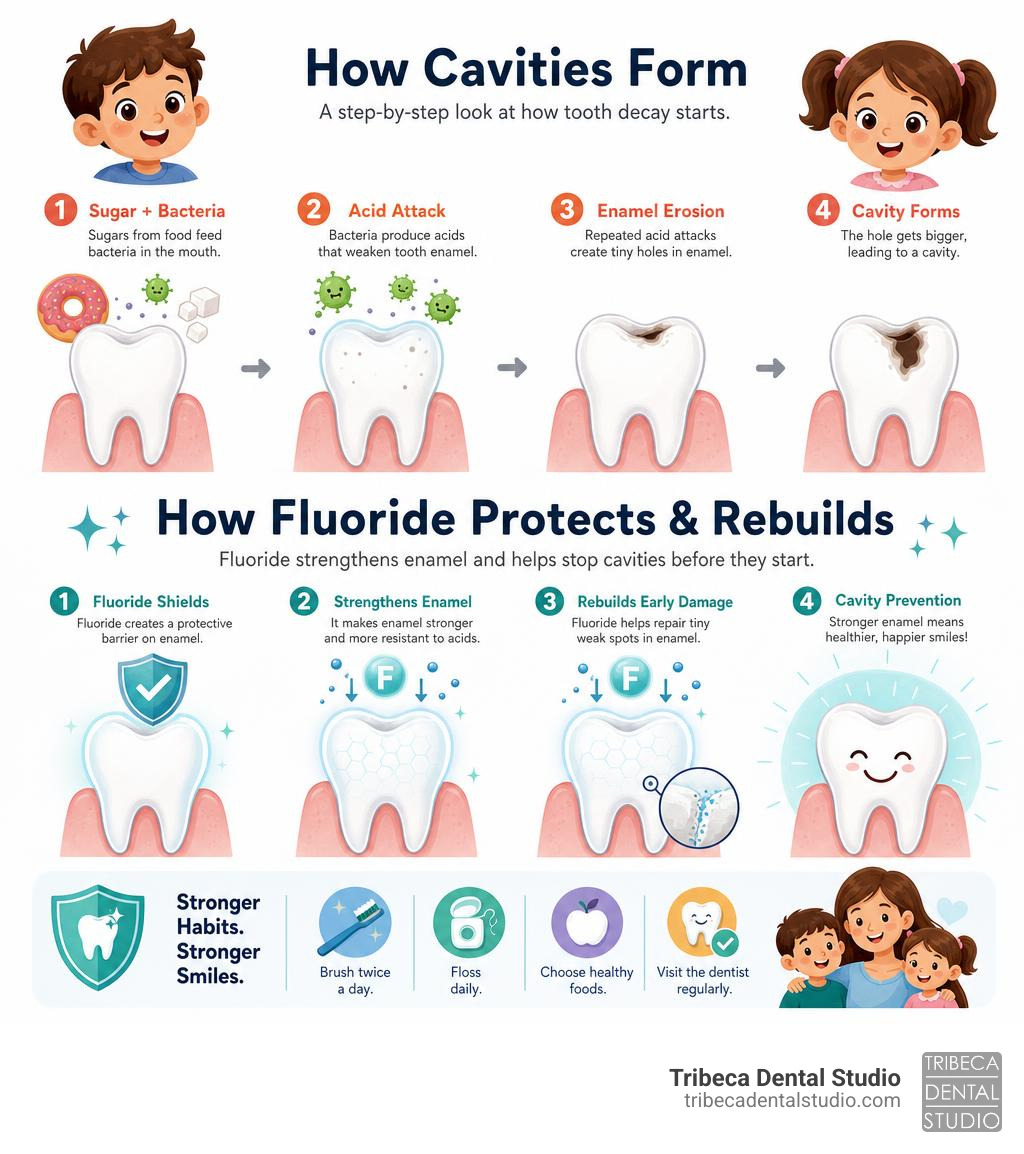
Fluoride treatment for children terms simplified:
What is Fluoride and How Does It Protect Young Teeth?
At its core, fluoride is a natural mineral found abundantly throughout nature — in our soil, plants, rocks, and water supplies. For decades, public health experts and dentists have recognized it as a cornerstone of oral health. But how exactly does a simple mineral protect your child’s teeth from the snacks, juices, and occasional treats they consume?
To understand fluoride, we first have to understand the constant tug-of-war happening on your child’s tooth enamel. Every day, the bacteria naturally living in the mouth feast on the sugars and refined carbohydrates in food. As they consume these sugars, they produce harmful acids. These acids strip away essential minerals from the protective outer layer of the teeth, a damaging process known as demineralization.
This is where fluoride steps in to save the day. Think of fluoride as a shield that actively repairs and reinforces this enamel layer. When fluoride is present in the mouth, it initiates remineralization. It acts like a magnet, attracting other vital minerals like calcium and phosphate back into the weakened areas of the enamel. This chemical reaction creates a new, mineral-rich surface called fluorapatite. This new surface is significantly harder and far more resistant to future acid attacks than the original tooth structure.
By strengthening the enamel and slowing down the ability of oral bacteria to produce acid in the first place, fluoride helps stop early decay in its tracks. To explore more about how we protect young teeth from decay in our Manhattan office, check out our guide on cavity prevention NYC and learn how we use advanced preventive dentistry techniques to keep smiles bright.
How Fluoride Rebuilds Enamel
When acid-producing bacteria run rampant, they can quickly turn minor mineral loss into a full-blown cavity. According to national health statistics, the prevalence of total caries (which includes both treated and untreated decay) is a staggering 46% among children aged 2 to 19. Even more concerning is that about 13% of children in this same age group have untreated cavities.
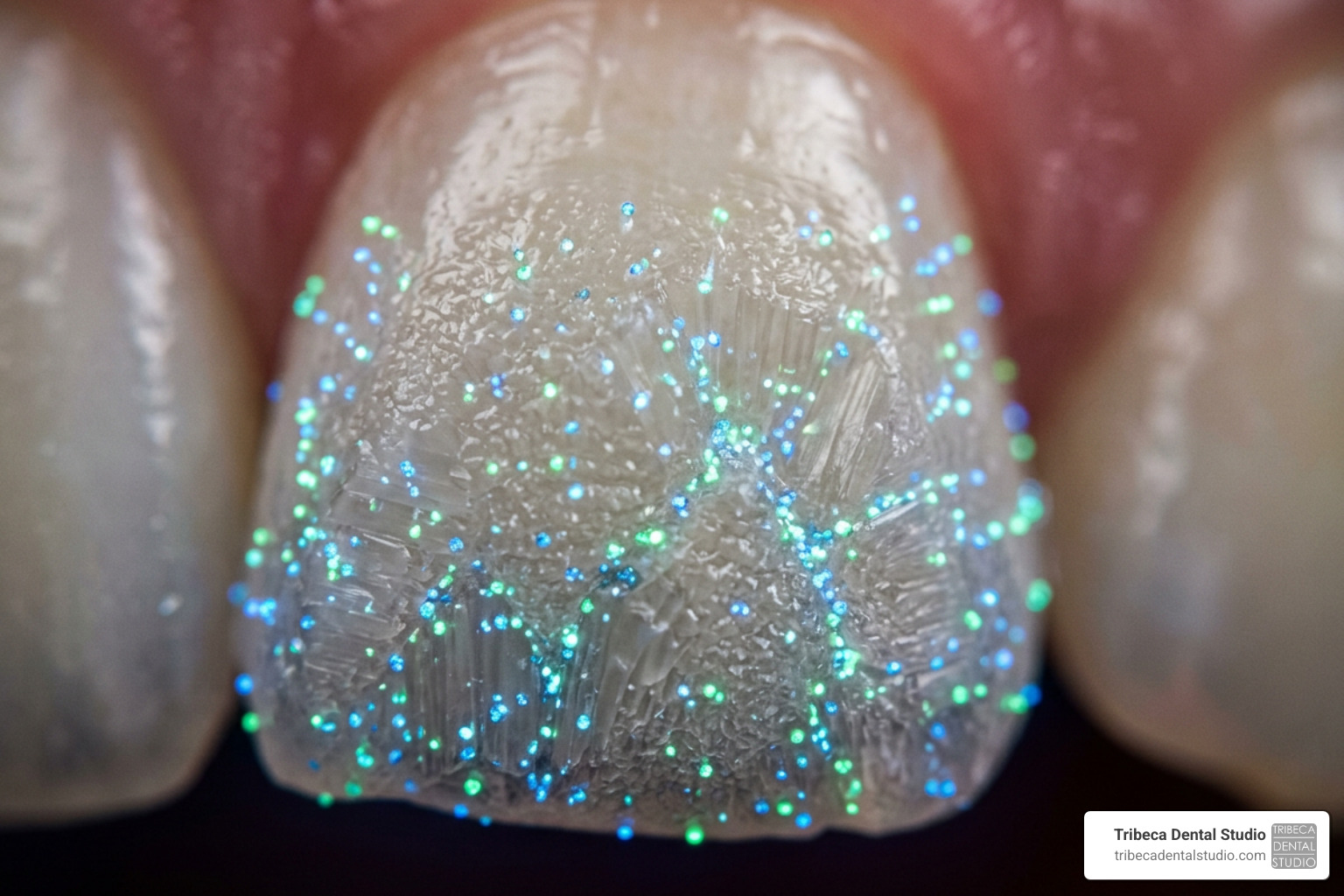
By introducing professional topical fluoride, we can dramatically alter this trajectory. The process of rebuilding enamel is dynamic:
- Neutralizing the Threat: Fluoride reduces the amount of acid that oral bacteria can produce.
- Rebuilding the Surface: It continuously deposits calcium and phosphate ions back into the microscopic pores of the teeth.
- Halting Early Lesions: If a child has very early signs of a cavity (which often look like chalky white spots on the teeth), consistent topical fluoride can actually reverse this damage, saving the tooth from needing a traditional dental filling.
For a deeper dive into the clinical research supporting these mechanisms, you can read the official AAPD Guideline on Fluoride Therapy.
Systemic vs. Topical Fluoride
Fluoride works through two distinct delivery methods: systemic and topical. Both play a vital role, but they protect the teeth in completely different ways.
- Systemic Fluoride (Ingested): This refers to fluoride that is swallowed. Once ingested, it enters the bloodstream and becomes incorporated into the developing permanent teeth of infants and toddlers before they even erupt through the gums. The most common source of systemic fluoride is fluoridated tap water. For children who do not have access to fluoridated water and are at a very high risk of decay, dentists or pediatricians may prescribe systemic supplements, such as drops or chewable tablets. You can read more about these prescription options on the official Label: FLUORIDE- sodium fluoride tablet, chewable.
- Topical Fluoride (Applied Directly): This is fluoride applied directly to the outer surfaces of the teeth already present in the mouth. It provides a highly concentrated, localized defense. Common daily sources of topical fluoride include over-the-counter fluoride toothpastes and mouth rinses.
While systemic fluoride is highly beneficial during the early years of tooth development, clinical consensus emphasizes that the topical effect of fluoride is actually the most important over a person’s lifespan. This is why professional, high-concentration topical treatments in a dental office are so essential, even for children who drink fluoridated water.
Professional Fluoride Treatment for Children: Age, Frequency, and Varnish
When you bring your child to Tribeca Dental Studio, their preventive care will likely include a professional topical fluoride application. In the past, dental offices used foam or gel placed into uncomfortable, bulky trays that children had to bite down on for several minutes. Today, the gold standard in pediatric dentistry is fluoride varnish.
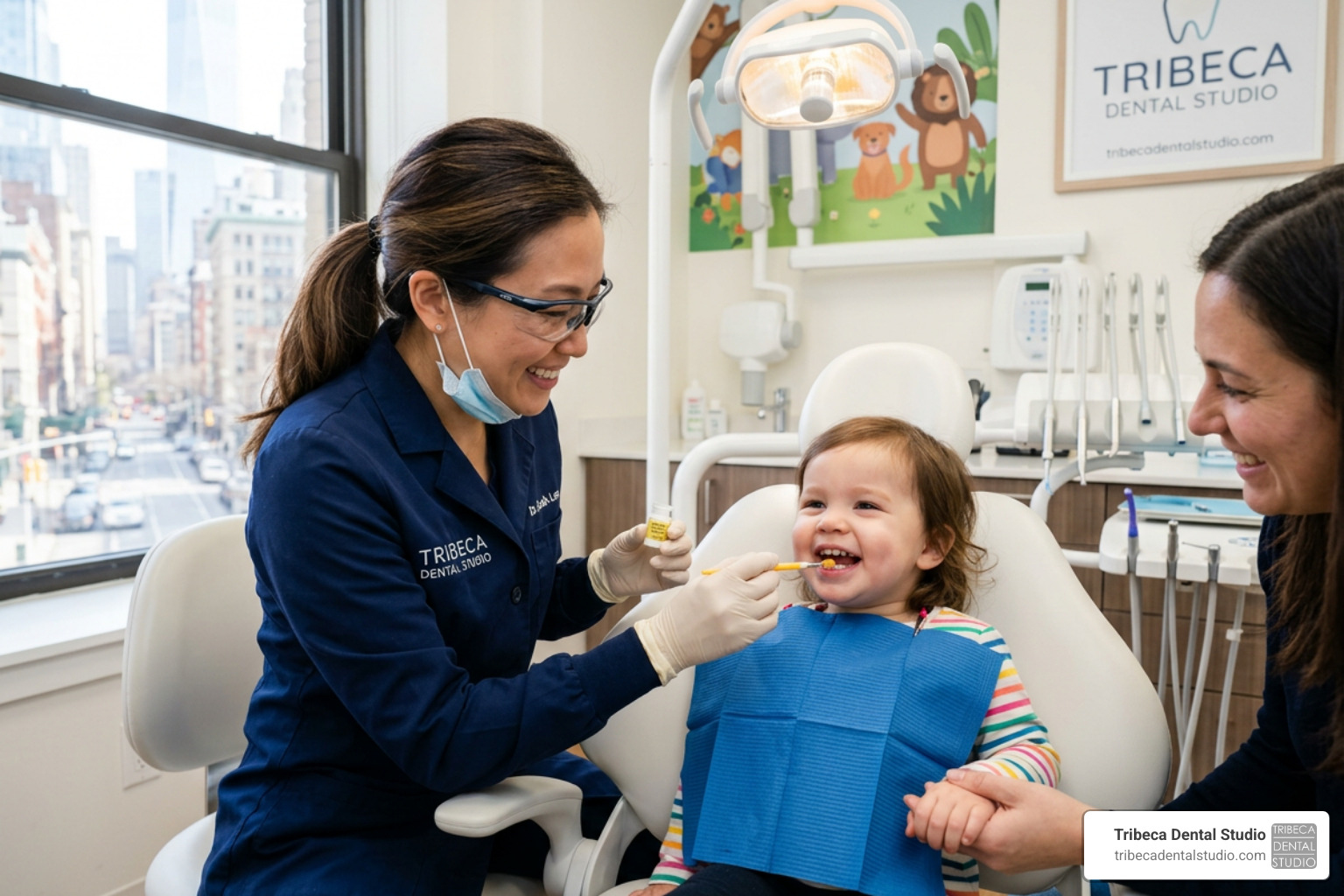
Fluoride varnish is a highly concentrated, sticky lacquer containing 5% sodium fluoride (22,600 ppm). Our pediatric dental specialists apply it using a tiny, soft brush. We gently paint it onto the front, back, and chewing surfaces of the teeth. The entire process takes less than a minute, is completely painless, and has a pleasant taste that kids love.
The magic of varnish is that it sets instantly when it comes into contact with saliva. This means your child doesn’t have to sit still with trays in their mouth, and there is virtually zero risk of them accidentally swallowing the product. Once applied, the varnish remains on the teeth for several hours, providing a slow, continuous release of fluoride directly into the enamel. To understand how we integrate this into our customized preventive plans, read everything you need to know about fluoride treatment.
When to Start and How Often to Get a Fluoride Treatment for Children
The American Academy of Pediatric Dentistry (AAPD) and the American Academy of Pediatrics (AAP) recommend that a child’s first professional fluoride varnish application should occur as soon as their first primary tooth erupts, which is typically between 6 and 12 months of age.
For the vast majority of children, we recommend receiving a professional fluoride treatment for children every 6 months during their routine dental cleanings. However, if a child is determined to be at a moderate-to-high risk for dental caries — due to factors like diet, genetic enamel variations, deep tooth grooves, or a history of cavities — we may recommend increasing this frequency to every 3 to 6 months.
Starting these visits early is about more than just applying varnish; it’s about helping your child build confidence in the dental chair. You can prepare for these milestones by exploring the importance of early dental care and what to expect during a baby’s first dentist visit NYC.
Why Fluoride Varnish is Highly Effective for Preschoolers
Preschool-aged children are particularly vulnerable to rapid tooth decay because their baby teeth have thinner enamel than adult teeth. This is where fluoride varnish shines as an incredibly cost-effective, evidence-based preventive tool.
Clinical studies show that regular fluoride varnish applications can reduce the risk of developing new cavities by up to 40% in primary teeth. In fact, public health simulations show that applying fluoride varnish regularly would reduce the percentage of 7½-year-old children with tooth decay from 63% down to 40%.
Beyond the clinical benefits, it makes immense financial sense. Preventing a cavity with a simple varnish application is infinitely cheaper and less stressful for a child than treating a deep cavity with fillings, pediatric crowns, or root canals. Public health data shows that providing preventive care like fluoride varnish can save families and healthcare programs significant amounts in future dental treatment costs. For more detail on these preventive guidelines, you can consult the Clinical Guideline on Fluoride Therapy.
Addressing Safety Concerns, Fluorosis, and Fluoride Refusal
It is completely natural for parents to have questions about the safety of any treatment their child receives. There is a lot of conflicting information online about fluoride. At Tribeca Dental Studio, we believe in open, honest, and evidence-based conversations to help you make the best decisions for your family.
When administered by trained dental professionals using precise, age-appropriate dosages, fluoride is incredibly safe. Major global health organizations, including the World Health Organization (WHO), the American Dental Association (ADA), and the AAP, strongly endorse its use. To review the comprehensive primary care safety guidelines, you can reference the AAP Guideline on Fluoride Use in Caries Prevention.
Understanding Dental Fluorosis and Dosage Control
The most common side effect associated with fluoride is dental fluorosis. Fluorosis is not a disease and does not affect the health or function of the teeth. Instead, it is a cosmetic condition that causes faint, white streaks or spots to appear on the enamel of permanent teeth.
Fluorosis only occurs if a child regularly ingests excessive amounts of fluoride during the critical years of enamel formation (specifically under the age of 8, with the highest risk window for permanent front teeth occurring around age 2). It is almost always caused by children swallowing adult-strength fluoride toothpaste or taking unnecessary systemic supplements.
To prevent fluorosis while still giving your child the cavity-fighting benefits of fluoride, we recommend following strict dosage guidelines at home:
- For Children Under 3 Years: Use a tiny “smear” of fluoride toothpaste (about the size of a single grain of rice). This minimizes the amount of fluoride they might swallow while still offering topical protection.
- For Children Aged 3 to 6 Years: Use a “pea-sized” amount of fluoride toothpaste.
- Supervised Brushing: Always supervise your child’s brushing sessions until they are at least 8 years old to ensure they are spitting out the excess toothpaste rather than swallowing it.
Evidence-Based Alternatives to Professional Fluoride Treatment for Children
If you prefer to avoid professional fluoride treatments, or if your child has an allergy to a specific varnish ingredient, there are several highly effective, evidence-based alternatives and complementary treatments we can use to protect their teeth:
- Dental Sealants: These are thin, protective plastic coatings painted onto the chewing surfaces of the permanent molars. Sealants act as a physical barrier, keeping food particles and bacteria out of the deep grooves where 90% of childhood cavities occur. If you want to learn more about how sealants protect teeth, read our dental sealants Chelsea guide.
- Glass Ionomer Sealants: These are specialized sealants that naturally release a low level of protective minerals over a period of two to three years, helping to keep the surrounding enamel strong.
- Silver Diamine Fluoride (SDF): A liquid medication painted directly onto active decay. The silver acts as an antimicrobial agent to kill bacteria, while the fluoride hardens the tooth structure, halting the cavity’s progress without requiring drilling.
- Dietary Modification and Sugar Reduction: Minimizing your child’s intake of sticky, sugary, and highly acidic foods (like fruit snacks, sodas, and juices) is one of the most powerful ways to naturally prevent decay.
How Dentists and Parents Can Navigate Fluoride Hesitancy
We recognize that about 13% of parents have expressed hesitation or refused professional fluoride treatments during medical or dental visits. Often, this hesitation comes from a place of deep care and a desire to protect their child from perceived risks.
At Tribeca Dental Studio, we never pressure or judge families who are hesitant about fluoride. Instead, we use a collaborative, patient-centered approach:
- We Listen First: We want to hear your specific concerns without interrupting.
- We Assess Individual Risk: We look at your child’s unique oral health, diet, and water source to determine their actual cavity risk.
- Shared Decision-Making: If you decide against fluoride, we will work with you to implement alternative strategies — like sealants, meticulous brushing habits, and dietary changes — to keep your child’s smile safe and healthy.
Frequently Asked Questions About Fluoride for Kids
Does bottled water contain fluoride?
Generally, no. Most commercially bottled waters contain negligible or undetectable amounts of fluoride, unless the manufacturer has specifically added it and labeled the bottle accordingly. If your family primarily drinks bottled water rather than NYC tap water (which is optimally fluoridated at 0.7 ppm), your child may not be receiving the systemic benefits of fluoridated water. Be sure to let us know during your visit so we can tailor their topical care to compensate.
What should I do if my child swallows fluoride toothpaste?
If your child swallows a normal, daily brushing amount of fluoride toothpaste, there is no need to panic. Their body will process it safely. However, if your child consumes a large quantity of toothpaste directly from the tube, they may experience mild stomach upset, nausea, or vomiting.
If you suspect they have ingested a large amount (more than a standard brushing dose), give them a glass of milk or a slice of cheese. The calcium in dairy products binds to fluoride in the stomach, reducing its absorption. For peace of mind, store all toothpaste out of reach of young children and contact Poison Control or our office if you have concerns.
Is fluoride varnish cost-effective for preventing cavities?
Yes, professional fluoride varnish is highly cost-effective. A single application is a minor investment that can prevent the need for expensive restorative treatments.
Conclusion
Preventive dental care is the greatest gift you can give your child’s growing smile. By combining routine home habits, a balanced diet, and professional interventions like fluoride treatment for children, we can pave the way for a lifetime of healthy, confident smiles.
At Tribeca Dental Studio in Manhattan, Dr. Nina Izhaky and our compassionate pediatric dental team are dedicated to providing a warm, family-centered environment where your child feels safe and empowered. We design every treatment plan around your family’s unique preferences and your child’s specific clinical needs.
Ready to give your child’s smile the ultimate shield against decay? Schedule a pediatric dentistry visit in NYC with us today!