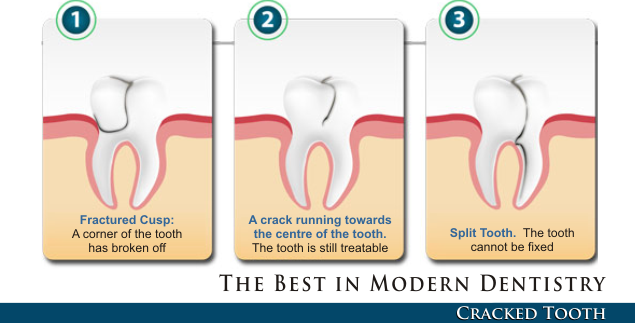
What to Do When You Have a Broken Dental Crown
Fixing a broken crown tooth is something that needs to happen quickly — but it doesn’t have to be a crisis.
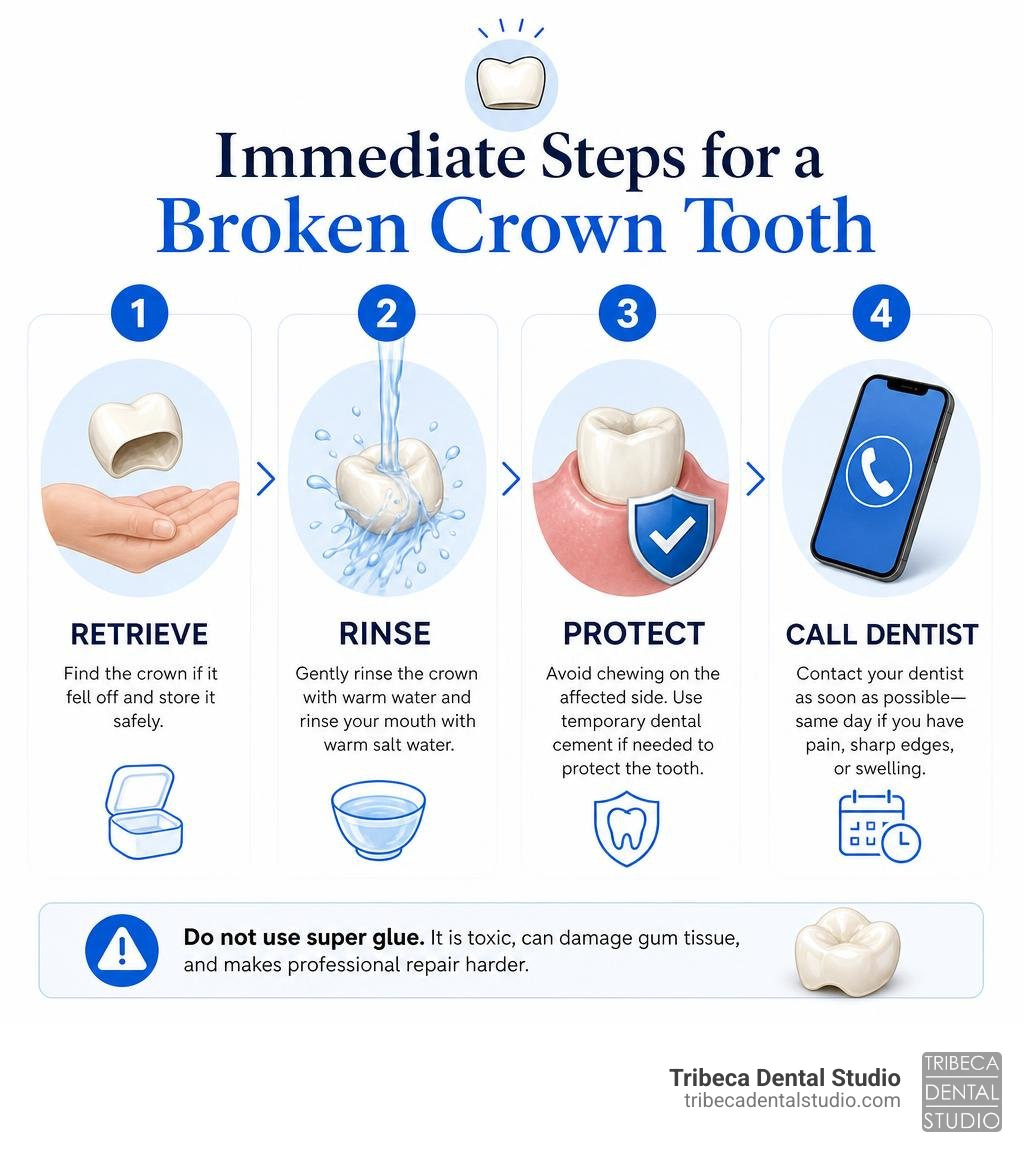
Here’s what to do right now:
- Retrieve the crown if it fell off, rinse it gently with warm water, and store it safely.
- Rinse your mouth with warm salt water to reduce inflammation.
- Avoid chewing on the affected side.
- Use over-the-counter temporary dental cement (like Dentemp) to protect the exposed tooth if you can’t get to a dentist immediately.
- Call your dentist as soon as possible — same day if you have pain, sharp edges, or swelling.
Do not use super glue. It is toxic, can damage gum tissue, and makes professional repair harder.
Dental crowns typically last between 5 and 15 years. Even well-maintained crowns can crack, chip, or loosen over time due to grinding, trauma, hard foods, or decay under the crown. In fact, up to 15% of implant-supported crowns require repair or replacement within the first 10 years.
The good news? Most broken crowns are fixable — and acting fast gives you the best chance of a simple, affordable repair rather than a full replacement.
I’m Dr. Nina Izhaky, a graduate of New York University College of Dentistry and founder of Tribeca Dental Studio, where fixing a broken crown tooth is one of the most common emergencies I treat using the latest digital dentistry tools. In the sections below, I’ll walk you through every step — from what to do in the next five minutes to your long-term options.
Relevant articles related to fixing a broken crown tooth:
Why Dental Crowns Break and the Risks of Delay
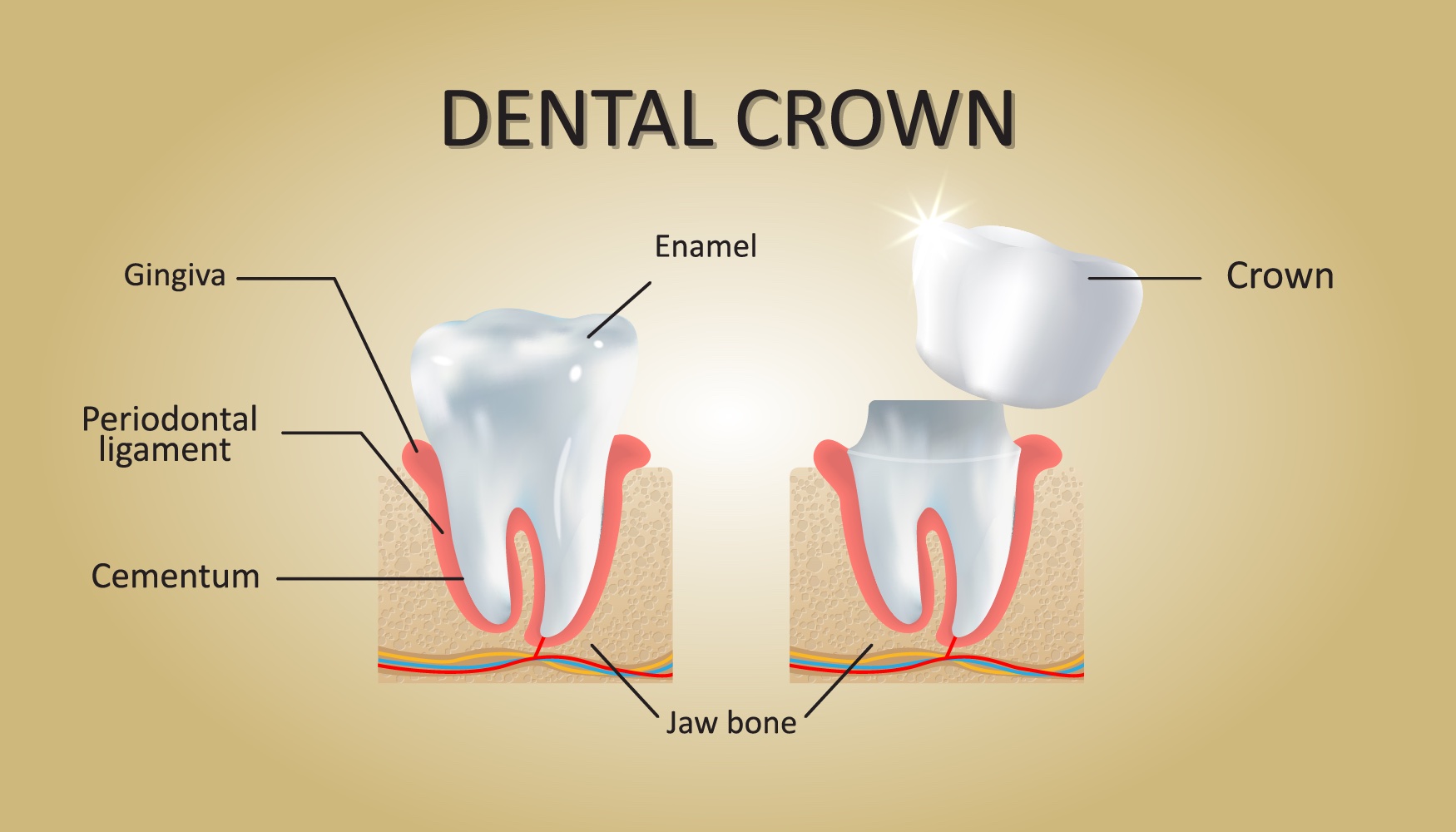
While dental crowns are designed to act like durable “little helmets” for your teeth, they are not completely indestructible. Over time, the daily forces of chewing, speaking, and living can take their toll. Understanding why a crown breaks can help you prevent it from happening again, and more importantly, understand why you shouldn’t put off getting it looked at by a professional.
Here are the most common culprits behind a broken or dislodged dental crown:
- Bruxism (Teeth Grinding and Clenching): This is one of the leading causes of premature crown failure. Grinding your teeth at night exerts immense pressure on your restorations, often leading to microscopic fractures that eventually turn into visible cracks or chips.
- Accidental Trauma: A sudden blow to the face during sports, an accidental fall, or biting down on an unexpectedly hard object (like a stray popcorn kernel, hard candy, or ice) can instantly fracture porcelain.
- Underlying Decay: While a porcelain or metal crown itself cannot decay, the natural tooth structure underneath it absolutely can. If bacteria sneak past the margin where the crown meets your gum line, a cavity can form. This weakens the foundation holding the crown, causing the cement to fail and the crown to loosen or break. For a deeper look at this process, check out our guide on Why Does a Crowned Tooth Hurt Years Later? Causes, Symptoms, and Treatments.
- Wear and Tear: Dental cement naturally degrades over time due to the acidic environment of the mouth and constant chewing forces. If your crown is over a decade old, it may simply have reached the end of its natural lifespan.
The Risks of Delaying Treatment
If your crown breaks or falls off, you might be tempted to ignore it, especially if it doesn’t hurt. However, delaying treatment is highly risky.
When a crown is damaged or missing, the prepared “stump” of your natural tooth is left completely exposed to the elements. This underlying dentin is highly porous and sensitive. Without its protective shield, you are highly likely to experience a Crown Sensitive to Cold and Hot.
More seriously, an exposed tooth is incredibly vulnerable to bacterial invasion, rapid decay, and deep structural infections. What could have been a simple, quick re-cementing appointment can quickly turn into a situation requiring a root canal or even a complete tooth extraction if the underlying structure fractures beyond repair.
Immediate Steps: What to Do Right Now
If you have just experienced a broken crown, take a deep breath. While it feels like a major emergency, it is a highly manageable situation if you follow a few structured steps:
- Step 1: Assess and Clean the Area: Carefully check your mouth. If there are loose pieces of porcelain or metal, gently remove them so you don’t accidentally swallow or inhale them. Rinse your mouth thoroughly with lukewarm water.
- Step 2: Retrieve and Save the Crown: If the crown has come off completely in one piece, save it! Place it in a clean, dry container or a plastic zip-lock bag. In many cases, if the crown is fully intact and the underlying tooth is healthy, we can clean it and re-cement it back into place, saving you the time and expense of a brand-new restoration.
- Step 3: Keep It Clean with Salt Water: Mix half a teaspoon of salt into a glass of warm water and rinse gently. Salt water is a natural disinfectant that helps soothe irritated gum tissue and keeps bacteria away from the exposed tooth.
- Step 4: Manage Any Discomfort: If you are experiencing mild pain or sensitivity, over-the-counter pain relievers such as ibuprofen or acetaminophen can help. You can also apply a tiny dab of clove oil to the exposed tooth using a cotton swab to naturally numb the area.
Temporary Steps Before Fixing a Broken Crown Tooth
If you cannot see us immediately—for instance, if your crown breaks over a weekend or while you are traveling away from Manhattan—there are safe, temporary measures you can take to protect your tooth.
- Use Pharmacy Dental Cement: You can purchase temporary dental cement (such as Dentemp) or dental wax at most local NYC pharmacies. If your crown is intact, you can clean the inside of it, apply a tiny amount of this temporary cement, and gently press it back onto your tooth. Bite down softly on a piece of gauze for about 30 seconds to let it set.
- Use Dental Wax for Sharp Edges: If your crown chipped but is still firmly attached to your tooth, the remaining edges can be sharp and irritating to your tongue and cheeks. Cover the jagged area with a small ball of orthodontic dental wax to prevent painful cuts.
- Strictly Avoid Super Glue: We cannot emphasize this enough: never use super glue or household adhesives to fix a dental crown. These products contain toxic chemicals that can permanently damage your tooth’s nerve and severely irritate your gum tissue. Furthermore, household glues do not wash off easily, meaning we may have to destroy the crown entirely to remove it once you reach our office.
- The Safe Timeline: Temporary drugstore cement is only designed to last 24 to 48 hours. It does not seal out bacteria completely. You should still aim to see us within 1 to 2 days of the breakage to ensure your tooth remains healthy.
Professional Options for Fixing a Broken Crown Tooth
When you arrive at Tribeca Dental Studio, our first step is always to take digital X-rays and perform a thorough evaluation. We want to see exactly what is happening to the tooth structure beneath the crown before deciding on the best course of action.
Depending on the severity of the damage, we will recommend one of the following professional treatments:
| Treatment Option | Best Suited For | What the Procedure Involves | Expected Lifespan |
|---|---|---|---|
| Re-Cementation | Intact crowns that have simply come loose due to cement failure. | Cleaning the crown and tooth, applying professional-grade adhesive, and bonding it back. | Varies (often several years if tooth is healthy) |
| Dental Bonding | Minor chips or cracks on porcelain crowns where the structure is still strong. | Applying tooth-colored composite resin to the chipped area and curing it with a special light. | 1 to 3 years (temporary to semi-permanent) |
| Dental Onlay | Medium-sized damage where a portion of the crown is broken but the rest is stable. | Fabricating a custom porcelain piece that fits perfectly into the missing section. | 5 to 10+ years |
| Full Replacement | Large fractures, crowns with decay underneath, or poorly fitting older crowns. | Removing the old crown, cleaning the tooth, taking a digital impression, and placing a new crown. | 5 to 15+ years |
If you have a minor chip on a front tooth, we can often utilize composite bonding to smooth out the surface and restore your smile’s aesthetics in a single visit. To learn more about how we handle these minor repairs, read our article on Chipped Crown: What to Do When Your Dental Work Needs a Fix.
Conversely, if the damage is more extensive but doesn’t require a full crown, we might recommend a more conservative option. You can explore this choice further in our guide on When to Choose an Onlay Over a Full Crown.
What to Expect When Fixing a Broken Crown Tooth
If your crown is beyond repair and requires a full replacement, we want to make the process as comfortable, seamless, and efficient as possible.
The material of your new crown plays a massive role in both its durability and cosmetic appearance:
- Zirconia: Known as the “ironman” of dentistry, zirconia is incredibly strong and highly resistant to fracturing, making it the premier choice for back teeth and patients who grind their teeth.
- Porcelain / Ceramic: These materials offer unmatched, lifelike translucency and color-matching, making them ideal for highly visible front teeth. To see how these advanced materials can elevate your smile, check out our guide on Beyond Repair: How Cosmetic Crowns Transform Your Teeth.
At Tribeca Dental Studio, we utilize state-of-the-art CAD/CAM (Computer-Aided Design/Computer-Aided Manufacturing) technology. In many cases, this allows us to design, mill, and place a custom, high-strength ceramic crown in just a single visit, completely eliminating the need for messy impressions, uncomfortable temporary crowns, or multiple appointments.
For a comprehensive overview of our crown services, you can visit our Dental Crowns & Bridges service page. If you are curious about how academic institutions or specialized clinics handle porcelain repairs, you can also read about How to repair a chipped crown.
The Cost of Emergency Crown Care
We believe in complete transparency when it comes to dental costs. Facing an unexpected dental emergency in NYC can feel stressful, but understanding the typical price ranges and your insurance options can help you plan effectively.
Here is a general breakdown of typical costs for fixing a broken crown tooth in the Manhattan area:
- Emergency Consultation & Digital X-Rays: $110 to $350 (often covered fully or partially by insurance as diagnostic care).
- Emergency Re-Cementation: $100 to $300 (for an intact crown that just needs to be glued back on).
- Composite Bonding / Minor Repair: $150 to $400.
- Brand-New Custom Dental Crown: $800 to $3,000 (averaging around $1,900 in NYC, depending heavily on the material chosen and the complexity of the underlying tooth restoration).
For a detailed look at pricing structures, material options, and how to maximize your dental budget, we highly recommend reading our localized guide on Dental Crown Cost NYC: From Porcelain to Same-Day Savings.
Insurance Coverage and Financing
Most dental insurance plans view a broken crown as a medically necessary procedure rather than cosmetic, meaning they will typically cover up to 50% of the cost of a replacement crown (after your deductible is met), up to your annual maximum. That many insurance policies have a “replacement limit,” meaning they may only cover a new crown on the same tooth once every 5 to 7 years.
To help navigate these complex guidelines, check out our resource on Dental Crown Cost: Average Prices and Insurance Tips. We also offer flexible, in-office financing options and accept third-party payment plans like CareCredit to ensure you can get the emergency care you need without delay.
Frequently Asked Questions
Can a crown fall off without breaking?
Yes, absolutely. A dental crown can detach completely without sustaining any physical damage. This most commonly happens when the dental cement beneath the crown naturally degrades over time, or if a microscopic cavity develops at the margin, weakening the bond.
If your crown falls off intact and your underlying tooth is still strong, we can often simply clean and re-cement it.
What happens if I accidentally swallow my crown?
If you accidentally swallow your dental crown while eating, try not to panic. In the vast majority of cases, the smooth, small crown will pass safely through your digestive system within a few days without causing any internal harm.
However, if you experience any shortness of breath, coughing, or chest pain immediately after swallowing it, seek emergency medical care right away, as this could indicate that the crown was inhaled into your airway rather than swallowed. If it has passed safely, you will simply need to visit us so we can fabricate a replacement.
How can I prevent my dental crown from breaking in the future?
The best way to protect your investment is through proactive daily habits:
- Wear a Custom Nightguard: If you clench or grind your teeth at night, a custom-fitted nightguard is the absolute best way to cushion your restorations from extreme forces.
- Maintain Excellent Oral Hygiene: Brush twice daily with a soft-bristled toothbrush and floss carefully around the margins of your crown to prevent decay from forming underneath.
- Avoid Using Your Teeth as Tools: Never use your teeth to open packaging, bite your nails, or chew on ice.
- Keep Up with Regular Checkups: Visiting us every six months allows us to monitor the integrity of your crowns and catch tiny issues before they turn into major breaks.
To learn more about receiving top-tier restorative care in the city, check out our dedicated page on Manhattan Dental Crowns.
Conclusion
A broken or dislodged dental crown can certainly disrupt your day, but with prompt professional care, it is a problem that can be solved quickly and comfortably. At Tribeca Dental Studio, Dr. Nina Izhaky and our warm, welcoming team treat every patient like family. We combine a personalized, compassionate approach with the most advanced dental technology in Manhattan to restore your smile’s function and beauty seamlessly.
If you are dealing with a chipped, cracked, or missing crown, don’t wait for pain or infection to set in. Schedule a consultation to repair your chipped tooth with us today, and let us help you get back to smiling with confidence!