The Lifespan of Dental Implants: A Guide to Durability
June 24, 2026
How Long Implants Last — and What That Means for You
How long implants last is one of the first questions patients ask — and it’s a smart one before committing to any tooth replacement.
Here’s the short answer:
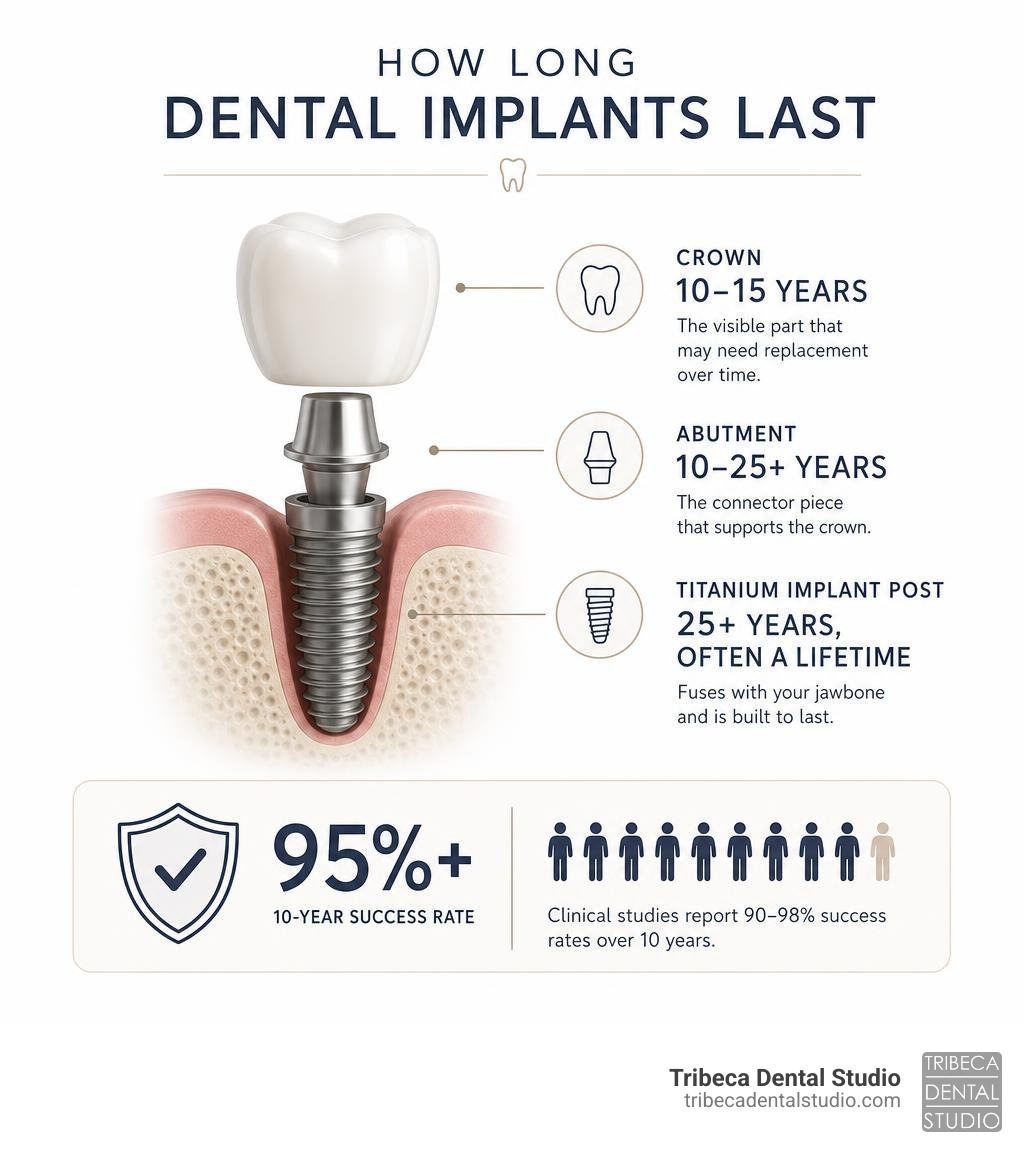
| Component | Typical Lifespan |
|---|---|
| Titanium implant post | 25+ years, often a lifetime |
| Abutment | 10–25+ years (varies) |
| Porcelain crown | 10–15 years before replacement |
- The implant itself fuses permanently with your jawbone through a process called osseointegration, making it the most durable tooth replacement option available.
- The crown on top is the part that wears down over time — but it can be replaced without touching the implant root underneath.
- Clinical studies report 90–98% success rates over 10 years, with one large study tracking 10,871 implants showing a 94% survival rate at 15 years.
- A landmark 38–40 year follow-up study found a 95.6% implant survival rate — the longest documented evidence we have.
In short: most implants last decades, and many last a lifetime. The crown may need replacing once or twice, but the foundation beneath it is built to endure.
I’m Dr. Nina Izhaky, a graduate of New York University College of Dentistry and the founder of Tribeca Dental Studio, where I’ve guided many patients through the question of how long implants last and helped them choose solutions built to stand the test of time. In the guide below, I’ll walk you through everything that determines implant durability — from the materials and surgery to your daily habits and health.
Basic How long implants last? glossary:
How Long Implants Last?
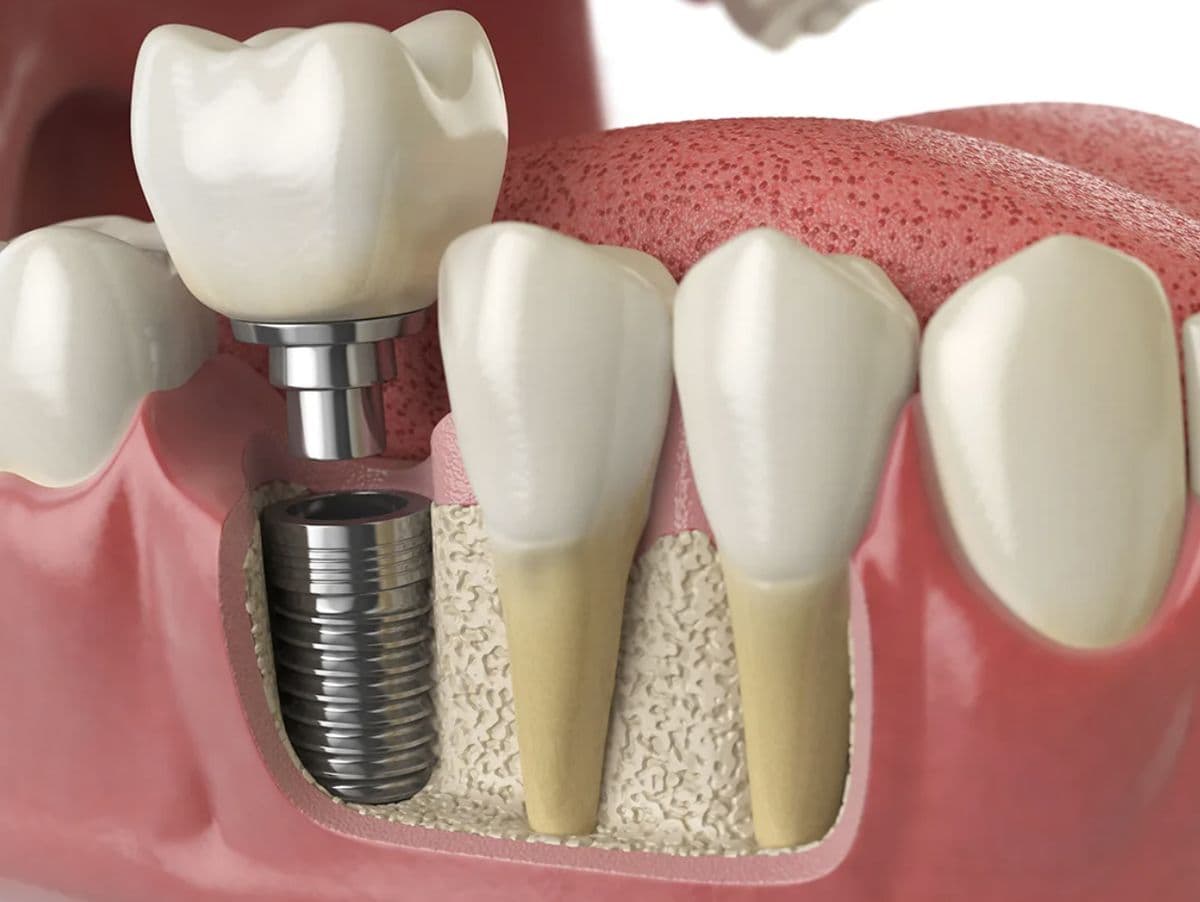
When patients ask us how long implants last?, we like to explain that a dental implant is not just a single artificial tooth. It is a sophisticated, three-part engineering marvel designed to replicate the natural anatomy of your mouth. Because each component is made from different materials and subjected to different levels of wear and tear, they each have their own distinct lifespans.
To truly understand how long your investment will last, we must look at the implant piece by piece.
By breaking down the system into its individual parts, we can see why dental implants outlast any other restorative treatment. If you want to dive deeper into protecting this investment from day one, check out our comprehensive guide on dental implant post care.
The Permanent Titanium Implant Root
The magic of a dental implant lies beneath the gumline. The implant post—typically a small, screw-shaped fixture—functions as your new tooth root. It is surgically placed into the jawbone, where it undergoes a remarkable biological phenomenon known as osseointegration.
Osseointegration is the process by which living bone cells attach directly to the implant’s surface, essentially locking it into your jaw. This occurs because dental implants are made of biocompatible titanium or advanced ceramics (like zirconia). Your body does not recognize titanium as a foreign object; instead, the bone fuses with it as if it were natural tissue.
Because of this permanent structural bond, the titanium implant root is built to last a lifetime. Once fully integrated, it does not slip, decay, or weaken. For a deeper medical look at how this bone-bonding process works, you can explore this scientific overview of dental implants.
The Lifespan of Abutments and Crowns
While the titanium root is safe and snug inside your jawbone, the parts above your gums have a tougher job.
The abutment is the connector piece that screws into the implant post and holds the visible tooth in place. Because it is protected inside the crown and gum tissue, it is highly durable and often lasts decades without needing attention.
The prosthetic crown, however, is the workhorse of the system. Usually crafted from high-grade porcelain or zirconia to match the beautiful translucency of your natural teeth, the crown is responsible for all your daily chewing, biting, and grinding.
Because of this constant mechanical stress, crowns face standard wear and tear. On average, a high-quality implant crown lasts 10 to 15 years. In many cases, with excellent care, they can easily push past 20 years. When a crown eventually chips or wears down, we can simply unscrew or unbond it and place a new one on top—all without disturbing the permanent titanium root underneath.
Dental Implants vs. Alternative Tooth Replacements
When you are deciding how to replace missing teeth, it is helpful to look at the long-term value. Traditional options like dental bridges and removable partial or full dentures have been around for a long time, but they do not compare to the durability of modern implants.
The biggest difference lies in bone preservation. When you lose a tooth, the surrounding jawbone no longer receives chewing stimulation. Without this stimulation, the bone naturally begins to shrink and resorb over time.
- Dental Bridges: A bridge replaces a missing tooth by anchoring onto the neighboring healthy teeth. To do this, those adjacent teeth must be permanently ground down to fit support crowns. While functional, bridges do not stimulate the jawbone underneath, and they typically need to be replaced every 10 to 15 years.
- Removable Dentures: Dentures sit on top of the gums and do nothing to prevent jawbone loss. As the bone shrinks, the dentures lose their snug fit, leading to slipping, clicking, and the need for regular relines or replacements every 5 to 10 years.
- Dental Implants: By replacing the actual tooth root, implants preserve your natural facial structure, protect adjacent teeth from being ground down, and offer a permanent solution.
To help you visualize the differences, here is a quick comparison of how implants stack up against traditional alternatives:
| Restoration Type | Average Lifespan | Impact on Adjacent Teeth | Jawbone Preservation? | Approximate Lifetime Cost Efficiency |
|---|---|---|---|---|
| Dental Implant | 25+ years to lifetime | None (completely independent) | Yes (prevents bone loss) | High (rarely needs root replacement) |
| Dental Bridge | 10–15 years | High (requires grinding adjacent teeth) | No | Moderate (requires multiple replacements) |
| Removable Denture | 5–10 years | Moderate (can stress anchor teeth) | No | Low (requires relines and adhesive costs) |
If you are trying to decide which route is best for your smile and your budget, you can read our detailed breakdown on how to compare crowns, bridges, and implants.
Key Factors Determining How Long Implants Last
While dental implants boast incredible survival rates, they are not completely indestructible. Just like natural teeth, their longevity is heavily influenced by your lifestyle, your health, and the quality of your dental care.

Medical Conditions and Lifestyle Choices
To keep your dental implants healthy for the long haul, your body needs to maintain its natural healing and bone-rebuilding capabilities. Several factors can compromise this:
- Smoking and Tobacco Use: Smoking is one of the leading causes of early implant failure. Nicotine constricts blood vessels, reducing blood flow and oxygen to the gums and bone. This slows down the osseointegration process and makes it harder for your body to fight off infections. Clinical data shows that smokers have an implant failure rate of roughly 11%, compared to just 5% for non-smokers.
- Uncontrolled Diabetes: High blood sugar levels can impair your body’s immune response and slow down bone healing. If you have diabetes, keeping your HbA1c levels controlled (ideally under 7%) is crucial for a successful, long-lasting implant.
- Bruxism (Teeth Grinding): Constantly clenching or grinding your teeth puts immense mechanical stress on the implant crown and the underlying bone connection. Over time, this extreme pressure can lead to loose screws, chipped porcelain, or even microscopic fractures in the surrounding bone. We often recommend a custom nightguard to protect your investment while you sleep.
- Oral Hygiene: This is the most critical factor under your control. Poor brushing and flossing allow plaque to build up around the implant, leading to a condition called peri-implantitis (gum disease around the implant). If left untreated, it destroys the bone supporting the post, leading to failure.
Surgical Expertise and Material Quality
Where you get your implants placed matters just as much as how you care for them. Successful implantology requires extreme surgical precision.
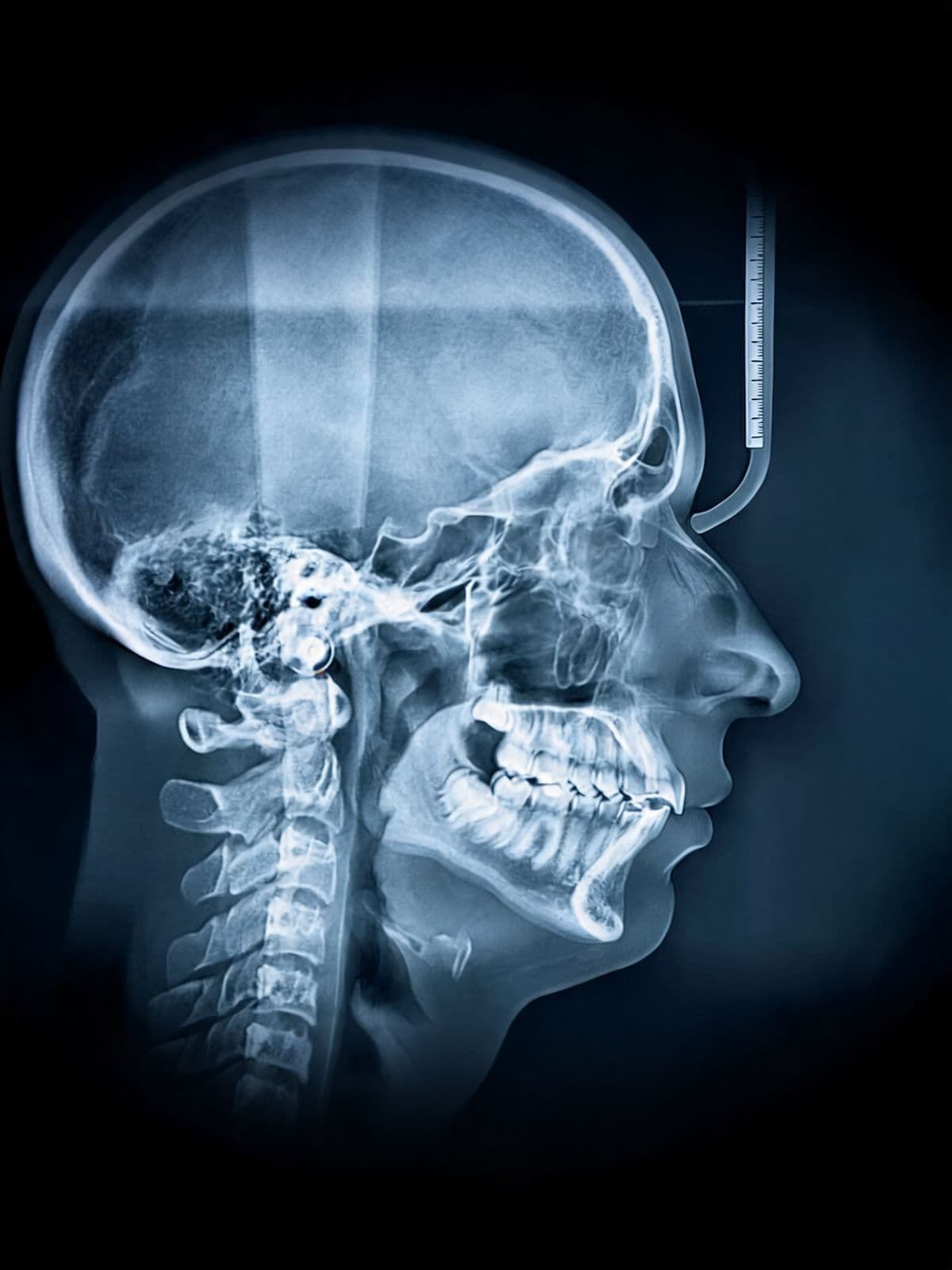
At Tribeca Dental Studio, we use state-of-the-art Cone Beam CT (CBCT) imaging to create a highly detailed, 3D map of your jawbone, nerves, and sinuses before we ever begin the procedure. This allows us to plan the exact angle and depth of the implant placement, avoiding complications and ensuring maximum stability.
Furthermore, the quality of materials makes a massive difference. We use premium, clinically backed implant brands (such as Straumann) that feature advanced micro-threaded collars and specialized surface treatments to accelerate bone fusion. If a patient has experienced bone loss due to missing teeth, we can perform highly successful bone grafting procedures first, creating a robust, thick foundation of bone to support the implant for life.
Clinical Studies on How Long Implants Last
We don’t just want you to take our word for it—the longevity of dental implants is backed by decades of rigorous clinical research.
10 to 20-Year Survival Rates
Modern dental implants have some of the highest success rates in all of medicine. When we look at large-scale, long-term studies, the numbers are incredibly reassuring.
A massive cohort study published in Clinical Implant Dentistry and Related Research tracked the performance of 10,871 dental implants in 4,247 patients for up to 22 years. The findings showed outstanding durability:
- 98.9% survival rate at 3 years
- 98.5% survival rate at 5 years
- 96.8% survival rate at 10 years
- 94.0% survival rate at 15 years
For more details on this landmark research, you can read the full long-term clinical performance of 10,871 dental implants study.
Additionally, a comprehensive, 20-year meta-analysis of modern screw-shaped titanium implants concluded that approximately 4 out of 5 implants (80%) survive past the 20-year mark, even when using highly conservative statistical models that account for patients who dropped out of follow-ups. This performance compares incredibly well to other major medical joint replacements, such as hip and knee arthroplasties. You can explore the data yourself in the 20-year meta-analysis of dental implant survival.
38 to 40-Year Real-World Evidence
What happens when we look even further down the road? The longest-running clinical study on single-tooth implants followed the very first patients treated with single-tooth restorations in the early 1982 to 1985 era.
After 38 to 40 years of continuous function, the results were nothing short of spectacular:
- The implants themselves had a 95.6% cumulative survival rate, with many patients showing stable or even improved bone levels around the titanium roots over nearly four decades.
- The implant-supported crowns had a 60.9% survival rate over the same 40-year span. Most of the crown replacements were due to minor aesthetic upgrades or natural changes in the surrounding teeth, rather than structural failure.
This proves that while you might need to refresh the “tooth” on top at some point in your life, the foundation can easily go the distance. Read more about this incredible historical data in the study on the outcome of single dental implants over 38-40 years.
Recognizing and Treating Dental Implant Failure
While dental implant failure is rare (occurring in fewer than 5% of cases), it is important to know what to watch out for. Catching a problem early can mean the difference between a simple, in-office adjustment and losing the implant entirely.
Implant failure is generally categorized into two phases:
- Early Failure: Occurs within the first few months, usually because the bone failed to properly fuse with the titanium post (poor osseointegration) or due to an early post-surgical infection.
- Late Failure: Occurs years down the road, almost always triggered by mechanical overload (excessive grinding) or peri-implantitis (the bacterial infection of the surrounding gum and bone).
Signs of a Failing Implant
If you experience any of the following symptoms, you should contact us immediately:
- Severe Pain or Discomfort: While some tenderness is normal during the initial healing phase, sharp or throbbing pain around an established implant is a major warning sign.
- Swelling or Redness: Persistent inflammation, bleeding, or pus coming from the gums around the implant indicates an active infection.
- Implant Mobility: A healthy implant should feel as solid as a rock. If the tooth feels loose, shifts, or moves when you chew, the bone support may be compromised.
- Gum Recession: If the gum tissue begins to pull away from the implant, exposing the metallic titanium post underneath, it can indicate active bone loss.
- A Bad Taste or Odor: Persistent bad breath or a metallic taste in your mouth can be a sign of bacterial buildup beneath the gumline.
Treatment Options for Failed Implants
If an implant is struggling, we have highly effective protocols to save it or replace it:
- Treating Peri-Implantitis: If caught early, we can treat gum infections around the implant using specialized deep cleanings, localized antibiotics, or gentle laser therapy to decontaminate the titanium surface and stop bone loss in its tracks.
- Implant Removal and Bone Grafting: If the implant has completely lost its connection to the bone, we will gently remove it to let the area heal. We can then perform a bone graft to rebuild the lost jawbone structure.
- Replacement Success: Once the bone has fully healed and regenerated (usually taking a few months), we can safely place a new implant. Studies show that replacing a failed implant at the same site has a highly promising 71% success rate.
Frequently Asked Questions About Dental Implant Durability
Navigating dental restorations can raise a lot of questions. Here are some of the most common things our patients in Manhattan ask us.
At what age should you not consider dental implants?
There is no upper age limit for dental implants! As long as you are in good general health and have sufficient bone density (or can receive a bone graft), you are never too old to get a beautiful, permanent smile. In fact, implants can dramatically improve the quality of life for seniors by restoring the ability to eat a healthy, varied diet.
However, there is a lower age limit. We cannot place dental implants in children or teenagers whose jawbones are still growing. If an implant is placed before jaw growth is complete, it can prevent proper bone maturity and end up misaligned. We typically wait until a patient is at least 18 (and sometimes 21 for males) to ensure the jaw is fully developed.
Can dental implants get cavities?
No! Because dental implants are made of biocompatible titanium, ceramic, and porcelain, they are completely immune to tooth decay. You will never have to worry about getting a cavity in an implant.
However, this does not mean you can throw away your toothbrush. The surrounding gum tissue and jawbone are still completely organic and susceptible to bacterial infections like peri-implantitis. Excellent daily oral hygiene is still absolutely essential to keep the foundation of your implant healthy.
Is getting a dental implant safe?
Yes, dental implants are widely recognized as one of the safest, most predictable, and highly successful surgical procedures in modern dentistry. With success rates consistently landing between 95% and 98%, complications are incredibly rare when the procedure is performed by a qualified specialist. For a detailed breakdown of safety protocols, materials, and what to expect during the process, take a look at our is dental implant safe guide.
Conclusion
At Tribeca Dental Studio, we believe that a healthy smile is the foundation of your overall well-being. Led by Dr. Nina Izhaky, our welcoming NYC practice is dedicated to providing advanced, highly personalized dental care. We treat every patient like family, combining state-of-the-art technology with a warm, caring touch to ensure your dental implants are built to last a lifetime.
If you are ready to explore how dental implants can permanently restore your smile, we are here to help. Contact our convenient Manhattan office today to schedule a consultation for dental implants and take the first step toward a lifetime of confident smiles!