Everything You Need to Know About Sinus Augmentation
December 23, 2025
Understanding Sinus Augmentation: A Common Solution for Dental Implants
What is sinus augmentation and why do so many people need it before getting dental implants? Here’s the quick answer:
Sinus augmentation (also called a sinus lift) is a surgical procedure that adds bone to your upper jaw in the area of your molars and premolars. The bone is placed between your jaw and the maxillary sinuses, which sit on either side of your nose. To make room for the bone, the sinus membrane needs to be lifted upward—hence the name “sinus lift.”
Key facts:
- Purpose: Creates enough bone height for dental implants in the upper back jaw
- Why it’s needed: Tooth loss causes bone to shrink, and the sinus expands into that space
- Success rate: Over 90% when performed by an experienced surgeon
- Healing time: Typically 4-12 months before implants can be placed
- Common procedure: Increasingly popular as dental implants become the standard for tooth replacement
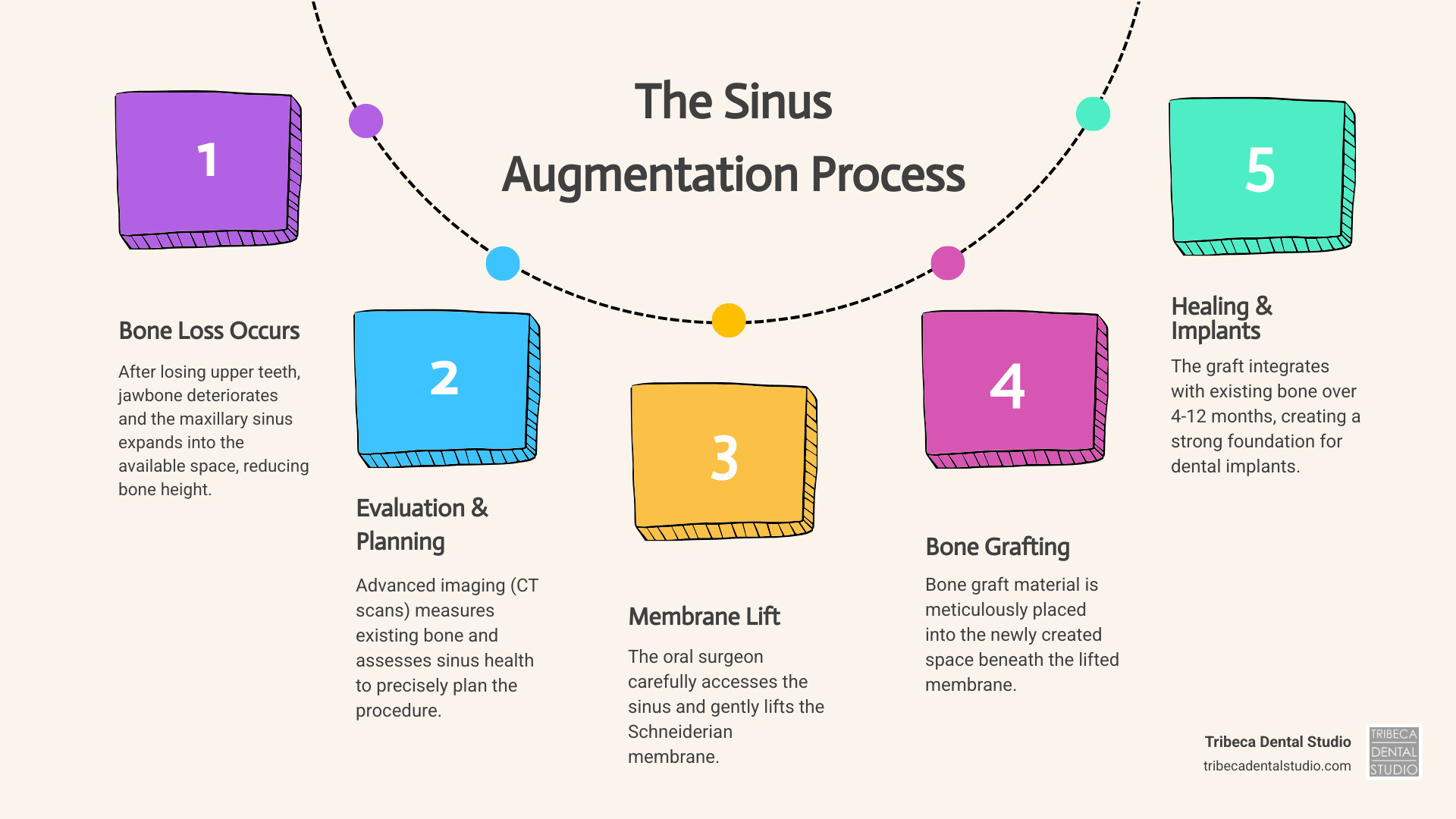
The upper back jaw presents unique challenges for dental implant placement. When you lose teeth in this area, the bone naturally deteriorates. At the same time, your maxillary sinuses—those air-filled spaces above your upper teeth—can expand downward into the space left behind. This leaves little to no bone for an implant to anchor into.
That’s where sinus augmentation comes in. By carefully lifting the sinus membrane and placing bone graft material underneath, your oral surgeon creates a solid foundation for dental implants that can last a lifetime.
As Dr. Nina Izhaky, founder of Tribeca Dental Studio, I’ve helped countless patients understand what is sinus augmentation and how it enables successful implant placement in the upper jaw. With advanced imaging and proven surgical techniques, we make this procedure as comfortable and predictable as possible.
What is Sinus Augmentation and Why Might You Need It?
At Tribeca Dental Studio, we often explain what is sinus augmentation by starting with a quick anatomy lesson. The maxillary sinuses are air-filled cavities located behind your cheeks and above your upper back teeth. They’re usually the largest of your paranasal sinuses, typically holding about 15 cubic centimeters of air. These sinuses have two main growth phases: one in early childhood and another that parallels the eruption of your permanent teeth from ages 7 to 18.
Now, why does this matter for your teeth? Well, when you lose one or more teeth in your upper jaw, especially molars or premolars, something called bone resorption begins. This means the alveolar process—the part of your jawbone that holds your teeth—starts to remodel and collapse because it no longer has teeth to support. This leads to a loss of both height and width in your jawbone.
To make matters more interesting, your maxillary sinuses can undergo a process called pneumatization. This is when the sinus expands downward into the space where your teeth used to be, further diminishing the available bone thickness. Suddenly, that area where you once had a sturdy tooth might now have very little bone, or even have the sinus right up against your gums!
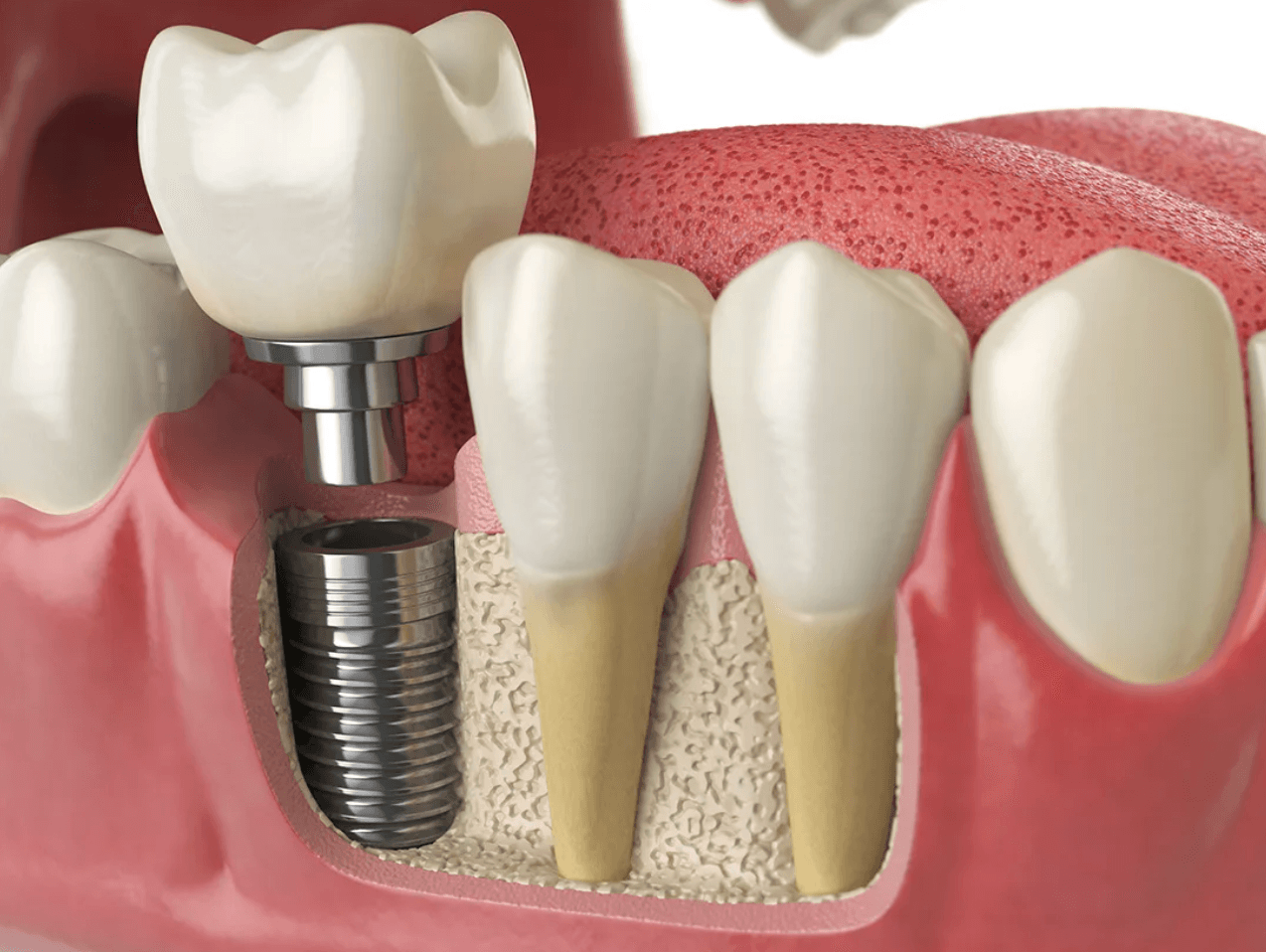
This creates a significant challenge if you’re considering Dental Implants. Dental implants, which are essentially artificial tooth roots, need a sufficient amount of healthy bone to properly integrate and remain stable. Without enough bone, an implant simply can’t be placed or won’t last. Sinus augmentation is our way of creating that necessary foundation. It’s about rebuilding the bone so your new smile has a strong, reliable base.
Beyond tooth loss, other factors can lead to insufficient bone height. Periodontal disease, also known as gum disease, can cause significant bone loss around your teeth, weakening the jaw structure. Additionally, some individuals naturally have smaller jawbones or larger maxillary sinuses that encroach on the available bone space, making implant placement difficult even without prior tooth loss. Jaw anatomy can vary quite a bit from person to person, and sometimes, nature just needs a little help!
Common reasons for needing a sinus lift
When we evaluate patients for dental implants at our Manhattan practice, we look for several common scenarios that indicate the need for a sinus lift:
- Long-term tooth loss in the upper jaw: When you lose a tooth, especially in the back of your upper jaw, the bone in that area is no longer stimulated. Over time, your body reabsorbs this bone, leading to a significant reduction in bone volume. The longer a tooth has been missing, the more likely you are to experience this bone loss and subsequent sinus expansion.
- Bone loss from gum disease: Periodontal disease can destroy the bone supporting your teeth. If you’ve suffered from advanced gum disease in your upper jaw, you might have lost enough bone to make implant placement challenging without augmentation.
- Natural anatomy with large sinuses or thin jawbone: Some people are simply born with maxillary sinuses that are naturally larger or sit lower, or they have a thinner upper jawbone. This leaves less inherent bone for implant placement, regardless of tooth loss history.
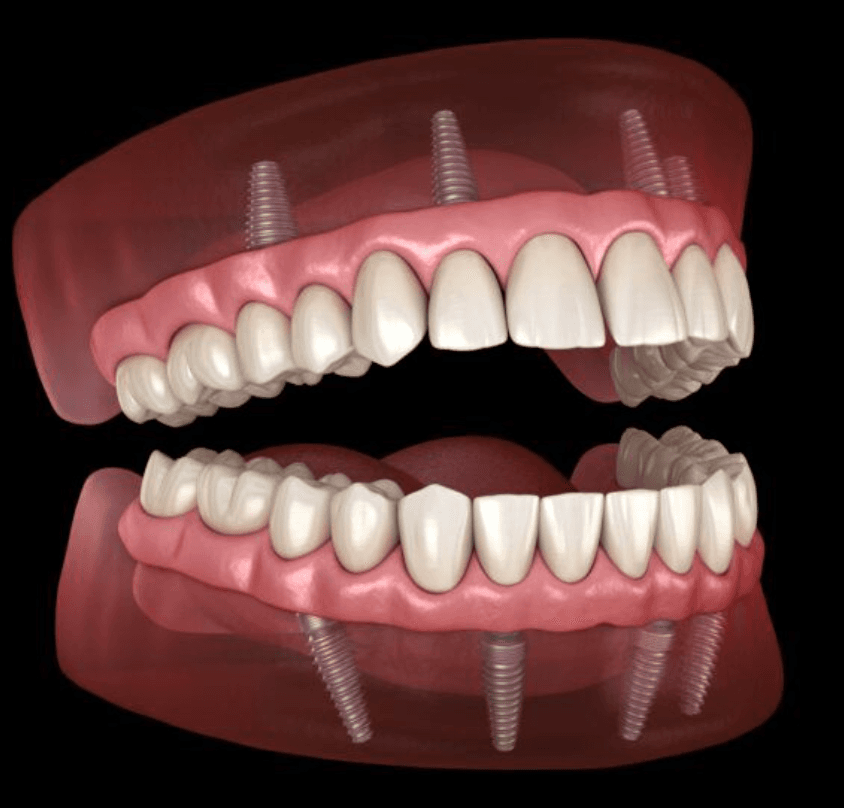
- Preparation for All-On-4 Dental Implants: If you’re looking for a full arch solution like All-On-4, but have significant bone deficiency in the posterior maxilla, a sinus lift might be a crucial preparatory step to ensure the stability and longevity of your new smile.
How sinus augmentation improves implant success
The success of a dental implant hinges on a process called osseointegration, where the implant fuses directly with the surrounding bone. For this to happen effectively, the implant needs to be fully encased in healthy, dense bone. This is precisely where sinus augmentation makes a world of difference.
By adding bone graft material and allowing it to heal, we create adequate bone volume and density. This provides a robust, stable base for the implant, ensuring it has the necessary support to withstand the forces of chewing and speaking. This improved stability is key to the long-term success and longevity of your dental implants.
Studies consistently show the high success rates of sinus grafts. The American Academy of Periodontology notes that undergoing sinus lift surgery significantly increases the chances for successful implants that can last for years to come. In fact, the success rates of sinus grafts are over 90%, and for the lateral window technique, the long-term prognosis is estimated to be 94%. These impressive statistics highlight why sinus augmentation is a trusted and effective procedure for preparing your mouth for a lasting, beautiful smile.
The Sinus Augmentation Procedure from Start to Finish
Starting on a sinus augmentation journey might sound a bit daunting, but we assure you, with our expert team at Tribeca Dental Studio, you’re in the safest and most capable hands. We believe that a well-informed patient is a confident patient, so let’s walk through the process together, from your initial evaluation to the final steps of recovery. It’s all part of our comprehensive approach to Oral Surgery and implant solutions.
Your Pre-Operative Evaluation
Before we even think about touching a dental instrument, we conduct a thorough pre-operative evaluation. This initial consultation is where we get to know you, your dental history, and your smile aspirations. We’ll discuss your overall health, any medications you’re taking, and answer all your questions. We treat you like family, and that means ensuring your comfort and understanding from the very beginning.
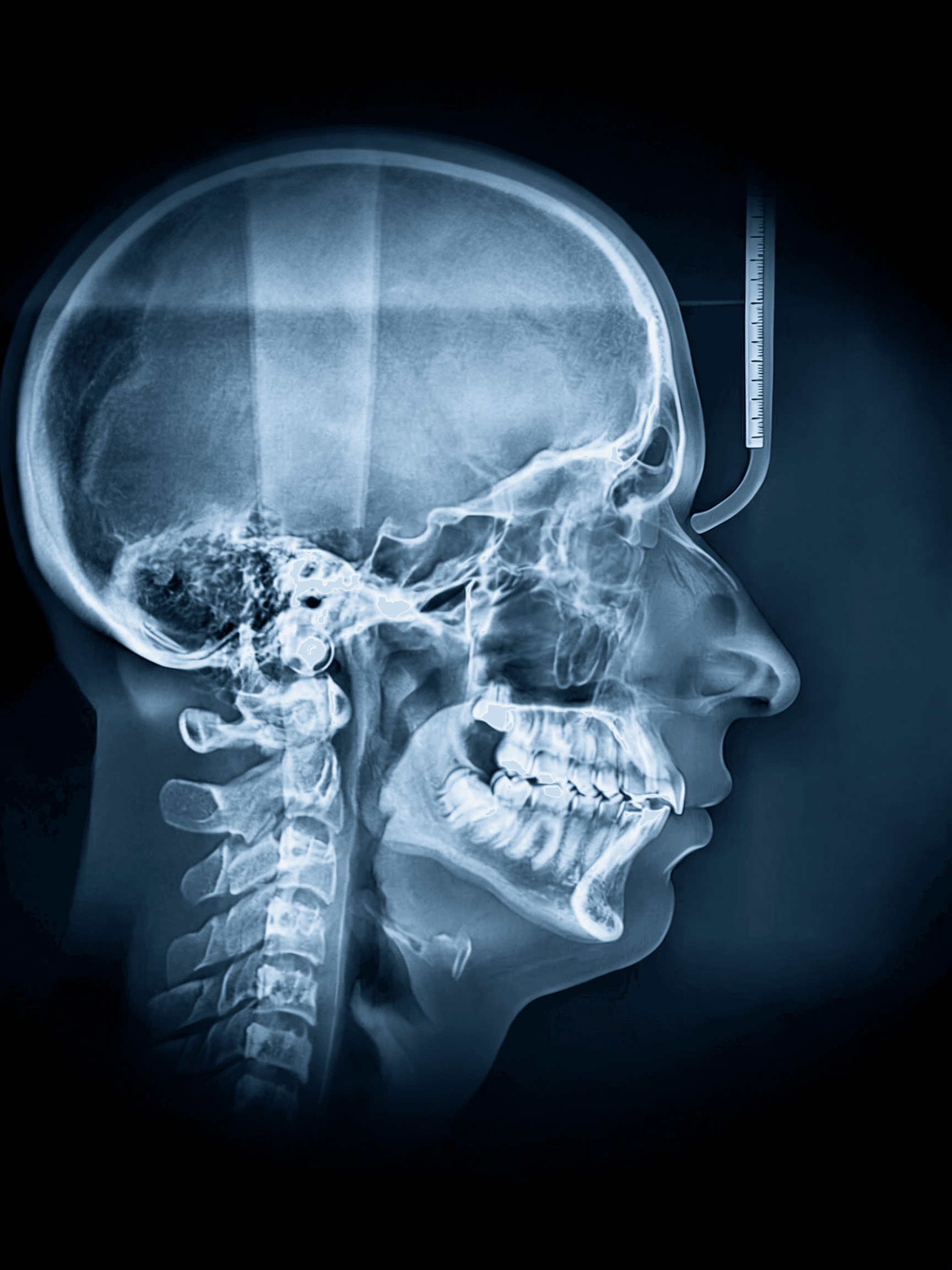
A critical part of this evaluation involves advanced imaging. While traditional dental X-rays provide a good starting point, we rely heavily on Cone Beam Computed Tomography (CBCT) scans. These state-of-the-art 3D images give us an incredibly detailed view of your jawbones and, crucially, your maxillary sinuses.
With CBCT, we can:
- Measure bone height and width: This allows us to precisely determine how much bone is available and how much augmentation is needed.
- Assess sinus health: We check for any existing pathologies within your sinuses, such as inflammation, cysts, or mucoceles, which could impact the procedure.
- Identify vital structures: The scans help us pinpoint the exact location of your Schneiderian membrane (the delicate lining of your sinus), any bony septa (internal divisions within the sinus), and important blood vessels to ensure the safest surgical approach.
This meticulous planning is essential for a predictable and successful outcome, ensuring that when we proceed, we do so with the utmost precision.
Surgical Techniques: What is the sinus augmentation approach?
There isn’t a one-size-fits-all approach to sinus augmentation. Instead, we select the technique best suited for your specific anatomical needs and the amount of bone required. The two primary methods we use are the Lateral Window Technique and the Osteotome Technique.
| Feature | Lateral Window Technique (Direct Sinus Lift) | Osteotome Technique (Crestal Approach / Indirect Sinus Lift) |
|---|---|---|
| Bone Gain | For significant bone gain, typically 5mm or more. | For minor bone gain, typically less than 4mm. |
| Invasiveness | More invasive, involves creating a window in the side of the jawbone. | Less invasive, performed through the implant site. |
| Procedure | Creates a bony window, lifts the sinus membrane, places graft material. | Uses specialized instruments (osteotomes) to tap and lift the sinus floor. |
| Healing Time | Bone graft healing generally 4-12 months. | Bone integration can be faster, around 4-8 months. |
| Implant Placement | Usually a separate procedure after graft healing. | Often performed simultaneously with the sinus lift. |
| Complexity | More complex, higher risk of membrane perforation if not skillfully performed. | Less complex, generally lower risk of complications. |
Lateral Window Technique: This is our go-to method when you need a substantial increase in bone height. It’s often referred to as a “direct” sinus lift.
- Creating an opening: After numbing the area, we make a small incision in your gum tissue to expose the bone on the side of your upper jaw, near your molars. We then carefully create a small, hinged bony window in this exposed bone.
- Lifting the Schneiderian membrane: With extreme precision, we gently push this bony window inward, effectively creating an opening into your sinus cavity. The delicate Schneiderian membrane, which lines your sinus, is then carefully separated and lifted upward, creating a space beneath it.
- Placing graft material: This newly created space is then filled with bone graft material.
- Closing the site: The gum tissue is repositioned and sutured closed. Over the next several months, your body will integrate this graft material, turning it into solid bone.
The long-term prognosis for the lateral window technique is estimated to be an impressive 94%, making it a highly reliable option for significant bone augmentation.
Osteotome Technique (Crestal Approach): For those requiring a smaller amount of bone augmentation, perhaps just a few millimeters, we might opt for the less invasive osteotome technique, sometimes called an “indirect” sinus lift or crestal approach. This method is typically used when you have at least 6mm of natural bone height and only need to lift the sinus floor by less than 4mm.
- Access through the implant site: Instead of creating a side window, we access the sinus floor directly through the site where your implant will eventually be placed.
- Using osteotomes to lift the sinus floor: Specialized instruments called osteotomes are gently tapped to push the bone at the bottom of your sinus upward, lifting the Schneiderian membrane without direct visualization. This creates a small space.
- Graft material and implant placement: Bone graft material is typically packed into this space, and often, the dental implant can be placed during the same procedure.
The osteotome technique offers a quicker healing period for bone integration, normally lasting 4 to 8 months. Both techniques are performed with the utmost care and expertise by our Tribeca Dental Studio team, prioritizing your safety and the success of your future dental implants.
Types of Bone Graft Materials Used
When we perform a sinus augmentation, we’re essentially asking your body to grow new bone. To kickstart this incredible process, we introduce bone graft material into the lifted sinus space. Think of it as a scaffold or a signal to your body to regenerate. We’ll discuss the best options for your specific needs during your consultation, ensuring we choose the right approach for your Bone Grafting procedure.
There are several types of bone graft materials we can use, each with its own advantages:
- Autograft: This is often considered the “gold standard” because it uses your own bone, typically harvested from another part of your mouth or body. Autografts have excellent osteogenic potential, meaning they contain living bone cells that can directly form new bone, and they are completely biocompatible. The main drawback is that it requires a second surgical site for harvesting.
- Allograft: This material comes from a human donor. It is carefully processed and sterilized to remove any cellular material that could cause an immune reaction, making it safe for use. Demineralized bone, a common type of allograft, retains natural proteins like bone morphogenetic protein (BMP), which are osteoinductive—meaning they signal your body’s cells to differentiate into bone-forming cells.
- Xenograft: This bone material comes from an animal source, most commonly bovine (cow) bone. Like allografts, xenografts are rigorously processed and sterilized. They act as a scaffold, providing a framework for your own bone to grow into. Bovine hydroxyapatite is a frequently used xenograft material.
- Alloplast: These are synthetic bone graft materials, often made from biocompatible ceramics like hydroxyapatite or tricalcium phosphate. Alloplasts are safe, readily available, and eliminate the need for a donor site. They serve as a scaffold to guide new bone formation.
In some cases, especially with minimally invasive techniques, we might even use platelet-rich fibrin (PRF) from your own blood or simply allow a blood clot to form in the liftd sinus space. Studies suggest that the mere lifting of the sinus membrane, creating a void, and allowing blood clot formation can sometimes result in new bone due to the principles of guided bone regeneration. The choice of material is always made with your specific clinical situation and best outcomes in mind.
Recovery, Risks, and Success Rate
Once your sinus augmentation procedure is complete, the real magic—and patience—begins. Your body needs time to heal and integrate the new bone material. This healing timeline is crucial for the long-term success of your dental implants. Generally, the graft is left to heal for 4–12 months, allowing the new bone to become a strong, integral part of your natural sinus floor bone. After this, we can proceed with placing your dental implants, followed by an additional 3-6 months for the implants to osseointegrate with the newly formed bone. We’ll provide you with detailed instructions for your Dental Implant Post Care: Complete Guide to ensure the best possible outcome.
The Recovery Process After a Sinus Lift
We understand that recovery is a significant part of any surgical procedure. After your sinus lift, managing swelling and discomfort will be a priority. We’ll provide you with prescription pain relievers and antibiotics to minimize any post-operative pain and prevent infection.
Here are some general post-operative instructions we typically provide to our patients in Tribeca:
- Head Elevation: Keep your head liftd, even while sleeping, for the first few days to help reduce swelling.
- Avoid Blowing Your Nose or Sneezing Forcefully: This is critical! Forceful actions can dislodge the blood clot or graft material and even perforate the delicate sinus membrane. If you need to sneeze, try to do so with your mouth open.
- Diet Recommendations: Stick to a liquid diet for the first two days, followed by a soft diet for about two weeks. Avoid chewing from the surgical site during this initial healing phase.
- Activity Restrictions: Avoid strenuous activities, heavy lifting, or playing blowing instruments for a period. We also advise against smoking, using straws, scuba diving, and flying for a minimum of three days (or longer, depending on your specific case), as these activities can create pressure changes in the sinus.
- Oral Hygiene: We might recommend a specific mouthwash, like 1.2% chlorhexidine, for a couple of weeks to keep the surgical site clean. Avoid aggressive brushing near the surgical area.
- Follow-up Appointments: We’ll schedule follow-up visits, typically around 7-10 days, to check on your healing and remove any sutures.
While full recovery from the actual surgery can take about six months or longer, the essential bone integration normally takes 4 to 12 months for the graft material to fully become part of your natural bone structure.
Potential Risks and Complications
As with any surgical procedure, there are some potential risks and complications associated with sinus augmentation, though we take every precaution at Tribeca Dental Studio to minimize them. Our experienced oral surgeons are highly skilled in these procedures, which significantly reduces the likelihood of issues.
- Sinus membrane perforation: This is the most common complication, occurring in 7%–35% of procedures. The Schneiderian membrane, the delicate lining of your sinus, can sometimes be punctured or torn during the lift. If this happens, we can often repair it immediately with stitches or a patch. For larger tears, we might need to postpone the procedure to allow the membrane to heal before attempting the sinus lift again.
- Infection: While antibiotics are prescribed to prevent this, infection can occur. A potential consequence is acute maxillary sinusitis, which is a temporary inflammation of the membranes in your nose and sinuses. This condition can make it difficult to drain mucus. Research shows that caution taken throughout the procedure helps to keep the sinuses open and reduce this risk.
- Graft failure: In rare cases, the bone graft material may not integrate properly with your existing bone or may not develop a sufficient blood supply. If the graft fails, the sinus lift procedure might need to be repeated.
- Other risks: Less common complications include inflammation, prolonged pain, nerve damage, scarring, allergic reactions to graft materials, or an oro-antral communication (an opening between your mouth and sinus).
It’s important to know when to call us. Contact our office immediately if you experience continuous bleeding that doesn’t stop, increasing pain or swelling, a high fever, or if you suspect the bone graft material has become dislodged. Your health and comfort are our top priority.
Success Rate and Alternatives to Sinus Augmentation
The good news is that sinus augmentation is a highly successful procedure. As mentioned, the success rates of sinus grafts are over 90%, and for the lateral window technique, it’s estimated to be 94%. This means that for the vast majority of our patients, sinus augmentation effectively creates the necessary bone for stable, long-lasting dental implants.
However, we understand that not every patient is a candidate for or desires a sinus lift. For those cases, or when the bone loss is particularly severe, we explore alternatives:
- Short implants: If you have a minimal but still adequate amount of bone, we might consider using shorter dental implants. While these can be effective, they may not offer the same long-term stability as standard-length implants in all situations.
- Angled implants: In some cases, implants can be strategically angled to avoid the sinus cavity, leveraging existing bone at an angle. This is a common strategy used in procedures like All-On-4.
- Zygomatic Implants: For patients with extreme bone loss in the upper jaw, where even a sinus lift might not be enough, zygomatic implants offer an excellent solution. These longer implants anchor into the dense zygomatic (cheek) bone, completely bypassing the need for a sinus lift or bone grafting in the traditional sense. You can learn more about these advanced solutions in our guide, Dental Implants for Severe Bone Loss in Tribeca: Zygomatic Bone Grafting Solutions.
- Mini dental implants: While theoretically an alternative, studies have shown that mini dental implants are generally not as strong as standard ones and are associated with much higher failure rates. At Tribeca Dental Studio, we prioritize your long-term comfort and function, and as such, we typically prefer to conduct a sinus floor elevation procedure followed by standard-size dental implants to ensure the best possible outcome.
We’ll discuss all viable options with you during your consultation, ensuring you make an informed decision that aligns with your health goals and lifestyle.
Frequently Asked Questions about Sinus Augmentation
We get a lot of questions about sinus augmentation, and we’re always happy to provide clear, straightforward answers. Here are some of the most common inquiries we receive at our Tribeca office:
Is a sinus lift procedure painful?
This is one of the most common concerns, and we’re here to put your mind at ease! The sinus lift surgery itself is performed under local anesthesia, meaning the area will be completely numb, so you won’t feel any pain during the procedure. For patients who experience dental anxiety, we also offer various sedation options, including IV sedation, nitrous oxide (laughing gas), or oral sedation, to ensure you are relaxed and comfortable throughout.
After the procedure, it’s normal to experience some discomfort and swelling. However, for most people, this is minimal and manageable with the prescribed pain medication. Many patients compare the post-operative discomfort to what they might experience after routine Tooth Extractions & Oral Surgery, which is typically well-controlled. We’ll provide you with detailed instructions and medication to keep you comfortable during your recovery.
What is the cost of a sinus augmentation?
The cost of a sinus augmentation can vary significantly. Generally, it can range from approximately $1,759 for a simple and small lift to $5,000 for more complex cases.
Several factors influence the final cost:
- Complexity of the case: More extensive bone loss or anatomical challenges will require a more intricate procedure, impacting the cost.
- Surgical technique: The lateral window technique, being more involved, typically costs more than the osteotome technique.
- Type and quantity of graft material: The choice of bone graft material (autograft, allograft, xenograft, alloplast) and the amount needed will affect the overall price.
- Associated procedures: If other treatments are needed simultaneously, this will also factor into the total cost.
During your initial consultation at Tribeca Dental Studio, we’ll provide a personalized treatment plan and a detailed cost estimate after a thorough evaluation of your specific needs. We’ll also discuss insurance coverage, as it can vary, and explore any available financing options to help make your treatment affordable.
How long does the entire process take, from sinus lift to final crown?
The entire journey from initial sinus augmentation to receiving your final dental crown is a multi-step process that requires patience, but the results are well worth the wait for a permanent, healthy smile.
Here’s a general timeline:
- Sinus lift surgery time: The actual surgical procedure for a sinus lift typically takes between 90 to 120 minutes.
- Bone healing and integration: After the sinus lift, the newly placed bone graft material needs time to heal and integrate with your existing jawbone. This crucial healing phase usually takes 4 to 12 months. It’s during this period that the graft material transforms into solid, viable bone capable of supporting an implant.
- Dental implant placement and osseointegration: Once sufficient bone has formed, we can proceed with placing your dental implants. After implant placement, another healing period is required for the implants to fuse with the bone (osseointegration), which typically takes 3 to 6 months.
- Final restoration (crown): Once osseointegration is complete, we’ll take impressions to fabricate your custom dental crown, bridge, or denture, which is then attached to the implant. This final step usually takes a few weeks.
So, while the initial surgery is relatively quick, the entire process, from your sinus lift to your final crown, can range from approximately 8 months to over a year and a half. The exact timeline will depend on your individual healing capabilities, the extent of the bone graft, and whether implants can be placed simultaneously with the lift (which can sometimes shorten the overall duration). We’ll keep you informed every step of the way, celebrating each milestone towards your restored smile.
Your Path to a Restored Smile in NYC
We hope this comprehensive guide has helped you understand what is sinus augmentation and why it’s such a valuable procedure for many of our patients in Tribeca. At Tribeca Dental Studio, we are dedicated to helping you achieve a permanent, healthy, and beautiful smile, even when facing bone loss challenges. Sinus augmentation allows us to create the robust foundation necessary for successful Dental Implants in New York.
The journey to a restored smile is an investment in your health, confidence, and quality of life. It requires the expertise of a skilled and experienced oral surgeon or periodontist, someone who understands the intricate anatomy of the maxillary sinus and can execute these delicate procedures with precision. Dr. Nina Izhaky and our team bring that level of expertise and a personalized approach to every patient, treating you with the care and attention you deserve.
If you’re considering dental implants and have been told you might not have enough bone in your upper jaw, don’t despair! Sinus augmentation could be the perfect solution to open up your smile’s full potential. We invite you to experience the Tribeca Dental Studio difference—where advanced dentistry meets compassionate care.
Ready to learn more about how a sinus lift can transform your smile? Learn more about our Sinus Lift procedure or contact us today to schedule your personalized consultation. We look forward to welcoming you to our Tribeca family.