What You Need to Know About Fixing a Chipped Molar
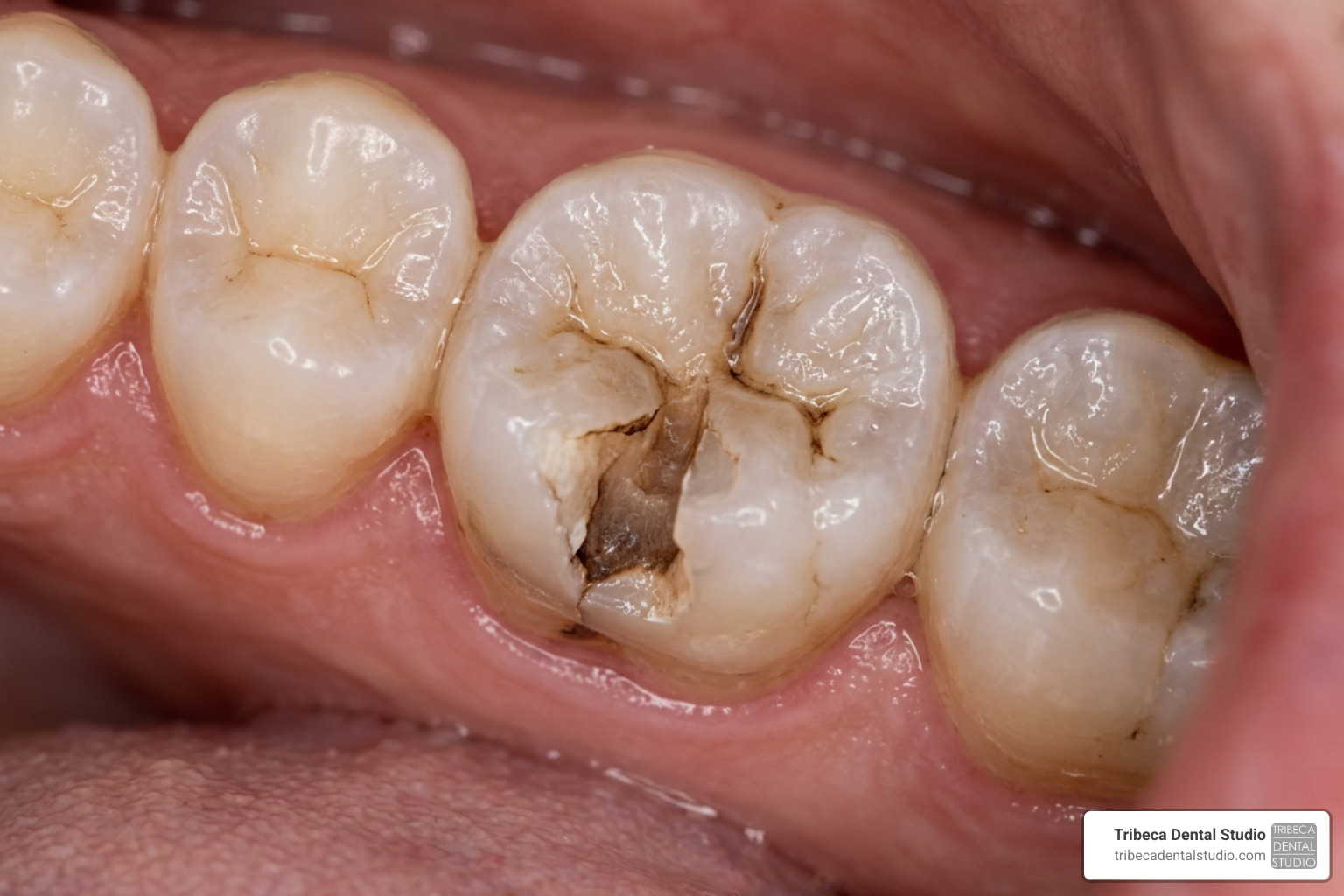
Fixing a chipped molar is something that needs professional dental care — there is no way for enamel to repair itself at home. Here is a quick overview of your options:
The right treatment depends on how deep the chip goes, how much tooth structure remains, and whether the nerve is involved. A dentist will assess this with a visual exam and X-rays.
You might be eating something ordinary — a crusty piece of bread, a handful of popcorn — when you feel that sudden, unmistakable crunch. Your tongue finds the jagged edge before your brain fully registers what happened. A chipped molar.
It is more common than most people realize. Molars take the full force of chewing every single day, which makes them especially vulnerable to chips, cracks, and fractures. And because they sit in the back of the mouth, the damage is often discovered by feel before it is ever seen.
The good news: modern dentistry has reliable, lasting solutions for almost every level of molar damage — from a hairline chip to a full fracture.
I’m Dr. Nina Izhaky, a graduate of New York University College of Dentistry and founder of Tribeca Dental Studio, where fixing a chipped molar is one of the most common restorative concerns I address for my patients. With a fully digital, mercury-free practice and every specialist on-site, I’ll walk you through everything you need to know to get your molar back in business.
Why Do Molars Chip? Common Causes and Risk Factors
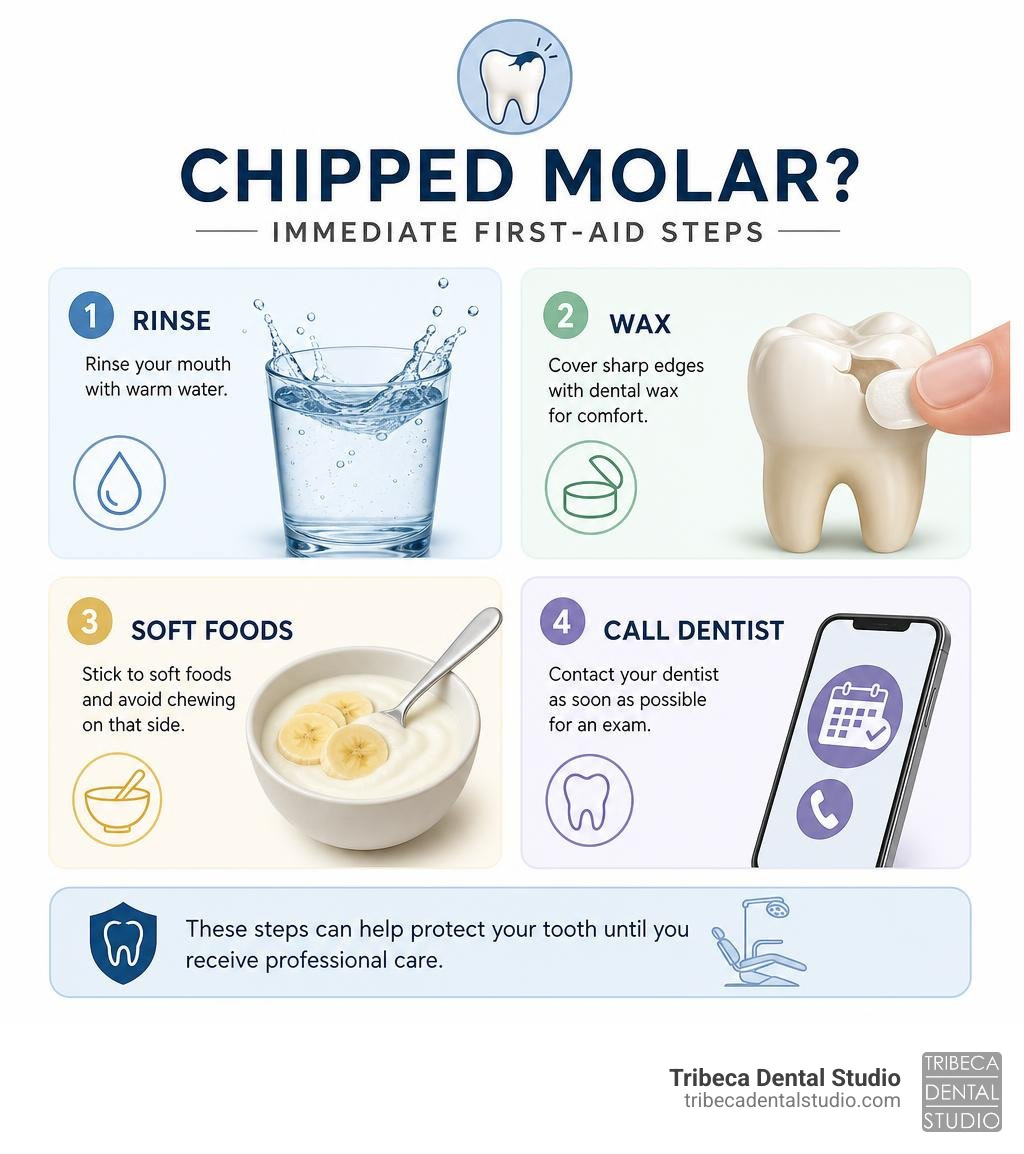
Our molars are the workhorses of our mouths. Located at the back of the jaw, they bear the brunt of our chewing forces — which can exceed 200 pounds of pressure per square inch. While tooth enamel is the hardest tissue in the human body, it is not completely indestructible. Under the right (or wrong) circumstances, even a healthy molar can chip or break.
Understanding why a molar chips is the first step in both treating it and preventing future damage. Here are the most common culprits:
- Bruxism (Teeth Grinding and Clenching): Many of us grind our teeth or clench our jaws at night without even realizing it. Over time, this constant, heavy friction creates micro-fractures in the enamel. Eventually, a small piece of the tooth simply gives way under normal chewing pressure.
- Dental Decay (Cavities): Cavities are caused by bacteria eating away at the tooth structure. As decay hollows out the inside of a tooth, the outer shell of enamel loses its support system. What seems like a sudden chip from eating a soft food is often the collapse of enamel over an unnoticed cavity.
- Old Restorations: Dental fillings do not last forever. Older silver amalgam fillings, in particular, can expand and contract with temperature changes in the mouth. Over decades, this expansion acts like a wedge, putting stress on the surrounding natural tooth structure until a portion of the molar breaks off.
- Physical Trauma: An unexpected blow to the face during sports, a slip-and-fall accident, or biting down on an incredibly hard object (like an unpopped popcorn kernel, ice, or a hard candy) can instantly chip a tooth.
- Acid Erosion: Frequent exposure to acidic foods, beverages, or medical conditions like acid reflux (GERD) and chronic vomiting can strip away the protective outer layer of enamel. This thins the tooth structure, making it highly susceptible to fractures.
If you suspect your chip is linked to structural weakness or underlying decay, our team specializing in Restorative Dentistry can help identify the root cause and restore both the strength and health of your tooth.
Immediate First Aid: What to Do Right After Chipping a Molar
Discovering a chipped molar can be alarming, but taking the right immediate steps can prevent further damage, manage discomfort, and protect your mouth’s soft tissues. Here is what you should do in the first few hours after the injury:
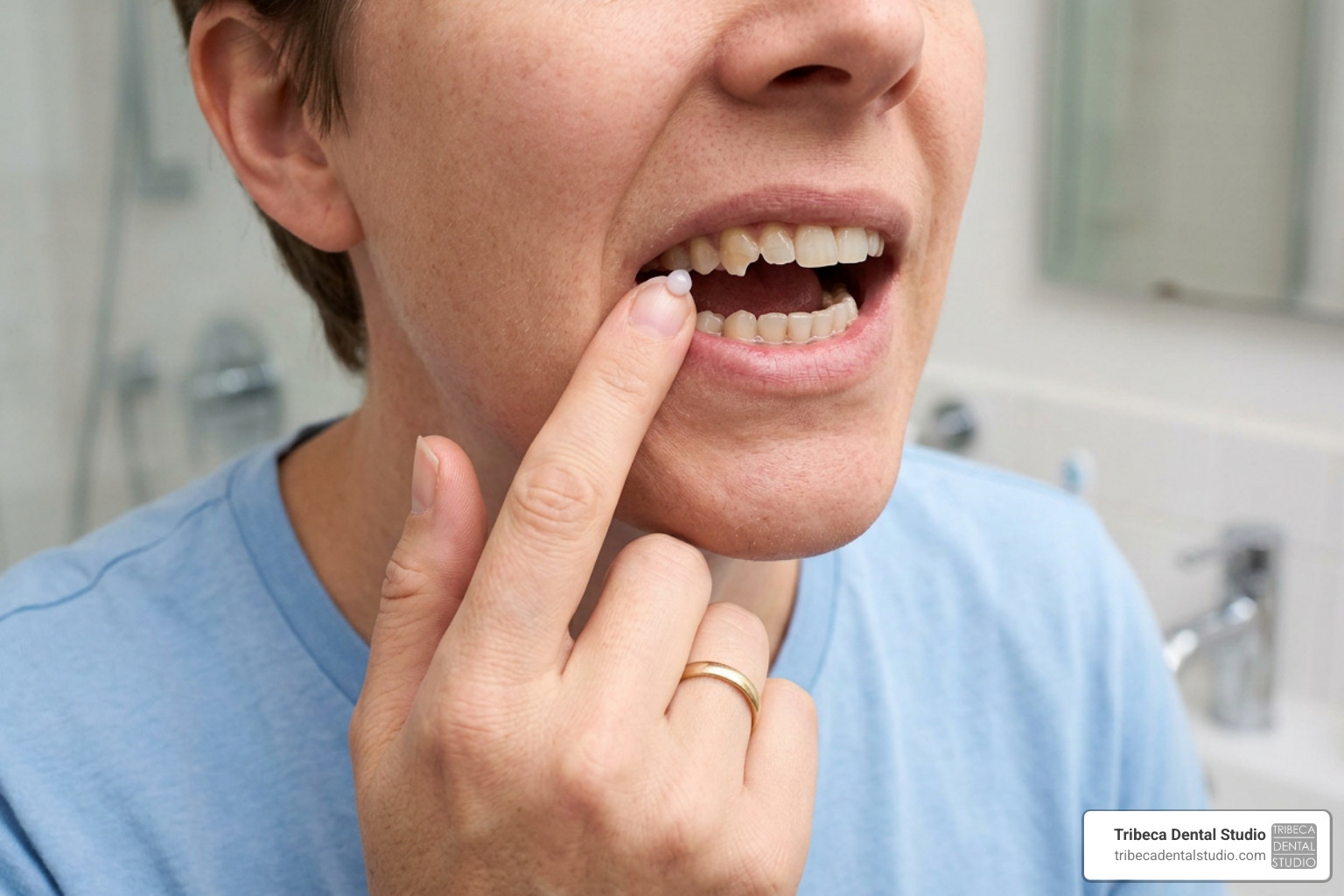
- Rinse Your Mouth: Gently rinse your mouth with warm salt water (about half a teaspoon of salt in a glass of warm water). This helps clean the area, clear out any loose tooth fragments, and reduce the risk of infection.
- Save the Fragment (If Possible): If you can find the broken piece of your tooth, save it. Keep it moist in a small container of milk or clean saliva. While dentists cannot always reattach a chipped fragment to a back molar, having it can sometimes help us assess the extent of the break.
- Protect Your Tongue and Cheek: Chipped molars often leave behind razor-sharp edges that can easily slice your tongue or the inside of your cheek. To prevent painful cuts, cover the sharp edge with a small piece of temporary dental wax (available at most NYC pharmacies) or even sugar-free chewing gum.
- Modify Your Diet: Avoid chewing on the side of your mouth with the damaged tooth. Stick to soft, easy-to-chew foods like yogurt, mashed potatoes, or soup. Stay away from extremely hot, cold, sugary, or acidic foods and drinks, as exposed inner tooth layers can be highly sensitive.
- Manage Pain and Swelling: If you are experiencing discomfort, over-the-counter pain relievers like ibuprofen or acetaminophen can help. If the chip was caused by physical trauma and your cheek is swelling, apply a cold compress to the outside of your face for 15 minutes at a time.
For more detailed guidance on handling dental injuries at home, you can review these First-aid tips for a chipped or broken tooth.
Can a Chipped Molar Heal on Its Own?
The short answer is no. Unlike bones, skin, or other tissues in your body, tooth enamel does not contain living cells and lacks blood vessels. This means it cannot regenerate or heal itself.
While a very tiny, superficial enamel nick might feel smoother over time as your tongue naturally polishes it, the physical structure of the tooth remains permanently altered and weakened. Ignoring even a minor chip can allow bacteria to slowly seep into the deeper layers of the tooth, eventually leading to decay, structural failure, or a painful infection.
To understand why proactive care is so vital for your back teeth, read our detailed guide on why you shouldn’t ignore a chip.
Is It an Emergency? Assessing the Severity of Your Molar Damage
Not every chipped tooth requires a midnight run to an emergency dental clinic, but some situations demand immediate professional intervention. To determine how quickly you need to see a dentist, you must evaluate the severity of the damage.
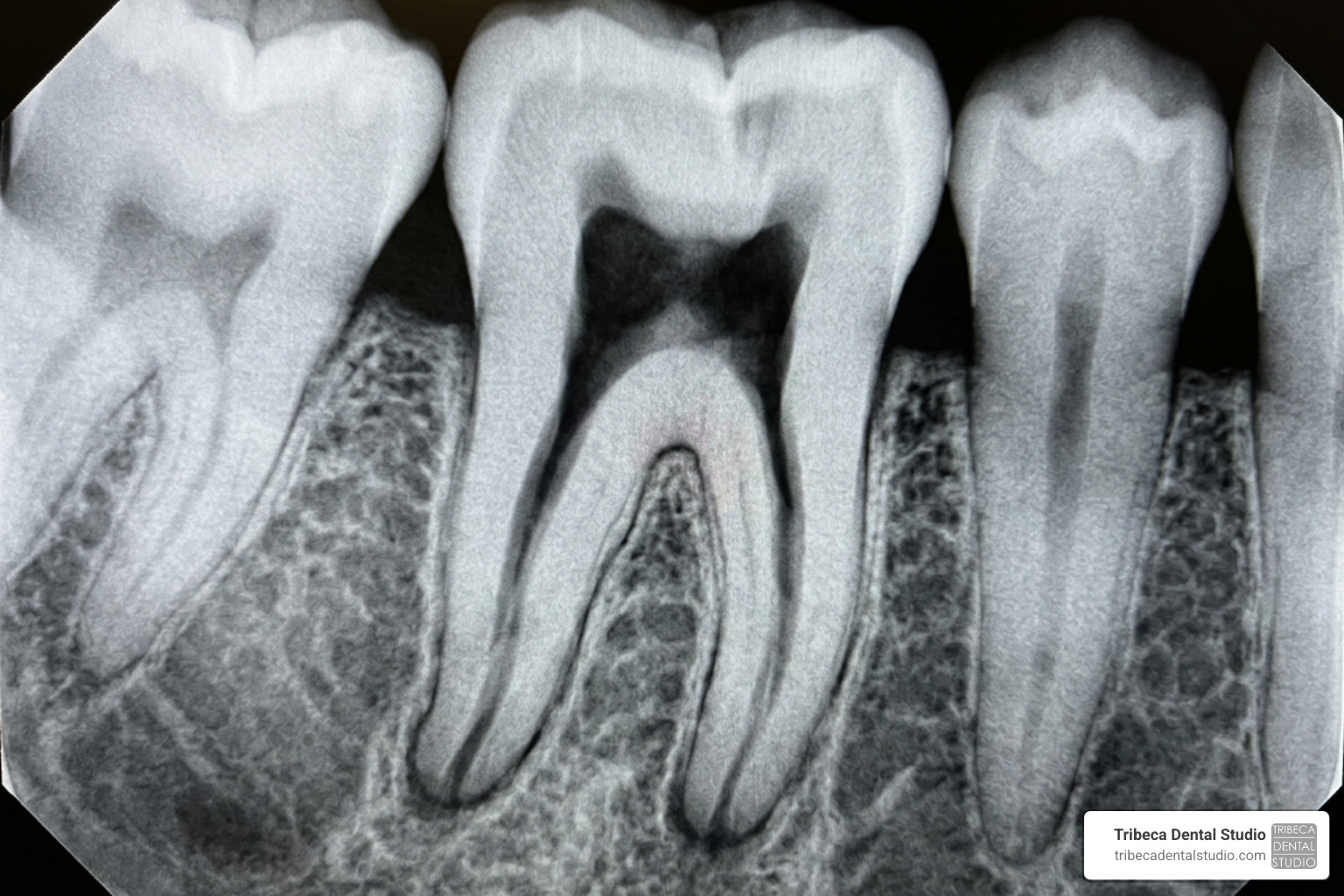
When you visit us, we will take a digital dental X-ray to look closely at the internal structure of the tooth, checking how close the fracture is to the nerve and ensuring there are no hidden cracks running down into the root.
Here is what your symptoms might be telling you about the depth of the damage:
- No Pain, Mild Roughness: If the chip is small, painless, and only feels rough to your tongue, it is likely confined to the outer enamel. You should still schedule an appointment within a week or two, but it is not an emergency.
- Sensitivity to Hot, Cold, or Sweet: If you feel a sharp flash of pain when drinking cold water or eating hot food, the chip has likely exposed the dentin — the sensitive, yellow layer of tooth directly beneath the enamel. This requires prompt attention within a few days.
- Constant, Throbbing Pain: Continual throbbing pain, pain when biting down, or a dull ache that keeps you awake at night indicates that the pulp (the nerve and blood supply at the center of the tooth) is irritated, damaged, or exposed. This is a dental emergency.
- Bleeding or Visible Pink/Red Spots: If the tooth is bleeding from the inside or you can see a tiny pink or red dot in the center of the fracture, the nerve is directly exposed. You should seek emergency dental care immediately to save the tooth and prevent severe infection.
To learn more about how to identify different types of structural damage, explore our resource on Emergency guidelines for chipped teeth.
Minor Cosmetic Chip vs. Serious Dental Emergency
To help you decide whether to call our office for a same-day emergency slot or schedule a routine visit, consider this quick comparison:
- Minor Chip: Only affects the enamel. No pain, no bleeding, and no swelling. The tooth is completely stable in the jaw. This can wait for the next available standard appointment.
- Serious Emergency: The chip is accompanied by severe pain, swelling of the face or gums, bleeding, a loose tooth, or a fever (which indicates an active infection). If you experience these symptoms, contact us immediately. Leaving a deep fracture untreated can lead to a dental abscess, systemic infection, and eventual tooth loss.
For a deeper dive into evaluating different levels of tooth damage, check out our guide on understanding all tooth repair options.
Professional Treatment Options for Fixing a Chipped Molar
When you come into our Tribeca office for fixing a chipped molar, we will customize your treatment plan based on the size of the chip, the health of the remaining tooth, and your functional needs.
Because molars are subjected to intense chewing forces, our primary goal is to restore the structural integrity and strength of the tooth. Here are the main professional treatment options:
- Smoothing and Polishing: For very minor enamel-only chips, we can simply smooth down the sharp edges and polish the tooth. This is a quick, painless, and highly conservative option.
- Dental Bonding (Composite Resin): We apply a tooth-colored composite resin to the chipped area, shape it to match your natural tooth contours, and harden it with a special curing light. While bonding is excellent for small repairs, it may not be strong enough for large, high-stress areas on back molars.
- Dental Inlays and Onlays: Often called “partial crowns,” onlays are custom restorations fabricated in a lab (or milled digitally) to replace one or more damaged cusps of a molar. They are ideal when the chip is too large for a filling but the tooth does not require a full crown, allowing us to preserve more of your natural tooth structure.
- Dental Crowns (Caps): A crown is a custom-made cap that completely covers the visible portion of the tooth above the gumline. It protects and strengthens a severely chipped or cracked molar, preventing further fractures.
- Root Canal Therapy: If the chip is deep enough to expose or infect the dental pulp, a root canal is necessary. We remove the damaged nerve tissue, clean and seal the canals, and then place a protective crown over the tooth to restore its strength.
- Tooth Extraction: If the fracture extends deep below the gumline or splits the root of the tooth, the molar cannot be saved. In these rare cases, we will gently extract the tooth and discuss replacement options like a dental implant to keep your bite aligned.
For step-by-step details on what to expect during these procedures, see our guide on getting a chipped tooth fixed.
Molar Repair Options Comparison
| Treatment | Best For | Lifespan | Invasiveness |
|---|---|---|---|
| Smoothing & Polishing | Tiny, non-painful enamel nicks | Permanent | Non-invasive (no drilling) |
| Dental Bonding | Small, low-stress chips | 3 to 10 years | Minimally invasive |
| Dental Onlay | Moderate damage involving tooth cusps | 10 to 15+ years | Moderately invasive |
| Dental Crown | Large fractures, weakened teeth | 10 to 20 years | Moderately invasive |
| Root Canal + Crown | Deep chips with nerve exposure | 10 to 20+ years | Highly invasive (restorative) |
How Dentists Choose the Best Method for Fixing a Chipped Molar
Choosing the right repair method is a careful science. When we evaluate your chipped molar at Tribeca Dental Studio, we weigh several critical factors:
- Chewing Pressure: Because back teeth take the brunt of your bite, we rarely recommend composite bonding for large molar chips. The heavy forces of chewing can easily shear off the resin. Crowns or onlays are typically much better suited for back teeth.
- Remaining Tooth Structure: A filling or bonding needs healthy surrounding walls to cling to. If more than half of the tooth’s chewing surface is damaged, a dental onlay or a full crown is required to keep the tooth from splitting.
- Bite Alignment: We look at how your upper and lower teeth meet. If you have a heavy bite or grind your teeth, we will opt for highly durable materials like zirconia or gold for your crown or onlay.
For more insights on how we approach back tooth restorations, read our specialized article on back molar tooth repair.
Durability and Lifespan of Different Molar Repairs
No dental restoration lasts forever, but choosing the right material and caring for it properly will extend its lifespan significantly.
- Dental Bonding: Typically lasts between 3 and 10 years. It is prone to wear and tear under heavy chewing pressure and can stain over time.
- Dental Onlays: Highly durable, often lasting 10 to 15 years or more. Because they are custom-made from strong porcelain, ceramic, or gold, they resist wear incredibly well.
- Dental Crowns: On average, crowns last between 10 and 20 years. Materials like zirconia and porcelain-fused-to-metal offer outstanding longevity for back teeth.
To explore more about the long-term outcomes and clinical details of these restoration types, you can review this Clinical insight on chipped molar repairs.
How to Prevent Future Molar Chips and Protect Your Smile
Once your molar is successfully repaired, you will want to protect your investment and keep the rest of your teeth safe. Here are the most effective ways to prevent future chips:
- Wear a Custom Night Guard: If you clench or grind your teeth at night, a custom-fitted night guard is the single best defense for your teeth. It cushions the biting forces and protects your enamel from wear and micro-fractures.
- Wear an Athletic Mouthguard: If you play contact sports (like basketball, soccer, or martial arts), always wear a professionally made sports mouthguard to cushion your teeth from external blows.
- Adjust Your Diet: Avoid chewing on exceptionally hard items. Don’t crunch on ice ice cubes, avoid biting unpopped popcorn kernels, and let hard candies dissolve in your mouth instead of biting them.
- Never Use Your Teeth as Tools: Your teeth are designed for chewing food — not for opening plastic packaging, tearing tape, or popping off bottle caps.
- Stay Up to Date with Dental Checkups: Regular cleanings and exams allow us to spot early signs of wear, hairline fractures, or failing restorations before they turn into major structural breaks.
If you are interested in reinforcing your smile or correcting minor wear, look into our cosmetic dentistry options.
Frequently Asked Questions
Is fixing a chipped molar painful?
No, the repair process itself is highly comfortable. For minor procedures like smoothing or simple bonding, anesthesia is rarely even needed. For deeper repairs like crowns, onlays, or root canals, we use local anesthesia to completely numb the area. You might experience some mild sensitivity or soreness for a few days after the procedure, but this is easily managed with over-the-counter pain relievers.
How long can I wait before fixing a chipped molar?
We recommend having any chipped tooth evaluated by a dentist within a few days, even if it doesn’t hurt. Leaving a chip untreated exposes the softer inner layers of the tooth to bacteria, which can lead to rapid decay, painful infections, and more complex (and expensive) treatments down the road.
What is the cheapest way to repair a chipped back tooth?
The most cost-effective professional option is dental bonding or a simple composite filling. However, while bonding is inexpensive upfront, it may not withstand the heavy chewing forces of a back molar for very long. Investing in a highly durable onlay or crown is often more cost-effective in the long run because it prevents the tooth from fracturing further and needing extraction.
Conclusion
A chipped molar can disrupt your day and make chewing uncomfortable, but with modern restorative dentistry, getting your smile back in business is straightforward and highly effective. From conservative composite bonding to durable, custom-crafted crowns and onlays, we have a solution for every level of damage.
At Tribeca Dental Studio in Manhattan, Dr. Nina Izhaky and our multi-specialty team are dedicated to providing a personalized, warm, and highly advanced approach to oral healthcare. We treat our patients like family, ensuring your comfort at every step of your treatment.
If you have recently chipped a tooth or want to discuss ways to protect your smile, schedule a consultation for cosmetic and restorative options to repair a chipped tooth with us today.