Why Understanding Cavity Filling Costs Matters
Cavity filling cost varies widely based on several factors, but here’s what you need to know right away:
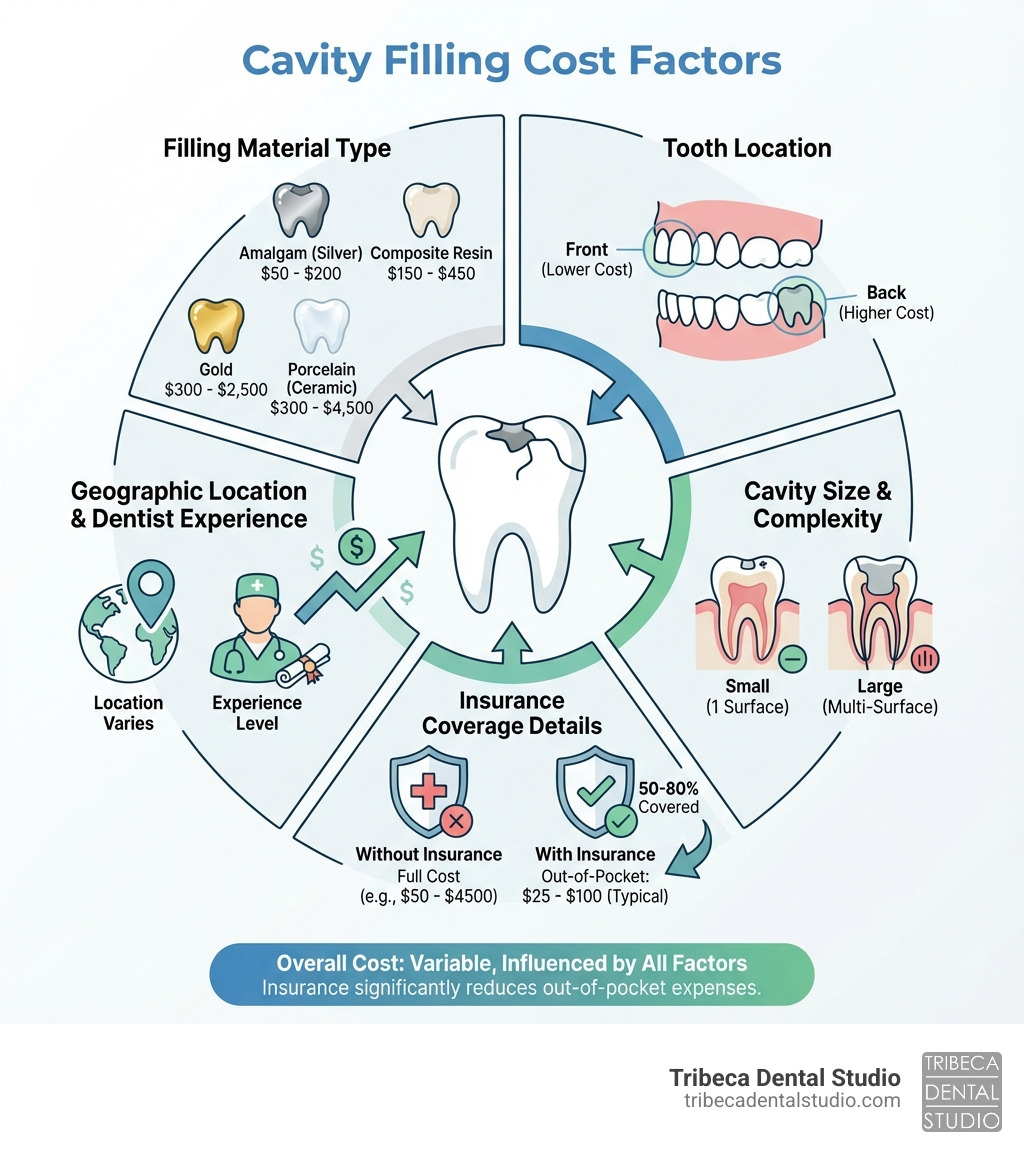
Average Cavity Filling Costs (Without Insurance):
- Amalgam (Silver): $50 – $200 per tooth
- Composite Resin (Tooth-Colored): $150 – $450 per tooth
- Gold: $300 – $2,500 per tooth
- Porcelain (Ceramic): $300 – $4,500 per tooth
With dental insurance, you typically pay $25 – $100 out-of-pocket per filling, as most plans cover 50-80% of the procedure cost.
If you’ve been told you have a cavity, you’re in good company. Around 90% of adults have experienced tooth decay at some point, and the average person has five to eight fillings in their mouth. But when your dentist recommends treatment, the first question that comes to mind is often: How much is this going to cost?
The truth is, cavity filling costs can be confusing. You might see prices ranging from $100 to over $4,000 for what seems like the same procedure. This wide range depends on the filling material, your tooth’s location, your dentist’s experience, where you live, and whether you have insurance.
Getting a filling isn’t optional. Left untreated, a cavity will continue to grow, potentially requiring more expensive procedures like root canals or crowns. Early treatment saves both your tooth and your wallet.
I’m Dr. Nina Izhaky, and I’ve helped countless patients at Tribeca Dental Studio steer cavity filling cost decisions while providing personalized, mercury-free restorations. Understanding the financial aspects of dental care helps you make informed choices about your oral health without unnecessary stress.
A Detailed Breakdown of Dental Filling Costs and Types
When it comes to dental fillings, one size certainly doesn’t fit all. The material chosen for your filling is a major determinant of its cavity filling cost, durability, and aesthetic appeal. At Tribeca Dental Studio, we believe in discussing all options with you, ensuring you understand the pros and cons of each. Let’s explore the different types of dental filling materials available.

| Filling Material | Average Cost (Without Insurance) | Longevity | Aesthetics |
|---|---|---|---|
| Amalgam (Silver) | $50 – $200 per tooth | 10-15 years | Visible (silver) |
| Composite Resin | $150 – $450 per tooth | 5-7 years | Tooth-colored |
| Gold | $300 – $2,500 per tooth | 15+ years | Visible (gold) |
| Porcelain (Ceramic) | $300 – $4,500 per tooth | Up to 15 years | Tooth-colored |
Amalgam (Silver) Fillings
Amalgam fillings, often called “silver fillings,” are typically the least expensive option, with national averages ranging from $50 to $200 per tooth. They are made from a mix of durable metals, including elemental mercury, silver, copper, and tin. Amalgam fillings have been a staple in dentistry for many years due to their strength and cost-effectiveness.
Their primary advantage is their exceptional durability, making them less prone to breaking, especially in back teeth that endure significant chewing pressure. They can last a good 10 to 15 years. However, their silver-gray appearance means they are quite visible, which is why they are usually reserved for molars or less visible areas of the mouth. While the U.S. Food & Drug Administration (FDA) considers the amount of mercury in silver amalgam fillings safe for most people, we understand that some patients have concerns. You can find more information on dental amalgam fillings from official sources.
Information on dental amalgam fillings
Composite Resin (Tooth-Colored) Fillings
Composite resin fillings are by far the most popular choice today, and it’s easy to see why. Averaging around $150 to $450 per tooth without insurance, these fillings are designed to match the natural shade of your teeth, blending seamlessly with your smile. In New York City, specifically, you might expect to pay between $200 and $300 for a composite filling. This makes them ideal for visible areas, like front teeth, or for patients who prefer a more aesthetic solution.
These fillings are made from a combination of acrylic resin and powdered glass, which bonds directly to the tooth structure. This direct bonding often means less tooth preparation is required compared to amalgam, preserving more of your natural tooth. While they are aesthetically superior, their longevity is generally 5 to 7 years, which is less than amalgam or gold fillings. They may not be as durable as metal fillings for very large cavities or those subjected to heavy chewing forces. Learn more about our approach to tooth-colored fillings.
More info about tooth-colored fillings
Gold Fillings (Inlays/Onlays)
If durability and longevity are your top priorities, and budget is less of a concern, gold fillings might be for you. These fillings, also called inlays or onlays, are among the most expensive options, with costs ranging from $300 to $2,500 per filling. Gold fillings are crafted from a blend of gold, copper, and other metals, offering best strength and resistance to corrosion. They are incredibly durable and can last an impressive 15 to 30 years, often outliving other filling types.
However, gold fillings require multiple dental visits as they are custom-made in a dental laboratory before being cemented into place. Their distinct gold color makes them highly visible, which might not be desirable for everyone. Despite their high cavity filling cost and aesthetic difference, many patients appreciate their excellent biocompatibility and long-term reliability.
Porcelain (Ceramic) Fillings
Porcelain, or ceramic, fillings offer an excellent balance of aesthetics and durability. Similar to gold, these are often inlays or onlays, custom-made in a lab, and then bonded to the tooth. The cavity filling cost for porcelain can range from $300 to $4,500 per filling, placing them among the higher-end options.
Porcelain fillings are highly valued for their ability to perfectly match your tooth color and their stain resistance, ensuring a natural-looking and long-lasting restoration. They are robust and can last up to 10 to 15 years with proper care. While they are strong, they can be more brittle than gold and may not be suitable for areas under extreme chewing pressure. The process usually involves two appointments: one for preparation and impressions, and a second for bonding the custom-made filling.
Key Factors That Influence the Cavity Filling Cost
Beyond the material itself, several other variables can significantly alter the final price of your dental filling. Understanding these factors can help you anticipate costs and make informed decisions about your treatment plan. At Tribeca Dental Studio in Manhattan, we ensure transparency regarding all aspects influencing your cavity filling cost.

Cavity Size and Complexity
One of the most significant factors influencing the cavity filling cost is the size and complexity of the cavity itself. A small, simple cavity that affects only one surface of the tooth will naturally be less expensive to fill than a large, complex cavity that spans multiple surfaces or has progressed deeply into the tooth.
- Number of Surfaces: Dentists often categorize fillings by the number of tooth surfaces they cover (e.g., one-surface, two-surface, or multi-surface). Each additional surface generally increases the cost because it requires more material and more time for the dentist to prepare and sculpt the filling. For instance, a standard one-surface filling might cost $100 to $250, while a multi-surface filling could exceed $300.
- Amount of Decay: If the decay is extensive, it means more of the tooth structure needs to be removed and replaced. This can lead to a larger, more intricate filling, or even necessitate an inlay, onlay, or crown if there isn’t enough healthy tooth structure left to support a traditional filling. The deeper the decay, the more complex the procedure, and the higher the cost.
It’s a good reminder that addressing cavities early can save you money and discomfort in the long run. To understand more about how quickly decay can progress, you can learn how long cavities take to form.
Learn how long cavities take to form
Tooth Location
The location of the affected tooth within your mouth also plays a role in the cavity filling cost.
- Front Teeth vs. Molars: Fillings in front teeth are often more expensive if you opt for aesthetic materials like composite or porcelain because they need to be perfectly matched to your natural tooth color and carefully sculpted to look natural. Back teeth (molars and premolars), while less visible, might require stronger, more durable materials like amalgam or gold due to the immense chewing pressure they withstand.
- Accessibility for the Dentist: Teeth that are harder to reach or located in awkward positions can make the filling procedure more challenging and time-consuming for the dentist, potentially increasing the cost.
- Chewing Pressure: Molars bear the brunt of chewing forces. A filling in a molar needs to be robust, which might lead to a recommendation for more durable materials, which often come with a higher price tag.
Additional Procedure Costs
The total cavity filling cost isn’t just about the filling material itself. There are often associated costs for other necessary dental procedures that contribute to the overall expense.
- Dental Exam: Before any treatment, a thorough dental exam is crucial to assess your oral health and accurately diagnose the cavity. This fee is typically separate from the filling cost.
- X-rays: X-rays are essential for detecting cavities that aren’t visible to the naked eye, determining the extent of decay, and planning the treatment. A single dental X-ray can cost anywhere from $25 to $200, depending on the type and number needed.
- Anesthesia or Sedation: For comfort during the procedure, local anesthesia is standard and usually included in the filling cost. However, if you require additional sedation options, such as nitrous oxide (laughing gas) or oral sedation, these will incur extra charges, typically ranging from $50 to $200. We prioritize your comfort at Tribeca Dental Studio, and we’ll discuss all options with you.
- Polishing: After the filling is placed, it needs to be carefully shaped and polished to ensure a smooth surface and proper bite alignment. This step is usually part of the filling procedure cost but is vital for the longevity and comfort of your new filling.
Paying for Fillings: With and Without Dental Insurance
Navigating the financial side of dental care can feel daunting, especially when faced with an unexpected cavity. Understanding your payment options is crucial, whether you have a comprehensive dental plan or are paying out-of-pocket. At Tribeca Dental Studio, we work with you to understand your options and simplify the process.
The Cavity Filling Cost With Insurance
Most dental insurance plans are designed to help alleviate the financial burden of procedures like cavity fillings. If you have dental insurance, you’ll typically find that plans cover a significant portion of the cavity filling cost.
- Typical Coverage: Many dental plans cover between 50% and 80% of the cost for basic restorative procedures like fillings, after your annual deductible has been met.
- Deductibles and Co-pays: A deductible is the amount you need to pay out-of-pocket before your insurance coverage kicks in. Once your deductible is met, you’ll usually pay a co-pay or coinsurance (a percentage of the cost) for the procedure, with your insurance covering the rest. For example, if your plan covers 80% of a $150 filling, and your deductible is met, you’d pay $30 (20% coinsurance).
- Annual Maximums: Most dental insurance plans have an annual maximum benefit, which is the highest amount your insurance will pay for your dental care within a year. It’s important to be aware of this limit, especially if you anticipate needing multiple procedures.
- In-network vs. Out-of-network: Choosing an in-network dentist, like us at Tribeca Dental Studio, can often lead to lower out-of-pocket costs because we have pre-negotiated rates with insurance providers. While we welcome all patients, understanding your plan’s network can save you money. For more detailed information on navigating your dental insurance, visit our insurance page.
The Cavity Filling Cost Without Insurance
For those without dental insurance, the prospect of paying the full cavity filling cost out-of-pocket can be concerning. On average, a tooth filling can cost anywhere from $150 to $530 without insurance, though this can vary widely based on the factors we’ve already discussed. In New York City, these costs can sometimes be on the higher end of the national averages.
It’s crucial to get a clear, detailed quote from your dentist before proceeding with treatment. Don’t hesitate to ask questions to fully understand what you’re paying for. Here are some questions we encourage you to ask us or any dental provider:
- What are the total estimated costs for my filling, including all associated procedures like X-rays or anesthesia?
- Are there different material options available for my specific cavity, and what are the cost differences?
- Do you offer any cash discounts for upfront payment?
- Are payment plans or financing options available through your office or a third-party provider?
- What are the potential long-term costs or implications if I delay this treatment?
How Insurance Coverage Varies by Material
It’s not uncommon for dental insurance coverage to differ based on the filling material chosen. This is a crucial point to discuss with your insurance provider.
- Amalgam vs. Composite Coverage: Many dental plans consider amalgam fillings a basic, medically necessary procedure and may cover a higher percentage of their cost. Composite (tooth-colored) fillings, especially for back teeth (molars and bicuspids), might sometimes be classified as “cosmetic” by certain insurance companies, leading to lower coverage or even no coverage in some cases. This means you might pay a larger portion of the cavity filling cost out-of-pocket if you choose composite over amalgam, even if your dentist recommends composite for other reasons.
- Least Expensive Alternative Provision (LEAP): Some insurance plans have a “Least Expensive Alternative Provision” (LEAP). If you choose a more expensive material like composite for a tooth where amalgam would technically suffice, the insurance company might only cover the cost equivalent to an amalgam filling, leaving you responsible for the difference.
- Waiting Periods: Be aware that some dental plans have waiting periods before they will cover major procedures like fillings. These waiting periods can range from 6 to 12 months after enrollment, so check your policy details if you’re new to a plan.
How to Save Money on Your Dental Filling
Facing a cavity filling cost doesn’t have to break the bank. Proactive measures and smart financial planning can make essential dental care more affordable. At Tribeca Dental Studio, we believe in empowering our patients with knowledge and options.
Prevention is the Best Medicine
We can’t stress this enough: preventing cavities in the first place is the absolute best way to save money on fillings. It’s much easier (and cheaper!) to maintain good oral health than to repair damage.
- Regular Checkups: Scheduling regular dental checkups every six to twelve months allows us to detect and address any potential issues, like tiny cavities, before they become larger and more expensive problems.
- Professional Cleanings: Professional cleanings remove plaque and tartar buildup that at-home brushing can miss, significantly reducing your risk of developing cavities. Want to know more about the costs of keeping your teeth sparkling? Check out our guide to teeth cleaning costs.
Guide to teeth cleaning costs - At-Home Oral Hygiene: A consistent routine of brushing twice daily with fluoride toothpaste and flossing once a day is your first line of defense against tooth decay. We’re always happy to demonstrate proper brushing and flossing techniques to help you optimize your home care. Learn more about how we emphasize preventative dentistry.
More info about preventive dentistry
Exploring Affordable Care Options
Even with the best preventative care, cavities can happen. If you find yourself needing a filling, there are ways to make it more affordable, especially if you don’t have traditional dental insurance.
- Dental Schools: In New York City, institutions like NYU College of Dentistry and Columbia University College of Dental Medicine often offer dental services, including fillings, at reduced rates. These treatments are performed by dental students under the close supervision of experienced faculty, providing quality care at a lower cavity filling cost.
- Community Health Clinics: Many community health centers across New York City provide low-cost dental services to underserved populations. These clinics are a fantastic resource for affordable care. You can contact your local health department to find a community health center near you.
- Health Savings Accounts (HSA) and Flexible Spending Accounts (FSA): If you have an HSA or FSA through your employer, these accounts allow you to set aside pre-tax money specifically for healthcare expenses, including dental work. Using these funds can effectively reduce your cavity filling cost by saving you money on taxes.
- Medicaid: For eligible low-income individuals and families in New York, Medicaid provides health insurance that can cover dental care. While it primarily covers children’s dental benefits, some states, including New York, may offer dental benefits for adults as well. It’s worth checking your eligibility.
Information on Medicaid dental benefits
Frequently Asked Questions about Cavity Filling Costs
We often hear many questions about the cavity filling cost and related concerns. Here are some of the most common ones we address at Tribeca Dental Studio.
How long do dental fillings last?
The longevity of a dental filling largely depends on the material used, your oral hygiene habits, and even your chewing patterns.
- Material Impact: As we discussed, silver amalgam fillings typically last 10-15 years, while composite resin (tooth-colored) fillings last about 5-7 years. Gold fillings boast an impressive 10-30 years, and porcelain ceramic fillings can last up to 10-15 years.
- Oral Hygiene: Diligent brushing and flossing significantly contribute to the lifespan of your fillings by preventing new decay around the edges. Poor oral hygiene can lead to “secondary cavities” forming around an existing filling, necessitating its replacement.
- Chewing Habits: If you grind your teeth (bruxism) or frequently chew on hard foods, it can put extra strain on your fillings, potentially shortening their lifespan. At Tribeca Dental Studio, we can recommend solutions like nightguards if bruxism is a concern.
For more in-depth information on the durability of different dental restorations, you can explore research on filling durability.
Research on filling durability
Is it cheaper to get multiple cavities filled at once?
Generally, yes, it can be more cost-effective to address multiple cavities in a single visit, or at least consolidate them into fewer appointments.
- Potential Savings: Consolidating appointments can lead to savings on facility fees, the cost of numbing agents, and X-rays, as these might be charged per visit rather than per filling.
- Reduced Appointment Fees: If your dentist charges a flat fee for the appointment in addition to the per-filling cost, combining treatments will reduce the number of times you incur that fee.
- Dentist Discounts: Some dentists might offer a modest discount for multiple fillings performed during the same visit. It’s always worth asking about this when discussing your treatment plan.
- Treatment Planning: At Tribeca Dental Studio, we work with you to create a comprehensive treatment plan that balances your dental needs with your budget, suggesting the most efficient way to address all your cavities.
What happens if I don’t get a cavity filled?
Ignoring a cavity is never a good idea, as it almost always leads to more pain, more extensive treatment, and a higher cavity filling cost down the line.
- Progression of Decay: A cavity is essentially a hole in your tooth caused by decay. If left untreated, this decay will continue to spread, growing larger and deeper. What might start as a small, easily fillable cavity can quickly become a significant problem.
- Risk of Infection: As the decay progresses, it can reach the pulp (the innermost part of your tooth containing nerves and blood vessels). This can lead to a painful infection, an abscess, and intense discomfort.
- Needing a Root Canal or Crown: If the infection reaches the pulp, a simple filling will no longer suffice. You would likely need a root canal, a more complex and expensive procedure to remove the infected pulp. After a root canal, a dental crown is often required to protect the weakened tooth, adding further to the cost and complexity.
- Potential Tooth Loss: In severe cases where the tooth is too damaged to be saved, extraction might be the only option. Losing a tooth can affect your chewing ability, speech, and the alignment of your other teeth, often requiring further costly treatments like dental implants or bridges.
Conclusion: Investing in Your Oral Health
Understanding cavity filling cost can seem complicated, with various factors like material choice, cavity size, tooth location, and insurance coverage all playing a role. However, the most important takeaway is that investing in your oral health through timely treatment and preventive care is always the wisest and most cost-effective approach.
Preventing cavities with regular checkups, professional cleanings, and excellent at-home oral hygiene is the ultimate money-saver. When a filling is necessary, knowing your options—from amalgam to porcelain—and understanding how insurance or alternative payment methods can help, empowers you to make the best decisions for your health and budget.
At Tribeca Dental Studio, we provide personalized, advanced, and welcoming oral healthcare right here in Manhattan. We treat our patients like family, taking the time to explain all your treatment options and associated costs, ensuring you make the best decision for your health and budget. Don’t let confusion about cavity filling cost deter you from getting the care you need.