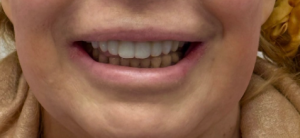
How to Replace a Missing Tooth Without Compromising Your Smile
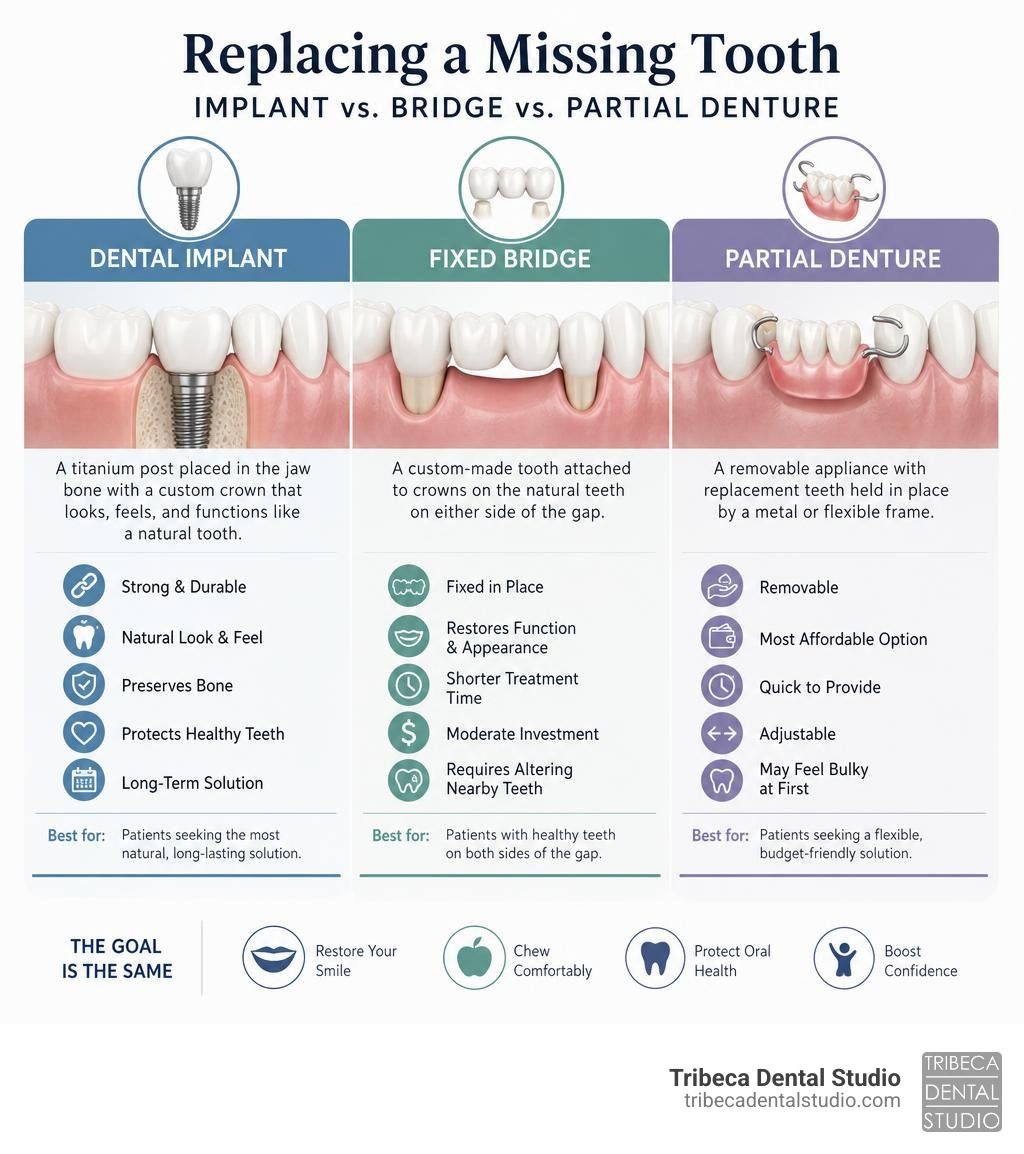
To replace missing tooth spaces, most people choose a dental implant, fixed bridge, or removable partial denture. The right choice depends on the location of the gap, your jawbone and gum health, treatment timeline, budget, and whether protecting nearby healthy teeth is a priority.
- Dental implant: A surgically placed post and custom crown designed for strong chewing, natural appearance, and long-term function.
- Fixed bridge: A non-removable replacement tooth supported by crowns on neighboring teeth.
- Partial denture or flipper: A removable option that can restore appearance and basic function, often used as a temporary or lower-cost choice.
A missing tooth can affect far more than a photo. It may change how you chew, allow nearby teeth to drift, and contribute to jawbone loss over time. By age 64, the average adult has three or more missing or decayed teeth, so this is a common problem with several modern treatment paths.
At Tribeca Dental Studio, we combine advanced implant dentistry, zygomatic implant care, full-mouth reconstruction, dental crowns, gum disease treatment, periodontal care, and deep cleaning with personalized smile planning. We are also known for no-prep veneers in NYC and conservative smile-design work that aims to preserve as much healthy tooth structure as possible while improving the look of your smile.
I am Dr. Nina Izhaky, an NYU College of Dentistry graduate with ongoing training in modern restorative and cosmetic dentistry, including personalized care to help patients replace missing tooth gaps. At Tribeca Dental Studio, our team uses digital technology and on-site specialty care to plan the next steps around your oral health, comfort, and long-term goals.
Key replace missing tooth vocabulary:
What to Do Immediately When You Lose a Tooth
Losing a tooth unexpectedly—whether from a sports injury, biting down on something unyieldingly hard, or sudden severe dental trauma—can feel alarming. However, taking swift, composed action within the first hour can dramatically improve your clinical outcomes.
If an adult tooth is completely knocked out (an avulsed tooth), treat it as a true dental emergency:
- Pick up the tooth carefully: Touch only the white enamel crown. Never handle the tooth by its sensitive root surface, as scrubbing or touching the root can damage delicate periodontal ligament cells necessary for reattachment.
- Rinse gently if soiled: If the tooth is dirty, rinse it very briefly (no more than 10 seconds) in lukewarm water or fresh milk. Do not scrub it, brush it, or rinse it under harsh, direct running tap water.
- Attempt reinsertion: If possible, try placing the tooth back into its socket facing the correct direction. Bite down gently on a clean piece of gauze or cloth to hold it in place.
- Keep the tooth moist: If you cannot reinsert it into your socket, place the tooth in a small container of cold whole milk or isotonic saline solution. If milk is unavailable, hold the tooth inside your mouth between your cheek and gum to keep it coated in saliva. Do not let the tooth dry out, and do not submerge it in regular tap water for extended periods.
- Seek urgent professional care: Contact an emergency dentist immediately. Reimplantation is most successful when performed within 30 to 60 minutes of the injury.
If the tooth cannot be saved or was lost due to deep decay or advanced structural damage, stay calm. Modern dentistry offers highly sophisticated treatment pathways to seamlessly replace missing tooth structures and restore full oral harmony.
Comprehensive Treatment Options to Replace Missing Tooth
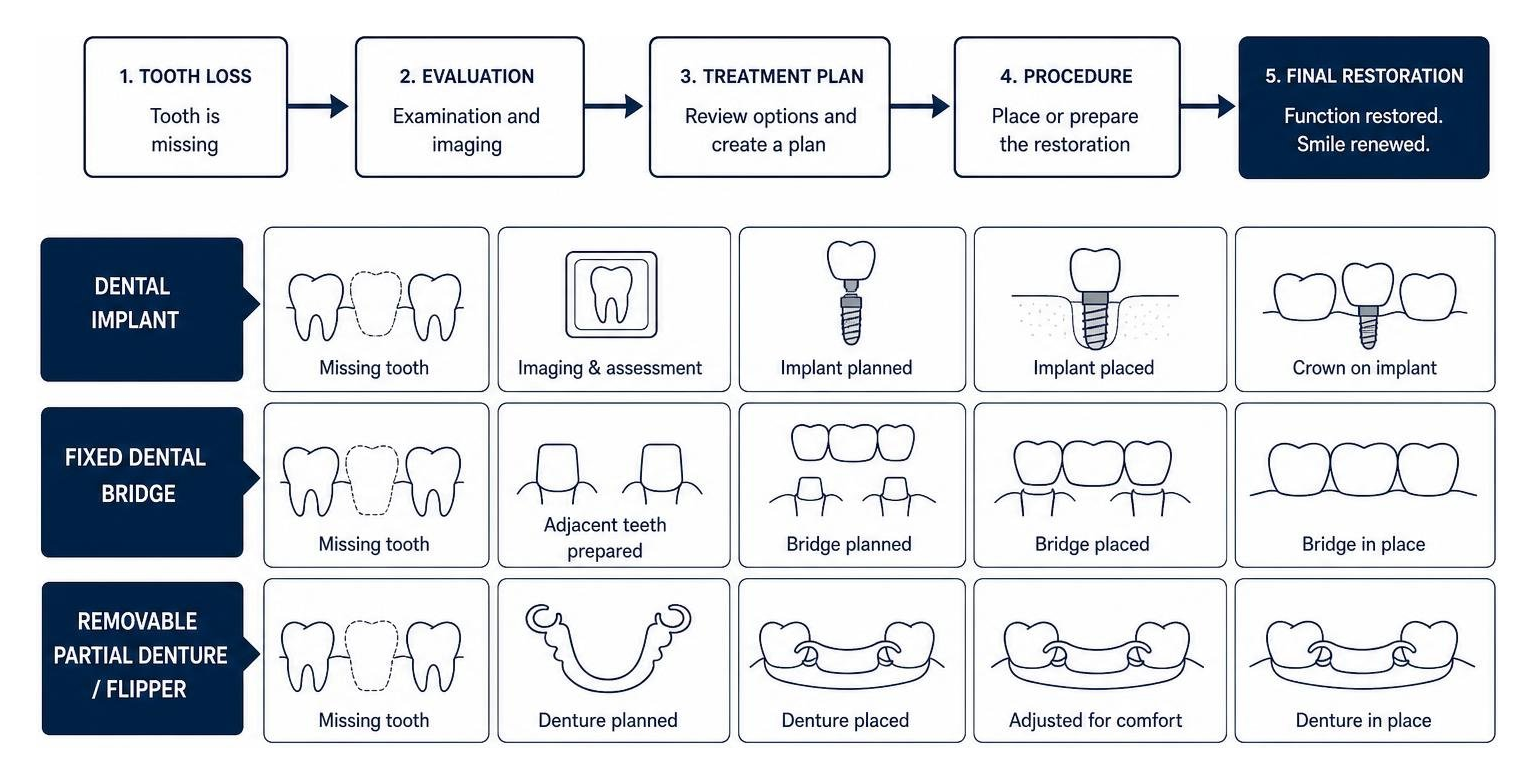
When evaluating how to replace missing tooth gaps, patients generally choose among three primary restorative pathways: standalone dental implants, fixed dental bridges, or removable prosthetics like partial dentures. Each method varies in aesthetic realism, procedural requirements, long-term durability, and overall impact on neighboring dental tissues.
| Feature / Criteria | Dental Implant | Fixed Dental Bridge | Removable Partial Denture / Flipper |
|---|---|---|---|
| Support Structure | Standalone titanium post embedded in jawbone | Anchored to adjacent natural teeth (abutments) | Rests on gums with metal or plastic clasps |
| Adjacent Teeth Impact | Zero impact; leaves adjacent enamel 100% untouched | Requires permanent shaving/grinding of neighboring teeth | Clips onto nearby teeth; can cause minor localized wear |
| Jawbone Preservation | Prevents bone loss by stimulating the jawbone | Does not stop bone loss under the missing tooth gap | Does not stop bone loss; may accelerate ridge flattening |
| Chewing Efficiency | Full chewing capacity (restores ~99% bite force) | Strong chewing capacity (~70-80% bite force) | Moderate chewing capacity (~30-50% bite force) |
| Care & Maintenance | Brushing and flossing just like natural teeth | Requires special floss threaders under the bridge pontic | Requires daily removal, soaking, and specialized cleaning |
| Primary Indication | Long-term single or multi-tooth restoration | Fast non-surgical fixed fix when neighbor teeth need crowns | Short-term temporary or economical removable replacement |
Understanding these primary differences helps tailor a solution to your specific anatomical and lifestyle needs. You can explore our comprehensive solutions for Dental Implants to see how custom clinical planning supports each unique smile.
Dental Implants: The Golden Standard to Replace Missing Tooth
A dental implant is widely regarded by dental clinical research as the most anatomically complete method to replace missing tooth gaps. Unlike traditional prosthetics that sit above the gumline, an implant replaces both the visible crown and the unseen root beneath the gums.
A single-tooth implant consists of three key components:
- The Implant Post: A biocompatible titanium or zirconia screw inserted into the jawbone, acting as a root substitute.
- The Abutment: A secure connector piece attached to the post after healing.
- The Custom Restoration: A handcrafted porcelain or zirconia crown crafted to match the exact shape, translucency, and shade of neighboring teeth.
As outlined in research on Dental Implants: Types, Purpose & Benefits, the standout feature of an implant is its biological independence. Because it relies entirely on the jawbone for support, it does not require reshaping adjacent healthy teeth. When deciding between different approaches, evaluating Crowns vs Bridges vs Implants reveals that implants preserve maximum natural tooth structure over time.
Fixed Dental Bridges and Partial Dentures to Replace Missing Tooth
For patients who may not be immediate surgical candidates or who prefer non-surgical alternatives, traditional fixed bridges and removable prosthetics offer well-established choices.
A fixed dental bridge bridges the gap created by one or more missing teeth. It uses the natural teeth on either side of the space as anchors (abutment teeth). To place a bridge, our dental team shapes down the protective enamel on those neighboring teeth to fit custom support crowns. A floating artificial tooth (pontic) sits between them to fill the empty space. Modern ceramics allow us to match your natural smile closely, as detailed in our guide to Dental Crowns & Bridges.
A removable partial denture consists of replacement teeth attached to a pink acrylic or metal frame that clips onto existing teeth. A lightweight version, often referred to as an “acrylic flipper,” is frequently used as a temporary aesthetic placeholder while a patient heals from tooth extraction or waits for an implant post to integrate. While removable dentures restore visual continuity, they require daily removal for cleaning, offer reduced chewing force compared to fixed solutions, and do not prevent underlying jawbone loss over time.
Dental Implants: Procedure, Candidacy, and Disqualifying Factors
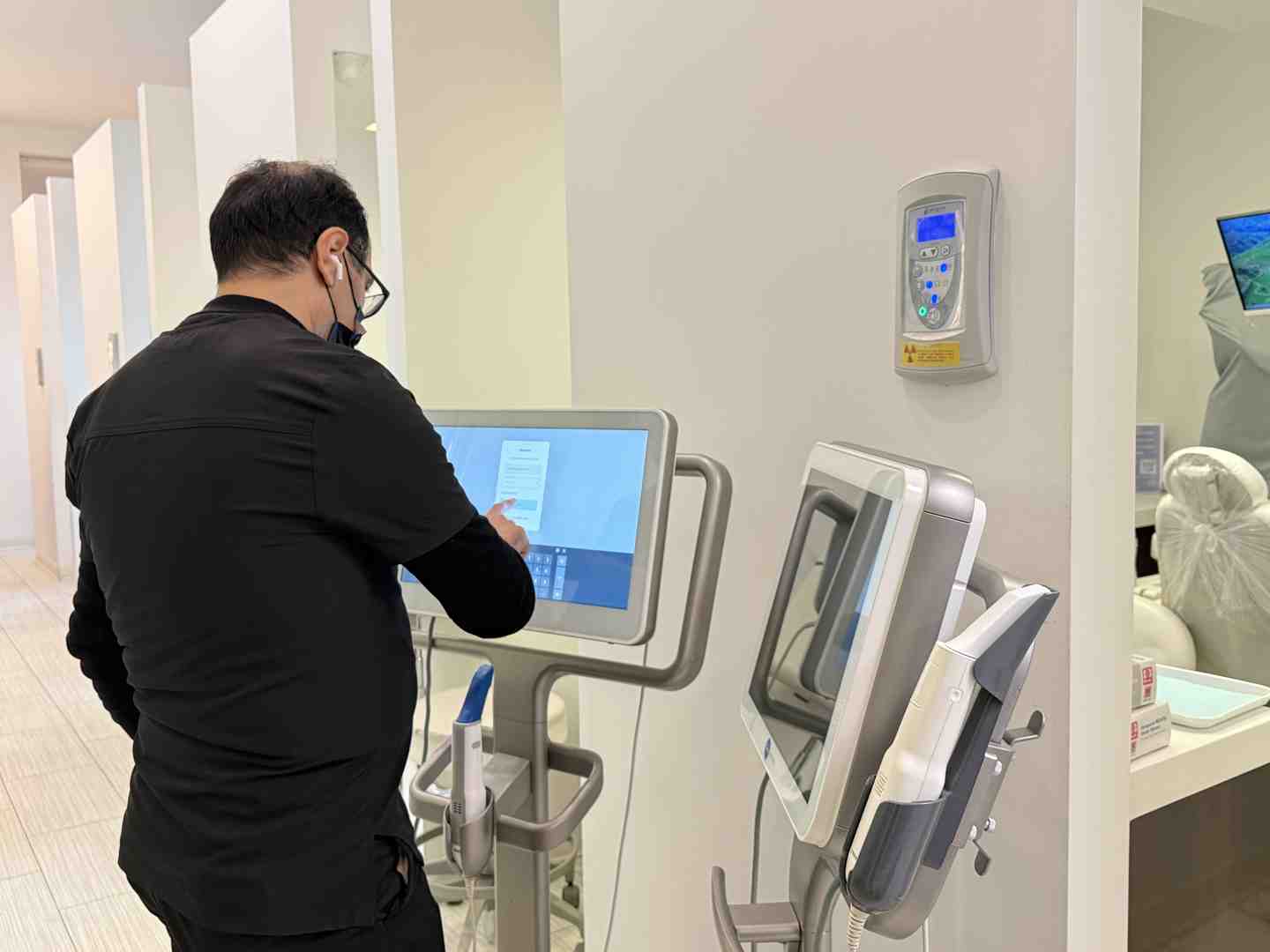
Planning a successful dental implant procedure requires rigorous clinical evaluation, advanced technology, and precise surgical execution. According to insights from Lost a tooth? What to know about dental implants – Harvard Health, assessing overall medical health, jawbone height, and tissue volume is critical before initiating implant therapy.
At Tribeca Dental Studio, we utilize high-definition Cone Beam Computed Tomography (CBCT 3D imaging). This technology allows board-certified implant specialists, including Dr. Sam Morhaim, to map nerve pathways, sinus cavities, and precise jawbone contours in three dimensions, ensuring accurate computer-guided implant positioning tailored to each patient’s exact anatomy.
Surgical Timeline and Osseointegration Process
Receiving a dental implant involves a structured, step-by-step healing journey designed to achieve stable, long-term function:
- Comprehensive Assessment: Complete digital 3D scanning, oral health examination, and custom treatment formulation.
- Implant Placement: Under local anesthesia or gentle sedation, the dental implant post is precisely set into the jawbone. Initial surgical recovery of soft tissues typically takes about 5 to 7 days with minimal discomfort.
- Osseointegration: Over the following 3 to 6 months, natural bone cells attach directly to the titanium surface. This natural fusion process, known as osseointegration, locks the post firmly into place.
- Abutment & Impression: Once fully integrated, a tiny connector abutment is attached, and a precise digital scan is captured.
- Final Crown Placement: A custom-milled porcelain or zirconia crown is securely fixed to the abutment, completing your smile.
Throughout the healing phase, patients are rarely left without teeth; comfortable temporary restorations are provided to preserve aesthetics and function. For a deeper understanding of long-term expectations, explore our insights on The Lifespan of Dental Implants.
Disqualifying Conditions and Advanced Solutions for Bone Loss
While dental implants are suitable for a wide range of adults, certain medical conditions and physical factors require careful management prior to surgery:
- Uncontrolled Chronic Illness: Unmanaged type 2 diabetes or active autoimmune conditions can slow natural healing. Once medical conditions are stabilized, patients often become excellent candidates.
- Heavy Tobacco Use: Smoking or heavy vaping restricts capillary blood flow to gum tissues, increasing risks during the initial healing phase.
- Specific Medications: Oral or intravenous bisphosphonate therapies for osteoporosis require detailed medical clearance due to their impact on bone remodeling.
- Inadequate Jawbone Volume: Following tooth loss, jawbone tissue naturally resorbs (shrinks). Without sufficient bone depth, standard implants lack necessary structural support.
For patients experiencing significant bone loss, modern oral surgery provides highly reliable restorative pathways. Advanced procedures like targeted Bone Grafting rebuild lost jawbone density using specialized graft materials. In cases of severe upper jaw bone loss where traditional bone grafts are impractical, specialized solutions such as those described in our Zygomatic Dental Implants Guide 2026 anchor securely into the dense cheekbone, allowing complex restorations to proceed with confidence.
Treatment Timing and Long-Term Oral Health Consequences

Choosing how to replace missing tooth gaps involves weighing clinical benefits, procedure timelines, and long-term oral health outcomes. When a missing tooth is left unaddressed, the jawbone beneath the empty socket begins to deteriorate through bone resorption, losing up to 25% of its local bone width within the first year alone.
Furthermore, adjacent teeth naturally shift and tilt toward the open gap, disrupting your bite alignment (occlusion) and creating tight spaces that are difficult to clean. This shifting increases risks of secondary tooth decay, jaw joint pain (TMJ disorders), and gum breakdown over time.
Clinical Considerations and Oral Health Value
When planning your care, it is essential to review treatment options thoroughly with your dental care team. Restoring a missing tooth helps safeguard adjacent natural teeth from unnecessary structural alterations and prevents complex bite misalignments. Selecting a solution designed for stability and clinical predictability ensures your oral health remains robust for years to come.
Risks of Unverified Solutions vs Professional Dental Care
In an attempt to find immediate aesthetic fixes, some individuals turn to over-the-counter DIY temporary tooth kits, moldable plastic beads, or online cosmetic novelties. While these temporary craft materials might offer a quick visual fix for a photoshoot or emergency single-day event, they present serious clinical risks if relied upon as long-term solutions:
- Infection & Bacterial Trapping: Non-custom porous plastics harbor harmful oral bacteria, plaque, and food debris, accelerating decay in neighboring natural teeth and causing severe gum inflammation.
- Choking Hazards & Instability: Unanchored DIY plastic pieces can easily dislodge during sleeping, talking, or eating, posing accidental aspiration hazards.
- Lack of Bone Preservation: DIY cosmetic covers sit loosely above the tissue without stimulating underlying bone, allowing silent jawbone erosion to continue unchecked.
Professional dental treatment ensures that every material placed in your mouth is bio-compatible, FDA-cleared, custom-engineered for your bite, and carefully monitored by experienced clinicians to protect your overall health.
Frequently Asked Questions About Tooth Replacement
How long does it take to replace a missing tooth from start to finish?
The complete timeline depends on the chosen treatment method and individual healing capacity:
- Dental Implants: Typically require 3 to 6 months from initial placement to final crown attachment, allowing full osseointegration. In select cases with high bone density, immediate-load implants can be fitted with temporary crowns on the same day.
- Fixed Dental Bridges: Generally require 2 to 4 weeks, involving an initial preparation appointment, digital impressions, and a follow-up fitting once the custom lab bridge is fabricated.
- Removable Partial Dentures: Usually take 2 to 5 weeks, depending on initial tissue healing, frame fittings, and final adjustments.
What happens if you choose not to replace a missing back molar?
Some patients assume that losing a hidden back molar does not require treatment because it isn’t visible when smiling. However, unreplaced back molars cause notable functional issues over time:
- Overburdening Front Teeth: Back molars handle the vast majority of heavy chewing pressure. Losing them forces front teeth to absorb excessive bite force, causing early wear, chipping, and tooth stress.
- Super-Eruption: The opposing tooth in the opposite arch (above or below the gap) no longer has contact support, causing it to gradually move or “super-erupt” out of its socket, exposing delicate root surfaces.
- Jaw Shift & TMJ Pain: As remaining teeth tilt into the empty space, your bite changes, leading to muscle strain, uneven tooth wear, and chronic jaw pain.
How do you care for a dental implant to make it last a lifetime?
Caring for a dental implant is very similar to caring for natural teeth, focusing on keeping the supporting gum tissue healthy:
- Daily Brushing & Flossing: Brush twice daily using a soft-bristled toothbrush and non-abrasive toothpaste. Floss daily around the implant crown using specialized dental tape or a water flosser to protect surrounding tissues from peri-implantitis (gum inflammation around implants).
- Routine Professional Cleanings: Visit your dentist every 6 months for professional cleanings and checkups. Specialized hygiene tools are used to cleanse titanium surfaces without scratching them.
- Protective Habits: If you grind your teeth at night (bruxism), wear a custom nightguard to shield both your natural teeth and implant crowns from excessive forces. Avoid chewing on ice, hard candy, or non-food objects.
Conclusion: Reclaim Your Smile and Health
Deciding to replace missing tooth gaps is one of the most effective choices you can make for your long-term oral health, facial structure, and daily quality of life. Whether you select a standalone dental implant to preserve surrounding tooth structure, a custom fixed bridge, or full-mouth reconstructive care, restoring complete dental function protects your remaining teeth and keeps your smile vibrant.
At Tribeca Dental Studio, located conveniently in Downtown Manhattan, we are committed to providing personalized, high-precision care in a comfortable environment. Led by Dr. Nina Izhaky alongside board-certified implant specialist Dr. Sam Morhaim, our team offers advanced implant dentistry, zygomatic implant care, full-mouth reconstruction, custom dental crowns, veneers, gum disease treatment, periodontal care, and gentle deep cleaning tailored to your unique goals. We focus on predictable outcomes, precise technology, and long-term durability so you can smile and eat with complete confidence.
Ready to take the next step toward a fully restored smile? Schedule your consultation with Tribeca Dental Studio today and discover the personalized tooth replacement options available for you.