Understanding the Factors That Impact Chipped Tooth Bonding Cost
When you feel a sudden jagged edge against your tongue, getting your smile back to normal is your top priority. At Tribeca Dental Studio, our clinicians bring extensive conservative smile-design expertise to every repair, and our practice is widely known for excelling in no-prep veneers in NYC to restore aesthetic harmony while preserving healthy tooth structure.
Understanding the overall cost of getting chipped tooth fixed begins with knowing what drives the numbers. Across the United States, the national average for tooth bonding sits around $431 per tooth, but individual fees generally span from $150 to $700 depending on the scope of work.
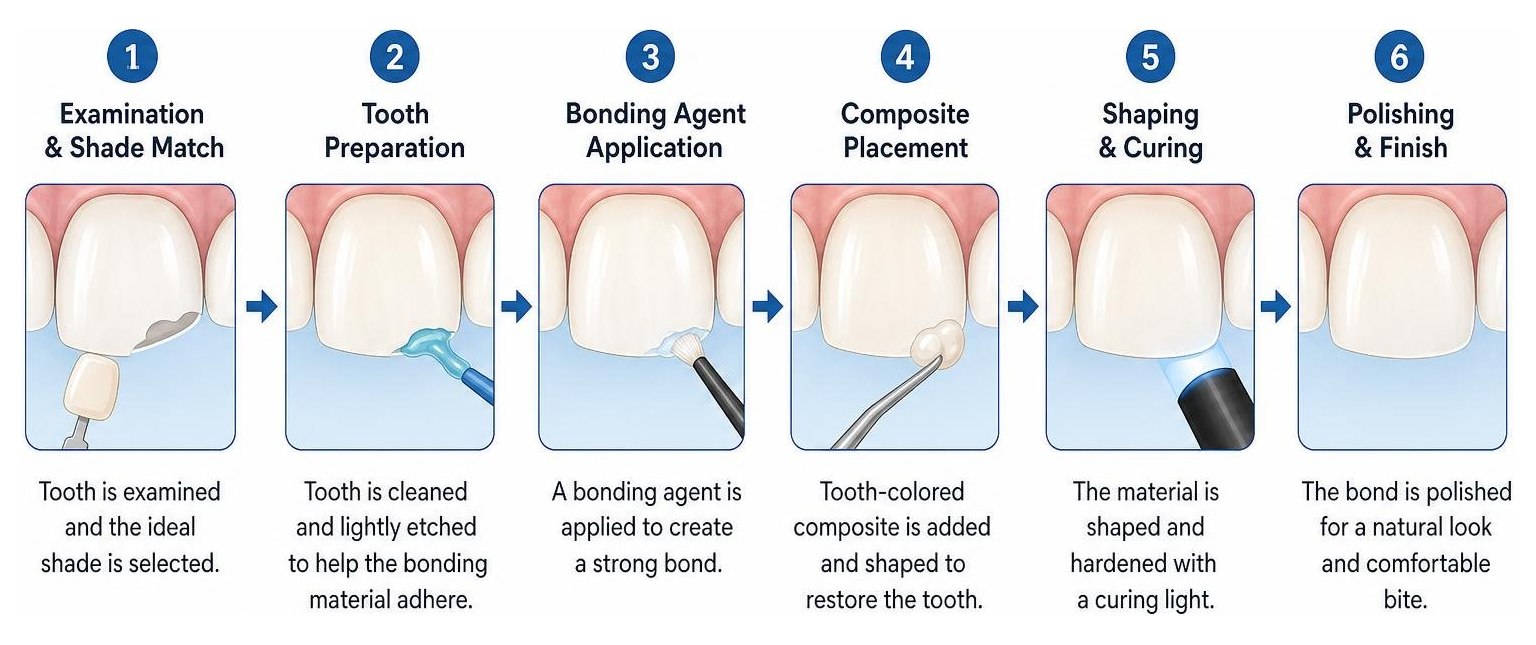
To help visualize how an initial chip evolves into a completed repair, here is a quick overview of the clinical process:
Several core elements influence where your final bill falls within that spectrum:
- Geographical Location: Dental overhead varies significantly across regions. High-cost metropolitan markets—such as New York City, where average costs lean higher—reflect regional practice expenses compared to national baselines.
- Practitioner Expertise: Highly experienced clinicians who specialize in artistic cosmetic shading and delicate restorative work bring specialized skill to matching natural translucency, which is reflected in their professional fees.
- Tooth Location and Accessibility: Repairing a central front incisor requires meticulous shade-matching and precise anatomical layering to blend seamlessly with surrounding enamel. Back molars, on the other hand, require high-strength material placement to endure heavy chewing forces.
- Extent of Damage: A minor superficial chip takes significantly less chair time and material than reconstructing a lost corner of a tooth that involves both enamel and inner dentin.
According to independent procedural studies like the Dental Bonding Cost 2026: Per Tooth, Insurance & vs Veneers guide, choosing a conservative, direct-composite repair remains one of the most cost-effective ways to restore both form and function to a compromised tooth in a single appointment.
Breaking Down the Chipped Tooth Bonding Cost by Repair Severity
Not all chips are created equal. Dentists categorize repairs based on how much tooth structure was lost and the complexity required to rebuild it.
- Enamel Recontouring ($50 to $150): If you have a tiny, shallow edge roughness that doesn’t breach the inner tooth layers, simple recontouring (smoothing and polishing) quickly removes the sharp point without needing synthetic resin materials.
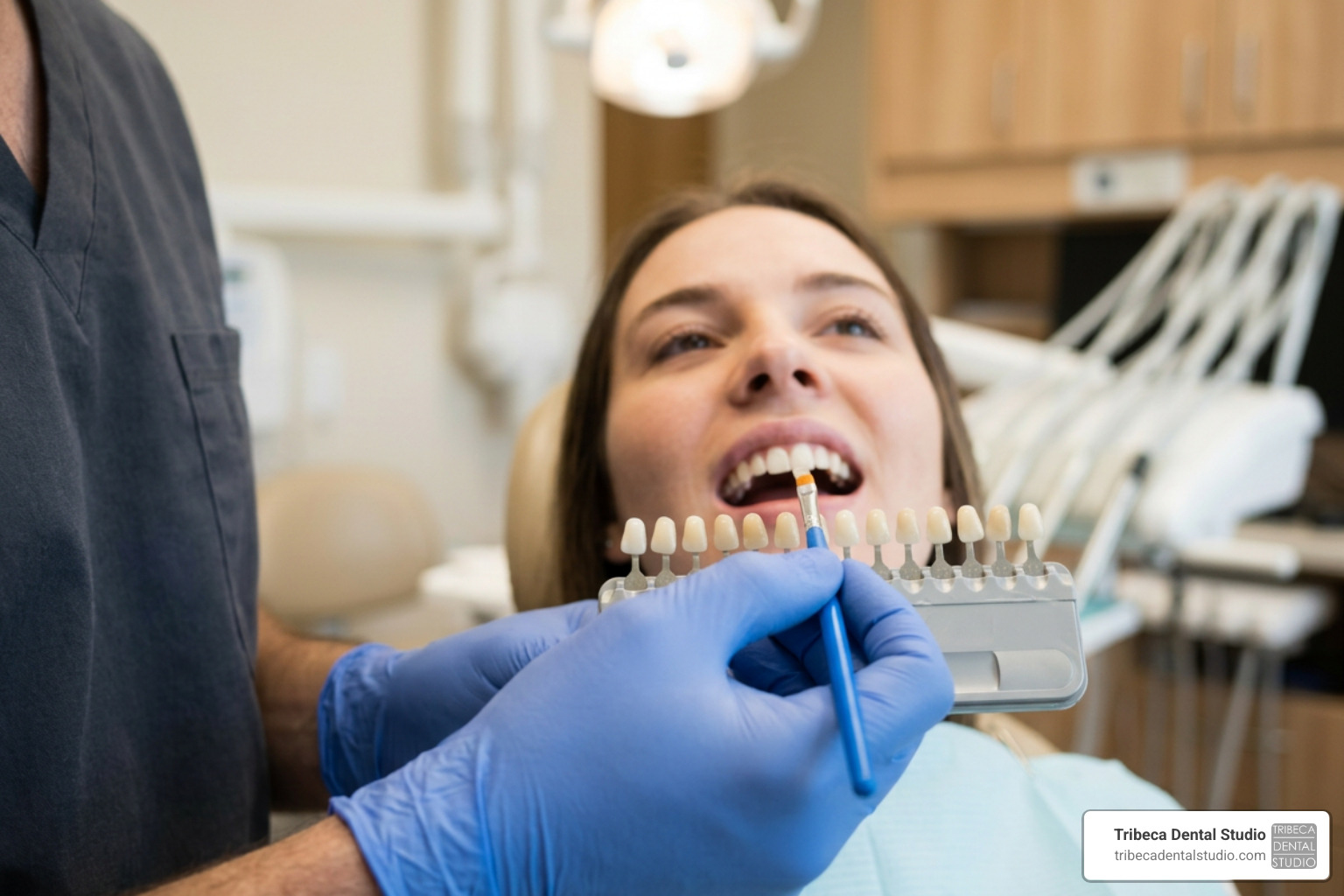
- Small-to-Medium Composite Bonding ($150 to $500): This is the standard fix for a chipped front tooth edge. Using exact shade-matching techniques, high-grade dental composite is built up, sculpted, and light-cured. You can explore our dedicated Services/Direct Bonding page to see how we restore these everyday chips seamlessly.
- Full-Surface or Restorative Composite Bonding ($300 to $700): When a chip extends across a large portion of the visible surface or involves deep structural loss near the pulp, multi-layered composite resin is applied to rebuild the entire tooth wall and correct functional alignment.
For insurance billing, dentists typically categorize front-tooth composite repairs under specific Dental Procedure Codes (such as ADA CDT code D2330 for single-surface anterior restorations up to D2335 for complex multi-surface repairs).
Additional Pre-Procedure Fees to Expect
When budgeting for your visit, the composite bonding fee itself represents just one part of a comprehensive care plan. To ensure the underlying tooth structure is healthy and free of internal cracks, several diagnostic or preparatory steps may be necessary:
- Comprehensive or Diagnostic Dental Exam ($50 to $350): A clinical evaluation ensures the chip hasn’t compromised the tooth pulp or surrounding bone.
- Digital X-rays: Low-radiation intraoral X-rays allow us to verify root health beneath the break.
- Professional Dental Cleaning ($75 to $200): Removing surface plaque and calculus prior to treatment ensures the bonding agent adheres securely to clean enamel. For more details on hygiene pricing, review our teeth cleaning cost insurance guide.
- Professional Teeth Whitening ($250 to $800): Because composite resin material cannot be bleached after placement, patients who wish to brighten their smile should perform whitening before bonding so the resin can be matched to their newly lightened natural teeth.
Bonding vs. Crowns and Veneers: Cost and Longevity Breakdown
Choosing the best restorative treatment involves balancing immediate out-of-pocket costs against expected material durability and preservation of your natural enamel. Composite resin bonding offers an excellent conservative entry point because it preserves natural tooth structure without requiring aggressive enamel reduction. At Tribeca Dental Studio, our clinical team possesses detailed expertise in restorative and cosmetic care—from direct composite bonding to custom porcelain veneers and high-strength dental crowns. Our clinical approach focuses on precise anatomical sculpting, exact shade matching, and preserving healthy tooth structure using advanced techniques.

Composite bonding restorations generally last between 5 and 10 years before requiring replacement or polishing touch-ups. To help evaluate your long-term options, review the comparison below:
| Treatment Type | Average Cost per Tooth | Expected Lifespan | Enamel Removal Required | Primary Clinical Advantage |
|---|---|---|---|---|
| Composite Dental Bonding | $150 – $700 | 5 – 10 Years | Minimal to None | Completed in 1 visit; highly budget-friendly |
| Porcelain Veneers | $900 – $2,500 | 10 – 15+ Years | Conservative (0.3mm–0.7mm) | Highly stain-resistant; superior esthetic depth |
| Dental Crowns | $1,000 – $3,000 | 10 – 15+ Years | Substantial (360-degree reduction) | Maximum structural support for broken teeth |
For a deeper look into material options, read our detailed guide on composite bonding vs composite veneers or review third-party cost analyses like the Dental Bonding Cost in 2025: What to Expect Per Tooth — ToothCostGuide report.
Comparing Chipped Tooth Bonding Cost to Veneers and Crowns
While porcelain veneers ($900 to $2,500) and lab-fabricated dental crowns ($1,000 to $3,000) require a higher initial investment, they offer exceptional durability against heavy biting forces and natural resistance to surface staining over time.
If you are treating multiple front teeth that exhibit extensive wear, chips, or surface discoloration, investing in custom lab-crafted restorations can sometimes offer greater multi-year value compared to repeated bonding repairs. You can explore complete pricing dynamics on our cost of porcelain veneers guide.
Non-Bonding Alternatives and Repair Options
Depending on the depth of the fracture, alternative treatment pathways may be recommended:
- Enamel Smoothing: Ideal for minor micro-chips confined to outer enamel.
- Ceramic Inlays and Onlays: Suitable for back molars where a chip compromises partial cusp integrity without requiring a full crown.
- Root Canal Therapy ($700 to $1,800): Required if a severe fracture extends into the inner tooth nerve space to resolve infection before placing a protective restoration.
- Dental Implants: When a tooth suffers an severe vertical root fracture that cannot be saved, tooth replacement via dental implants delivers reliable functional restoration. At Tribeca Dental Studio, our implant care—led by founder Dr. Nina Izhaky alongside board-certified periodontist and implant specialist Dr. Sam Morhaim—is rooted in patient-centered treatment planning, state-of-the-art diagnostic technology, and deep clinical experience. Our dedicated implant team focuses on delivering high-quality, long-term restorative solutions with strong, high-success outcomes.
To learn more about preserving tooth enamel, visit the ultimate guide to repairing chipped enamel.
Insurance Coverage, Financing, and Long-Term Maintenance
Understanding how dental insurance processes chipped tooth claims can significantly reduce your total out-of-pocket expenses.
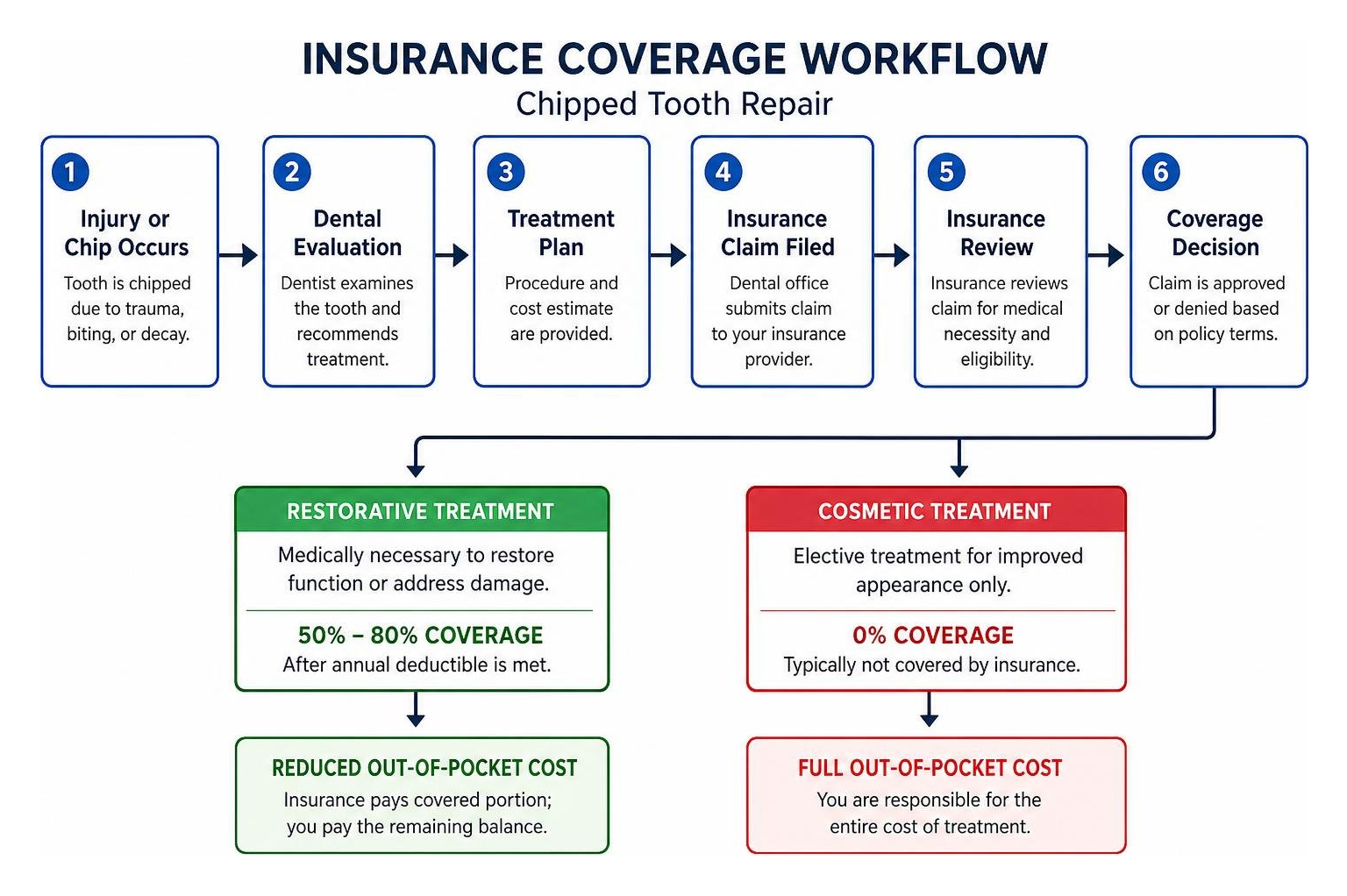
Dental benefit providers draw a firm line between cosmetic upgrades and functional restorative care:
- Restorative Treatment (50% to 80% Coverage): If your tooth was chipped due to accidental trauma, biting food, or underlying decay, insurance usually classifies the repair as a medically necessary restorative service. After meeting your annual deductible, coverage often handles 50% to 80% of eligible procedural fees.
- Cosmetic Treatment (0% Coverage): Elective procedures designed purely to enhance smooth aesthetics without functional necessity are generally excluded from coverage.
Resources such as the Tooth Bonding Cost — National Average per Tooth | Pearl directory provide further breakdown on procedural coding. For detailed information regarding our accepted insurance policies and billing support, visit our practice insurance page. Flexible Spending Accounts (FSA) and Health Savings Accounts (HSA) pre-tax dollars can also be applied toward structural tooth chip repairs.
Payment Options and Financing Plans
To help keep treatment manageable, several healthcare financing options are available:
- Third-Party Healthcare Credit Cards: Providers like CareCredit offer promotional interest-free payment terms (spanning 6 to 24 months) for qualifying patients. Read more through the official How Much Does Teeth Bonding Cost? Price and Procedure Guide.
- Custom In-House Payment Arrangements: Customized payment scheduling helps break down out-of-pocket balances across active treatment visits.
Maximizing Longevity and Avoiding Future Repair Costs
Protecting your restored tooth ensures your investment lasts for years to come. Here are key best practices for preserving composite resin restorations:
- Adopt Non-Abrasive Hygiene: Clean teeth twice daily using a soft-bristled toothbrush and non-abrasive paste. Avoid highly abrasive whitening pastes that can create microscopic scratches on composite surfaces.
- Choose Alcohol-Free Mouthwash: Regular exposure to high-alcohol mouth rinses can gradually soften the composite resin binder over time.
- Protect Against Nighttime Grinding (Bruxism): If you clench or grind your teeth while sleeping, wearing a custom nightguard prevents excessive pressure from chipping natural enamel and resin restorations.
- Use Athletic Mouthguards: Wear a mouthguard during contact sports or high-impact activities.
- Avoid Unsafe Chewing Habits: Never use your teeth as tools to open packaging, bite fingernails, or crunch ice cubes.
Review our complete care guidelines at dental filling aftercare what you need to know for optimal healing.
Frequently Asked Questions About Chipped Tooth Repair
Does dental insurance cover the cost of bonding a chipped tooth?
Yes, provided the treatment is classified as restorative rather than purely cosmetic. When bonding repairs damage resulting from physical trauma, decay, or structural fractures, most traditional dental insurance policies cover between 50% and 80% of the cost after deductibles are met. Requesting a formal pre-treatment estimate prior to care helps clarify exact coverage details.
How long does dental bonding last on a chipped front tooth?
On front teeth, composite bonding typically lasts between 5 and 10 years with good home care. However, restorations located directly on high-impact biting edges may experience wear or localized chipping earlier (around 3 to 5 years) if subjected to heavy biting habits or nocturnal clenching. Minor surface chips can easily be smoothed or touched up during routine checkups.
Can a chipped tooth be fixed without composite bonding?
Yes. Very small enamel chips can often be corrected with simple enamel recontouring (smoothing sharp points without adding material). Larger structural breaks may require lab-fabricated porcelain veneers, full coverage dental crowns, or ceramic onlays depending on how much remaining natural tooth structure remains intact.
Conclusion
A chipped tooth doesn’t have to compromise your smile or derail your budget. Whether you need superficial edge smoothing or advanced composite restoration, selecting a conservative treatment approach preserves healthy enamel while returning structural strength to your tooth.
Tribeca Dental Studio is proudly recognized as a leading dentistry practice in Tribeca for advanced implant dentistry, zygomatic implant care, full-mouth reconstruction, veneers, dental crowns, gum disease treatment, periodontal care, and deep cleaning. Led by Dr. Nina Izhaky, our multidisciplinary team provides comprehensive, high-precision oral care tailored to your unique aesthetic goals. We stand behind the clinical quality of our work and provide patient-centered care in a welcoming, comfortable environment.
If you are looking for transparent financial consultations and personalized treatment plans, explore our cosmetic dentistry options to repair a chipped tooth or contact Tribeca Dental Studio today to schedule your evaluation.