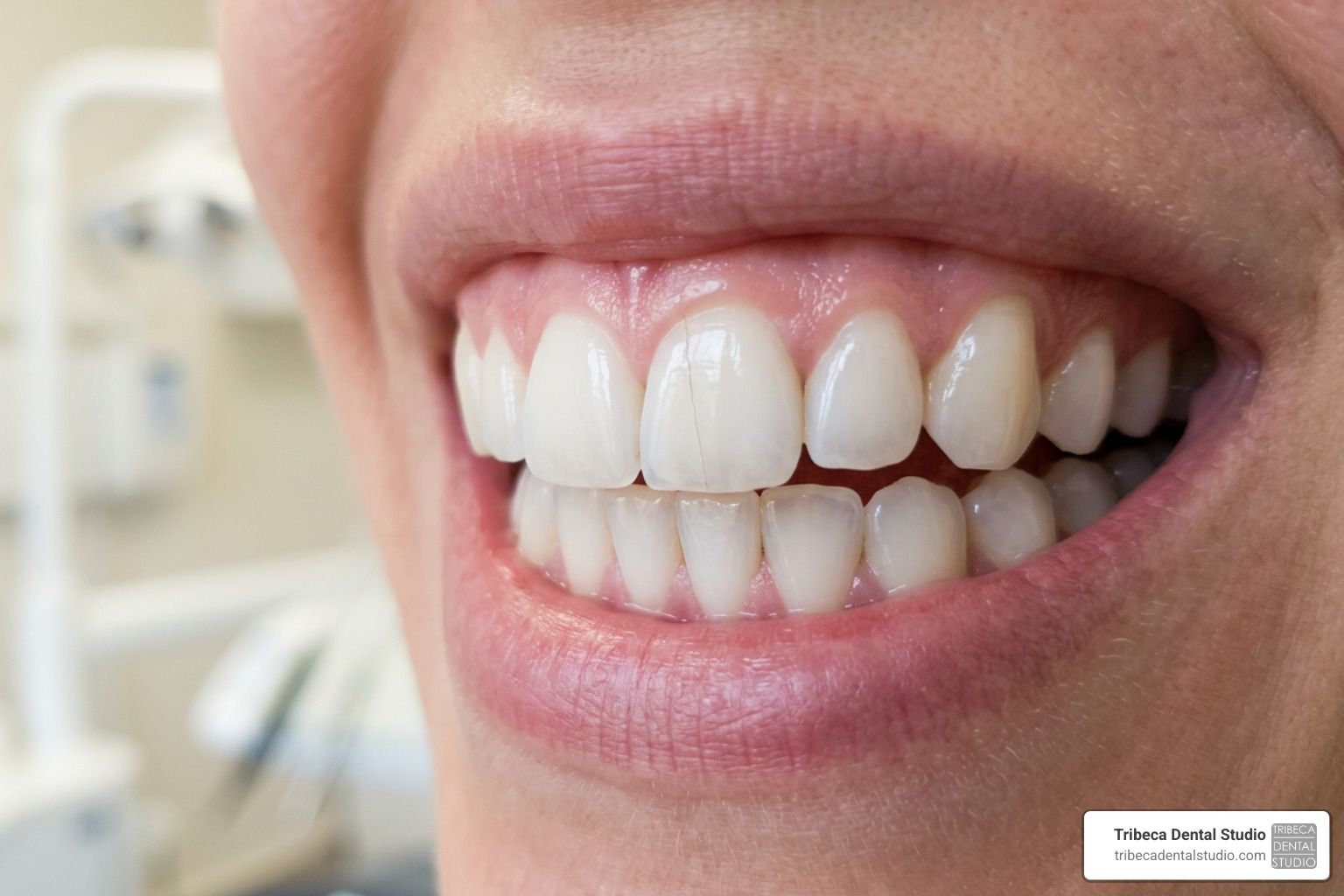
What a Crack in Enamel Means for Your Teeth — and What to Do About It
A crack in enamel can range from a harmless surface line to a serious fracture that threatens the health of your tooth. Here is a quick overview to address your concern right away:
Quick answers:
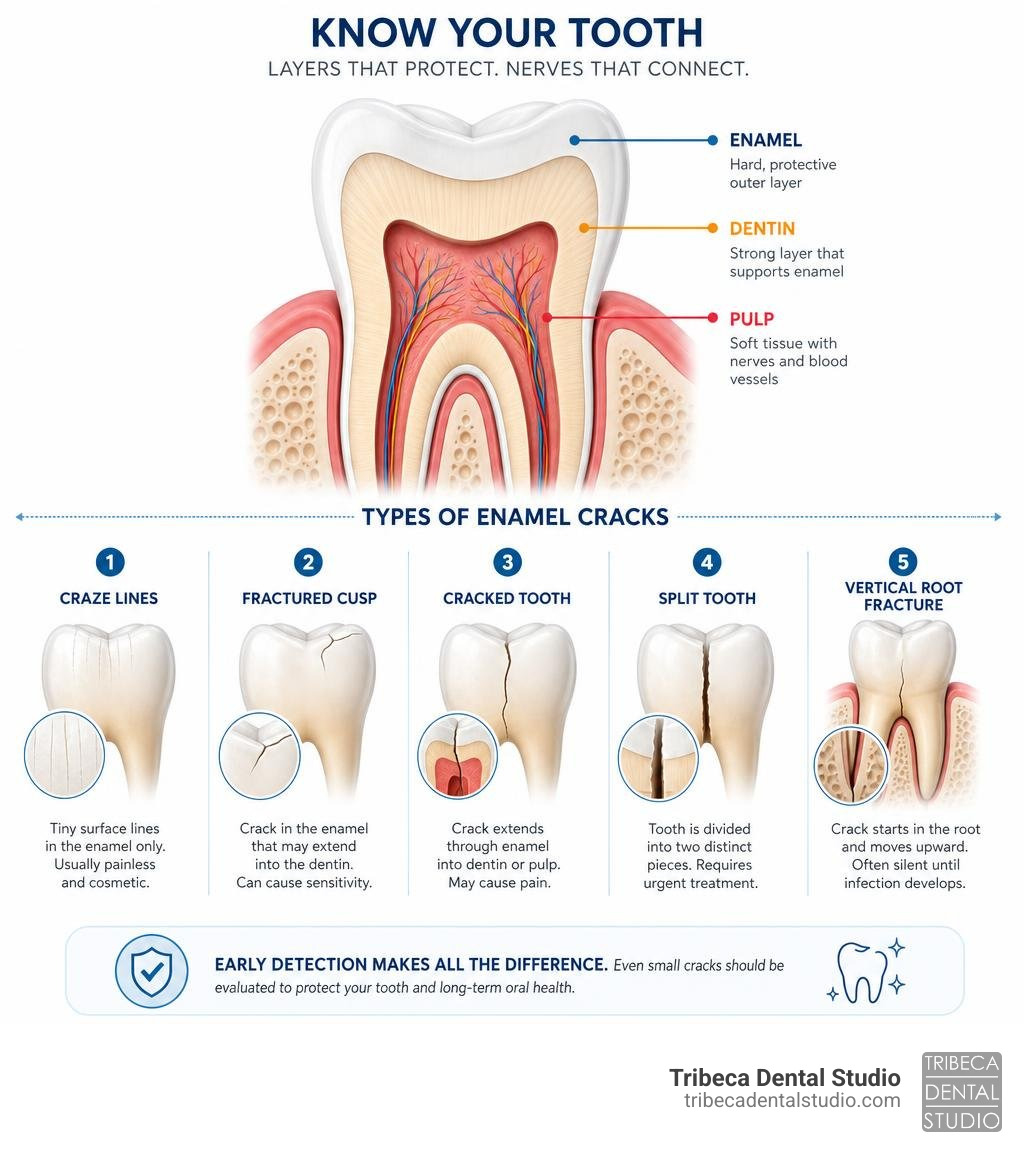
- Craze lines — Tiny, surface-level cracks in the outer enamel only. No pain, no structural damage. Usually cosmetic.
- Cracked tooth — Extends deeper, past the enamel into the dentin or pulp. Can cause pain, sensitivity, and infection risk.
- Split tooth — The tooth is divided into two distinct pieces. Requires urgent treatment.
- Vertical root fracture — Starts at the root and moves upward. Often silent until infection develops.
Most enamel cracks do not require emergency care. But they should always be evaluated by a dentist — because what looks minor on the surface can sometimes run deeper than expected.
Enamel is the hardest substance in the human body, yet it can still develop cracks from everyday habits like teeth grinding, chewing ice, or even drinking something hot followed by something cold. Studies show that cracked teeth affect 34–74% of adults between the ages of 30 and 50 — making this one of the most common dental concerns people face.
The good news: when caught early, most enamel cracks are very treatable — and many are purely cosmetic.
I’m Dr. Nina Izhaky, a graduate of New York University College of Dentistry and the founder of Tribeca Dental Studio, where I’ve helped many patients identify, treat, and prevent enamel cracks using advanced diagnostics and conservative, personalized care. Evaluating a crack in enamel is something I approach with both precision and a commitment to preserving as much of your natural tooth structure as possible — and this guide walks you through everything you need to know.
Related content about crack in enamel:
Understanding the Causes of a Crack in Enamel
To understand how a crack in enamel forms, it helps to look at the sheer strength of the material we are dealing with. Tooth enamel is incredibly resilient. Scientifically, the hardness of the enamel contact area is approximately 5.35 ± 0.19 GPa, its elastic modulus is about 98.1 ± 1.5 GPa, and its fracture toughness is 1.244 ± 0.12 MPa·m^0.5. To put that in perspective, this is significantly higher than the fracture toughness of pure hydroxyapatite crystals (which sits at a mere 0.3 MPa·m^0.5).
Yet, despite being tougher than bone, this natural armor is subjected to immense daily stress. Over time, physical, thermal, and mechanical forces can cause the enamel to yield, creating micro-cracks.
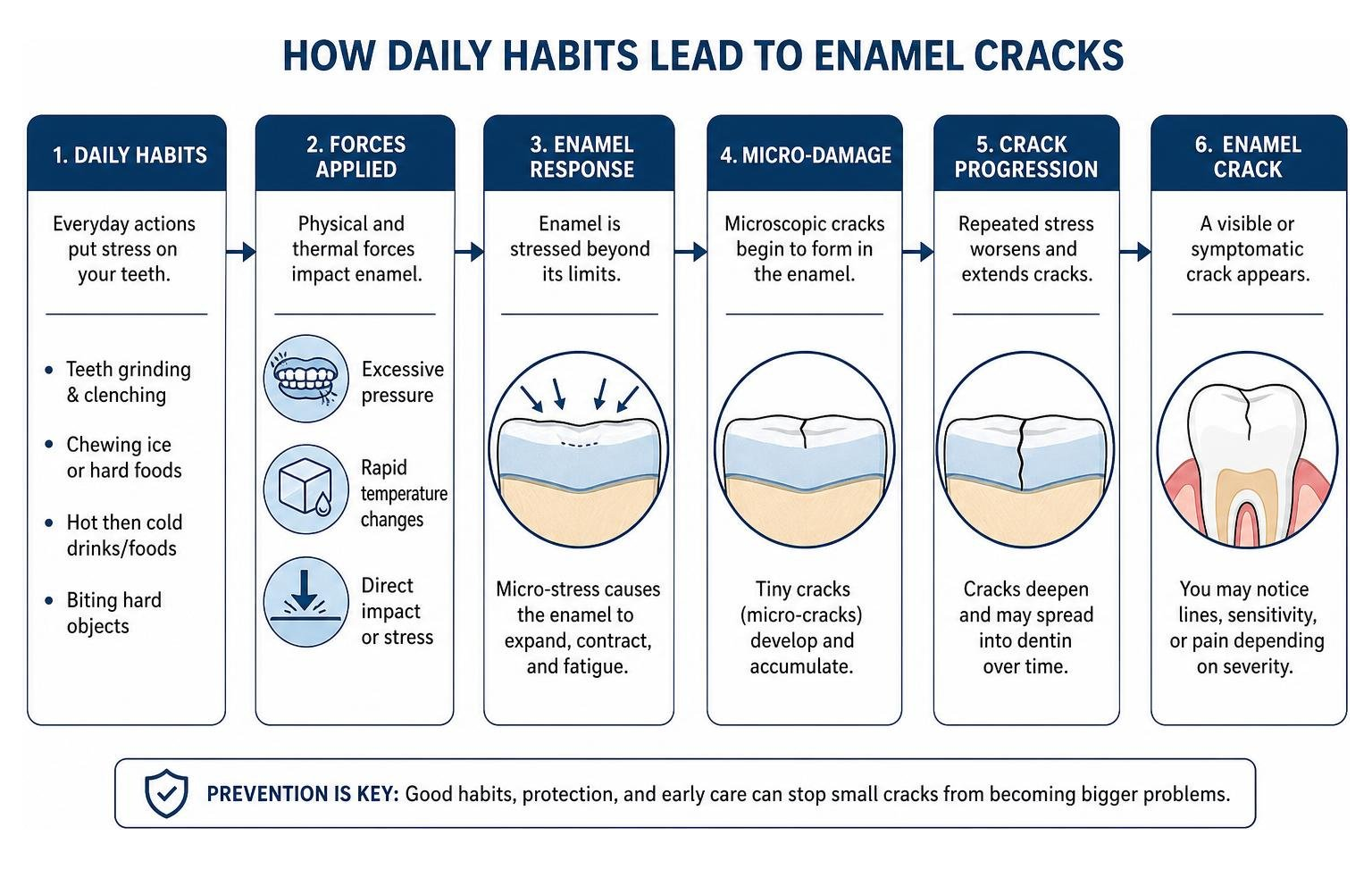
The most common causes of enamel cracks include:
- Teeth Grinding and Jaw Clenching (Bruxism): Chronic grinding exerts massive, unnatural forces on the biting surfaces of your teeth. This constant pressure slowly fatigues the crystalline structure of your enamel.
- Thermal Shock: Humans are unique in consuming extremely hot foods followed immediately by ice-cold drinks. This rapid temperature fluctuation causes the enamel to expand and contract rapidly, leading to micro-cracks.
- Masticatory Forces and Hard Objects: Biting down on unpopped popcorn kernels, hard candy, ice cubes, or using your teeth as tools to open packaging.
- Aging Enamel: As we age, our teeth accumulate millions of micro-stress cycles. People age 50 and older are statistically much more likely to have visible tooth cracks than younger individuals.
- Bite Misalignment: If your teeth do not meet evenly, certain teeth (especially the lower back molars) bear a disproportionate amount of pressure during chewing, leaving them highly susceptible to enamel fractures.
- Nail Biting and Chronic Habits: Repetitive, localized pressure on the thin edges of your front teeth can easily splinter the outer enamel.
In the scientific community, researchers study how the microscopic structure of teeth prevents these daily forces from splitting our teeth entirely. According to research on ON THE R-CURVE BEHAVIOR OF HUMAN TOOTH ENAMEL, human enamel exhibits what is known as “rising R-curve behavior.” This means that the deeper a crack tries to penetrate, the more resistance it encounters.
The outer enamel acts almost like pure mineral, which allows tiny surface cracks to start easily. However, as the crack travels inward, the woven, crisscrossing arrangement of the inner enamel prisms (called decussation) forces the crack to twist, turn, and ultimately halt. This remarkable evolutionary design keeps many minor surface cracks from turning into catastrophic failures.
Craze Lines vs. Deep Tooth Fractures
It is vital to distinguish between a harmless, superficial craze line and a structurally threatening deep fracture. Craze lines are microscopic, vertical hairline cracks that affect only the outermost enamel layer. They are entirely asymptomatic, cause no pain or sensitivity, and are primarily a cosmetic concern. Because they do not penetrate into the underlying dentin, they do not compromise the structural integrity of the tooth.
Deep tooth fractures, however, cross the enamel-dentin junction and can extend all the way down to the pulp (the nerve center of the tooth). These cracks weaken the tooth, expose the sensitive inner layers to bacteria, and often cause sharp pain when chewing or releasing bite pressure.
| Feature | Craze Lines | Deep Tooth Fractures |
|---|---|---|
| Depth | Confined entirely to the outer enamel | Penetrates into dentin, pulp, or root |
| Pain/Sensitivity | Completely asymptomatic | Sharp pain when biting, sensitivity to hot/cold |
| Structural Risk | None; purely cosmetic | High; can lead to split teeth or infections |
| Bacterial Entry | Minimal risk to the nerve | High risk of internal decay and abscesses |
| Common Treatment | No treatment, whitening, or no-prep veneers | Bonding, crowns, root canals, or onlays |
If you suspect your crack goes deeper than the surface, you can read more in our guide to cracked tooth solutions.
The Role of Enamel Lamellae in Cavities
While craze lines are generally harmless, some microscopic enamel cracks, known as enamel lamellae, can act as hidden pathways for dental decay. These organic, leaf-like structures or microscopic fissures run from the outer surface of the tooth down to the dentin-enamel junction (DEJ).
As detailed in the classic study Enamel cracks. The role of enamel lamellae in caries initiation, these micro-cracks are highly permeable to fluids, dyes, and bacteria.
Acid-producing bacteria like Streptococcus mutans and Lactobacilli can actually travel down these microscopic highways, bypassing the highly mineralized outer enamel entirely. Once they reach the softer dentin layer beneath, they can initiate internal decay (often called “hidden” or “occult” caries). This is why a tooth can look perfectly healthy and white on the outside while a cavity quietly develops underneath, highlighting the importance of regular professional evaluations.
How Dentists Diagnose and Evaluate Enamel Damage
Because micro-cracks are incredibly small, they are notoriously difficult to spot with the naked eye or even standard dental X-rays. In fact, conventional radiographs and 3D CBCT scans have a resolution limit of about 80 to 100 micrometers, meaning they usually cannot detect early enamel cracks. They only show the damage once the crack has caused bone loss around the root or a major separation.
To find these elusive lines before they cause trouble, we utilize advanced diagnostic technologies. As discussed in Recent Advances in the Diagnosis of Enamel Cracks: A Narrative Review – PMC, modern dentistry relies on several sophisticated techniques to evaluate enamel damage:
- Fiber-Optic Transillumination (FOTI): By shining a high-intensity light through the tooth, we can see exactly where the light path is interrupted. If the light passes completely through the tooth, it is likely a superficial craze line. If the light is blocked or reflected, it indicates a deeper crack that has separated the tooth structure.
- Near-Infrared Imaging (NIR): This cutting-edge method uses long wavelengths (1300–1700 nm) where enamel becomes highly transparent, allowing us to visualize internal cracks with exceptional contrast.
- Bite Testing: Using specialized diagnostic tools like the Tooth Slooth, we apply pressure to individual cusps. If you feel a sharp, fleeting pain when the pressure is released (rebound pain), it is a classic sign of a cracked tooth. This occurs because the temporary separation of the tooth segments causes a sudden fluid shift in the microscopic dentinal tubules, triggering the nerve.
- Tactile Probing & Dye Staining: We use fine explorer instruments and specialized dyes (like methylene blue) to trace and highlight hidden fracture lines under magnification.
Identifying a Crack in Enamel Under Magnification
At Tribeca Dental Studio, we don’t believe in guesswork. To achieve the highest diagnostic accuracy, we use high-magnification Dental Operating Microscopes.
While general visual inspection might miss early enamel damage, viewing the tooth at a magnification of 14x to 18x (with 16x being the clinical sweet spot) allows us to see the exact entry point, path, and depth of a crack in enamel. This level of precision ensures we can catch micro-cracks early, preventing them from progressing into painful nerve infections or structural failures.
Restorative and Cosmetic Treatment Options
If a crack in enamel is affecting your confidence or threatening the structural integrity of your tooth, modern dentistry offers a variety of beautiful, long-lasting solutions. At Tribeca Dental Studio, we are known for our conservative smile-design expertise. We believe in preserving as much of your natural, strong tooth structure as possible while delivering highly predictable, aesthetic outcomes.
Depending on the depth and location of the crack, treatment options may include:
- Cosmetic Bonding: A quick, non-invasive option using tooth-colored composite resin.
- Porcelain Veneers: Thin shells of ceramic that cover the front of the teeth.
- No-Prep Veneers: Ultra-thin porcelain covers that require virtually no removal of your natural enamel.
- Dental Crowns: Custom-made caps that cover and protect a heavily cracked tooth.
- Inlays and Onlays: Custom laboratory-crafted restorations for back teeth when a filling isn’t strong enough but a full crown isn’t necessary.
To explore the full spectrum of treatments, you can read our detailed breakdown of all tooth repair options.
Cosmetic Bonding and No-Prep Veneers
For superficial cracks and stained craze lines on your front teeth, cosmetic treatments can completely transform your smile. Tribeca Dental Studio is a trusted, leading practice in New York City, particularly known for excelling in no-prep veneers in NYC.
- Cosmetic Bonding: We use a medical-grade composite resin meticulously color-matched to your natural teeth. The resin is applied to the surface, shaped to conceal the crack, and cured with a high-intensity light. It’s an excellent, cost-effective way to restore minor chips and lines in a single visit. Learn more about our direct bonding services.
- No-Prep Veneers: For patients looking to conceal multiple craze lines or deep discoloration without altering their natural teeth, no-prep veneers are a game-changer. Because these porcelain shells are incredibly thin, we can bond them directly over your existing enamel without the need for drilling or shaving down healthy tooth structure. This preserves the natural “R-curve” defense system of your inner enamel while giving you a flawless, radiant smile. Explore our porcelain veneers and Lumineers options.
Restorative Solutions: Crowns, Inlays, and Onlays
When a crack in enamel extends deep into the dentin, cosmetic fixes are no longer enough. The tooth requires structural reinforcement to prevent the crack from spreading to the root.
- Dental Crowns: If the crack compromises a large portion of the tooth, a custom-crafted dental crown is the best solution. A crown acts like a protective helmet, holding the segments of the tooth together and absorbing the forces of chewing. At Tribeca Dental Studio, we craft beautiful, metal-free porcelain and zirconia crowns that blend seamlessly with your natural teeth. Discover our dental crowns and bridges.
- Inlays and Onlays: When a crack affects the chewing surface of a back molar but doesn’t require a full crown, we turn to custom inlays or onlays. Often referred to as “partial crowns,” these are custom-manufactured in a dental laboratory to fit perfectly into the damaged area of the tooth. They offer superior strength, preserve more of your natural tooth, and are ideal when more than 50% of a molar’s grinding surface is compromised.
Prevention and Long-Term Care
Preventing a crack in enamel from forming—or keeping existing craze lines from worsening—comes down to protecting your teeth from excessive physical stress and wear.
Here are the most effective preventive habits you can adopt at home:
- Wear a Custom Nightguard: If you grind your teeth at night, a custom-fitted nightguard is the single best investment you can make. It cushions your teeth, distributes biting forces evenly, and prevents structural enamel fatigue.
- Protect Your Teeth During Sports: Always wear a protective mouthguard during contact sports or high-risk recreational activities.
- Avoid Chewing on Hard Objects: Break habits like chewing on ice cubes, hard candies, fruit stones, pens, or fingernails.
- Be Mindful of Temperature Changes: Avoid consuming boiling hot soup or coffee immediately followed by ice water.
- Practice Stress Reduction: Managing stress can significantly reduce involuntary daytime jaw clenching and nighttime bruxism.
- Maintain Excellent Oral Hygiene: Brushing twice daily and flossing helps prevent plaque buildup along micro-cracks, protecting them from bacterial invasion.
Preventing a Future Crack in Enamel
In addition to lifestyle changes, keeping your bite properly aligned is crucial. When your bite is misaligned, specific teeth bear the brunt of your jaw’s closing force. During your routine checkups at Tribeca Dental Studio, we carefully evaluate your bite alignment and monitor any existing craze lines to ensure they remain stable. If we detect early signs of wear, we can recommend proactive, conservative treatments—such as bite adjustments or protective sealants—to keep your enamel strong and crack-free for years to come.
Frequently Asked Questions About Enamel Cracks
Are craze lines a dental emergency?
No, craze lines are not a dental emergency. They are superficial, vertical lines confined entirely to the outer enamel. Because they do not cause pain, structural damage, or immediate risk of infection, they do not require urgent treatment. However, it is always a good idea to have them evaluated during your routine cleaning to rule out deeper fractures.
Can a cracked tooth heal on its own?
Unlike bone, tooth enamel is non-regenerative because it contains no living cells. Once a crack in enamel forms, it cannot heal or weld back together on its own. While minor craze lines can remain stable for a lifetime without treatment, deeper cracks require professional intervention to prevent them from spreading, decaying, or causing a painful nerve infection.
How do I know if a crack has reached the nerve?
A crack has likely reached the pulp (nerve) if you experience:
- Sharp, sudden pain when biting down or releasing bite pressure.
- Lingering sensitivity to hot, cold, or sweet foods and drinks.
- Constant, dull, aching pain in the tooth or surrounding jaw.
- Swelling of the gums around the affected tooth. If you notice any of these symptoms, it is important to schedule an evaluation right away to protect the tooth from further damage.
Conclusion
A crack in enamel doesn’t have to compromise your peace of mind or your beautiful smile. Whether you have harmless cosmetic craze lines or require advanced restorative care, early detection and a conservative, personalized approach are key to maintaining a healthy mouth.
At Tribeca Dental Studio in Manhattan, New York City, we treat our patients like family. Led by Dr. Nina Izhaky, our highly experienced team provides comprehensive, state-of-the-art dental care right in the heart of Tribeca. We are committed to predictable, high-success outcomes, utilizing advanced diagnostics to catch micro-cracks before they progress.
Beyond our renowned expertise in conservative smile-design and no-prep veneers in NYC, our multi-specialty practice excels in:
- Advanced Implant Dentistry & Zygomatic Implants (led by our trusted implant specialist, Dr. Sam Morhaim)
- Full-Mouth Reconstruction
- Custom Porcelain Crowns, Inlays, and Onlays
- Comprehensive Periodontal Care, Deep Cleaning, and Gum Disease Treatment
Don’t let a tiny crack turn into a major headache. If you are concerned about lines in your enamel or want to enhance your smile, we are here to help. Schedule a consultation for cosmetic repair options with our welcoming team today!