What Are Your Chipped Tooth Repair Options?
Chipped tooth repair is something dentists handle every day — and the good news is that modern dentistry offers fast, effective solutions for nearly every type of chip.
Here is a quick overview of the main repair options:
| Repair Option | Best For | Typical Cost | Lifespan |
|---|---|---|---|
| Dental bonding | Small to moderate chips | $100–$400 | 3–10 years |
| Porcelain veneers | Cosmetic damage on front teeth | $500–$1,500 | 10–15 years |
| Dental crown | Large chips or structural damage | $800–$1,500 | 10–20 years |
| Tooth-colored filling | Minor chips with decay | $50–$150 | Several years |
| Root canal + crown | Chip with nerve exposure | $700–$1,200 + crown | 10–20 years |
The right option depends on how much tooth is damaged, where the chip is located, and whether the nerve is involved. A dentist can assess this in a single visit — often the same day.
One moment you are biting into something crunchy. The next, you feel that unmistakable sensation of something breaking in your mouth. It is alarming. But a chipped tooth is actually the most common dental injury, and it is almost always fixable.
What matters most is acting quickly. Even a small chip that causes no pain can quietly worsen over time — becoming more sensitive, developing decay, or cracking further under chewing pressure. The sooner you get it looked at, the simpler and more affordable the fix tends to be.
I’m Nina Izhaky, a graduate of New York University College of Dentistry and founder of Tribeca Dental Studio, where I have helped countless patients navigate chipped tooth repair using the latest digital and minimally invasive techniques. My practice brings together a full team of on-site specialists — so whether your chip needs simple bonding or a more complex restoration, you get the right care in one place.
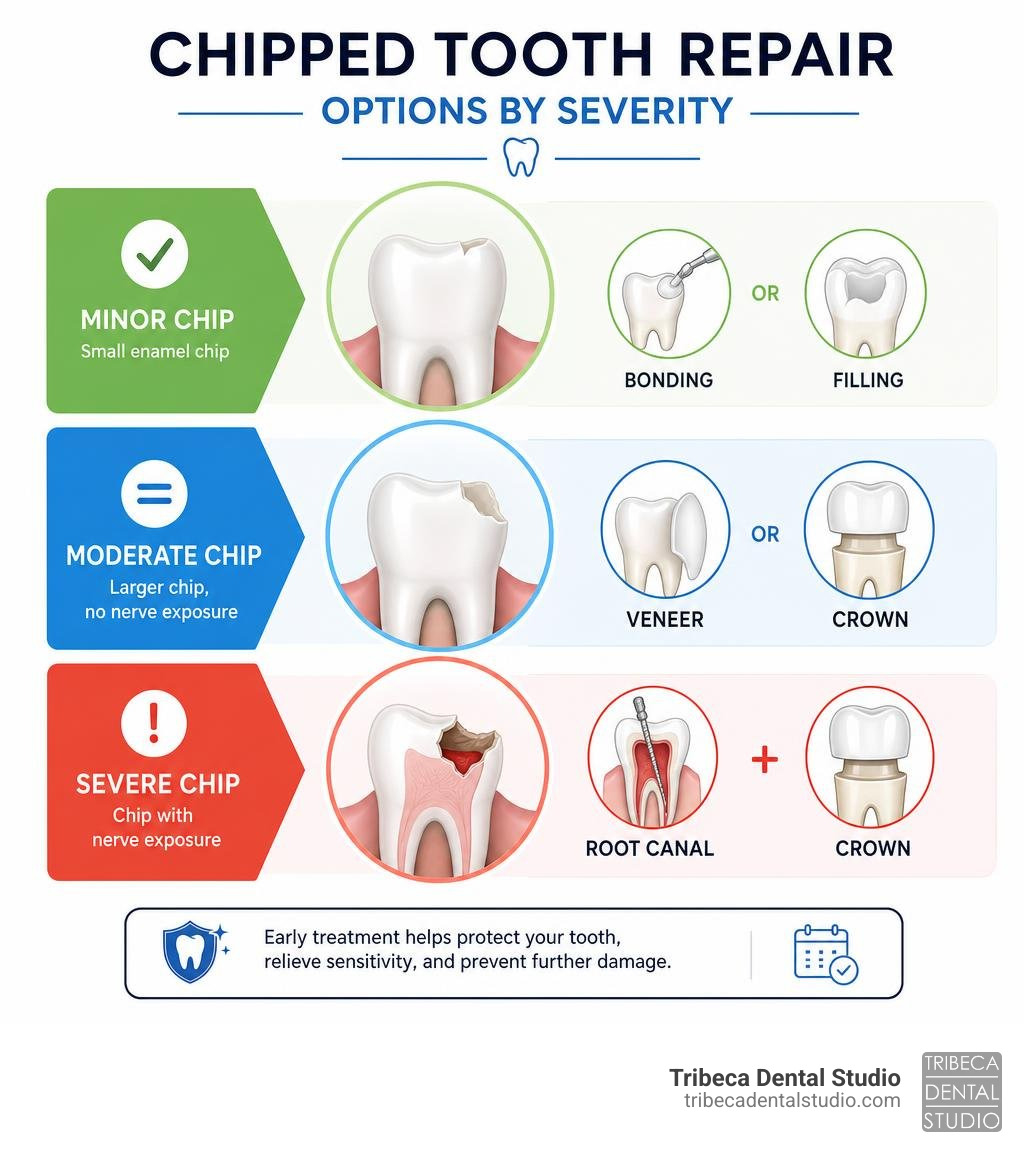
Chipped tooth repair terms explained:
Understanding Tooth Damage: Causes and Severity
To find the best path forward, we first need to look at what caused the chip and how deep the damage goes. While teeth are incredibly resilient—indeed, enamel is the hardest substance in the human body—they are not completely indestructible.
In our Tribeca office, we see teeth chip for a wide variety of reasons. Some of the most common causes include:
- Biting down on hard objects: Popcorn kernels, ice cubes, hard candies, or even olive pits are frequent culprits.
- Facial trauma: Falls, car accidents, or getting hit in the mouth during recreational activities can easily break a tooth.
- Bruxism (teeth grinding): Chronic clenching and grinding exert massive forces on your teeth, gradually weakening the enamel structure over time until a piece finally snaps off.
- Large, older fillings: When a tooth has a massive silver or composite filling, the remaining natural tooth structure is thin and prone to fracturing.
- Untreated decay: Cavities eat away at the strong enamel from the inside out, leaving a hollow shell that collapses under normal chewing pressure.
When assessing the damage, we categorize the injury by its clinical severity. This distinction is crucial because a superficial line requires a completely different approach than a deep structural fracture.
- Craze Lines: These are tiny, shallow hairline cracks that affect only the outermost enamel. They do not cause pain, do not threaten the health of the tooth, and are purely a cosmetic concern.
- Fractured Cusp: This occurs when a piece of the tooth’s chewing surface (usually on a molar) breaks off. It rarely damages the inner pulp where the nerves live, so it might not cause severe pain, but it does require professional attention to restore your chewing bite.
- Cracked Tooth: A crack that extends from the chewing surface vertically down toward the root. If caught early, a crown can save it. If left untreated, it can quickly progress into a split tooth.
- Split Tooth: This is the result of an untreated cracked tooth that has split completely into two distinct segments. In many cases, the tooth cannot be saved in its entirety.
Understanding the unique characteristics of your dental injury is the first step toward getting your smile back. For a deeper look into how different types of tooth damage are diagnosed, you can read more in our guide on From Chips To Cracks Understanding All Tooth Repair Options. For general medical overviews of how enamel loss impacts your oral health, the Cleveland Clinic offers an excellent resource on Chipped Tooth: Causes, Symptoms & Repair.
Immediate First-Aid Steps After Chipping a Tooth
If you have just chipped a tooth, try to stay calm. Taking the right steps in the first hour can prevent infection, save you from unnecessary pain, and sometimes even allow us to reattach the broken fragment.
Here is your immediate first-aid checklist:
- Rinse your mouth immediately: Use warm salt water to clean the area, rinse away any debris, and reduce the risk of bacterial infection.
- Preserve the tooth fragment: If you can find the piece of tooth that broke off, save it! Store it in a small container of milk or saliva. In some cases, we can bond the original piece back onto your tooth.
- Manage any bleeding: If there is bleeding, apply gentle pressure with a clean piece of gauze or a damp tea bag for about 10 minutes or until it stops.
- Reduce swelling: Place a cold compress or ice pack wrapped in a cloth on the outside of your cheek or lip near the injured area. Use a 15-minutes-on, 15-minutes-off cycle.
- Protect your tongue and cheeks: If the chipped tooth has a sharp, jagged edge, cover it with a piece of dental wax or sugar-free chewing gum to keep from cutting your tongue or the inside of your cheek.
- Manage pain safely: Take over-the-counter pain relievers like ibuprofen as directed on the packaging. Avoid placing aspirin directly on the gums, as this can cause chemical burns.
- Eat soft foods: Avoid chewing on the side of the mouth with the damaged tooth. Stick to soft foods like yogurt, soup, or applesauce.
While these home remedies are helpful for temporary comfort, they are not permanent solutions. It is essential to have a professional examine the tooth as soon as possible. To understand whether your situation requires immediate emergency care, explore our resources on Is Your Broken Tooth A Dental Emergency What To Do Next and see how we handle urgent visits in Emergency Broken Tooth Repair Get Help Fast.
Professional Chipped Tooth Repair Options
Once you arrive at our Tribeca practice, we will take digital X-rays and perform a visual assessment to choose the safest, most durable repair method. The best treatment is determined by the size of the chip, its location (front tooth vs. back molar), and whether the inner pulp (nerve) is exposed.
If the pulp is exposed, you may experience a sharp, throbbing pain or extreme sensitivity to hot and cold temperatures. This means bacteria have reached the living tissue inside your tooth, requiring a root canal to clear the infection before we can place a protective crown. However, for most minor to moderate chips, we can restore the tooth quickly and comfortably.
At Tribeca Dental Studio, our team includes highly specialized prosthodontists who have completed three additional years of advanced training after dental school. This specialized expertise allows us to achieve highly precise, long-lasting cosmetic and functional results.
To learn more about the complete range of cosmetic and restorative treatments we offer, you can read our detailed breakdown of Cosmetic Dentistry Options To Repair A Chipped Tooth.
Direct Bonding: The Quickest Chipped Tooth Repair
For small to moderate chips, especially on the visible front teeth, direct dental bonding is often the ideal solution. It is the fastest and most conservative method available.
During a bonding procedure, we apply a tooth-colored composite resin directly to the chipped area. First, we gently etch the surface of the enamel to create a micro-rough texture, which helps the bonding agent adhere securely. We then carefully select a composite shade that matches the natural color and translucency of your tooth.
The resin is applied in thin, precise layers, shaped to match the natural contours of your tooth, and hardened using a specialized curing light. Finally, we polish the restoration so it has the same natural sheen as your surrounding enamel.
The major benefit of direct bonding is that it can usually be completed in a single, 30-to-60-minute visit, often without the need for local anesthesia or any drilling. To see if this quick, non-invasive option is right for you, check out our guide on Services/Direct Bonding and compare the pros and cons in our article on Composite Bonding Vs Composite Veneers.
Porcelain Veneers and Dental Crowns for Extensive Damage
When a chip is too large for bonding, or if the tooth has suffered significant structural damage, we turn to more robust, long-term restorations like porcelain veneers or dental crowns.
Porcelain Veneers Veneers are thin, custom-made shells of dental porcelain designed to cover the front surface of your teeth. They are highly popular for repairing chipped front teeth because they offer unmatched cosmetic results and superior stain resistance. To place a veneer, we typically remove a tiny amount of enamel (usually between 0.3 to 1.2 millimeters) to ensure the shell sits flush and looks completely natural. Veneers are highly durable and routinely last 10 to 15 years with proper care. You can read more about this treatment on our Services/Porcelain Veneers Lumineers page.
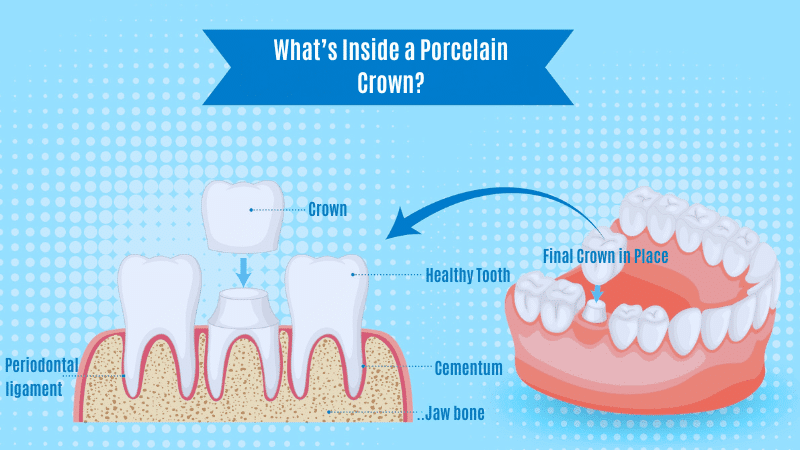
Dental Crowns If a tooth has lost more than half of its natural structure, a dental crown is the safest way to protect it. A crown acts like a protective helmet, completely encasing the visible portion of the tooth from the gumline up. Without a crown, a severely damaged or root-canal-treated tooth can become highly brittle—much like a hollow chocolate Easter bunny—and easily shatter under normal chewing forces.
Modern dental crowns are made from advanced materials like zirconia or high-quality porcelain, which look virtually identical to natural teeth while providing maximum strength. To learn how a crown can rescue a deeply compromised tooth, read our article Beyond Repair How Cosmetic Crowns Transform Your Teeth.
What Is the Cost of Chipped Tooth Repair?
When planning your treatment, understanding the financial aspect is just as important as the clinical details. The overall cost of repairing a chipped tooth depends heavily on the complexity of the procedure and the materials used.
Here is a general cost and lifespan breakdown for common repair methods:
- Dental Bonding: $100 to $400 per tooth. (Typically lasts 3 to 10 years).
- Porcelain Veneers: $500 to $1,500 per tooth. (Typically lasts 10 to 15 years).
- Dental Crowns: $800 to $1,500 per tooth. (Typically lasts 10 to 20 years).
- Root Canal Treatment: $700 to $1,200 (not including the cost of the final crown).
Does Dental Insurance Cover the Repair? In most cases, yes! If the repair is deemed medically necessary to restore the function of your tooth (such as a crown for a fractured molar or bonding to repair structural damage), most PPO insurance plans will cover a significant portion of the cost. Restorative bonding and fillings are often covered at 70% to 80%, while major restorations like crowns and root canals are typically covered at 50% after your deductible is met. Purely cosmetic treatments, such as placing veneers to correct minor, painless chips, are usually not covered by basic insurance.
For a comprehensive guide on navigating insurance claims and out-of-pocket costs, explore our articles on Breaking Down The Bill Chipped Tooth Repair Costs and Cost Of Getting Chipped Tooth Fixed.
Frequently Asked Questions About Chipped Teeth
Can a chipped tooth heal on its own?
No, a chipped tooth cannot heal on its own. Unlike your skin or bones, tooth enamel does not contain living cells, meaning it cannot regenerate or grow back once it is damaged.
While very minor, microscopic enamel wear can sometimes be strengthened through a process called remineralization (using fluoride toothpaste and minerals from your saliva), this only hardens the existing enamel—it cannot replace missing tooth structure. Any visible chip requires a professional evaluation to ensure the inner layers of the tooth are protected from decay and bacteria.
What happens if you leave a chipped tooth untreated?
Ignoring a chipped tooth, even if it does not hurt initially, can lead to serious oral health complications over time. When enamel is chipped away, the sensitive inner dentin layer is often left exposed. This makes the tooth far more vulnerable to:
- Tooth decay: Plaque and bacteria can easily accumulate in the rough, uneven edges of the chip, leading to rapid cavity development.
- Dental infection: Bacteria can travel through the exposed dentin into the pulp chamber, causing a painful infection or dental abscess.
- Pulp necrosis: Over time, untreated bacterial invasion can cut off the blood supply to the tooth’s nerve, causing the nerve to die (necrosis) and eventually requiring root canal therapy or extraction.
How can I prevent future chipped teeth?
While accidents happen, you can significantly reduce your risk of chipping a tooth by adopting a few simple preventive habits:
- Wear a sports mouthguard: If you play contact sports or participate in recreational activities like cycling or skateboarding, always wear a custom-fit sports mouthguard to cushion your teeth from impact.
- Use a nightguard for grinding: If you wake up with a sore jaw or have been told you grind your teeth at night, a custom nightguard will protect your teeth from the destructive forces of bruxism.
- Avoid using your teeth as tools: Never use your teeth to open plastic packaging, rip tape, or pop bottle caps.
- Adjust your dietary habits: Avoid chewing on hard items like ice cubes, unpopped popcorn kernels, hard candies, or pens.
- Maintain regular dental checkups: Routine cleanings and exams allow us to identify and strengthen weak enamel, micro-cracks, or failing fillings before they turn into major fractures.
Conclusion
A chipped tooth can feel overwhelming, but modern restorative dentistry makes getting your smile back simple, comfortable, and predictable. Whether you need quick composite bonding or a highly durable ceramic crown, seeking prompt professional care is the best way to protect your long-term oral health.
At Tribeca Dental Studio in New York City, we treat our patients like family. Led by Dr. Nina Izhaky, our welcoming Tribeca practice offers a comprehensive, multi-specialty approach under one roof.
For patients dealing with severe tooth loss or complex structural fractures that cannot be saved, we are also recognized as a leading practice in Manhattan for advanced implant dentistry and zygomatic implant care. Our highly experienced team, including Dr. Sam Morhaim, is committed to predictable, high-success outcomes using state-of-the-art digital technology. We stand behind the quality of our work and are dedicated to providing a comfortable, stress-free experience from start to finish.
If you have recently chipped a tooth or want to explore your cosmetic options, do not wait for the damage to worsen. Contact Tribeca Dental Studio today to schedule your consultation and discover how we can restore your smile’s strength and beauty. To learn more about our restorative options, visit our page on Cosmetic Dentistry Options To Repair A Chipped Tooth.