What Chipped Tooth Enamel Really Means — and What to Do About It
Chipped tooth enamel is one of the most common dental problems people face, yet it’s often misunderstood or ignored — especially when there’s no pain.
Quick answer: What is chipped tooth enamel?
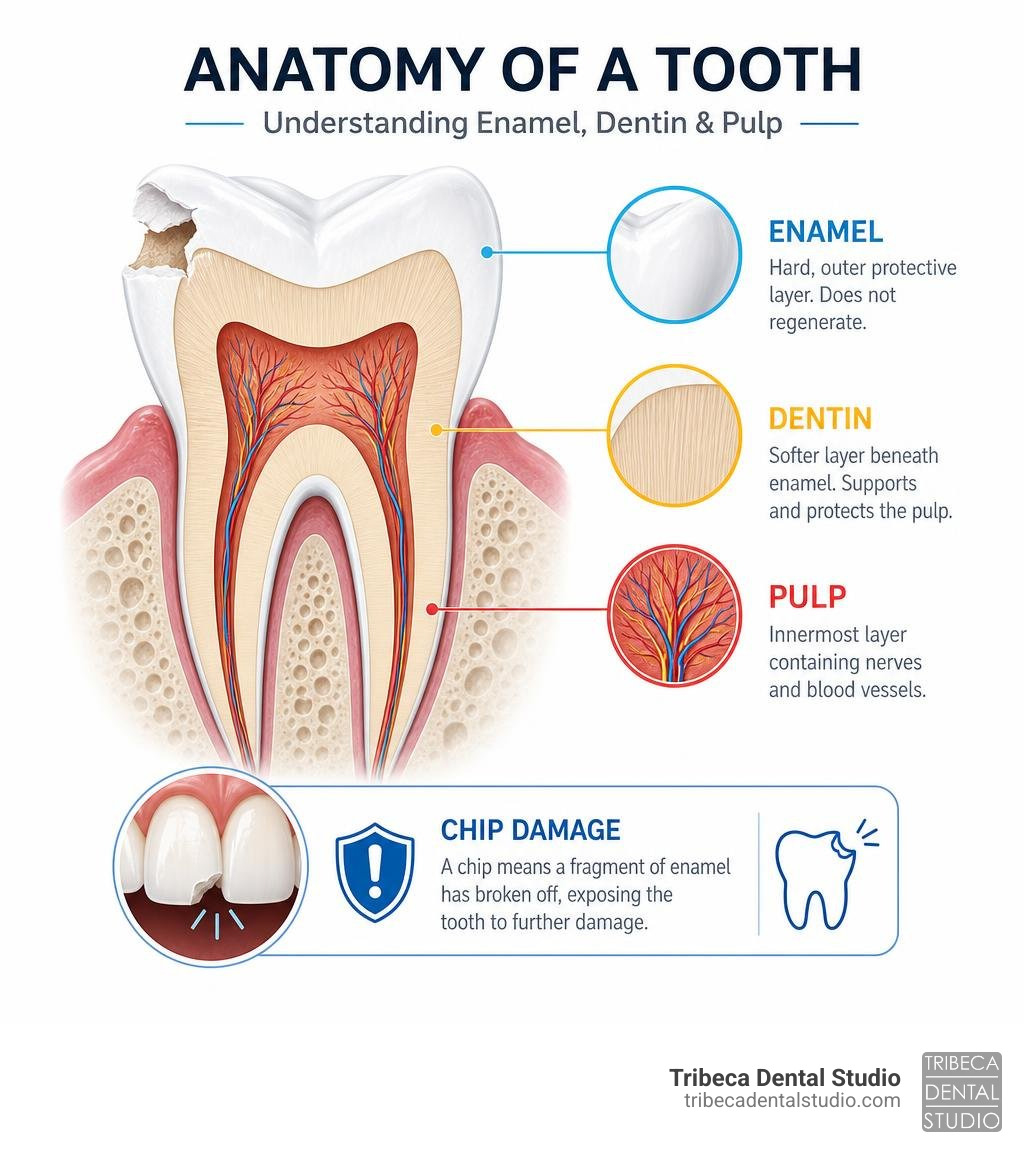
- Enamel is the hard outer layer that protects your teeth
- A chip means a fragment of that enamel has broken off
- Unlike bone, enamel cannot grow back or heal on its own
- Even a painless chip can lead to decay, sensitivity, or infection if left untreated
- Treatment ranges from a simple polish to bonding, veneers, or a crown — depending on severity
It can happen in an instant. You bite into something hard, take a hit during a game, or wake up one morning and notice a rough edge with your tongue. Sometimes you feel it right away. Other times, you don’t notice anything at all — which is exactly what makes chipped enamel tricky.
According to Cleveland Clinic, a chipped tooth means a fragment of your tooth enamel has broken off, exposing the tooth to potential further damage or cosmetic concerns. And because enamel has no living cells, it simply cannot repair itself the way other tissues in your body can.
About 1 in 5 adults in the United States has experienced a chipped tooth at some point. It affects people of all ages — from children who fall during play to adults over 50 whose enamel has thinned over time.
I’m Dr. Nina Izhaky, a graduate of New York University College of Dentistry and founder of Tribeca Dental Studio, where I’ve helped countless patients restore and protect their chipped tooth enamel using the latest techniques in cosmetic and restorative care. In this guide, I’ll walk you through exactly what to do — from the moment the chip happens to the best treatment options available.
Basic chipped tooth enamel vocab:
Understanding Chipped Tooth Enamel: Causes and Risk Factors
To understand why a tooth chips, we have to look closely at how our teeth are built. Tooth enamel is the translucent, incredibly tough outer shell of your teeth. In fact, it is the hardest substance in the human body—even stronger than your bones! However, despite its diamond-like hardness, enamel has a major vulnerability: it is highly brittle. When subjected to sudden impact, extreme pressure, or acidic erosion, it can snap, crack, or chip away.
What is Chipped Tooth Enamel?
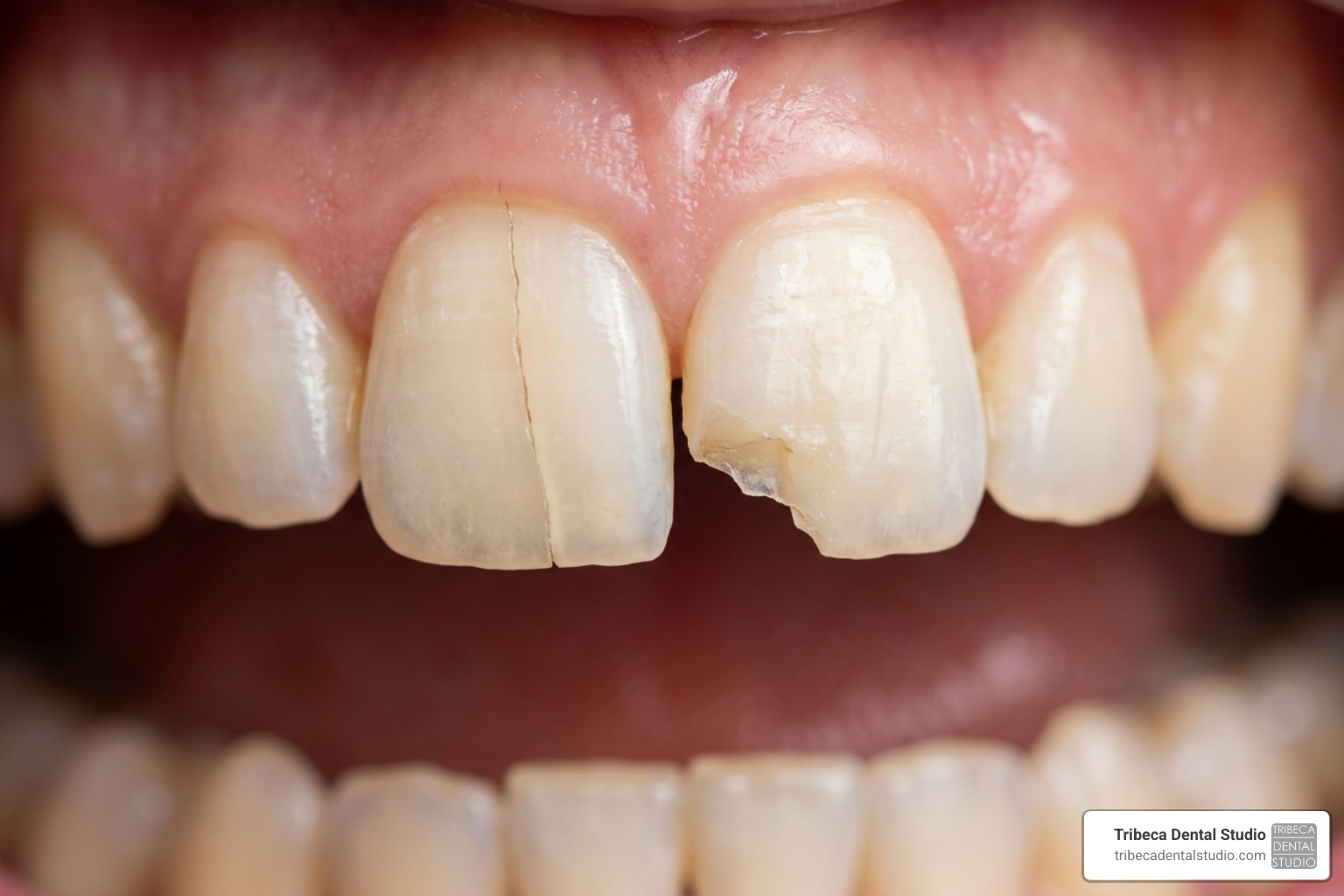
When we talk about chipped tooth enamel, we are referring to a localized break where a small piece of the tooth’s outer protective layer has fractured off. It is crucial to understand the distinct difference between a chipped tooth and a cracked tooth:
- Chipped Tooth: A fragment of the enamel (and sometimes the underlying dentin) physically detaches and breaks away from the rest of the tooth. The structural integrity of the root and the core of the tooth usually remains intact.
- Cracked Tooth: A fracture line runs vertically or horizontally through the tooth structure. Unlike a chip, a crack can extend from the chewing surface all the way down to the root, splitting the tooth without necessarily causing a piece to fall off immediately.
To learn more about how these issues differ and how they are addressed, explore our guide on From Chips to Cracks: Understanding All Tooth Repair Options.
Structurally, your teeth are layered. Beneath the outer enamel lies the dentin, a softer, yellowish layer containing microscopic tubules that lead directly to the tooth’s nerve center. At the very core is the dental pulp, which houses the nerves and blood vessels. If a chip is shallow and only affects the enamel, you might not feel any pain at all because enamel contains no nerves. However, if the chip goes deeper, exposing the dentin or pulp, you will likely experience sharp pain, temperature sensitivity, or discomfort when biting down. For a comprehensive overview of how these layers function during trauma, you can read more from the Cleveland Clinic’s guide on chipped teeth.
Common Causes and Risk Factors
Why do teeth chip in the first place? While teeth are designed to withstand a lifetime of chewing, several everyday factors can compromise their strength:
- Accidents and Trauma: Sudden falls, car accidents, or sports-related impacts are leading causes of chipped teeth.
- Biting Down on Hard Objects: Crunching on ice, popcorn kernels, hard candies, nuts, or even using your teeth as tools to open packaging can easily snap brittle enamel.
- Bruxism (Teeth Grinding): Constant clenching and grinding, especially at night, places immense, repetitive pressure on the chewing surfaces. Over time, this weakens the enamel, making it highly susceptible to spontaneous chipping.
- Untreated Cavities and Weakened Structure: Tooth decay eats away at the healthy structure of your tooth from the inside out. Large, older fillings can also weaken the surrounding natural enamel, leaving thin walls that easily break under normal chewing forces.
- Age-Related Wear: As we age, our enamel naturally thins and develops microscopic stress fractures. In fact, nearly two-thirds of individuals who experience cracked or chipped teeth are over the age of 50.
- Acidic Erosion: Frequent consumption of sugary, acidic foods and beverages, or underlying health conditions like acid reflux (GERD) and eating disorders, can chemically erode and soften enamel.
For more detailed insights into the biological mechanics of tooth damage, check out Healthline’s article on chipped tooth causes and recovery.
How to Prevent Chipped Tooth Enamel
While we cannot completely bubble-wrap our lives, we can take proactive, smart steps to protect our smiles from structural damage:
- Wear an Athletic Mouthguard: If you or your children play contact sports (like basketball, soccer, hockey, or martial arts), a custom-fitted athletic mouthguard is your single best defense against dental trauma.
- Use a Nightguard for Bruxism: If you wake up with a sore jaw or have been told you grind your teeth, we can craft a custom nightguard. This comfortable oral appliance acts as a shock absorber, protecting your enamel from overnight wear.
- Ditch Bad Habits: Never use your teeth as tools to tear open plastic bags, crack nuts, or pop bottle caps. Avoid chewing on non-food items like pen caps, fingernails, or ice.
- Manage Acid Reflux: Work with your doctor to manage GERD or acid reflux, as neutralizing stomach acid is essential to preventing enamel erosion.
- Keep Regular Dental Checkups: Routine visits allow us to spot early signs of wear, microscopic fractures, or decay before they turn into a major structural break.
Immediate Steps to Take After Chipping a Tooth
Discovering a chipped tooth can be alarming, but staying calm and taking the right steps immediately after the incident can make a massive difference in saving the tooth and preventing complications.
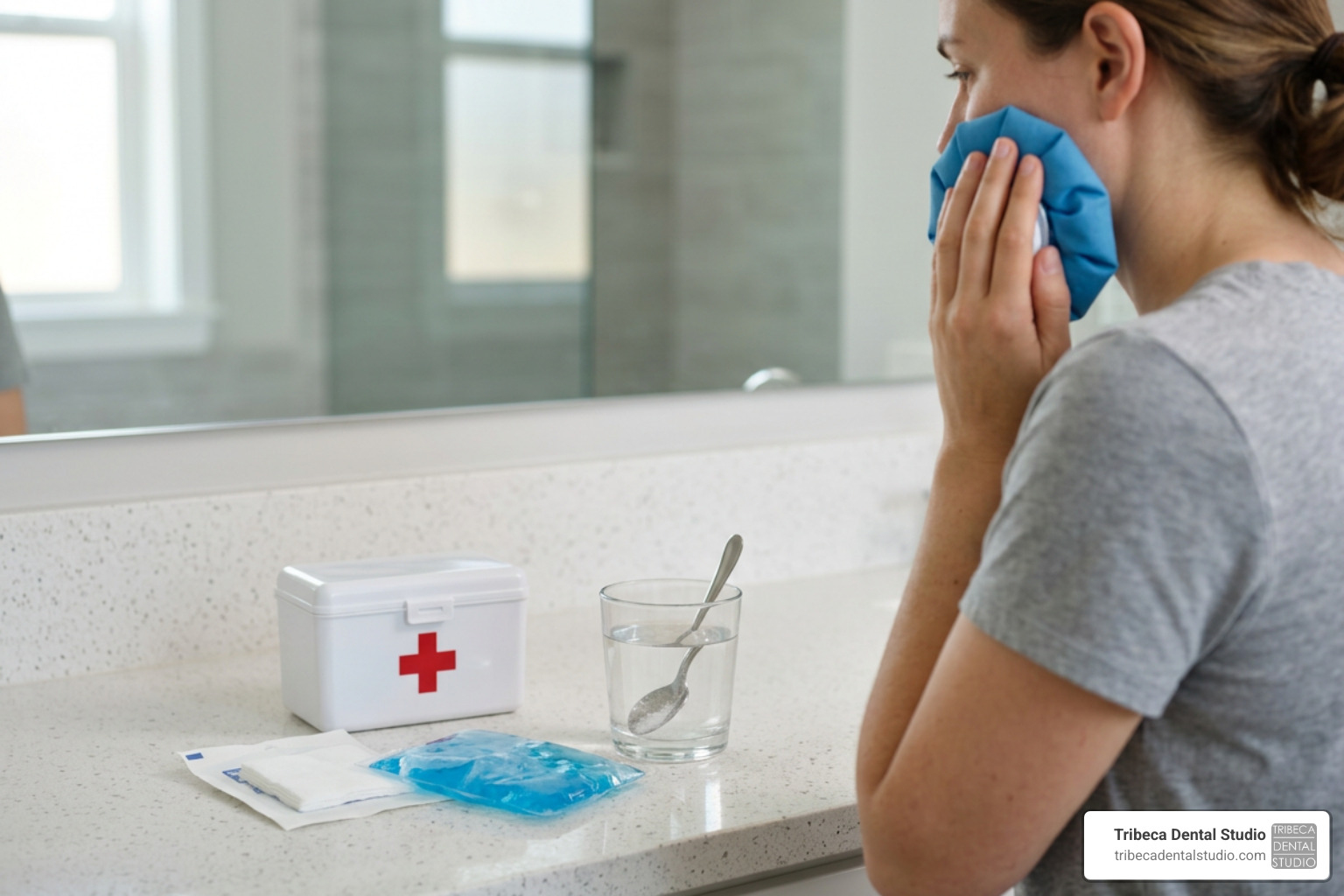
If you have just chipped your tooth, follow this step-by-step emergency checklist:
- Rinse Your Mouth: Immediately rinse your mouth with warm saltwater. This cleanses the area, removes any tiny loose fragments of enamel, and helps reduce the risk of infection.
- Control Bleeding: If your gums or lips are bleeding from the impact, apply gentle pressure with a clean piece of gauze or a damp cloth for about 10 minutes or until the bleeding stops.
- Apply a Cold Compress: To keep swelling down, apply a cold compress or an ice pack wrapped in a cloth to the outside of your cheek or lip near the injured tooth. Do this in 15-minute intervals.
- Protect Your Soft Tissues: If the chipped tooth has a sharp, jagged edge that is scraping against your tongue, cheek, or lips, cover the sharp spot. You can use dental wax, a small piece of sugar-free chewing gum, or temporary dental cement available at most drugstores.
- Save the Tooth Fragment: If you can find the piece of tooth that broke off, pick it up carefully by the crown (not the broken edge). Rinse it gently under water and store it in a small container of milk or your own saliva. In some cases, we can actually reattach the original fragment!
- Contact Us Immediately: Call our Tribeca office to schedule an appointment. Even if the chip seems minor and does not hurt, a professional assessment is vital to ensure the internal nerve is safe.
For more actionable tips on handling this situation, read our comprehensive Get Chipped Tooth Fixed Guide.
Managing a Chipped Tooth at Home While Waiting for Your Appointment
If you cannot see us immediately, you can safely manage discomfort and protect your mouth at home with these temporary measures:
- Stick to Soft Foods: Avoid chewing on the side of the mouth with the damaged tooth. Eat soft, easy-to-chew foods like yogurt, mashed potatoes, soups, or smoothies. Avoid extremely hot, cold, sweet, or acidic foods, which can trigger intense sensitivity.
- Manage Discomfort: Over-the-counter anti-inflammatory pain relievers (such as ibuprofen or acetaminophen) can help manage minor pain or throbbing. Always use these medications strictly according to the package instructions.
- Keep It Clean: Continue to brush and floss your other teeth normally, but be incredibly gentle around the chipped area to avoid irritating the gums or worsening the damage.
Children vs. Adults: Key Differences in Chipped Teeth
Chipped teeth are incredibly common in children due to their active lifestyles, playground adventures, and sports. However, treating a child’s chipped tooth requires a different clinical approach than treating an adult’s:
- Baby Teeth vs. Permanent Teeth: If a child chips a primary (baby) tooth, the treatment focus is often on smoothing the sharp edge to prevent tongue cuts or placing a simple filling. If the baby tooth is severely damaged, we must protect the underlying, developing permanent tooth.
- Thinner Enamel: Children’s baby teeth have much thinner enamel layers than adult teeth. This means decay or fractures can reach the sensitive inner pulp much faster, requiring prompt attention to prevent infection.
- Developing Roots: If a child chips an immature permanent tooth, the root may not be fully formed. We use specialized pediatric treatments to encourage the root to finish growing healthily despite the trauma.
Regardless of age, any dental trauma should be evaluated by a professional as soon as possible.
Professional Diagnosis and Treatment Options
When you visit us at Tribeca Dental Studio, our first step is to perform a comprehensive diagnostic exam. We will visually inspect the area, use specialized dental instruments to check for hidden fractures, and take digital X-rays to assess the health of the tooth’s root, bone, and inner pulp.
Depending on the size, location, and severity of the chip, we will recommend a customized treatment plan. To give you an idea of your options, here is a quick comparison:
| Treatment Option | Best Suited For | Number of Visits | Average Lifespan |
|---|---|---|---|
| Smoothing & Polishing | Very minor enamel chips with no pain | 1 visit | Permanent (natural tooth is reshaped) |
| Dental Bonding | Small to moderate chips, especially on front teeth | 1 visit | 3 to 10 years |
| Porcelain Veneers | Moderate, visible chips on front teeth where aesthetics are a priority | 2 visits | 10 to 20+ years |
| Dental Crowns | Severe chips, broken cusps, or teeth with large fillings/root canals | 2 visits | 10 to 15+ years |
| Inlays & Onlays | Moderate damage to the chewing surfaces of back teeth | 2 visits | 10 to 20+ years |
Dental Bonding and Tooth-Colored Fillings
For minor to moderate chips, dental bonding is often the quickest and most conservative cosmetic solution. During this simple, painless procedure, we apply a tooth-colored composite resin directly to the chipped area.
We meticulously sculpt, shape, and smooth the resin to match the exact contours of your natural tooth. Once we achieve the perfect shape, we cure and harden the material using a specialized high-intensity light, followed by a final polish to give it a natural, enamel-like sheen. Bonding can typically be completed in just one visit, taking about 30 to 60 minutes per tooth.
If the chip has occurred on a back chewing tooth or is associated with a cavity, we use durable, tooth-colored composite fillings to restore both function and beauty. Learn more about our approach to Direct Bonding and our advanced Tooth-Colored Fillings to see how we seamlessly blend science and artistry.
Porcelain Veneers and Dental Crowns
For more extensive cosmetic damage on your front teeth, porcelain veneers offer an incredibly lifelike and durable restoration. Veneers are ultra-thin, custom-made shells of medical-grade ceramic that are permanently bonded to the front surfaces of your teeth. They require only a minimal amount of enamel preparation (about 0.5mm) and are highly resistant to future staining, providing a gorgeous, long-lasting transformation.
If a chip is severe, has broken off a significant portion of the tooth, or affects a back molar that handles heavy chewing forces, a dental crown is the ideal solution. Often referred to as a “cap,” a dental crown is a custom restoration that completely covers the visible portion of the tooth from the gumline up, acting like a protective helmet to restore structural strength and prevent further fractures.
At Tribeca Dental Studio, we are widely recognized for our expertise in crafting beautiful, high-strength Porcelain Veneers & Lumineers and custom Dental Crowns & Bridges designed to blend seamlessly with your natural smile.
Root Canals and Restorative Care for Severe Chips
If a chip is deep enough to expose the tooth’s inner pulp, bacteria from your mouth can quickly enter and infect the nerve. This can lead to severe throbbing pain, sensitivity to hot and cold, and eventually a painful dental abscess.
To save the tooth from extraction, we perform root canal therapy. During this highly routine, comfortable procedure, we gently remove the damaged or infected pulp tissue, thoroughly clean and disinfect the root canals, and seal the space with a biocompatible material. Because a root-canal-treated tooth can become brittle over time, we almost always protect and reinforce it with a custom dental crown.
For moderate fractures on the chewing surfaces of your back teeth that do not require a full crown, we may recommend dental onlays. These custom-milled restorations fit perfectly within the grooves of your tooth, preserving as much of your natural tooth structure as possible. Discover our state-of-the-art options for Dental Inlays and Onlays.
Complications of Leaving a Chipped Tooth Untreated
It is a common misconception that if a chipped tooth does not hurt, it does not need to be treated. Even a tiny, painless chip in your chipped tooth enamel can create serious, progressive oral health issues if neglected:
- Increased Risk of Tooth Decay: The rough, jagged surface of a chip acts like a magnet for food particles, plaque, and bacteria. Because these areas are incredibly difficult to clean thoroughly with a toothbrush or floss, cavities can develop rapidly around the chip.
- Structural Weakening: A chip compromises the overall structural integrity of your tooth. Normal chewing forces place stress on the remaining enamel, which can cause micro-cracks to spread, eventually leading to a much larger, more severe break.
- Nerve Exposure and Sensitivity: Over time, the protective enamel around the chip can continue to wear down, exposing the underlying dentin. This leads to chronic, uncomfortable sensitivity to hot, cold, sweet, or acidic foods.
- Dental Infection and Abscess: If bacteria penetrate deep enough to reach the pulp, the nerve will eventually die, leading to a painful infection. This can result in localized swelling, systemic fever, and the need for more invasive treatments like root canals or extractions.
- Soft Tissue Irritation: Sharp, untreated edges of a chipped tooth can continuously scrape, cut, or irritate your tongue, inner cheeks, and lips, leading to painful mouth ulcers or chronic inflammation.
To explore why early intervention is always the smartest, most cost-effective choice, take a look at our detailed guide: Don’t Chip Out: Everything You Need to Know About Chipped Tooth Repair.
Frequently Asked Questions About Chipped Teeth
Is a chipped tooth a dental emergency?
It depends entirely on the severity of the chip and your pain levels.
- Non-Emergency: If the chip is small, confined strictly to the outer enamel, and causes no pain, bleeding, or sensitivity, it is not an immediate medical emergency. However, you should still schedule an appointment to see us within a few days to smooth the edge and prevent future decay.
- Emergency: If you are experiencing severe pain, continuous bleeding, significant swelling, or if the chip is large and has exposed the pinkish-red inner pulp of the tooth, you should seek urgent dental care immediately.
How long does it take to repair a chipped tooth?
The treatment timeline varies depending on the restoration you need:
- One-Visit Repairs: Dental bonding, tooth-colored fillings, and simple smoothing or polishing are completed in a single, convenient visit, usually taking under an hour.
- Two-Visit Repairs: Custom porcelain veneers, dental crowns, and inlays/onlays require two visits. During the first visit, we prepare the tooth, take digital impressions, and place a comfortable temporary restoration. A professional dental laboratory then custom-crafts your final restoration, which we permanently bond in place during your second visit about two weeks later.
Can a chipped tooth heal on its own?
No. While other parts of your body can regenerate and heal thanks to active blood flow and living cells, tooth enamel is non-living tissue. Once enamel is lost or fractured, it is gone forever and cannot regenerate. The only way to restore the shape, function, and health of a chipped tooth is through professional dental treatment.
Conclusion
A chipped tooth can happen in the blink of an eye, but with prompt, professional care, it does not have to compromise your health or your confidence. Whether you have a tiny, painless rough spot or a more severe fracture, addressing it early is the absolute best way to protect your long-term smile.
At Tribeca Dental Studio, located in the heart of Tribeca, Manhattan, we are proud to offer a comprehensive, advanced, and deeply welcoming environment for all your oral healthcare needs. Under the leadership of Dr. Nina Izhaky, our practice treats every patient like family, offering personalized, patient-focused care.
For complex restorative needs, our highly experienced team—including Dr. Sam Morhaim for advanced periodontal care and implant dentistry—utilizes leading-edge technology to deliver highly predictable, beautiful outcomes. From custom porcelain veneers and high-quality dental crowns to advanced implant dentistry, full-mouth reconstructions, gum disease treatment, and routine deep cleanings, we stand behind the quality of our work.
Don’t wait for a small chip to turn into a major headache. Schedule a consultation for chipped tooth repair with our trusted New York City team today!