Airway Orthodontics in NYC: The Complete A-Z Guide
February 5, 2026

Why Airway Orthodontics Matters for Your Health
Airway orthodontics is a specialized approach to dental care that focuses on improving breathing and overall health by addressing the structure of your airway. Unlike traditional orthodontics, which primarily targets tooth alignment, airway orthodontics prioritizes creating adequate space in your jaws and airway to promote proper nasal breathing, reduce sleep-disordered breathing, and support healthy facial development.
Quick Answer: What You Need to Know
- What it treats: Snoring, mouth breathing, sleep apnea, jaw pain, and airway obstruction
- How it differs: Focuses on jaw expansion and airway volume, not just straight teeth
- Who benefits: Children (ages 7-9 ideal) and adults with breathing or sleep issues
- Key treatments: Palatal expanders, functional appliances, myofunctional therapy, CBCT imaging
- The goal: A patent airway, nasal breathing, and improved quality of life
Breathing is fundamental. We can survive weeks without food and days without water, but only minutes without air. Yet many people, especially children, struggle to breathe properly during sleep without realizing it.
A constricted airway isn’t just about snoring. It’s linked to behavioral issues in kids, chronic fatigue in adults, and serious health conditions like high blood pressure and heart disease. Many cases of dental misalignment in children are connected to airway problems from narrow jaws and improper oral development.
Airway orthodontics takes a holistic, functional approach. Instead of just straightening teeth or extracting them to make space, this method expands the jaws to create room for the tongue, opens the nasal passages, and ensures the airway remains clear. It’s about treating the root cause—not just the symptoms.
The philosophy is simple: a beautiful smile should also be a healthy smile. When your oral structures are properly developed, you breathe better, sleep better, and live better.
As Dr. Nina Izhaky, I’ve dedicated my practice at Tribeca Dental Studio to providing comprehensive care that addresses the whole person. With expertise in airway orthodontics and state-of-the-art 3D imaging, I work with specialists to help patients of all ages achieve optimal airway health. Now, let’s explore the signs of a compromised airway and the power of airway-focused treatment.
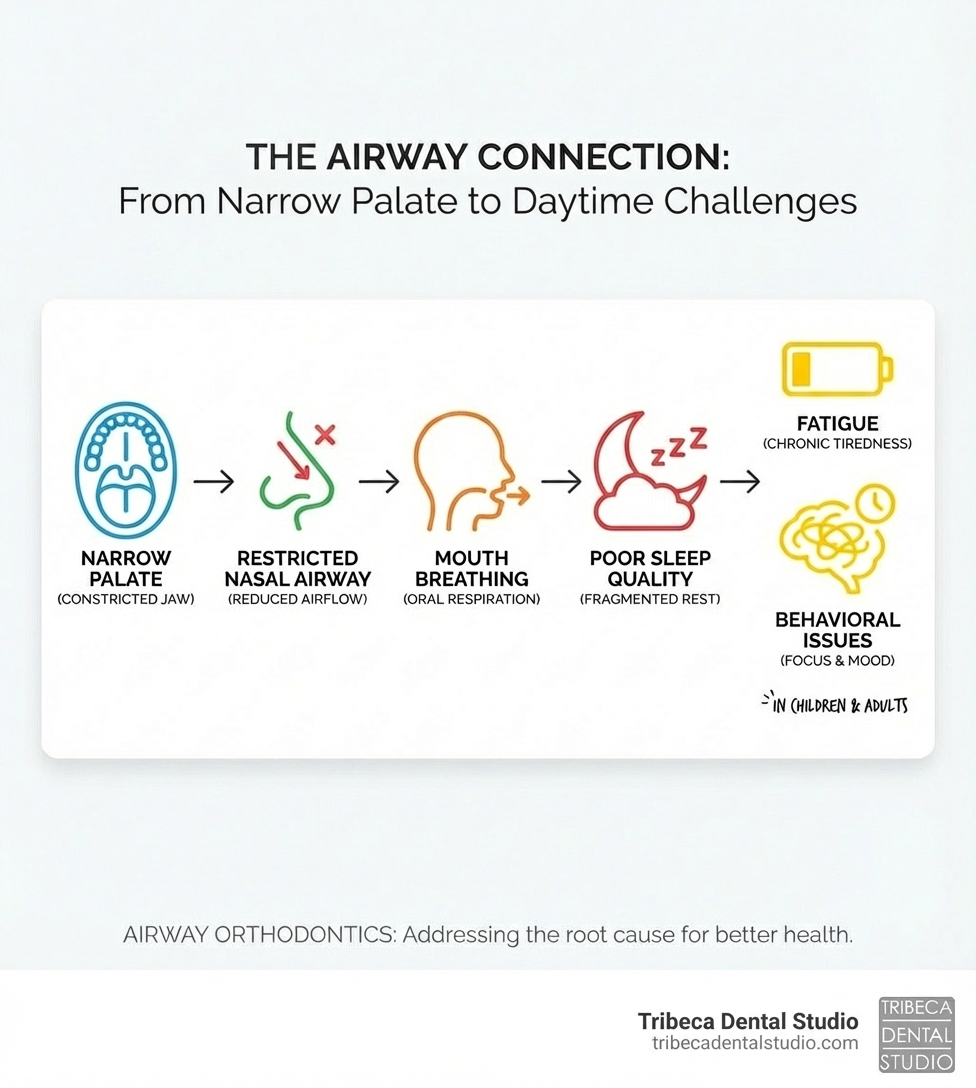
Simple guide to airway orthodontics terms:
Recognizing the Signs: Is a Compromised Airway Affecting You or Your Child?
A compromised airway can manifest in various ways, often subtly at first. Understanding the common signs in children and adults helps identify when an airway evaluation is necessary. These symptoms are often indicators that the body is struggling for adequate oxygen, especially during sleep.
Symptoms in Children
Children’s bodies are still developing, making early intervention critical. Parents might attribute these signs to other issues, like behavioral problems or being a “fussy sleeper.”
- Snoring: Snoring in children is a major red flag for a compromised airway, indicating restricted airflow. It should never be dismissed as normal.
- Mouth breathing: This is a clear sign that nasal passages aren’t working correctly, which can negatively impact facial and jaw growth.
- Restless sleep: Frequent tossing and turning or sleeping in unusual positions (e.g., head hyperextended) can be an attempt to open the airway.
- Daytime drowsiness: Difficulty waking up or feeling tired despite a full night’s sleep can result from fragmented sleep.
- Dark circles under the eyes: A perpetually tired appearance can be a sign of poor sleep quality.
- Behavioral issues like ADD/ADHD: Difficulty concentrating or hyperactivity can sometimes be misdiagnosed when the root cause is poor sleep due to a restricted airway.
- Bedwetting (enuresis): This can be linked to sleep-disordered breathing, as the body’s stress response during apnea events can interfere with bladder control.
From an orthodontic perspective, we look for physical signs like crowded teeth, which suggest underdeveloped jaws, and a high, narrow palate, which indicates a narrow nasal airway. If you notice these signs, it’s worth reviewing the 5 Signs Your Child Might Need Braces: A Parent’s Guide.
Symptoms in Adults
In adults, airway compromise often presents as chronic issues with systemic effects.
- Chronic snoring: Habitual snoring is never normal and signals a partially obstructed airway during sleep.
- Diagnosed Obstructive Sleep Apnea (OSA): This is a more severe condition where breathing repeatedly stops and starts during sleep.
- Daytime fatigue: Feeling unrefreshed even after a full night’s sleep is a common complaint.
- Morning headaches: These are often a result of oxygen deprivation during sleep.
- Teeth grinding (bruxism) and jaw pain (TMJ/TMD): The body may unconsciously clench or grind to keep the airway open.
Long-term effects can include increased risk for high blood pressure, heart attacks, strokes, and Type 2 diabetes. If these symptoms sound familiar, seek an evaluation. You can find More info about an airway dentist for adults on our website.
Common Causes of Airway Obstruction
Understanding the root causes is key to effective treatment.
- Narrow or underdeveloped jaws: If jaws don’t reach their full potential, there isn’t enough room for the tongue, which can fall back and obstruct the airway.
- Retruded mandible (lower jaw): A lower jaw that is set back can worsen airway constriction.
- Enlarged tonsils and adenoids: Common in children, these can physically block the airway and often require collaboration with an ENT specialist.
- Deviated septum: This can obstruct nasal breathing, forcing mouth breathing.
- Improper tongue posture: The tongue should rest against the roof of the mouth. If it rests low, it can fall back into the airway. This may be related to a tongue-tie, which restricts tongue movement.
What is Airway Orthodontics and How Does It Differ?
At Tribeca Dental Studio, we believe in a comprehensive approach to oral health that extends beyond a beautiful smile. This is where airway orthodontics shines, differentiating itself from traditional methods by focusing on the fundamental aspect of breathing.
The Philosophy of Airway Orthodontics
The core philosophy of airway orthodontics is centered on function and health. We understand that the mouth, jaw, and airway are linked to the entire body. Our goal isn’t just to align teeth; it’s to optimize the system to support proper breathing, sleep, and facial development. We aim to treat the root cause of issues like crowded teeth, which can be a sign of jaw growth problems affecting the airway.
We focus on guiding natural growth and development, especially in children, to help jaws reach their full potential. This usually involves a non-extraction approach; we create space by expanding the jaws rather than removing healthy teeth. Creating adequate space for the tongue and airway promotes nasal breathing, which is vital for overall health. This holistic approach leads to benefits far beyond a straight smile, improving quality of life and long-term wellness, as detailed in articles like Understanding Airway: An Orthodontist’s Approach.
Traditional Orthodontics vs. Airway Orthodontics
While both traditional and airway orthodontics improve dental alignment, their philosophies and priorities differ.
| Feature | Traditional Orthodontics | Airway Orthodontics |
|---|---|---|
| Primary Focus | Aesthetics, tooth alignment, bite correction | Airway volume, jaw development, proper breathing, overall health |
| Treatment Approach | May involve tooth extractions to create space | Non-extraction preferred; expansion of jaws to create space |
| Consideration of Airway | Often secondary or disregarded | Central to diagnosis and treatment planning |
| Goal | Straight teeth, aesthetic smile | Patent airway, nasal breathing, improved sleep, healthy facial development, stable bite |
| Timing | Often waits until all permanent teeth erupt | Emphasizes early intervention during growth and development |
| Interdisciplinary | Less common, primarily dental-focused | Strong collaboration with ENTs, sleep specialists, myofunctional therapists |
Traditional orthodontics typically focuses on straightening teeth, sometimes extracting teeth to create space. This approach may not consider the impact on the airway.
Airway orthodontics, on the other hand, takes a broader, functional view. Our priority is to ensure the jaws and oral structures support a healthy, open airway. We focus on developing the jaws to their optimal size, which naturally creates more room for the teeth, tongue, and airflow. This often leads to a non-extraction approach, preserving natural tooth structure.
The Goal: Beyond a Perfect Smile
The goal of airway orthodontics at Tribeca Dental Studio is to achieve a patent airway—one that remains open and unobstructed, allowing for effortless breathing, especially during sleep. This fundamental improvement leads to a cascade of health benefits.
A key objective is to promote nasal breathing, which is superior to mouth breathing for filtering air and improving oxygen absorption. This contributes to better lung function and healthier craniofacial development.
Furthermore, we aim for long-term stability of both dental alignment and airway function. By addressing the underlying skeletal and muscular issues, we help create a stable foundation that reduces the likelihood of relapse. This leads to an improved overall quality of life, characterized by better sleep, increased energy, and improved concentration. It’s about creating a smile that not only looks beautiful but also supports optimal health for life. Learn more about how we integrate this with our orthodontics services.
The Treatment Journey: Diagnosis, Appliances, and Collaboration
The journey of airway orthodontics is a systematic process designed to identify underlying issues, implement effective treatments, and ensure long-term health. It begins with a thorough diagnosis and often involves a collaborative effort among different specialists.
Diagnosis: Seeing the Full Picture
The first step is a comprehensive evaluation. At Tribeca Dental Studio, we assess your teeth, bite, jaw structure, facial profile, tongue posture, and breathing patterns.
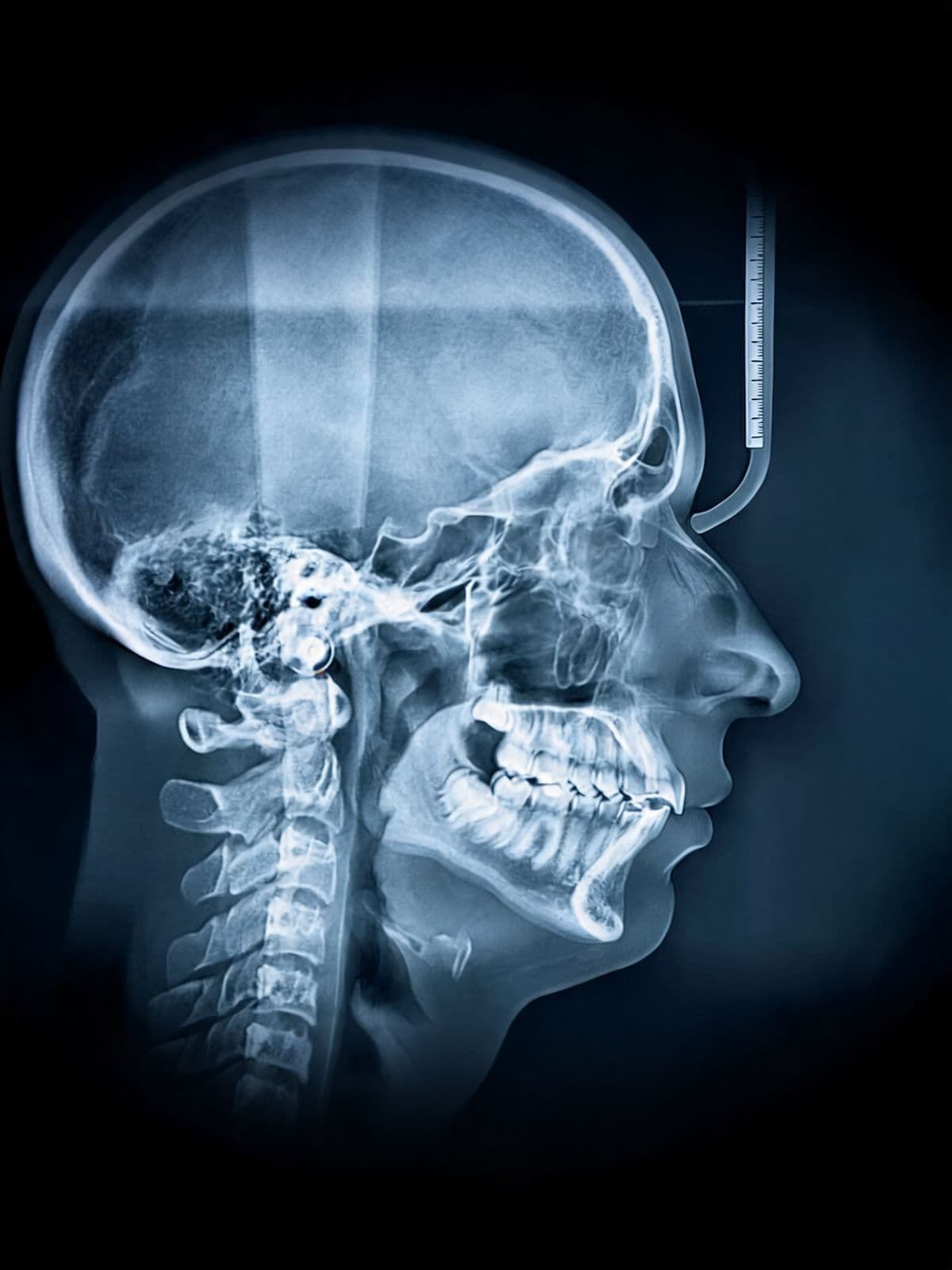
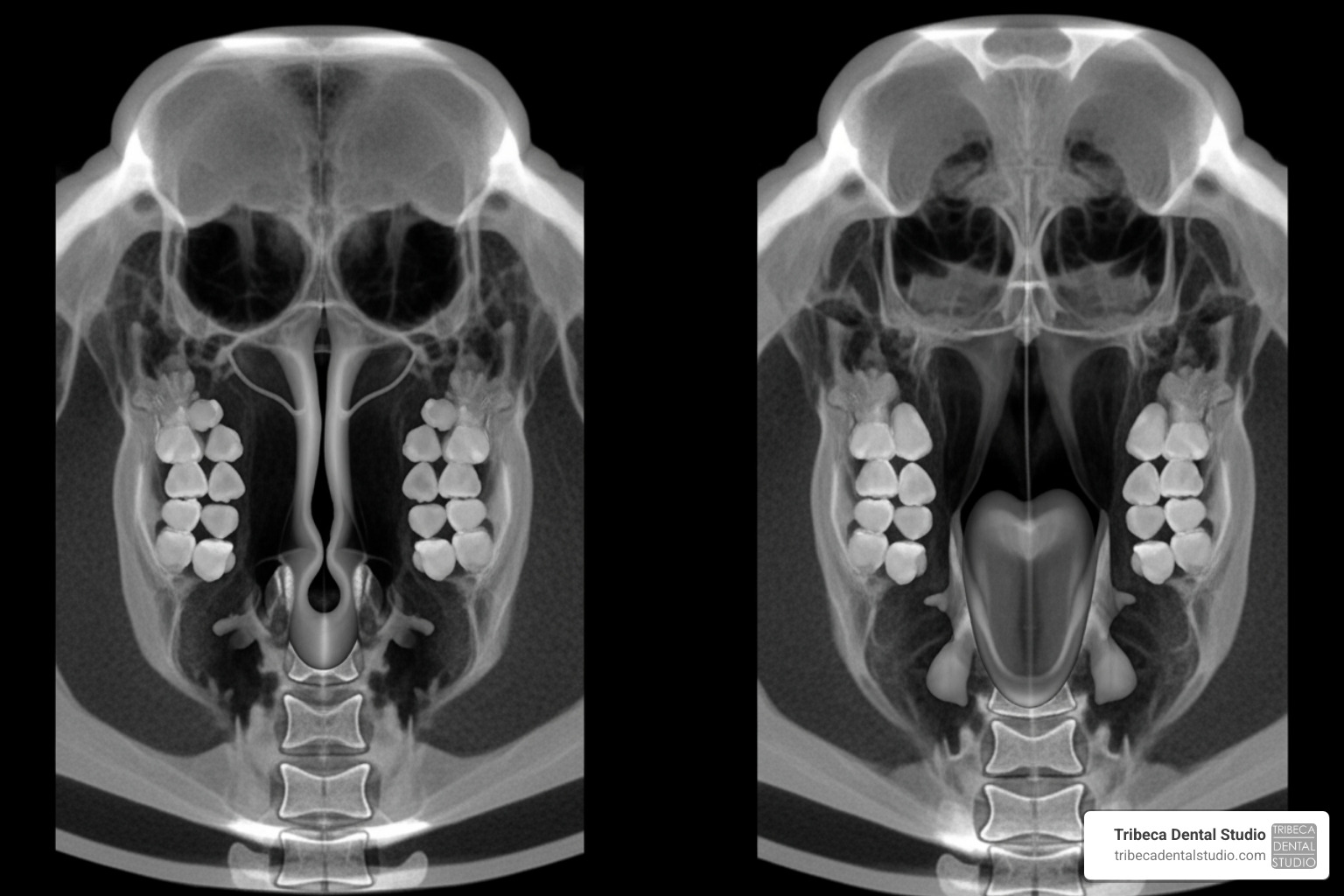
A cornerstone of our diagnosis is the 3D Cone-Beam Computed Tomography (CBCT) scan. Unlike 2D X-rays, CBCT gives us a detailed, 3D view of your oral and maxillofacial structures. This allows for a precise airway volume analysis to identify constrictions that might otherwise be missed. CBCT is considered the gold standard for airway evaluation.
We also conduct TMJ screening to evaluate jaw joint health, as TMJ/TMD and bruxism are often linked to airway issues. Sleep questionnaires provide insights into your sleep habits and symptoms. This comprehensive data allows us to form an accurate diagnosis and develop a personalized treatment plan.
Given the complex nature of airway issues, collaboration with medical specialists is often essential. We frequently work with ENTs (Ear, Nose, and Throat doctors) and sleep physicians to ensure comprehensive care.
Key Treatments in Airway Orthodontics
Once a diagnosis is established, we use a range of specialized treatments to improve airway function.
- Palatal Expanders for children: These devices gently widen the upper jaw, which also increases the width of the nasal airway, improving nasal breathing. This is highly effective in growing children. Learn more with our guide to Palatal Expansion for Children: A Non-Surgical Way to.
- MARPE and MSE for adults: Advancements like the Miniscrew-Assisted Rapid Palatal Expander (MARPE) and Maxillary Skeletal Expander (MSE) allow us to achieve significant maxillary expansion in adults, even after sutures have fused. For details, see Understanding MARPE: Benefits and Techniques.
- Myofunctional Therapy: This involves exercises to retrain oral and facial muscles. It helps establish proper tongue posture, promotes nasal breathing, and corrects harmful habits to ensure the long-term stability of treatment. We offer specialized Myofunctional Therapy at Tribeca Dental Studio.
- Mandibular Advancement Devices (MADs): These custom oral appliances are worn at night to gently reposition the lower jaw forward, keeping the airway open and reducing snoring and symptoms of mild to moderate sleep apnea in adults.
- Functional appliances: Used primarily in growing children, these devices guide jaw development. Appliances like the Twin Block encourage the lower jaw to grow forward, creating more space for the tongue and airway.
The Multidisciplinary Team Approach
At Tribeca Dental Studio, we understand that addressing complex airway issues requires a collaborative approach.
- Orthodontists lead the process by diagnosing skeletal and dental issues that impact the airway and implementing corrective treatments.
- Ear, Nose, and Throat specialists (ENTs) are our partners in evaluating and treating conditions like enlarged tonsils, adenoids, or a deviated septum.
- Sleep Physicians are indispensable for diagnosing the severity of sleep apnea through sleep studies and monitoring treatment effectiveness.
- Myofunctional Therapists are integral for retraining oral and facial muscles to establish proper tongue posture and nasal breathing, reinforcing the structural changes from orthodontics.
This team-based approach, supported by research on the Impact of different orthodontic treatment modalities on Airway: A literature review, allows us to provide the most comprehensive and integrated care possible.
Open uping Health: The Lifelong Benefits of Airway-Focused Treatment
The investment in airway orthodontics at Tribeca Dental Studio yields far more than a perfectly aligned smile. It opens the door to a lifetime of better health and improved quality of life for both children and adults.
For Children: A Foundation for a Healthy Future
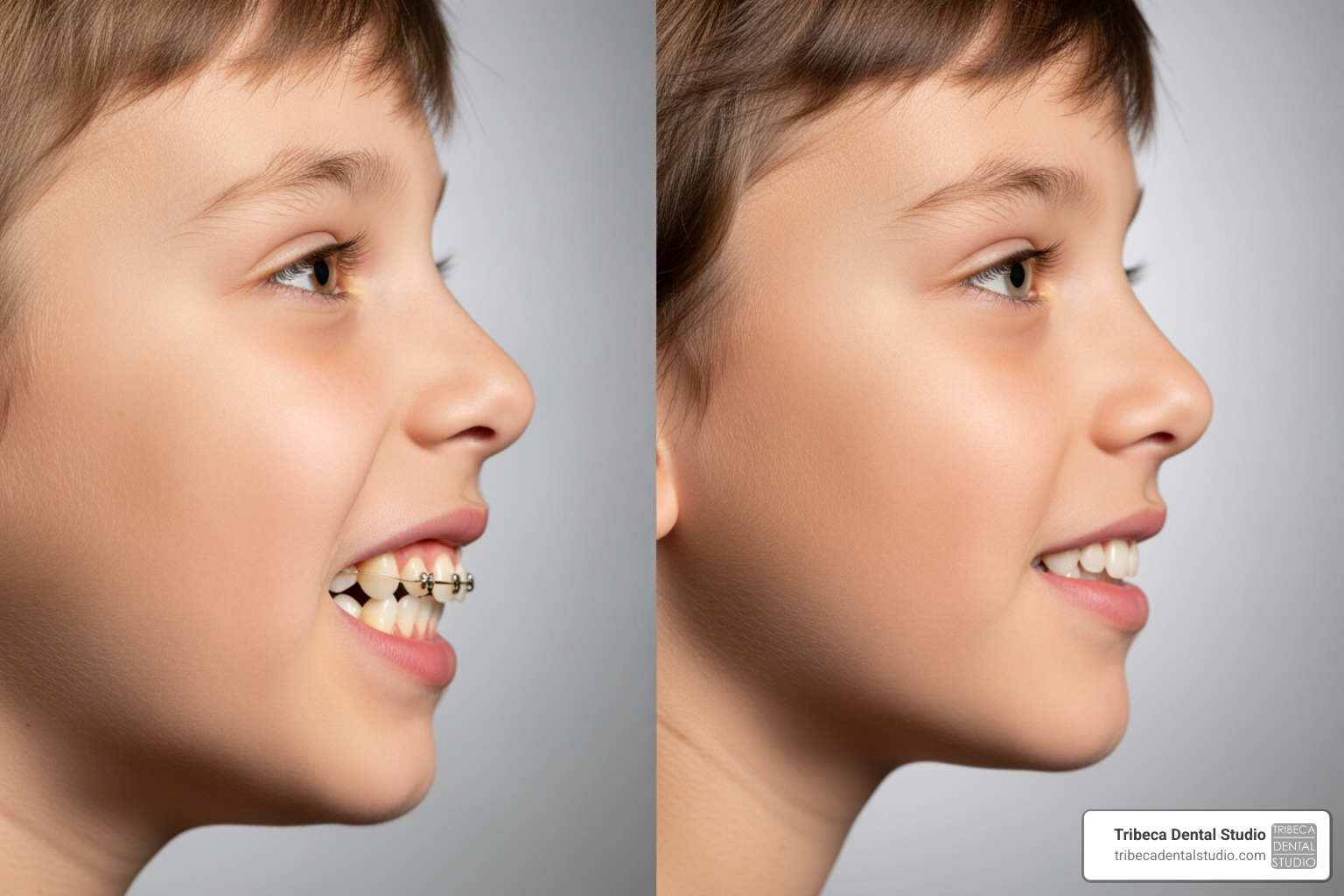
For children, early airway orthodontic intervention is transformative. By guiding proper jaw and facial growth, we create adequate space for permanent teeth, reduce the need for future extractions, and build a stable, open airway for lifelong health. This proactive approach is crucial for reducing the risk of future SDB/OSA.
The benefits also impact cognitive and behavioral development. By improving sleep quality and oxygenation, airway orthodontics can significantly improve a child’s concentration and school performance. Better sleep leads to more alert, focused children. We often see a reduction in behavioral issues like hyperactivity, which are sometimes misdiagnosed when sleep-disordered breathing is the root cause. This holistic approach underscores The Importance of Early Dental Care.
For Adults: Reclaiming Health and Vitality
It’s never too late to address airway issues. For adults, airway orthodontics offers a path to reclaiming health compromised by years of inadequate breathing and sleep.
One of the most immediate benefits is improving sleep quality. By opening the airway, patients experience more restorative sleep, which directly translates to reducing snoring. For those with sleep apnea, airway orthodontics provides an effective strategy for managing symptoms, often reducing the severity of OSA and sometimes minimizing the need for CPAP machines.
Many adults also find relief from chronic pain. Alleviating TMJ pain and headaches is a common outcome, as optimizing jaw position reduces strain on the joints and muscles. The cumulative effect of better sleep and reduced pain is a significant boost in daytime energy and focus, allowing patients to feel more alert and productive. Our sleep apnea treatments are designed to help you achieve these life-changing benefits.
Frequently Asked Questions about Airway Orthodontics
We understand that you might have many questions about this specialized field. Here, we address some of the most common inquiries about airway orthodontics.
What is the ideal age for an airway orthodontic evaluation?
Early evaluation is crucial. The American Association of Orthodontists (AAO) recommends that all children have their first orthodontic visit by age 7. While treatment might not begin immediately, an early evaluation allows us to monitor jaw growth and intervene at the most opportune time.
This “Golden Period” (typically between ages 7-9) is ideal for guiding jaw growth and maximizing airway improvement with less invasive methods. During this time, a child’s bones are still developing and are highly responsive to orthopedic changes. Addressing issues early can prevent more severe problems from developing later on.
Can airway orthodontics cure my sleep apnea?
Airway orthodontics addresses the structural causes of Obstructive Sleep Apnea (OSA) by expanding the jaws and airway. While a “cure” isn’t guaranteed, treatment can significantly reduce the severity of apneic events, often reducing or eliminating the need for a CPAP machine.
Successful management of OSA, a complex medical condition, requires a multidisciplinary approach. Your orthodontist, an ENT, and a sleep physician will work together to achieve the best possible outcome.
Is this treatment only for children?
Absolutely not! While early intervention is ideal, adults can achieve significant benefits from airway orthodontics as well.
For adults, treatments like MARPE (Miniscrew-Assisted Rapid Palatal Expander) can effectively widen the upper jaw to increase nasal airflow. Mandibular advancement appliances are also highly effective in keeping the airway open during sleep. These interventions can dramatically improve airway function, sleep quality, and reduce symptoms of sleep-disordered breathing, leading to a noticeable improvement in overall health and vitality.
Conclusion: Breathe Easier, Live Better
At Tribeca Dental Studio, we believe a healthy smile is linked to a healthy life. Airway orthodontics represents a shift towards foundational, whole-body health, recognizing that proper breathing and sleep are fundamental needs. We have seen how addressing airway issues transforms lives—improving a child’s concentration and restoring an adult’s energy.
A healthy airway is the cornerstone of well-being, impacting everything from your sleep quality and daily energy to your long-term systemic health. Our personalized approach ensures you receive comprehensive care custom to your unique needs, integrating advanced diagnostics with collaborative treatment strategies.
If you or your loved ones are experiencing symptoms of a compromised airway, don’t wait. Take the first step towards a healthier future. Learn more about our Airway Orthodontics services and schedule your consultation today. Let us help you breathe easier, sleep better, and live a fuller, healthier life right here in New York City.