What Good Post Filling Care Actually Looks Like
Post filling care starts the moment you leave the dental chair — and the steps you take in the first 24 hours (and beyond) make a real difference in how comfortably and quickly your tooth heals.
Here is a quick overview of the essentials:
- Wait to eat until the numbness from local anesthesia wears off (usually 2–4 hours)
- Choose soft, lukewarm foods for the first 24 hours
- Avoid hard, sticky, or chewy foods for at least a few days
- Expect mild sensitivity to hot and cold — this is normal and typically resolves within 1–3 weeks
- Brush and floss gently starting the same day, using a soft-bristled toothbrush
- Contact your dentist if your bite feels uneven, if you have severe pain, or if sensitivity persists beyond 2–3 weeks
These steps apply whether you have a composite (tooth-colored) filling or a metal one — though some specifics differ by material, which we cover in detail below.
Getting a filling is one of the most common dental procedures, and for good reason: it stops decay in its tracks and restores the tooth’s strength and function. But what happens after the procedure is just as important as the procedure itself. Many patients leave the office unsure of what to eat, what to feel, and what to watch out for. That uncertainty can lead to avoidable discomfort — or missed warning signs.
This guide gives you clear, practical answers — no guesswork needed.
I’m Dr. Nina Izhaky, a graduate of New York University College of Dentistry and the founder of Tribeca Dental Studio, where post filling care and conservative, patient-first restorations are central to how we practice. With years of experience placing tooth-colored composite fillings and guiding patients through smooth, comfortable recoveries, I’ll walk you through everything you need to know.
Tribeca Dental Studio is also a trusted choice for dental filling care in Tribeca, led by Dr. Nina Izhaky and a skilled team focused on precise, comfortable, and natural-looking restorations. From careful cavity preparation to personalized aftercare guidance, our team helps patients feel confident before, during, and after their filling appointment.
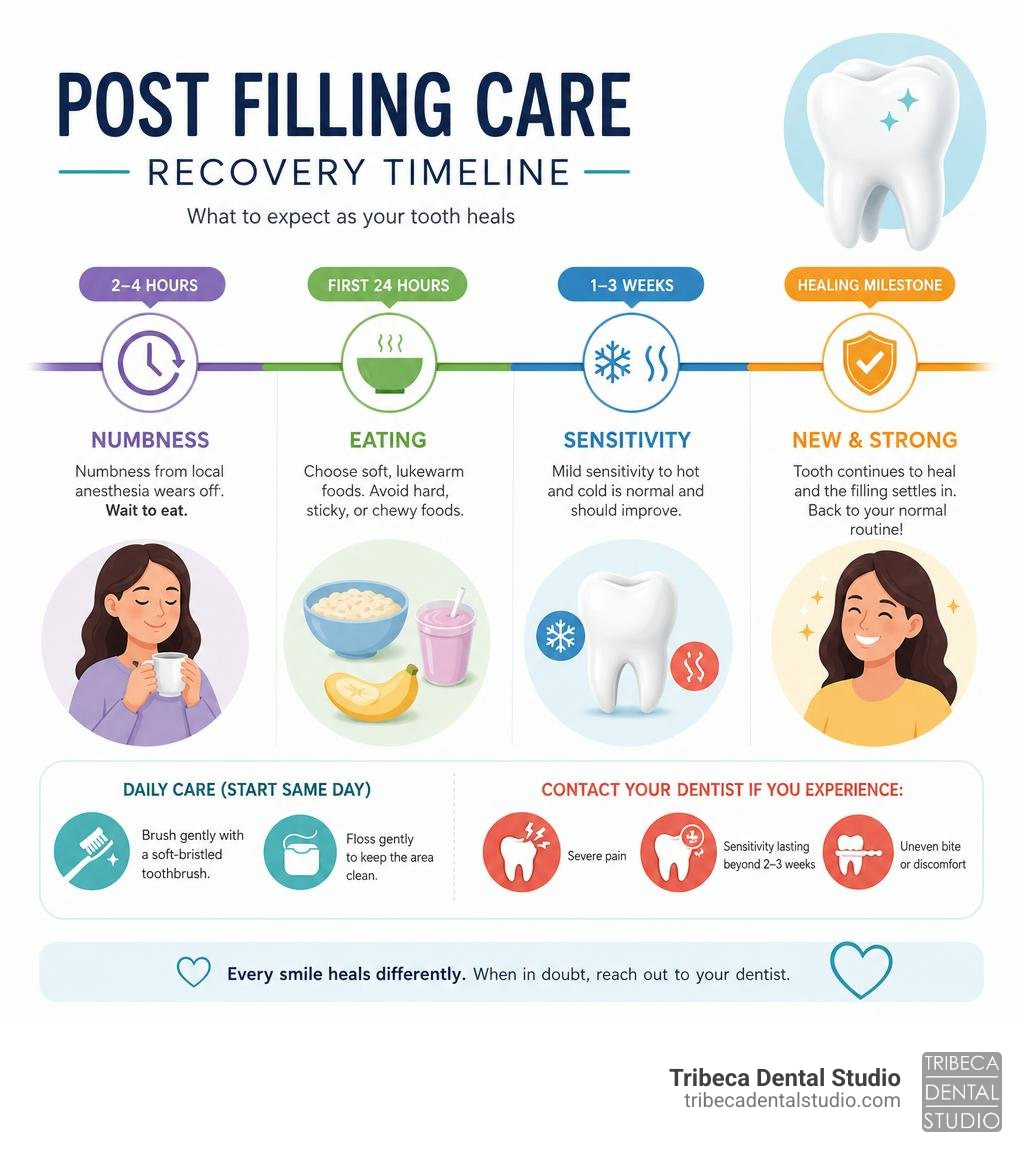
Post filling care terms simplified:
At Tribeca Dental Studio, located in the heart of Manhattan, we focus on conservative smile-design. Before placing any restoration, we look at the whole picture of your oral health. While we are widely known for excelling in no-prep veneers in NYC and providing advanced cosmetic and reconstructive care, we bring that same meticulous, aesthetic-focused dedication to everyday restorative treatments like cavity fillings.
Whether we are preserving your enamel with a discreet tooth-colored restoration or performing complex full-mouth rehabilitation, our goal is always to keep your natural smile strong, healthy, and beautiful.
Understanding Dental Filling Materials and Longevity
The type of material used to restore your tooth plays a major role in your immediate recovery timeline, your daily post filling care routine, and how long the restoration will last before needing a replacement.
When repairing a cavity, dentists choose between direct and indirect fillings. Direct fillings are placed, shaped, and completed right inside your mouth during a single appointment. Indirect fillings, such as inlays or onlays, are custom-fabricated in a dental laboratory (or using in-office CAD/CAM technology) and require at least two visits.
To help you understand your restoration, let’s look at how different materials compare:
| Material Type | Common Uses | Aesthetic Appeal | Average Lifespan | Setting/Hardening Time |
|---|---|---|---|---|
| Composite Resin | Front and back teeth, chips, fractures | Excellent (matched to tooth shade) | 5–10 years | Instant (cured with specialized blue light) |
| Amalgam (Silver) | Back molars (high-pressure chewing areas) | Low (metallic silver/dark grey) | 10–15+ years | 24 hours to fully set and reach maximum strength |
| Ceramic (Porcelain) | Inlays, onlays, aesthetic restorations | Outstanding (mimics natural enamel) | 15–30 years | Instant (bonded with specialized cement) |
| Gold | Inlays, onlays, back molars | Low (visible gold color) | 15–30+ years | Instant (cemented in place) |
Choosing the right material is a collaborative process. If you want a deep dive into how we match restorations to your unique oral anatomy, explore The Material World: Finding Your Perfect Tooth Filling.
Composite Resin and Tooth-Colored Restorations
Composite resin is the modern standard for aesthetic, conservative dental restorations. Made of a blend of medical-grade plastic and fine glass particles, composite material allows us to perform precise shade matching to mimic the natural translucency and texture of your surrounding teeth.
During the procedure, we apply the composite in thin, deliberate layers. Each layer is exposed to a specialized blue dental curing light, which triggers a rapid chemical bonding process. This light-curing technology means the filling is 100% hardened and structurally stable before you even leave our Tribeca office.
Because composite chemically bonds directly to your enamel, it requires far less drilling and removal of healthy tooth structure than traditional metal options. To learn more about how this material works, see our guide on Composite Filling Material.
Amalgam and Metal Fillings Safety and Lifespan
Amalgam fillings, often called “silver fillings,” have been used in dentistry for over a century. They are made from a mixture of metals, including liquid mercury, silver, tin, and copper. While amalgam is exceptionally durable and can easily withstand heavy chewing forces for 10 to 15 years or more, it has fallen out of favor for highly visible areas due to its dark appearance.
The presence of mercury in amalgam has also led to safety discussions. The FDA and the American Dental Association (ADA) state that dental amalgam is safe for the general population. However, the FDA recommends that certain high-risk populations avoid receiving new amalgam fillings whenever possible. These groups include:
- Pregnant or nursing women
- Women planning to become pregnant
- Children under the age of six
- Individuals with pre-existing neurological conditions or kidney impairment
Additionally, metal fillings expand and contract when exposed to hot and cold temperatures. Over time, this constant micro-movement can put stress on the surrounding tooth structure, potentially leading to microscopic cracks or structural weakness.
Essential Post Filling Care: The First 24 Hours

The first 24 hours after your procedure are the most critical for a comfortable recovery. During this window, your mouth is adapting to the physical changes, your nerve tissue is settling down, and the local anesthetic is gradually wearing off. If you want to know more about the entire process from start to finish, check out Cavity Filling 101: From Numbing to a New Smile.
Managing Numbness and Preventing Soft Tissue Injury
Local anesthesia is wonderful for ensuring a comfortable, pain-free procedure, but its effects linger long after you leave the office. Typically, numbness in your lips, tongue, cheeks, and gums lasts between 2 to 4 hours.
While you are numb, you lack the normal sensory feedback that prevents you from injuring yourself. It is incredibly easy to accidentally bite your cheek, lip, or tongue while chewing, which can cause painful swelling and deep tissue bruising once the anesthetic wears off.
Post-operative safety guidelines for managing numbness:
- Avoid solid foods completely until you have fully regained sensation in your mouth.
- Skip hot beverages like coffee, tea, or soup. Because your tissues are numb, you cannot accurately sense temperature, putting you at a high risk for severe oral burns. Stick to lukewarm or cool water instead.
- Supervise children closely. Pediatric patients are highly prone to chewing or sucking on their numb lips and cheeks out of curiosity, which can cause significant self-inflicted soft tissue trauma. Keep them on a strict liquid or pureed diet until the numbness fully resolves.
Eating and Drinking Guidelines for Post Filling Care
Once the numbness has completely faded, you can begin eating, but your food choices should reflect the type of filling material you received:
- For Composite (Tooth-Colored) Fillings: Because composite is fully cured and hardened by the blue light during your appointment, you can technically chew on it as soon as the numbness wears off.
- For Amalgam (Metal) Fillings: Amalgam requires up to 24 hours to fully set and reach its maximum structural strength. You should avoid chewing directly on the side of the mouth with the new metal filling for the first 24 hours to prevent the restoration from cracking or shifting.
Recommended foods for the first 24 hours:
- Applesauce, yogurt, and pudding
- Mashed potatoes or sweet potatoes
- Smoothies (drink them without a straw, as the suction can sometimes irritate healing gums)
- Scrambled eggs
- Lukewarm soups and broths
- Oatmeal or soft pasta
Foods to avoid during early recovery:
- Hard foods: Ice, hard candies, nuts, and popcorn kernels can easily crack a fresh restoration or aggravate a sensitive nerve.
- Sticky or chewy foods: Caramel, taffy, and gummy candies can pull on a new filling or get trapped in the microscopic margins before the tooth has fully settled.
- Extremely hot or cold items: If your tooth nerve is temporarily inflamed from the dental work, extreme temperatures will trigger sharp, uncomfortable sensitivity.
Managing Common Side Effects and Sensitivity

It is completely normal to experience some mild discomfort, gum irritation, or temperature sensitivity after getting a cavity filled. Your tooth is a living, vital organ with its own internal nerve and blood supply. Drilling and preparing the tooth structure is essentially a minor surgical procedure on that living tissue, and it takes time for the nerve to heal. For tips on how we minimize discomfort during the treatment itself, you can read about our approach to a Painless Dental Filling.
Relieving Tooth Sensitivity After a Filling
Post-operative tooth sensitivity to cold air, hot liquids, and sweet foods is incredibly common. This sensitivity typically peaks within the first few days and gradually resolves over 1 to 3 weeks.
To keep yourself comfortable while your tooth’s internal nerve heals, try these practical steps:
- Use desensitizing toothpaste: Toothpastes containing potassium nitrate or stannous fluoride help block the microscopic pathways leading to the tooth’s nerve, significantly reducing sensitivity over time.
- Take over-the-counter pain relievers: Non-steroidal anti-inflammatory drugs (NSAIDs) like ibuprofen, or pain relievers like acetaminophen, are highly effective at reducing the mild inflammation around the tooth nerve and injection sites.
- Brush and floss gently: Do not skip oral hygiene, but use a soft-bristled toothbrush and avoid aggressive scrubbing around the newly filled tooth.
- Avoid acidic foods and drinks: Soda, citrus fruits, and tomatoes can temporarily strip away protective minerals and worsen sensitivity.
When to Seek Professional Post Filling Care for Bite Discomfort
Sometimes, a filling can feel perfectly fine while your mouth is numb, but once the anesthesia wears off, you might notice that your teeth do not come together quite right. This is known as a “high bite.”
Even a fraction of a millimeter of excess filling material can cause the opposing tooth to hit the new filling first when you chew. When this happens, the tooth absorbs far more biting pressure than it is designed to handle. This constant, excessive force bruises the periodontal ligament — the shock-absorbing tissue that anchors your tooth to the jawbone.

A bruised periodontal ligament leads to persistent pain when biting down and can eventually cause the filling or the tooth itself to crack.
Do not wait for a high filling to wear down naturally. It will not. Instead, call your dentist for a quick, painless bite adjustment. Your dentist will use a thin strip of articulating paper to identify the high spots and gently polish them down. This adjustment takes only a few minutes, requires no numbing, and usually provides immediate relief.
Long-Term Maintenance for Your Restorations
A great post filling care routine does not stop after the first week. To maximize the lifespan of your restorations and prevent new decay from forming around their edges (known as recurrent decay), you must maintain excellent daily oral hygiene.
- Brush twice daily with fluoride toothpaste: Fluoride helps remineralize your enamel and strengthens the margins where your filling meets your natural tooth.
- Floss daily with proper technique: When flossing around a new filling, curve the floss into a “C” shape against the side of the tooth and slide it gently up and down. If you feel the floss catching, shredding, or tearing, this may indicate a rough edge or a microscopic gap at the margin. Let us know so we can smooth it out.
- Rinse after meals: If you cannot brush immediately after eating, rinse your mouth thoroughly with water or an antibacterial mouthwash to dislodge food particles.
- Wear a night guard if you grind your teeth: Bruxism (teeth grinding) puts immense pressure on your teeth. This constant clenching and grinding can easily chip, crack, or prematurely wear down both composite and amalgam restorations. A custom-fitted night guard protects your investment.
- Attend regular dental visits: Seeing your dentist every six months for professional cleanings and exams is essential. During these visits, we use diagnostic tools and visual exams to monitor the structural integrity of your fillings and catch any minor issues before they turn into major problems.
Frequently Asked Questions About Dental Filling Recovery
How long does sensitivity last after a dental filling?
For most patients, mild sensitivity to hot, cold, or pressure resolves within 1 to 3 weeks as the tooth’s internal nerve heals. However, if your cavity was exceptionally deep or close to the pulp chamber, the nerve may take several weeks or even a couple of months to fully settle. If your sensitivity is worsening over time, or if you experience a constant, throbbing ache, contact your dentist to rule out irreversible nerve inflammation.
When can I eat or drink after getting a filling?
You should wait to eat or drink hot liquids until the local anesthetic has completely worn off (usually 2 to 4 hours) to prevent chewing on your tongue or burning your mouth. Once the numbness is gone, you can eat immediately if you have a composite filling. If you have an amalgam filling, avoid chewing on that side of your mouth for the first 24 hours to let the metal fully set.
What are the signs that a filling needs to be replaced?
Fillings are highly durable, but they do not last forever. Common warning signs that a filling is failing, cracked, or leaking include:
- A sharp, rough edge that you can feel with your tongue
- Food constantly getting trapped or floss shredding in the same spot
- Sudden, localized sensitivity to hot, cold, or sweet foods
- A visible dark line or shadow forming beneath or around the restoration
- Feeling the restoration move or shift when you chew
Conclusion
Your recovery and the long-term success of your dental restorations depend heavily on the quality of your post filling care. By managing the initial numbness safely, choosing the right foods during the first 24 hours, and staying proactive about bite adjustments and daily oral hygiene, you can enjoy a comfortable recovery and a healthy smile for years to come.
At Tribeca Dental Studio, we believe in a highly personalized, warm approach to oral healthcare. Under the leadership of Dr. Nina Izhaky, our multi-specialty team treats every patient like family. We pride ourselves on being a trusted, leading dentistry practice in Tribeca, Manhattan, recognized for our commitment to predictable, high-success outcomes.
Beyond general restorative treatments, our practice is known for excelling in conservative smile-design, including best-in-class no-prep veneers in NYC. We also offer comprehensive, advanced care in:
- Advanced implant dentistry and zygomatic implant care (led by our highly experienced specialist, Dr. Sam Morhaim)
- Full-mouth reconstruction and rehabilitation
- Custom dental crowns and bridge restorations
- Advanced gum disease treatment, periodontal care, and deep cleanings
We stand behind the quality of our work and are dedicated to keeping your smile both beautiful and functionally strong. If you have any questions about your recovery, or if you need to schedule your next checkup, we are here to help.
Schedule your appointment with Tribeca Dental Studio today to keep your smile healthy and vibrant!