Why You Stop Breathing at Night and How to Fix It
March 19, 2026
Why You Stop Breathing at Night
Obstructive sleep apnea is a sleep disorder where your breathing repeatedly stops and starts throughout the night because your throat muscles relax too much, blocking your airway. Here’s what you need to know:
Key Facts:
- Your airway becomes physically blocked during sleep, cutting off oxygen
- Breathing pauses typically last 10+ seconds and can happen hundreds of times per night
- Over 50 million Americans have OSA, but 80% remain undiagnosed
- Common symptoms include loud snoring, gasping for air, and extreme daytime tiredness
- Treatment options range from custom dental appliances to lifestyle changes
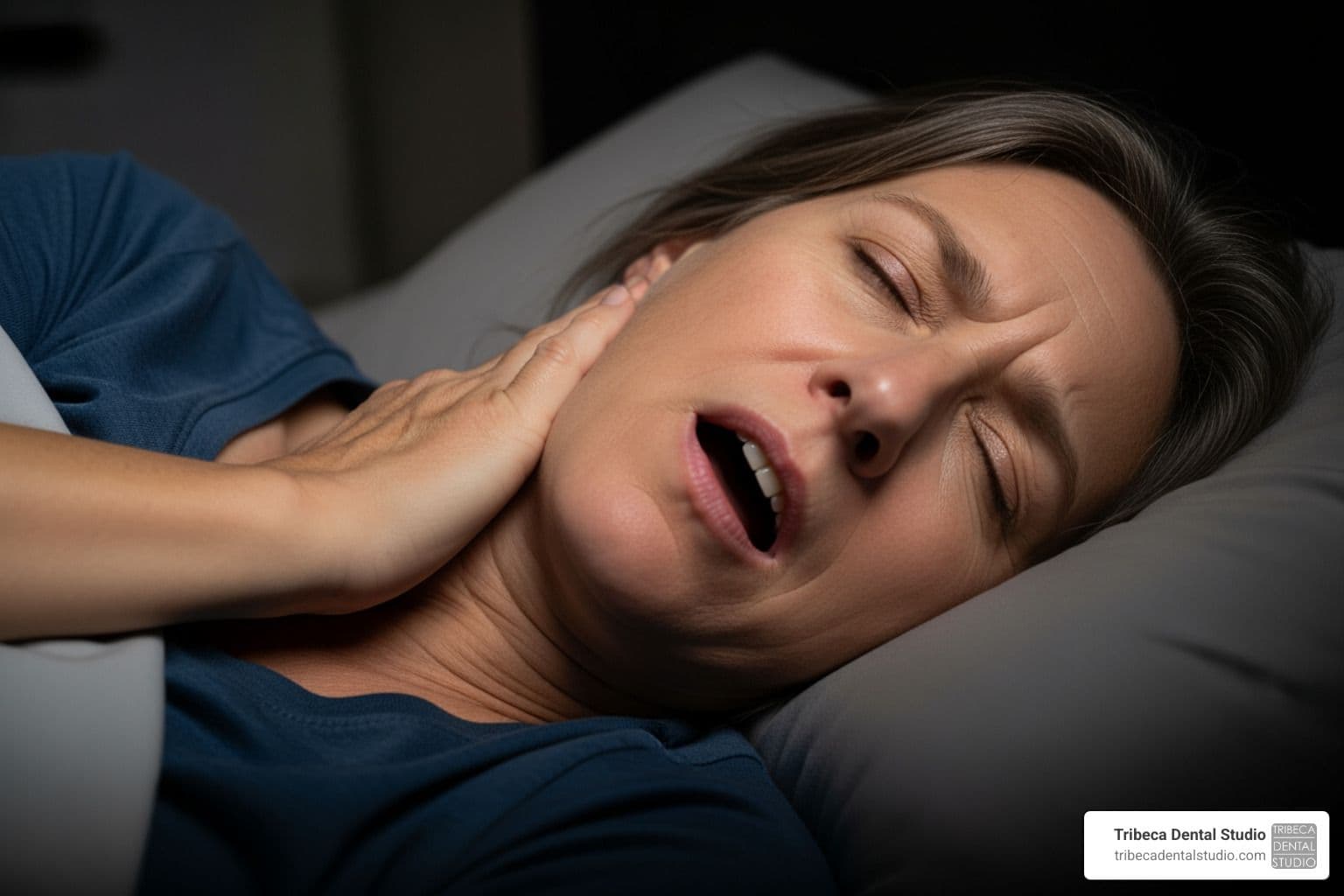
Have you ever woken up gasping for air? Or does your partner complain about your loud snoring followed by periods of eerie silence? You’re not alone. Most people with obstructive sleep apnea don’t even realize they stop breathing at night—until someone else points it out or they finally understand why they’re exhausted all day despite “sleeping” eight hours.
The good news is that OSA is treatable. Once diagnosed, many patients find relief through dental appliances, lifestyle modifications, or other interventions that keep their airways open during sleep.
I’m Dr. Nina Izhaky, and I’ve spent years helping patients in Tribeca address obstructive sleep apnea through personalized dental solutions. At our practice, we use advanced airway assessments and custom oral appliances to help you breathe better and sleep soundly.
Essential obstructive sleep apnea terms:
Understanding Obstructive Sleep Apnea and Its Impact
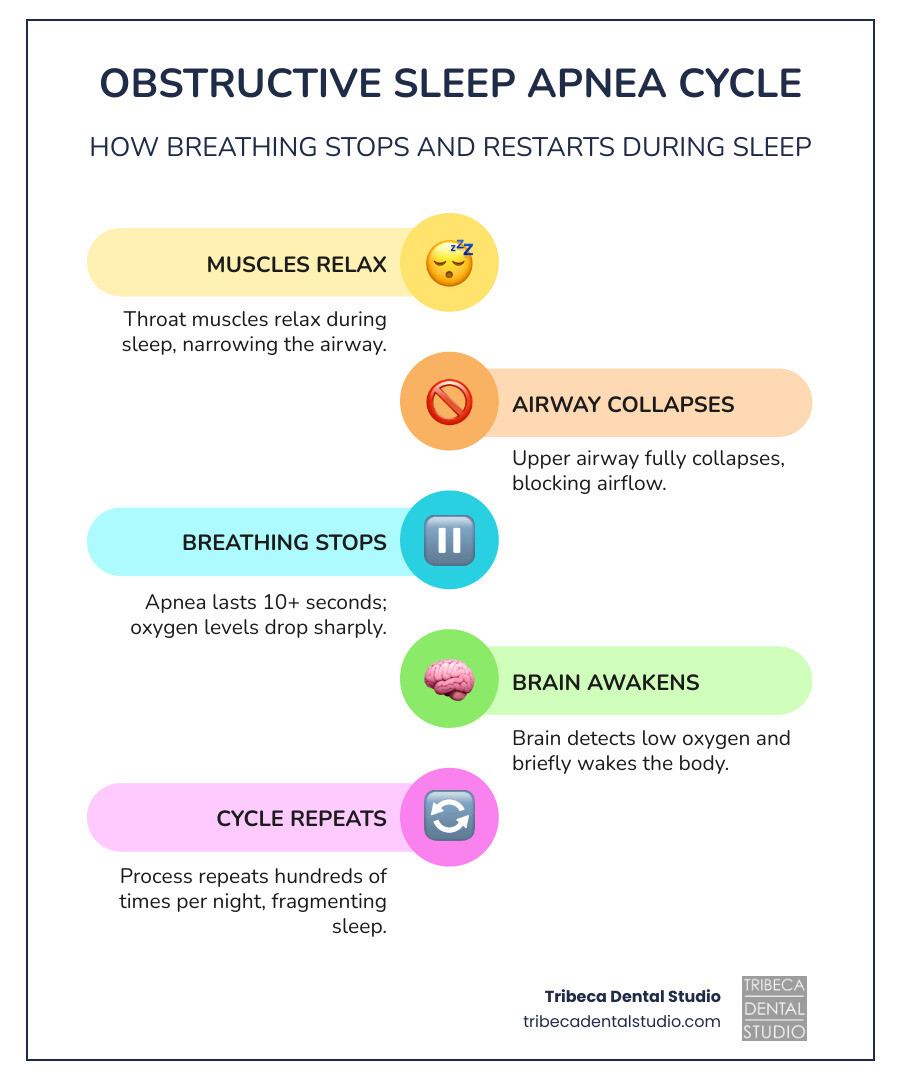
At its core, obstructive sleep apnea (OSA) is a mechanical problem. When we fall asleep, our muscles naturally relax. However, for those with OSA, the soft tissues at the back of the throat—including the tongue and soft palate—relax so much that they collapse into the airway. This airway collapse prevents air from reaching the lungs, leading to a drop in blood oxygen levels, a process known as oxygen desaturation.
When your brain realizes you aren’t breathing, it triggers a “panic” response, causing a brief awakening (arousal) to reopen the airway. While these arousals are often so short you won’t remember them, they cause significant sleep fragmentation. Instead of cycling through restorative deep sleep and REM stages, your body remains in a state of high alert. This constant “fight or flight” mode leads to sympathetic nervous system activation, which puts immense strain on your heart and metabolic systems.
Obstructive Sleep Apnea vs. Central Sleep Apnea
It is important to distinguish OSA from other sleep-related breathing disorders. While OSA is a physical blockage, Central Sleep Apnea (CSA) occurs because the brain fails to send the correct signals to the muscles that control breathing. In CSA, there is no respiratory effort during the pause; in OSA, the body is trying to breathe, but the “pipes” are clogged.
We also look for Upper Airway Resistance Syndrome (UARS), where the airway narrows enough to cause sleep disturbances but doesn’t quite meet the technical definition of a full “apnea.” Another key term is hypopnea, which refers to a partial blockage where airflow is reduced by at least 30%, often accompanied by a drop in oxygen. Whether it is a full stop or a partial reduction, the result is the same: nonrestorative sleep and long-term health risks.
The Global Prevalence of Obstructive Sleep Apnea
The statistics surrounding obstructive sleep apnea are staggering. In the United States alone, over 50 million people are estimated to have the condition. Perhaps most concerning is the 80% undiagnosed rate. Many people assume their fatigue is just a part of getting older or a result of a busy NYC lifestyle, but the underlying cause is often hidden in their sleep.
The famous Wisconsin sleep cohort study highlighted a significant gender disparity: 93% of women and 82% of men with moderate-to-severe sleep apnea were undiagnosed. While men are generally 2 to 3 times more likely than premenopausal women to have OSA, the risk for women increases significantly after menopause. In fact, there is a threefold increase in risk for post-menopausal women compared to their pre-menopausal counterparts.
Even children aren’t immune. About 1 in 50 children suffer from OSA, often due to enlarged tonsils or adenoids. In our practice, we pay close attention to pediatric airway health because early intervention can prevent developmental and behavioral issues later in life.
Common Symptoms and Risk Factors
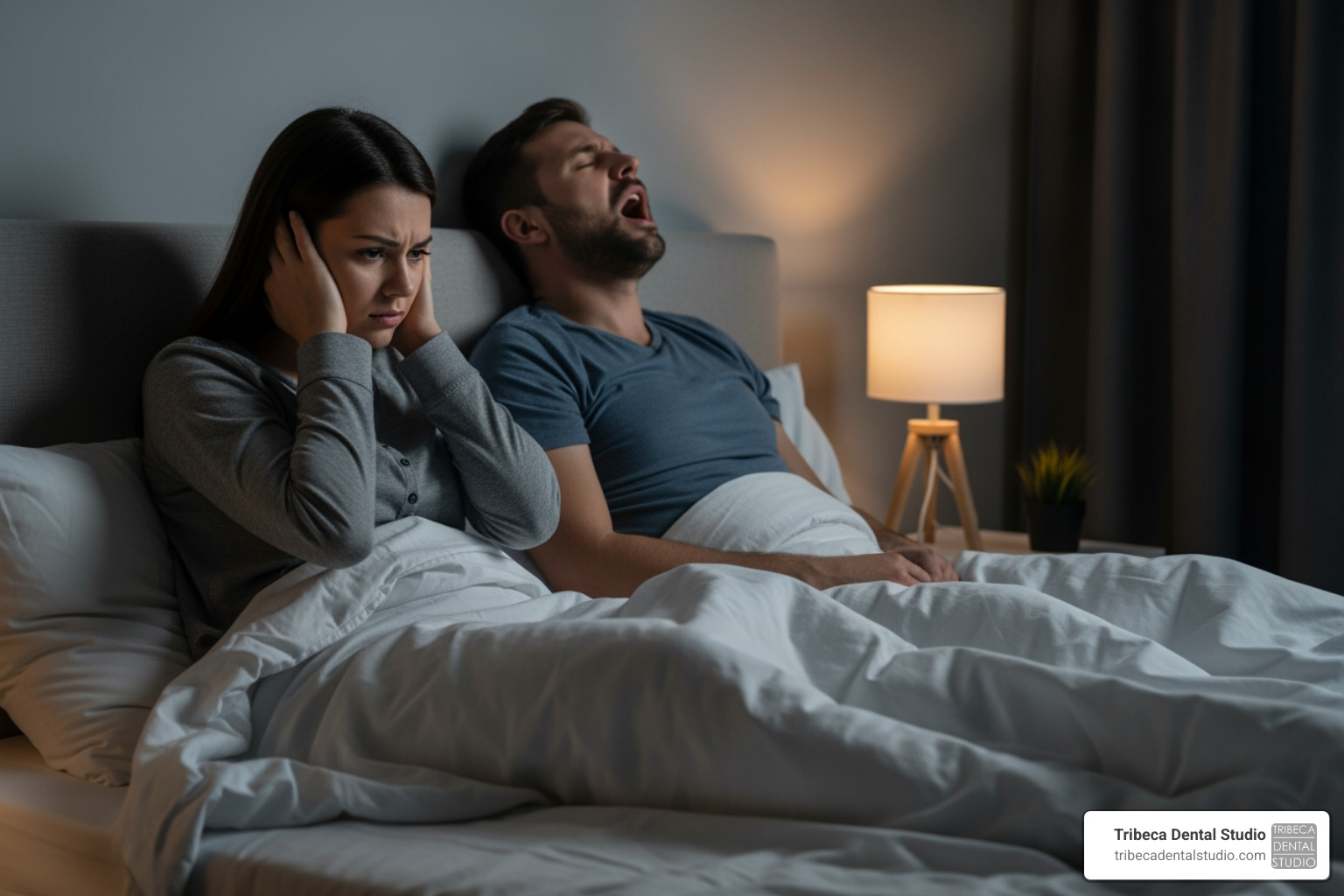
Recognizing the signs of obstructive sleep apnea is the first step toward reclaiming your health. While loud, chronic snoring is the most “famous” symptom, it isn’t the only one. Many patients visit us complaining of excessive daytime sleepiness, morning headaches, or irritability.
Other common symptoms include:
- Nocturia: Waking up multiple times a night to use the bathroom.
- Dry Mouth: Waking up with a parched throat or “cotton mouth.”
- Mood Changes: Feeling depressed, anxious, or unusually forgetful.
- Bruxism: Interestingly, many people who grind their teeth at night are actually doing so as a subconscious effort to move the jaw forward and reopen the airway.
Who is at risk? While anyone can develop OSA, certain factors significantly increase the likelihood:
- Obesity: Between 60 to 70 percent of individuals with OSA have obesity. Excess fat deposits around the neck can narrow the airway.
- Neck Circumference: Men with a neck size larger than 17 inches and women larger than 16 inches are at higher risk.
- Smoking: Smoking can increase the risk of OSA by as much as three times compared to non-smokers, likely due to inflammation and fluid retention in the upper airway.
- Anatomy: A naturally narrow throat, a small lower jaw, or a large tongue can create a “crowded” airway.
- Nasal Congestion: Chronic congestion can double a person’s chances of experiencing OSA.
- Genetics: If an immediate relative has OSA, you are twice as likely to develop it yourself.
Diagnosis and Health Complications of Untreated OSA
If we suspect you have obstructive sleep apnea, the diagnostic process usually begins with simple screening tools. The STOP-Bang questionnaire and the Epworth Sleepiness Scale are excellent starting points to assess your risk and daytime fatigue levels.
A doctor typically diagnoses OSA when these studies show that apneas or hypopneas occur more than five times per hour.
Why shouldn’t you ignore it? Leaving obstructive sleep apnea untreated is like leaving a ticking time bomb in your body. The chronic lack of oxygen and constant stress on the heart lead to severe cardiovascular complications. Patients with OSA have a 30% higher risk of heart attack or death. It is also closely linked to:
- Hypertension: High blood pressure that is often resistant to medication.
- Atrial Fibrillation: Irregular heart rhythms.
- Type 2 Diabetes: OSA can worsen insulin resistance.
- Cognitive Impairment: Issues with memory, focus, and decision-making.
- Accident Risk: OSA increases motor vehicle accident risk by 2 to 3-fold due to microsleeps and reduced alertness.
Treatment Options: Dental and Lifestyle Approaches
The most common medical treatment for OSA is CPAP (Continuous Positive Airway Pressure). However, many people find the mask uncomfortable or noisy, leading to noncompliance rates as high as 40%. This is where dental intervention becomes a lifesaver.
Oral Appliance Therapy (OAT)
For patients with mild to moderate OSA, or those who cannot tolerate CPAP, we often recommend custom oral appliances. These devices, often called mandibular advancement devices (MADs), look like a sports mouthguard or an orthodontic retainer. They work by gently shifting the lower jaw forward, which keeps the tongue and soft tissues from collapsing and ensures the airway remains open.
Airway Orthodontics
In some cases, the root cause of the blockage is a narrow palate or a misaligned jaw. We use airway orthodontics to physically expand the airway. Techniques like MARPE (Miniscrew-Assisted Rapid Palatal Expansion) can widen the upper jaw, creating more room for the tongue and improving nasal breathing.
Lifestyle Interventions
We always encourage a holistic approach to better sleep. Even small changes can make a big difference:
- Weight Loss: A 10% reduction in body weight can significantly reduce the number of apnea events.
- Positional Therapy: Since OSA is often worse when sleeping on your back (due to gravity), using pillows or devices to stay on your side can help.
- Avoid Alcohol and Sedatives: These substances relax the throat muscles further, worsening the collapse.
- NightLase: We also offer NightLase treatment, a non-invasive laser therapy that tightens the tissues in the throat to reduce snoring and mild apnea.
| Treatment Type | Best For | Pros |
|---|---|---|
| Oral Appliance | Mild to Moderate OSA | Portable, quiet, comfortable |
| CPAP | Severe OSA | Highly effective if used |
| Airway Ortho | Structural Issues | Permanent airway expansion |
| Weight Loss | Obesity-related OSA | Improves overall health |
| Positional Therapy | Positional OSA | Low cost, easy to start |
Frequently Asked Questions about OSA
Can you die from sleep apnea in your sleep?
While it is rare to simply “stop breathing” and never wake up, obstructive sleep apnea significantly increases the risk of sudden cardiac death. The repeated drops in oxygen and spikes in blood pressure put immense strain on the heart, which can trigger a heart attack or stroke during the night. Treating OSA is essential for heart health and longevity.
Is snoring always a sign of obstructive sleep apnea?
No, not everyone who snores has sleep apnea, but almost everyone with sleep apnea snores. “Benign snoring” occurs when the airway narrows slightly, causing vibration. However, if your snoring is interrupted by gasping sounds, choking, or long silences, it is a major red flag for OSA.
Can weight loss cure sleep apnea?
For many people, weight loss can drastically improve or even “cure” OSA, especially if obesity is the primary cause. Losing weight reduces the fat deposits around the neck and tongue, keeping the airway clearer. However, if your OSA is caused by your bone structure (like a small jaw), weight loss may help but might not solve the problem entirely.
Conclusion
At Tribeca Dental Studio, we believe that a good night’s sleep is the foundation of a healthy life. Under the leadership of Dr. Nina Izhaky, we provide a welcoming and advanced environment where we treat every patient like family. We don’t just look at your teeth; we look at your entire airway health to find the root cause of your sleep struggles.
If you’re tired of being tired, or if you’re concerned about your health, we’re here to help. From Mouth Mapping® to custom-fit appliances, we offer the latest NYC sleep solutions right here in the heart of Tribeca.
Ready to breathe easier? Book a Sleep & Airway Assessment with us today and take the first step toward the restful sleep you deserve.