Jaw-Dropping Relaxation: Manage Nighttime Tension for Better Sleep
March 20, 2026
Why Jaw Tension Disrupts Your Sleep and What You Can Do About It
How can I relax my jaw when I sleep? To relax your jaw during sleep, try these evidence-based techniques:
- Perform pre-bedtime jaw exercises – Place your tongue on the roof of your mouth and gently open and close your jaw, or practice chin tucks for 3 seconds, repeated 10 times
- Apply warm compresses – Use a warm cloth on your jaw for 10-15 minutes before bed to loosen tight muscles
- Sleep on your back – This position keeps your head and neck aligned, reducing jaw strain
- Use a custom night guard – A professionally fitted dental appliance protects your teeth and can help retrain jaw muscles
- Practice stress management – Deep breathing, meditation, or progressive muscle relaxation before bed reduces unconscious clenching
- Limit caffeine and alcohol – Avoid these substances at least 3-4 hours before bedtime, as they increase muscle tension
- Stay hydrated – Dehydration contributes to muscle cramping, including in your jaw
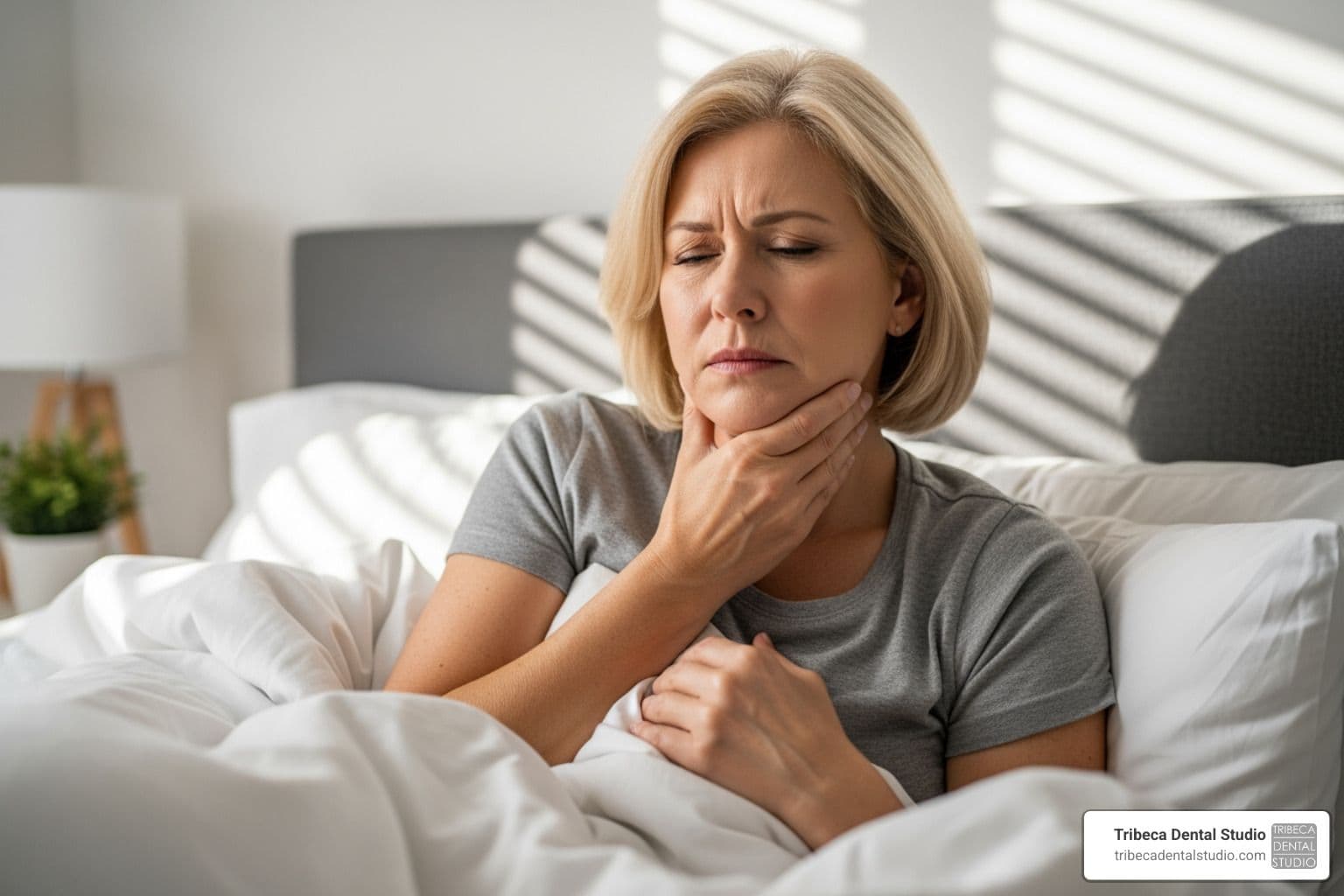
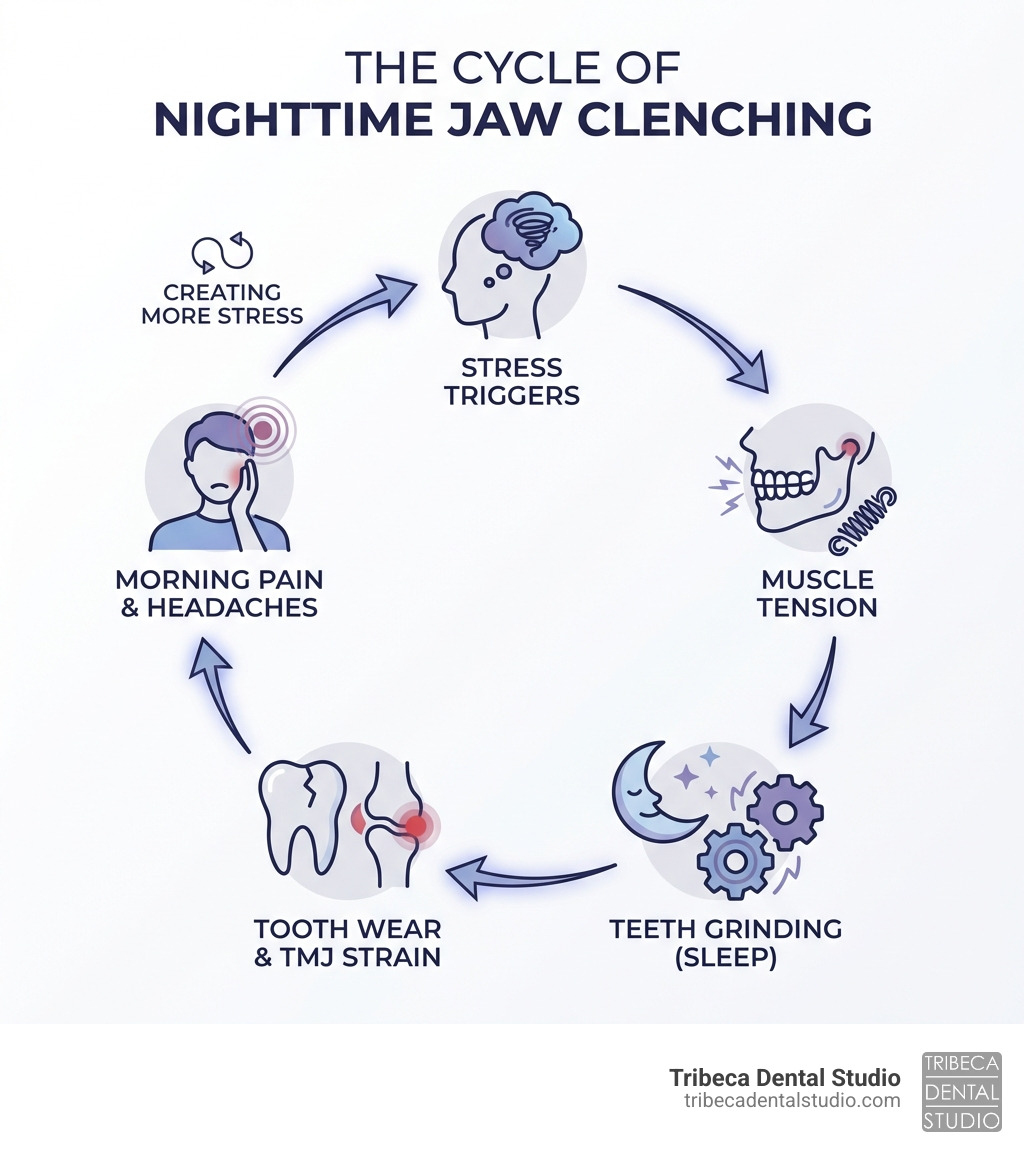
Do you wake up with a sore jaw, persistent headaches, or worn-down teeth? You might be experiencing bruxism – a condition where you unconsciously clench or grind your teeth while sleeping. This involuntary habit affects nearly one in six people during sleep and can lead to serious dental damage, temporomandibular joint (TMJ) disorders, and disrupted sleep quality.
The problem often goes unnoticed for months or even years. Many people only discover they’re clenching when a dentist spots telltale signs of tooth wear, or when a partner complains about the grinding noise that sounds like “nails scraping a board.” Even during sleep, you may clench your teeth with a force of up to 250 pounds – far more than normal chewing.
Why does this happen? The causes are complex and interconnected. Stress and anxiety are the most common triggers, but other factors include sleep disorders like sleep apnea, certain antidepressant medications (particularly SSRIs), misaligned teeth, and even genetic predisposition. Research shows that 20-50% of people who grind their teeth have family members who do the same.
The good news is that jaw clenching is manageable with the right approach. From simple relaxation exercises and lifestyle adjustments to professional dental treatments, there are effective solutions that can help you wake up pain-free and protect your teeth from further damage.
I’m Dr. Nina Izhaky, a graduate of New York University College of Dentistry with years of experience helping patients understand how can I relax my jaw when I sleep through personalized, holistic dental care. At my practice in Tribeca, I’ve seen how addressing the root causes of bruxism – not just the symptoms – leads to lasting relief and better overall health.
How can i relax my jaw when i sleep vocabulary:
Understanding Nighttime Bruxism and Why It Happens
Sleep bruxism is a repetitive jaw-muscle activity characterized by clenching or grinding of the teeth during sleep. While it might seem like a simple bad habit, nearly one in six people grind or clench their teeth while sleeping, and many are completely unaware of it until symptoms become severe.
So, why does the body decide to engage in a 250-pound “workout” while you’re trying to rest? One of the primary drivers is stress. When we are stressed, our bodies remain in a state of high alert, and that tension often manifests in the masticatory (chewing) muscles. However, scientific research on the causes of tight jaw suggests that it isn’t always just about a tough day at the office.
Other significant factors include:
- Sleep Disorders: There is a strong correlation between bruxism and obstructive sleep apnea (OSA). In many cases, the body clenches the jaw as a survival mechanism to keep the airway open during an apnea event. If you suspect your grinding is linked to breathing issues, exploring sleep apnea treatments is a critical step.
- Medications: Certain Selective Serotonin Reuptake Inhibitors (SSRIs), commonly used for depression and anxiety, can alter dopamine levels in the brain, which may trigger involuntary jaw movements.
- Micro-arousals: These are brief shifts in sleep depth. During these transitions, the autonomic nervous system can “spike,” leading to a sudden contraction of the jaw muscles.
- Malocclusion: If your teeth don’t fit together perfectly, your jaw muscles may work overtime at night trying to find a “comfortable” resting spot, leading to chronic clenching.
How Can I Relax My Jaw When I Sleep?
Learning how can i relax my jaw when i sleep starts with retraining your muscle memory during the day and implementing soothing rituals before bed. Your jaw muscles are some of the strongest in your body for their size; they need active “de-programming” to stay soft during the night.

One of the most effective ways to start is by practicing “lips together, teeth apart.” This should be your mantra. Your teeth should only touch when you are chewing or swallowing. Throughout the day, check in with yourself: is your tongue resting on the roof of your mouth? Is there space between your molars?
Beyond awareness, physiological support is key. Scientific research on masticator muscle relaxation exercises has shown that targeted movements can significantly reduce pain and improve the range of motion for those with TMJ issues. Additionally, nutrition plays a role; magnesium is a natural muscle relaxant that can help prevent the spasms associated with clenching. Staying hydrated is equally vital, as dehydration can lead to muscle cramping and increased sensitivity.
For immediate relief, thermal therapy is a fantastic tool. Use this guide to decide which treatment you need:
| Therapy Type | When to Use | Benefits |
|---|---|---|
| Hot Therapy | Before bed or during chronic stiffness | Increases blood flow, relaxes tight “knots,” and prepares muscles for sleep. |
| Cold Therapy | After a flare-up or when there is swelling | Numbs sharp pain and reduces inflammation in the jaw joint (TMJ). |
For more comprehensive strategies, check out our guide on how to stop grinding teeth.
Pre-Bedtime Jaw Exercises to Relax My Jaw When I Sleep
Consistency is the secret to success. Perform these exercises for about 5-10 minutes before you climb into bed to signal to your nervous system that it’s time to let go. You can find more tips on stopping grinding naturally to supplement these movements.
- The Tongue-to-Roof Stretch: Place the tip of your tongue against the ridge of tissue behind your upper front teeth. Slowly open your mouth as wide as you can without the tongue losing contact. Hold for 5 seconds, then relax. Repeat 10 times.
- Chin Tucks: While sitting upright, pull your chin straight back (creating a “double chin”) without tilting your head up or down. This stretches the muscles at the base of the skull that often tighten in tandem with the jaw.
- The Goldfish Exercise: Place one finger on your TMJ (just in front of your ear) and another on your chin. Open your jaw halfway and then fully, feeling the joint move smoothly. This helps center the jaw and prevents “tracking” issues.
- Resisted Opening: Place your thumb under your chin. Open your mouth slowly, providing gentle resistance with your thumb. This strengthens the opening muscles and helps inhibit the overactive closing muscles (the ones that clench).
- Wide Smile Inhale: Smile as wide as you can while taking a deep breath in through your nose. As you exhale slowly through your mouth, let your jaw “drop” and feel the tension melt away.
Optimizing Sleep Position to Relax My Jaw When I Sleep
Your sleep posture dictates how much pressure is placed on your jaw joints. If you are a stomach sleeper, you are likely forcing your jaw into an unnatural side-angled position for 7-8 hours a night. This creates massive strain on the TMJ.
The gold standard for jaw health is back sleeping. When you lie on your back, gravity helps keep your jaw in a neutral position. However, this only works if you have the right pillow support. A pillow that is too high or too firm can push your head forward, tensing the neck and jaw.
Look for memory foam or adjustable pillows that maintain “spinal neutrality”—a straight line from your tailbone to the top of your head. If you must sleep on your side, ensure your pillow fills the gap between your shoulder and your ear perfectly so your head doesn’t tilt down, which can put lateral pressure on the jaw.
Lifestyle Changes and Habits to Avoid Before Bed
What you do during the day—and especially in the hours leading up to sleep—directly impacts your jaw’s “tightness” at night.
- Caffeine and Alcohol: Both are major culprits. Caffeine is a stimulant that keeps your muscles “twitchy,” while alcohol, despite making you feel sleepy, disrupts your REM cycles and increases the likelihood of micro-arousals and grinding.
- The Sugar Connection: Recent research on sugar intake and sleep quality suggests that high sugar consumption leads to more restless sleep, which can trigger bruxism episodes.
- Stress Management: Since 70% of grinding is linked to stress, finding a “wind-down” routine is essential. Try Progressive Muscle Relaxation (PMR): tensing and then slowly releasing every muscle group in your body, starting from your toes and ending with your jaw.
- Mindfulness and Screen Time: Reducing blue light exposure an hour before bed helps your brain produce melatonin. Use this time for meditation or reading to lower your grinding and anxiety levels.
Professional Treatments and the Role of Night Guards
Sometimes, lifestyle changes aren’t enough to fight the 250 pounds of pressure your jaw can produce. This is where professional intervention becomes necessary.
At Tribeca Dental Studio, we often recommend custom night guards as a first line of defense. Unlike store-bought “boil-and-bite” guards, which can be bulky and may actually encourage more clenching by giving the jaw something “squishy” to chew on, a professional guard is slim and precisely calibrated to your bite. It acts as a protective barrier, preventing enamel wear and absorbing the shock of clenching.
In cases where bruxism is a symptom of an underlying airway issue, we may look into sleep apnea devices or mandibular advancement devices. These help reposition the jaw forward to keep the airway open, often stopping the grinding reflex entirely. Other professional options include:
- Occlusal Splints: More advanced than a standard guard, these help realign the jaw over time.
- Physical Therapy: A specialist can provide manual release of the masseter and temporal muscles.
- Botox Injections: For severe cases, Botox can be used to partially “freeze” the overactive jaw muscles, providing months of relief.
Frequently Asked Questions about Jaw Tension
What are the signs I’m clenching my jaw at night?
Many patients don’t realize they have a problem until a routine checkup. Common telltale signs of grinding include:
- Worn Enamel: Teeth that look flat, chipped, or shorter than they used to be.
- Morning Headaches: Particularly dull headaches that start in the temples.
- Scalloped Tongue: Indentations along the sides of your tongue from pressing against your teeth.
- Facial Soreness: A “tired” feeling in your cheeks or jaw first thing in the morning.
- Tooth Sensitivity: Increased sensitivity to hot or cold because the protective enamel has been thinned.
Are over-the-counter mouthguards effective?
While over-the-counter options are better than nothing in an emergency, they are rarely a long-term solution. They often lack the durability to withstand heavy grinding and can interfere with proper breathing or jaw alignment. Contemporary bruxism management emphasizes that a custom-fit guard is superior because it ensures the jaw is held in a position that minimizes muscle strain rather than just providing a cushion.
When should I see a dentist for jaw pain?
You should schedule an appointment if you experience:
- Persistent pain or tenderness in your jaw, ear, or face.
- A clicking, popping, or grating sound when you open your mouth.
- “Locking” of the jaw that makes it difficult to open or close your mouth fully.
- Noticeable wear on your teeth or broken fillings. If your symptoms are severe, we may recommend sleep studies for bruxism to see if a sleep disorder is the root cause.
Conclusion
Understanding how can i relax my jaw when i sleep is a journey that involves both self-care and professional guidance. At Tribeca Dental Studio, we believe in a personalized, holistic approach to dentistry. Led by Dr. Nina Izhaky, our team treats every patient like family, ensuring that we don’t just treat the worn teeth, but the person behind the smile.
Whether your jaw tension is caused by stress, sleep apnea, or alignment issues, you don’t have to live with the pain. By combining pre-bedtime exercises, optimal sleep positioning, and custom-fitted dental appliances, you can reclaim your sleep and protect your long-term oral health.
Ready to wake up feeling refreshed and pain-free? Schedule a consultation for sleep apnea and jaw tension relief at our Tribeca office today. Let’s work together to give your jaw the rest it deserves.