Why Choosing the Right Sleep Apnea Device Can Change Your Life
Sleep apnea devices range from simple mouthpieces to sophisticated machines — and picking the right one makes a real difference in how you sleep, feel, and function.
Here’s a quick look at the main non-invasive options:
| Device | Best For | How It Works |
|---|---|---|
| Oral Appliance (MAD) | Mild to moderate OSA, CPAP intolerance | Moves jaw forward to open airway |
| Tongue-Stabilizing Device (TSD) | Those who can’t wear MADs | Holds tongue forward with suction |
| CPAP Machine | Moderate to severe OSA | Delivers continuous pressurized air |
| Positional Therapy | Back-sleeper-specific OSA | Encourages side sleeping |
| Myofunctional Therapy | Mild cases, adjunct treatment | Exercises that strengthen airway muscles |
Nearly half of all sleep apnea patients have most of their breathing problems when sleeping on their backs. Many people struggle with CPAP machines — and that’s exactly where dental sleep solutions step in.
Untreated sleep apnea doesn’t just leave you tired. It raises your risk for high blood pressure, stroke, and heart disease. The good news? There are more effective, comfortable options today than ever before.
I’m Dr. Nina Izhaky, a graduate of New York University College of Dentistry and founder of Tribeca Dental Studio, where I help patients find the right sleep apnea devices based on their airway anatomy, lifestyle, and health goals. In this guide, I’ll walk you through what actually works — so you can make a confident, informed decision.
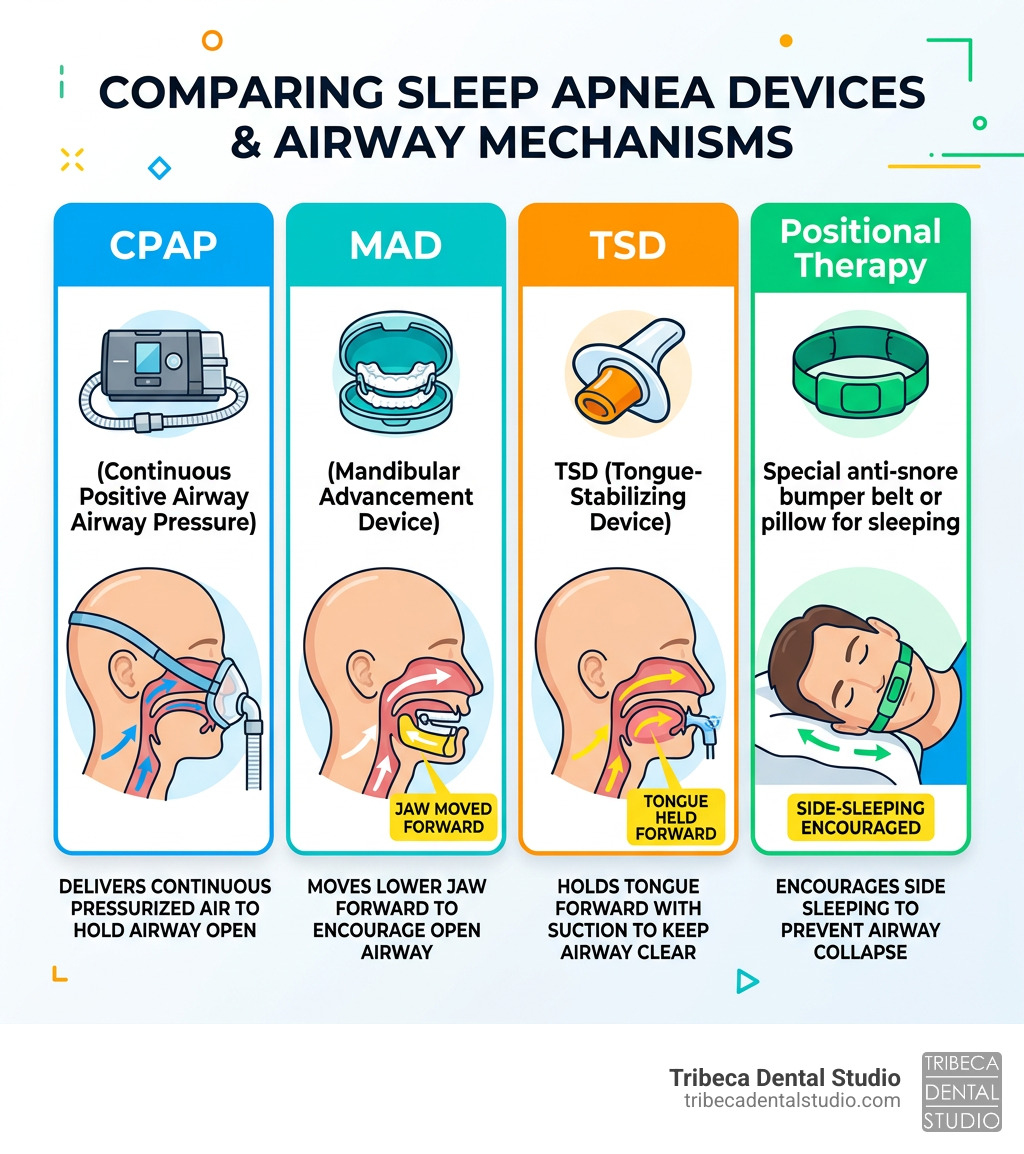
Glossary for sleep apnea devices:
Understanding Your Sleep Apnea Treatment Options
When we talk about Obstructive Sleep Apnea (OSA), we are talking about a physical blockage. While you sleep, the muscles in your throat relax, and gravity pulls the soft tissues down, closing off your airway. This leads to breathing pauses that can happen hundreds of times a night, starving your brain and organs of oxygen.
Choosing between sleep apnea devices often comes down to the severity of your condition and your personal comfort.
CPAP: The “Gold Standard” Powerhouse
Continuous Positive Airway Pressure (CPAP) machines are incredibly effective. Research shows that with consistent use, CPAP can reduce Apnea-Hypopnea Index (AHI) events by up to 95%. These machines, like the ResMed AirSense 11 or the Philips DreamStation 2, work by blowing a steady stream of air through a mask to keep the airway “inflated” and open.
However, many of our patients in NYC find CPAP difficult to live with. Between the noise, the bulky mask, and the feeling of being tethered to a machine, adherence rates can be low.
Oral Appliances: The Dental Alternative
Oral appliance therapy is often the preferred choice for those with mild to moderate OSA or those who simply cannot tolerate a CPAP. These devices are small, portable, and look much like a sports mouthguard. They work by repositioning the jaw or tongue to ensure the airway stays open naturally.
| Feature | CPAP Machine | Oral Appliance (MAD) |
|---|---|---|
| Primary Mechanism | Pressurized air | Mechanical jaw advancement |
| Portability | Requires power/travel case | Fits in a pocket-sized case |
| Noise Level | Quiet hum/motor | Silent |
| Effectiveness | High (all severities) | High (mild to moderate) |
| Maintenance | Daily cleaning of mask/tubing | Simple brushing |
Scientific research has shown that custom-made oral appliances are highly effective at reducing AHI levels, particularly in patients who find they actually wear the device all night, every night—something that is often a struggle with CPAP.
Oral Appliance Therapy: A Comfortable CPAP Alternative
If you have ever felt claustrophobic at the thought of a sleep mask, oral appliances might be your best bet. We focus on two primary types of dental sleep apnea devices:
Mandibular Advancement Devices (MADs)
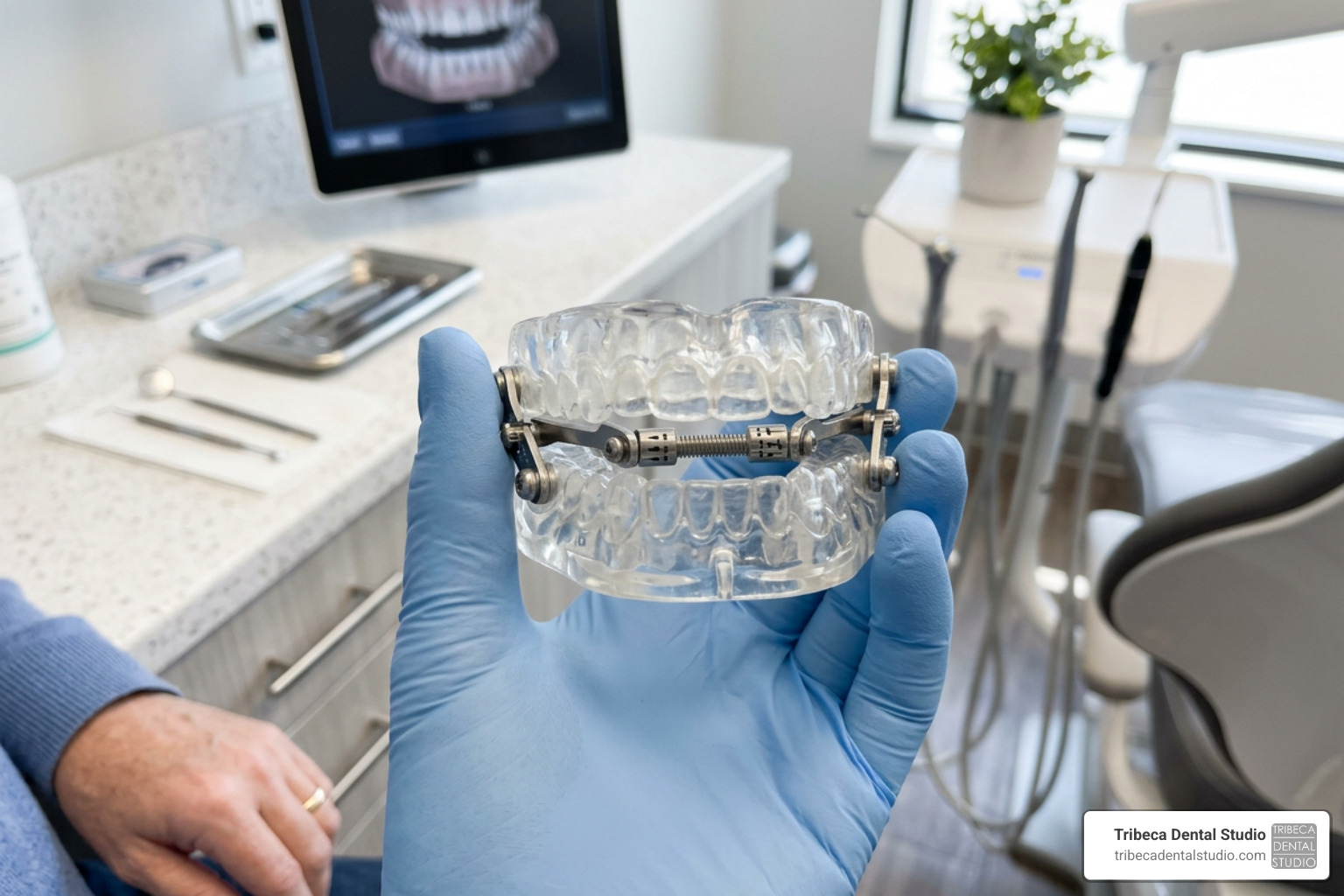
MADs are the most common dental devices for sleep apnea. They snap over your upper and lower teeth and use a hinge mechanism to gently ease your lower jaw forward. This “advancement” pulls the base of the tongue away from the back of the throat, significantly increasing airway volume.
Tongue-Stabilizing Devices (TSDs)
For patients who may not have enough healthy teeth to support a MAD, or those with specific jaw issues, a TSD is an alternative. These devices use a gentle suction mechanism to hold the tongue in a forward position, preventing it from collapsing backward into the airway.
Adjusting to these devices typically takes about two to four weeks. During this time, your mouth and jaw get used to the new position, and any initial side effects like increased salivation usually disappear. You can learn more about these options on our sleep apnea treatments page.
Custom vs. Over-the-Counter Sleep Apnea Devices
It is tempting to try a “boil-and-bite” mouthpiece from a drugstore, but when it comes to medical treatment, quality matters. A European study involving 35 people with mild sleep apnea compared custom-made devices to over-the-counter options. The results were clear: only the custom-made devices significantly reduced apnea events. Research on the efficacy of custom oral devices from the Cleveland Clinic supports these findings, noting that professional fitting is key to success.
At Tribeca Dental Studio, we use 3D imaging and precise dental impressions to create a device that fits your unique anatomy. Custom devices are:
- More Effective: They provide the exact amount of jaw advancement needed.
- More Comfortable: They are thinner and fit your teeth perfectly, reducing jaw strain.
- More Durable: Medical-grade materials last much longer than drugstore plastic.
For a deeper dive into how we use technology to map your airway, check out our Airway Orthodontics guide.
Who is a Candidate for These Sleep Apnea Devices?
Oral appliances are an excellent fit for:
- Patients with mild to moderate OSA.
- People who snore loudly but don’t have full apnea.
- CPAP-intolerant patients who have tried and failed with the machine.
- Frequent travelers who need a portable solution.
However, they aren’t for everyone. Those with severe OSA may still require CPAP or surgical interventions. Additionally, oral appliances are generally not recommended for children (whose jaws are still growing) or patients with Central Sleep Apnea (a neurological condition rather than a physical blockage). If you’re an adult looking for a solution, our Airway Dentist for Adults section explains the criteria in more detail.
Complementary and Advanced Therapies for Airway Health
Sometimes, one device isn’t the whole answer. We often combine sleep apnea devices with other therapies to get the best results.
NightLase Treatment
NightLase is a patient-friendly, non-invasive laser treatment. It uses gentle laser energy to tighten the tissues at the back of the throat, reducing the “floppiness” that causes snoring and airway collapse. It’s a fantastic adjunct to oral appliance therapy. You can read more about NightLase treatment for snoring on our blog.
Myofunctional Therapy
Think of this as physical therapy for your mouth and throat. By performing specific exercises, you can strengthen the tongue and airway muscles, making them less likely to collapse during sleep. We offer specialized myofunctional therapy in NYC to help our patients achieve long-term stability.
Advanced Surgical Options
For severe cases where non-invasive devices fail, we may discuss options like Hypoglossal Nerve Stimulation (such as the Inspire system). This involves a small surgical implant that stimulates the tongue nerve to move it forward when it senses you are breathing. Candidates typically have a BMI under 32 and an AHI between 15 and 65.
Positional Therapy
Since about 50% of patients experience worse apnea while on their backs, simple positional tools can help. This can range from specialized wedge pillows to the “tennis ball technique”—where a ball is attached to the back of a pajama shirt to discourage back-sleeping. In one study, 38% of participants were still successfully using this method after six months!
What to Expect: Adjustment and Side Effects
Transitioning to a new sleep device is a journey. Whether you choose a CPAP or an oral appliance, your body needs time to adapt.
Short-Term Side Effects:
- Jaw Soreness: Similar to starting a new workout, your jaw muscles might feel a bit stiff in the morning.
- Excessive Salivation or Dry Mouth: Your brain initially thinks the device is food, but this settles within a week or two.
- Minor Tooth Tenderness: This usually fades shortly after removing the device in the morning.
Long-Term Considerations: With years of use, oral appliances can cause subtle tooth movement or changes in your bite. This is why regular dental monitoring is essential. We often provide “morning occlusal guides”—small jigs you bite into for a few minutes each morning to help reset your jaw to its natural position.
If you struggle with mouth breathing, which can worsen these side effects, we recommend looking into mouth breathing correction techniques to improve your overall results.
Frequently Asked Questions about Sleep Apnea Tools
Are oral appliances covered by insurance?
Yes, in many cases! Because OSA is a medical condition, oral appliances are typically covered under medical insurance, not dental insurance. This includes Medicare for qualifying patients. We recommend getting a formal diagnosis through sleep studies first, as this is required for insurance pre-authorization.
How long does it take to adjust to a new device?
Most patients take between two to four weeks to fully habituate. We suggest a gradual wear schedule—wearing it for an hour while watching TV before trying to sleep with it. For those needing extra help with tongue posture during this phase, Myo Munchee therapy can be a great tool.
Can these devices cure sleep apnea?
For most, these devices are a way to manage the condition rather than cure it. However, when combined with lifestyle changes like weight loss or procedures like MARPE (Maxillary Skeletal Expansion), some patients see a dramatic permanent improvement. You can read about MARPE and NightLase combinations to see if a more permanent structural change is possible for you.
Conclusion: Take the First Step Toward Better Sleep
At Tribeca Dental Studio, we don’t believe in a one-size-fits-all approach to sleep apnea devices. Under the leadership of Dr. Nina Izhaky, our team takes a root-cause, diagnostic-first approach to your airway health. We treat you like family, ensuring that the device you choose fits your life in NYC—whether that’s a custom-fitted MAD for your busy travel schedule or a combination of NightLase and myofunctional therapy for a holistic fix.
Don’t let another night of gasping for air steal your vitality. Schedule an Airway Orthodontics consultation with us today and discover the personalized path to a restful, healthy night’s sleep.