What Clenching Teeth Really Means (And Why It Matters)
Clenching teeth meaning refers to the act of tightly pressing your upper and lower teeth together — often without realizing you’re doing it. It’s a form of bruxism, the medical term for involuntary teeth clenching and grinding.
Quick answer:
| Term | Definition |
|---|---|
| Clenching teeth | Pressing teeth tightly together with no movement; causes muscle and joint strain |
| Bruxism | The broader condition that includes both clenching and grinding |
| Awake bruxism | Clenching during the day, often triggered by stress or concentration |
| Sleep bruxism | Clenching or grinding during sleep; classified as a sleep-related movement disorder |
It happens subconsciously — while you’re stuck in traffic, staring at a screen, or deep asleep. Many people don’t even know they do it until a partner notices, or a dentist spots the damage.
Left untreated, it can wear down enamel, strain your jaw joints, and cause daily headaches and facial pain.
I’m Dr. Nina Izhaky, a graduate of New York University College of Dentistry and the founder of Tribeca Dental Studio, where I help patients understand the full clenching teeth meaning and its impact on long-term oral health. If you’re waking up with jaw soreness or unexplained headaches, you’re in the right place.
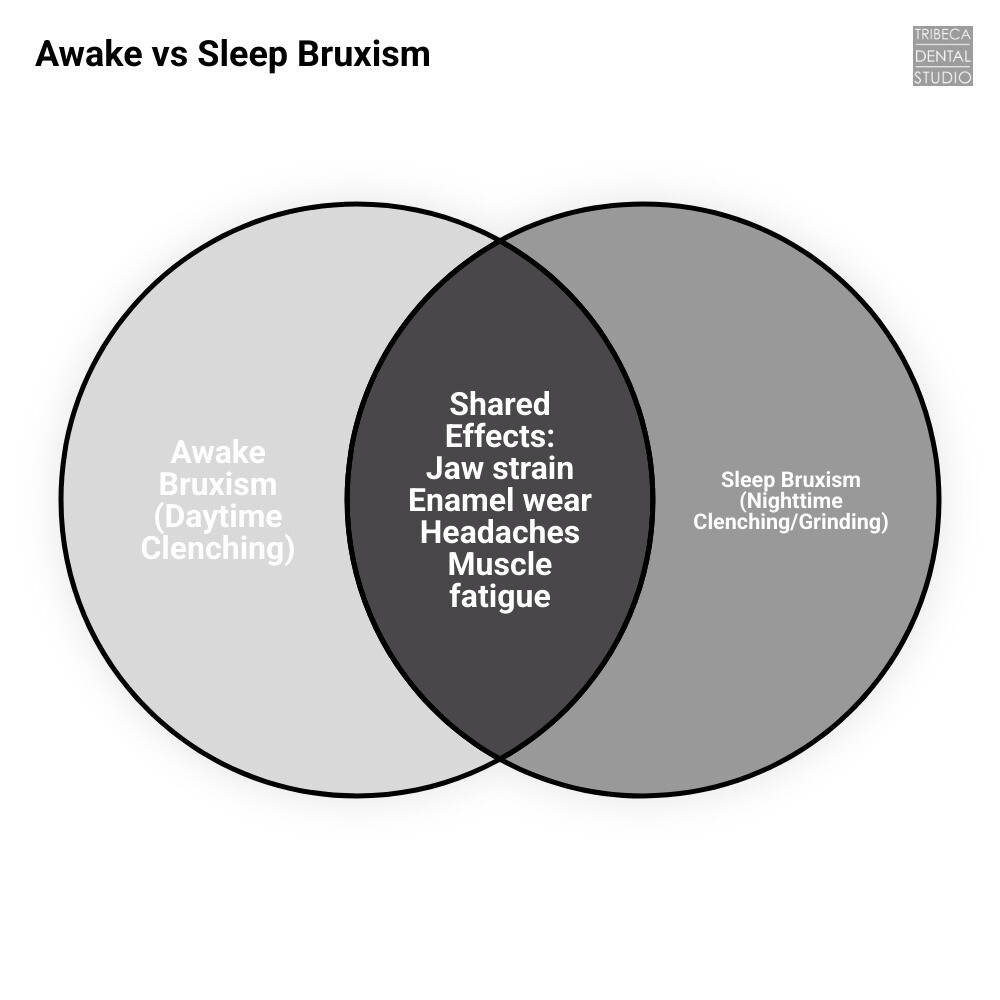
Clenching teeth meaning terms simplified:
Understanding the Clenching Teeth Meaning: Bruxism Explained
To truly grasp the clenching teeth meaning, we have to look at the medical term: bruxism. While many people use “grinding” and “clenching” interchangeably, they are actually slightly different behaviors that fall under the same umbrella.
The Difference Between Clenching and Grinding
According to information from MedlinePlus, bruxism is when you slide your teeth back and forth over each other (grinding) or press them together tightly (clenching).
Think of grinding as a dynamic movement—like sandpaper wearing down a surface. Clenching, on the other hand, is static pressure. It’s like holding a heavy weight in your hand without moving your arm. Your muscles are working incredibly hard, even though nothing is moving. This static pressure can actually be more damaging to the jaw joint (TMJ) and the surrounding muscles because there is no “release” in the movement.
Awake vs. Sleep Bruxism
The clenching teeth meaning also changes depending on when it happens.
- Awake Bruxism: This is usually a semi-conscious habit. You might find yourself clenching your jaw while concentrating on a difficult task at work, driving in Manhattan traffic, or when you’re feeling particularly stressed. It’s often a physical manifestation of emotional tension.
- Sleep Bruxism: This is considered a sleep-related movement disorder. It happens entirely subconsciously. Because you aren’t awake to “stop” the habit, the forces involved can be staggering. Research suggests that a person can clench their teeth with a force of up to 250 pounds during sleep—far more pressure than you would ever apply while eating.
The Central Nervous System Connection
Modern research has shifted our understanding of why this happens. We used to think it was just a “bad bite” or misaligned teeth. However, we now know that sleep bruxism is often triggered by the central nervous system. It is frequently associated with “micro-arousals”—short bursts of brain activity during sleep that transition you from deep sleep to light sleep. These arousals are often preceded by an increase in heart rate and muscle activity, leading to that tight, locked jaw.
Common Symptoms and Signs of Teeth Clenching
Because clenching often happens in the dark of night, the “meaning” of your symptoms might not be clear until you wake up. If you feel like you’ve been chewing on bricks all night, you aren’t alone.
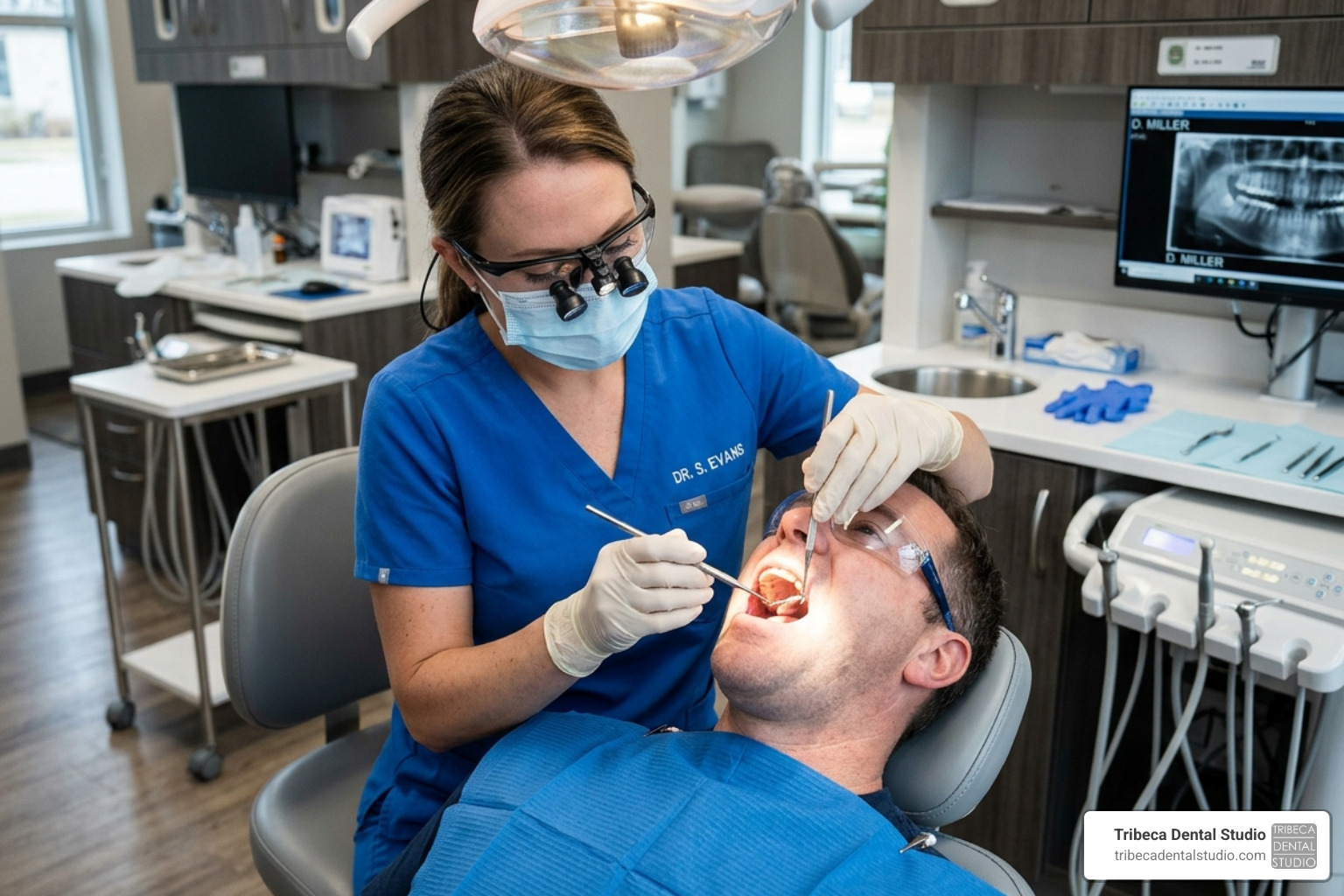
The Telltale Signs
- Morning Headaches: These usually start at the temples and feel like a dull, throbbing ache. They are often mistaken for tension headaches or even earaches.
- Jaw Soreness and Fatigue: Does your jaw feel “tired” when you wake up? That’s because your masseter muscles (the big ones on the side of your face) have been running a marathon while you were trying to rest.
- Tooth Sensitivity: If your teeth are suddenly sensitive to hot or cold, it might not be a cavity. Constant clenching can wear down the protective enamel or cause micro-fractures that expose the sensitive nerves.
- Earache-like Pain: Because the temporomandibular joint (TMJ) is located right next to your ear canal, the inflammation from clenching often feels like an ear infection.
- Tongue Indentations: Take a look in the mirror. Do you see “scalloped” edges on the sides of your tongue? This happens when you habitually press your tongue against your teeth while clenching.
- Worn Enamel and Flattened Teeth: Over time, the tips of your teeth may look flat or even. You might also notice a “white line” on the inside of your cheeks where you’ve been biting them.
If you find that you are asking, “why does it hurt when I chew?”, it’s time to look at the pressure you’re putting on your teeth. Chronic clenching can even lead to facial muscle hypertrophy—where your jaw muscles become enlarged, giving the face a more “square” or heavy appearance.
For a deeper dive into how these symptoms manifest, the National Institutes of Health offers a great resource on Taking on Teeth Grinding and Clenching.
Why Am I Clenching My Teeth? Causes and Risk Factors
Understanding the clenching teeth meaning requires looking at the “why.” It’s rarely just one thing; usually, it’s a combination of physical, mental, and lifestyle factors.
1. Stress and Anxiety
This is the big one. Approximately 70% of bruxism cases are linked to stress. Whether it’s a high-pressure job in New York City or personal worries, your body often stores that tension in your jaw. We see a direct correlation between grinding teeth and anxiety, where the jaw becomes a “release valve” for emotional pressure.
2. Sleep Disorders (Sleep Apnea)
There is a significant relationship between clenching and Obstructive Sleep Apnea (OSA). When your airway collapses during sleep, your body may instinctively clench your jaw to keep the airway open. About half of all people who suffer from bruxism also have sleep apnea.
3. Lifestyle and Substances
What you put into your body matters.
- Caffeine: Consuming more than six cups of coffee a day (or equivalent caffeine) can double your risk of clenching.
- Nicotine and Alcohol: Both are major risk factors. Smoking and drinking alcohol interfere with sleep quality and increase muscle activity at night.
- Medications: Certain antidepressants, specifically Selective Serotonin Reuptake Inhibitors (SSRIs) like fluoxetine or sertraline, have been known to cause bruxism as a side effect.
4. Physical Factors
While “bad bites” aren’t the primary cause, things like malocclusion (misaligned teeth) can certainly make the effects of clenching worse. Additionally, some patients experience TMJ disorder after wisdom teeth removal due to the strain on the jaw during or after the procedure.
5. Genetics
If your parents were “grinders,” there’s a good chance you will be, too. Research suggests that between 20% and 50% of people with sleep bruxism have a close family member who also struggles with the condition.
How to Stop Clenching Teeth: Treatments and Home Remedies
The good news is that you don’t have to just “live with it.” At Tribeca Dental Studio, we focus on a multi-layered approach to help you find relief.
Professional Dental Solutions
The most common and effective treatment is a custom-fitted dental night guard.
- How it works: This is a hard plastic appliance that fits over your upper or lower teeth. It doesn’t necessarily stop the act of clenching, but it absorbs the 250 pounds of pressure, protecting your teeth from wear and taking the strain off your jaw joint.
- Why custom matters: Store-bought “boil-and-bite” guards are often too bulky and can actually make jaw pain worse by forcing the joint into an unnatural position.
Advanced Medical Treatments
For severe cases, we may recommend:
- Botox Injections: By injecting small amounts of Botox into the masseter muscles, we can partially “de-power” them. This reduces the force of the clenching without affecting your ability to eat or speak.
- Muscle Relaxants: Taking a mild muscle relaxant before bed for a short period can help break the cycle of nighttime tension.
Home Remedies and Lifestyle Changes
You can do a lot on your own to reduce the frequency of clenching:
- Stress Management: Techniques like meditation, yoga, or counseling can address the root emotional cause.
- Jaw Exercises: Practicing “tongue up, teeth apart” helps train your jaw to stay in a relaxed position during the day.
- Sleep Hygiene: Avoid caffeine and alcohol in the evening and create a calming bedtime routine.
- Heat Therapy: Applying a warm washcloth to your jaw muscles before bed can help them relax.
For more tips, check out our 10 ways to stop clenching your jaw at night or our comprehensive how to stop grinding teeth guide. If you prefer a holistic route, we also have a guide on natural cures for teeth grinding.
Frequently Asked Questions about Clenching Teeth Meaning
The Clenching Teeth Meaning in Children
It is incredibly common for children to grind or clench their teeth. In fact, 15% to 33% of children do it.
- Why do they do it? It usually happens when their baby teeth emerge or when their permanent teeth are coming in. It can also be a response to earaches or allergies.
- Should you worry? Most children outgrow the habit by the time they reach adolescence. However, it’s always a good idea to have us check for signs of excessive wear during their regular checkups.
What is the relationship between clenching and sleep apnea?
As mentioned earlier, clenching is often a “rescue” mechanism for the body. When oxygen levels drop during a sleep apnea episode, the brain triggers a micro-arousal. This causes the jaw muscles to tighten, which can help pull the tongue forward and open the airway. If you clench and also snore or feel exhausted during the day, you should look into how to stop grinding teeth in sleep naturally and consider a sleep study.
When to See a Dentist About Your Clenching Teeth Meaning
You should schedule an appointment if:
- Your jaw is locked or you have trouble opening your mouth.
- You have chronic pain in your face, jaw, or ears.
- You notice your teeth look shorter, chipped, or fractured.
- You are wondering, “why my tooth hurts when I chew.”
Conclusion
At Tribeca Dental Studio, we believe that understanding the clenching teeth meaning is the first step toward a healthier, pain-free life. Whether your clenching is caused by the New York lifestyle or an underlying sleep disorder, our team, led by Dr. Nina Izhaky, is here to provide personalized, welcoming care.
We don’t just treat the symptoms; we look at the whole picture—from your stress levels to your sleep quality. By addressing bruxism early, we can prevent long-term complications like tooth loss, fractured crowns, and chronic TMJ disorders.
If you suspect you’re clenching your teeth at night, don’t wait for the damage to become permanent. We invite you to visit us in Tribeca for a comprehensive evaluation. We can also provide more info about sleep apnea treatments if we suspect your clenching is linked to your breathing.
Your teeth are meant to last a lifetime—let’s make sure they do!