Why a Broken Tooth Emergency Demands Immediate Attention
A broken tooth emergency requires quick action to save your tooth and prevent serious complications. Whether you bit down on something hard, suffered a fall, or experienced sudden trauma, knowing what to do in the critical first hour can make the difference between saving and losing your tooth.
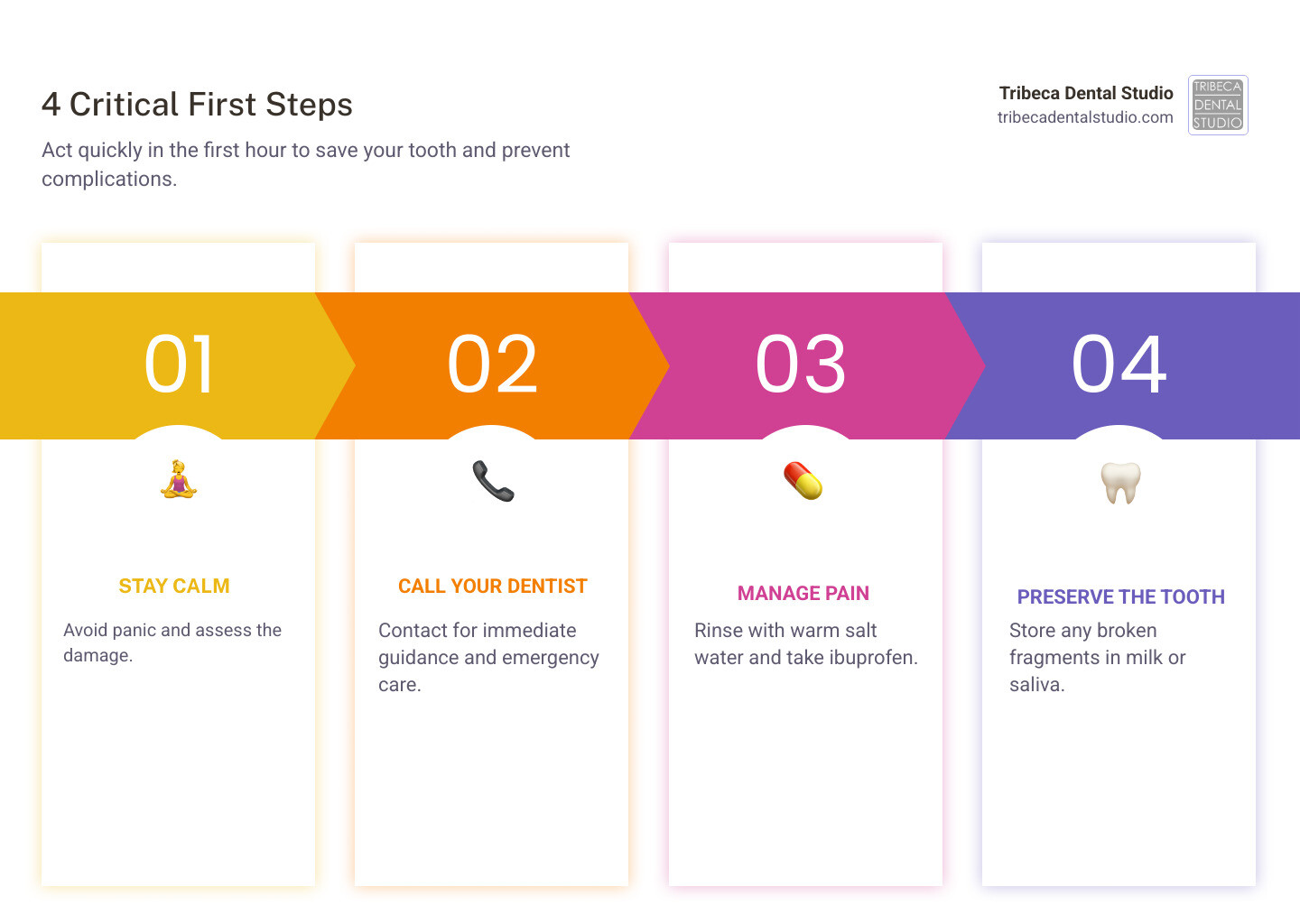
If you have a broken tooth emergency, take these immediate steps:
- Stay Calm – Panicking makes the situation worse and delays proper care
- Call Your Dentist – Contact Tribeca Dental Studio immediately for same-day emergency care
- Manage Pain – Rinse with warm salt water and take over-the-counter ibuprofen
- Preserve the Tooth – Save any broken fragments in milk or saliva and keep them moist
A broken tooth becomes a dental emergency when you experience:
- Severe, persistent pain that doesn’t improve
- Uncontrolled bleeding from the tooth or gums
- A large, visible piece of tooth missing or knocked out completely
- Signs of infection like fever, facial swelling, or pus
- Sharp edges cutting your tongue or cheek
Millions of people face this dental emergency each year. The good news? Dentists can save knocked-out teeth most effectively within the first 60 minutes after injury, and even severely broken teeth often have excellent treatment options when addressed promptly.
I’m Dr. Nina Izhaky, founder of Tribeca Dental Studio, where I’ve treated countless broken tooth emergency cases over my years of practice in cosmetic and restorative dentistry. My team and I prioritize emergency patients with same-day appointments because we understand that time is critical when it comes to saving your tooth and relieving your pain.
When Is a Broken Tooth a Dental Emergency?
It’s easy to wonder if a broken tooth truly constitutes an emergency. After all, not every chipped tooth sends us into a panic. However, there are clear indicators that signal a broken tooth emergency requiring immediate professional attention. Generally, a broken tooth is considered a dental emergency if you’re experiencing severe pain or bleeding that won’t stop, or if a significant portion of the tooth has been lost or knocked out entirely. This includes situations where a molar tooth breaks, which is often classified as a serious issue needing urgent treatment. Any dental problem that demands immediate attention to stop bleeding, prevent infection, or alleviate severe pain falls under the umbrella of a dental emergency.
Chipped vs. Broken: Understanding the Urgency
Understanding the difference between a minor chip and a more severe break is crucial for determining the urgency of care.
- Minor Chip: This usually involves only a small piece of enamel, the outermost layer of your tooth. It might feel rough to your tongue but often causes no pain or sensitivity. While not typically an emergency, we still recommend contacting us for an appointment soon, as even minor chips can worsen or lead to sensitivity over time.
- Craze Lines: These are superficial cracks in the enamel that don’t extend into the deeper tooth structure. They are usually harmless and don’t require emergency care, though we can assess them during a regular check-up.
- Fractured Cusp: This occurs when a piece of the chewing surface of the tooth breaks off, often around a filling. It might not immediately cause pain, but the exposed area can become sensitive.
- Split Tooth: This is a more serious condition where the tooth has a crack extending from the surface down to the root. It’s often very painful and requires immediate attention as it can lead to tooth loss if untreated.
- Vertical Root Fracture: These cracks begin in the root and extend upwards toward the chewing surface. They are often difficult to detect and can be quite painful, frequently leading to infection and requiring immediate care.
Here’s a quick comparison to help you understand when to act fast:
| Feature | Minor Chip (Not Emergency) | Major Break (Emergency) |
|---|---|---|
| Pain | Little to none, possibly mild sensitivity | Severe, sharp, persistent, or throbbing pain |
| Bleeding | None | Present, especially from the gum line or tooth socket |
| Tooth Loss | Small, superficial piece of enamel | Large portion of tooth, or tooth completely knocked out |
| Sensitivity | Mild to moderate, especially to cold air/water | Extreme sensitivity to hot, cold, or biting pressure |
| Aesthetics | Minor cosmetic concern | Highly visible, affects smile and confidence |
| Risk | Can worsen over time if ignored | High risk of infection, nerve damage, or tooth loss |
| Action | Call us for an appointment soon | Call us immediately for emergency care |
Key Signs of a Broken Tooth Emergency
Beyond the general definition, specific symptoms scream “emergency!” If you experience any of the following, please call Tribeca Dental Studio right away:
- Sharp, spontaneous pain: This indicates that the break likely extends to the tooth’s pulp, where nerves and blood vessels reside.
- Pain when biting or chewing: Even if the pain isn’t constant, discomfort when pressure is applied can signal a significant crack or fracture. This is a tell-tale sign that something is wrong. You can learn more about this by visiting our page on Why Does My Tooth Hurt When I Chew?.
- Extreme sensitivity to hot or cold: If your tooth reacts sharply to temperature changes, the inner layers of the tooth are likely exposed.
- Swelling in the gums around the broken tooth: Swelling, especially accompanied by tenderness or pus, can indicate an infection.
- A sharp, jagged edge cutting your tongue or cheek: This not only causes discomfort but can also lead to painful sores or infections in your soft tissues.
If you’re unsure, it’s always best to err on the side of caution and give us a call. We’re here to help you assess the situation and guide you on the next steps.
Immediate First Aid: What to Do in the First 60 Minutes
When a broken tooth emergency strikes, the moments immediately following the injury are critical. Quick, decisive action can significantly improve the outcome and increase the chances of saving your tooth. Our primary advice is always to call your dentist immediately for guidance. At Tribeca Dental Studio, we reserve time in our daily schedules for emergency patients because we know that time is of the essence.
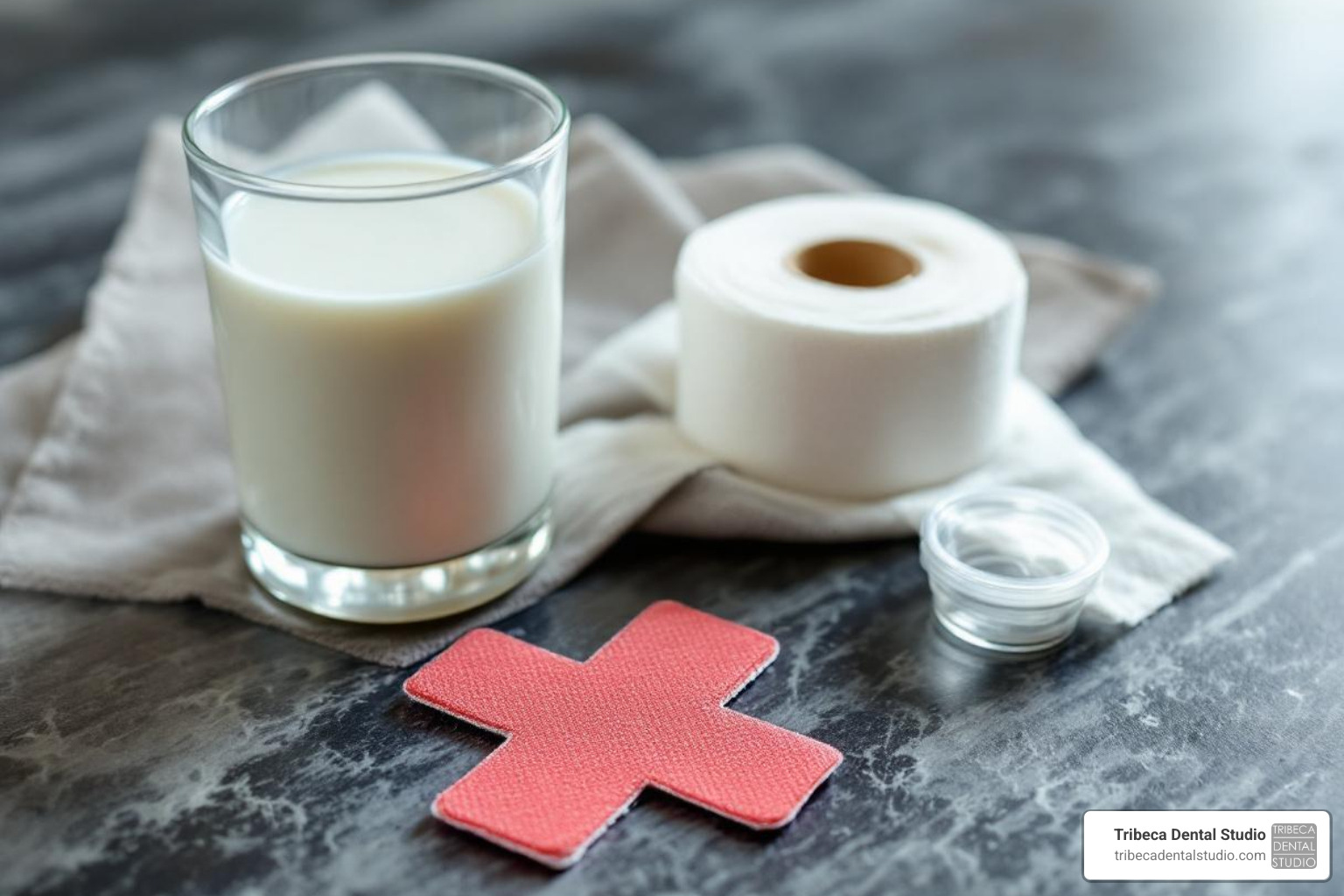
The statistics are clear: dentists have the best chance of saving a knocked-out tooth if it’s re-implanted within the first 60 minutes after injury. A permanent tooth that is reimplanted within 30 minutes has the highest chance of success. This critical window underscores why contacting us for Emergency Dentistry at Tribeca Dental Studio should be your very first step.
How to Manage Pain, Bleeding, and Swelling
While you’re waiting to see us, there are several steps you can take to manage your symptoms:
- Rinse your mouth with warm salt water: Mix half a teaspoon of salt in 8 ounces of warm water and gently swish it around your mouth for 30 seconds. This helps clean the area, reduce bacteria, and can provide some soothing relief.
- Apply a cold compress to the outside of your cheek: If you experience swelling, gently hold an ice pack or a bag of frozen peas wrapped in a cloth against the outside of your mouth or cheek. This helps reduce swelling and numb the pain. For more tips on cold compresses, you can refer to this information on cold compress.
- Use sterile gauze to apply gentle pressure to stop bleeding: If there’s bleeding, fold a piece of sterile gauze (or even a clean, moist tea bag – the tannic acid can help with clotting) and place it over the injured area. Apply firm but gentle pressure for 10-15 minutes until the bleeding subsides.
- Take over-the-counter pain relievers like ibuprofen: Medications like ibuprofen (Advil, Motrin) or naproxen (Aleve) are often effective for dental pain because they target inflammation. Acetaminophen (Tylenol) can also help. Always follow the dosage instructions on the package.
- Avoid placing aspirin directly on the tooth or gums: While aspirin is a pain reliever, placing it directly on your aching tooth or gums can burn the gum tissue and cause further damage.
These are temporary measures. They are meant to keep you comfortable until you can receive professional care.
How to Handle a Broken Fragment or Knocked-Out Tooth
If a piece of your tooth has broken off, or if an entire tooth has been knocked out, knowing how to handle it correctly can be the key to saving it:
- Find the tooth or fragment: Carefully look for the broken piece or the entire tooth.
- Hold it only by the crown (the chewing surface): Avoid touching the root of a knocked-out tooth, as this can damage the delicate cells necessary for reattachment.
- Gently rinse with water if dirty (do not scrub): If the tooth or fragment is dirty, rinse it briefly (no more than 10 seconds) under cool, running water. Do not scrub it, as this can remove vital tissue.
- Try to place a knocked-out adult tooth back in its socket: If it’s a permanent tooth and you feel comfortable, gently try to reinsert it into its original socket. Push it firmly but carefully into place. If successful, bite down gently on a clean piece of gauze or a handkerchief to hold it there.
- If not possible, store it in a small container of milk or your own saliva: If you can’t reinsert the tooth, or if it’s a broken fragment, keep it moist. The best options are a small container of milk, or even tucked between your cheek and gum in your mouth. Do not store it in plain water, as the cells on the root surface can swell and burst.
- Use a tooth preservation product with the ADA Seal of Acceptance if available: These kits are designed to keep knocked-out teeth viable for longer and are an excellent addition to any first-aid kit.
For a knocked-out baby tooth, do not try to re-insert it. Instead, find the tooth, keep it moist, and bring it to our office. We will assess the situation and guide you on the best course of action for your child.
Professional Treatment for a Broken Tooth Emergency
Once you arrive at Tribeca Dental Studio, our first priority is to accurately diagnose the extent of the damage. We’ll perform a thorough dental examination, often including diagnostic X-rays, to assess the fracture’s depth and if the tooth’s inner pulp (containing nerves and blood vessels) is involved. This detailed assessment helps us determine the most effective treatment plan to repair and restore your smile.
Repairing and Restoring Your Tooth
The treatment options for a broken tooth depend heavily on the severity and location of the fracture:
- Dental bonding for small chips: For minor chips or cracks, we can often use dental bonding. This involves applying a tooth-colored composite resin directly to the tooth, which is then sculpted, hardened with a special light, and polished to match your natural tooth. It’s a quick, effective, and aesthetic solution.
- Tooth Colored Fillings: If a larger piece of the tooth is broken but the pulp is not exposed, we might use a tooth-colored filling material to restore the tooth’s shape and function. These modern fillings blend seamlessly with your natural teeth.
- Dental crowns to cover and protect a large break: When a large piece of the tooth breaks off, or if the tooth has extensive decay, a dental crown (or cap) may be necessary. A crown completely covers the damaged tooth, restoring its shape, size, strength, and appearance. We offer various crown materials, including porcelain, which provides an excellent aesthetic match. After a filling, a Dental Crown After Filling may be needed to protect the tooth.
- Porcelain veneers for cosmetic repairs on front teeth: If the break primarily affects the front teeth and is more of a cosmetic concern, porcelain veneers can be an excellent option. These are thin, custom-made shells that cover the front surface of the tooth, improving its appearance. You can find More info on cosmetic dentistry options on our website.
Advanced Procedures for Severe Breaks
For more severe broken tooth emergency situations, advanced procedures may be required to save the tooth and prevent further complications:
- Root Canal Therapy if the inner pulp is exposed or infected: If a break is deep enough to expose the tooth’s pulp, or if the pulp becomes infected, root canal therapy becomes necessary. This procedure involves carefully removing the damaged or infected pulp, cleaning and disinfecting the inside of the tooth, and then filling and sealing it. After a root canal, a crown is typically placed to protect the weakened tooth.
- Pulp capping to protect the nerve: In some cases where the pulp is minimally exposed, a procedure called pulp capping might be performed. A special material is placed over the exposed pulp to encourage healing and protect the nerve, potentially avoiding a full root canal.
- Tooth extraction as a last resort: Unfortunately, if the tooth is severely damaged—for example, a vertical root fracture or a break below the gum line that cannot be repaired—extraction may be the only viable option. Our goal is always to save your natural tooth, but sometimes extraction is necessary to preserve your overall oral health.
- Dental implants to replace an extracted tooth: If a tooth must be extracted, we can discuss options for tooth replacement, with dental implants being a highly effective and long-lasting solution. Implants function and look like natural teeth. You can explore more about how we Fix Fractured Tooth and the various solutions we offer.
Aftercare and Preventing Future Dental Injuries
Repairing a broken tooth is an important step, but equally vital is the aftercare and implementing strategies to prevent future dental injuries. We want to ensure your repaired tooth lasts and that you avoid another broken tooth emergency.
Long-Term Care for Your Repaired Tooth
Your journey doesn’t end once your broken tooth is repaired. Proper aftercare is crucial for the longevity of your restoration and the health of your mouth:
- Follow all post-treatment instructions: We’ll provide specific guidelines custom to your treatment. It’s important to adhere to these instructions, whether it’s about medication, hygiene, or dietary restrictions.
- Eat soft foods initially: For a few days after certain procedures, especially crowns or root canals, we recommend sticking to soft foods to allow the tooth and surrounding tissues to heal properly.
- Avoid biting down on hard objects with the repaired tooth: While restorations are strong, they are not indestructible. Be mindful of chewing on extremely hard foods or objects, particularly with the newly repaired tooth, to prevent re-injury.
- Maintain excellent oral hygiene with regular brushing and flossing: Continue to brush twice daily with fluoride toothpaste and floss once a day. Good oral hygiene prevents plaque buildup and gum disease, which are critical for supporting your repaired tooth.
- Attend all follow-up appointments: These appointments allow us to monitor the healing process, check the integrity of the restoration, and address any concerns you might have. Regular dental check-ups are key to long-term success.
How to Avoid Another Dental Emergency
Prevention is always better than cure, especially when it comes to a painful broken tooth emergency. Here are our top tips for safeguarding your smile:
- Wear a custom-fitted mouthguard during sports: If you participate in contact sports or activities with a risk of facial impact, a custom-fitted mouthguard is your best friend. It provides superior protection compared to over-the-counter options, distributing impact forces and preventing tooth fractures or knock-outs.
- Get a night guard if you grind your teeth (bruxism): Many people unknowingly grind or clench their teeth at night, putting immense pressure on them. A custom night guard can protect your teeth from this unconscious habit, preventing cracks and fractures.
- Avoid chewing on ice, hard candy, or pens: These seemingly innocuous habits are common culprits behind chipped and broken teeth. Ice, in particular, can be surprisingly damaging.
- Never use your teeth as tools to open packages: We’ve all been tempted to tear open a bag or bottle with our teeth, but please resist! Using your teeth for anything other than eating can lead to unexpected and painful injuries. Always grab a pair of scissors or a bottle opener instead.
Frequently Asked Questions
When you’re dealing with a broken tooth emergency, you’ll naturally have a lot of questions. Here are some of the most common ones we hear:
How much does it cost to fix a broken tooth?
The cost to fix a broken tooth can vary significantly depending on the severity of the break and the type of treatment required. For instance, a small chip repaired with dental bonding will cost less than a severe fracture needing a root canal and a crown. Factors influencing the cost include:
- Severity of the break: Minor chips are less expensive to fix than extensive fractures.
- Treatment type: Bonding, fillings, veneers, crowns, root canals, and implants each have different price points. You can explore the Cost of Getting Chipped Tooth Fixed and Fractured Tooth Repair Cost on our site for more details.
- Dental insurance coverage: Most dental insurance plans cover a portion of emergency dental care and restorative treatments. Our team at Tribeca Dental Studio will help you understand your benefits and discuss payment options.
We believe in transparent pricing and will provide you with a clear breakdown of costs before any treatment begins.
Can a broken tooth heal on its own?
Unfortunately, no, a broken tooth cannot heal on its own. Unlike other parts of your body, tooth enamel does not contain living cells that can regenerate or repair themselves. Once the enamel is chipped or fractured, that damage is permanent without professional intervention. Ignoring a broken tooth will not make it better; in fact, it significantly increases the risk of:
- Developing a painful infection or abscess.
- Further damage, potentially leading to the tooth splitting completely.
- Nerve damage, eventually requiring a root canal or even extraction.
Professional treatment is always necessary to seal the tooth, protect its inner structures, and prevent complications.
What happens if I ignore a broken tooth?
Ignoring a broken tooth is a bit like ignoring a crack in your car’s windshield – it might seem minor at first, but it will inevitably worsen and lead to bigger problems down the road. If you leave a broken tooth emergency untreated, you put yourself at risk for:
- Risk of a painful infection or abscess: The exposed inner layers of your tooth are vulnerable to bacteria, which can lead to a severe infection in the pulp. This can spread to the surrounding bone and cause a painful abscess.
- Nerve damage requiring a root canal: If bacteria reach the tooth’s nerve, it can become inflamed or die, necessitating a root canal to save the tooth from extraction. You can learn more about this on our page: How Long Does it Take for a Tooth Nerve to Die?.
- Potential for tooth loss: Without intervention, a severely broken tooth can deteriorate to the point where it cannot be saved and must be extracted.
- More complex and expensive treatment in the future: What might have been a simple bonding or filling initially can escalate into a need for a crown, root canal, or even an implant, all of which are more involved and costly.
It’s always in your best interest to address a broken tooth promptly to prevent these complications and preserve your oral health.
Conclusion: Get Same-Day Relief for Your Broken Tooth in NYC
A broken tooth is a serious, often painful, but highly treatable issue. We understand that a broken tooth emergency can be frightening and disruptive, but acting quickly is the key to saving your tooth, preventing complications, and getting you back to comfort.
At Tribeca Dental Studio, we pride ourselves on a personalized approach to dentistry, treating every patient like family. Led by Dr. Nina Izhaky, our team is dedicated to providing comprehensive, advanced, and welcoming oral healthcare right here in Tribeca, NYC. We prioritize dental emergencies to provide fast, compassionate, and effective care, often with same-day appointments, because we know that when it comes to your oral health, every minute counts.
If you’re in pain or have suffered a dental injury in Manhattan, don’t wait. Contact us immediately for Urgent Dental Care NYC and get the relief you need. We’re here to help you through your dental emergency with expertise and care.