Can You Get Dental Implants Without a Bone Graft?
June 16, 2026

When You’re Told You Need a Bone Graft — But Want to Know If You Don’t
Dental implants without bone grafting are now a real option for many patients, thanks to modern techniques that work around — or entirely bypass — the need to rebuild your jawbone first.
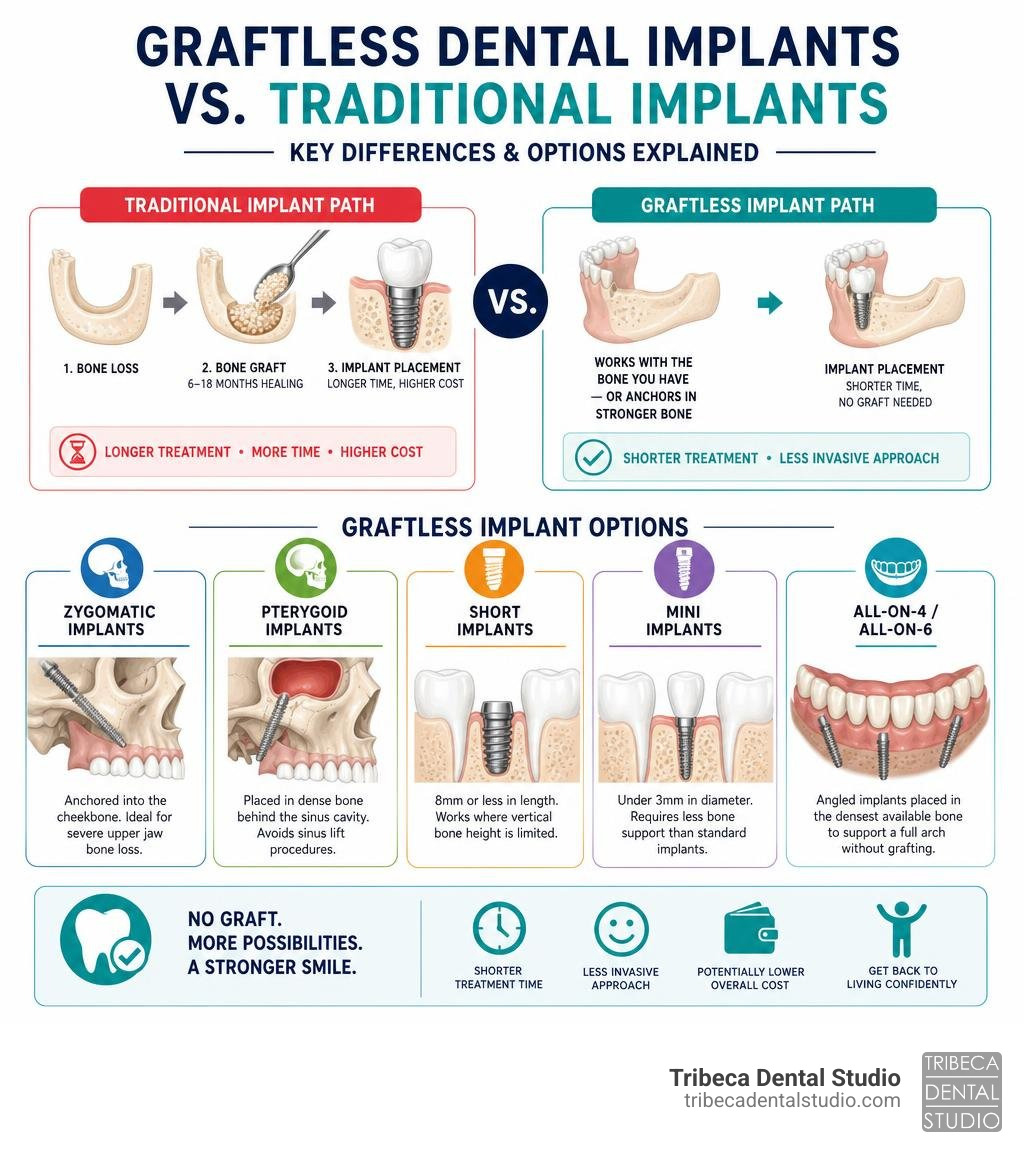
Quick answer: Yes, you can often get dental implants without a bone graft. Here are the main ways it’s done:
- Zygomatic implants — anchored into the cheekbone instead of the jaw; ideal for severe upper jaw bone loss
- Pterygoid implants — placed in dense bone behind the sinus cavity; avoids sinus lift procedures
- Short implants — 8mm or less in length; work where vertical bone height is limited
- Mini implants — under 3mm in diameter; require less bone support than standard implants
- All-on-4 / All-on-6 — angled implants placed in the densest available bone to support a full arch without grafting
If you’ve been told dentures are your only option, that’s worth a second look.
Bone loss after tooth extraction is common — the jaw starts to shrink almost immediately once a tooth is gone. Over time, this can make standard implant placement difficult or impossible without first rebuilding the bone. Traditional bone grafting can add 6 to 18 months to your treatment timeline and $300 to $3,000 or more per site in extra costs. That’s a significant barrier.
But advancements in implant dentistry have changed the picture considerably. Specialized techniques now let skilled clinicians work with the bone structure you already have — or anchor implants in alternative dense bone structures entirely.
I’m Dr. Nina Izhaky, a graduate of New York University College of Dentistry and founder of Tribeca Dental Studio, and I’ve guided many patients through advanced dental implants without bone grafting using the latest digital and surgical techniques available today. In the sections below, I’ll walk you through exactly how these options work so you can make a truly informed decision.
Dental implants without bone basics:
Why Traditional Implants Require Bone and the Shift to Graftless Solutions
To understand why graftless solutions are such a major milestone in modern dentistry, we first have to look at why bone matters so much to a standard dental implant.
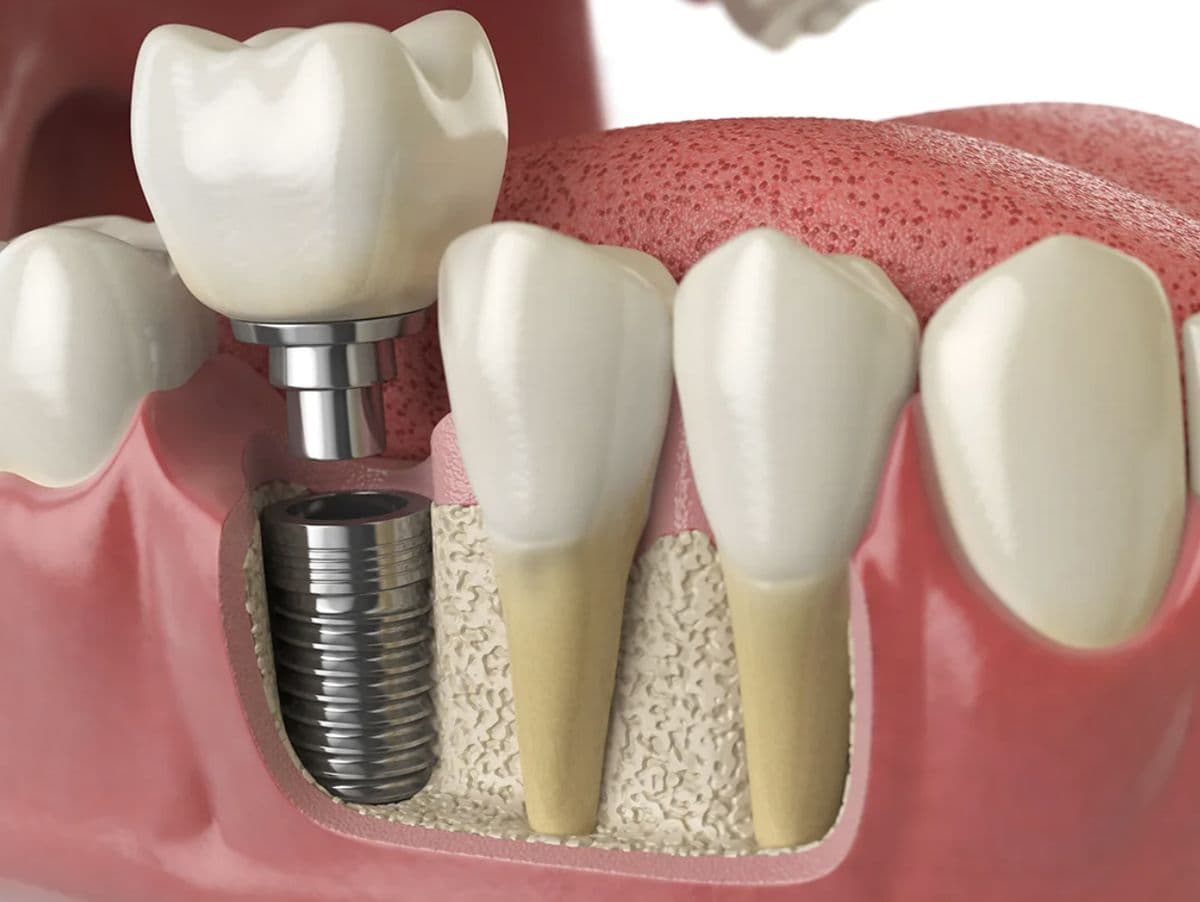
A traditional dental implant behaves exactly like a natural tooth root. It is made of titanium, which is highly biocompatible. Through a biological miracle called osseointegration, your natural jawbone actually fuses directly to the titanium post. This creates an incredibly strong, stable anchor for your new crown.
However, if you do not have enough bone height or width, a standard implant cannot achieve this tight, permanent grip. Traditionally, the only solution was to rebuild the foundation first. Understanding when bone grafting is necessary is the first step in recognizing why so many patients are now seeking alternatives. If you want to dive deeper into how these preparatory procedures work, you can read more info about bone grafting services that we perform here in our Tribeca office.
The Biology of Jawbone Loss After Tooth Extraction
Your jawbone is highly dynamic. It relies on the constant mechanical stimulation of chewing to maintain its volume and density. The moment you lose a tooth, that biological stimulation stops.
Without that physical signal, your body assumes the bone in that area is no longer needed. The alveolar ridge (the part of the jawbone that holds your teeth) begins to resorb, or shrink, at an alarming rate. In fact, you can lose up to 25% of your local bone width within the first year after a tooth extraction alone!
Over time, this bone loss is compounded by other factors:
- Periodontitis: Advanced gum disease actively destroys the bone supporting your teeth.
- Long-term denture wear: Removable dentures sit on top of the gums and apply uneven pressure, which actually accelerates bone resorption.
- Sinus expansion (pneumatization): In the upper jaw, the maxillary sinuses lie directly above your back teeth. When those teeth are lost, the sinus cavity actually expands downward, leaving only a paper-thin ribbon of bone behind.
When bone loss is severe, traditional vertical implants have nothing left to hold onto. This is why many patients are left frustrated, believing that unstable dentures or dental bridges are their only options.
The Drawbacks of Traditional Bone Grafting Procedures
Historically, if you had severe bone loss, a bone graft was mandatory. While highly effective, traditional bone grafting is a major surgical undertaking. It involves transplanting bone material—either from your own body, a human donor, bovine sources, or synthetic alternatives—to the deficient site.
The drawbacks of this traditional route include:
- Extended timelines: A bone graft must fully heal and integrate before an implant can be placed. This adds 6 to 18 months of waiting time to your smile journey.
- Increased discomfort: Rebuilding bone requires additional surgical sites, incisions, and recovery periods, leading to higher surgical morbidity.
- Unpredictability: While generally successful, bone grafts can occasionally resorb prematurely or fail to integrate, meaning you might go through months of healing only to find the site still isn’t ready.
Fortunately, modern clinical research has paved the way for minimally invasive options. For example, scientific research on flapless ridge preservation shows that “open healing” protocols using exposed collagen membranes can help preserve bone volume immediately after extraction with far less surgical trauma. But what if you already have severe bone loss? That is where advanced graftless implant techniques come into play.
Advanced Techniques for Dental Implants Without Bone
If you are missing bone, you don’t necessarily have to rebuild it. Modern implantology has shifted toward utilizing your existing, high-density bone structures.
By using advanced diagnostic tools like 3D Cone Beam Computed Tomography (CBCT) scans, we can map your facial anatomy with sub-millimeter precision. This allows us to locate areas of strong, dense bone—even in patients who have experienced extreme jawbone resorption. Once we find these anatomical sweet spots, we can use specialized graftless protocols to secure your implants safely. You can find more info about dental implants services and how we utilize these high-tech diagnostics to plan your care.
Let’s look at the primary alternative techniques that make dental implants without bone grafting possible.
Zygomatic Implants: Bypassing Jawbone Loss in the Upper Arch
When the upper jawbone has resorbed so severely that it resembles a thin sheet of paper, zygomatic implants offer an incredible lifeline.
Instead of anchoring into the damaged upper jawbone, zygomatic implants are much longer (ranging up to 55mm) and are angled upward to anchor securely into your cheekbones (the zygomatic arch).
Why the cheekbone? The zygoma is an incredibly dense, stable bone that does not resorb over time, even if you have been missing teeth or wearing dentures for decades. This means we can completely bypass the upper jawbone and the sinus cavities, eliminating the need for complex sinus lift surgeries or extensive bone grafts.
For a deeper dive into this life-changing technique, you can read more info about zygomatic implants or explore our clinical comparison on why zygomatic implants beat bone grafting in terms of treatment speed, predictability, and overall comfort.
Pterygoid Implants: Utilizing the Sphenoid Bone
Similar to zygomatic implants, pterygoid implants are a specialized solution designed for the back of the upper jaw.
Instead of anchoring into the cheekbone, pterygoid implants are placed at an angle into the pterygoid plate of the sphenoid bone, which lies behind your maxillary sinuses. Because this bone is highly dense and structurally stable, it provides excellent support for a full-arch prosthesis without requiring a sinus lift or bone graft.
If you are comparing your upper-arch options, you can read more info about pterygoid dental implants and look at our detailed breakdown of zygomatic vs. pterygoid implants to see how these two powerhouse techniques complement one another.
Short and Mini Dental Implants: Options for Dental Implants Without Bone
What if you have localized bone loss in the lower jaw, or in specific spaces where a massive zygomatic implant isn’t appropriate? This is where smaller, strategically designed implants shine.
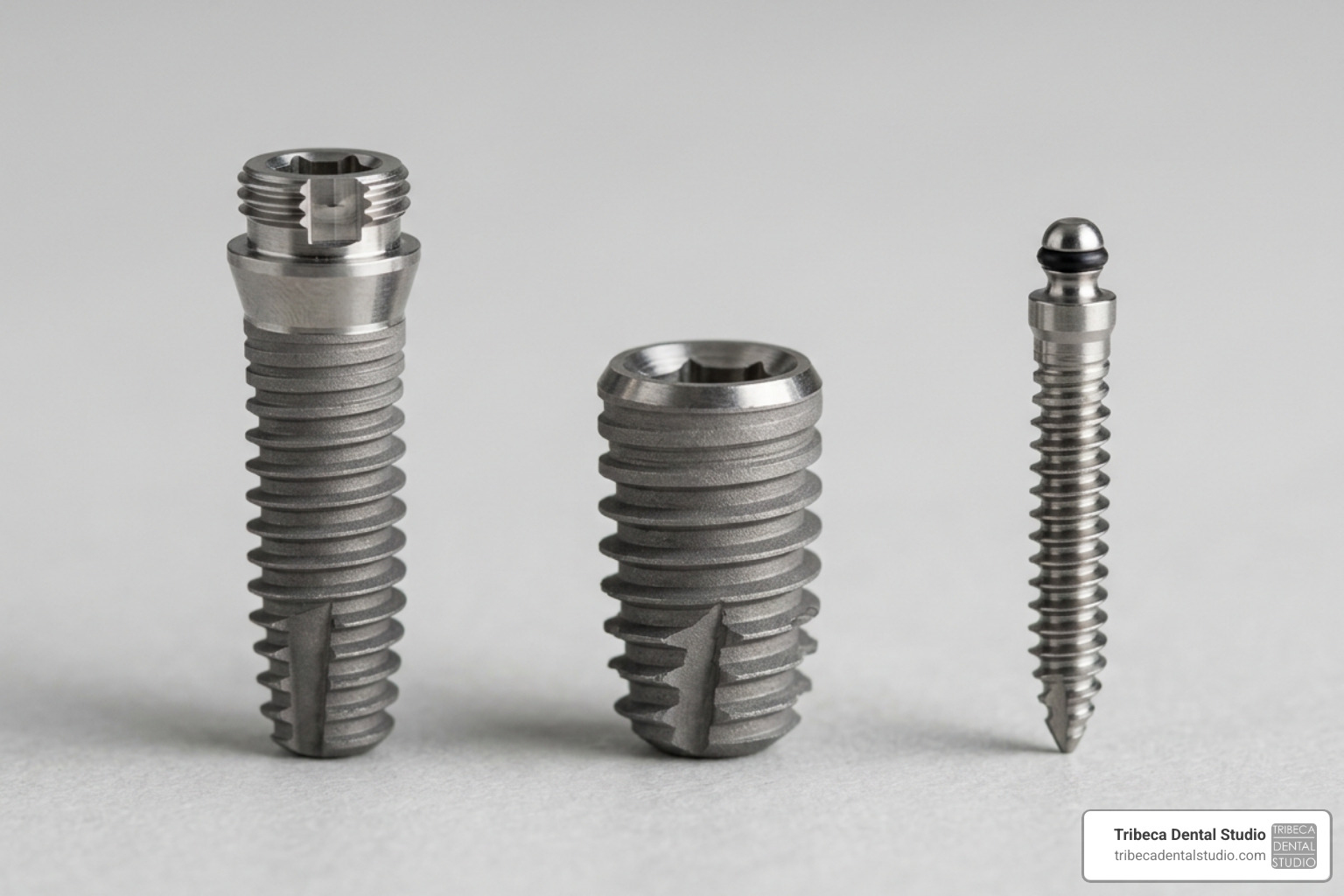
- Short Implants: Measuring 8mm or less in length, short implants are designed to maximize the use of whatever vertical bone height you have left. They allow us to place implants in the lower jaw without risking damage to the inferior alveolar nerve, which runs directly beneath your lower teeth. Modern short implants have success rates that are fully comparable to traditional, longer implants.
- Mini Implants: With a diameter of less than 3mm, mini dental implants require significantly less bone width to stabilize. They are frequently used to hold lower dentures firmly in place or to replace single teeth in narrow spaces.
To learn more about how these smaller alternatives can help you bypass the grafting chair, check out these helpful options for dental implants without bone.
Who is a Candidate for Dental Implants Without Bone?
While graftless implant techniques are incredibly versatile, they do require careful planning. The ideal candidate is someone who:
- Has moderate to severe bone loss in the upper or lower jaw.
- Wants to avoid the long healing times and multiple surgeries associated with bone grafting.
- Has worn traditional dentures for years and is experiencing slippage or discomfort.
- Has a healthy immune system and does not have uncontrolled medical conditions (like severe diabetes) that could interfere with bone healing.
To help you visualize how these different techniques compare, we have put together a quick reference table:
| Implant Type | Primary Anchor Location | Best For | Key Advantage |
|---|---|---|---|
| Zygomatic | Cheekbone (Zygoma) | Severe upper jaw bone loss | Completely avoids sinus lifts and upper jaw grafting |
| Pterygoid | Sphenoid Bone (Pterygoid Plate) | Back of the upper jaw | Bypasses the sinus cavity using dense posterior bone |
| Short | Remaining Jawbone | Lower jaw with limited height | Avoids nerve damage without needing vertical grafts |
| Mini | Remaining Jawbone | Narrow ridges / Denture stabilization | Minimally invasive, requires very little bone width |
Full-Arch Restoration: All-on-4 and All-on-6 Concepts
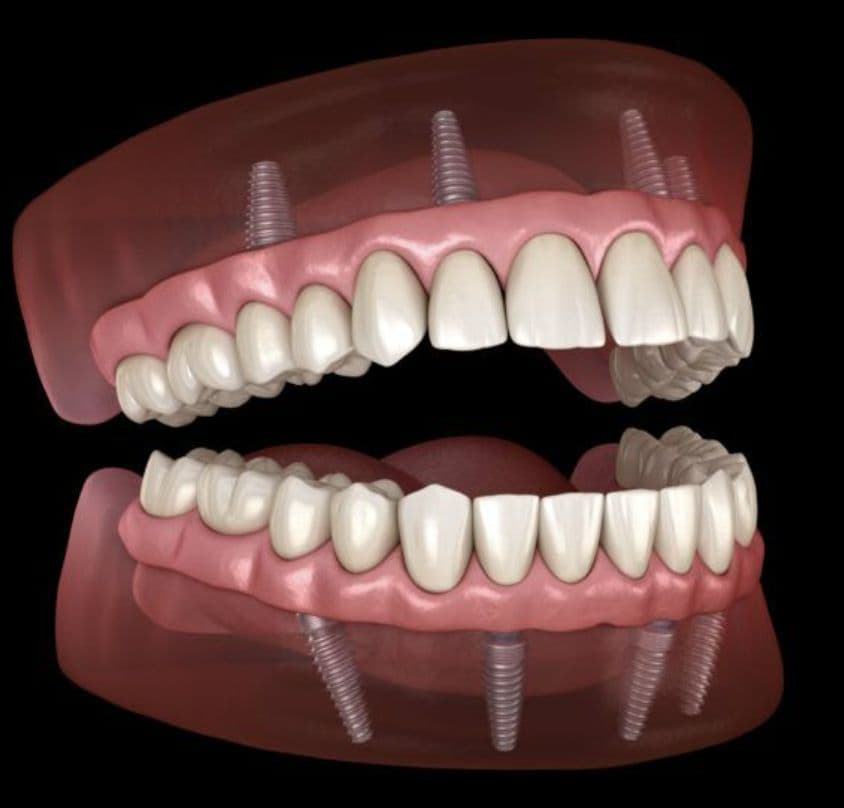
If you are missing all of your teeth in an arch, or if your remaining teeth are failing, you do not need an individual implant for every single tooth. In fact, trying to place 10 to 12 vertical implants in a resorbed jaw is virtually impossible without massive bone grafting.
Instead, we utilize the All-on-4 or All-on-6 techniques.
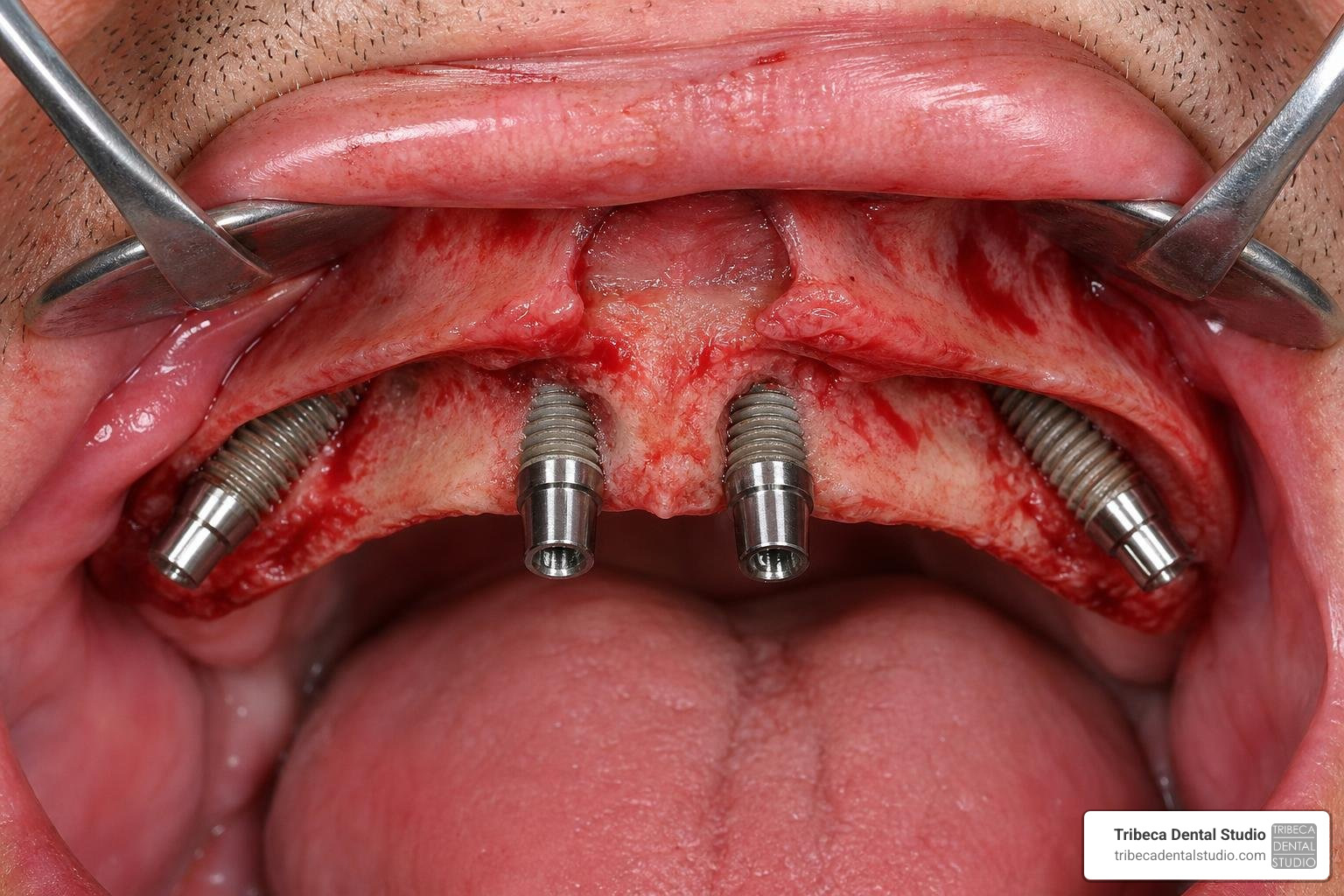
These concepts allow us to restore an entire arch of teeth using just four or six strategically placed implants. By maximizing the bone you already have, we can completely eliminate the need for grafting in the vast majority of full-mouth reconstructions. If you are dealing with significant bone loss and want to know how we handle these cases in our Tribeca practice, read more info about dental implants for severe bone loss.
How Angled Implants Maximize Existing Bone Density
The secret behind the All-on-4 and All-on-6 techniques lies in the physics of angled placement.
Instead of placing all the implants straight up and down, the two implants at the back of the mouth are placed at an angle (usually between 30 and 45 degrees). This tilt does three incredible things:
- Engages denser bone: It allows the implant to tap into the stronger, denser cortical bone at the front of your jaw.
- Avoids vital structures: By angling the posts, we can steer completely clear of the maxillary sinuses in the upper jaw and the mental nerve in the lower jaw.
- Improves weight distribution: Just like the angled legs of a sturdy dining table, tilted implants spread the biting force over a much wider area, providing superb stability for your new smile.
The Benefits of Immediate Loading and Same-Day Teeth
One of the most exciting aspects of graftless full-arch restorations is immediate loading.
Because angled implants are anchored into highly dense, stable bone, they achieve excellent “primary stability” (a very tight mechanical grip) on the day of surgery. This means we can often attach a beautiful, fully functional temporary set of teeth to your implants on the exact same day.
You walk into our Tribeca office with failing teeth or dentures, and you walk out a few hours later with a fixed, non-removable smile. While you will need to stick to a soft-food diet for a few weeks while the bone permanently fuses to the titanium, you never have to go a single day without teeth.
Frequently Asked Questions
We know that navigating advanced dental procedures can feel a bit overwhelming. Here are some of the most common questions we hear from our patients in Manhattan.
What is the success rate of graftless dental implants?
Graftless dental implants have exceptionally high, clinically proven success rates. Long-term studies show that zygomatic implants have a success rate of over 90% at 10 years. Similarly, modern short implants and All-on-4 protocols show success rates that are fully comparable to traditional implants placed in grafted bone. Because these techniques utilize your body’s densest natural bone structures, the foundation is incredibly reliable.
How much do graftless implants cost compared to traditional methods?
At first glance, specialized implants like zygomatic or pterygoid posts have a higher individual component cost than standard implants. However, when you look at the big picture, graftless techniques are often highly cost-effective.
By choosing a graftless route, you completely eliminate the cost of bone grafting surgeries (which can run from $300 to $3,000+ per site) and sinus lifts. You also save money by requiring fewer surgical appointments, fewer diagnostic scans, and less time off work. Most importantly, you save months of valuable time.
What are the risks of getting implants without a bone graft?
Any surgical procedure carries some risk, but choosing a graftless approach under the care of a highly experienced specialist actually minimizes many traditional complications.
If a standard implant is placed in insufficient bone without a graft, the primary risk is implant failure due to lack of support. However, by utilizing zygomatic, pterygoid, or angled implants, we avoid this risk by anchoring directly into dense, healthy bone.
Our team uses 3D CBCT guided planning to map out every nerve and sinus cavity before we ever begin, keeping risks like nerve injury or sinus complications to an absolute minimum.
Conclusion
If you have been told that you aren’t a candidate for dental implants because of bone loss, please don’t lose hope. The landscape of modern implant dentistry has evolved dramatically. With advanced solutions like zygomatic implants, pterygoid implants, short implants, and the All-on-4 technique, we can help you bypass the discomfort, cost, and long delays of bone grafting entirely.
At Tribeca Dental Studio in New York City, we pride ourselves on our advanced, warm, and highly personalized approach to oral healthcare. Led by Dr. Nina Izhaky, our multi-specialty team treats every patient like family. We combine state-of-the-art 3D imaging with a gentle touch to design custom, graftless treatment plans that fit your life, your schedule, and your goals.
Ready to find out if you can skip the bone graft and get your smile back? Schedule a consultation for dental implants with us today. We are located right here in Tribeca, Manhattan, and we can’t wait to welcome you to our practice!