What Does It Cost to Repair a Cracked Molar? (Quick Answer)
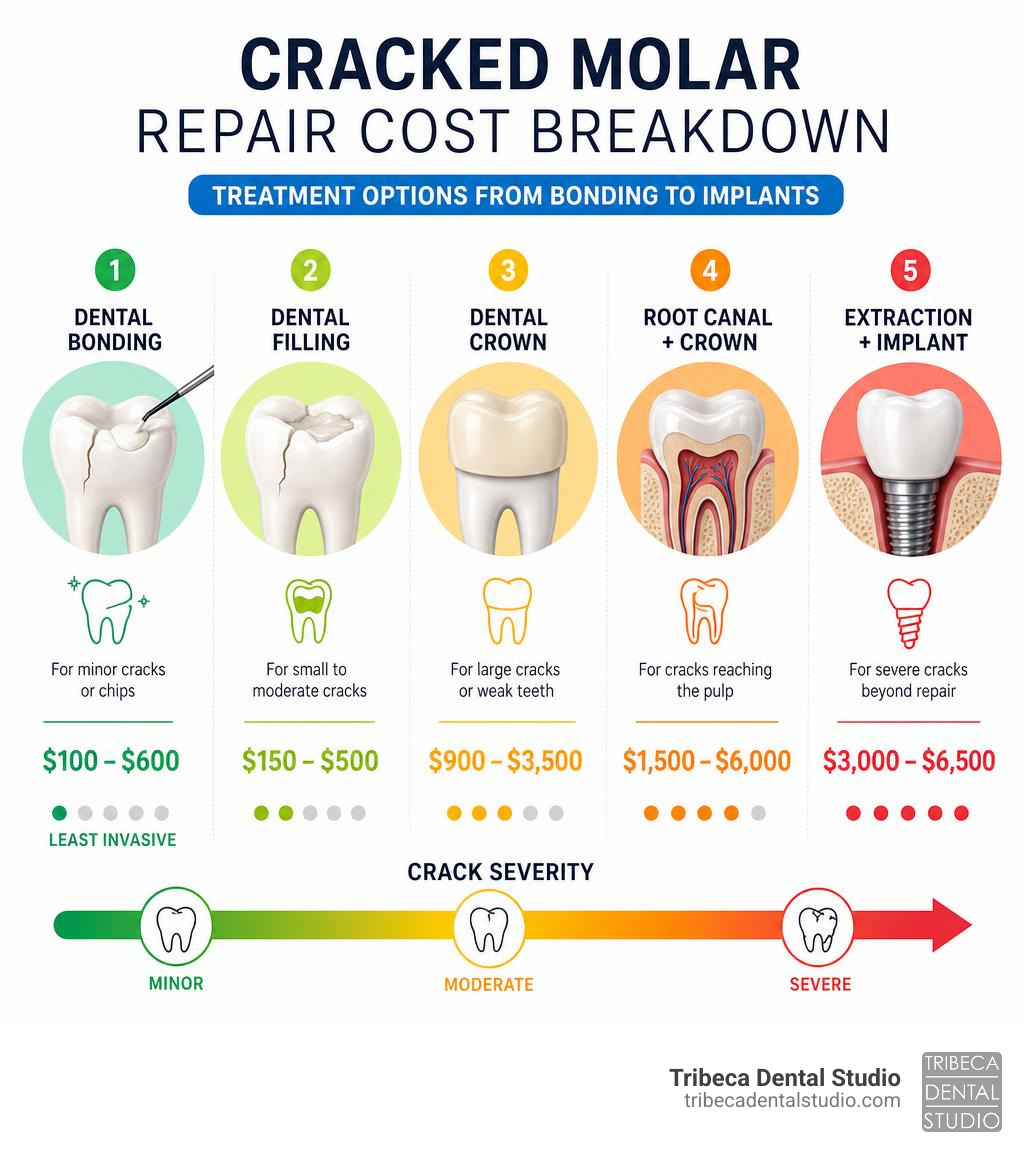
Cracked molar repair cost ranges widely depending on how severe the damage is and what treatment you need:
| Treatment | Typical Cost Range |
|---|---|
| Dental bonding | $100 – $600 |
| Dental filling | $150 – $500 |
| Dental crown | $900 – $3,500 |
| Root canal + crown | $1,500 – $6,000 |
| Extraction + implant | $3,000 – $6,500 |
Costs vary based on location, materials used, and your dentist’s experience. NYC and other major cities typically run 25–45% above national averages.
That sharp, sudden pain when you bite down on something — then nothing. Or maybe it’s a dull ache that won’t quit, or a strange sensitivity to cold drinks. A cracked molar doesn’t always announce itself loudly, but it always gets worse without treatment.
The tricky part? The longer you wait, the more expensive the fix. A small crack that costs a few hundred dollars to repair today can turn into a root canal, a crown, or even an extraction if left alone. What starts as a $200 problem can quietly become a $5,000 one.
And yet, most people hesitate. Why? Usually because they don’t know what to expect — especially when it comes to cost.
This guide breaks it all down clearly: the types of cracks, the treatments, the real costs, and what your insurance will (and won’t) cover.
I’m Dr. Nina Izhaky, a New York University College of Dentistry graduate and founder of Tribeca Dental Studio in NYC, where I’ve helped countless patients navigate cracked molar repair cost decisions with honest, personalized treatment plans. My goal is always to help you save your natural tooth whenever possible — and to make sure you understand exactly what you’re paying for before any work begins.
Glossary for cracked molar repair cost:
Causes and Types of Molar Fractures
To understand why the cracked molar repair cost varies so much, we first have to look at how and why molars break.
Our back teeth are the workhorses of our mouth. They absorb massive mastication (chewing) forces — up to 200 pounds of pressure per square inch. Over time, this constant pressure takes a toll.
What Causes a Molar to Crack?
Some of the most common culprits behind a cracked molar include:
- Bruxism (Teeth Grinding): Chronic grinding or clenching, especially at night, places immense, unnatural stress on your molars.
- Dental Trauma: Biting down on an unexpected hard object (like an unpopped popcorn kernel, an olive pit, or hard candy) or sustaining an injury to the jaw during sports.
- Large Fillings: Over time, large silver amalgam or composite fillings can weaken the remaining natural tooth structure, making it highly susceptible to fracturing.
- Age Factors: As we age, our teeth naturally lose moisture and flexibility. Tooth fractures are highly common in adults over the age of 50.
The Five Types of Tooth Fractures
Not all cracks are created equal. The depth and direction of the fracture dictate the treatment you will need. For a deep dive into these solutions, check out our guide to cracked tooth solutions.
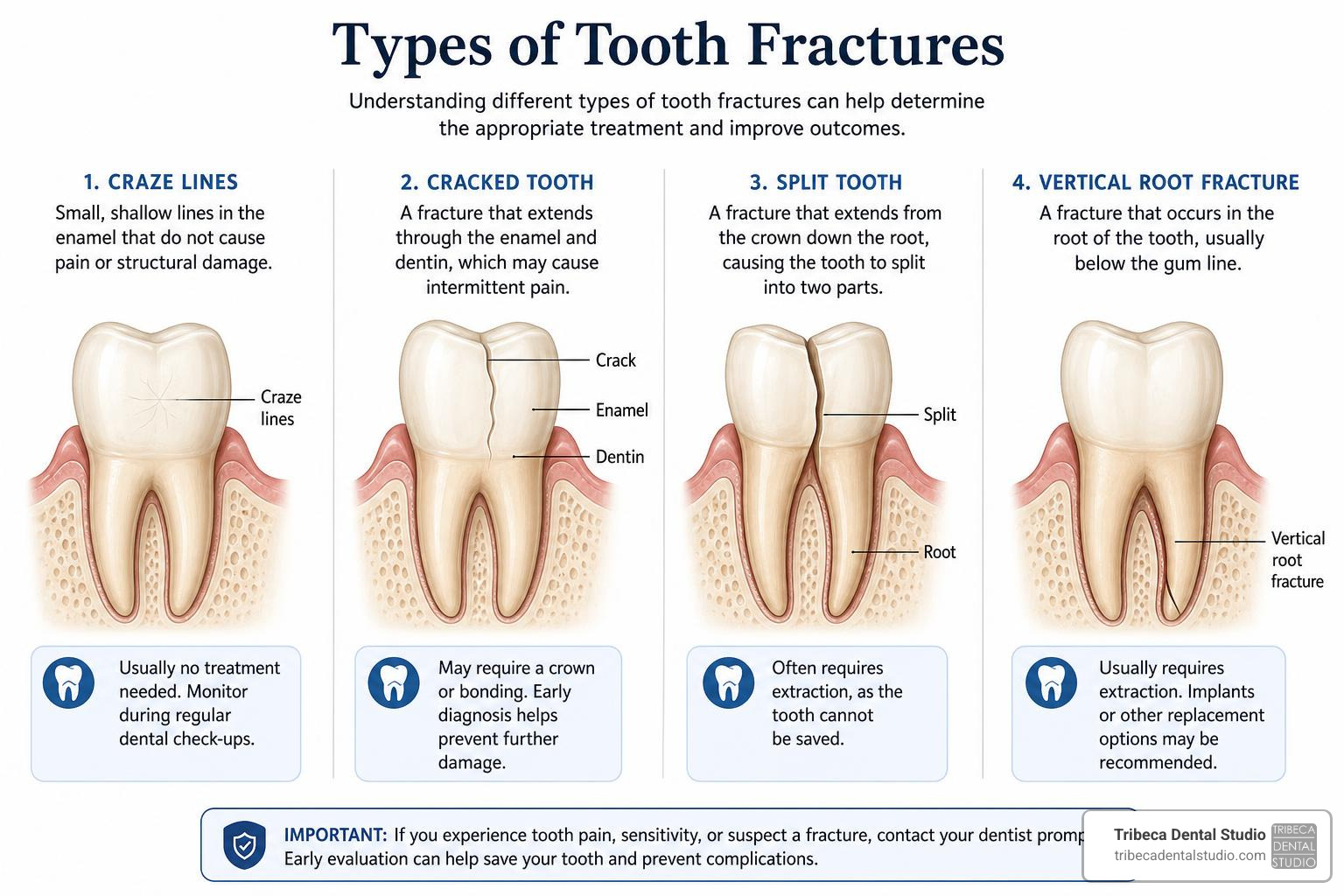
- Craze Lines: These are tiny, superficial cracks that affect only the outer tooth enamel. They are incredibly common in adult teeth, cause no pain, and are purely cosmetic. Usually, they require no treatment at all.
- Fractured Cusp: This occurs when a piece of the molar’s chewing surface (the pointed cusp) breaks off, often around an old filling. While it can cause some temporary sensitivity, it rarely damages the pulp (the tooth’s nerve), making it relatively simple to fix.
- Cracked Tooth: This fracture runs vertically from the chewing surface down toward the root. If caught early, before it reaches the pulp, we can save the tooth. If it reaches the nerve, you will likely need a root canal. Read more on how we approach fixing a fractured tooth.
- Split Tooth: If a cracked tooth is left untreated, it can split entirely into two distinct, separated segments. In almost all cases, a split tooth cannot be saved in its entirety, though sometimes a portion can be preserved.
- Vertical Root Fracture: These cracks begin at the root tip and travel upward toward the chewing surface. They are incredibly tricky because they often show no symptoms until an infection develops in the surrounding bone and gum. These almost always require tooth extraction.
To see a detailed breakdown of how professional labs and dentists evaluate these cracks, you can read this clinical overview on How Dentists Fix A Broken Tooth.
Understanding Your Cracked Molar Repair Cost
When you receive a dental estimate, it can feel like a lot of numbers are being thrown at you at once. The final cracked molar repair cost is never a single flat rate because every mouth is unique.
Several key factors shape the final number on your bill:
- Pulp Involvement (The Ultimate Cost Driver): This is the single biggest variable. If the crack has reached the inner nerve (pulp) of your tooth, the cost of your treatment will immediately double or triple because you will require root canal therapy before the tooth can be restored.
- Choice of Materials: Premium materials like zirconia or high-noble gold cost more than standard porcelain-fused-to-metal (PFM) or composite resin, but they offer vastly superior durability for back teeth.
- Specialist Expertise: If your crack is complex, you may need to see an endodontist (a root canal specialist) or a prosthodontist. Specialized care naturally carries higher fees than general dentistry.
- Geographic Location: Dental fees reflect the cost of doing business. Operating a state-of-the-art clinic in Manhattan involves significantly higher overhead than in rural areas, which is why urban pricing typically runs 25% to 45% above national averages.
To get a clearer sense of the baseline expectations, read our breakdown of fractured tooth repair cost or consult this national pricing guide on Broken Tooth Repair Cost: From Bonding to Crowns.
Average Cracked Molar Repair Cost by Treatment Type
Let’s look closely at the average costs for each specific repair option, moving from the most conservative treatments to the most complex.
1. Dental Bonding or Tooth-Colored Fillings ($100 – $600)
For minor chips or very shallow cusp fractures that do not threaten the nerve, composite dental bonding or a simple tooth-colored filling is the quickest and cheapest option. The dentist applies a tooth-colored composite resin to rebuild the missing structure, cures it with a special light, and polishes it to match your natural tooth.
2. Dental Crowns ($900 – $3,500)
If the crack is moderate to severe but has not reached the pulp, a dental crown is the gold standard of protection. A crown acts like a protective helmet, completely encasing the visible portion of the molar above the gum line to prevent the crack from spreading further. To understand how crowns are priced and what your insurance might pay, read about dental crown cost average prices.
3. Root Canal Therapy + Crown ($1,500 – $6,000)
When a crack penetrates deep into the tooth, bacteria enter the pulp chamber, causing painful inflammation or a serious infection (abscess). To save the tooth, an endodontist must perform a root canal to clear out the damaged nerve, seal the canals, and then place a dental crown to restore the tooth’s structural strength.
4. Tooth Extraction + Dental Implant ($3,000 – $6,500)
If the crack extends below the gum line or splits the root vertically, the tooth cannot be saved. The only predictable option is to extract the damaged molar and replace it. A dental implant is the most lifelike replacement, consisting of a titanium post placed into the jawbone, topped with a custom porcelain crown. To compare these major restorative paths, read our guide on crowns vs bridges vs implants.
How Geographic Location and Materials Impact Your Cracked Molar Repair Cost
As we mentioned, where you live plays a massive role in what you pay. In New York City, particularly in neighborhoods like Tribeca, dental costs reflect the high cost of living, advanced local specialist networks, and the cutting-edge technology utilized by top-tier urban practices.
While a standard porcelain crown might cost $1,100 in a mid-sized suburban market, that same crown in Manhattan can range from $1,500 to $3,500 depending on the materials and diagnostic tools used. You can explore our specific NYC pricing insights in our guide to dental crown cost NYC.
Material Options for Molars
Because your back molars bear the brunt of your chewing force, material choice is critical:
- Zirconia: Incredibly strong, virtually fracture-proof, and tooth-colored. It is highly recommended for patients who grind their teeth.
- Porcelain-Fused-to-Metal (PFM): Highly durable and highly reliable, though a dark metal line may eventually show near the gum line over time.
- Gold Alloys: The strongest and most biocompatible material available. It doesn’t chip and wears down at a rate similar to natural tooth enamel, making it a fantastic choice for back molars if you don’t mind the metallic look.
When to Choose an Onlay
Sometimes, you don’t need a full crown. A dental onlay (often called a “partial crown”) covers only the damaged chewing surface of the molar, preserving more of your natural tooth structure and often costing slightly less than a full crown. Learn more about choosing an onlay over a full crown.
Dental Insurance, Financing, and the Cost of Delaying Treatment

One of the most common questions we hear is: “Will my insurance cover this?”
The short answer is yes — but with limits. Most dental PPO plans view cracked molar repairs as “medically necessary” rather than cosmetic (unlike veneers).
How Insurance Typically Breaks Down:
- Basic Procedures (Bonding/Fillings): Insurance usually covers 70% to 80% of the cost.
- Major Procedures (Crowns, Root Canals, Implants): Insurance typically covers 50% of the cost.
- The Annual Maximum Catch: Most dental insurance plans have a strict annual maximum cap of $1,000 to $2,500 per year. If you need a root canal and a crown in the same year, you will likely exceed your maximum and have to pay the remaining balance out of pocket.
If you have a Health Savings Account (HSA) or Flexible Spending Account (FSA), you can use these tax-free funds to cover any out-of-pocket costs.
What If My Old Filling Is the Problem?
Often, a crack forms because an old filling has failed. If you suspect this is the case, read our helpful guides on cracked filling repair and what to do if my filling cracked.
The Real Cost of Waiting (The “Cost of Delay”)
We understand that dental work is an investment, but delaying treatment for a cracked tooth is a major financial gamble.
Unlike bones, teeth cannot heal themselves. A tiny, painless crack in your enamel will gradually widen every time you chew. If bacteria slip into that crack, they will infect the pulp.
- Act Today: Fix a minor crack with a $300 dental bonding.
- Wait 6 Months: The crack spreads to the nerve. Now you need a $1,500 root canal and a $1,800 crown (Total: $3,300).
- Wait 1 Year: The tooth splits completely below the gum line. It must be extracted and replaced with an implant (Total: $5,000+).
Frequently Asked Questions about Cracked Molar Repair
We know that dealing with a damaged tooth can be stressful. Here are some of the most common questions our patients ask us about cracked molar repairs.
Can a cracked molar heal on its own?
No. Unlike bone, which has a rich blood supply and can regenerate, tooth enamel does not contain living cells and cannot heal or grow back together. Once a crack forms in a tooth, it is a permanent structural defect. The only way to stop the crack from spreading is through professional dental intervention to stabilize and seal the tooth.
How long do common cracked molar repairs last?
The lifespan of your repair depends heavily on the treatment type, the materials used, and your personal habits (like clenching or oral hygiene):
- Dental Bonding: Typically lasts 5 to 10 years before needing to be touched up or replaced.
- Dental Crowns: Usually last 10 to 20 years, though many can last a lifetime with diligent brushing, flossing, and regular dental check-ups.
- Dental Implants: The titanium post fuses permanently with your jawbone and can last a lifetime, while the custom crown on top may need replacement after 15 to 20 years of wear.
What should I do immediately if I suspect a cracked molar?
If you feel a sharp pain or suspect you have cracked a tooth, take these immediate steps before your appointment:
- Rinse your mouth gently with warm salt water to clean the area and reduce bacteria.
- Apply a cold compress to the outside of your cheek if you are experiencing any swelling or throbbing.
- Use dental wax or sugarless gum to cover any sharp, jagged edges of the tooth to protect your tongue and cheeks from cuts.
- Avoid chewing on that side of your mouth, and stay away from extremely hot, cold, or sweet foods.
- Call your dentist immediately to schedule an emergency evaluation. The sooner we assess the crack, the more likely we can save your tooth.
Conclusion
A cracked molar can certainly disrupt your day, but with modern dental technology, it is a highly treatable problem. The key to keeping your cracked molar repair cost manageable is taking swift, decisive action before a minor crack turns into a major clinical emergency.
At Tribeca Dental Studio in New York City, Dr. Nina Izhaky and our dedicated team believe that high-quality, comprehensive oral healthcare should always be transparent and personalized. We treat our patients like family, taking the time to explain your diagnostic imaging, discuss your material options, and map out a treatment plan that fits your health goals and your budget.
If you are looking to explore your cosmetic and restorative options for a damaged tooth, read our guide on cosmetic dentistry options to repair a chipped tooth or schedule a comprehensive evaluation with us today. Let us help you protect your smile, relieve your pain, and restore your peace of mind.