What You Actually Pay for Dental Implants With Insurance
Tooth implant cost with insurance is one of the most searched questions in dentistry — and for good reason. The numbers can feel overwhelming before you understand what your plan actually covers.
Here’s a quick answer:
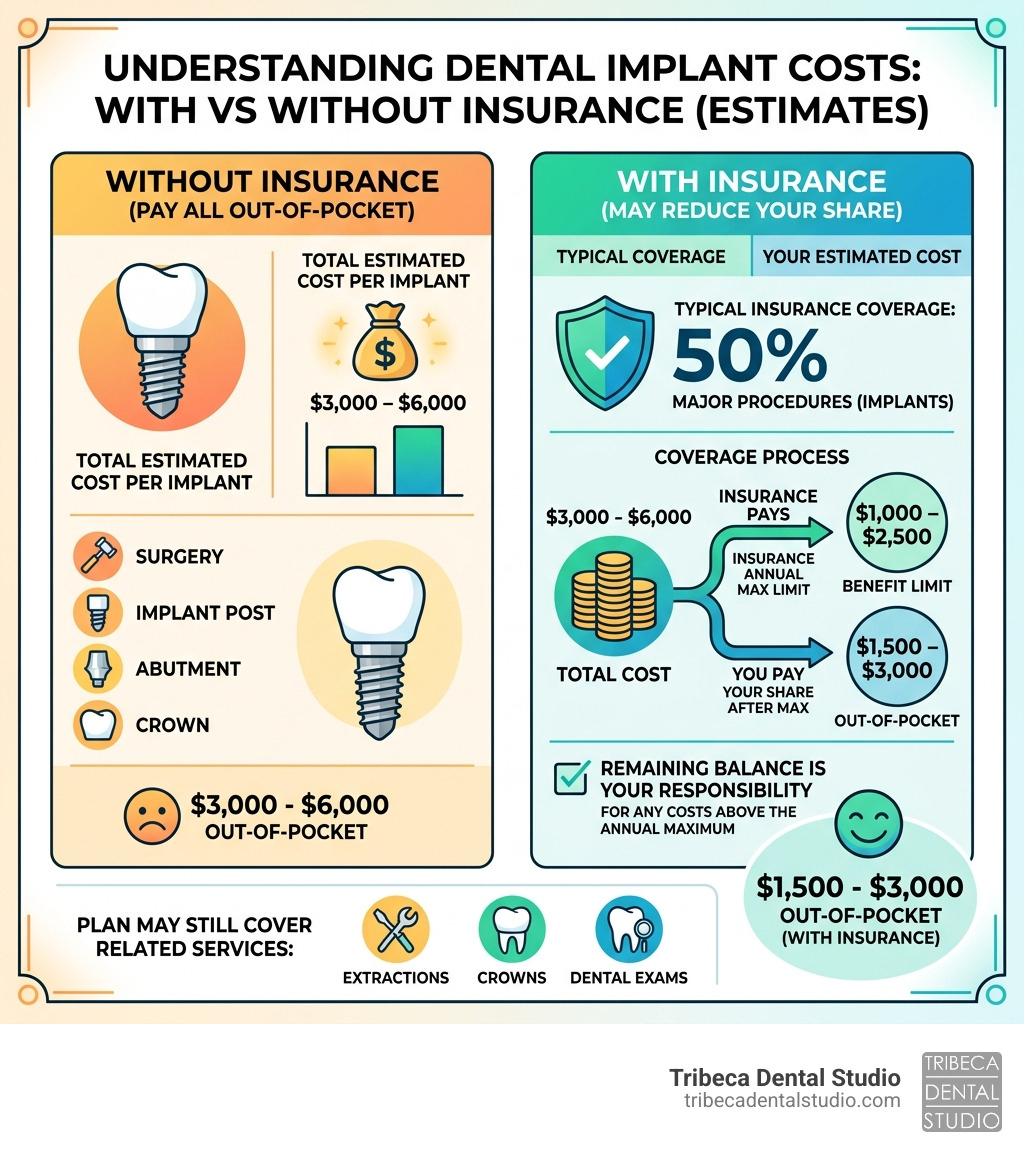
| Situation | Typical Cost Per Implant |
|---|---|
| Without insurance | $3,000 – $6,000 |
| With insurance (50% coverage) | $1,500 – $3,000 out-of-pocket |
| Insurance annual maximum | $1,000 – $2,500 (limits your benefit) |
| After annual max is used | Remaining balance is your responsibility |
Key facts at a glance:
- Most dental plans classify implants as a major procedure and cover roughly 50% — but only up to your annual maximum
- Annual maximums typically range from $1,000 to $2,500, which rarely covers the full implant cost
- Plans from Delta Dental, MetLife, and Cigna tend to offer the best implant coverage
- Medicare and Medicaid generally do not cover dental implants, with limited exceptions
- Even when the implant post isn’t covered, your plan may still pay for related services like extractions or crowns
The gap between what insurance pays and what you owe can still be significant — but knowing how to work the system makes a real difference.
I’m Nina Izhaky, a graduate of New York University College of Dentistry and founder of Tribeca Dental Studio, where I’ve helped countless NYC patients navigate the real-world complexity of tooth implant cost with insurance. My goal here is to give you a clear, honest breakdown so you can walk into your treatment plan — and your insurance conversation — with confidence.
Basic tooth implant cost with insurance terms:
Understanding the Average Tooth Implant Cost with Insurance
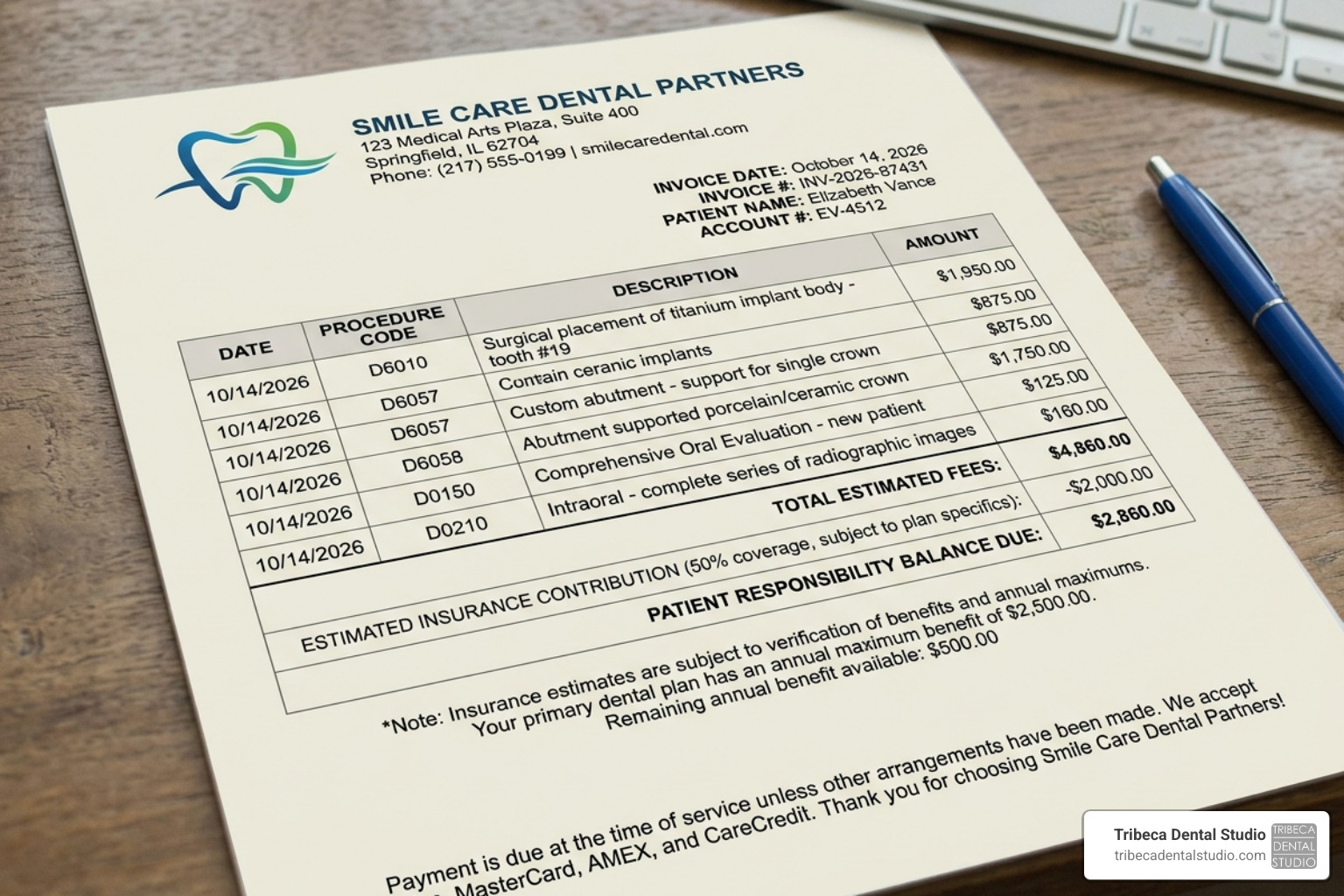
When we talk about the tooth implant cost with insurance in April 2026, we have to look at the “real” numbers. While marketing ads might throw around low figures, the national average for a single dental implant (including the post, abutment, and crown) typically ranges from $3,000 to $7,000.
If you have a solid private insurance plan, your out-of-pocket cost for a single implant often drops to between $1,500 and $3,000. However, this isn’t a simple 50% discount across the board. The math is governed by your “annual maximum”—the most your insurance will pay in a single year. If your plan has a $1,500 maximum, even if the procedure costs $5,000, the insurance company stops paying at $1,500.
To get a better idea of the specifics, you can check out our detailed guide on How Much 1 Tooth Implant Cost.
Components of Implant Pricing
A dental implant isn’t just one “piece.” It’s a three-part system, and insurance often views these parts differently:
- The Titanium Post: This is the “root” that is surgically placed into your jawbone.
- The Abutment: A small connector piece that sits on top of the post.
- The Custom Crown: The visible tooth part that allows you to chew and smile.
Interestingly, some insurance plans that refuse to cover the surgical post may still offer coverage for the dental crown. This is why we always recommend a line-by-line review of your benefits.
National vs. NYC Regional Variations
In a city like New York, specifically in Manhattan and Tribeca, costs are naturally higher due to the cost of living and the high level of specialized expertise required. In NYC, a single implant without insurance can easily reach the $5,000 to $6,000 range.
However, the value of receiving care in a high-tech NYC practice is significant. Advanced imaging, such as 3D CT scans, and the use of premium materials mean your implant has a much higher chance of lasting a lifetime. For a deeper dive into local pricing, see our Dental Implant Cost Nyc Guide.
Factors Influencing Your Out-of-Pocket Expenses
Not every mouth is ready for an implant on day one. Several clinical factors can change the total tooth implant cost with insurance.
Preparatory Procedures and Coverage
If you’ve been missing a tooth for a while, your jawbone may have thinned out. In these cases, we may need to perform:
- Bone Grafting: Adding bone minerals to strengthen the implant site.
- Sinus Lifts: Lifting the sinus floor to make room for implants in the upper jaw.
- Extractions: Removing a damaged tooth before the implant can be placed.
While insurance often covers extractions at a higher rate (sometimes up to 80%), bone grafts are frequently viewed as “elective” unless we can prove medical necessity. Regular maintenance is also vital; keeping your gums healthy through professional care can prevent the need for more expensive interventions. Check our Teeth Cleaning Cost Insurance Guide to see how preventive care fits into your overall budget. For more on the specific Services/Dental Implants we offer, our team is always ready to explain the clinical “why” behind these steps.
Material Choices: Titanium vs. Zirconia
The material used for your implant also impacts the price. Titanium is the gold standard—it’s biocompatible, incredibly strong, and has decades of success data. Zirconia (ceramic) implants are an alternative often requested for aesthetic reasons or by patients with metal sensitivities. Zirconia can sometimes cost a few hundred dollars more per tooth, and insurance coverage for “upgraded” materials can vary.
How to Navigate Dental Insurance Plans for Implants
Navigating insurance requires a bit of detective work. Before committing to surgery, you must understand three key terms:
- Deductible: The amount you pay before insurance kicks in.
- Annual Maximum: The “cap” on what the insurance will pay per year (usually $1,000–$2,500).
- Waiting Period: Many plans require you to be a member for 6–12 months before they cover “major” work like implants.
This is why we tell our patients to Be Picky When Finding Your Insurance Policy.
Major Providers and Coverage Percentages
Most major PPO plans (Preferred Provider Organization) follow a 100-80-50 structure: 100% for cleanings, 80% for fillings, and 50% for major work like implants.
- Delta Dental: Often covers 50% of the implant cost if you stay in-network.
- MetLife: Their PPO plans are generally implant-friendly, though HMO plans may require extensive pre-authorizations.
- Cigna: Known for having some of the most comprehensive “major procedure” categories in the NYC market.
Maximizing Benefits for Full Mouth Restorations
If you need a full arch of teeth—such as the All-on-4 technique—the tooth implant cost with insurance gets more complex. Since a full arch can cost $20,000 to $35,000 per jaw, a $2,000 insurance maximum barely scratches the surface.
One “pro tip” we use at Tribeca Dental Studio is splitting treatment across calendar years. If we place the implants in December and the final bridge in January, you can utilize two years of annual maximums, effectively doubling your insurance benefit. For more details on these extensive procedures, read about Full Mouth Dental Implants Cost Nyc and How Much Does A Full Set Of Teeth Implants Cost.
Financing and Alternative Savings Strategies
If your insurance isn’t enough to cover the full cost, don’t panic. There are several ways to bridge the gap and ensure you get the care you need.
Maximizing Your HSA and FSA
Health Savings Accounts (HSA) and Flexible Spending Accounts (FSA) are excellent tools for dental implants. These allow you to use pre-tax dollars to pay for your surgery, which can save you 20–30% depending on your tax bracket. For 2026, the contribution limits remain a powerful way to fund your “Smart Smile.”
Payment Plans and In-House Options
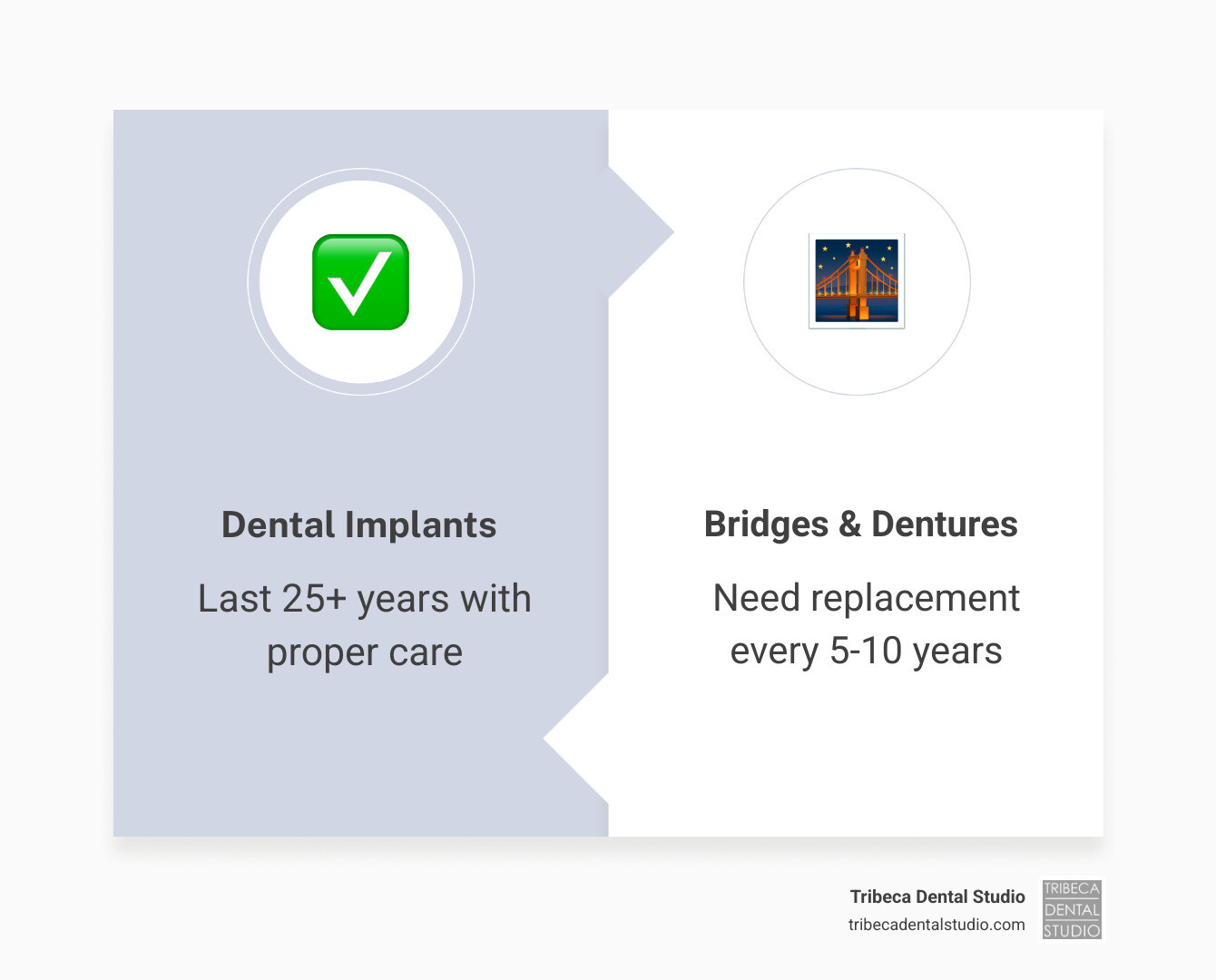
At Tribeca Dental Studio, we believe financial stress shouldn’t stand in the way of a healthy smile. We work with third-party financing like CareCredit, which often offers 0% APR for qualified patients. Over 99% of patients who apply for some form of third-party financing find an option that works for them. When you consider that implants can last 25 years or more, the long-term ROI (return on investment) far outweighs cheaper, temporary fixes like dentures. Our Dental Implants Cost Guide provides more insight into these financial pathways.
Frequently Asked Questions about Tooth Implant Cost with Insurance
Does Medicare or Medicaid cover the tooth implant cost with insurance?
Generally, no. Traditional Medicare (Parts A and B) does not cover dental implants. According to Medicare.gov, the federal program generally does not cover dental procedures or devices. Some Medicare Advantage (Part C) plans may offer a small dental allowance, but it is rarely enough for a full implant. In New York, Medicaid typically does not cover implants, viewing them as an elective procedure rather than a medical necessity.
What is the typical out-of-pocket tooth implant cost with insurance for a single tooth?
For most NYC patients with a standard PPO plan, the out-of-pocket cost is between $1,500 and $3,000. This assumes your deductible has been met and you haven’t used up your annual maximum on other treatments like crowns or root canals earlier in the year.
Are there differences in coverage for single vs. multiple implants?
Insurance companies usually have a “missing tooth clause,” which may limit coverage if the tooth was lost before you joined the plan. When replacing multiple teeth, insurance may limit the number of implants they cover in a single year, or they may suggest a lower-cost alternative like a bridge. However, we always fight for the treatment that is clinically best for your long-term health.
Conclusion
Maximizing your tooth implant cost with insurance is all about strategy and transparency. At Tribeca Dental Studio, Dr. Nina Izhaky and our entire team treat you like family. We don’t just perform the surgery; we help you navigate the financial hurdles to ensure your “Smart Smile” is also a sustainable one.
Whether you are looking for a single tooth replacement or a full-mouth restoration in the heart of NYC, we are here to provide a personalized, advanced, and welcoming experience. Ready to see what your insurance can do for you? Schedule a consultation with us today and let’s build your treatment plan together.