Filling Gone Rogue: Your Emergency Guide
March 26, 2026
What to Do When Your Filling Fell Out
Filling fell out? Here’s what to do right now:
- Stay calm – it’s fixable and usually not a true emergency
- Retrieve the filling if you can and store it in a small plastic bag
- Rinse your mouth gently with warm salt water
- Apply dental wax or OTC temporary cement to protect the exposed tooth
- Avoid chewing on that side until you see your dentist
- Call your dentist and book the earliest available appointment
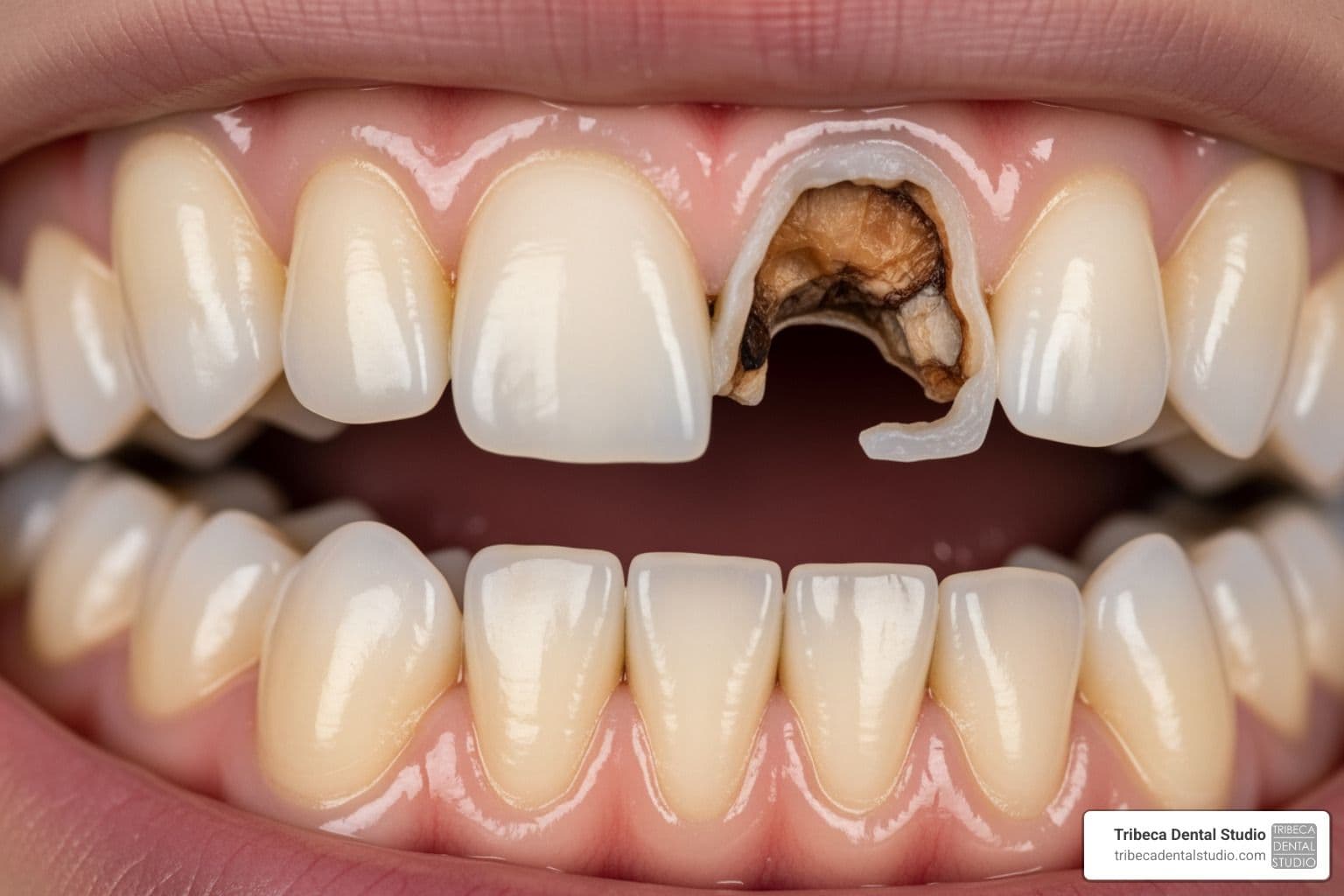
One moment you’re eating dinner, and the next you feel something hard between your teeth – or a strange new gap where your filling used to be. Sometimes you don’t even notice until your tongue finds a rough hollow in the tooth.
It can feel alarming. But here’s the truth: a lost filling is one of the most common dental issues dentists see, and in most cases it’s straightforward to fix.
That said, don’t ignore it – even if there’s no pain. The exposed tooth is vulnerable to bacteria, decay, and sensitivity the moment that filling is gone. Acting quickly protects you from bigger (and more expensive) problems down the line.
I’m Dr. Nina Izhaky, a graduate of New York University College of Dentistry and the founder of Tribeca Dental Studio, and I’ve helped countless patients navigate the exact situation of a filling fell out – from quick same-day repairs to more complex restorations. In the guide below, I’ll walk you through everything you need to know to protect your tooth, manage any discomfort, and get the right care.
Key terms for Filling fell out:
What to Do Immediately When Your Filling Fell Out
The first ten minutes after you realize your filling fell out are the most important for preventing further damage. While your natural instinct might be to panic, especially if you’re in the middle of a busy day in Manhattan, taking a few systematic steps can save your tooth structure.
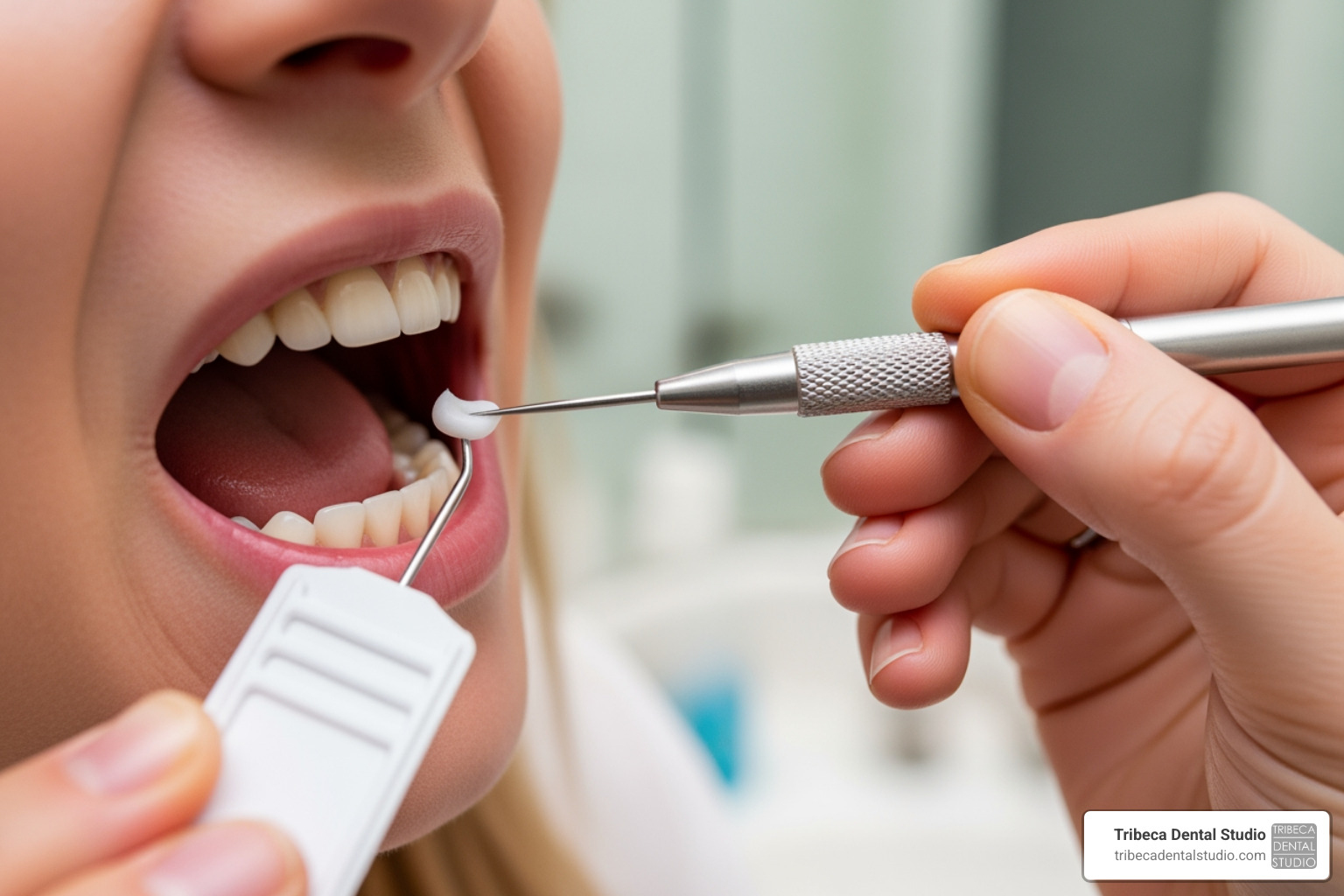
First, call your dentist immediately. Even if you aren’t in pain, you need a professional evaluation within 24 to 48 hours. At Tribeca Dental Studio, we prioritize these types of calls because we know that an open cavity is a gateway for bacteria.
Second, try to retrieve the filling. If it came out while you were eating, spit it out carefully. While we usually replace lost fillings with fresh material, seeing the old filling can help us understand why it failed—whether it was due to underlying decay or a structural break in the material itself. Store it in a small plastic bag or a clean container.
Next, perform a saltwater rinse. Mix half a teaspoon of salt into a cup of warm water and swish gently. This helps clear away food debris and acts as a mild disinfectant for the newly exposed dentin.
To manage any discomfort or sensitivity to air and temperature, you can use temporary filling materials found at most pharmacies. These over-the-counter kits usually contain a zinc oxide material that hardens when it comes into contact with saliva. If you can’t get to a pharmacy, a small piece of dental wax (the kind used for braces) can also provide a barrier.
Finally, avoid chewing on that side of your mouth. The remaining tooth structure is often weakened once the filling is gone, making it prone to cracking or fracturing under the pressure of a bite. If you are worried about the replacement process, rest assured that modern painless dental filling options make the restoration process much more comfortable than it was in years past.
Protecting the tooth temporarily
If you are unable to see us immediately, pharmacy kits like DenTek Temparin Max are excellent stop-gaps. Before applying any temporary material, ensure the area is as clean as possible. Use a gentle toothbrush and the aforementioned saltwater gargle.
If you don’t have a kit, some people use a piece of sugar-free gum to plug the hole. While this isn’t a long-term solution, it can shield the sensitive nerves from cold air for a few hours. Just make sure the gum is truly sugar-free, as sugar will react with the bacteria in the cavity and cause significant pain.
What to do if you swallowed the filling
It happens more often than you’d think! If you accidentally swallowed your filling while eating, don’t panic. Most dental fillings are small enough to pass through your digestive system without any issues.
However, you should perform a quick respiratory check. If you find yourself coughing, wheezing, or having trouble breathing shortly after the filling disappears, it may have been inhaled into your lungs rather than swallowed. This is a medical emergency, and you should seek immediate care.
Regarding amalgam safety, if you swallowed an old silver filling, the mercury content is generally considered stable and unlikely to cause acute toxicity as it passes through. Still, we recommend a consultation with us so we can monitor the site and ensure no other pieces are loose.
Why Dental Fillings Fail: Common Causes and Lifespans
No dental restoration is truly permanent. Fillings are subject to incredible forces every day—the average human jaw can exert significant pressure during chewing. Over time, these forces, combined with the chemical environment of the mouth, lead to wear and tear.
Common reasons a filling fell out include:
- New Decay: This is the most frequent culprit. Bacteria can seep under the edges (margins) of an old filling, creating a new cavity that undermines the support for the restoration.
- Bruxism (Teeth Grinding): If you clench or grind your teeth at night, the constant pressure can cause composite filling materials to crack or loosen over time.
- Hard Foods: Biting into ice, hard candy, or even a hidden pit in an olive can cause a “pop” that dislodges the filling.
- Chemical Erosion: Frequent consumption of acidic sodas or citrus can weaken the bond between the tooth and the filling.
- Poor Bonding: If a filling falls out shortly after it was placed, it may have been due to moisture contamination during the original procedure, which prevented a secure bond.
Average Lifespan of Filling Materials
| Filling Material | Average Lifespan | Key Benefit |
|---|---|---|
| Amalgam (Silver) | 10–15 Years | Highly durable for back teeth |
| Composite (Tooth-Colored) | 5–10 Years | Aesthetic and bonds to tooth |
| Gold Inlays | 15–20+ Years | Extremely long-lasting |
| Ceramic/Porcelain | 10–15 Years | Stain-resistant and natural look |
The ADA guidance on filling replacement emphasizes that regular checkups are the only way to catch these issues before the filling actually fails. During your cleaning, we use a tool called an explorer to check for “open margins” where a filling might be starting to pull away.
Is it dangerous if a filling fell out but doesn’t hurt?
Many patients call us and say, “My filling fell out but it doesn’t hurt, so can I wait a few weeks?” The short answer is: No.
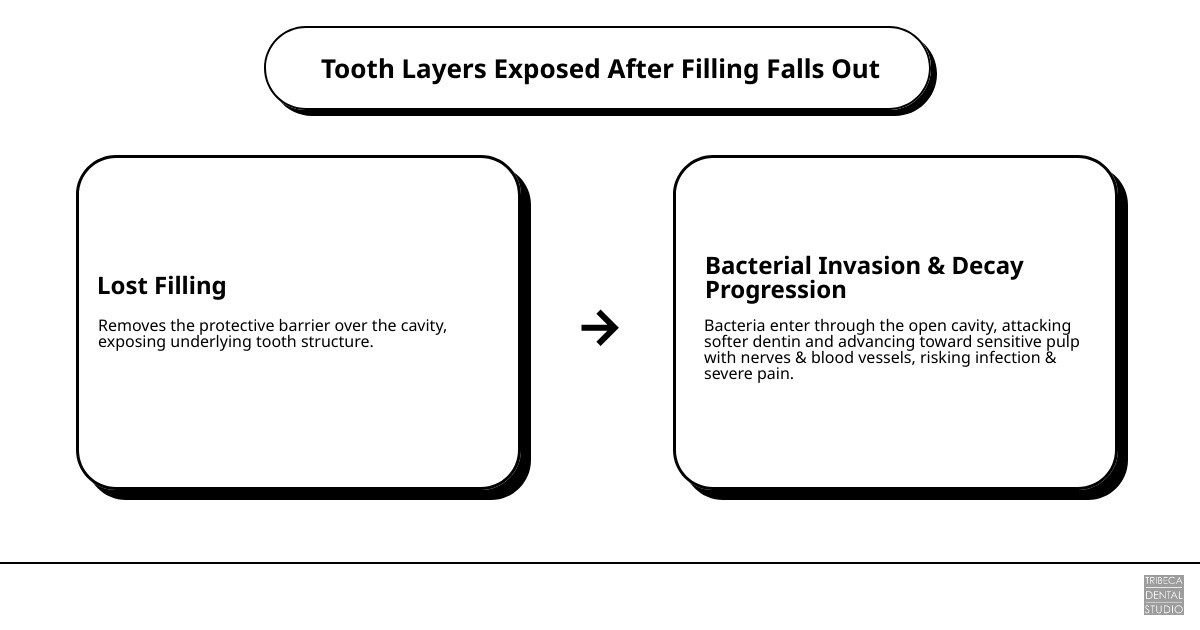
When a filling is lost, it exposes the dentin, the layer of the tooth underneath the enamel. Dentin is much softer than enamel and contains microscopic tubules that lead directly to the nerve. Even if it doesn’t hurt now, the area is a magnet for food and bacteria.
This can lead to a silent infection. Without the protective seal of a filling, decay can progress rapidly toward the pulp (the center of the tooth). By the time you actually feel pain, the damage may have reached the nerve, turning a simple filling replacement into a need for a root canal or even an extraction.
How to prevent fillings from falling out in the future
Prevention starts with great oral hygiene. Brushing twice a day with fluoride toothpaste and flossing daily keeps the margins of your fillings clean and free of plaque.
If you are a “grinder,” we highly recommend a custom night guard. This creates a cushion between your upper and lower teeth, protecting your restorations from the immense pressure of bruxism. Additionally, try to avoid “using your teeth as tools” to open packages and limit your intake of extremely sticky or hard candies that can physically pull a filling out of its place.
Professional Treatment: How Dentists Fix a Lost Filling
When you arrive at Tribeca Dental Studio for your appointment, our first goal is to assess the health of the remaining tooth. We’ll start with a physical examination and likely an X-ray to see if there is any hidden decay beneath the surface.
The repair process generally follows these steps:
- Cleaning: We remove any debris or new decay that has formed since the filling fell out.
- Preparation: The tooth is etched and primed to ensure a strong bond for the new material.
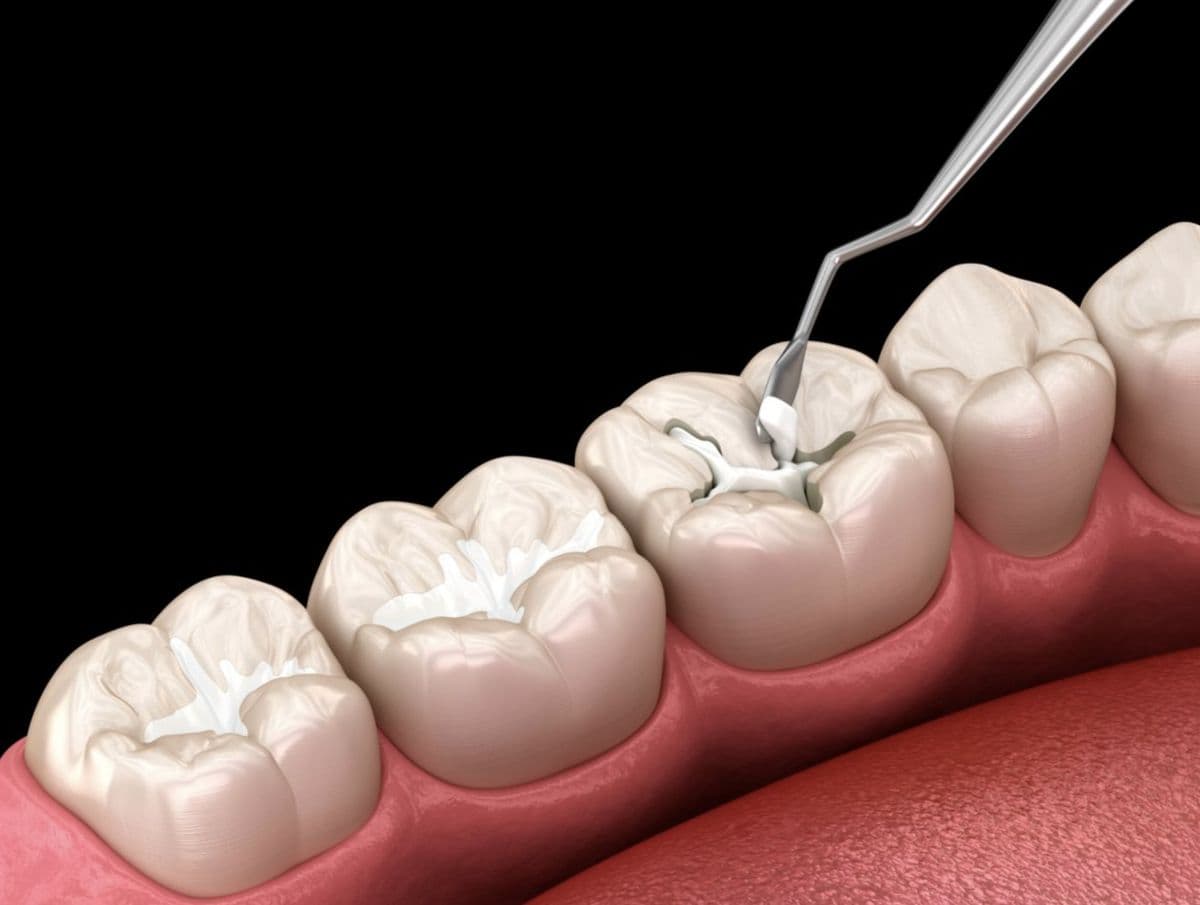
- Restoration: We typically use tooth-colored fillings (composite resin) that are matched to your natural tooth shade. These are applied in layers and cured with a special blue light.
- Bite Alignment: We check how your teeth come together to ensure the new filling isn’t “high,” which could cause pain or cause the filling to crack again.
- Polishing: The final step is smoothing the restoration so it feels natural to your tongue.
In cases where the lost filling was very large, or if the tooth has fractured, a simple filling may no longer be enough. We might recommend a dental crown after filling to provide 360-degree protection to the weakened tooth. If the decay has reached the nerve, we will discuss root canal therapy to save the tooth root.
The cost of replacing a filling fell out
We understand that budget is a concern for many of our NYC neighbors. The cost of replacement depends largely on the material used and the size of the cavity.
- Amalgam Fillings: Generally the most affordable, ranging from $100 to $200.
- Composite Fillings: These are more aesthetic and bond directly to the tooth. You can find more details in our composite filling cost guide. These typically range from $150 to $350.
- Large/Complex Restorations: If the filling covers multiple surfaces of the tooth, costs can rise to $500 or more.
Several cavity filling cost factors come into play, including the location of the tooth and your insurance coverage. Most dental insurance plans cover a significant portion of filling replacements, as they are considered “basic” restorative care. However, if you wait too long and the tooth requires a crown ($900–$1,500) or a root canal ($1,200–$2,000), your out-of-pocket costs will be significantly higher.
Repair vs. Full Replacement
Can a filling ever just be “patched”? If a tiny chip occurs at the edge of a composite filling and there is zero decay underneath, we may be able to perform a minor repair by bonding new resin to the old.
However, if the filling fell out entirely, a full replacement is almost always necessary. We need to ensure the entire cavity is sterile and that the new bonding agent has a fresh, clean surface to adhere to. This ensures the longevity of the new restoration and prevents “recurrent decay” from being trapped under the new material.
Frequently Asked Questions about Lost Fillings
How long can I safely wait to see a dentist?
The safe window is generally 24 to 48 hours. While you might be able to wait a few days if you are using a temporary pharmacy kit and have no pain, every hour the tooth is exposed increases the risk of bacterial contamination. If you experience severe pain, facial swelling, or a fever, you should seek emergency care immediately, as these are signs of an abscess or infection.
What foods should I avoid until my appointment?
Until your tooth is professionally restored, your diet should consist of soft foods. Avoid:
- Sticky Candy: Taffy, caramel, or gummy bears can pull out temporary fillings.
- Hard Nuts and Ice: These can easily fracture the remaining thin walls of your tooth.
- Extreme Temperatures: Without a filling, your nerve is very close to the surface; hot coffee or ice water can cause sharp, shooting pain.
- Acidic Drinks: Sodas and wine can irritate the exposed dentin and speed up decay.
Is a lost filling considered a dental emergency?
It is considered a minor dental emergency. While it isn’t life-threatening like a knocked-out permanent tooth or a jaw fracture, it requires prompt attention to prevent a minor issue from becoming a major one. If the loss of the filling is accompanied by intense throbbing pain that keeps you awake at night, it has moved into the “urgent emergency” category.
Conclusion
At Tribeca Dental Studio, we believe that a filling fell out shouldn’t be a source of long-term stress. Led by Dr. Nina Izhaky, our team provides a welcoming, family-like atmosphere where we prioritize your comfort and long-term oral health. Whether you need a simple composite replacement or a more advanced restoration, we use the latest technology to ensure your treatment is efficient and durable.
Living in New York City is busy, and we know you don’t have time for dental pain. If you’ve lost a filling, don’t wait for the pain to start. Our personalized approach to dental fillings in NYC is designed to get you back to your life with a smile that is as functional as it is beautiful.
Contact us today to schedule your appointment and let us help you secure your smile for the future!