Why Finding the Right Sleep Apnea Treatment in NYC Matters
Sleep apnea treatment NYC is easier to access than most people realize – and getting it right can genuinely change your health.
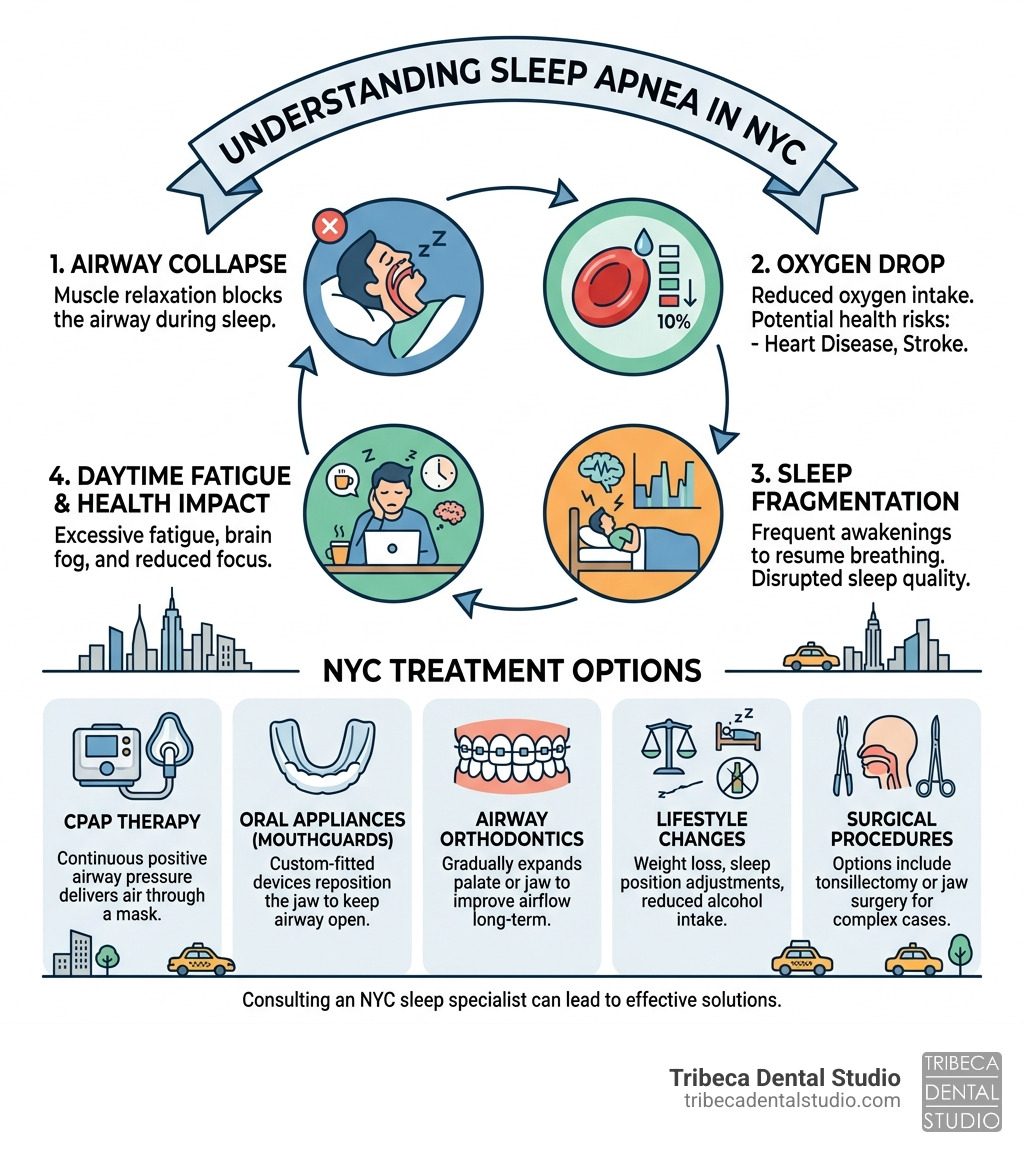
Here are the main treatment options available in New York City:
- Oral appliances (mouthguards) – Custom-fitted devices that reposition the jaw to keep the airway open. Best for mild to moderate cases.
- CPAP therapy – A machine that delivers continuous air pressure to prevent airway collapse. Most commonly prescribed.
- Airway orthodontics – Expands the palate and jaw to improve airflow long-term. Available for both adults and children.
- Lifestyle changes – Weight loss, sleep position adjustments, and reduced alcohol intake can reduce severity.
- Surgical procedures – For severe or anatomically complex cases, options include tonsillectomy, UPPP, or jaw surgery.
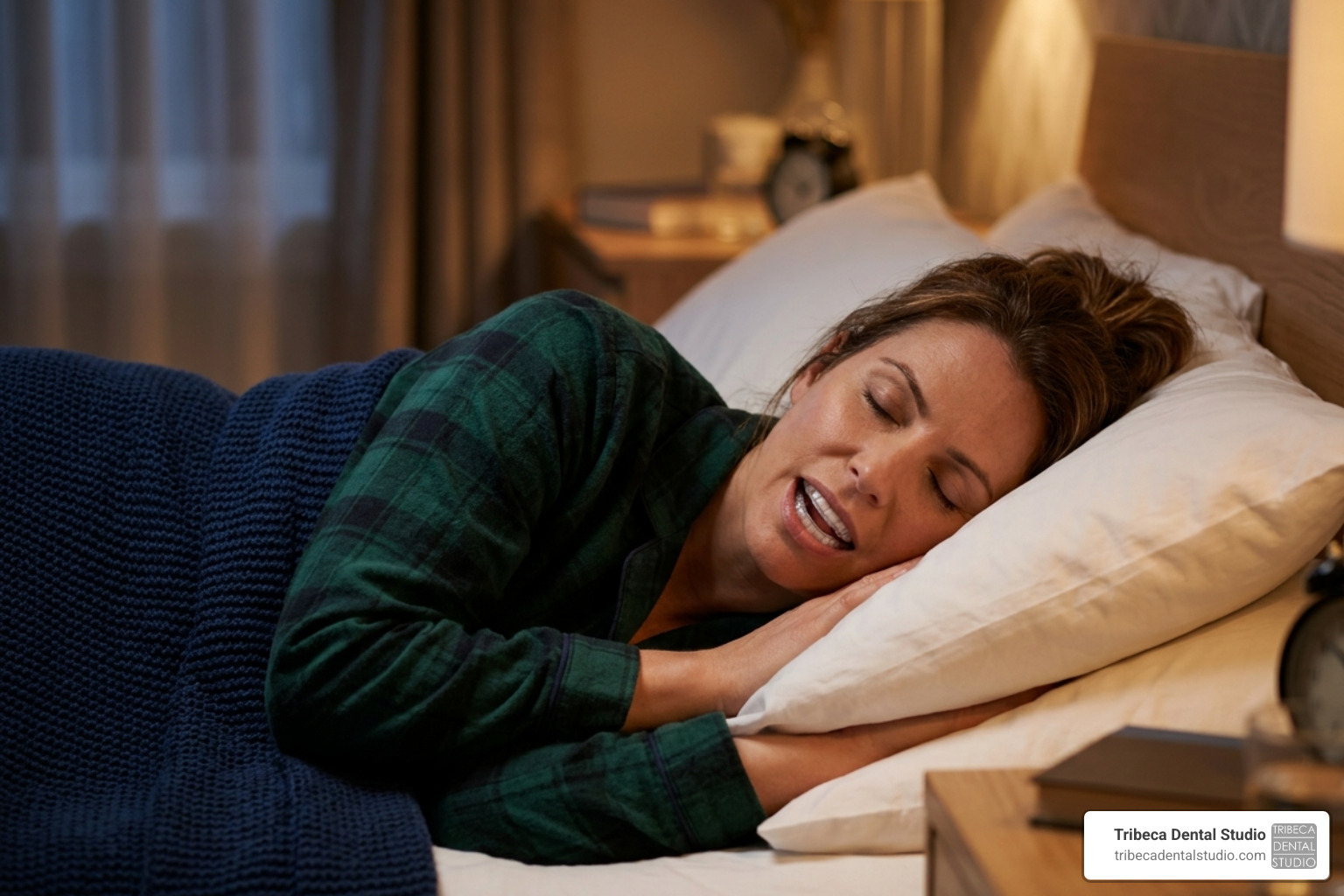
Sleep apnea is not just loud snoring. It’s a condition where your airway repeatedly collapses during sleep, cutting off oxygen – sometimes hundreds of times a night. Left untreated, it raises your risk for heart disease, stroke, high blood pressure, and cognitive decline. Over 20 million Americans are affected, according to the American Sleep Apnea Association, yet many go undiagnosed for years.
In a city as as New York, the fatigue and brain fog caused by untreated sleep apnea can quietly erode your quality of life – your focus at work, your mood, your relationships.
The good news? NYC has some of the most advanced sleep apnea care available anywhere, including cutting-edge dental solutions that don’t require a CPAP machine or surgery.
I’m Dr. Nina Izhaky, a graduate of New York University College of Dentistry and founder of Tribeca Dental Studio, where I’ve spent over two decades helping patients find personalized sleep apnea treatment NYC solutions through advanced dental care. In this guide, I’ll walk you through every option available – so you can find the right fit for your needs.
Common sleep apnea treatment NYC vocab:
Understanding Sleep Apnea Treatment NYC Options
When you or a loved one is diagnosed with Obstructive Sleep Apnea (OSA), the first question is usually: “Do I have to wear that mask?” While Continuous Positive Airway Pressure (CPAP) is often the “gold standard” for severe cases, according to the American Academy of Sleep Medicine, it isn’t the only way to breathe better. In fact, research shows that roughly half of patients cannot use CPAP long-term, leading many New Yorkers to seek effective alternatives.
At Tribeca Dental Studio, we look at the whole picture. Sleep apnea treatment NYC can range from simple lifestyle adjustments to advanced dental interventions. Weight management, for instance, is a powerful tool; even a modest reduction in weight can significantly decrease the pressure on your airway. Positional therapy—learning to sleep on your side rather than your back—can also prevent gravity from pulling the tongue and soft tissues into the throat.
For more information on the variety of paths available, you can explore our sleep apnea treatments page.
Comparison of Primary Sleep Apnea Treatments
| Treatment Type | Best For | Pros | Cons |
|---|---|---|---|
| CPAP | Severe OSA | Highly effective if used | Low compliance; bulky |
| Oral Appliances | Mild to Moderate OSA | Portable; comfortable | Requires healthy teeth |
| Airway Orthodontics | Structural issues | Permanent structural fix | Takes time (months/years) |
| Surgery | Anatomical blockages | Can be curative | Invasive; recovery time |
The Role of Oral Appliances in Sleep Apnea Treatment NYC
If you’re looking for a non-invasive, travel-friendly option, oral appliance therapy is a game-changer. These devices, often called mandibular advancement devices (MADs), look similar to a sports mouthguard or an orthodontic retainer. They work by gently moving the lower jaw forward, which keeps the tongue and soft tissues of the throat from collapsing into the airway.
Research indicates that for mild to moderate cases, custom-fit oral appliances can be just as effective as CPAP but with much higher patient compliance. It’s a lot easier to pack a small case in your carry-on than a CPAP machine when you’re heading out of JFK or LaGuardia!
These devices also offer tongue stabilization, ensuring the airway remains wide and unobstructed throughout the night. Because they are custom-made from digital impressions, the fit is precise, minimizing discomfort. You can find more details on these specific sleep apnea devices and how they might work for you.
Pediatric and Adult Airway Orthodontics in NYC
Sometimes, the root cause of sleep apnea is the shape of the mouth itself. If the palate (the roof of the mouth) is too narrow, it doesn’t leave enough room for the tongue, forcing it back into the throat. This is where airway orthodontics comes in.
We use advanced techniques like MARPE (Miniscrew-Assisted Rapid Palatal Expansion) to literally widen the upper jaw. This creates more room for the tongue and opens up the nasal passages, making it easier to breathe through your nose. We often get asked: Can MARPE and NightLase fix sleep apnea? The answer is that for many patients, these structural changes provide a long-term solution that addresses the cause, not just the symptoms.
For our youngest New Yorkers, early intervention is key. Our pediatric airway dentist guide explains how expanding a child’s palate can prevent a lifetime of sleep struggles. We also offer NightLase®, a non-invasive laser treatment that tightens the tissues in the throat to reduce snoring. You can say goodbye to snoring with NightLase without any needles or downtime.
Advanced Non-Surgical Solutions at Tribeca Dental Studio
Our approach is built on the latest research and technology. By combining our airway orthodontics complete guide knowledge with personalized care, we help adults who thought their only option was a lifetime of “the mask.” As an airway dentist for adults, we focus on expanding the biological gateway—your mouth—to improve your systemic health.
How Sleep Apnea is Diagnosed in New York City
Before we can start sleep apnea treatment NYC, we need a clear diagnosis. The diagnostic journey usually begins with a conversation about your symptoms: Are you waking up with a dry mouth? Do you have morning headaches? Is your partner complaining about loud snoring or gasping?
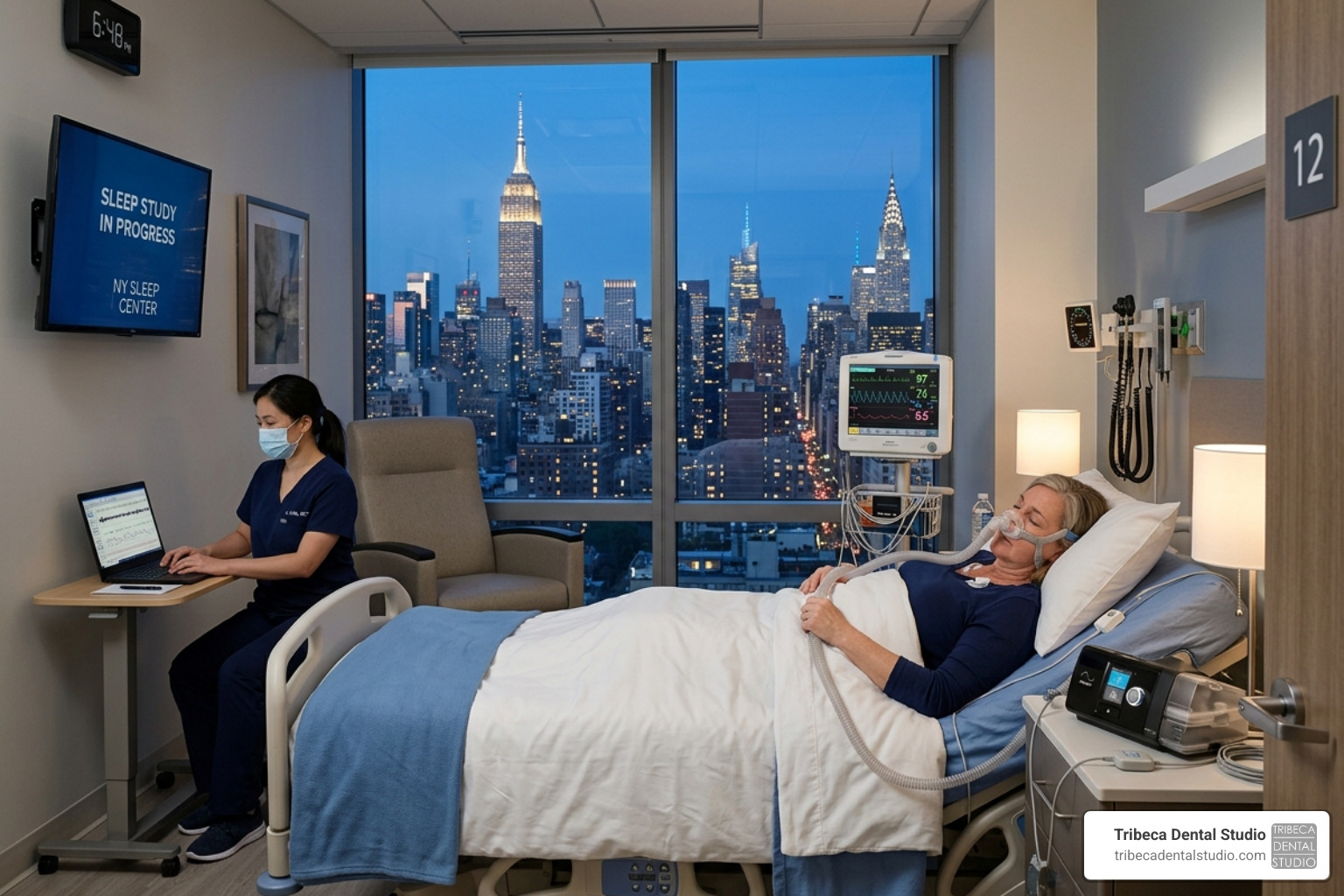
The “gold standard” for diagnosis is Polysomnography (an overnight sleep study). While these used to require a night in a hospital lab, many patients now qualify for home sleep tests. These portable devices allow you to sleep in your own bed while sensors record your oxygen levels, breathing patterns, and heart rate. You can learn more about the specifics of sleep studies on our dedicated page.
In some cases, a sleep physician or ENT (Ear, Nose, and Throat) specialist may recommend advanced diagnostic procedures to see exactly where the blockage is happening. This might include:
- Fiberoptic Nasolaryngoscopy: A tiny camera is used to look at the nasal passages and throat. It usually takes less than five minutes.
- Drug-Induced Sleep Endoscopy (DISE): This is a 10-minute procedure where you are lightly sedated to mimic sleep, allowing doctors to observe exactly how your airway collapses.
Understanding why you stop breathing at night is the first step toward a clinical improvement. In fact, clinics focusing on these detailed diagnostics report clinical improvement rates as high as 84% for sleep disorders.
Home Sleep Tests vs. In-Lab Polysomnography
While in-lab studies provide the most comprehensive data, home sleep apnea testing technology has been reliable for nearly 30 years. It is often more realistic because it captures your sleep in your natural environment.
The process typically involves:
- Telemedicine Visit: A 20-minute video call with a specialist to review your risk.
- Sleep Screener: A quick questionnaire to assess the likelihood of OSA.
- Insurance Pre-authorization: Verifying coverage for the test.
- Testing: Wearing the device for one or two nights.
- Review: A physician reviews your Apnea-Hypopnea Index (AHI) levels to determine the severity of your apnea and medical necessity for treatment.
Understanding All Treatment Avenues: A Multidisciplinary Approach
While oral appliances and airway orthodontics offer effective non-surgical solutions, it’s important to be aware of all available options. For certain severe cases or when other treatments are not suitable, surgical interventions may be considered by specialists.
These include:
- UPPP (Uvulopalatopharyngoplasty): Trimming the soft palate and removing the tonsils.
- Septoplasty: Straightening a deviated septum to improve nasal breathing.
- Hypoglossal Nerve Stimulation (Inspire): An FDA-approved implanted device that stimulates the tongue to stay forward.
- Tonsillectomy and Adenoidectomy: Especially common in children; more than 80% of tonsillectomies today are performed to treat sleep-disordered breathing.
- Maxillomandibular Advancement (MMA): A surgical procedure to move the upper and lower jaws forward.
At Tribeca Dental Studio, we emphasize a collaborative, multidisciplinary approach. We aren’t just “fitting a mouthguard”; we are working within a network of ENT doctors, sleep physicians, and oral surgeons to ensure you get the right care for your specific anatomy.
Choosing the Right Specialist for Sleep Apnea Treatment NYC
Finding the right provider in a city with thousands of doctors can be overwhelming. You want someone who looks beyond just the teeth. A “dental sleep specialist” or an “airway orthodontist” has specific training in how the mouth and throat interact during sleep.
When evaluating a clinic, consider:
- Multidisciplinary Care: Does the office work with sleep physicians for official diagnoses?
- Board-Certified Providers: Look for specialists with advanced fellowships in sleep medicine or airway orthodontics.
- Patient Satisfaction: High ratings (like 4.95/5) often indicate a provider who takes the time to listen.
- Longitudinal Follow-up: Sleep apnea is a chronic condition. You need a provider who will see you every 6–12 months to adjust your appliance and monitor your progress.
For a deeper dive into how we view the connection between your teeth and your breath, check out our airway orthodontics overview.
Frequently Asked Questions about Sleep Apnea in NYC
Is a home sleep test as reliable as a lab study for diagnosis?
For most patients with suspected obstructive sleep apnea, yes. While in-lab studies (Polysomnography) are the “gold standard” and are better at catching complex or central sleep apnea, home sleep testing is highly reliable for OSA. It’s convenient, often covered by insurance, and allows for a more natural night’s sleep. You can read more about sleep studies here.
How long does the process take to receive a custom oral appliance?
The timeline can vary based on your insurance payer. Once we receive medical necessity and pre-authorization, the process can take as little as 2 weeks or as long as 3 months for some insurance providers. This includes taking digital impressions, fabrication in a specialized lab, and the initial fitting. Afterward, we begin the “titration” process, where we slowly adjust the device to the perfect position for your airway. Discover more about sleep apnea devices and the fitting process.
What are the long-term health risks of leaving sleep apnea untreated?
Untreated sleep apnea is a serious systemic health risk. It causes chronic cardiovascular inflammation, which leads to hypertension (high blood pressure) and a significantly increased risk of stroke and heart failure. Furthermore, the constant sleep fragmentation is linked to cognitive decline and even an increased risk of Alzheimer’s disease. Understanding why you stop breathing at night is crucial for preventing these life-altering conditions.
Conclusion
Living in New York City requires energy, focus, and resilience—none of which are possible without restorative sleep. If you’re struggling with snoring or daytime fatigue, don’t wait to seek sleep apnea treatment NYC.
At Tribeca Dental Studio, Dr. Nina Izhaky and our multi-specialty team are dedicated to providing a personalized airway care experience. We treat our patients like family, ensuring that every treatment plan is as unique as the person receiving it. By looking at the mouth-body connection, we don’t just fix smiles; we help you reclaim your health and your life.
Whether you are interested in a custom oral appliance, NightLase® therapy, or structural expansion, we are here to guide you through every step of the process. Your journey to better sleep and a longer, healthier life starts with a simple conversation.
Ready to breathe easier? Start your journey with airway orthodontics at Tribeca Dental Studio today.