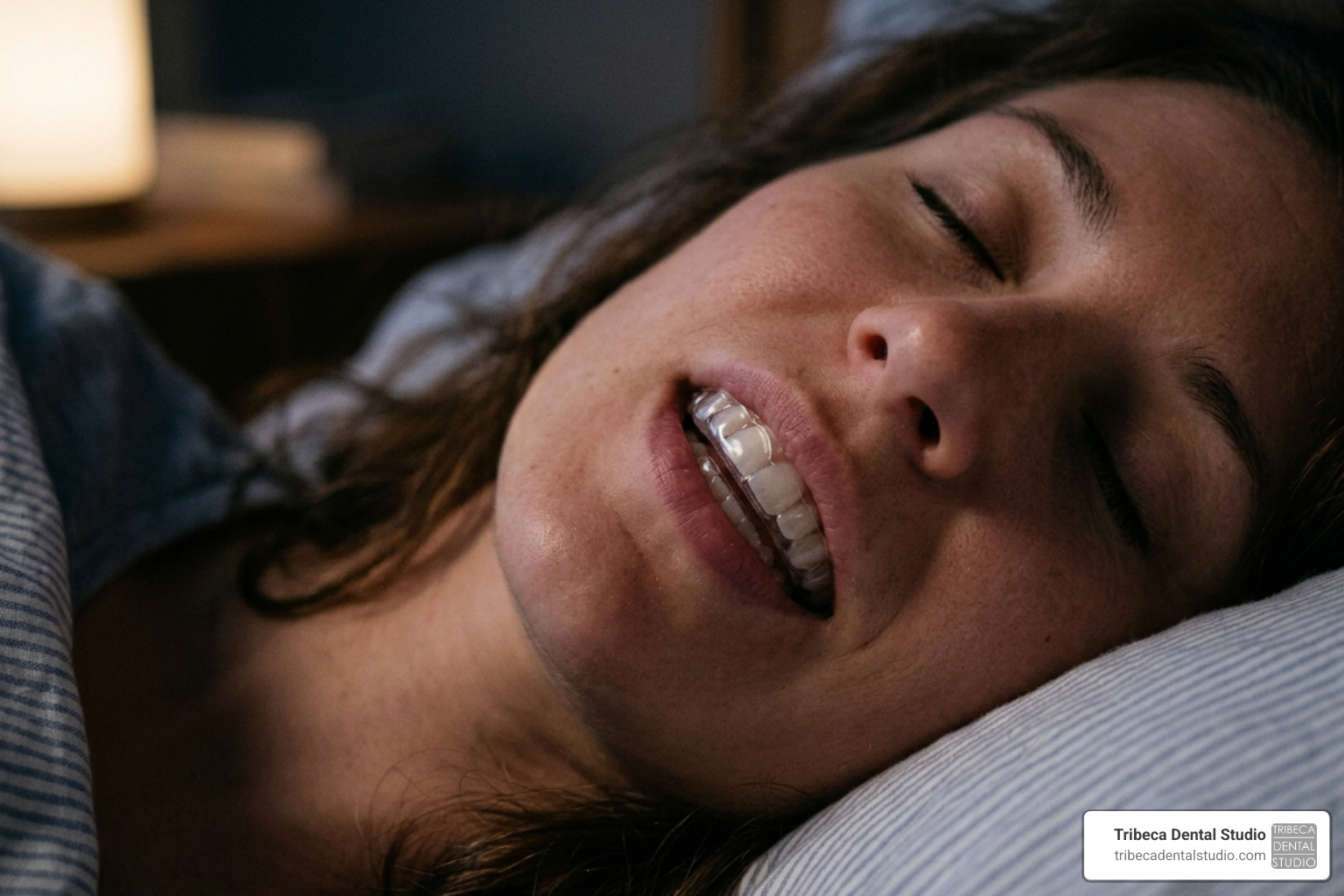
What Happens When You Grind Your Teeth at Night — and How to Stop
How to avoid grinding teeth while sleeping is simpler than most people think. Here’s a quick overview:
- Wear a custom night guard to protect your teeth while you sleep
- Reduce stress through meditation, deep breathing, or light exercise
- Cut back on caffeine and alcohol, especially in the evening
- Establish a calming bedtime routine — try herbal tea, a warm bath, or light stretching
- Avoid hard or chewy foods before bed
- Practice jaw relaxation exercises throughout the day
- See a dentist if symptoms persist — they can identify underlying causes and recommend treatment
You’re asleep. You have no idea what’s happening. But your jaw is clenching with up to 250 pounds of force, slowly wearing down your teeth, straining your jaw muscles, and setting you up for a throbbing headache by morning.
That’s sleep bruxism — unconscious teeth grinding during sleep. It affects anywhere from 8% to 13% of adults, and up to 40% of children. Most people don’t even know they do it until a partner mentions it, or a dentist spots the damage.
The tricky part? Because it happens while you’re asleep, it’s much harder to control than daytime clenching. But it is manageable — with the right habits, tools, and support.
I’m Dr. Nina Izhaky, a graduate of NYU College of Dentistry and the founder of Tribeca Dental Studio in Manhattan, where I regularly help patients understand how to avoid grinding teeth while sleeping through personalized, evidence-based care. In the sections below, I’ll walk you through exactly what works — from simple lifestyle changes to professional treatments.
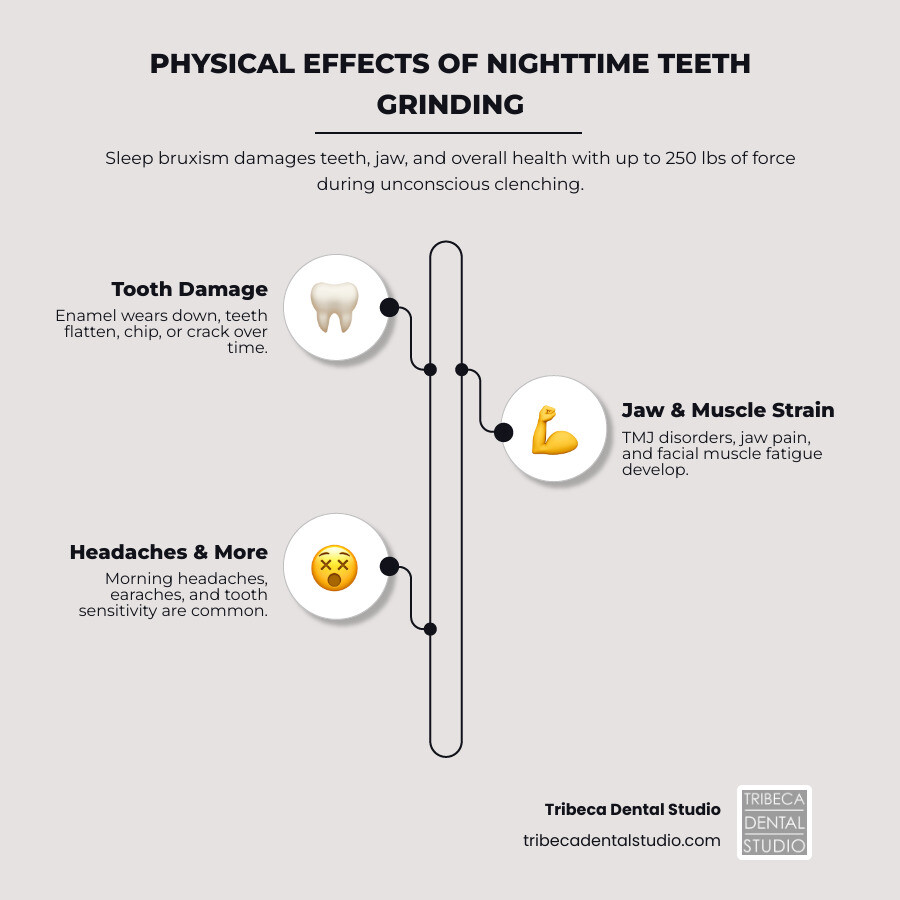
How to avoid grinding teeth while sleeping vocab to learn:
Understanding the Causes and Symptoms of Sleep Bruxism
To understand how to avoid grinding teeth while sleeping, we first have to recognize the signs that it’s happening. Because bruxism is an involuntary reflex of the central nervous system, many of our patients at Tribeca Dental Studio are surprised when we point out the wear on their molars.
Common symptoms include:
- Morning Headaches: Often felt in the temples, these occur because the masseter and temporal muscles have been working overtime all night.
- Jaw Pain and Fatigue: Your jaw might feel tight, “stuck,” or tired, making it difficult to open your mouth wide for breakfast.
- Tooth Sensitivity: As enamel wears away, the inner layers of the tooth become exposed to hot and cold temperatures.
- Flattened or Chipped Teeth: Over time, the constant friction can make teeth appear shorter or cause small fractures.
- Earaches: Because the temporomandibular joint (TMJ) is so close to the ear canal, jaw inflammation often feels like an ear problem.
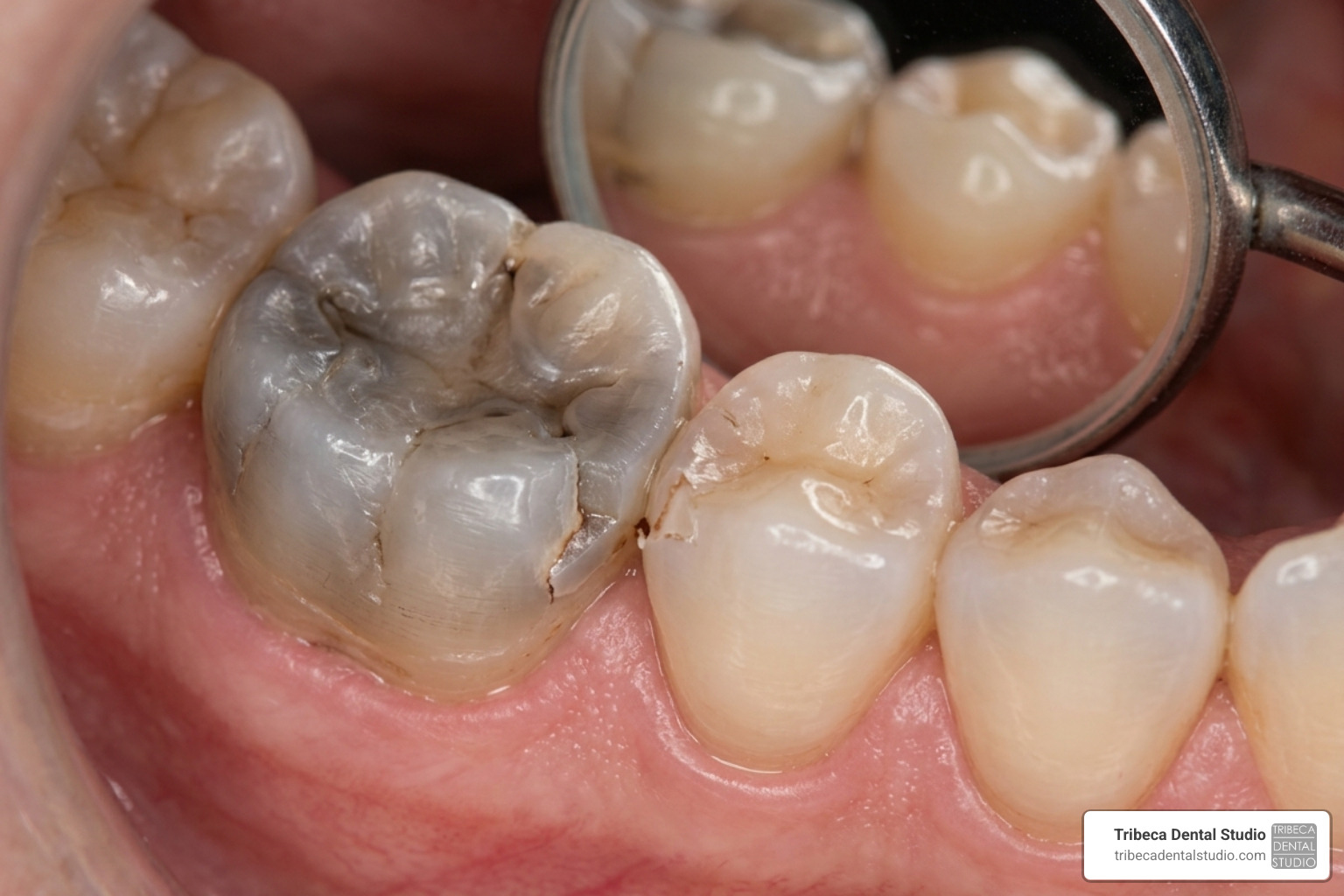
Why Is This Happening?
There is rarely a single “smoking gun” for bruxism. Instead, it’s usually a combination of factors. Stress and anxiety are the leading triggers; in fact, research suggests up to 70% of people grind their teeth when they are under pressure.
Physical factors also play a role. Malocclusion, or an abnormal bite (crooked or missing teeth), can cause the jaw to “search” for a comfortable resting place at night, leading to grinding. There is also a strong genetic component; if your parents ground their teeth, you are more likely to do so as well. If you aren’t sure if you fit the profile, check out our guide on how to tell if you grind your teeth at night.
How to Avoid Grinding Teeth While Sleeping with Lifestyle Changes
While dental tools are essential for protection, addressing the root cause often starts with your daily habits. If you want to know how to avoid grinding teeth while sleeping naturally, you have to look at your “sleep preparation.”
Stress Management and Cortisol Reduction
Since stress is the primary driver, finding ways to lower your cortisol levels before bed is crucial. We often recommend:
- Meditation and Deep Breathing: Even five minutes of mindfulness can signal to your nervous system that it is safe to relax.
- Journaling: Getting your “to-do” list or anxieties out of your head and onto paper can prevent your brain from “chewing” on those problems while you sleep.
- Therapy: For chronic bruxers, talk therapy or Cognitive Behavioral Therapy (CBT) can be highly effective in managing grinding and anxiety.
Watching What You Consume
What you put into your body significantly impacts your jaw activity at night.
- Limit Caffeine and Nicotine: Both are stimulants that increase muscle activity. Studies show that people who consume more than six cups of coffee a day or smoke regularly are twice as likely to grind their teeth.
- Avoid Alcohol: While a “nightcap” might help you fall asleep, alcohol disrupts sleep cycles and leads to more frequent “micro-arousals,” which is when most grinding occurs.
- Hydration: Dehydration can lead to muscle cramping, including in the jaw. Aim for the recommended 11–15 cups of water daily.
- Magnesium-Rich Foods: Low magnesium levels have been linked to increased muscle tension. Incorporate spinach, almonds, and oats into your diet to help your muscles relax naturally.
For more on these holistic approaches, read our tips on how to stop grinding teeth naturally.
Improving Sleep Hygiene to Prevent Grinding
Your environment dictates your sleep quality. To reduce the frequency of grinding episodes, follow these tips for better sleep hygiene:
- Maintain a Consistent Schedule: Going to bed and waking up at the same time helps regulate your nervous system.
- Optimize Your Environment: Keep your bedroom dark, quiet, and cool.
- Ditch the Blue Light: Turn off screens at least an hour before bed; the light from phones can interfere with melatonin production.
- Sleep Position: Try sleeping on your back or side. If you sleep on your stomach, your jaw is often pushed to one side, which can exacerbate misalignment and grinding. Ensure you have proper pillow support to keep your head and spine aligned.
Dietary Adjustments for Jaw Health
If your jaw is already sore, don’t make it work harder.
- Avoid Hard Foods: Steer clear of nuts, hard candies, and tough meats like steak.
- The “No-Gum” Rule: Chewing gum during the day trains your jaw muscles to stay active, making them more likely to clench at night.
- Soft Food Diet: During a flare-up, stick to yogurt, smoothies, and cooked vegetables.
- Reduce Sugar: High sugar intake can lead to energy spikes and restless sleep.
Explore more natural remedies for teeth grinding to supplement these dietary changes.
Professional Treatments and Dental Appliances
While lifestyle changes help reduce the urge to grind, dental appliances are the “seatbelts” that prevent damage when grinding does occur. At Tribeca Dental Studio, we believe a multifaceted approach is best.
The most common and effective treatment is a custom night guard (or occlusal splint). These are not the same as the “boil-and-bite” guards you find at a drugstore. A custom guard is fabricated from a precise impression of your teeth, ensuring it fits perfectly and doesn’t shift your bite.
| Feature | Custom-Fitted Guard (Dentist) | Over-the-Counter (Store) |
|---|---|---|
| Fit | Precise, based on dental impressions | General, “one size fits most” |
| Material | High-quality, durable acrylic resin | Soft, thin plastic |
| Comfort | Minimal bulk, easy to speak/breathe | Often bulky and uncomfortable |
| Bite Alignment | Adjusted by a dentist to protect TMJ | Can inadvertently shift your bite |
| Longevity | 3 to 10 years | 3 to 6 months |
For a deeper dive into these options, see our comprehensive guide to stopping teeth grinding or the Mayo Clinic’s overview on the diagnosis and treatment of bruxism.
Using Mouthguards to Avoid Grinding Teeth While Sleeping
A professional night guard acts as a cushion between the upper and lower teeth.
- Protecting Restorations: If you have spent money on crowns, veneers, or fillings, a night guard is essential to prevent them from fracturing.
- Dual-Laminate Guards: These feature a soft inner layer for comfort against the teeth and a hard outer layer for durability against heavy grinding.
- Preventing TMJ Disorders: By providing a level surface for the teeth to rest on, the guard reduces the strain on the jaw joint.
If you are struggling with chronic tension, we have identified 10 ways to stop clenching your jaw that work alongside mouthguard therapy.
Natural Remedies and Physical Exercises
You can actively train your jaw muscles to relax through specific exercises and “biofeedback” techniques. The goal is to make “teeth apart, lips together” your jaw’s default resting position.
Daily Exercises to Avoid Grinding Teeth While Sleeping
- The Tongue-to-Roof Exercise: Place the tip of your tongue against the roof of your mouth, just behind your front teeth. Open your mouth as wide as you comfortably can while keeping the tongue in place. Hold for 5 seconds, then relax. Repeat 10 times.
- The “N” Sound: Say the letter “N” out loud. Notice how your upper and lower teeth are slightly apart? Try to maintain this position throughout the day.
- Range of Motion: Slowly open and close your mouth, ensuring the jaw moves straight down rather than shifting to one side.
- Progressive Muscle Relaxation: While lying in bed, tense your jaw for 5 seconds, then consciously release all the tension. Do this for your neck and shoulders as well, as these muscles are often linked to jaw pain.
Facial Massage and Heat Therapy
Applying moist heat to the jaw for 15 minutes before bed can significantly reduce nighttime tension. You can also use a gentle circular massage on the masseter muscle (the fleshy part of your cheek just in front of your ear).
Learning to manage nighttime tension for better sleep is a skill that pays off in both dental health and overall well-being.
The Connection Between Bruxism and Sleep Apnea
One of the most important things we screen for at Tribeca Dental Studio is the link between grinding and Obstructive Sleep Apnea (OSA). Research shows that teeth grinding is often a physiological response to a restricted airway.
When your airway collapses during sleep, your brain sends a signal to the jaw to clench and move. This action helps “wake up” the muscles of the throat and pull the tongue forward to reopen the airway. If you only treat the grinding with a mouthguard without addressing the apnea, you are treating the symptom but ignoring a potentially dangerous underlying condition.
Signs that your grinding might be linked to apnea include:
- Loud snoring
- Waking up gasping for air
- Excessive daytime sleepiness
- A “scalloped” tongue (indentations on the sides of the tongue)
If we suspect OSA, we may recommend a Mandibular Advancement Device (MAD). This is a special type of guard that pushes the lower jaw forward to keep the airway open while simultaneously protecting the teeth from grinding. You can read more about this connection in this Harvard Health article on stopping sleep bruxism.
Frequently Asked Questions about Bruxism
How can I tell if I am grinding my teeth if I sleep alone?
If you don’t have a partner to tell you about the “coffee grinder” sounds at night, look for physical clues. Do you wake up with a dull headache? Is your jaw sore when you first wake up? Do you notice your teeth looking flatter or more sensitive to your morning coffee? These are all tell-tale signs. You might also notice a thin white line on the inside of your cheeks (linea alba) where your teeth have been pressing against the tissue.
Are over-the-counter mouthguards as effective as custom ones?
In a word: No. While OTC guards are better than nothing in an emergency, they are often made of soft plastic that actually encourages some people to chew more. Furthermore, because they aren’t fitted to your specific bite, they can cause your teeth to shift over time, potentially leading to more severe TMJ issues. Custom guards are thinner, more comfortable, and much more durable.
Can children outgrow teeth grinding?
Yes, bruxism is very common in children (up to 40%) as their jaws and teeth develop. Most children outgrow the habit by their teen years. However, if the grinding is causing tooth pain or headaches, or if it seems linked to enlarged tonsils or adenoids (which can cause breathing issues), it’s important to see a pediatric dentist.
Conclusion
Learning how to avoid grinding teeth while sleeping is a journey that involves both protecting your smile and listening to what your body is trying to tell you about stress and sleep quality. Whether it’s through a custom-fitted night guard, a new relaxation routine, or addressing an underlying sleep disorder, the goal is to wake up feeling refreshed rather than pained.
At Tribeca Dental Studio, we take a personalized approach to every patient. Led by Dr. Nina Izhaky, our team in Manhattan provides a welcoming, family-like environment where we use the latest technology to diagnose and treat bruxism at its source. Don’t let nighttime tension ruin your oral health or your sleep quality.
If you’re ready to put the bite on bruxism, schedule a consultation for sleep apnea and bruxism treatments with us today. We’re here to help you achieve the silent, peaceful night’s sleep you deserve.