Causes, Symptoms, and Clinical Diagnosis in Overbite Orthodontics
When we evaluate bite alignment at Tribeca Dental Studio, understanding the root cause of the malocclusion is our first priority. An overbite—clinically referred to as vertical overlap—becomes a concern when upper front teeth extend too far down over lower front teeth. While a standard overbite measures between 1 and 2 millimeters, an excessive overlap crossing the 2 to 4 millimeter threshold creates functional strain on your entire oral system.
Overbites fall into two primary categories: dental and skeletal. A dental overbite occurs when teeth erupt improperly or shift out of position while the underlying jaw bones remain correctly aligned. A skeletal overbite, on the other hand, stems from a structural discrepancy in jaw development—typically where the upper jaw is overdeveloped or the lower jaw (mandible) is undersized or positioned too far back.
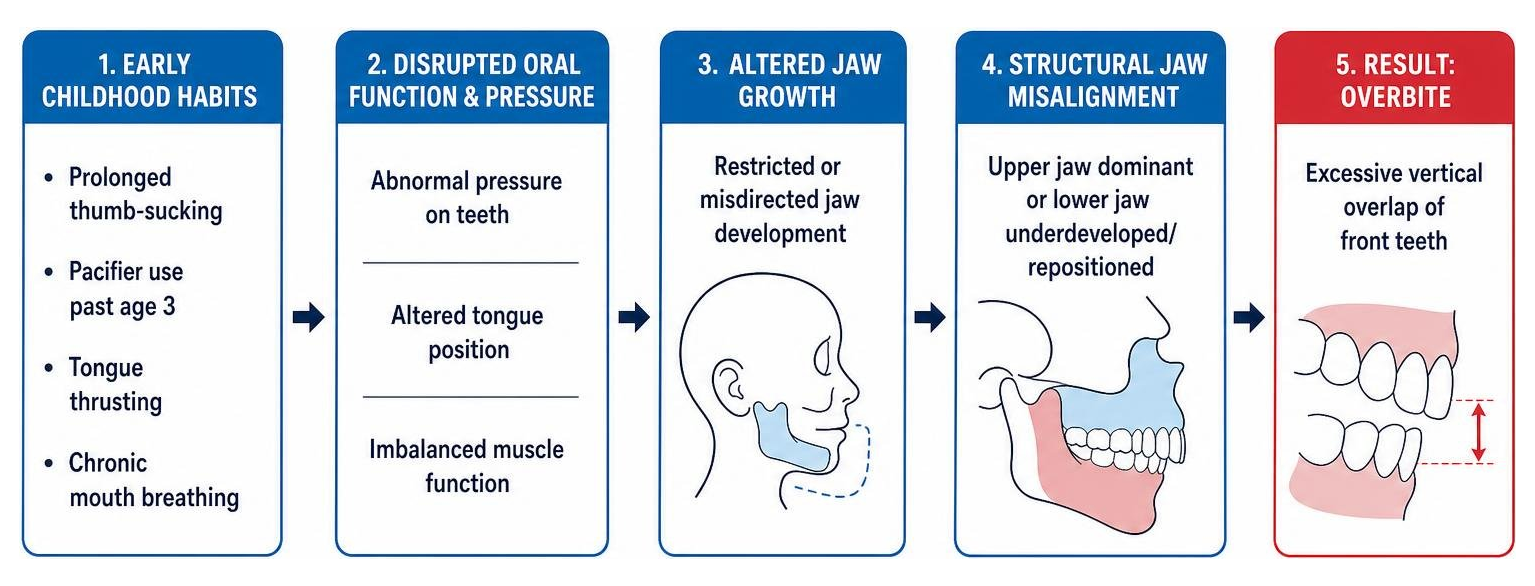
Genetics plays a major role in jaw size, shape, and development. However, environmental factors during early childhood are equally impactful. Prolonged thumb-sucking, pacifier use beyond age 3, tongue thrusting (pushing the tongue forward against front teeth during swallowing), and chronic mouth breathing can severely alter delicate jaw development. Research detailed by the Cleveland Clinic emphasizes how these non-nutritive habits disrupt normal growth patterns.
Leaving an excessive overbite untreated leads to serious long-term complications:
- Enamel Wear: Over-erupted lower teeth can bite against the backs of upper front teeth, wearing down enamel rapidly.
- TMJ Strain: Misaligned bites force jaw joints into unnatural positions, triggering chronic facial pain, headaches, and temporomandibular joint (TMJ) disorders.
- Gum Recession and Soft-Tissue Damage: In deep bite cases, lower teeth can physically contact the delicate palatal tissue behind upper front teeth, causing painful ulcers and localized gum recession.
- Airway and Breathing Issues: Retracted jaw positions frequently constrict upper airways, contributing to sleep-disordered breathing.
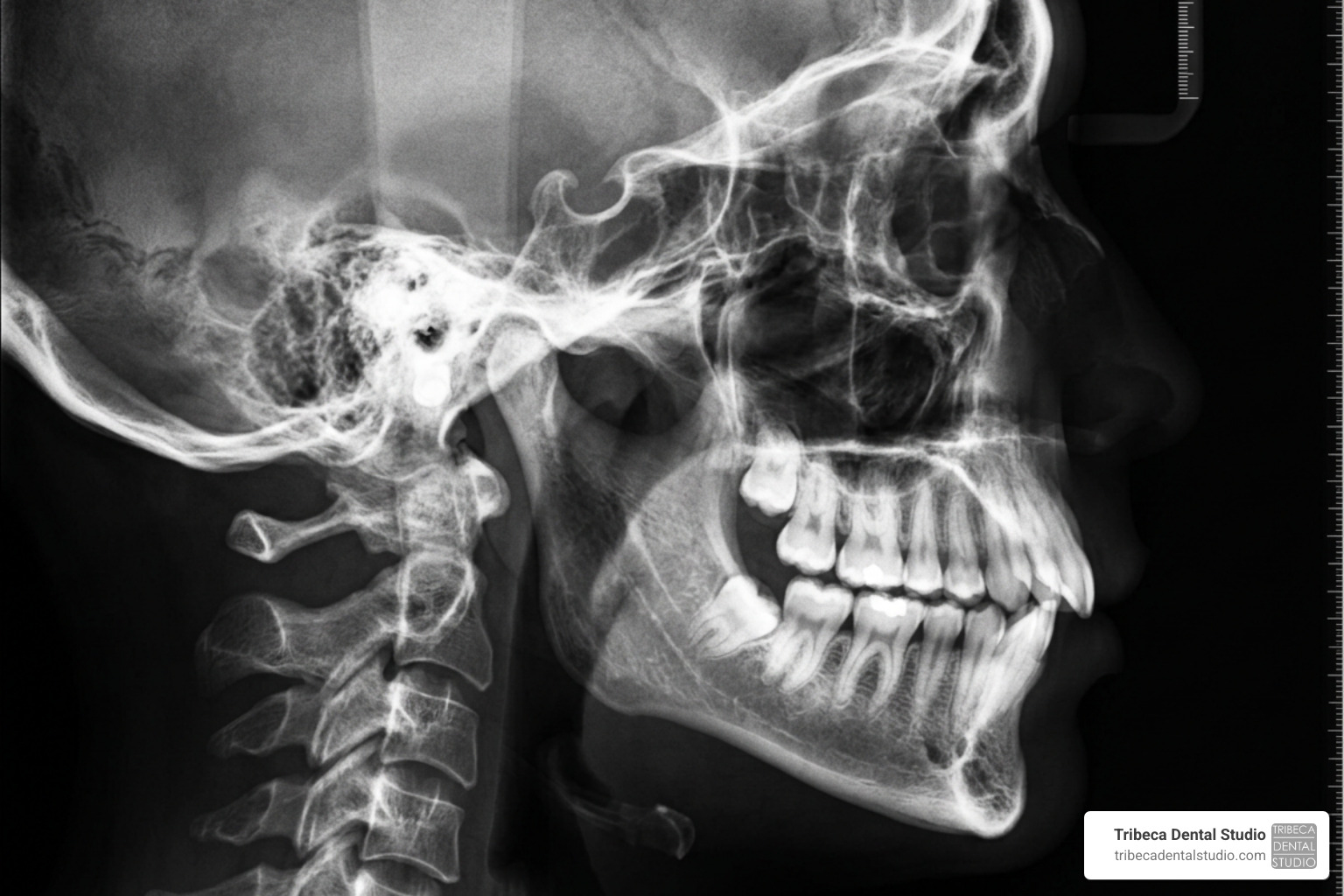
Diagnosis begins with advanced 3D digital scans and high-resolution imaging to capture the precise structural relationship between your teeth, jaw joints, and facial profile.
Overbite Orthodontics Diagnosis and Assessment
A comprehensive orthodontic evaluation goes far beyond simply looking at your teeth when you smile. At Tribeca Dental Studio, our diagnostic workflow combines detailed clinical examination with state-of-the-art imaging technology.
During your visit, we perform a complete facial symmetry and profile assessment alongside intraoral digital scanning. High-definition 3D digital scans replace messy traditional impressions, giving us a precise, comfortable digital model of your teeth. We also utilize digital cephalometric radiographs (specialized side-profile X-rays) to analyze the exact angular relationship between your upper and lower jaw bones. This comprehensive diagnostic approach ensures that our modern orthodontics protocols treat the root structural cause of your bite discrepancy, rather than just straight line aesthetics.
Differentiating Overbite, Overjet, and Deep Bite
Confusion often surrounds the distinction between an overbite, an overjet, and a deep bite. While these terms are sometimes used interchangeably in casual conversation, they describe distinctly different dimensional issues:
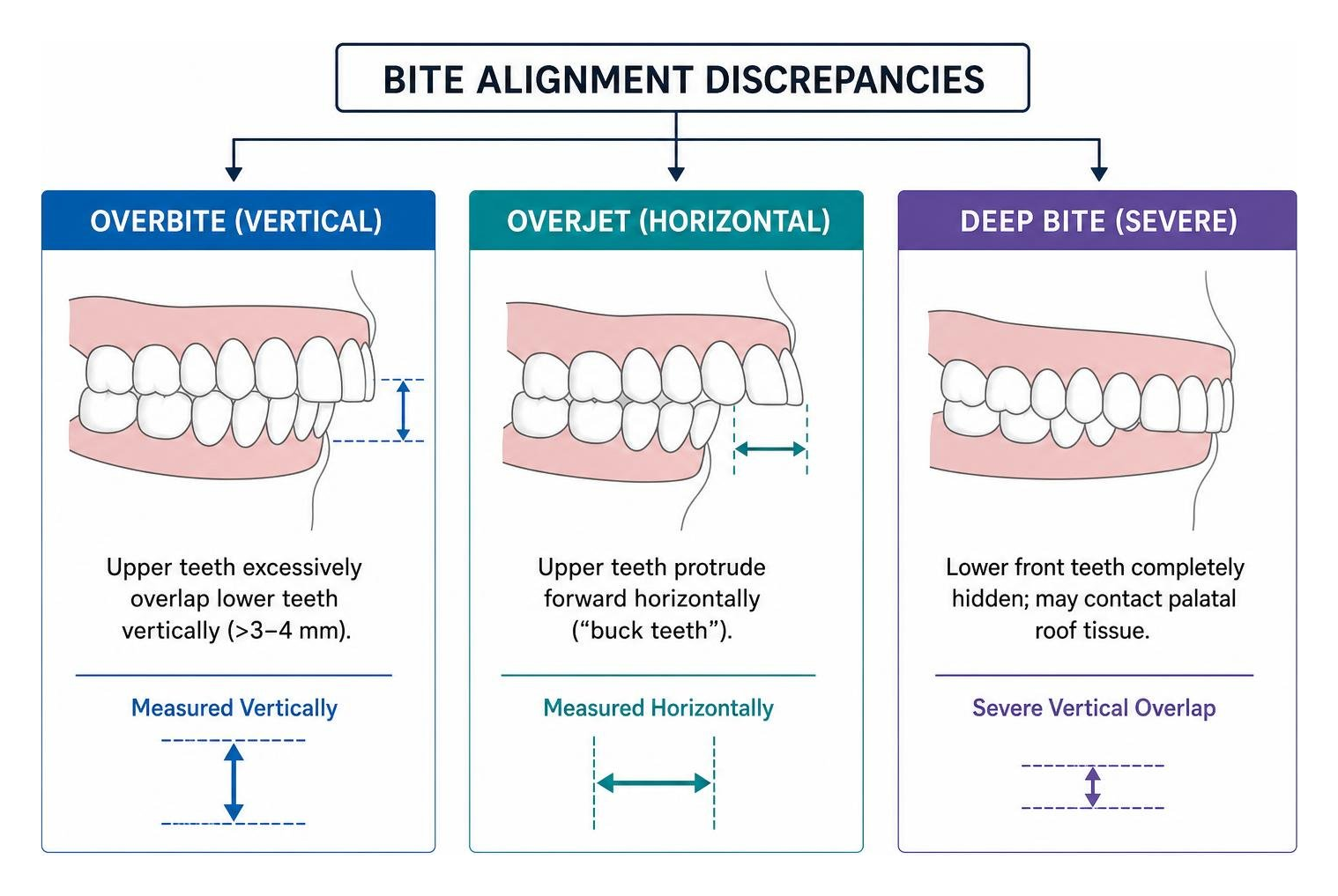
An overbite measures vertical overlap. An overjet measures horizontal distance—how far upper front teeth stick out forward past lower front teeth (often called “buck teeth”). Many patients present with a Class II malocclusion, exhibiting a combination of both horizontal protrusion and vertical overlap.
A deep bite is simply a severe vertical overbite where upper teeth completely cover lower front teeth, disrupting the natural curve of Spee (the anatomical curvature of the occlusal plane).
Pediatric and Adult Treatment Options Across Age Groups
Correcting a bite discrepancy varies significantly depending on patient age and skeletal maturity. Early pediatric intervention takes advantage of active jaw growth, whereas adult correction focuses on precise dental repositioning or conservative skeletal compensation.
| Feature / Consideration | Pediatric (Ages 7–10) | Adolescent (Ages 11–17) | Adult (Ages 18+) |
|---|---|---|---|
| Primary Objective | Intercept skeletal imbalances & guide growth | Complete tooth alignment & bite correction | Correct dental alignment & manage joint health |
| Common Appliances | Palate expanders, habit appliances, Phase 1 braces | Traditional braces, clear aligners, elastics, Herbst | Clear aligners, braces, MSE/MARPE, orthognathic surgery |
| Jaw Modification Potential | High (malleable bone structure) | Moderate (during final growth spurts) | Minimal (requires surgical/MSE expansion) |
| Average Duration | 9–12 months (Phase 1) | 12–24 months | 12–24+ months |
Pediatric Overbite Orthodontics Interventions
The American Association of Orthodontists recommends that every child receive an orthodontic evaluation by age 7. At this developmental milestone, permanent molars and incisors have begun erupting, allowing us to spot subtle jaw misalignments early.
Early growth guidance during Phase 1 pediatric treatment can alter jaw development non-surgically while bones are still soft and flexible. Appliances such as palatal expanders create vital space in narrow upper arches, allowing the lower jaw to position itself forward naturally. If you notice early warning signs, reviewing our guide on 5 signs your child might need braces can help you time your visit perfectly.
For younger children, replacing traditional spill-proof valve sippy cups with 360-degree rim cups helps prevent unnatural tongue placement and dental suction. When palate width requires gentle broadening, explore our non-surgical approaches to palatal expansion for children to learn how growth modification sets the foundation for lifelong health.
Adult Overbite Correction and Non-Surgical Approaches
It is a common myth that bite correction is only effective for teenagers. Adults can successfully address vertical overlap and Class II bite relationships at any age. While adult jaw bones are fully solidified, non-extraction orthodontic protocols achieve remarkable transformations by carefully controlling archwire sequences and flattening the curve of Spee.
By utilizing rectangular stainless steel archwires featuring accentuated and reverse curves of Spee combined with disciplined intermaxillary elastics, we can intrude front teeth and extrude back teeth safely. This flattens the bite plane without pulling healthy teeth. If you are exploring adult treatment options, read our detailed breakdown on do braces fix overbite? to see how modern mechanics adapt for adult smiles.
For severe adult skeletal discrepancies where non-surgical mechanics hit anatomical limits, orthognathic (corrective jaw) surgery remains an option. However, modern biomechanics allow us to resolve the majority of adult cases completely non-surgically.
Aligners, Auxiliaries, and Advanced Treatment Modalities
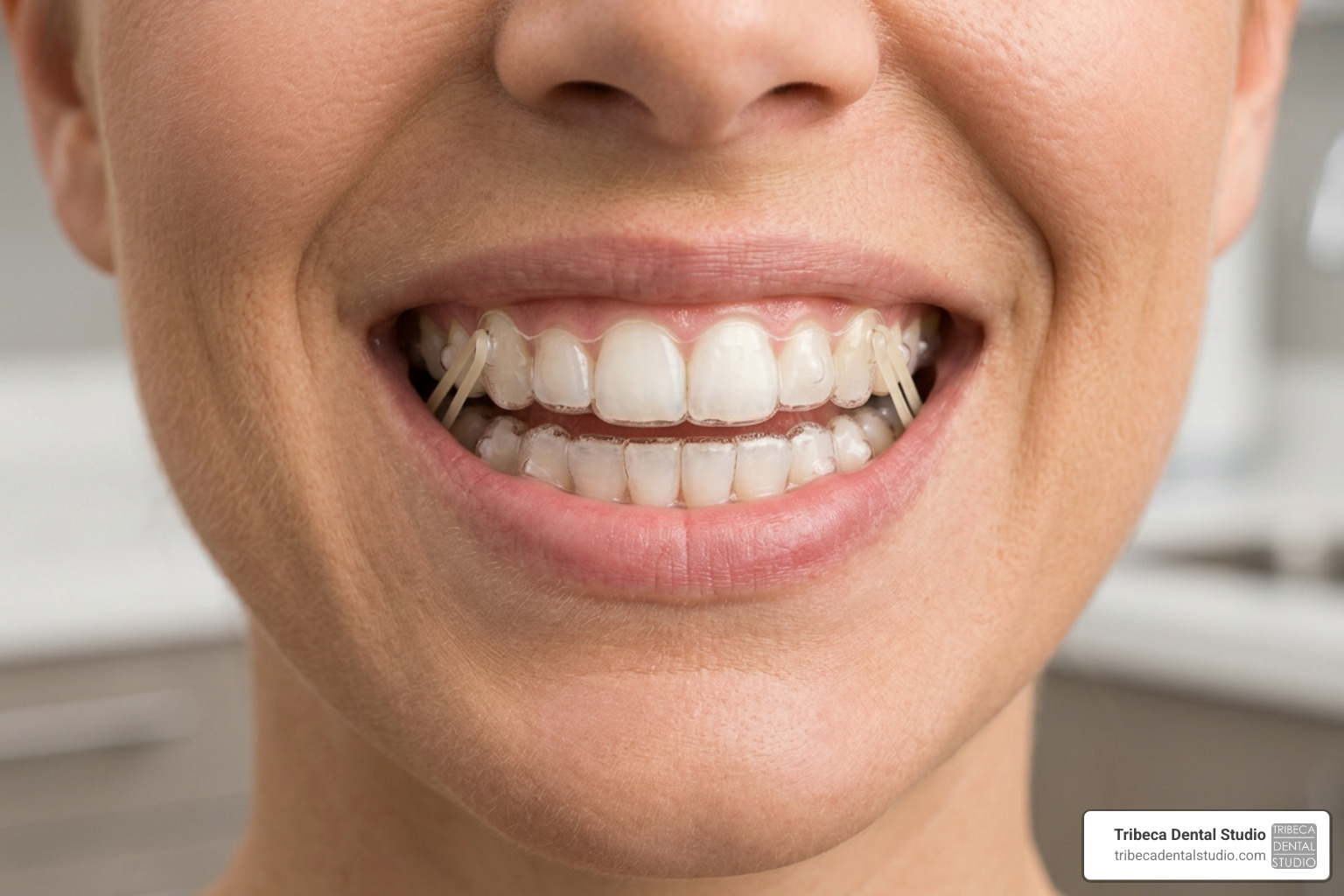
Modern overbite orthodontics has evolved far beyond basic metal brackets. Today, clear aligners, advanced skeletal expanders, and specialized functional auxiliaries offer highly discreet, comfortable, and efficient pathways toward ideal bite alignment.
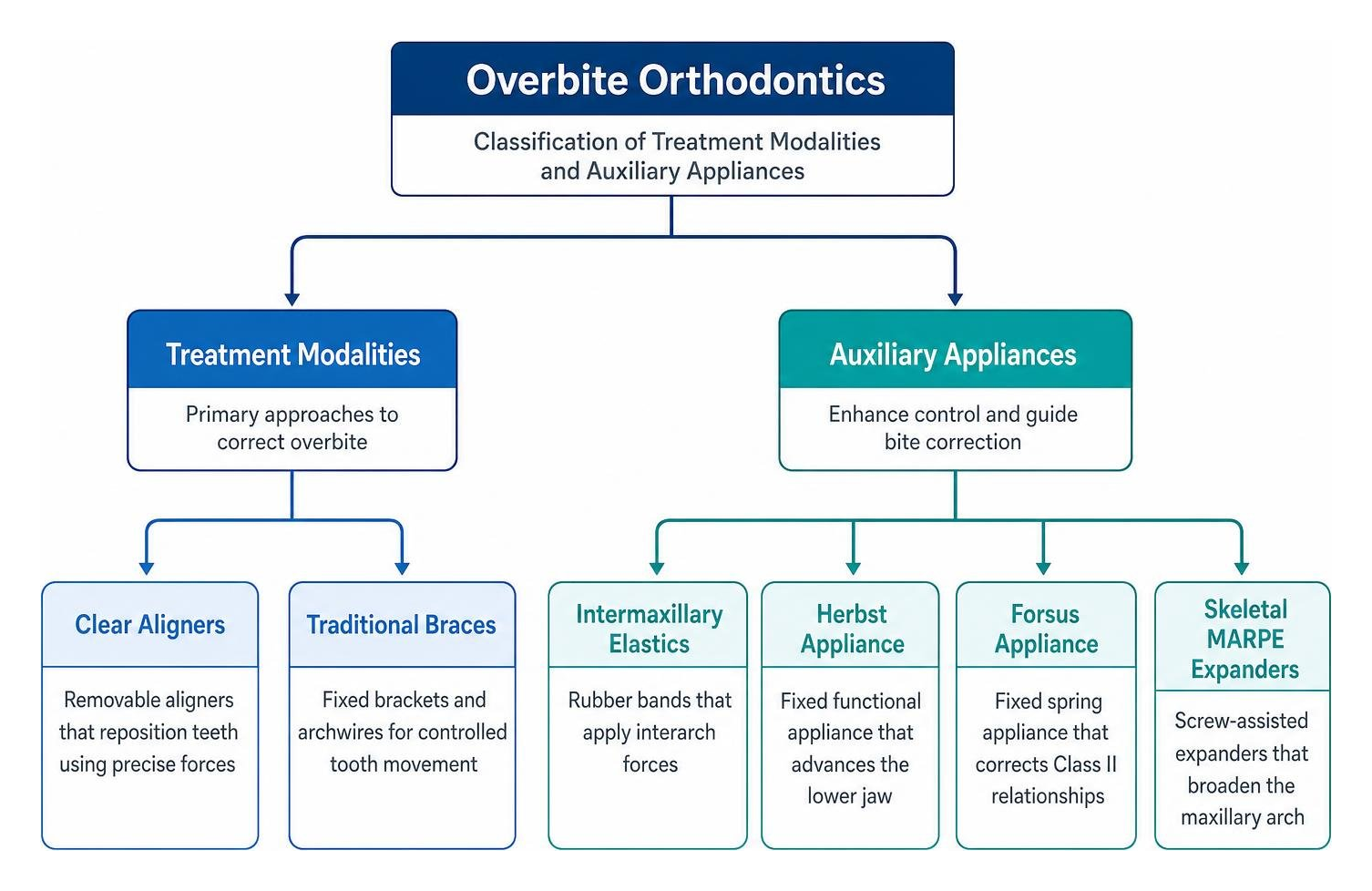
Clear Aligners vs. Traditional Braces for Overbite Alignment
Both traditional fixed braces and clear aligners are highly effective tools for overbite correction. However, each system offers distinct mechanical advantages depending on the complexity of your bite.
Clear aligners, such as Invisalign, excel in treating mild to moderate dental overbites. By utilizing discreet composite precision dots (attachments) bonded to specific teeth along with precision cuts for rubber bands, aligners deliver continuous force vectors to intrude front teeth and shift the bite. For aligners to work successfully, strict compliance is essential—aligners must be worn 20 to 22 hours per day.
Traditional metal or ceramic braces remain the standard of care for severe, highly complex skeletal overbites, offering absolute rigid control over multi-rooted teeth and deep vertical movements. Learn more about your options through our dedicated Invisalign clear aligner braces and traditional braces service pages.
The Role of Auxiliaries: Elastics, Expanders, and Airway Appliances
Correcting a vertical overbite frequently requires auxiliary tools working alongside primary braces or aligners:
- Intermaxillary Elastics (Rubber Bands): Connect upper and lower appliances, applying continuous diagonal force to shift the lower jaw forward and bring upper teeth backward into ideal meshing alignment.
- Herbst Appliance and Forsus Springs: Fixed functional appliances used primarily in growing adolescents to encourage forward mandibular positioning continuously.
- MARPE / MSE (Maxillary Skeletal Expansion): Micro-implant assisted expanders used in older teens and adults to widen a narrow upper jaw skeletally without traditional surgery. Explore our guide on understanding MARPE benefits and techniques to see how this technology expands treatment possibilities.
- Airway Orthodontics & Myofunctional Therapy: A constricted oral vault often forces tongue retraction, narrowing upper airways and compromising rest-breathing posture. By integrating airway-focused growth appliances and myofunctional therapy in NYC, we train perioral musculature and open airway passages for optimal health. Dive into our airway orthodontics complete guide to learn more about this whole-body health approach.
Timeline, Costs, and Relapse Prevention
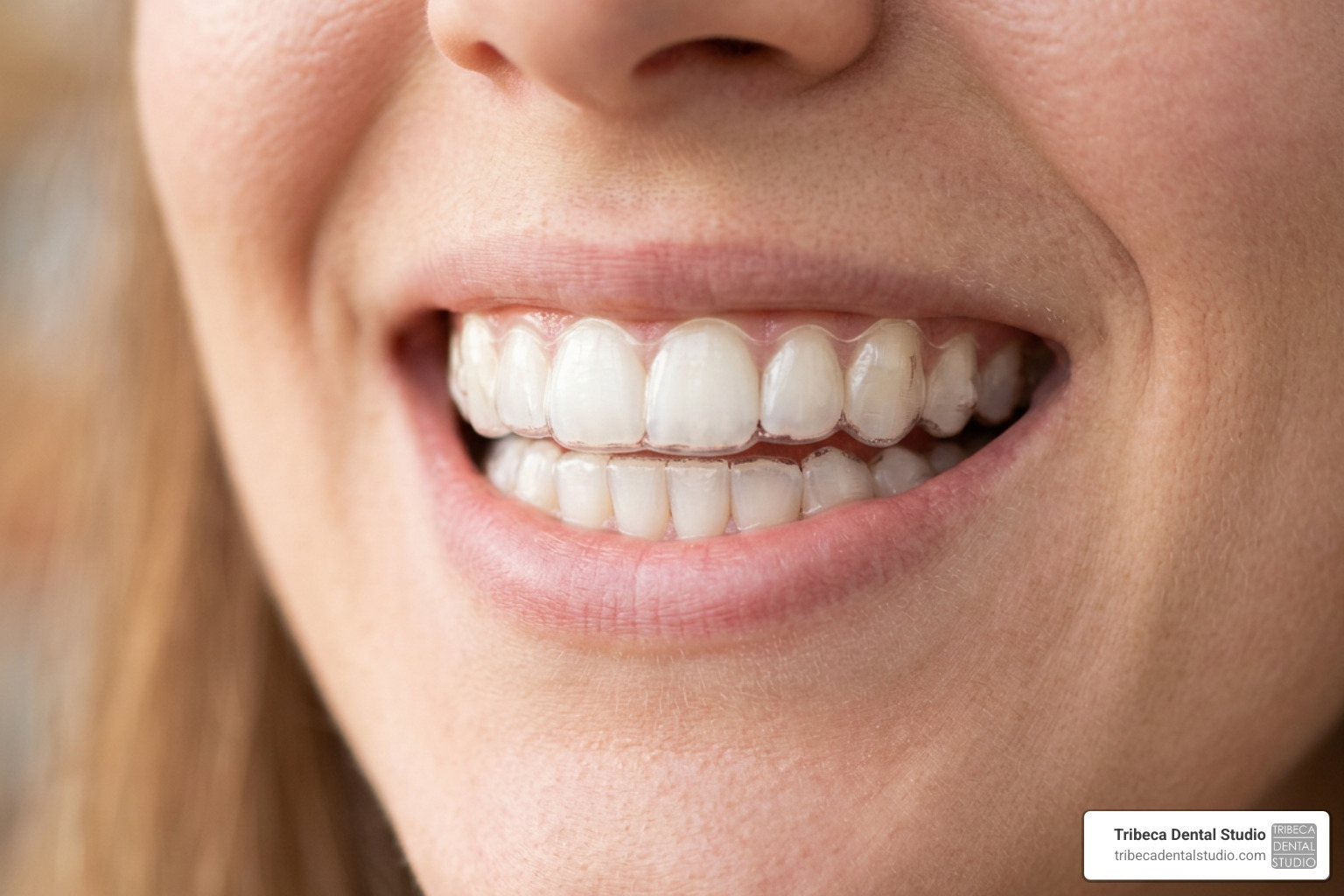
Understanding what to expect regarding treatment duration, financial investment, and post-treatment maintenance helps ensure a smooth orthodontic experience.
Treatment Duration and Cost Factors
The average time required for overbite orthodontics correction ranges from 12 to 24 months. Mild dental overbites treated with clear aligners typically settle into place within 12 to 18 months, whereas comprehensive moderate-to-severe bite cases utilizing traditional braces generally require 18 to 24+ months.
Several factors influence your overall timeline:
- Severity of Bite Discrepancy: Mild dental alignment moves significantly faster than severe skeletal deep bites.
- Patient Compliance: Consistently wearing aligners 20–22 hours daily and placing fresh rubber bands as directed directly dictates your final completion date.
- Biological Response and Age: Bone remodeling occurs faster in growing children than in mature adults.
Across the United States, comprehensive overbite orthodontic treatment costs generally range between $3,000 and $8,000. Actual investment depends on case complexity, selected treatment modality, and overall duration. Most dental PPO insurance plans with orthodontic coverage provide lifetime benefits that significantly lower out-of-pocket costs. To better evaluate financial expectations in Manhattan, consult our breakdown of Invisalign cost in NYC.
Maintaining Results: Retention Phase and Relapse Prevention
Achieving a beautifully balanced bite is an exciting milestone, but keeping it there requires a disciplined retention plan. Teeth retain a “memory” of their original positions due to elastic periodontal ligament fibers surrounding their roots. Furthermore, perioral muscle forces continue to press against teeth throughout your life.
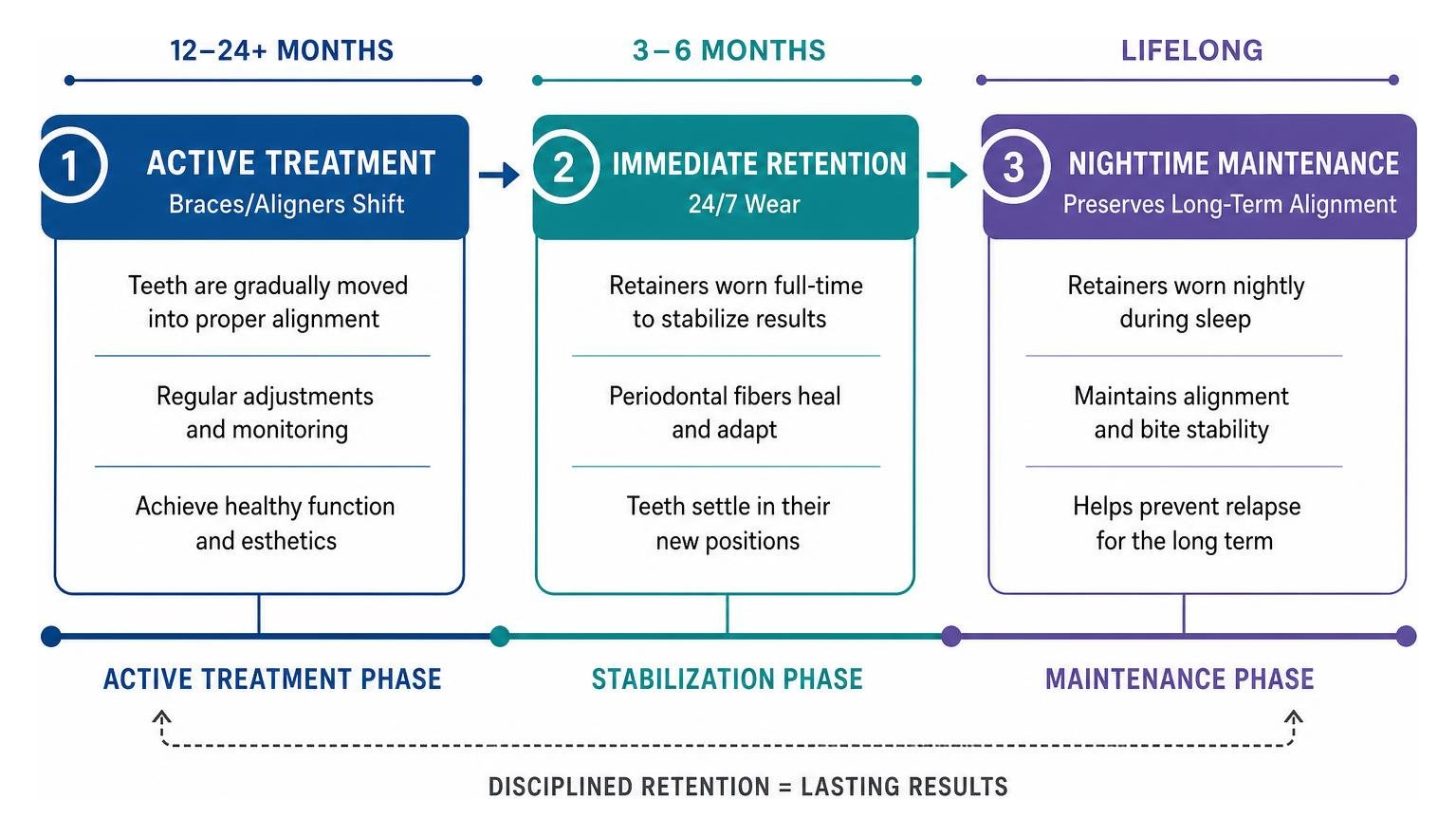
To guarantee long-term stability and eliminate bite relapse:
- Fixed Lingual Wire: A thin, custom-fitted wire bonded unobtrusively behind lower front teeth keeps fragile lower incisors permanently stabilized.
- Removable Retainers (Clear or Hawley): Custom clear plastic aligner-style retainers or durable acrylic Hawley retainers must be worn full-time initially (usually 3 to 6 months), transitioning to every night during sleep indefinitely.
Frequently Asked Questions
Can an overbite be corrected without traditional braces?
Yes! Mild to moderate dental overbites can be corrected using clear aligner therapy such as Invisalign. By combining custom aligners with tooth-colored precision attachments and intermaxillary elastics, aligners deliver the necessary vector forces to Intruded front teeth and realign your bite discreetly. Severe skeletal discrepancies may still benefit from traditional braces or specialized growth appliances.
How long does overbite orthodontic correction take?
Comprehensive overbite correction typically takes between 12 and 24 months. Mild cases managed with clear aligners often take 12 to 18 months, while complex skeletal deep bites requiring fixed braces and auxiliaries average 18 to 24+ months. Strictly following rubber band and aligner wear instructions is the best way to keep your timeline on track.
Can correcting an overbite change facial shape?
Yes, correcting an overbite can positively enhance your facial profile. Realigning a deep bite restores ideal lower third facial height, relieves harsh strain around the mouth, and allows a receded chin to sit naturally forward. This builds a balanced, relaxed jawline profile. Read more on how alignment impacts your appearance in our article on does Invisalign change face shape?.
Achieving Optimal Bite Alignment and Long-Term Health
At Tribeca Dental Studio in Tribeca, New York City, we believe that an exceptional smile requires a perfect balance of functional biology and cosmetic elegance. Led by Dr. Nina Izhaky, our interdisciplinary team combines advanced orthodontic mechanics, restorative mastery, and airway-focused oral healthcare under one comfortable roof.
When bite alignment or enamel wear demands a complete aesthetic refresh, Tribeca Dental Studio is widely recognized for excelling in ultra-conservative, precision smile designs. Known as leaders in custom no-prep veneers in NYC, our practice excels at preserving your natural tooth structure while restoring worn teeth to perfect length and beauty. Whether you are seeking early growth intervention for your child or comprehensive adult bite rehabilitation, we treat you like family, delivering predictable outcomes designed for lifelong functional stability.
Take the first step toward a healthier, more comfortable smile today. Explore our comprehensive orthodontics options or schedule a consultation with Dr. Nina Izhaky and our expert team at Tribeca Dental Studio.